
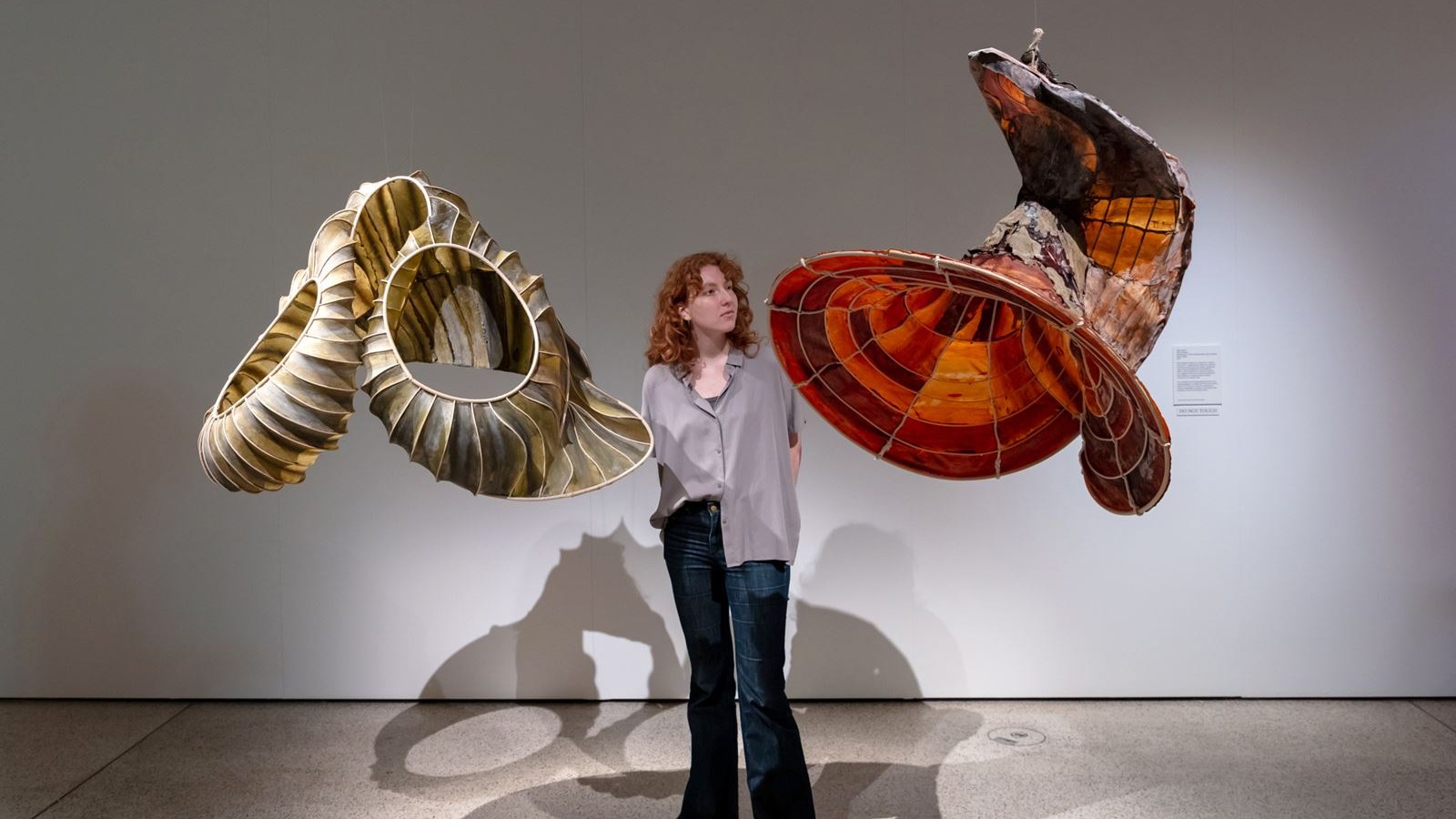
Five of them stand in a circle, each one taller than the visitors, and the museum leaves it to you to decide whether you are joining the meeting or watching it from outside. Kelp Council is Julia Lohmann’s installation of five seaweed sculptures, made for More than Human at London’s Design Museum in 2025. On November 28 the council sits again, this time at the ArtScience Museum in Singapore, where the exhibition opens its Asian run.
Most biomaterial design asks for credit just for existing. This asks a harder question.
The forms are strange in the right way, part creature, part furniture, part weather system, and the strangeness is load bearing. A smooth, tasteful object made of seaweed would be easy to admire and easier to walk past. These refuse the walk past, with looping bodies, open mouths and exposed ribs that keep pulling your eye back.
Skins, ribs and the sound of the tide
Each form is a skin stretched over a ribcage. Lohmann treats the kelp so it stays pliable, then pulls it across a framework and leaves the construction showing, so you read the relationship between surface and support at a glance. The skins are translucent at the thin points and nearly opaque at the ribs, so each form seems to glow and harden by turns as you walk around it.
The colours belong to the plant itself, running from olive green through warm amber to a deep reddish brown, and light passes through the thin skins and pools inside the open mouths of the forms. I have handled a fair number of bioplastic samples over the years, most of them beige, most of them apologetic. Nothing about this work apologises.

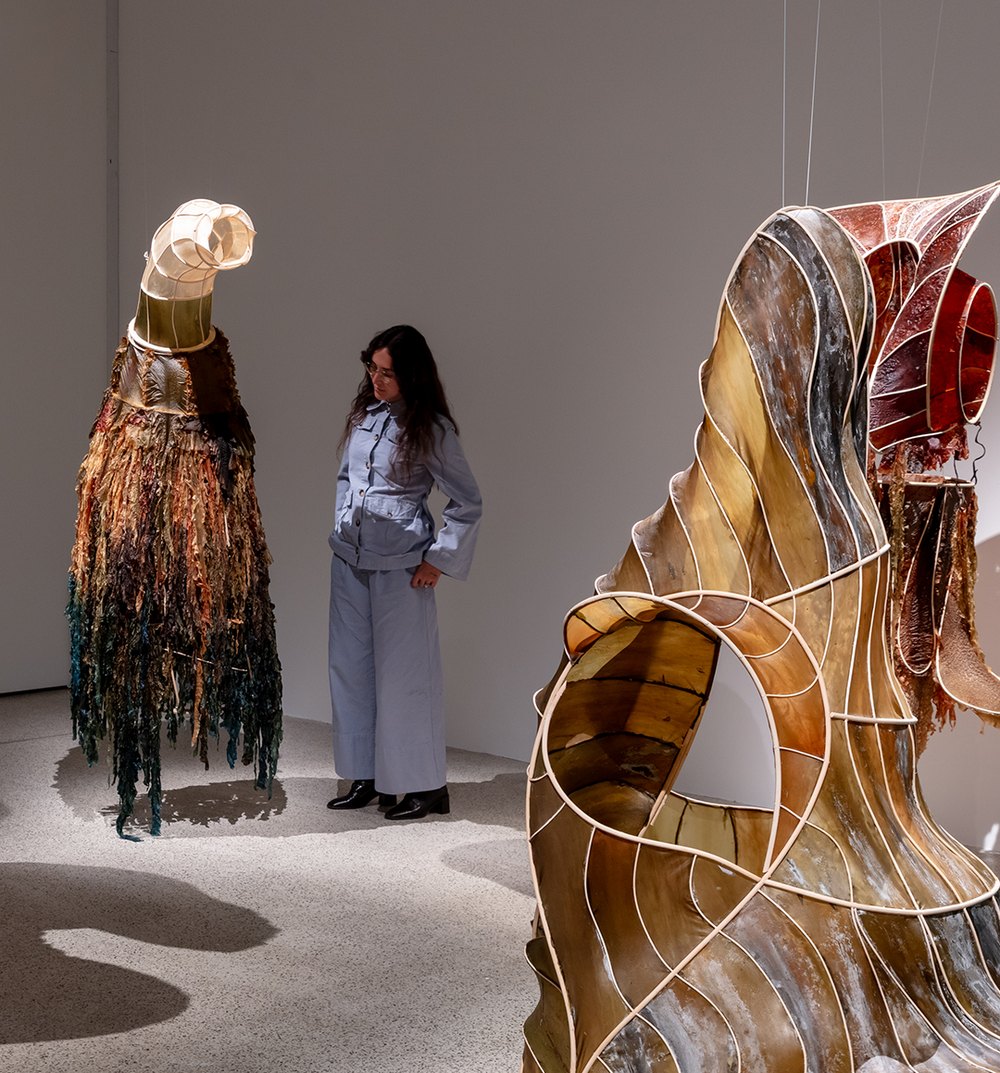
Keeping the ribs visible is the argument. The material has a structure, and the design works around it instead of ironing seaweed flat until it behaves like plastic. You can see the hand of the maker and the logic of the plant in the same glance, and the work trusts you to hold the two together.
Sound finishes the scene. A soundscape of rising and falling tides, composed by Lohmann with composer Ville Raasakka, runs underneath the circle, and the five forms are gathered from seaweed species collected in Europe and East Asia.
The circle is the staging, and it is doing quiet work. Five forms face inward, mid discussion, and the visitor completes or interrupts the ring by stepping into the middle of it. The curators frame the choice plainly: stay on the outside and observe, or enter the centre and listen to the landscape these organisms actually grow in. Most exhibition design tells you where to stand. This one asks.
Eighteen years of asking kelp questions
Lohmann came to seaweed in 2007, through an encounter with Japanese kelp at a fish market in Sapporo, and she has built the research in public ever since. During a residency at the Victoria and Albert Museum in 2013 she founded the Department of Seaweed, a community of practice testing what kelp can do as a material for making. The line of work runs unbroken from that studio to the Design Museum commission thirteen years later.

The earlier structures show the thinking hardening. Oki Naganode, at the V&A in 2013, stretched treated naga seaweed over a framework of rattan and aluminium. Hidaka Ohmu, in 2020, scaled the language to a pavilion of seaweed panels. Kombu Ahtola let drying kelp pull a rattan frame into the final curve as it contracted.
Her condition, as the Design Museum’s curators put it, is that anyone using a material like this has to engage with the whole ecosystem it came from, and to consider the material’s own needs and presence in the world, not just its usefulness to us. Few material startups could meet that standard. Fewer still would try. I find that harder to argue with than the harvest-more enthusiasm that usually surrounds seaweed.
It also sets the limit of the piece. Kelp Council proves seaweed can hold a room of adults in silence. It does not prove seaweed can furnish that room, and Lohmann, notably, never claims otherwise. A sculpture arguing for restraint in harvesting cannot then promise a product line next season, and this one is consistent enough to refuse.
The show travels, and the question travels with it
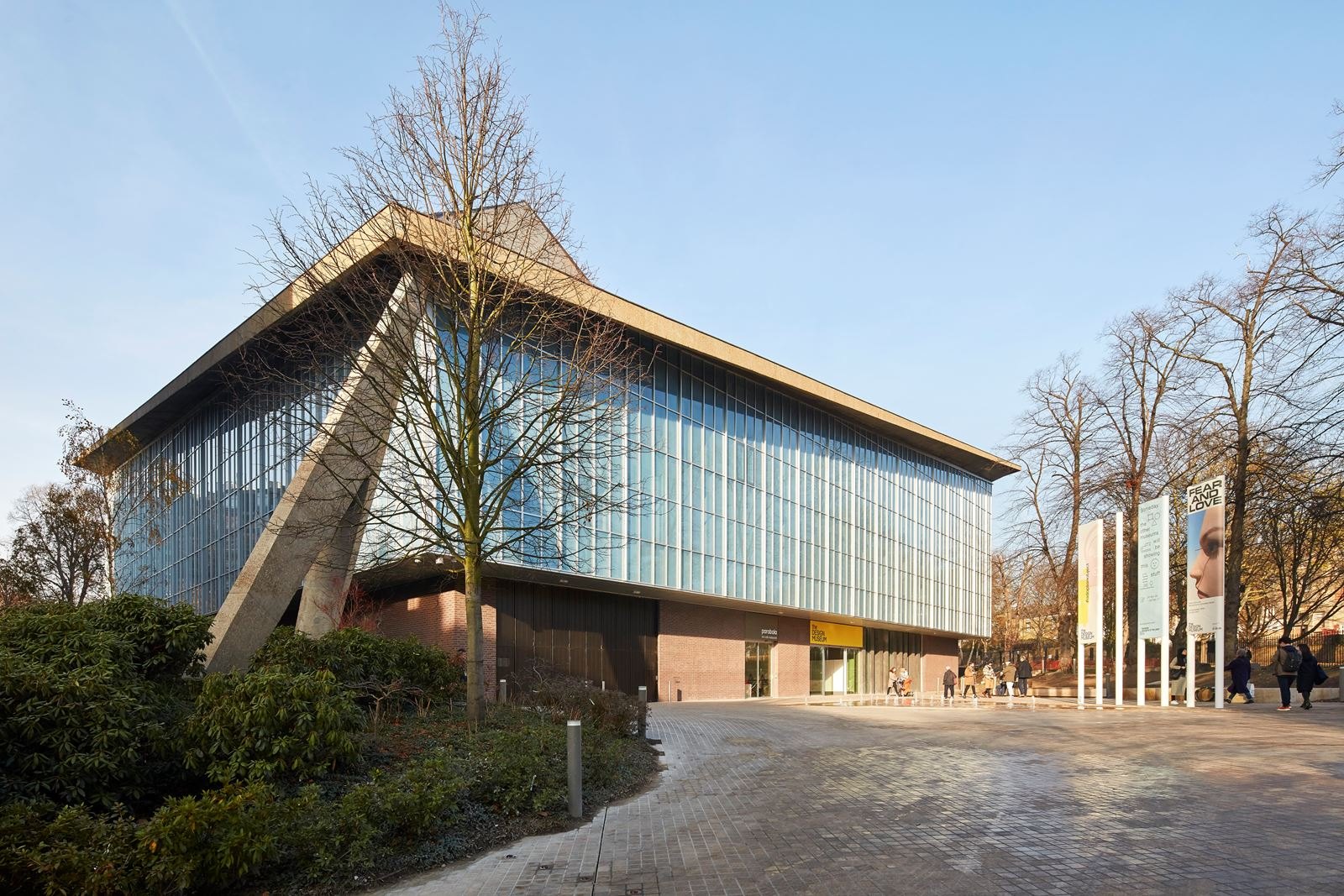
More than Human was the first major museum exhibition devoted to design beyond the human, and London packed it with more than 140 works by over 50 designers, artists and architects before the run closed on October 5, 2025. The Singapore edition, titled More than Human: Making with the Living World, expands the cast to nearly 55 artists and runs at the ArtScience Museum from November 28, 2026 to May 16, 2027.

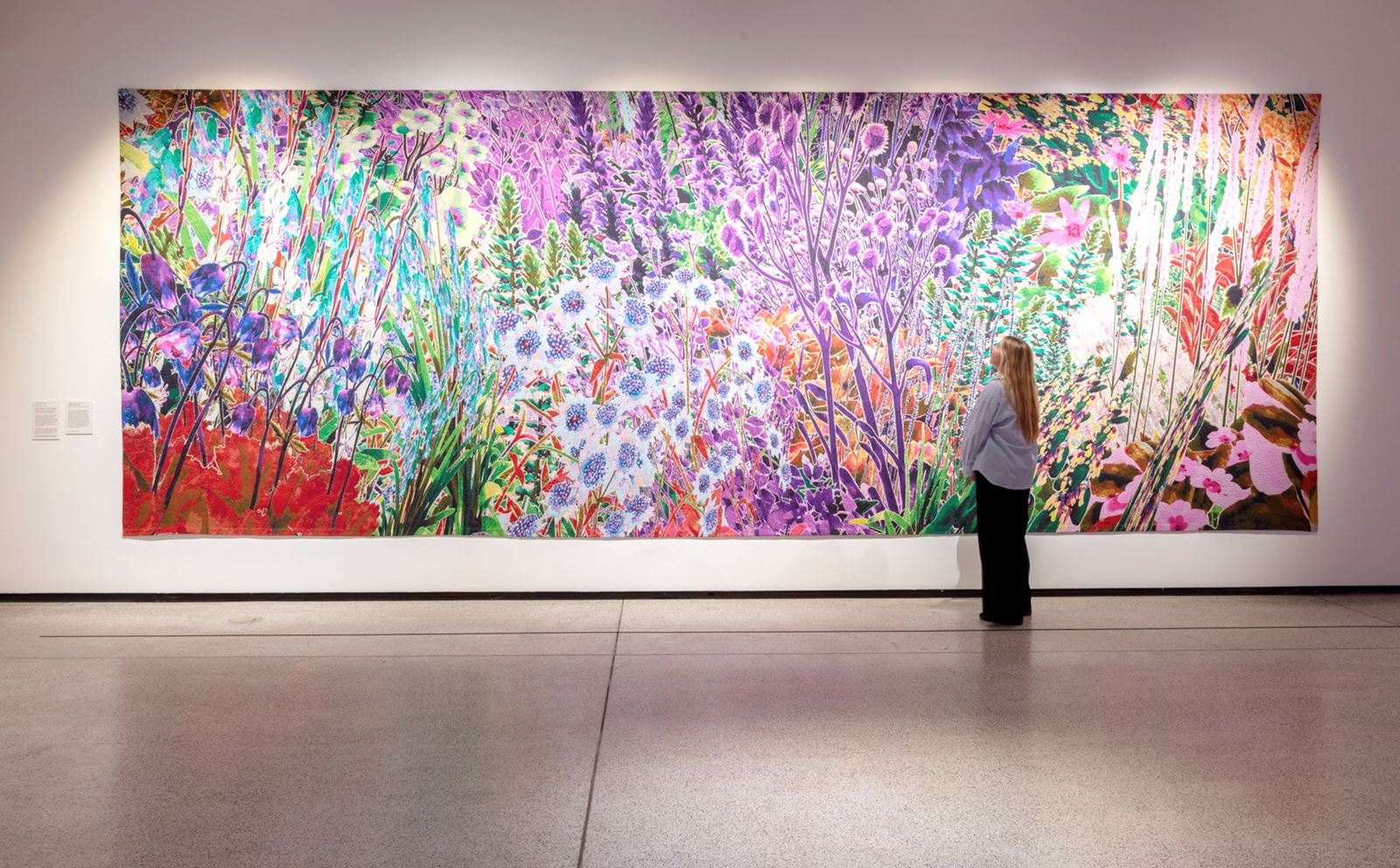
The company is strong. Ginsberg’s Pollinator Pathmaker tapestry stretches eight metres, a garden at pollinator scale.
The Singapore staging is no photocopy. ArtScience Museum developed it with the Design Museum and Future Observatory, widening the full artist list.
Tickets are on sale through Marina Bay Sands and online. If you go, step inside the circle. Remaining outside it is exactly the position this work is arguing against.