
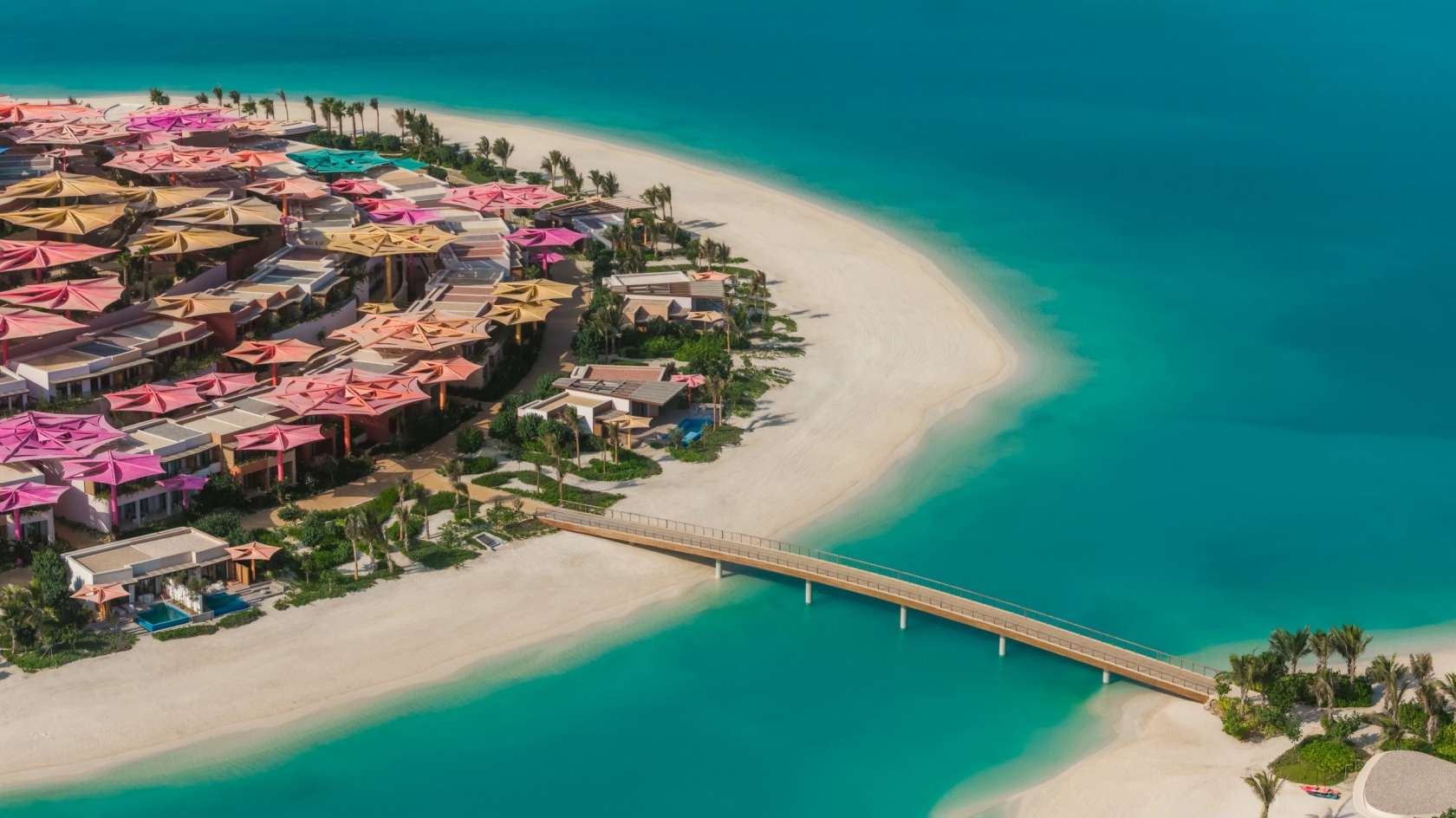
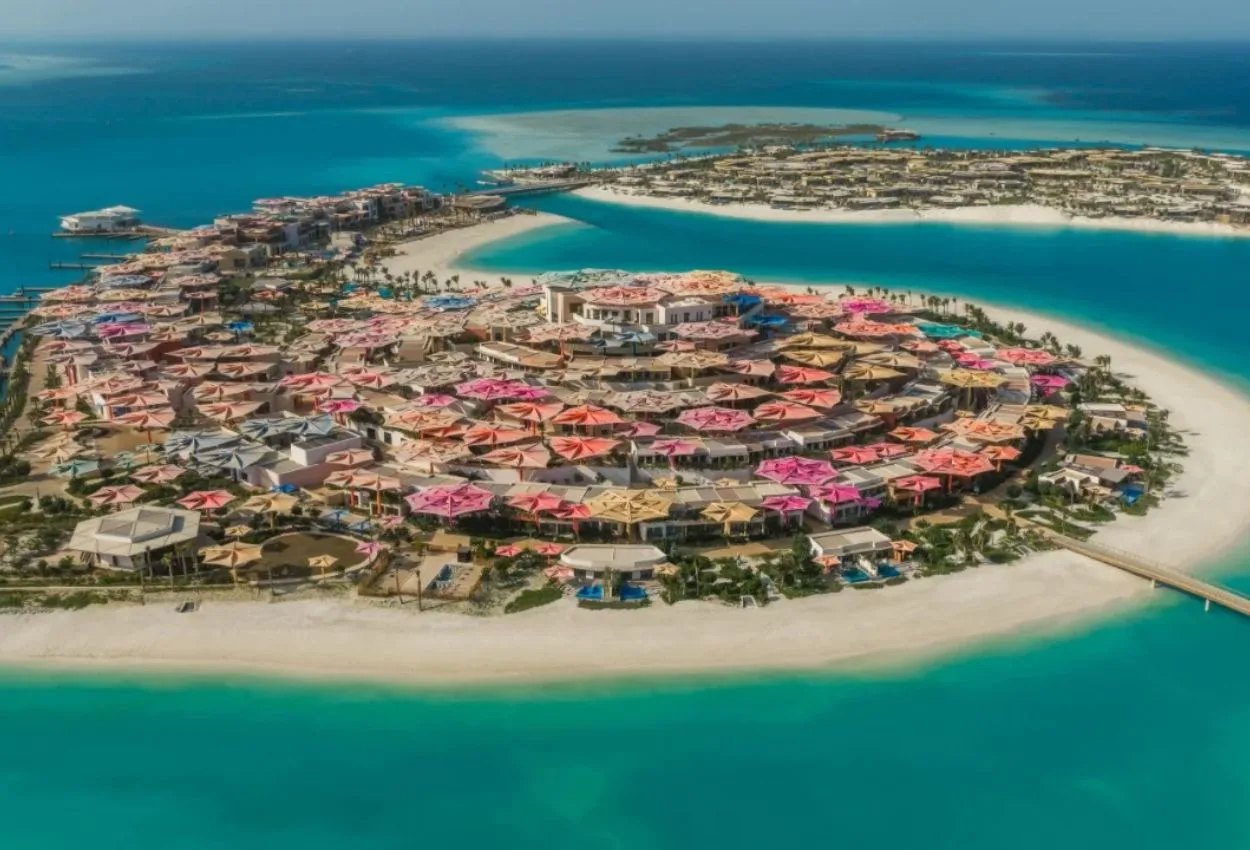
From the air, the newest resort on Shura Island looks like a reef that decided to become a roofline.
Grand Hyatt The Red Sea opened on November 2 on Saudi Arabia’s west coast, and the first thing you notice is the color. Pink, coral, sand and teal canopies spread across the low buildings in place of ordinary roofs, each one shaped after the coral colonies in the water below. Under them sit 430 rooms, suites and villas, nine dining venues and the largest ballroom on the island.
It’s the second Hyatt in The Red Sea destination and the eighth in Saudi Arabia, landing a few months after Miraval opened nearby. I’ve covered plenty of resorts that call themselves destinations. This one anchors an island planned as a single destination, and it shows.
The canopies are the architecture
Shura follows Coral Bloom, the masterplan Foster + Partners drew for the island, and the resort takes its cues straight from that brief. The signature canopies borrow their colors, textures and organic shapes from the Red Sea’s coral reefs, and they’re built using recycled fishing nets, which is the sort of detail I’d normally file under press-release poetry. Here it also happens to be the shade plan, the color palette and the photograph every guest takes on day one.

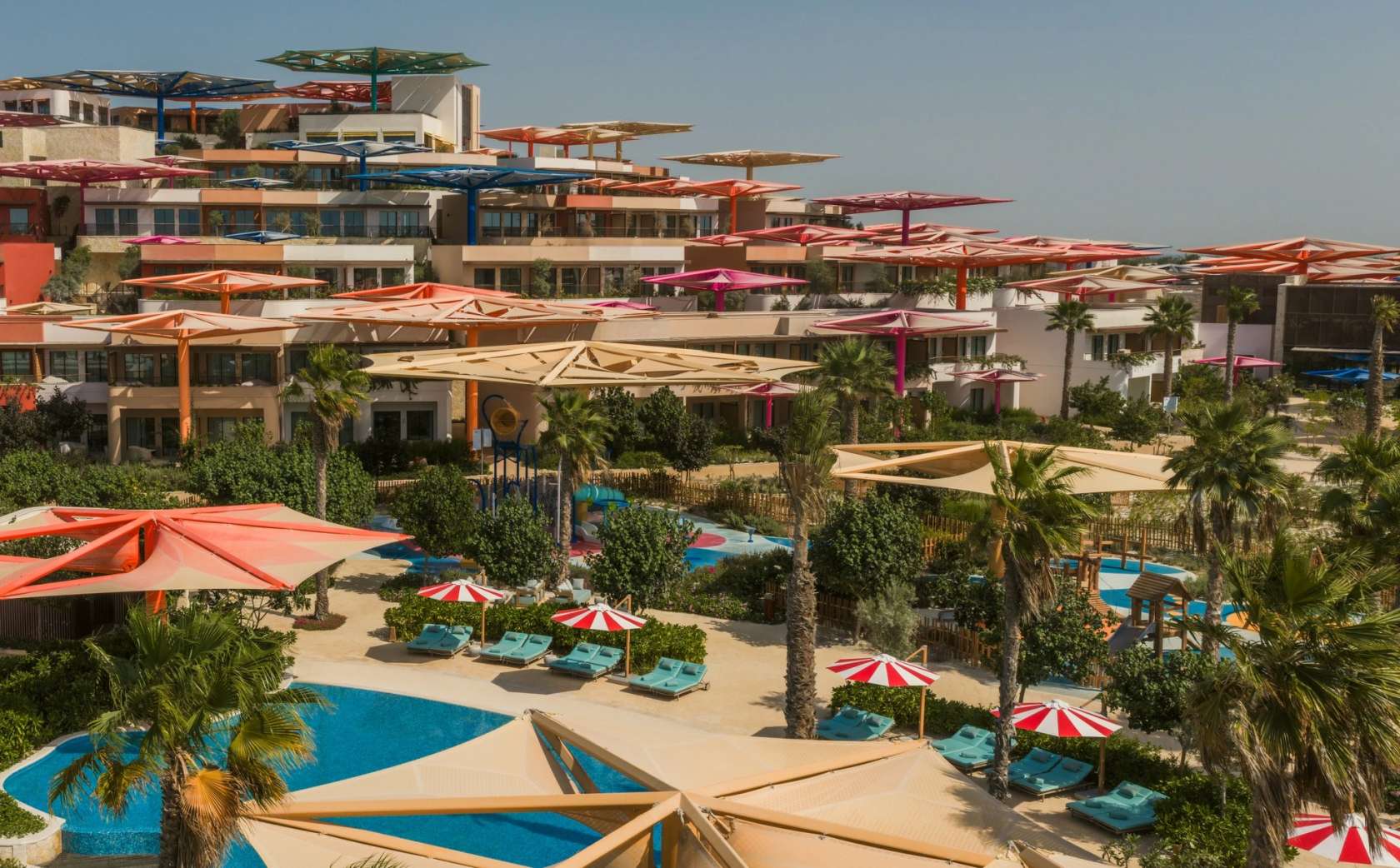
Except the photographs back it up. The canopies throw shade across the walkways and pool decks, and the woven panels scatter light the way shallow water does.
General manager Jean-Francois Durand says his team designed every part of the experience, from the rooms and pools to the nine dining venues, to reflect the place itself. That’s the right order of priorities out here. On an island this exposed, comfort is a design problem before it’s a service one, and the roofline solves it first. Hyatt is betting the island’s social life happens under these roofs, out in the open air, and the bet looks sound.
Inside, the reef turns the volume down
Muza Lab designed the interiors around a concept called The Reef Flower Garden, and the rooms trade the rooflines’ carnival for calm. Layered textures, soft warmth, organic curves. A coral-shaped pendant hangs over the table, a rug runs in tide lines, and the headboard wall ripples like sand under shallow water.

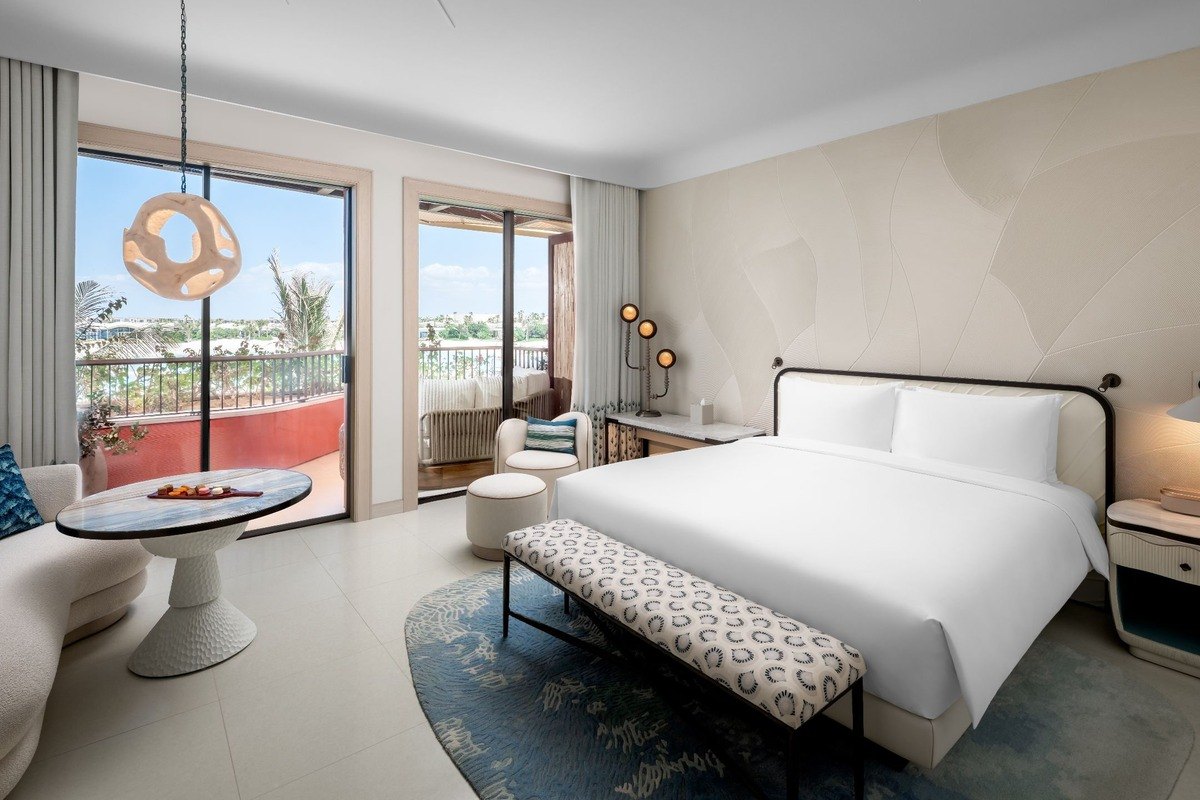
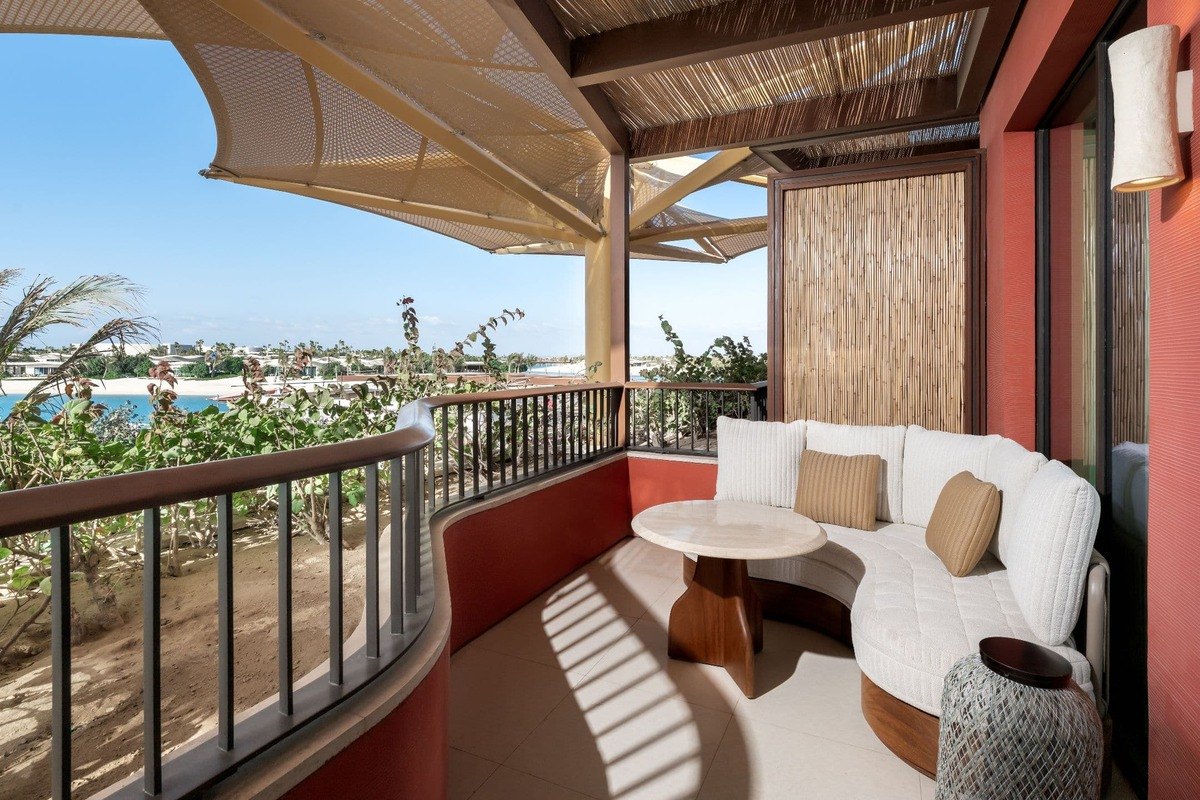
Every room carries a private balcony or terrace facing the sea, the lagoon or the gardens, depending on which side of the curve you’re on. Bathrooms lean spa, minibars are curated, beds face the glass.
Book a terrace room. Morning light on that water is worth the upgrade on its own.
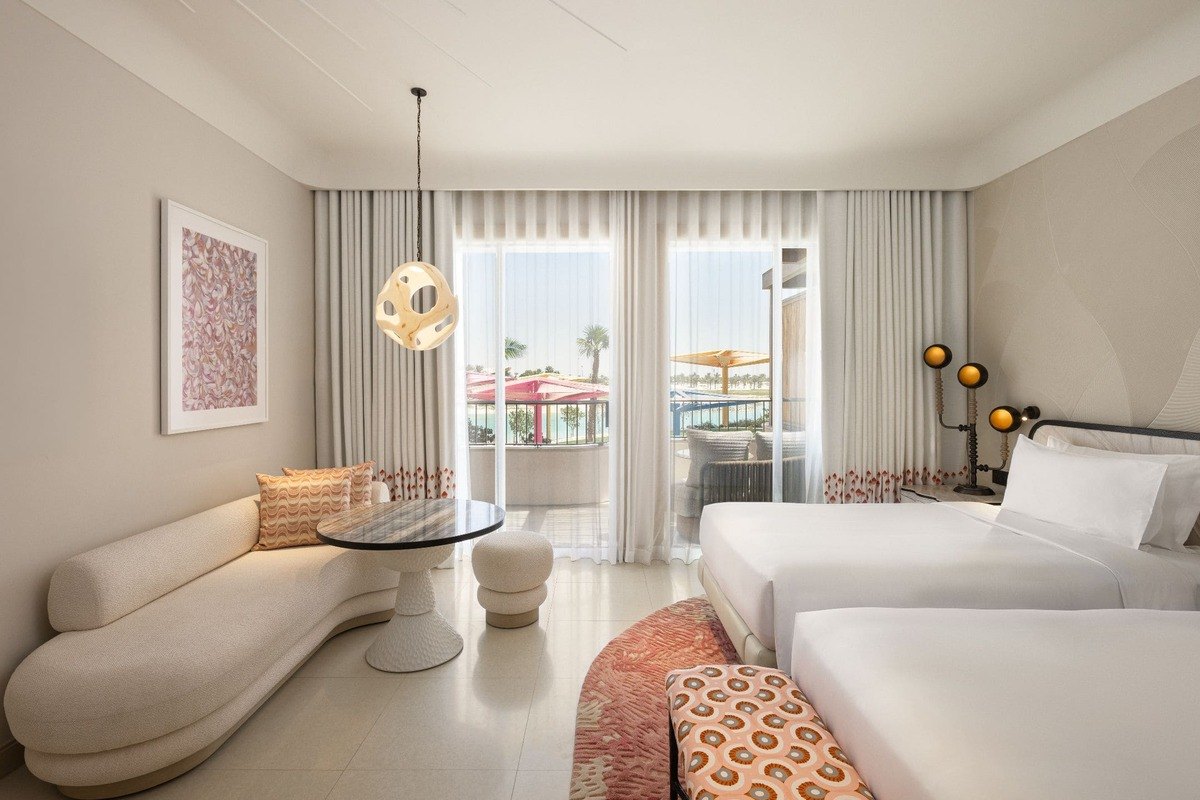
Families get twin layouts in the same palette, warmed up a step, and the ladder climbs from standard rooms to suites with separate living space. At the top sits the Royal Villa. Below it, a run of villas and select rooms carry private pools, for guests who’d rather swim alone. Two kids in the twins, parents out on the terrace, nobody queued for the one sink.
The day moves outside, on purpose
Five pools spread across the property, because one pool at a 430-room resort is a queue with water in it. Drift, Amalfi and Main sit outdoors. An indoor lap pool and a vitality pool wait inside the spa.
The Ethereal Spa runs 8,070 square feet with VOYA products and 12 treatment rooms, ten indoors and two outside, because a massage in sea air beats a massage under air-conditioning every time. Next door the fitness center covers 5,380 square feet, big enough that nobody’s vacation workout needs a reservation or a waiting list. Camp Hyatt keeps the kids busy while all of this happens, which is its own kind of wellness.
Private terraces handle the quiet hours. Curved banquettes, reed screens, canopy shade. The room’s second living room, and in November the better one.
Nine kitchens, and the island’s biggest room
Dinner is where the scale shows. Nine dining venues are planned, led on day one by Embers, a live-fire room for grilled meats and fresh seafood, and by the Drift Pool Bar for the hours between swims. The rest roll out in stages.

Akira Back is bringing Korean BBQ. Janice Wong is bringing 2am:, her dessert bar. Luis Pous is bringing El Ta’koy, his Hawaiian street food concept, and the Amalfi Club, a French bistro called Café Maude, Havana Social and a tandoor grill called Charcoal fill the rest of the board. Seven of the nine aren’t open yet, and Hyatt says so plainly in its own release. The openings run into next season, so the full dining picture is a 2027 story.
Events are the other half of the plan. The Grand Ballroom is the largest on Shura Island, backed by a junior ballroom, five meeting rooms and more than 5,000 square meters of event space in total.
Getting there’s simpler than the map suggests. Red Sea International Airport takes regular flights from Riyadh, Jeddah, Doha, Milan and Dubai, and the destination around the resort now counts 17 resorts and roughly 3,000 rooms spread across 28,000 square kilometers of islands, desert and mountains, all of it running on renewable energy, with a conservation-gain target the developers put at 30% by 2040. Shura is the hub island in the middle of the map.
World of Hyatt members booking the opening rate earn double points on the room and eligible charges. This isn’t a hideaway. It’s the island’s big, colorful center of gravity, and it knows it.
I’d go now, while seven restaurants are still dark and the island’s still quiet. The ballroom crowd is coming. The reef on the roof is already there.