
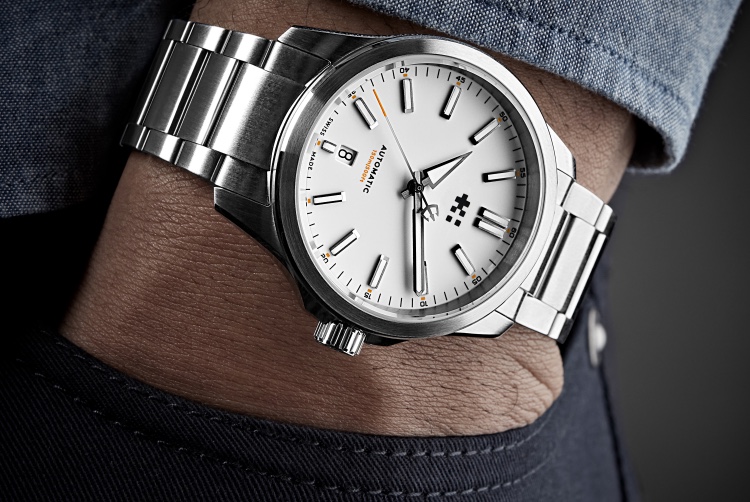
Christopher Ward’s C63 Sealander Automatic is a sports explorer that trusts proportion over noise: a 39 mm steel case, a lacquer dial with the date at 6, and a Swiss automatic you can watch through the back. It sells direct from the maker at $930.
Nothing here shouts. That’s the design brief, and the watch is better for it every day.
Light does the decorating
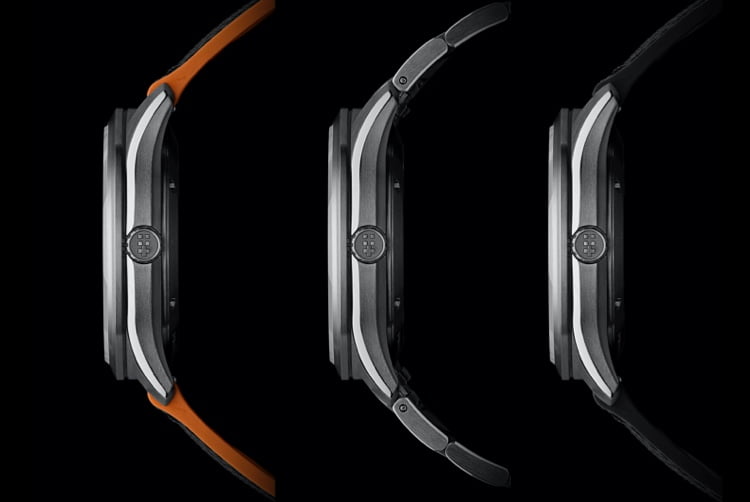
The Light-catcher case is cut from 316L stainless steel with brushed flanks and polished chamfers that trade light as the wrist turns, so the finishing reads in motion rather than in a spec list. Symmetry does the styling here.
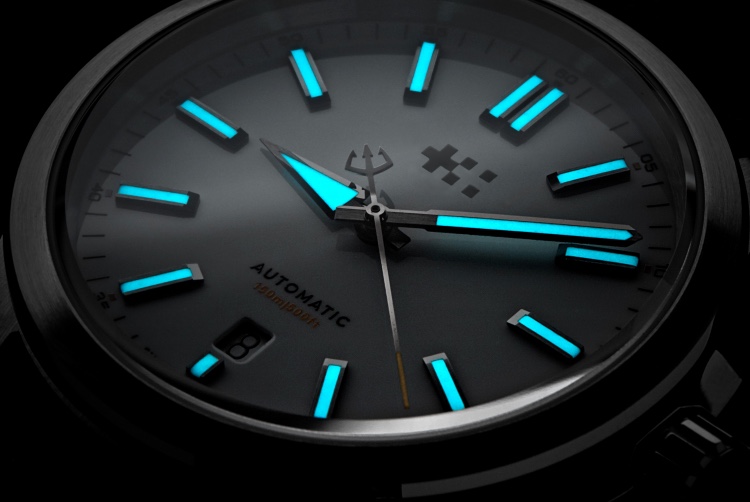
Polished lacquer in black, white or green, indexes filled with Super-LumiNova Grade X1, and the date at 6 balancing the logo up at 12.
A Swiss automatic you can see working
The Sellita SW200-1 runs at 4 Hz with 26 jewels and an anti-shock system for knocks. Its 38-hour power reserve sits behind an exhibition caseback that most brands reserve for watches costing far more.
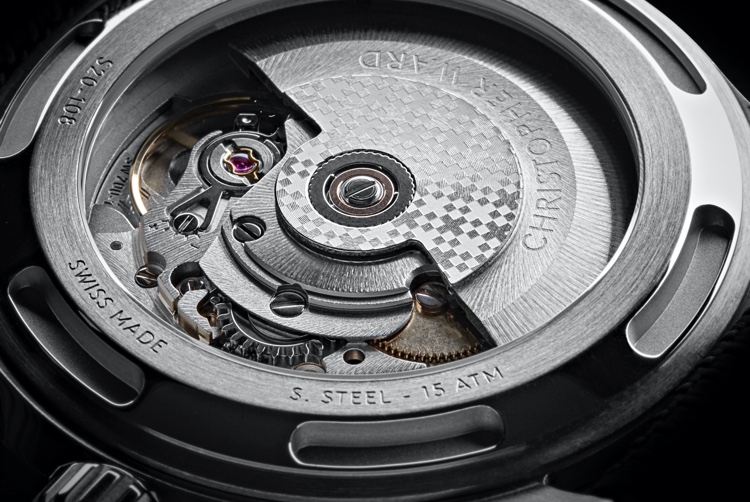
Water resistance runs to 150 m, the straps and bracelets swap on quick-release fittings in seconds without tools, and the whole package stays slim enough to slide under a cuff at the office. The movement is the party trick.
The trade sits in the reserve: 38 hours means a Monday rewind after a weekend off, in exchange for the visible movement.
Balanced at 39 mm
At 39 mm the case wears the way the old sports explorers did, close and unobtrusive, with the hand-set borrowed from the C60 Trident Pro 600 and lume that keeps the dial legible long after dark has fallen. It disappears on the wrist, in the good way.
Buy the Sealander at $930 if you want one Swiss automatic that covers work, water and weekends without a rotation. Skip it if a 38-hour reserve annoys you, and take the Tissot PRX Powermatic 80 instead at $850 on Amazon, which trades the exhibition back for an 80-hour reserve and a very different, integrated-bracelet look.