
Alfa Romeo Cuorerosso: a red heart aimed at the next Quadrifoglio
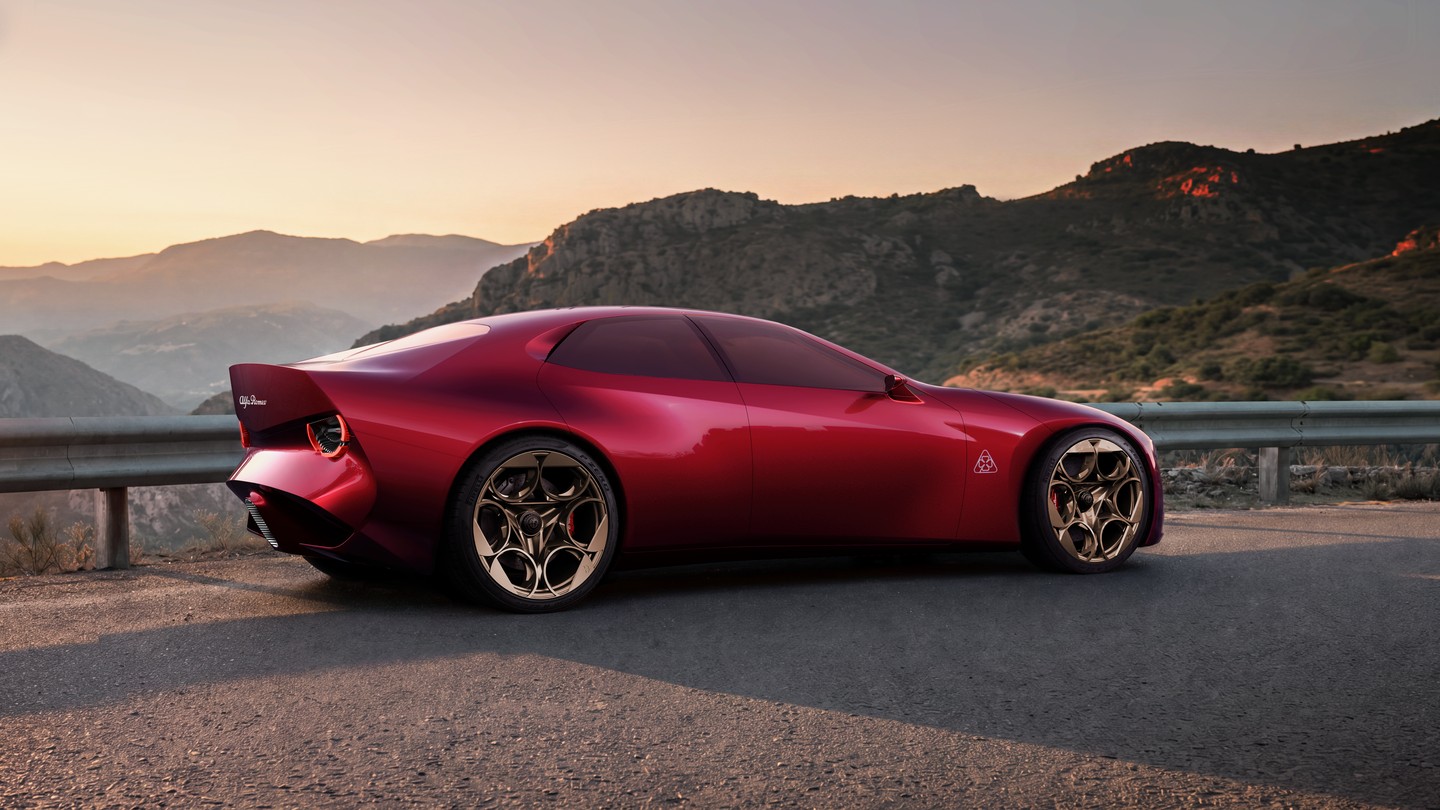
Cuorerosso arrives as one unbroken shape. No creases chase decoration. No panel begs for attention on its own.
Alfa Romeo built this 2+2 coupe as a statement, not a preview. It’s neither a production model in disguise nor a styling exercise.
The name joins two ideas. Cuore is heart. Rosso is red.

That pairing runs through every surface and every control inside. Design leads here. Driving gives the design its reason. Then design takes the last word.

Necessary Beauty, cut down to the sculpture
Alfa calls the philosophy Bellezza Necessaria. Necessary Beauty, in English. Strip away the superfluous, and leave only the essential standing.
Centro Stile worked that way in practice. Designers spent a week or two on sketches, then moved straight to three-dimensional modeling.
They treated the car as a single solid block, with wheels and glazing coming later. What emerged looks poured rather than assembled, its surfaces merging like liquid metal from nose to tail.
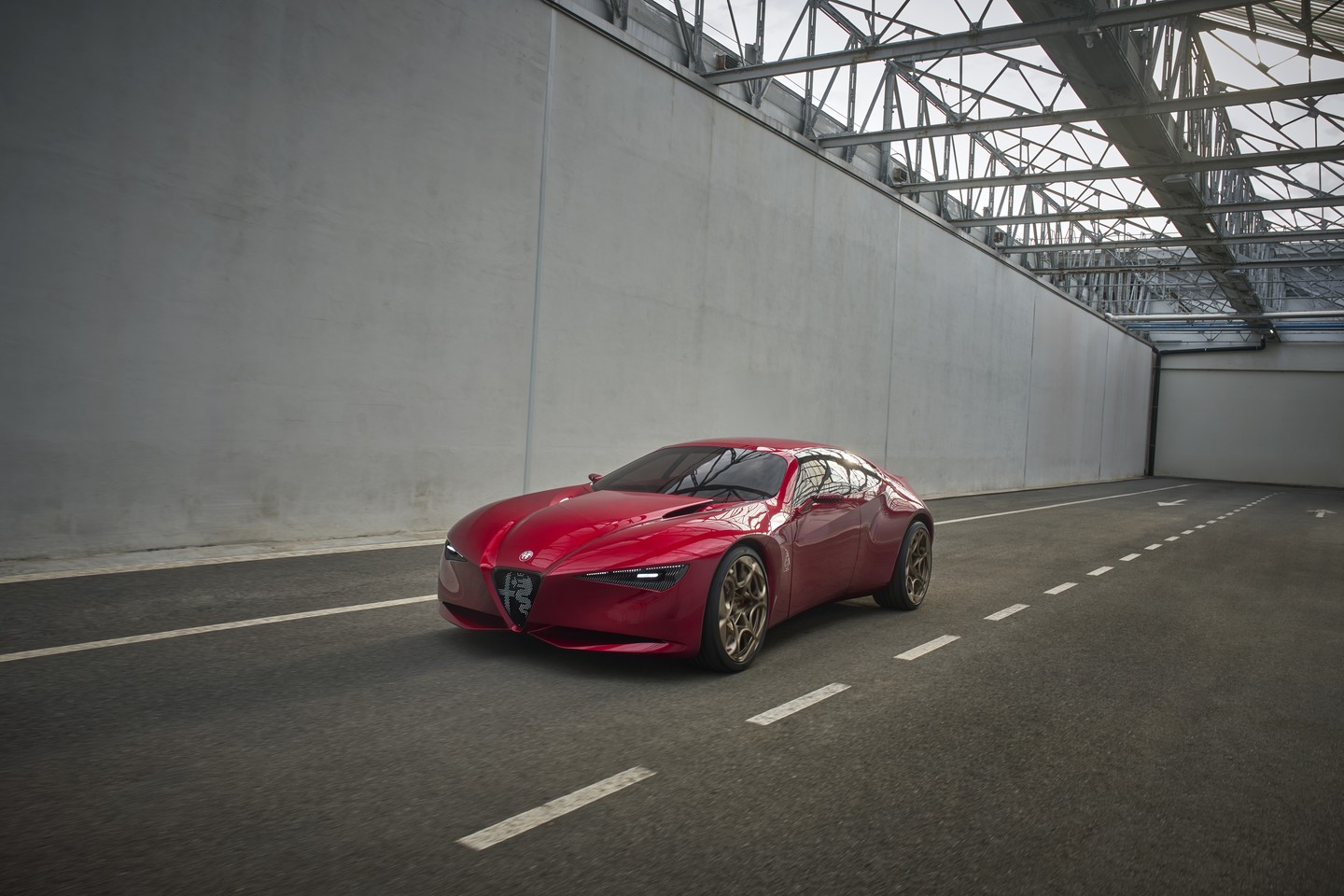
Proportions do the heavy lifting. Cuorerosso measures 4,700 mm long, 1,980 mm wide, and just 1,331 mm high.
A 2,930 mm wheelbase stretches underneath, and weight sits at 1,750 kg. Grand tourer elegance and supercar stance share one silhouette, kept tense by short overhangs.

A tail cut short on purpose
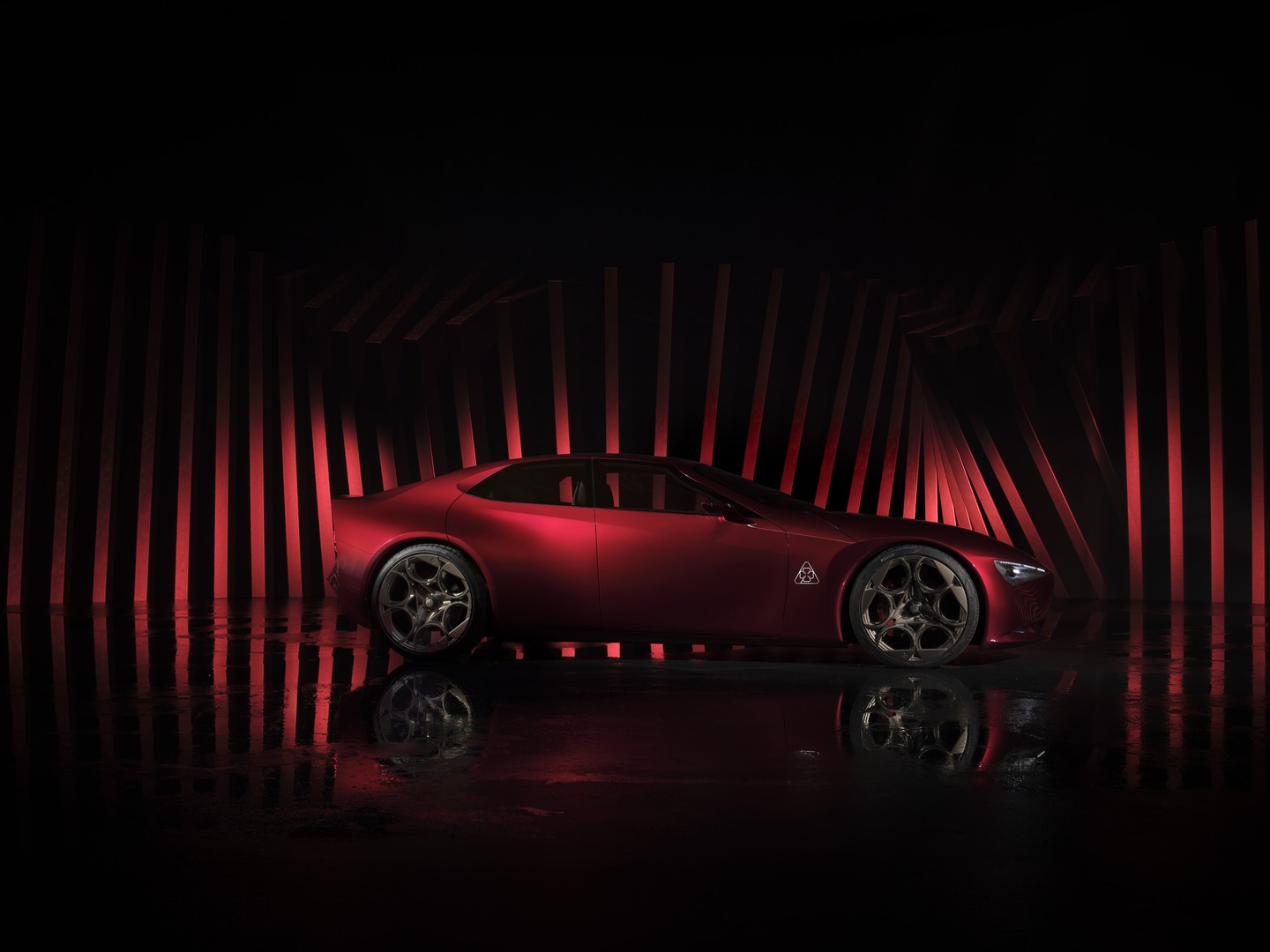
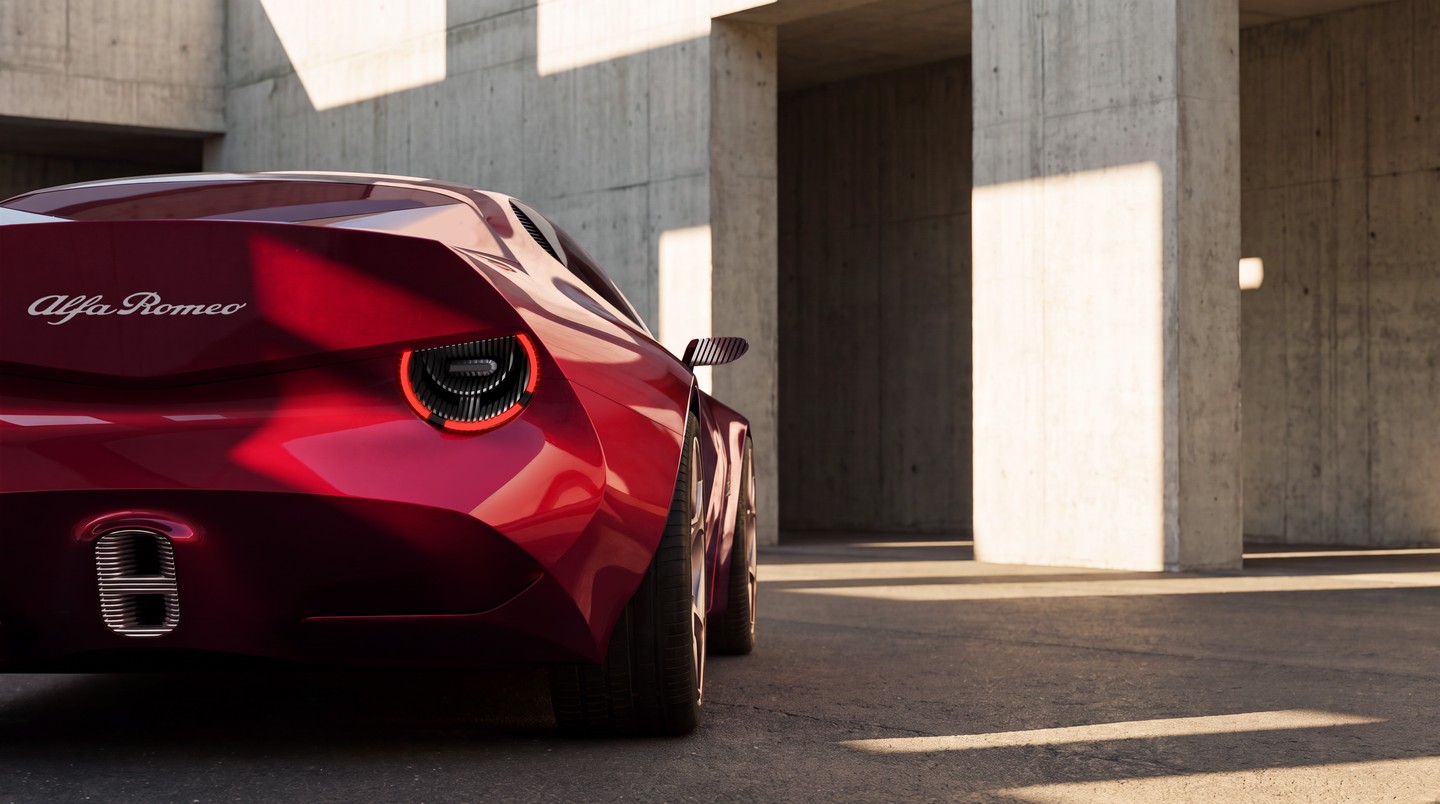
One wedge line crosses the flank. It starts up front and gathers speed toward the rear. Then it stops, hard.
The stop has a name. Coda Tronca means truncated tail, a code from Alfa racing history and its long aerodynamic work.
Cutting the tail short helps the air let go cleanly. With the pure body shape and a low diffuser built into the bodywork, drag lands at 0.28.
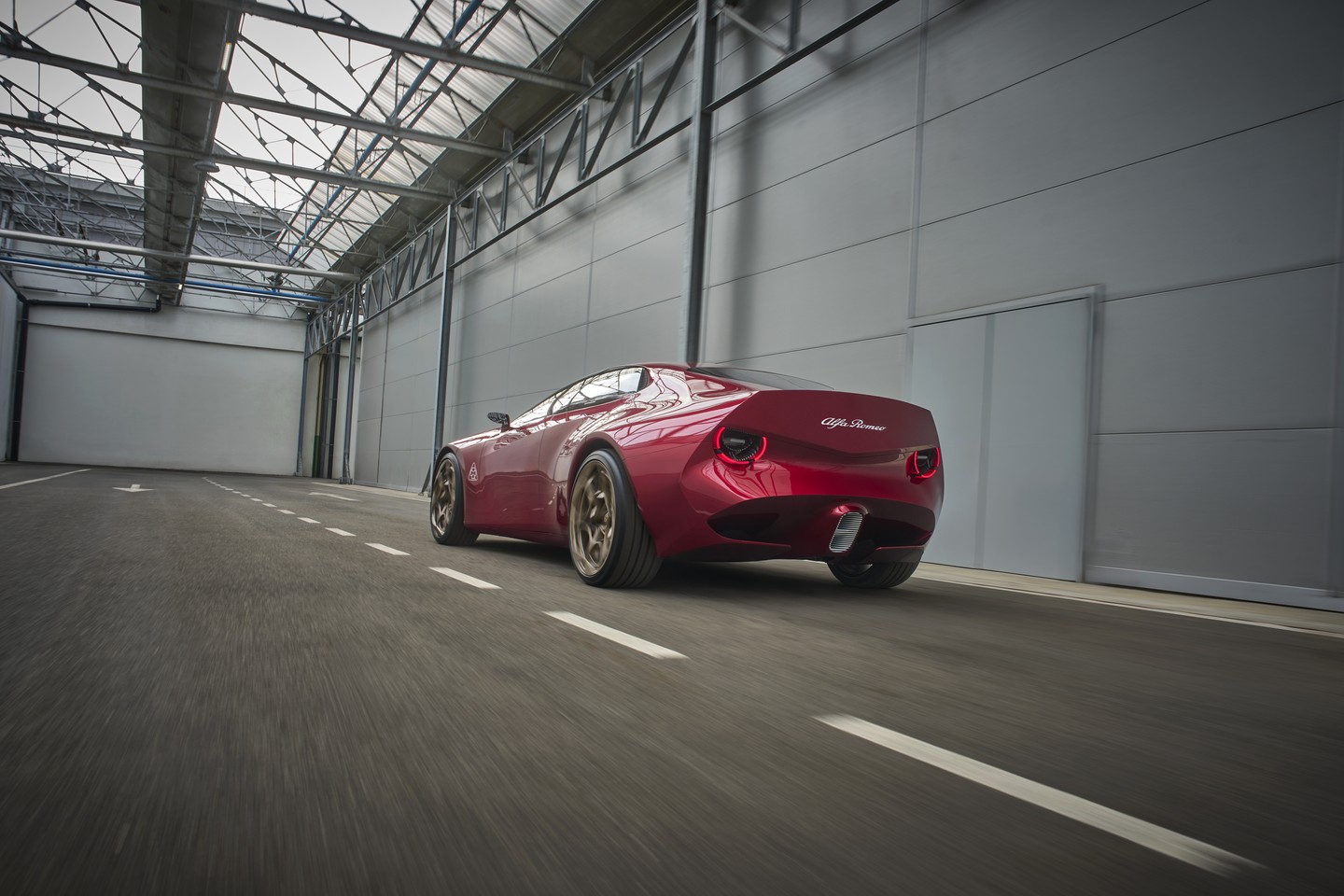
Two circular lights sit inside that cut. A rear window shaped like the Scudetto shield settles into the body volume above them.

Up front, the Trilobo face returns in new form. The central Scudetto rises straight from the sculpted volume and runs along the hood.

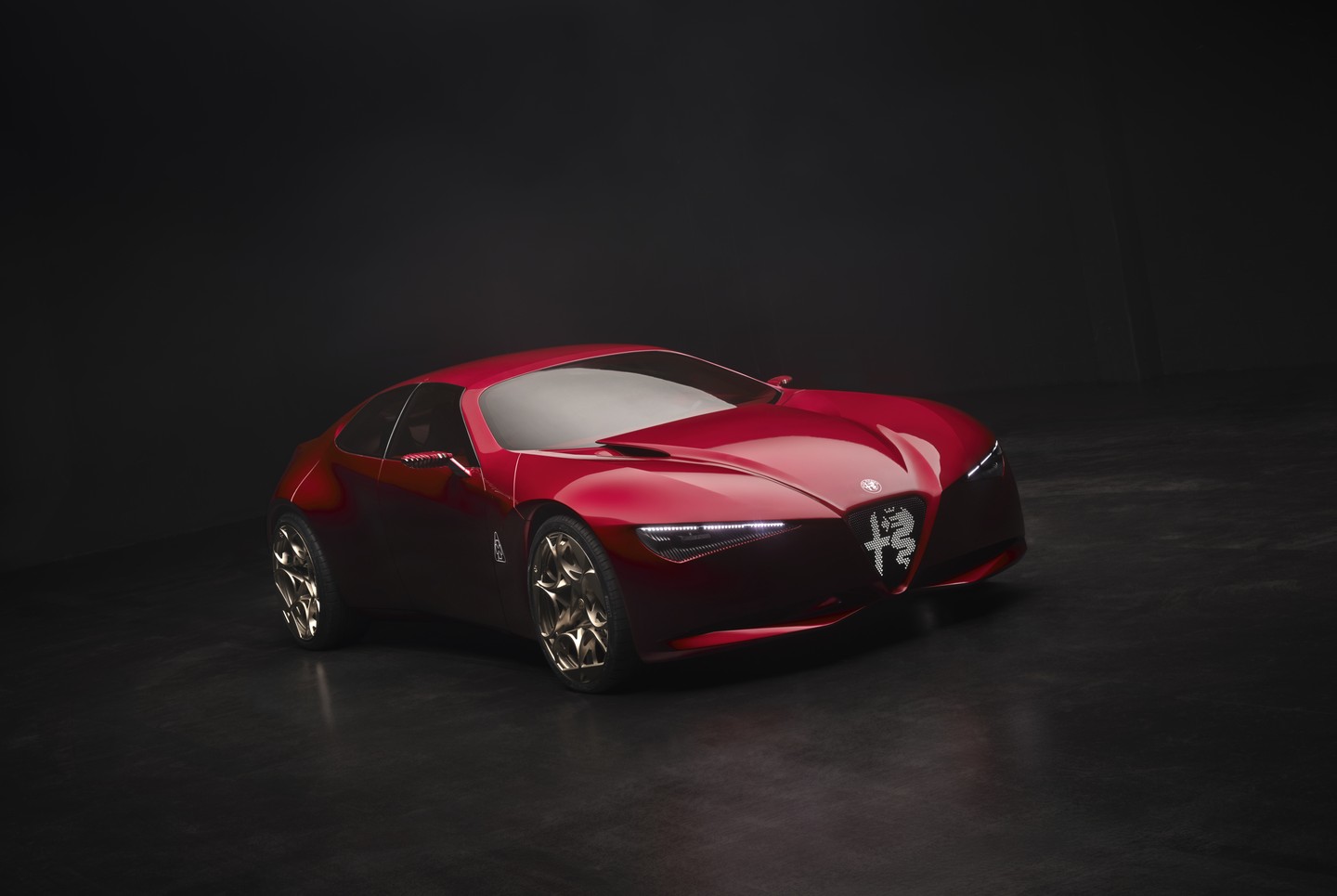
Backlit triangular elements fill the grille, and their light signature pulses like a heartbeat. Door handles disappear for a touch control on the roof, and the glass sits fully flush.
Forged wheels reinterpret the classic telephone dial, six circular elements across three spokes in a 2+2+2 scheme, with Scudetto-shaped grooves.
The cabin folds around the driver
Open the rear-hinged doors and the sculpture opens with them. Four individual seats wait inside, wrapped by a lengthened console and inward-pulling door panels.
The dashboard takes its architecture from the 1967 33 Stradale and its modern counterpart. One thin horizontal line runs across the cabin and continues into the doors.
In front of the driver sits the Cannocchiale Vivente, two instrument telescopes animated by physical movement rather than a menu.

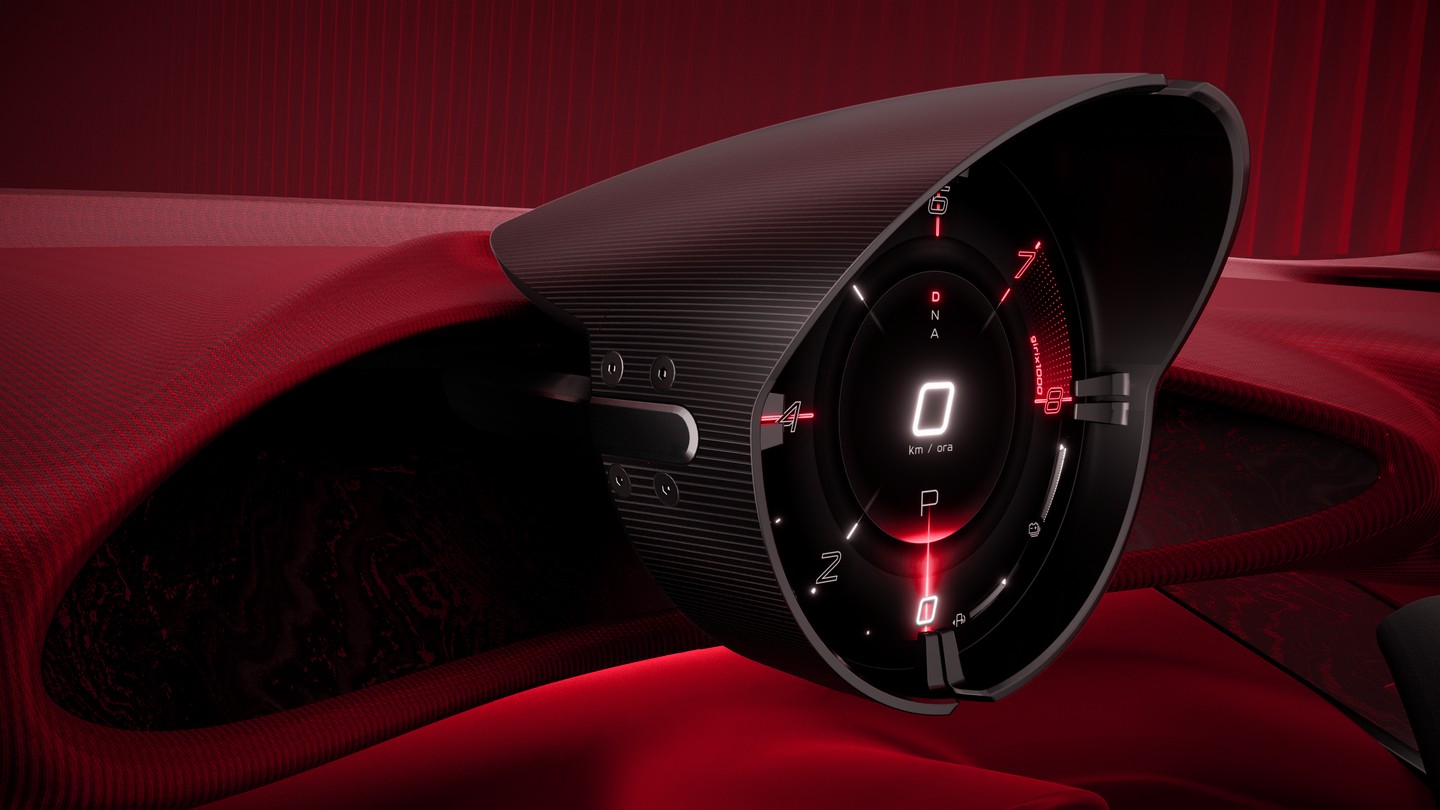
In Immersivo, the two elements stay separate. In Concentrato, they merge into a single unit, like the stripped instrumentation in old racing cars.
As engagement rises, information falls away. Only the essentials remain. That restraint is the point.
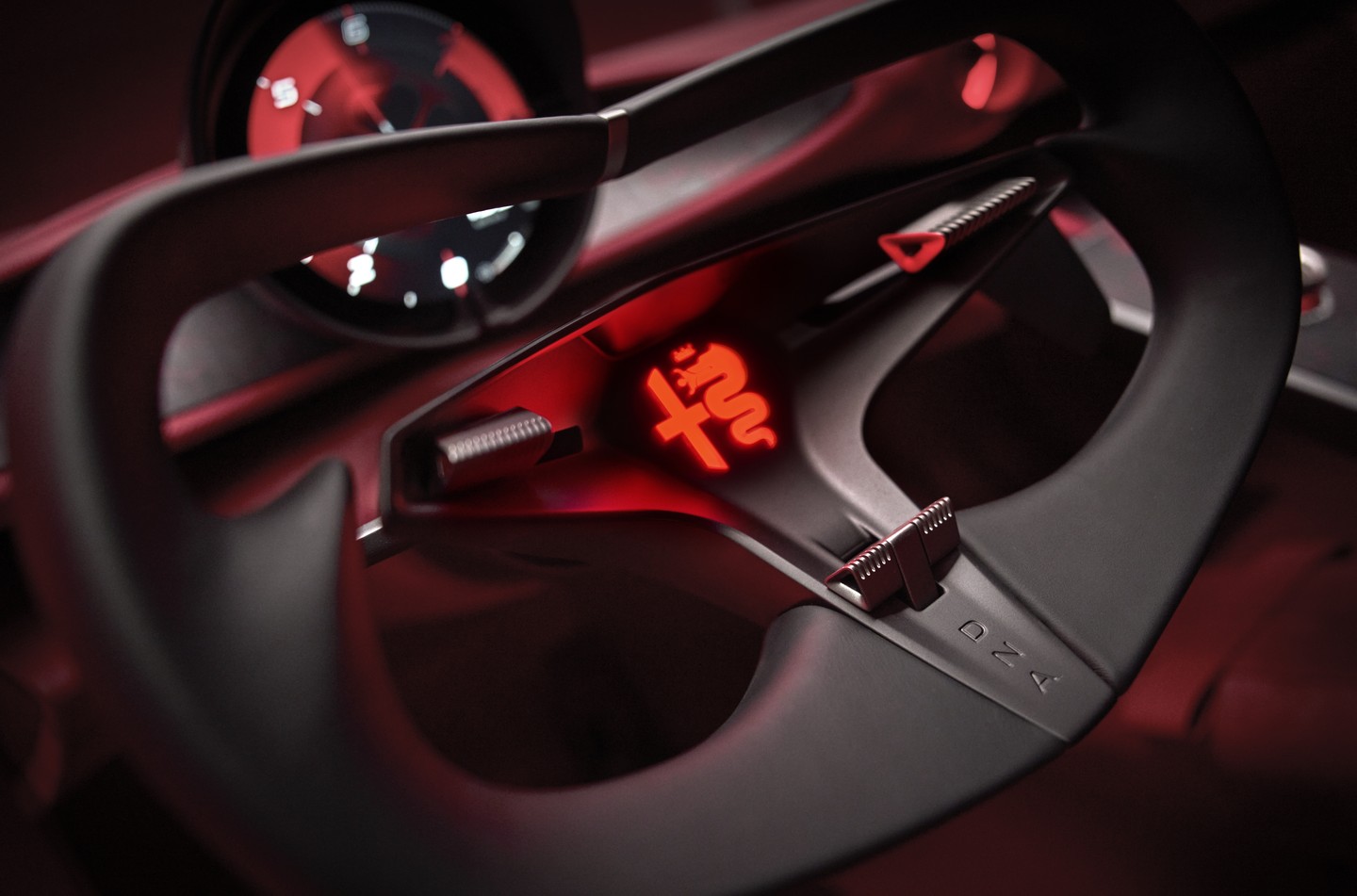
Steering runs by wire, though the contact stays physical. Alfa calls the three-spoke wheel Con-tatto Volante, with haptic and acoustic feedback in its controls.

On the tunnel, the Magma Display mixes a touch surface, a rotary dial, and toggles. Screens stay discreet until needed.
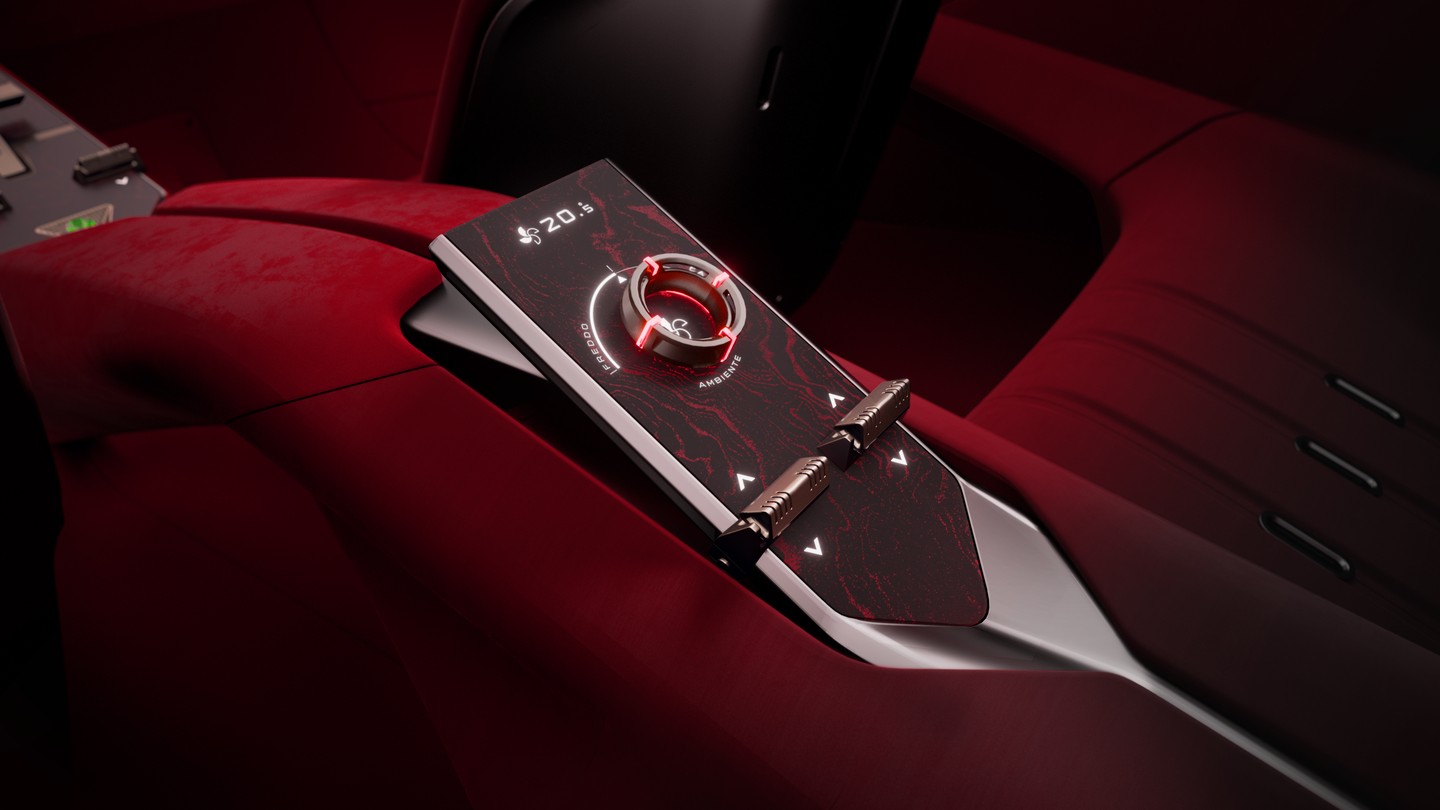
A hybrid V6, not an electric only answer
Three driving experiences shape the car. Cruise, Sport, and Quadrifoglio raise engagement step by step, with cabin lighting and information changing at each step.
Under the sculpture, Alfa imagines performance one specific way. A 2.9-liter V6 full-hybrid pairs with Q4 all-wheel drive, a torque converter, and a carbon fiber driveshaft.
On alfaromeo.com, Alfa puts numbers to that idea as intent, not as a finished spec. A twin-turbo V6 of around 565 hp works with lithium-ion batteries delivering around 350 kW. Alfa presents both figures as concept intent, not a showroom spec sheet.
Air suspension and Brembo carbon-ceramic brakes handle ride and stopping. Past this one car, Alfa plans a multi-energy lineup covering full-electric, plug-in hybrid, mild hybrid, and full-hybrid models.
What Quadrifoglio hears in this
That multi-energy range runs up to 4.7 meters long. Alfa says it can accommodate Quadrifoglio versions. This coupe shows how.
Performance doesn’t have to go silent to gain electric assist. A hybrid V6 keeps combustion, response, and sound inside the flagship formula.
Though the architecture stays flexible, the priority doesn’t move. Santo Ficili, who leads Alfa Romeo and Maserati, puts emotion ahead of the technical solution chosen. The Quadrifoglio badge survives by adapting, not by freezing.
Back to the red
Liquid Ink Red finishes the argument. A fine aluminum base under a colored transparent layer gives the color real depth, vibrant in bright light and darkening toward black from another angle. It looks lit from inside.
Inside, red builds toward the driver and cools toward the rear seats. Passion, in this cabin, has a gradient.
Materials follow the same discipline. Poltrona Frau nubuck goes only where occupants touch it, so quality concentrates where hands land.
Regenerated leather carries 60 percent post-industrial waste from premium upholstery work, and a light Luna Rossa sailing fabric covers the dashboard.
Headrests use a leather process first tried on the 33 Stradale. A removable bag builds into the passenger side of the dashboard, its straps doubling as its handle.
Every component gets one precise job. That discipline is the design language Alfa says will shape its cars from 2028.
Cuorerosso won’t sit in a showroom as drawn, and Alfa is clear on that. Its world premiere came at the 2026 Paris Motor Show. Freed from a launch date, the coupe can do its real work.
It tells Alfisti what stays. Beauty with a reason. A tail cut for air. Dials that fold down to one. And a hybrid V6 keeping the heart audible.