
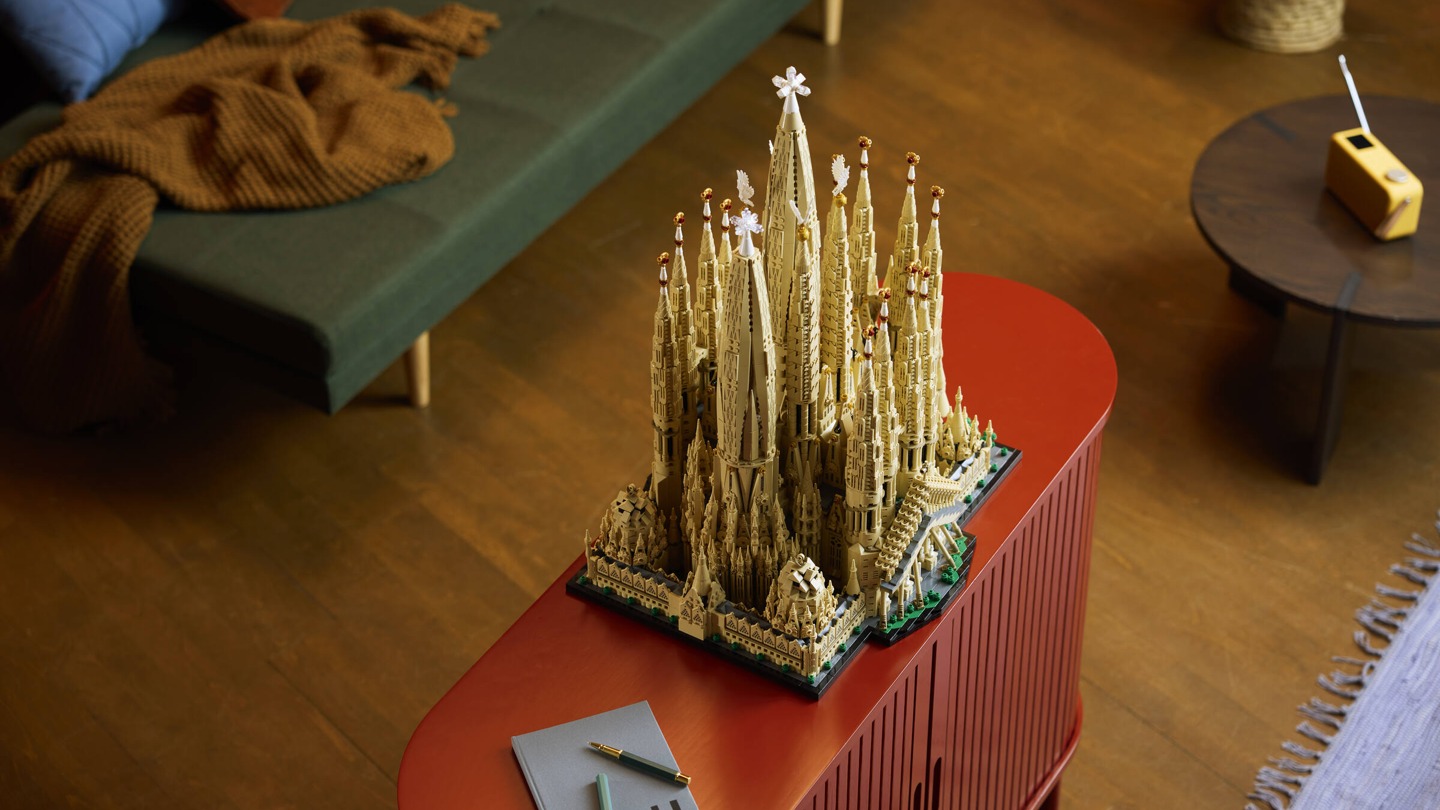
Barcelona has watched the same building rise since 1882, through scaffolding, cranes, wars, and generations of stonemasons, and the Sagrada Família still has not topped out. Now it fits on a cabinet. LEGO Architecture set 21065 rebuilds Antoni Gaudí’s basilica at 12,060 pieces, the largest count the company has ever put in one box, and the finished model stands over two feet tall.
This is a design object first and a toy a distant second.
The release lands in the centenary year of Gaudí’s passing, and LEGO timed the set to that anniversary. Designer Rok Žgalin Kobe described an immense responsibility to do justice to the building, honoring Gaudí’s vision while translating a monument that has been evolving for more than a century into a build a person can actually complete. The ambition of the original survives the shrinking. So does its complexity, which arrives bag after bag after bag.
A build that follows a century of construction
Most big sets start at the front door and work backwards. This one starts where Barcelona started. The build opens with the Apse and its Crypt, the oldest ground on the site, then moves to the Nativity façade before crossing to the Passion façade, exactly the order the real basilica grew in. It is a slow opening, deliberately so, and it teaches the building before it shows off the building.

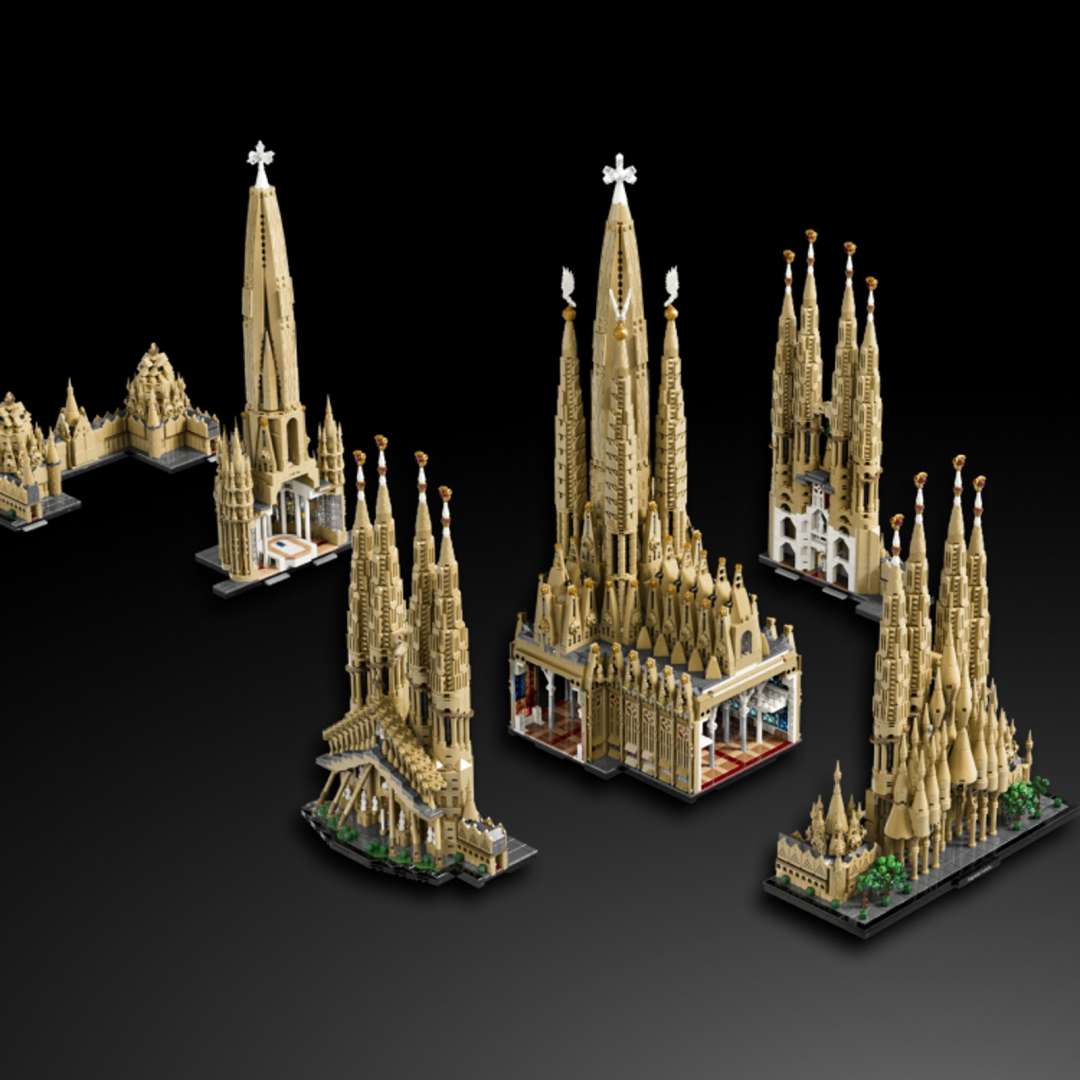
That sequencing changes how the model feels as it grows. Early sections sit low and dense, all foundation and crypt detail. Height arrives later, the way it did on the Eixample skyline, where the towers climbed decades after the first stones. Builders who know the real church will recognize the chronology under their fingers. Builders who do not get a history lesson disguised as a hobby, one subassembly at a time, until the skyline in the room starts to match the skyline in photographs of Barcelona.
The sections join into one base, with an elegant nameplate finishing the plinth.
Two façades with two very different tempers
Gaudí finished only one part of this church himself, the Nativity façade, and LEGO gives it the full treatment: dense, organic, crowded with sculpted detail, towers rising like something grown rather than built. Turn the model around and the mood drops twenty degrees.
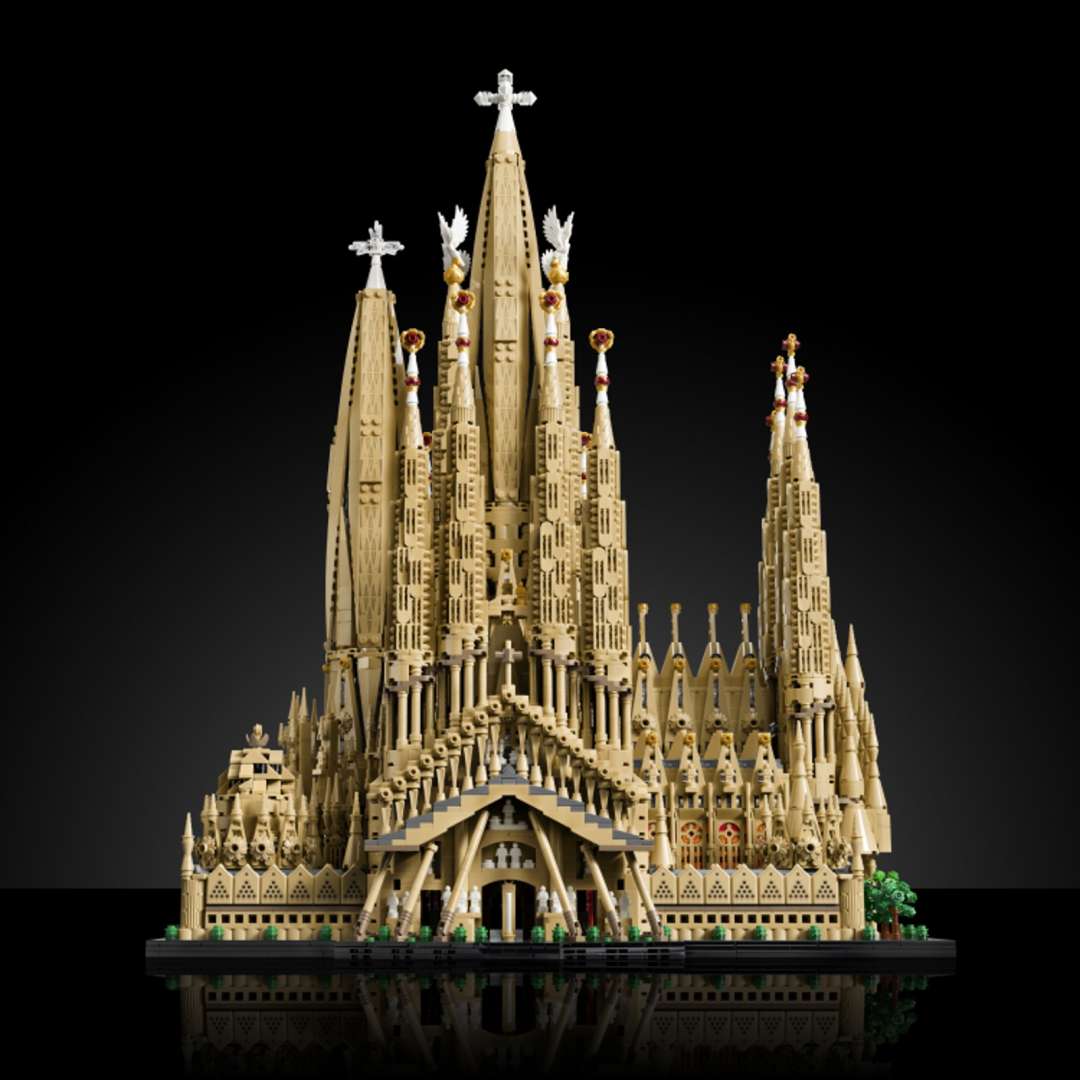
The Passion façade on the opposite face is stark, angular, skeletal. Where the Nativity side overflows, this side withholds. Holding both tempers in one model, in one brick palette of warm tan, is the design flex of the whole set.
Look closer at the towers and the geometry gets stranger, in a good way. Gaudí worked with curved, ruled forms, columns that lean and branch, surfaces that twist as they climb, and brick is a stubbornly straight medium for that language. Kobe’s team answers with stacked angles and tiny offsets, thousands of small compromises that add up to silhouettes Barcelona residents will spot across a room. The white crosses and gold and red finials topping the spires carry the only bright punctuation on the exterior, and against the tan they read like jewelry. Small pieces. Huge effect on the skyline.
The light inside is built in color
Open the model up and the interior steals the show. Branching columns rise through the nave like a stone forest, splitting as they climb to carry the ceiling, a direct echo of Gaudí’s tree-like structure inside the real basilica.

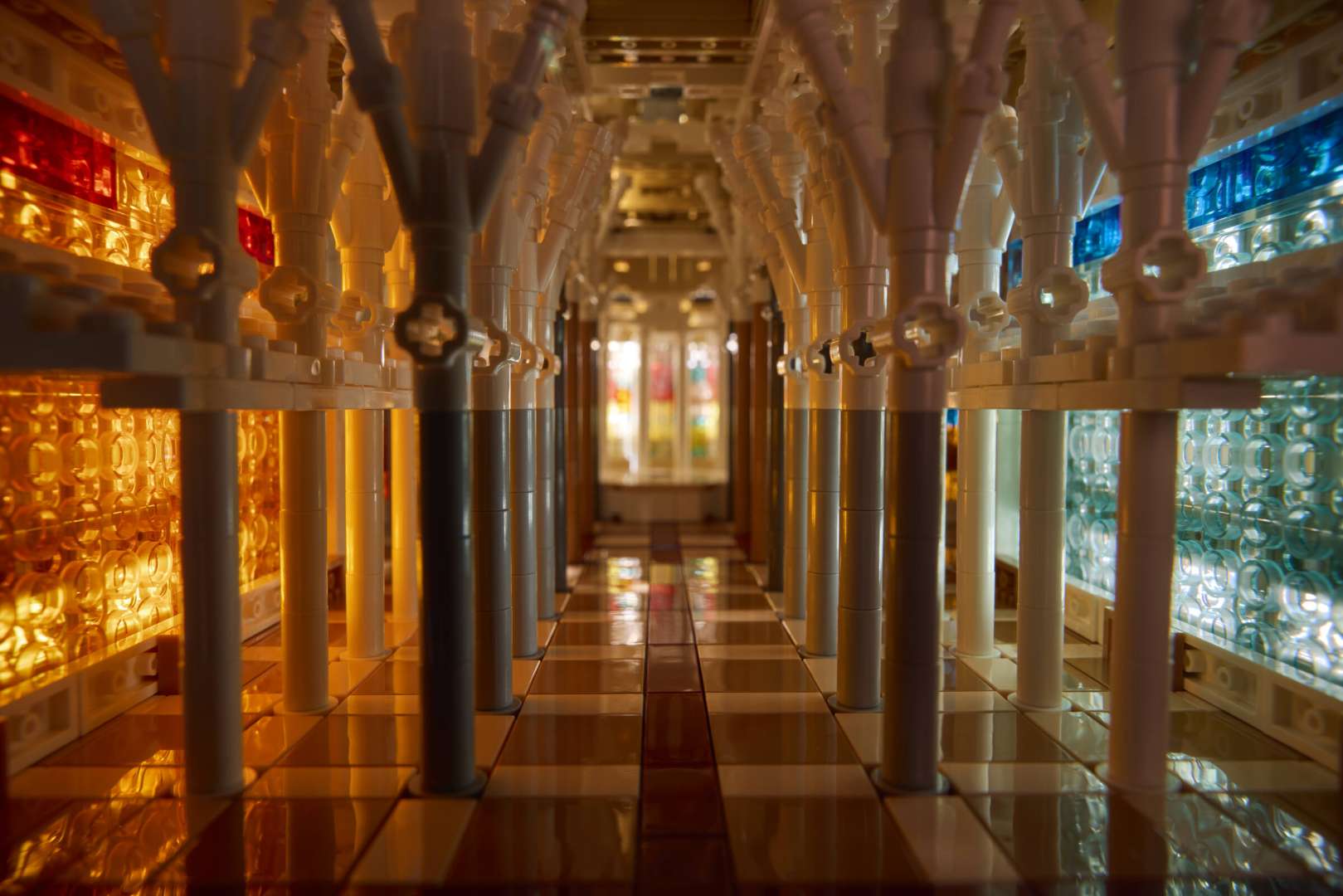
The windows carry a stained glass effect, and the LEGO Group newsroom notes it was designed to echo the way light moves through the real building. In the model that means warm amber and red glowing on one side, cool blue and teal answering on the other, with the nave floor reflecting both. Photographs of the interior look less like a toy and more like a dollhouse cathedral at golden hour.
It is the detail I keep coming back to, the one that separates this build from every skyline model on the shelf. Scale models usually spend everything on the silhouette and starve the inside, leaving a hollow shell behind the façade. This one rewards anyone who peers in, and the reward is color, arranged the way Gaudí arranged it, as architecture rather than decoration, light treated as a building material in its own right.
Six towers, then a finish line the real church has not reached
After the façades come the naves and the Western Sacristy. Then the build climbs: six towers, the Eastern Sacristy, and finally the Glory façade, the largest of the three fronts and the one Barcelona is still working toward. Finish this set and the basilica on your shelf is complete in a way the basilica in Spain is not, yet.
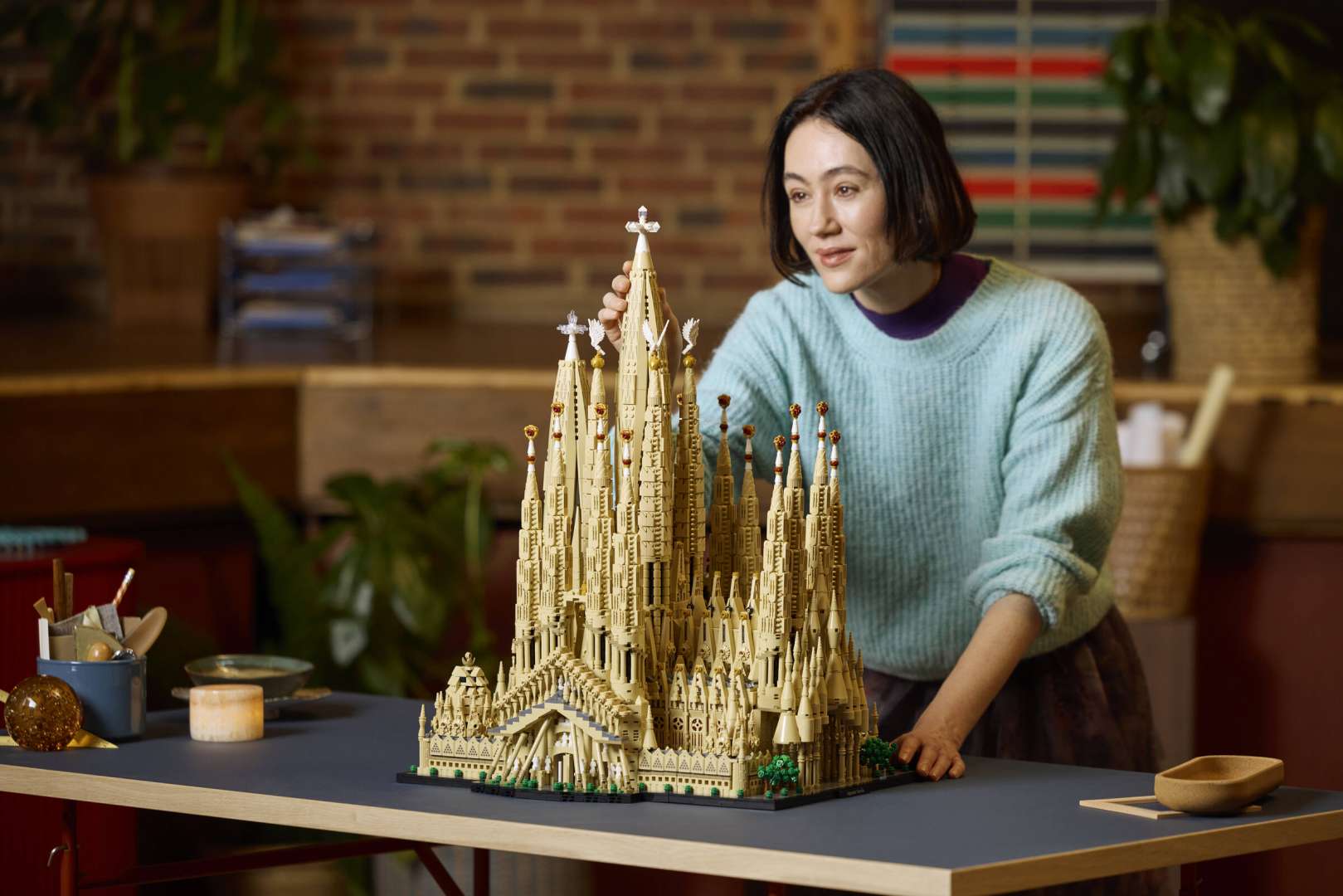
Complete, it measures over 24 inches high, 18.5 inches wide, and 15 inches deep, with the footprint of a small side table. Clear the shelf first. Seriously.
The LEGO Builder app carries the instructions in 3D, with zoom, rotation, and progress tracking across all 12,060 pieces, which helps when a build stretches across weeks of evenings. At $799.99 for an 18-plus Architecture set, nobody buys this on impulse, and that feels right for the subject. Gaudí knew he would never see his church finished and built for the people who came after him. A model that takes a season of evenings, then stands finished in the corner growing more familiar every year, understands the assignment better than most licensed plastic ever will.