

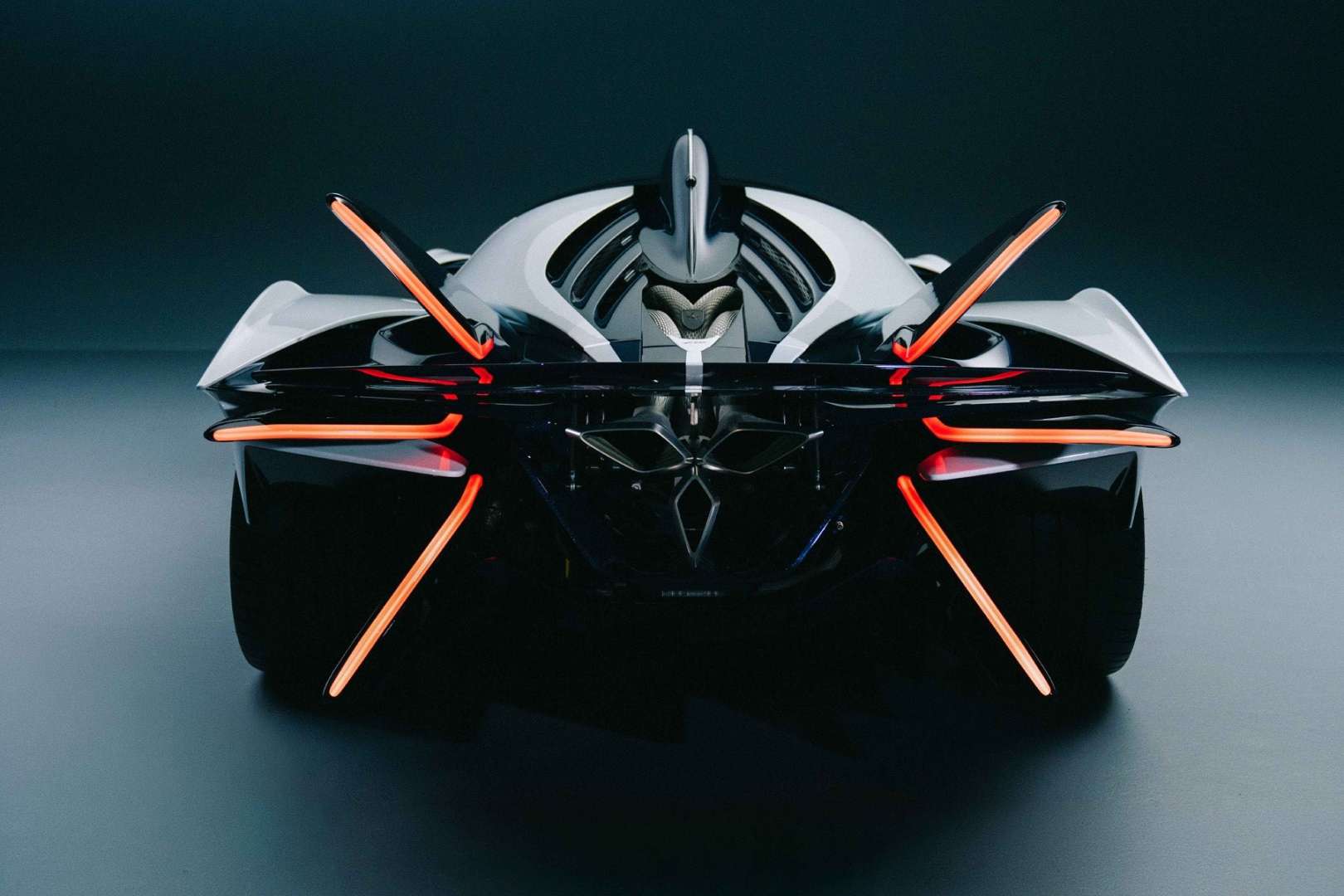
Ten Apollo EVOs will exist, and each one is a private commission, so the first finished car had to state its brief before it turned a wheel in public. Caribbean Dragon states it in paint: pearl white laid over deep ocean blue, a beach-and-water idea wrapped around a German track car that will never carry a road plate.
It succeeds the Intensa Emozione, runs on circuits only, and answers to nobody’s commute.
White sand in front, deep water behind
Apollo CEO Niko Konta ties the name to contrast, brilliant white for the sand and deep blue for the water off a Caribbean beach. The Pearl White paint carries a Diamond Dust finish that throws a crystalline sparkle in sunlight. Blue carbon fiber and Ocean Blue paint with a Blue Diamond finish hold the deep end of the car.
The split reaches the hardware: forged wheels wear pearl white at the front with matching calipers, then turn blue diamond at the rear, calipers included.
None of it is a wrap. The body is more than 75 separate carbon fiber panels, each painted and finished by hand, eight layers deep, and Apollo counts the paintwork alone at more than 1,000 hours.


The cabin keeps the same two colors
Behind the dihedral doors, the argument continues in blue carbon fiber, which runs across the cockpit in place of the usual black weave, with Ocean Blue leather trimming the cabin.
The bucket seats mix Bright White and Ocean Blue leather with blue contrast stitching, embroidered Apollo logos on the headrests and hand-trimmed patterns across the cushions and backrests, and even the steering wheel hardware is solid-milled aluminum with blue carbon accents.

A V12 with nothing helping it
Behind the cabin sits a naturally aspirated 6.3-liter V12 producing 800 hp and 564 lb-ft of torque, paired with a rigid six-speed sequential transmission. There is no turbocharger waiting to fill a gap and no hybrid system adding its weight, because Apollo built the EVO to stay free of what it calls overengineered distractions.
Apollo quotes 0 to 62 mph in 2.7 seconds and a 208 mph top speed. Stopping runs through carbon-ceramic brakes. The forged aluminum wheels measure 20 inches at the front and 21 at the rear, wrapped in Michelin Pilot Sport Cup 2 tires.
The carbon monocoque weighs 364 pounds, 15 percent stiffer and 10 percent lighter than the Intensa Emozione tub.
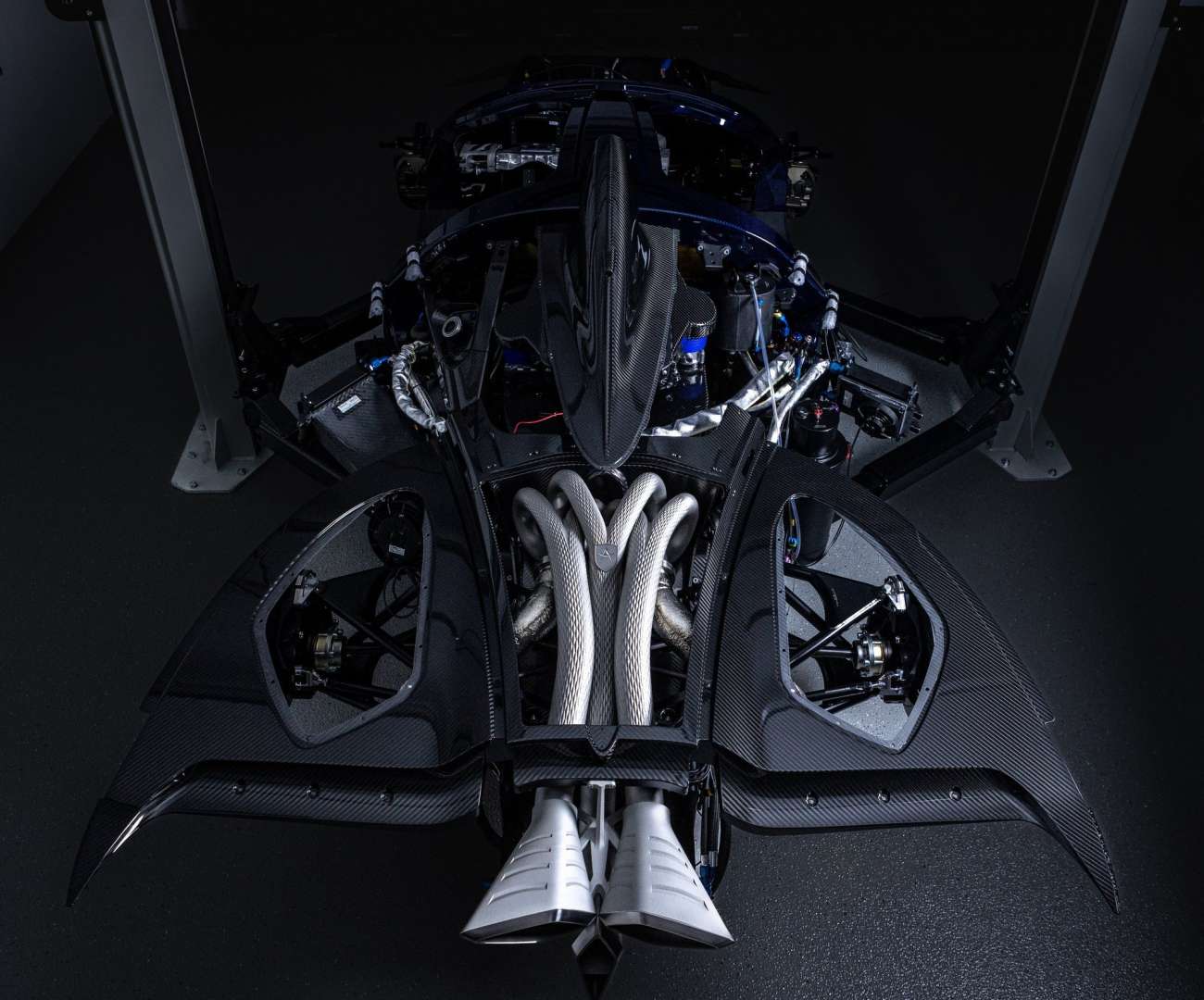
The exhaust is the hardware Apollo named Dragon Skin, 3D-printed in natural titanium with no welds. Apollo built it for strength-to-weight, temperature resistance and tight packaging, and the metal carries a scale texture that suits the car’s name. Heat then edits the finish: as the titanium cooks through sessions it takes on deeper blue hues, so the rear of the car darkens toward the ocean end of its own palette the harder it is driven.


The finish the car applies itself
That bluing exhaust closes the design loop. The Caribbean Dragon leaves Germany white and blue, then gains a third shade at the back, written by heat no painter can schedule.
The car also carries the brand’s whole history to Goodwood. Apollo traces itself to the Gumpert Apollo, whose deliveries began in 2006. Nine more EVOs follow this one, every car built around its own customer’s vision.
Apollo publishes no price, and a ten-car run barely needs one.
Editor’s take
Plenty of limited cars are a paint code and a plaque. This one spends the effort where it shows: a thousand hours of hand finishing across 75 carbon panels, a titanium exhaust that changes color in service, and a V12 with no electric assistance in an era that keeps adding it. The design is not decoration on the EVO. It is the product, and the driving hardware underneath was specified to the same standard.
Ten buyers are not purchasing transportation. Apollo is not pretending otherwise. They are buying the last of something, built slowly, in the open, one commission at a time.