
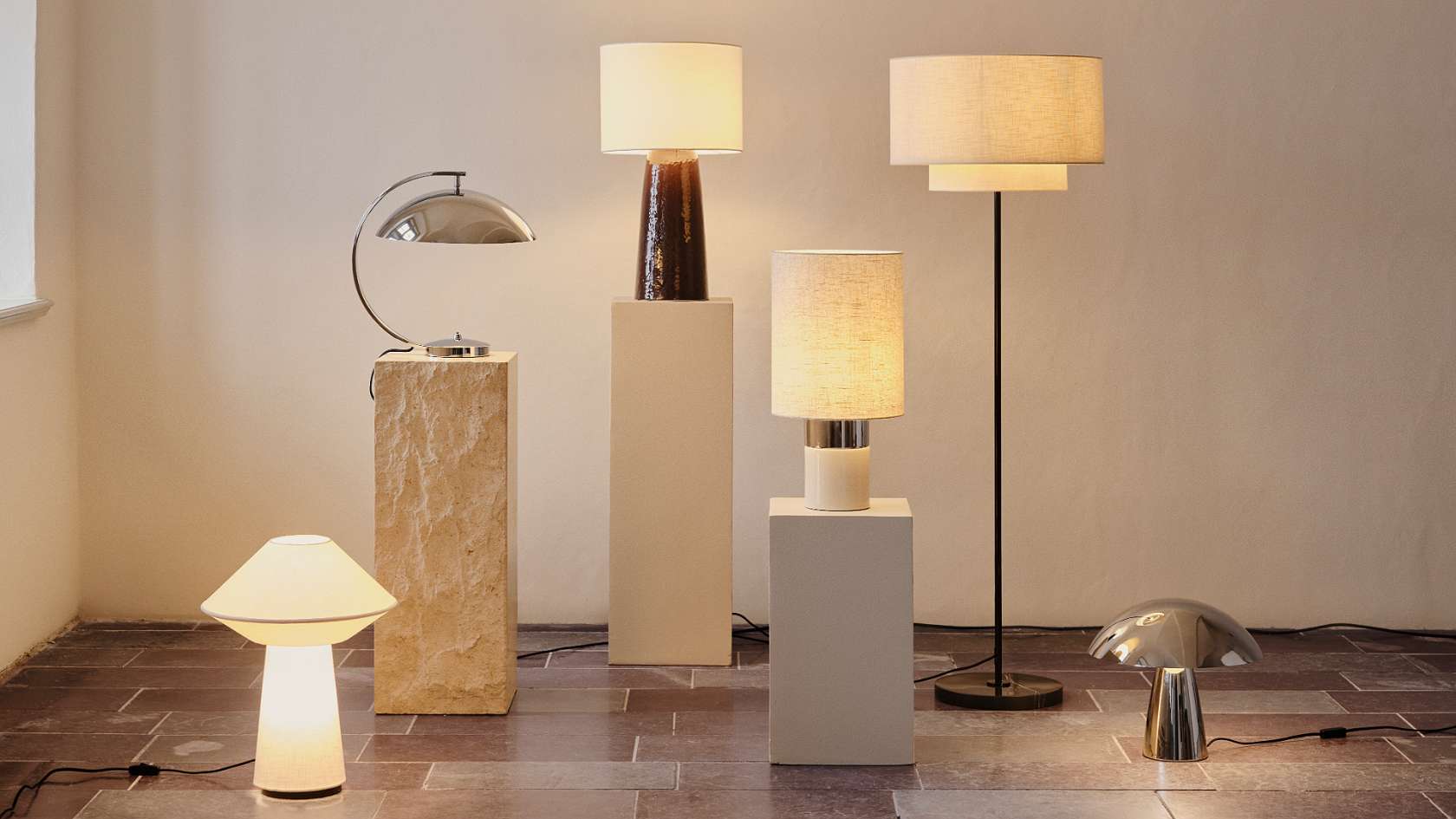
BoConcept’s AW26 lighting collection starts from a Scandinavian habit: several small lamps lit around a room instead of one bright source overhead. Six families carry that idea through fabric, marble, ceramic and chrome.
The Danish brand built the range around atmosphere rather than brightness, answering interiors that moved toward softer textures and warmer rooms. Nothing here glows hard. Fabric shades do most of that work here, with chrome and marble supplying the harder edges.
Six families share the brief, and each one handles it differently, from an angular table lamp with a glowing base to a pendant shaped like a pumpkin. Two of the six are redesigns of lamps BoConcept already sells well. BoConcept presented the collection in November 2026, and that spread keeps any single material story from taking over a room. The range arrives as BoConcept rethinks lamps, rugs and accessories as essential parts of a finished room rather than finishing touches added at the end.
Finn Jensen, who leads retail creative work at the brand, frames the range around Scandinavian homes being dark for half the year. Lamps, in that framing, create small moments of light throughout a home.
Kaku puts two light sources in one table lamp
Kaku takes its name from the Japanese word for angular, and the geometry stays crisp across a table lamp, a floor lamp and a pendant. Textured cotton shades soften those straight edges, so the light reads warm and glare-free instead of sharp. The pendant version hangs that same angled shade over a table, while the floor lamp stretches the geometry to standing height beside a sofa or a reading chair tucked into a corner.

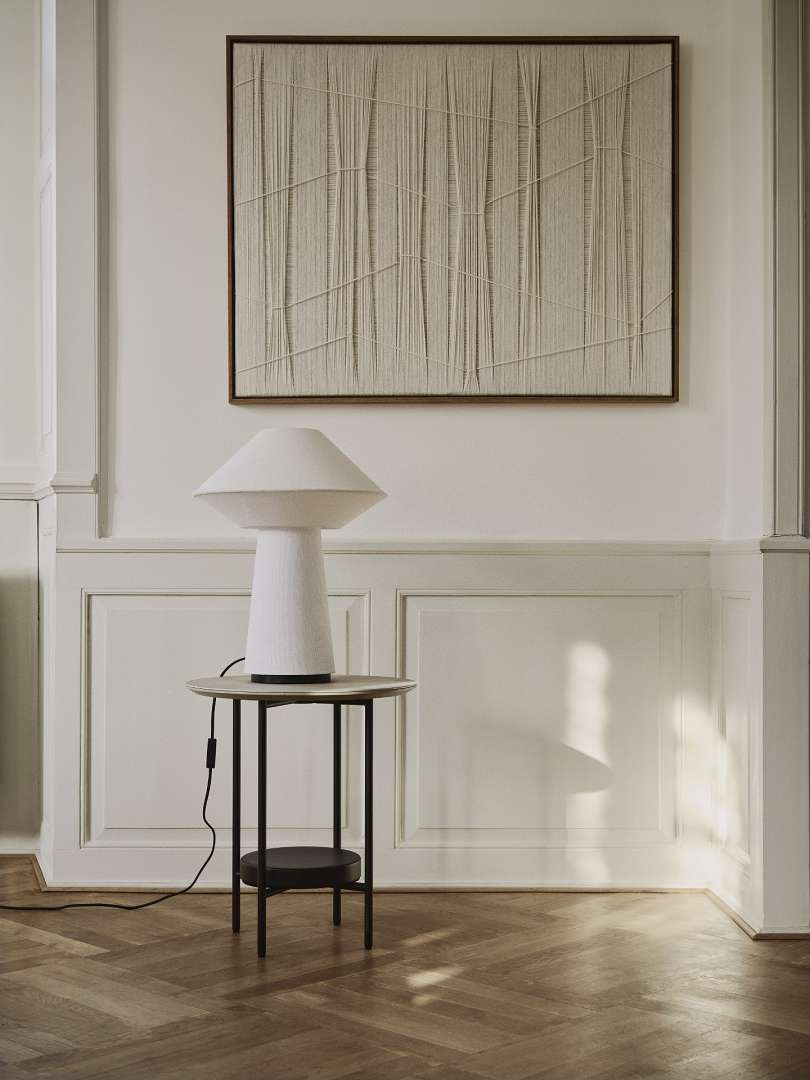
The table lamp carries the clever part, with one light source hidden inside its base and a second inside the shade. Two heights, one lamp. Both run at once, so the lamp glows from two heights and throws layered light across the surface under it, and the whole piece sits raised slightly off the table, which keeps the silhouette light.
As a pendant, Kaku comes in two sizes, 38.5 cm and 50.5 cm across, hung on a fabric cord. Over a dining table, the smaller size suits narrow rooms best, and a run of three at staggered heights suits a stairwell or a tall window just as well.
Blossom and Kabocha soften the pendant
Blossom pendants copy a flower at the moment it opens, and the shades are blown by hand, one at a time, from polymer. The technique borrows from candy floss, and it leaves a paper-like texture that never repeats exactly from lamp to lamp because each shade is shaped by hand after blowing.
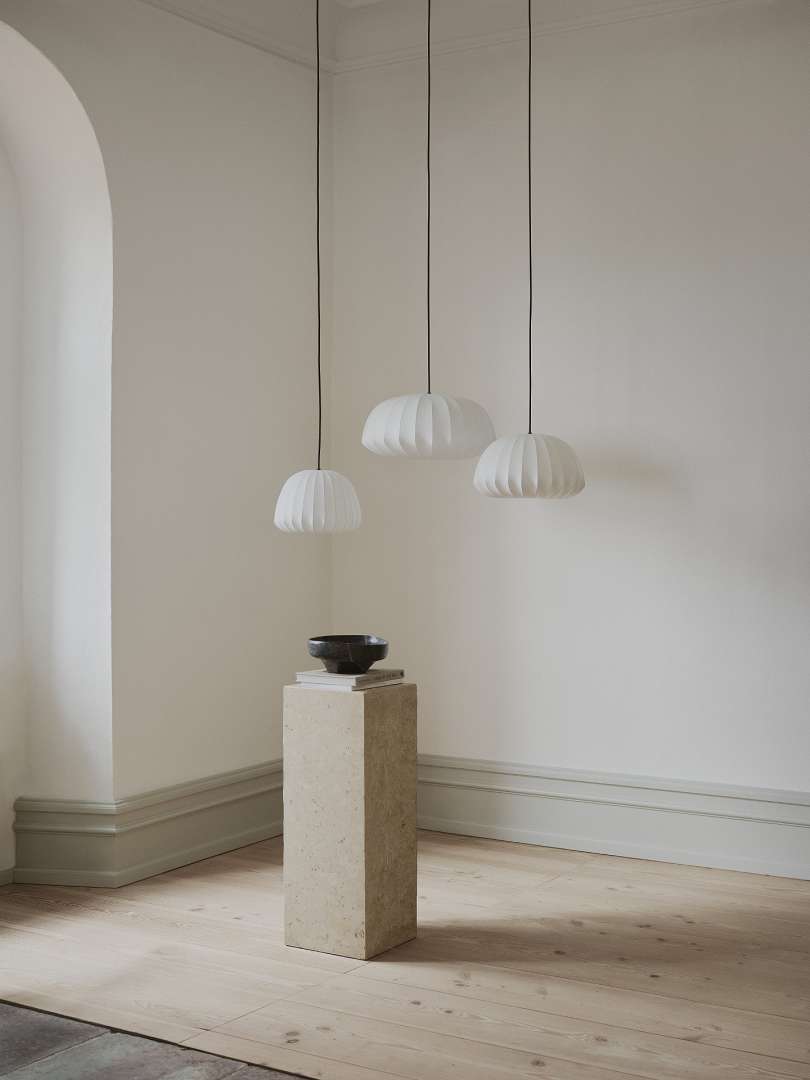
Three sizes let a set climb or step down over a dining table, and the layered shade shows its structure once the bulb is on. Soft shadows fall across the ceiling and walls. A single pendant reads quiet, while a grouped set turns the ceiling into the decorated surface.
Kabocha goes rounder, taking its name and its profile from the Japanese pumpkin, with cotton panels fixed by hand onto a metal frame. Bands in the same color hold those panels in place. Once lit, those bands print a striped pattern across the shade, and the oval reads closer to a paper lantern than a metal fixture.
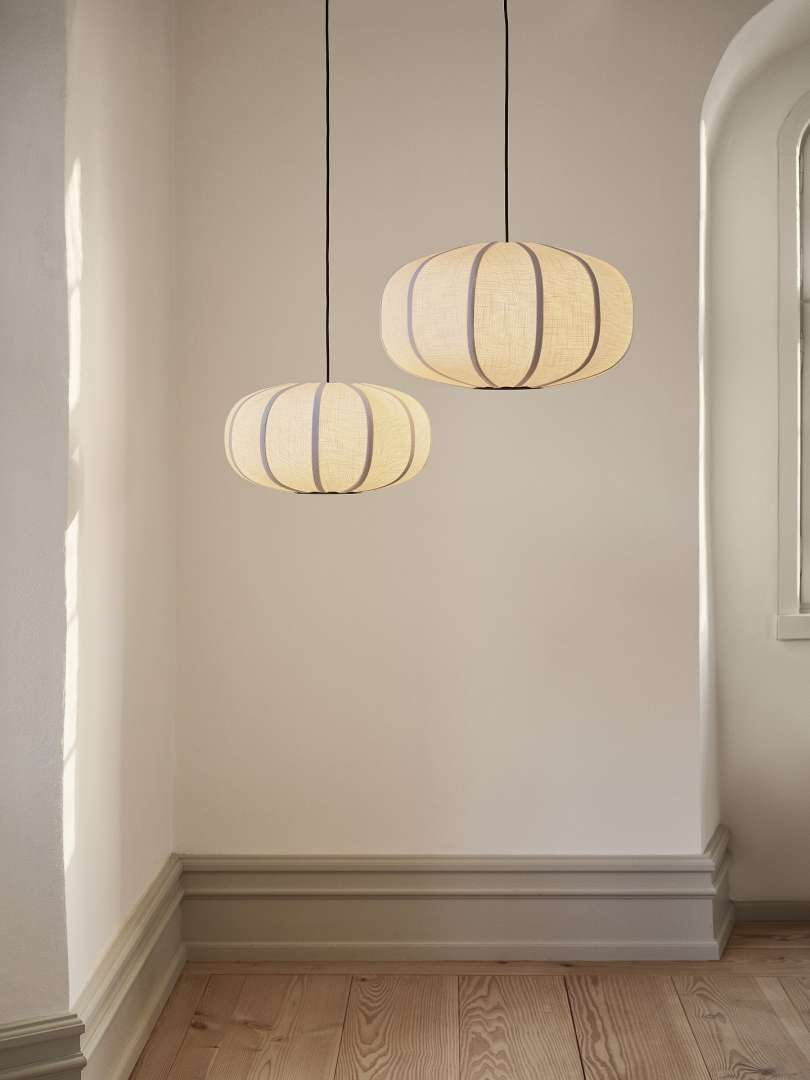
The fabric carries a retro texture. The Japanese references stay subtle rather than themed, and hung in a pair, the oval shades soften a hallway or a reading corner without any hard surface in sight.
Drum keeps the cylinder, grounds it in marble
Drum keeps the oldest shade shape in the collection, a plain fabric cylinder, and grounds it with weight. The shape stays familiar on purpose. The floor lamp stands on a marble base with black metal detailing, and a pendant version carries the same cylinder overhead.
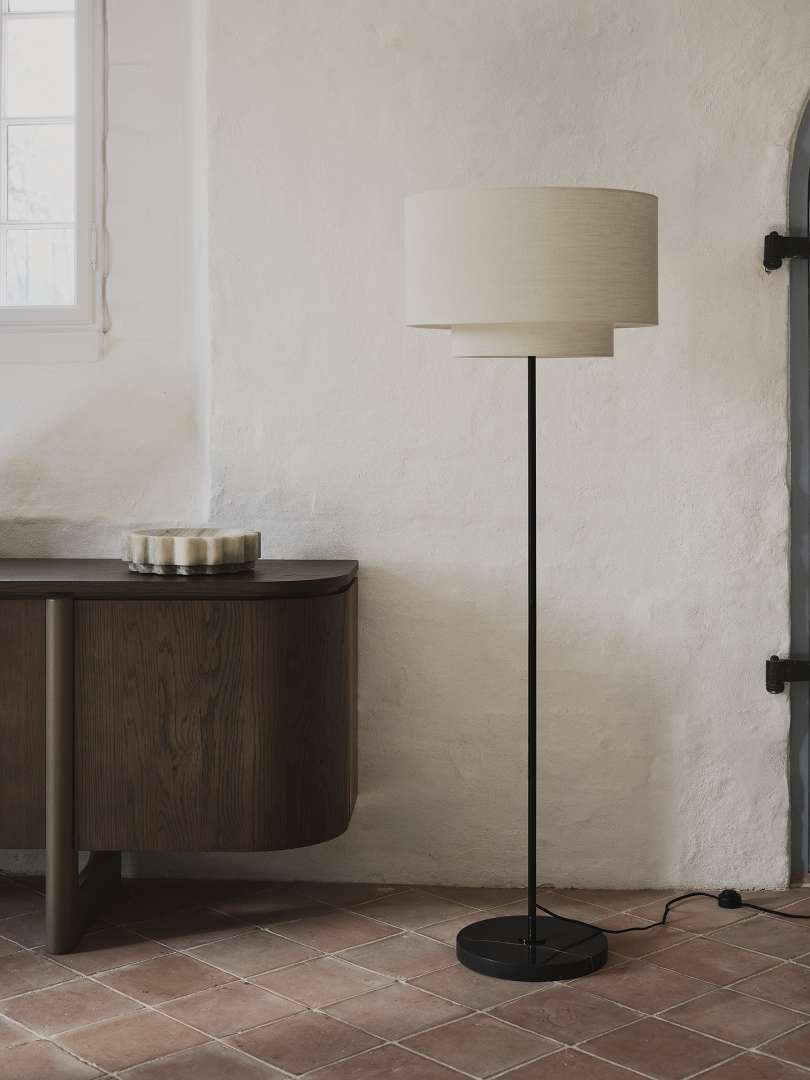
That mix gives Drum the architectural role in the range, the lamp that suits a study, a hotel-style bedroom or a living room built on straight lines. Marble also anchors the tall stem, so the lamp stands steady on wood and stone floors alike.
Dawn and Oslo return with softer materials
Dawn returns as a table lamp with a warm grey fabric shade, now standing on bases in ceramic or marble. Two sizes cover most tables. One new ceramic base wears a deep, flowing brown glaze under a white fabric shade fixed by hand, and the lamp comes in two sizes for side tables, shelves and windowsills.
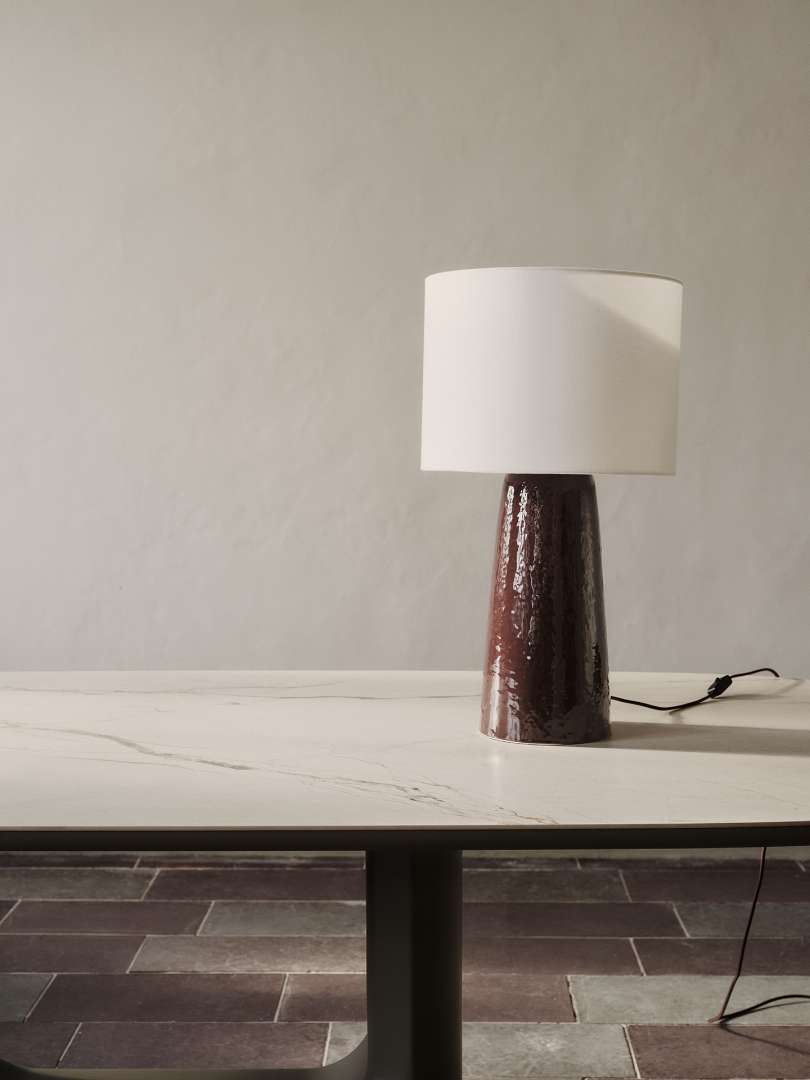
Dawn Lounge stretches the same idea to oversized proportions, scaled for larger living rooms and long sofa settings while keeping the light calm. Oslo follows the same path, rebuilding the bestselling Stockholm lamp with a fabric shade where clear glass used to sit, over the marble base that made the original familiar.
Several sizes and material combinations carry Oslo, so the redesign can sit beside older Stockholm lamps without clashing. Both redesigns show the direction of the whole collection, softer shades and warmer light over the same Danish bones.
BoConcept has sold Danish furniture since 1952 and now runs more than 300 stores across 65 countries, so a lighting range from the brand lands in a lot of living rooms at once. AW26 treats lamps as furniture in their own right, pieces chosen with the sofa and the sideboard rather than after them. Lighting sits inside that plan from the start.
The habit underneath the collection is the part worth copying, whatever the budget: light a room in pools, at different heights, through fabric. Pools beat glare every time. Kaku, with its glowing base, is the one to start with.