
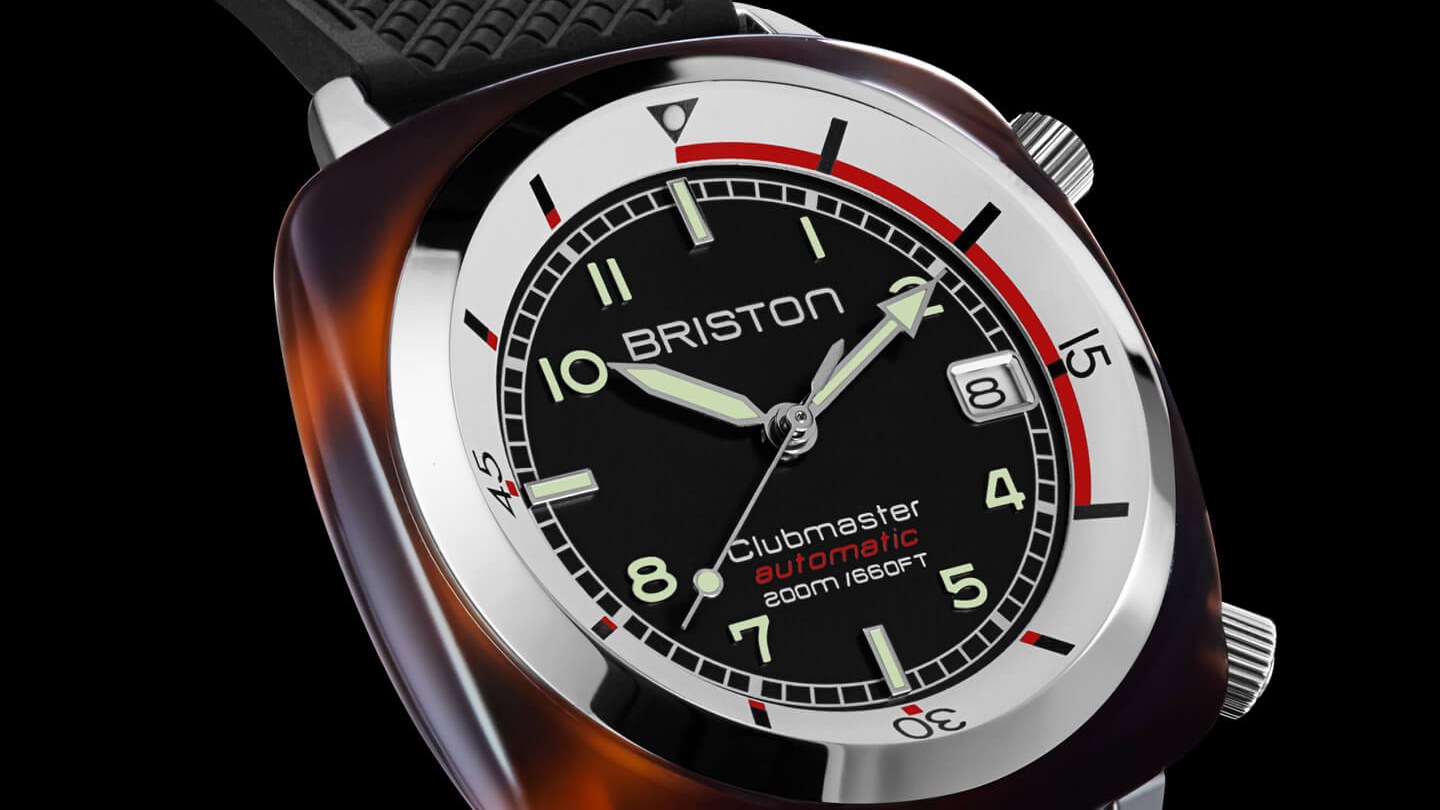
Briston’s Clubmaster has always read as eyewear for the wrist, a square-curved cushion of tortoiseshell acetate with a watch living inside it. The Clubmaster Legend Compressor keeps that silhouette and hands it a job: twin crowns, an internal dive bezel, 200 meters of water resistance, and a self-winding movement doing the timing underneath.
It’s the rare affordable diver that doesn’t chase the Submariner.
Four references split the idea two ways. Acetate comes with a black dial or a navy one at $660. Polished steel comes black or steel blue at $683. Under the dial, all four are the same watch: same movement, same inner bezel, same 42 mm cushion shape.
Within the Clubmaster family, the Legend line is where the automatic movements live, and the Compressor is its diver.
The case is the argument
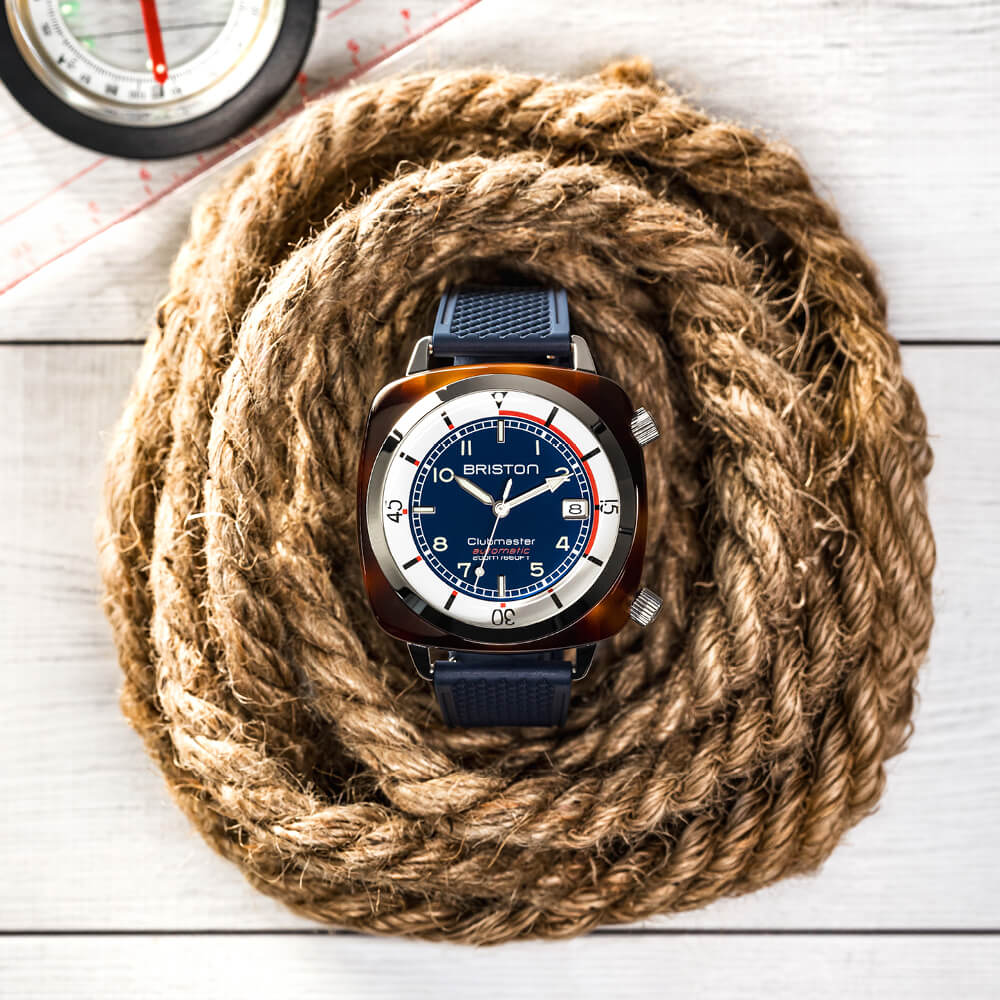
Acetate is the founding material here. Briston has built its name on Italian cellulose acetate since 2013, and the tortoiseshell stock for the Compressor comes from Mazzucchelli, the eyewear supplier whose hand-polishing craft runs back six generations.

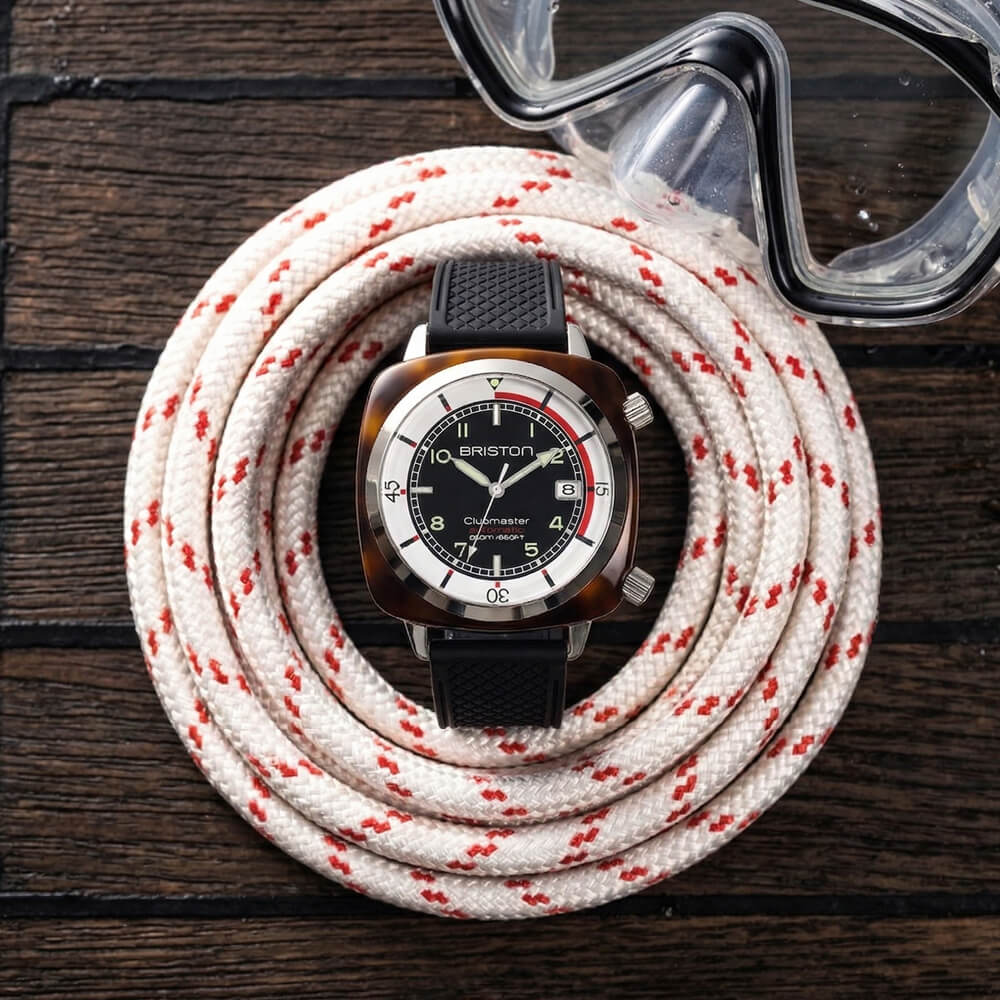
Hand polishing explains the glow. Light sinks into the tortoiseshell and comes back amber at the edges, and no two cases settle the pattern in quite the same place. Steel can’t do that. Steel doesn’t try.
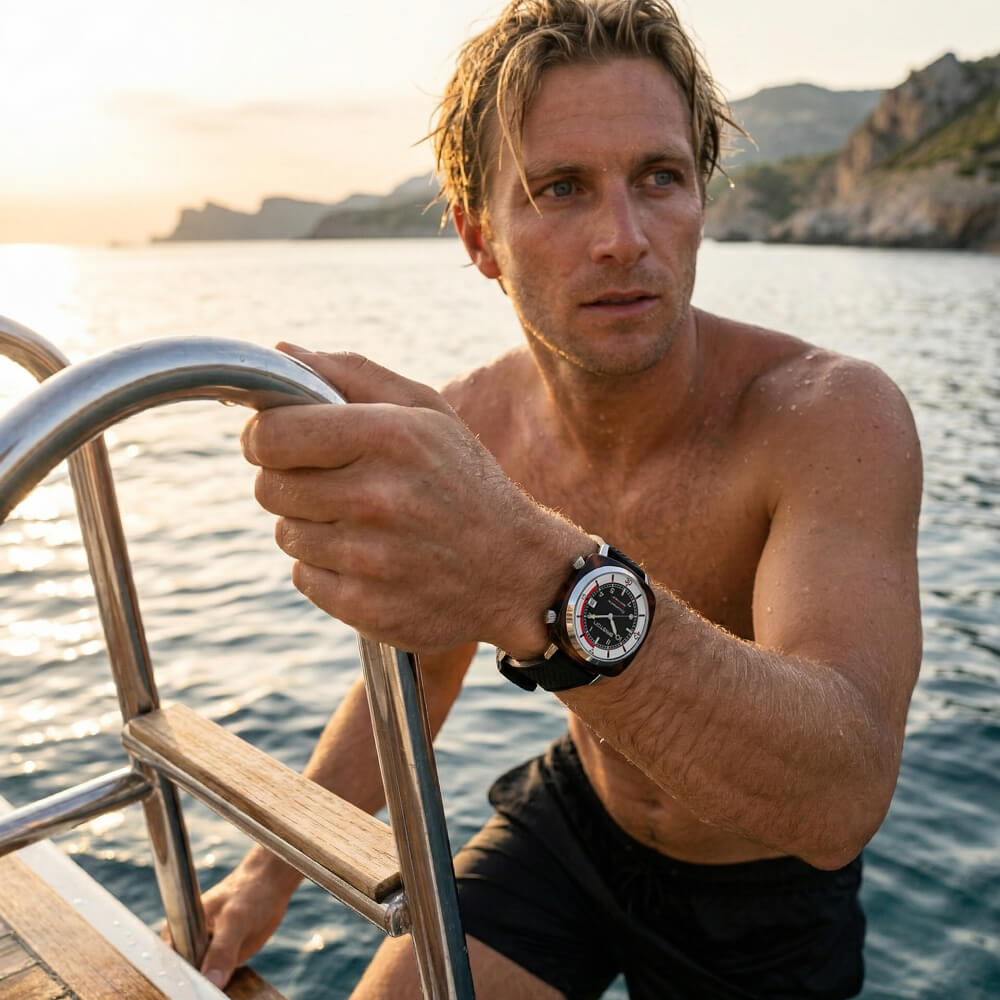
Short lugs and a case that curves away from the wrist make the 42 mm wear smaller than the figure suggests. On its rubber strap, the watch reads warm and soft-edged, a summer object that happens to carry a 200-meter rating. It draws looks at the beach club and then goes off the boat ladder without a thought, and that double life is exactly what Briston designed it for.
Two crowns, one hidden bezel
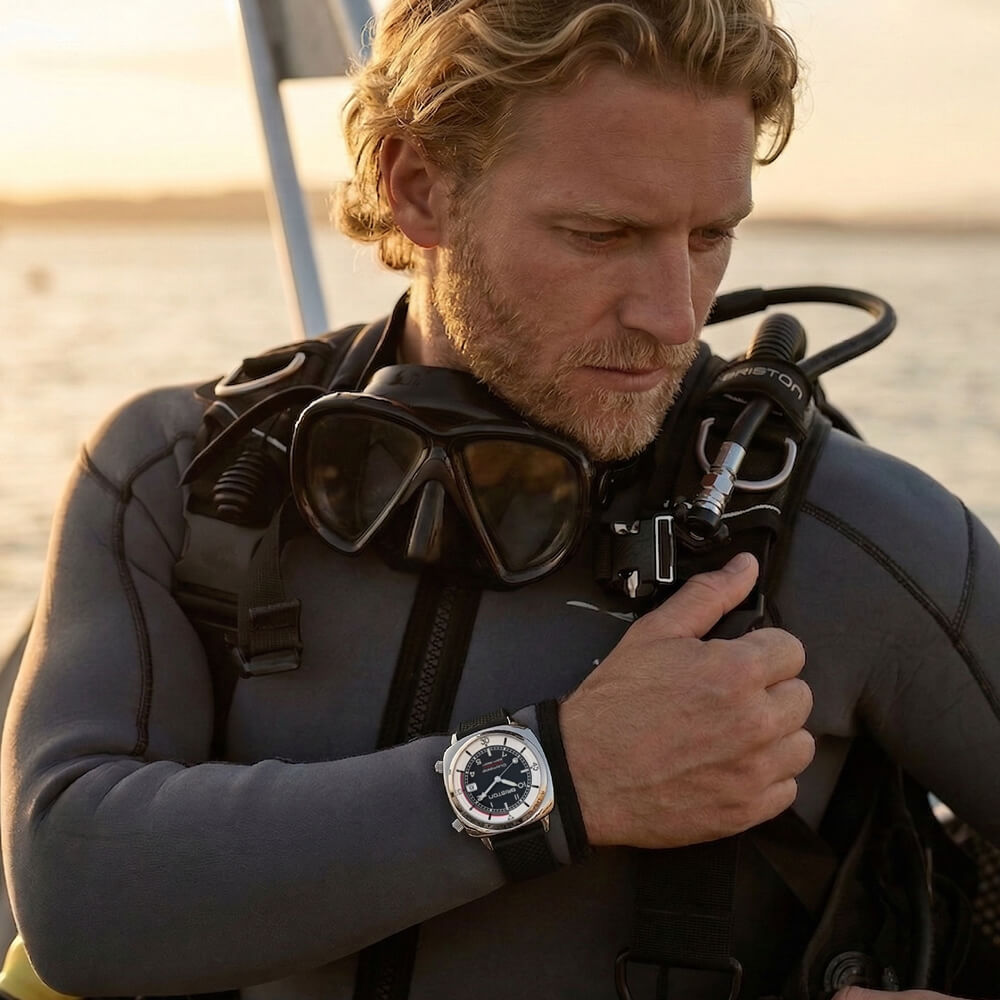
Compressor cases date to the 1950s, when makers sealed dive watches so rising water pressure compressed the gasket tighter the deeper the watch went. The hardware that survived the era is the pair of crowns and a bezel moved inside the crystal, where a knock against a door frame can’t shift it mid-dive. Modern versions keep the layout for its looks and its logic alike: the timing ring stays protected, and the case keeps its clean, unbroken outline.
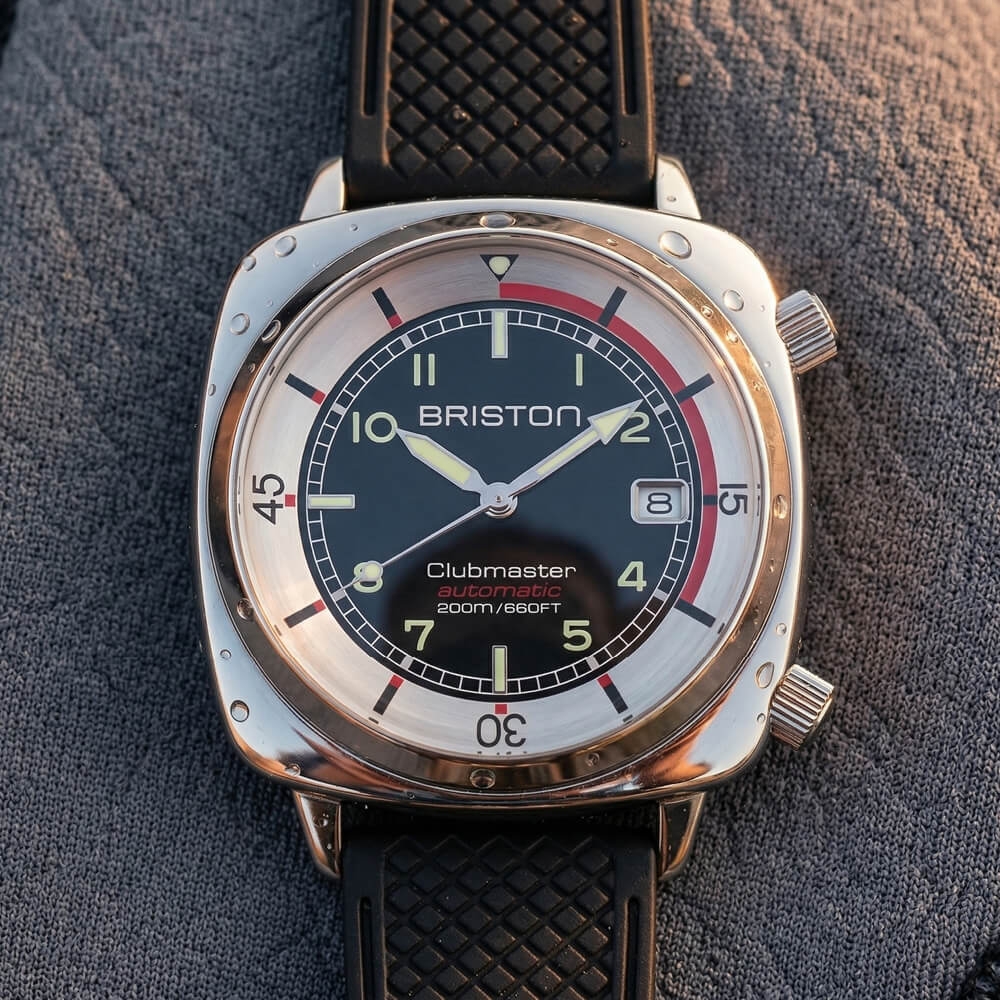
At 2 o’clock, the crown turns the silver-white inner ring in both directions. A red arc marks the first quarter of the scale, big numerals ride at 15, 30, and 45, and the crown at 4 o’clock sets the time and the quick-set date. Both crowns are big, knurled, and easy to grip.

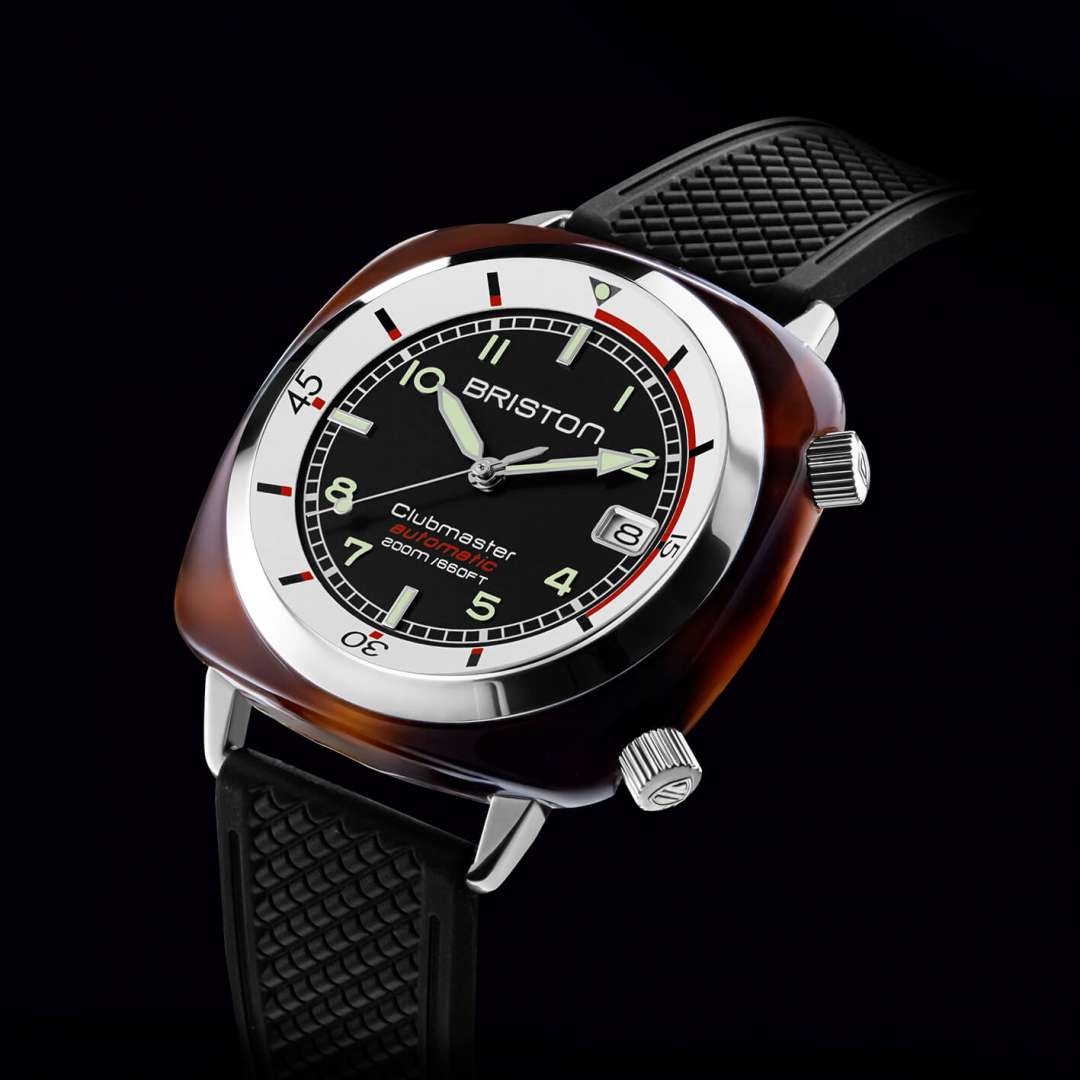
Under the domed crystal, the dial keeps the sixties brief: applied indexes and Arabic numerals filled with Super-LumiNova C3, a date window at 3, and the dive scale carried on the ring where it stays clean. No outer bezel chewing up the case lines.
You set the timer with two fingertips and forget it. That’s the appeal.
Steel, for the traditionalists
Tortoiseshell strikes some buyers as fashion first, and the steel references answer them. Mirror-polished 316L keeps the cushion shape, the dial furniture, and the red-arced ring, then adds the cold weight a dive watch is supposed to carry.
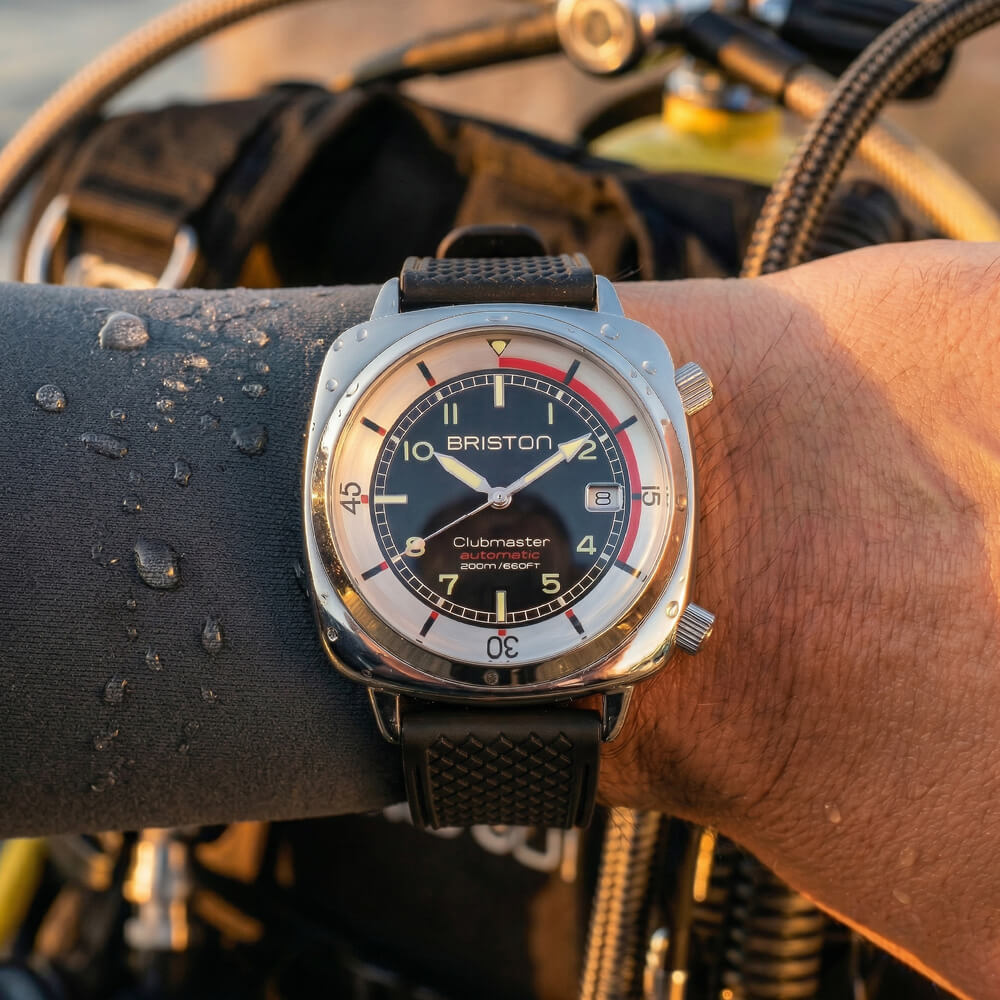
Black steel is the conservative pick of the four. Steel blue is the pretty one. Navy acetate splits the difference, warm tortoiseshell wrapped around a deep blue face, and it’s the one I’d wear on a boat.
Steel costs $23 more than acetate, $683 against $660. A materials preference priced like one, not an upgrade ladder, and fair play to Briston for that.
A workhorse inside, one compromise on top
Both cases run the Japanese NH35A automatic: 24 jewels, 21,600 vibrations an hour, up to 41 hours of power reserve. It’s a known quantity, the caliber a local watchmaker has seen a hundred times, and it’s a big reason the price stays under $700.
One compromise sits under the dome. The crystal is K1 mineral glass where rivals at this money fit sapphire, and that stings a little. The budget clearly went into the case and its finishing; movement and crystal are where Briston saved the money back. Owners who baby their watches won’t care. Owners who scrape them along pool walls will.
Every reference ships on 20 mm FKM rubber, with Briston’s own straps in nylon, leather, and steel sold as accessories. The warranty runs two years, stretching to three on registration.
On the wrist day to day, the FKM strap does quiet work: soft, grippy when wet, and shaped to the cushion case so the watch sits flat instead of perching. It’s the right call for a watch meant to get wet, and the 20 mm lugs mean the aftermarket is wide open if you want leather for dinner.
Buy the acetate. It’s the version only Briston could make, an eyewear material turned into a genuine 200-meter diver, and at $660 it undercuts most of the steel crowd it will be compared against. Sapphire and a fancier caliber exist at this price elsewhere, in cases nobody stops you to ask about.
Compressor divers were always the quiet ones. This one just glows a little.