
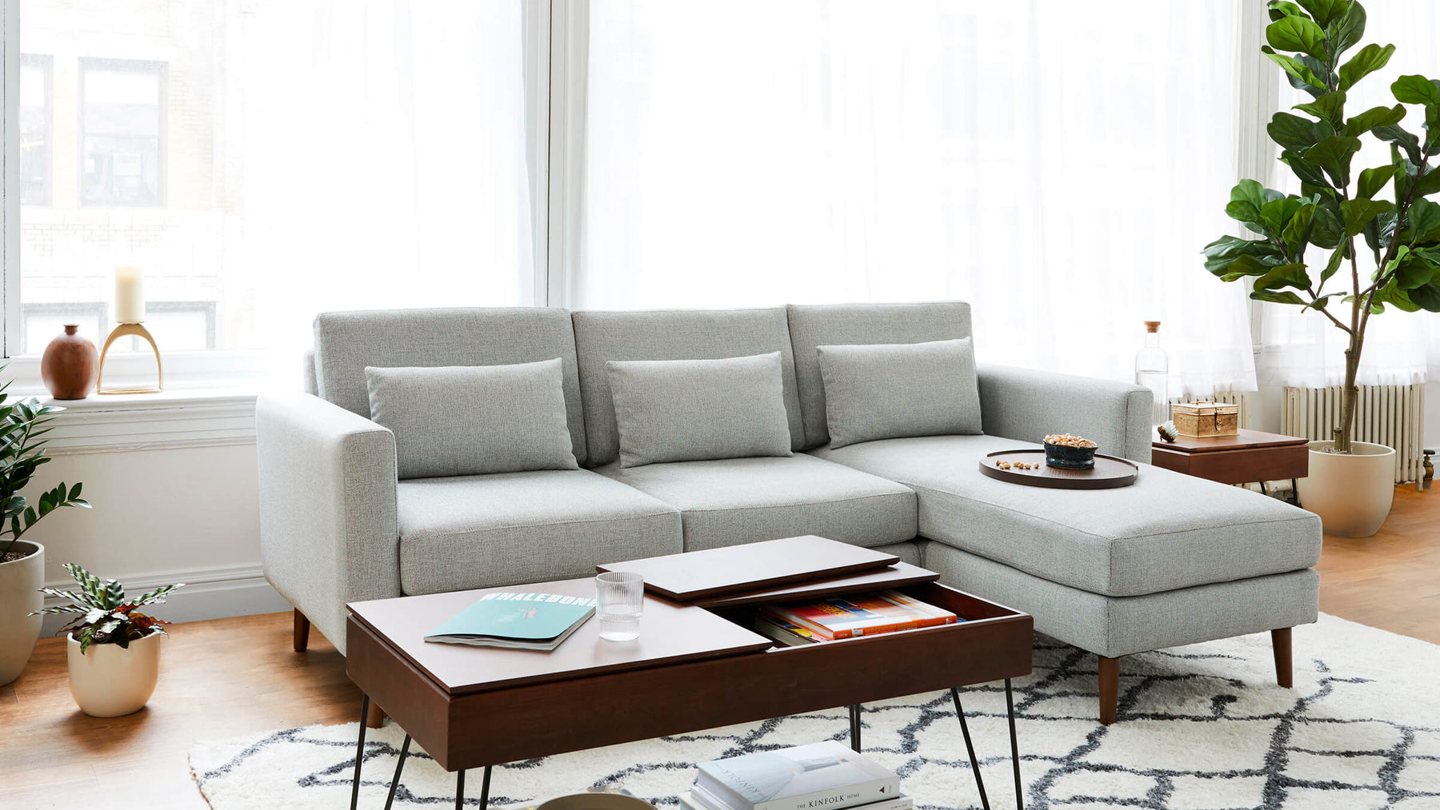
Burrow’s Nomad is the sofa that arrives in boxes, builds without a single tool and still manages to look like it was always there, in the room it was measured for. It’s the rare flat-pack that behaves like furniture first.
The three-seat runs 85 inches wide, 35 deep and 33 high, with a seat height of 17 inches and a seat depth of 22 that suits long evenings, low conversations and the occasional overnight guest. Nothing about the silhouette shouts modular. The arms stay slim, the cushions keep their tufting and the legs taper the way mid-century legs are supposed to taper.
Burrow sells the Nomad direct, which keeps the configuration straightforward and the price free of showroom markup, middlemen and the delivery surcharge that usually follows. You choose the arms, the legs and the cloth, and the boxes arrive at the door within days of ordering.

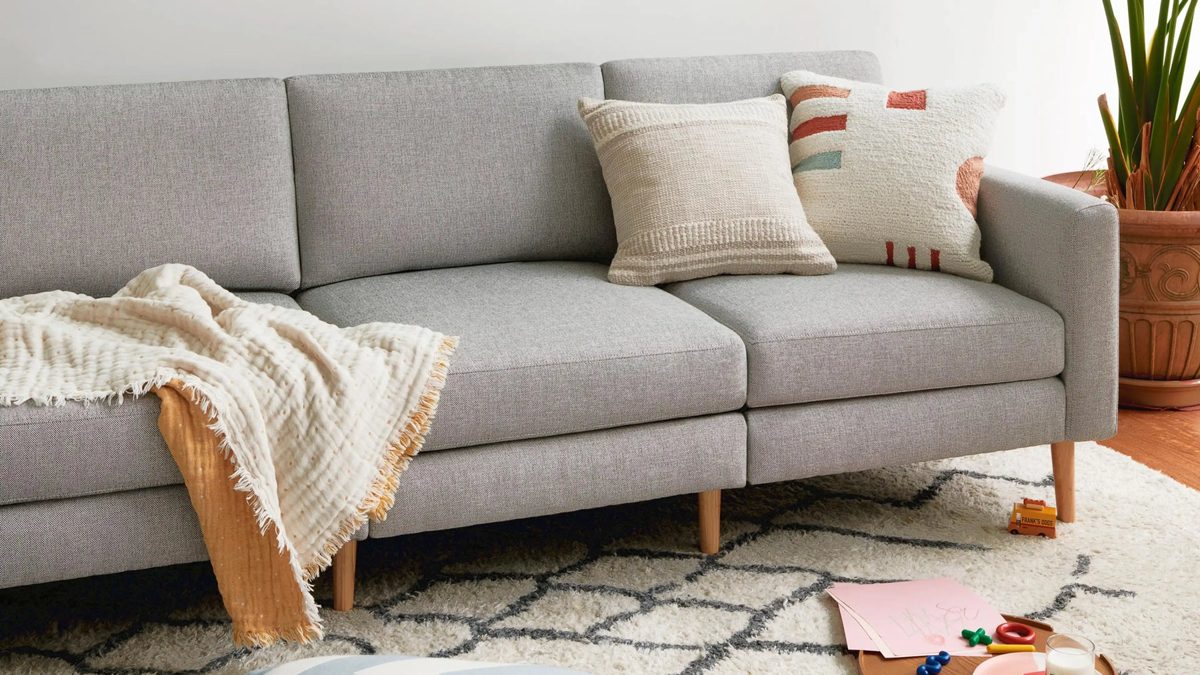
A mid-century outline without the heirloom weight
Most sofas this size arrive as one awkward, shrink-wrapped object that two delivery workers wrestle through the door while you hold your breath and measure the doorway twice and the stairwell three times. The Nomad skips that scene entirely, and the design never confesses how it got into the room, which is the neatest trick in the whole piece, and the seams never show it.
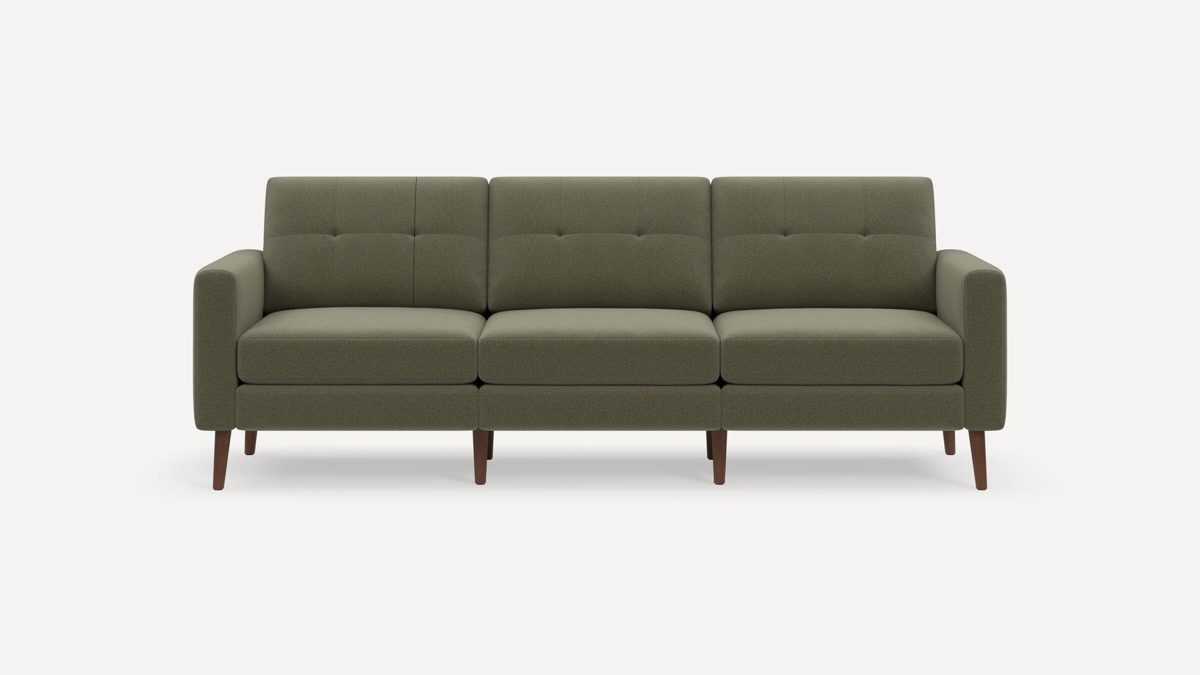
Three arm styles change the posture of the whole piece, from tailored and upright to low and sloped, and each one changes how the sofa meets the room. Six leg finishes run from pale oak to walnut and blackened steel. Reversible back cushions let you flip the look from one side to the other.
Under the fabric sits a frame of Baltic birch, a material cabinetmakers reach for when plywood has to behave like solid wood under load, year after year. It keeps the sofa light enough to shift for cleaning.
The seat height of 17 inches keeps the profile low and the conversation easy across a coffee table, a rug and a room that isn’t large. Nothing rides high or bulky, even at the three-seat width. The outline stays calm from every angle, including the back, which counts in open rooms.
Modules that latch, loosen and move with you
Each module connects to the next with the maker’s latch system, so a three-seat today can gain a chaise next year or split into a pair of chairs in a new apartment. No tools come out of the drawer. The boxes themselves are sized for stairwells, elevators and the doors of older buildings, which is where most sofa deliveries go to die.

When the lease ends or the house changes, the sofa comes apart as calmly as it arrived and rides in a car instead of a truck, with no freight booking, no delivery window. That reversibility is the luxury here, more than any single fabric.
A built-in USB charging port hides in the frame, close enough to the seat that a phone can charge without a cable crossing the room. It’s a small thing, and it’s the thing guests ask about. Replacement modules and added seats come from the same catalog, so an older frame never meets a part that doesn’t fit or a finish that clashes.
Built like furniture, finished like a custom order
The standard upholstery is an olefin performance weave, chosen because it shrugs off spills and resists fading, and it treats spills, dogs and red wine with the same indifference. Foam and fiber fill the seat and back cushions, firm at first and kinder by the month.
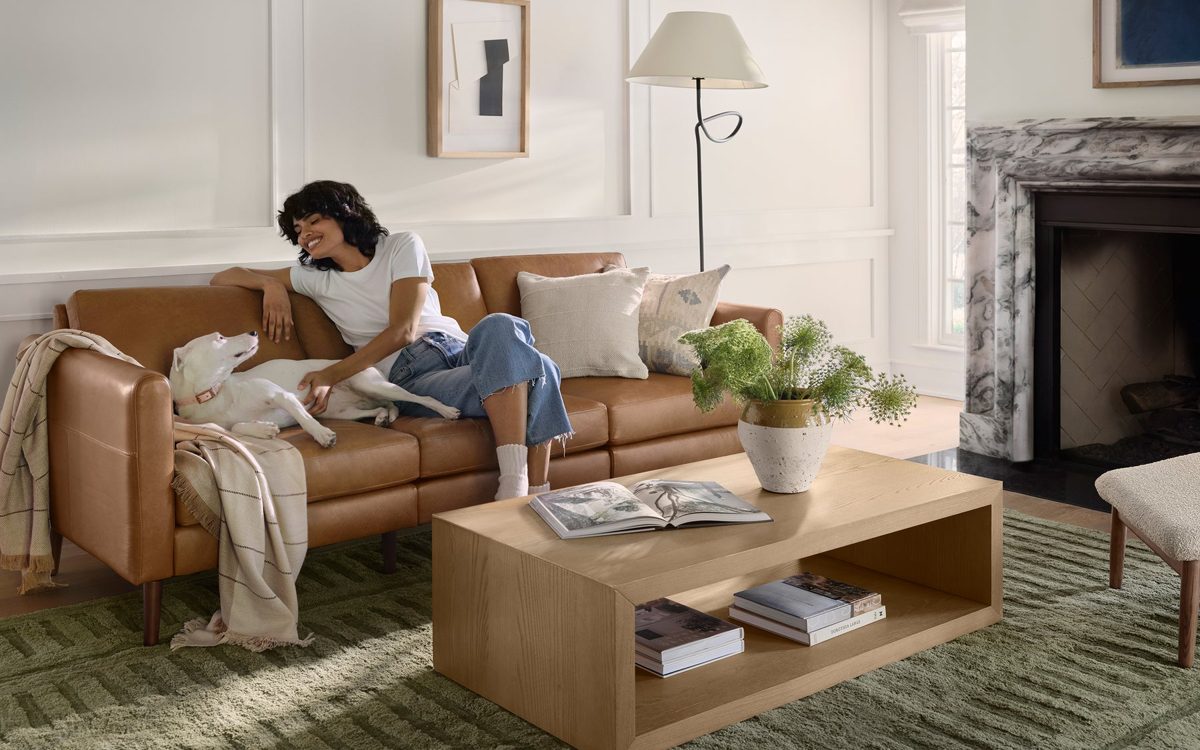
Beyond the standard weave, the menu runs to eleven-plus upholstery options, including velvets and top-grain leather in tan, slate and chestnut. The leather version changes the room entirely. It turns the same frame into a club sofa, with a surface that wipes clean and ages into its owner.

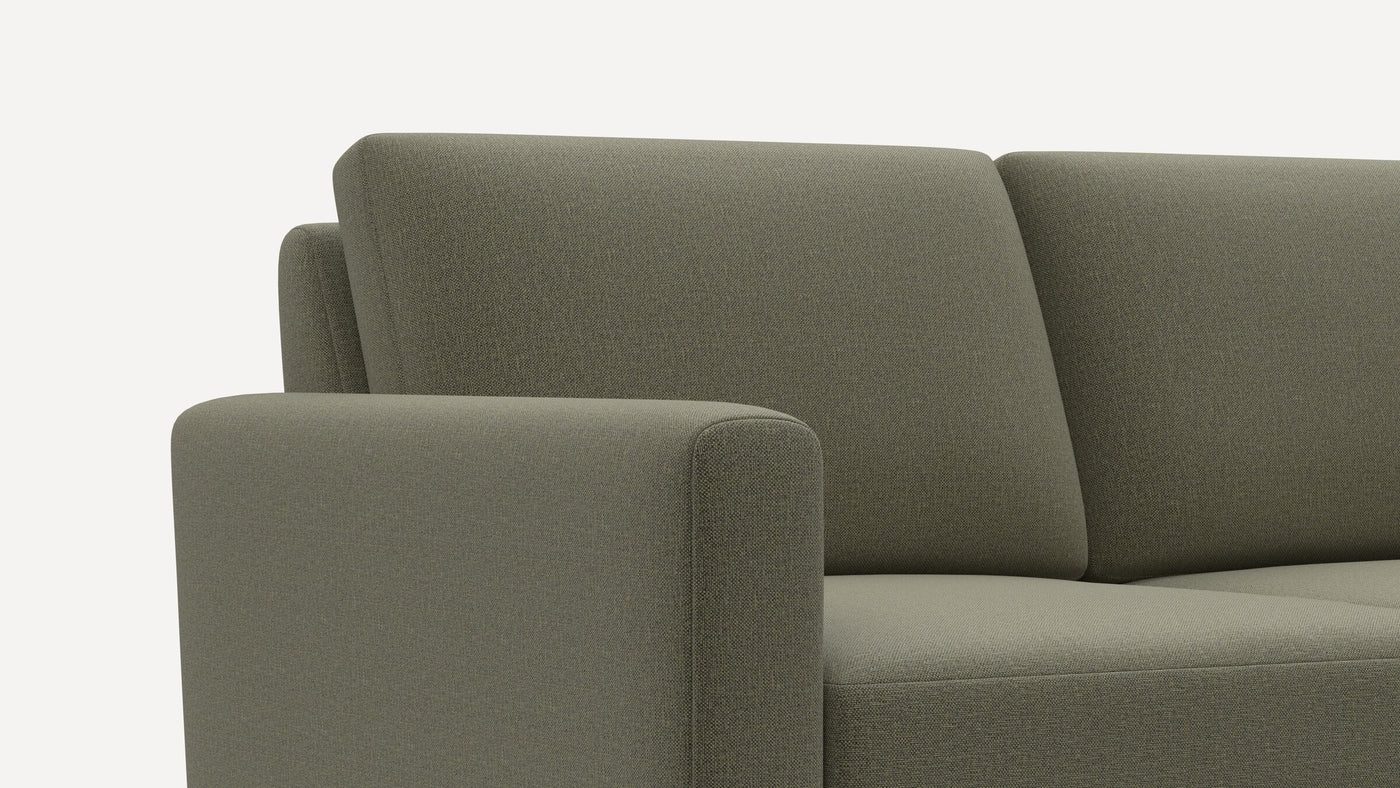
Legs come in responsibly forested wood or steel pins, and the finishes coordinate with the arm and fabric choices instead of fighting them. Every combination still ships as the same calm, low outline.
The sofa that treats moving as a feature
The three-seat in fabric lists at $1,949 and sells at $1,364 in the maker’s current sale, with wider configurations and leather builds climbing from there. For a sofa that survives three apartments, that’s a fair trade. The same modular idea exists on Amazon in the HONBAY sectional sleeper at $769.39, though it trades the birch frame and the fabric menu for a pull-out bed.
Burrow built the Nomad for the way people actually move now, between rentals, cities and floor plans that never match the last one or the next one either. Most furniture punishes that life. This piece plans for it, packs flat for it and still sits like it never left the showroom.
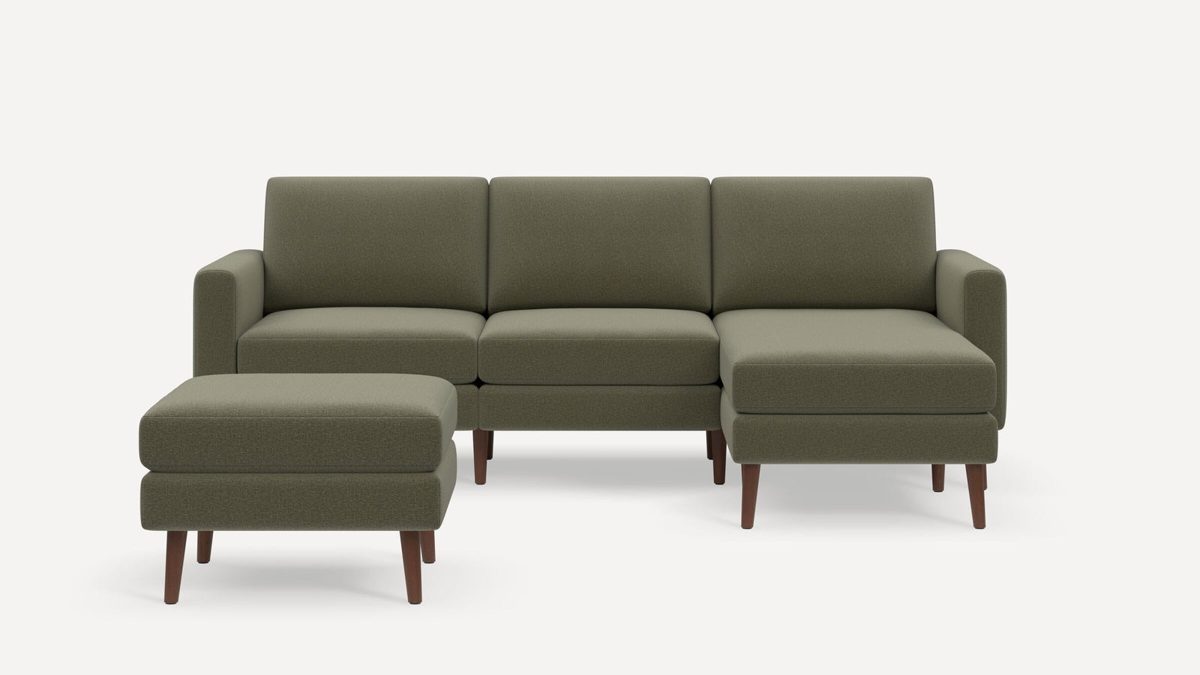
Buy it as a three-seat and grow it into a sectional when the room allows. The design stays the same calm constant through every version of the floor plan.
Plenty of sofas promise comfort, and a few promise style to go with it, at least in the photographs. The Nomad adds a third promise, that it’ll still fit your life after the next move, and that’s the one that keeps it in the room long after trendier pieces have gone to the curb.