
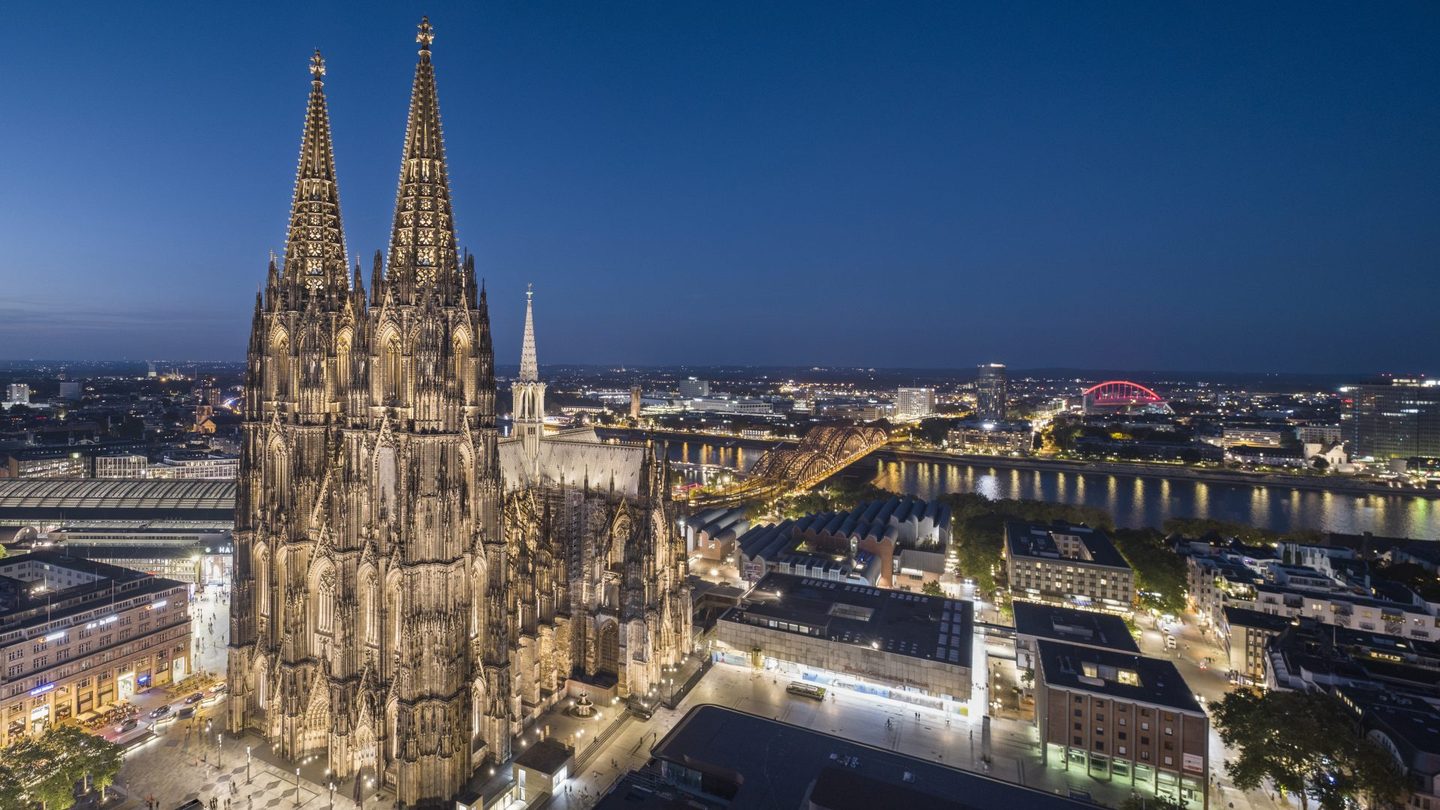
Cologne Cathedral now runs on 11,000 watts of light, and its stone has never read sharper after dark. Licht Kunst Licht swapped the rooftop floodlights that washed the facade flat for more than 700 LED fixtures clamped to the building, switched on at Easter 2025.
By day, the hardware all but disappears.
The floodlights flattened everything they touched
The old scheme lived on the roofs around the plaza, where 1,000-watt metal halide floodlights poured neutral white light over the whole building at once. It made the cathedral impossible to miss and its carving impossible to read, and the spill lit streets that never asked for it.

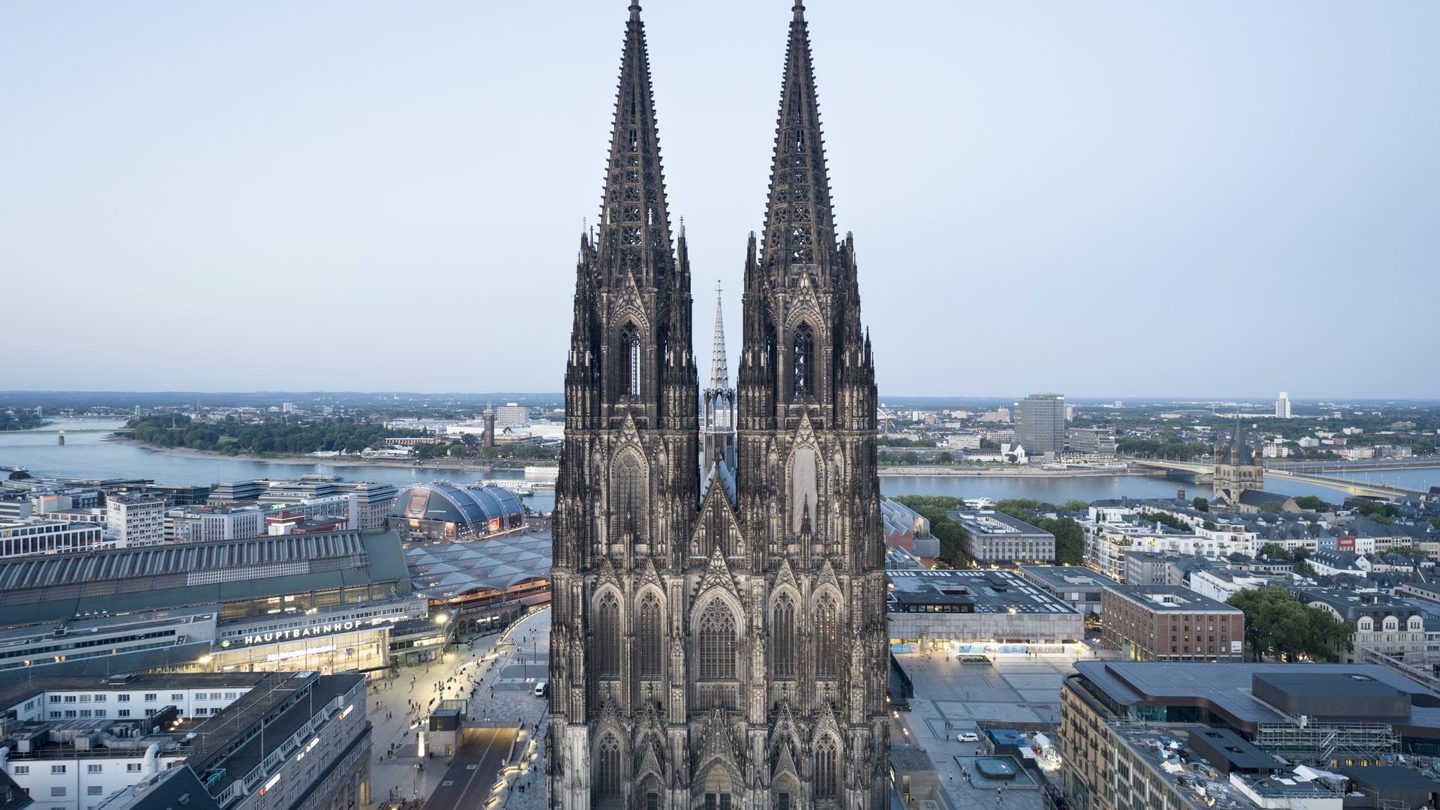
The cathedral has been lit, on and off, since 1838, when a crown prince’s visit earned the still unfinished building its first illumination. A permanent system followed in 1929 under Mayor Konrad Adenauer, and the twin towers joined the city’s night skyline.
In the summer of 2022 the lights went out, switched off alongside public buildings across Germany during the energy crisis. The towers went dark.
Licht Kunst Licht had started the replacement years earlier, and its Star of Bethlehem had sat atop the crossing tower since 2020.
Seven hundred fixtures, and not one hole drilled
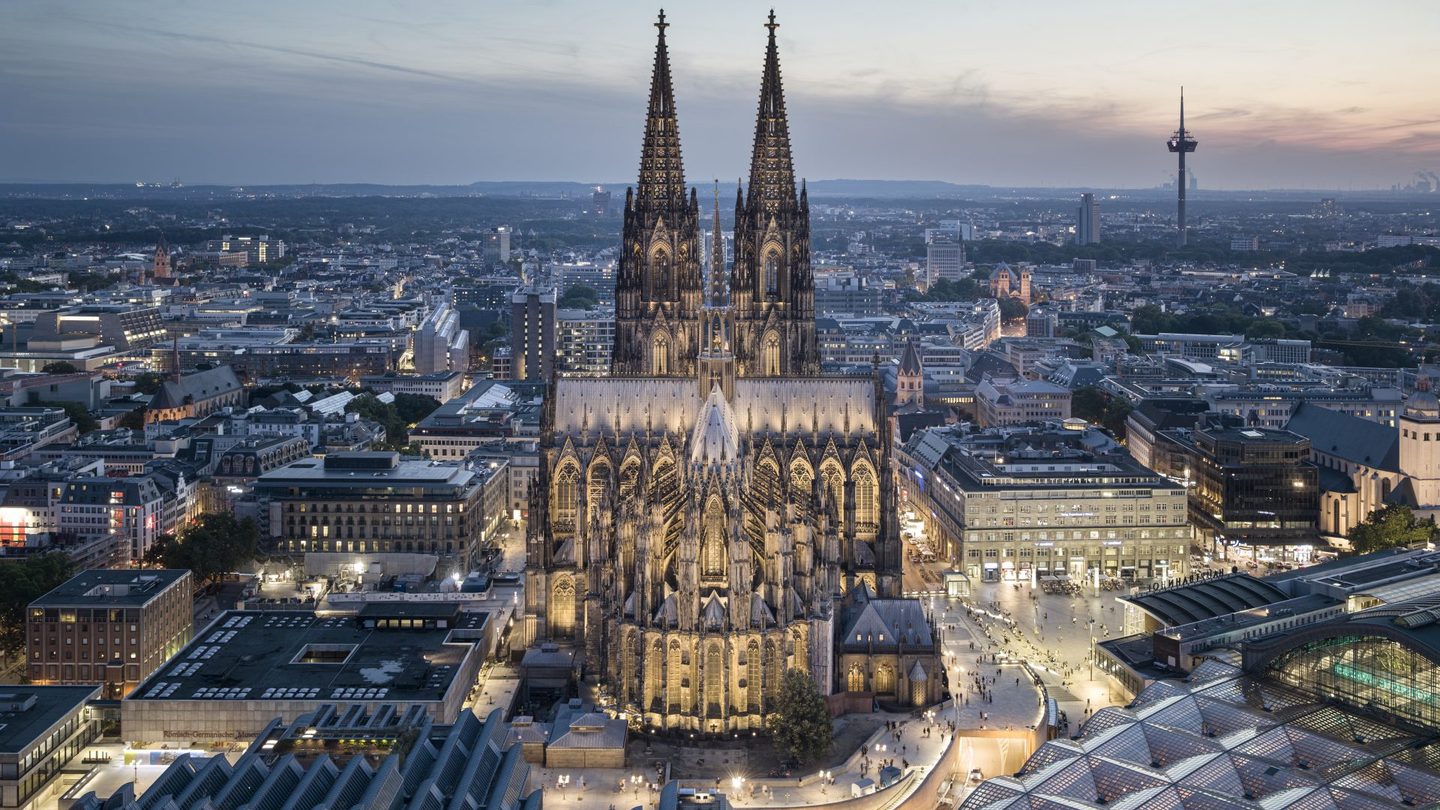
The new system puts more than 700 compact fixtures on or directly in front of the stonework, each one glare-free, aimed to graze a buttress, a pinnacle or a carved figure instead of flooding a wall. Only 10 percent of the light now comes from fixtures away from the building; the old scheme threw 80 percent of its light from off the building.
The cathedral keeps no complete architectural record, so the team studied the facade element by element and tuned optics, angles and positions by eye. Project lead Philipp Schmitz explains why: “Because digital simulations were insufficient for such a complex, heterogeneous structure, we conducted years of extensive on-site lighting tests.”
Nothing’s screwed into the medieval fabric: the studio and the Dombauhütte developed custom clamps with lead-padded brackets that spread the load, and every fixture can come down again without leaving a mark. By day, you’d never know it was there.
The towers now glow from the inside
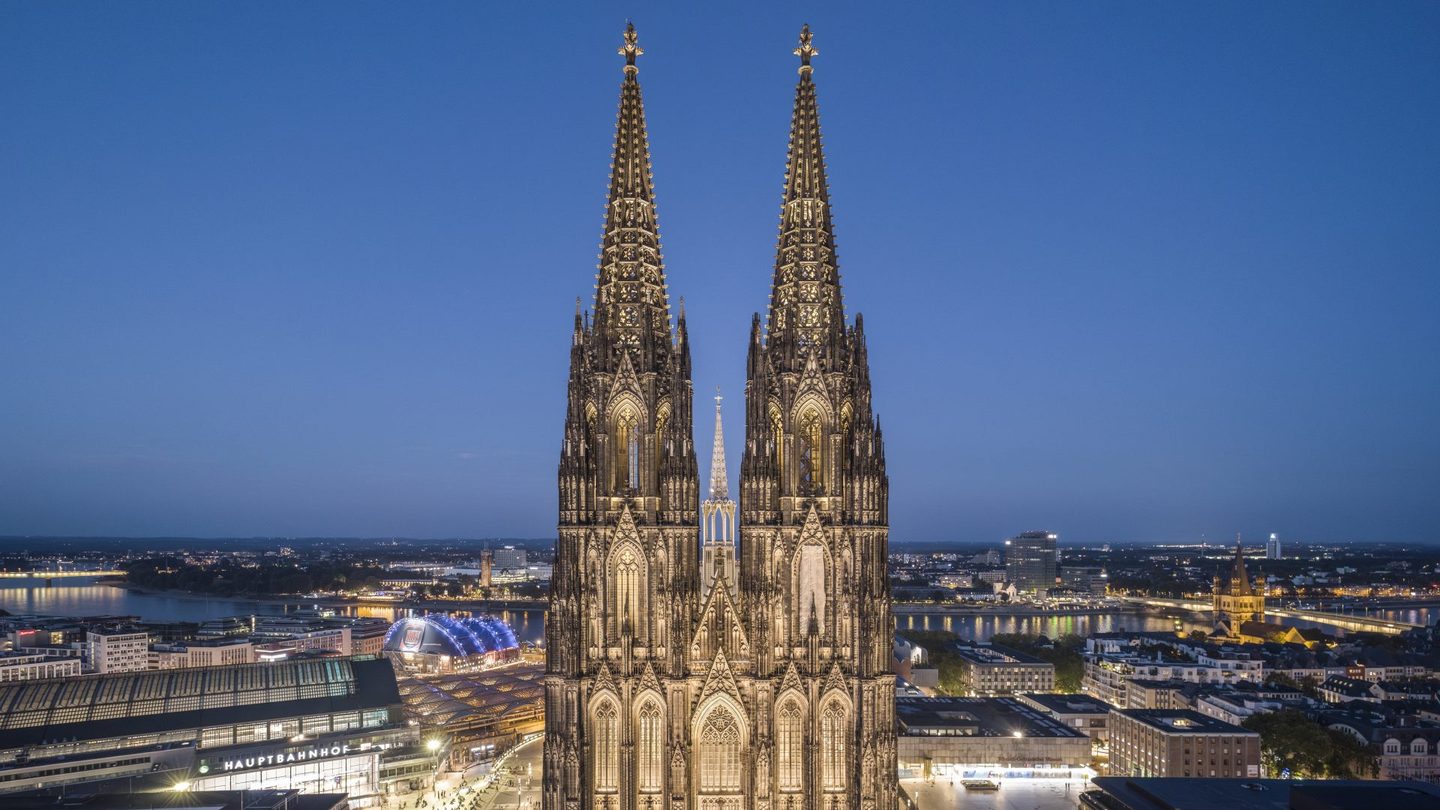
Directional and grazing light, played against shadow, hands the facade its depth back, tracing buttresses and pinnacles up toward the 157-meter spires. The newest move sits inside the towers, where fixtures shine outward through the Gothic tracery and turn the stone screen itself into the light source.
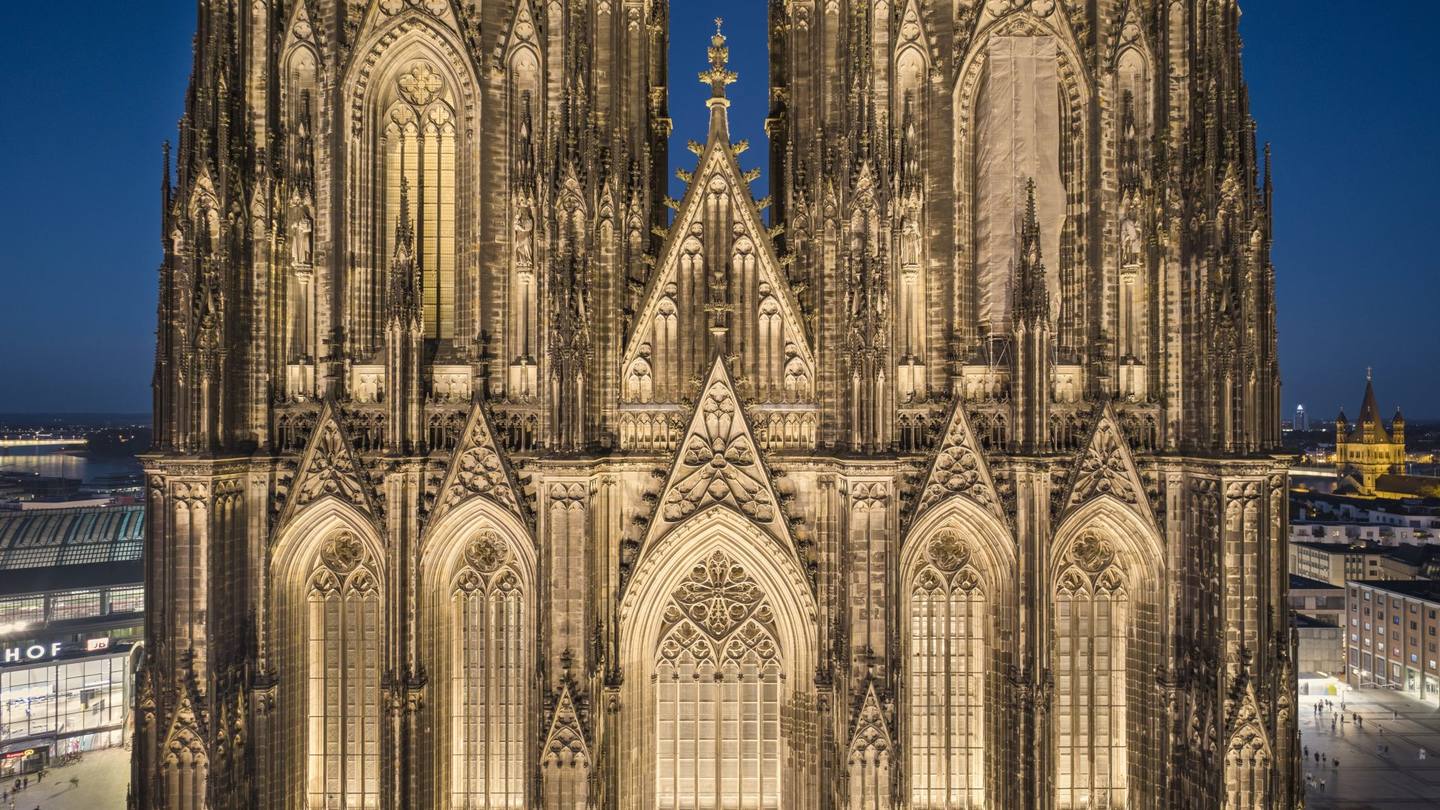
The rig is fully dimmable, its warm white tunable up to 2,700 K to sit with the sandstone, and it runs from two control points, one at ground level and one in the crossing tower, with remote access on top. The lights can be set one by one or across the whole building at once.
At night the towers turn to lace.
Stainless pylons at the doors, top honors on the shelf
Down on the plaza, slim stainless-steel pylons carry shielded modules that wash the entrances and portals, while spotlights pick out chosen elements of the facade above. Every source is shielded, so nobody crossing the square takes a beam in the eyes.
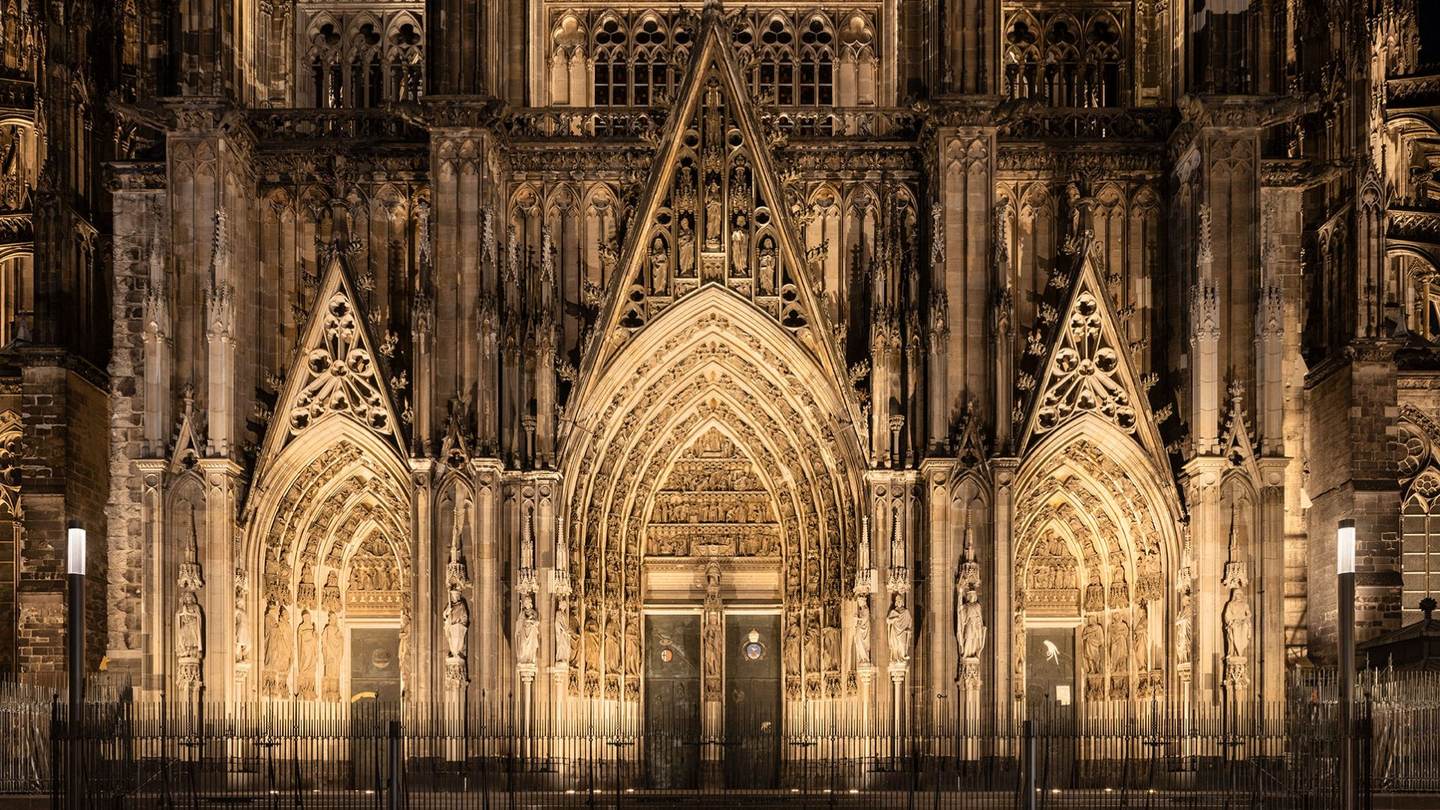
The awards shelf filled fast in 2026: the IALD handed the project its Award of Excellence and its Radiance Award, the darc awards named it Best of the Best, Rome gave Gold, and the AZ Awards gave it Lighting Schemes.
Stand on the Domplatte after dark and the method explains itself: light follows the architecture instead of drowning it, on a fifth of the old power draw. Any city guarding a landmark facade should steal the discipline, clamps and all; the glow itself belongs to Cologne.