
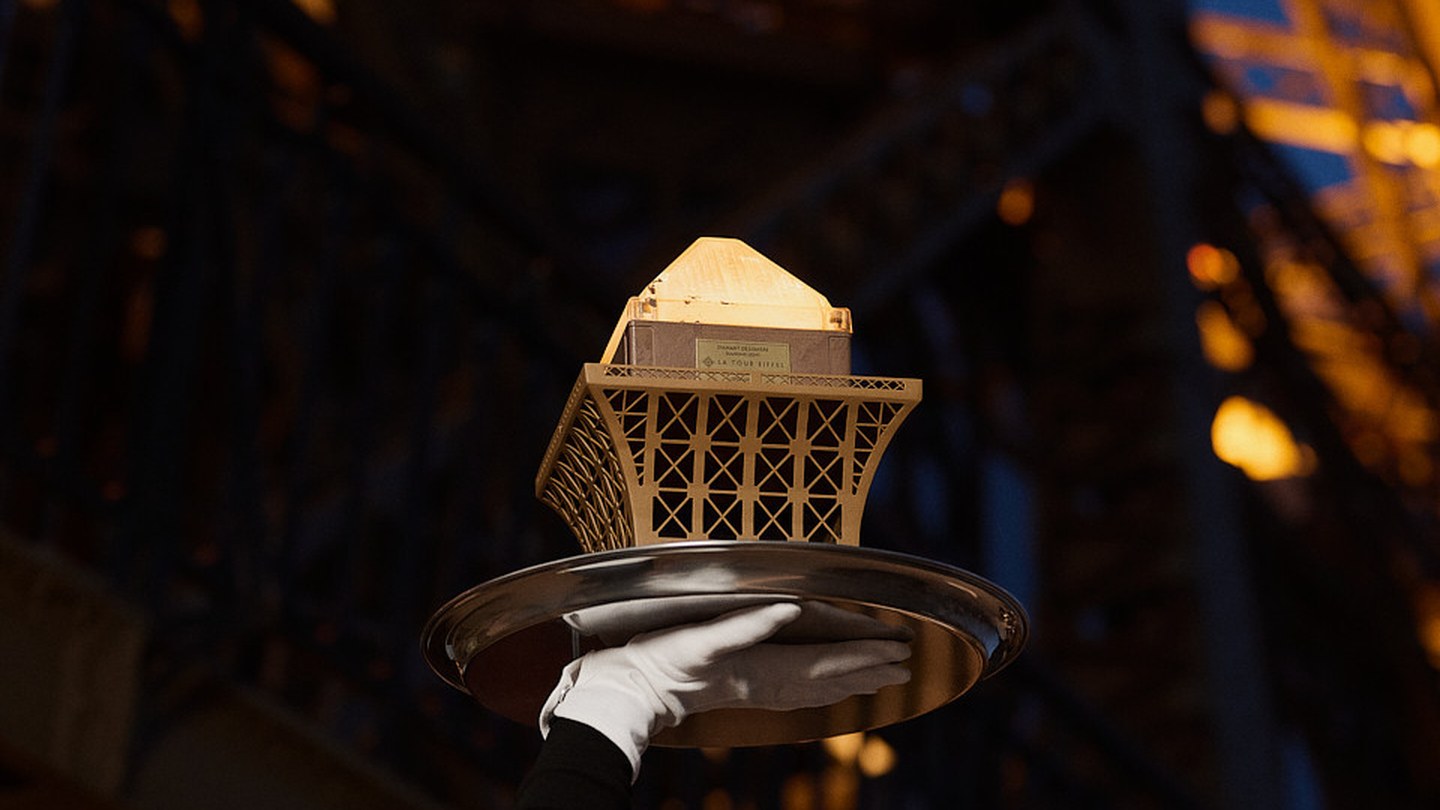
Every evening of the year, the Eiffel Tower sparkles for the first five minutes of every hour, 20,000 bulbs flashing over Paris in a rhythm the whole city can set its watch by. The bulbs wear out. Nearly 400 fittings come down each year so the display never dims, and this year some of the retirees got a second job instead of a scrap bin.
The Diamant de Lumière sets one of those retired fixtures on a new lattice base and makes it a lamp again: three modes, 500 numbered pieces, $1,110 at the tower’s own boutique.
The bulb spent its working life 300 meters up
The sparkle is the younger of the tower’s two night acts. Lighting engineer Pierre Bideau devised it for the turn of the millennium, a field of bulbs laid over the older golden glow, and Parisians liked it so much that the show never switched off again. Each bulb fires in turn, which is why the tower seems to boil with light instead of shining.

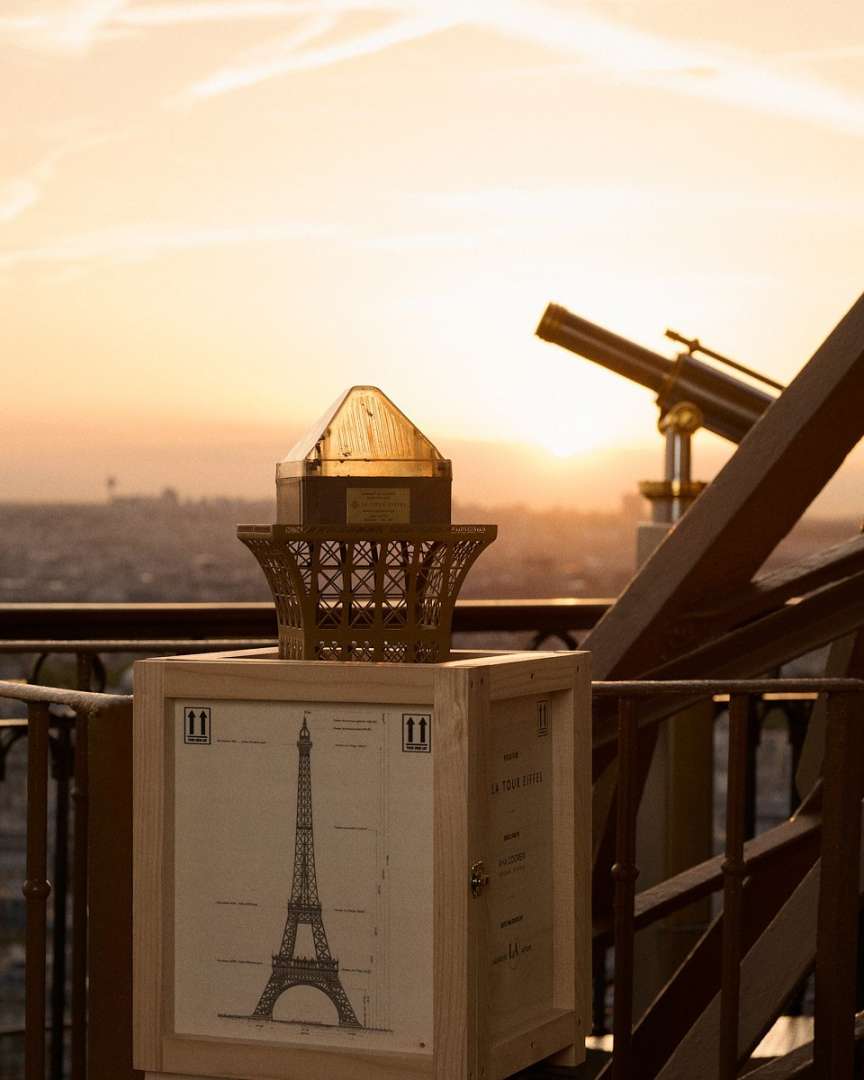
Working life up there is hard on hardware. Wind worries every seam, the iron swings between summer heat and winter frost, and the fittings gather faint traces of paint and small marks left by the years and the big events in the monument’s life. Some of that history is still readable on the housing of the lamp in this piece, if you look at it the way you’d read a well-traveled suitcase.
The tower has parted with retired bulbs before. Diamonds of Light went to collectors in 2016 and 2017, handsome objects from the same sparkling field, and they sold out fast and did one thing only: sit there, dark.
Nothing on the upper section has been cleaned up for its second career. The fixture is preserved as it came down off the iron, and a numbered plaque on the housing ties each lamp to its place in the run.
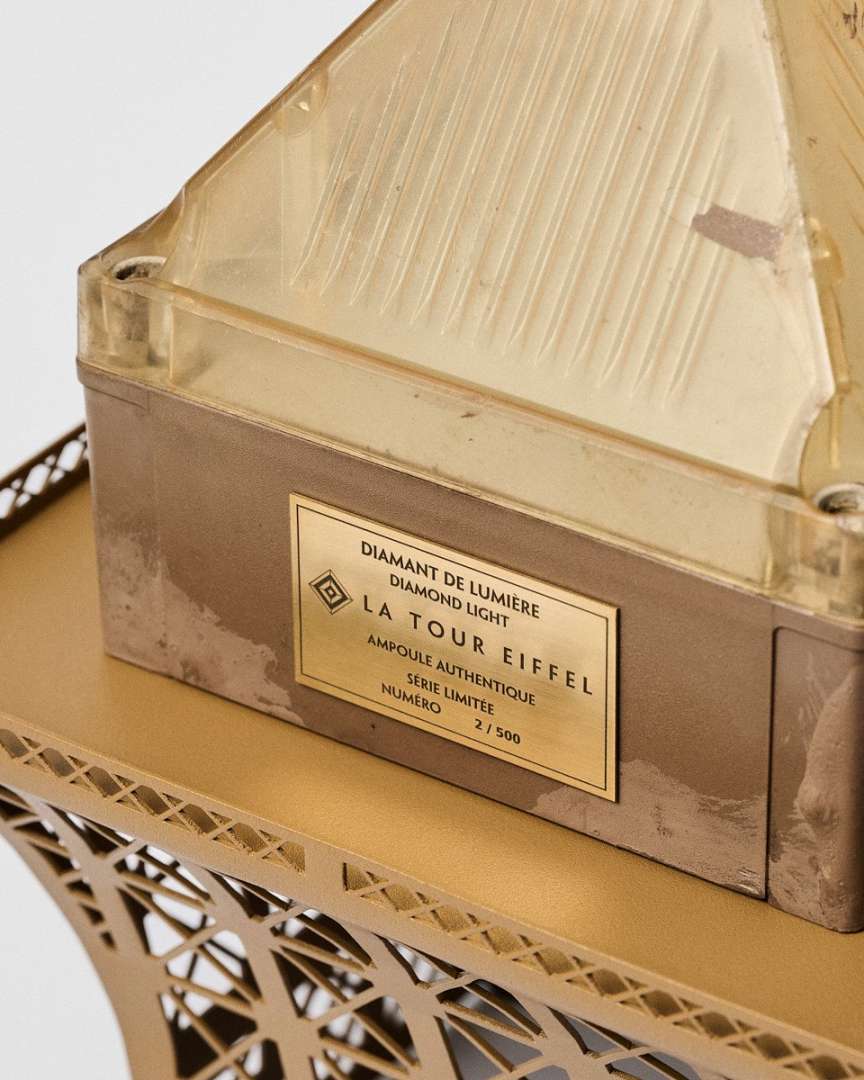
Five hundred pieces, each one numbered, each one carrying a different set of scars.
A base that borrows the tower’s summit
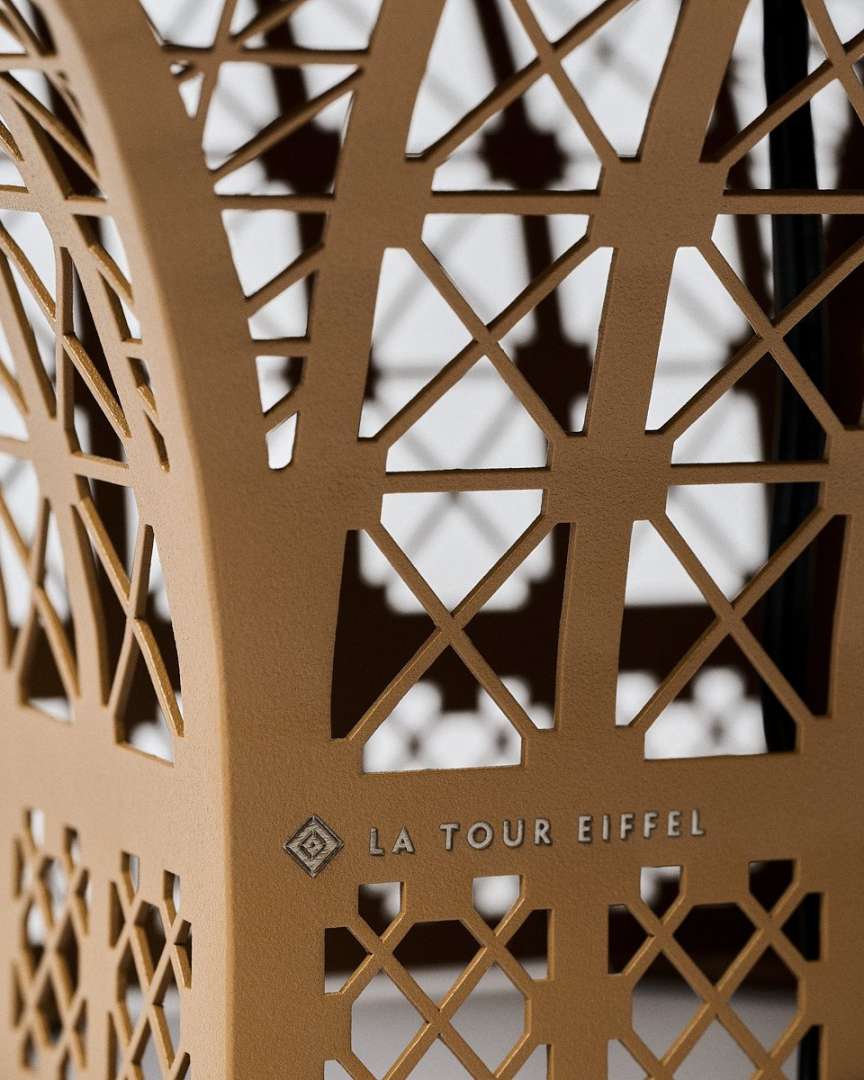
Aki and Arnaud Cooren, the Paris studio, shaped the new base to echo the top of the tower, the stretch of ironwork its fixture once lit. Cross-bracing runs through the base in the same lattice language as the monument, scaled down until it fits under one hand, and the pyramidal housing crowns it like the summit it came from. A small tower that happens to light up.
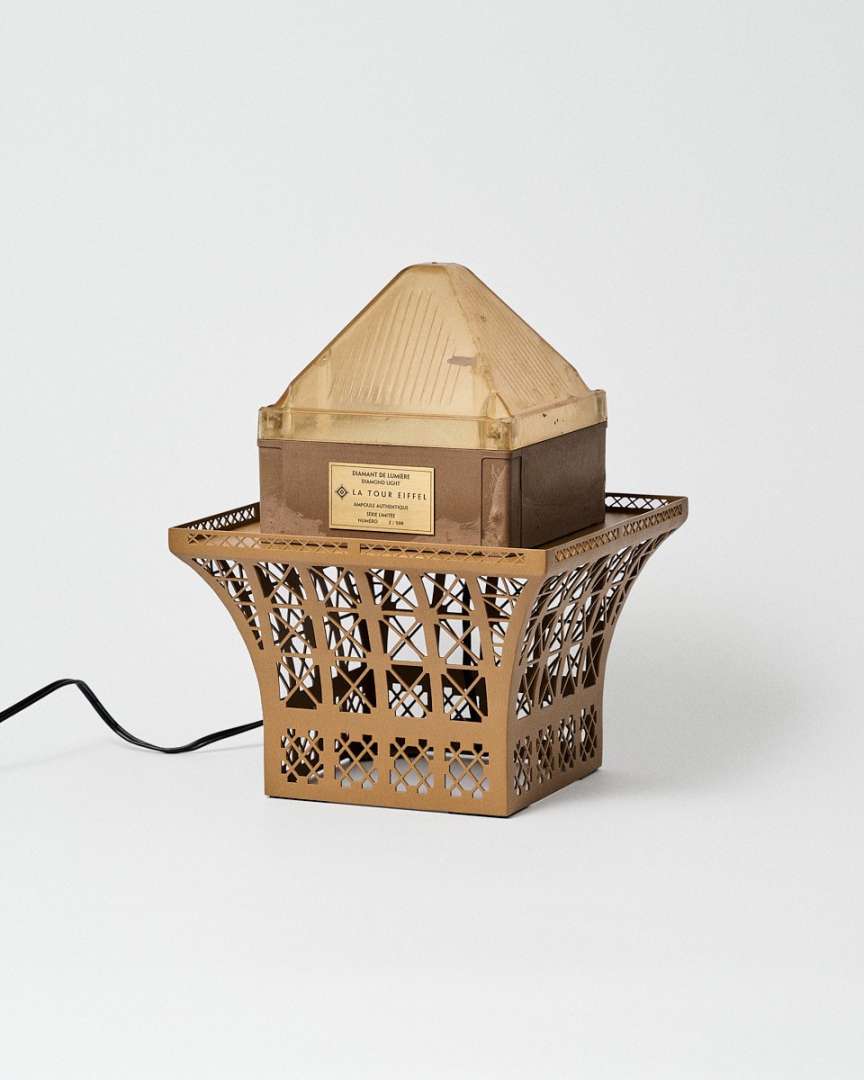
The drawings came out of Gustave Eiffel’s own plans, published in his La Tour de 300 mètres, and the finish is the golden brown the monument wears today.
The Coorens have run their studio since 1999, with work for Artemide, ClassiCon and the Manufacture Nationale de Sèvres, and their Franco-Japanese schooling shows in the restraint. One material carries the whole object, an iron alloy, and the tower-strength glare up top has been re-tuned into a softer, warmer light meant for the inside of a room.
Three modes, set to the tower’s clock
A rotary selector on the housing clicks through the settings with a watchmaker’s certainty, and the first mode is a steady, warm glow, the domestic version of the tower’s golden evening coat. It’s the mode the lamp will live in most of the time, burning at the edge of a room while dinner happens around it, bright enough to change the mood of a wall and far too polite to steal the evening.
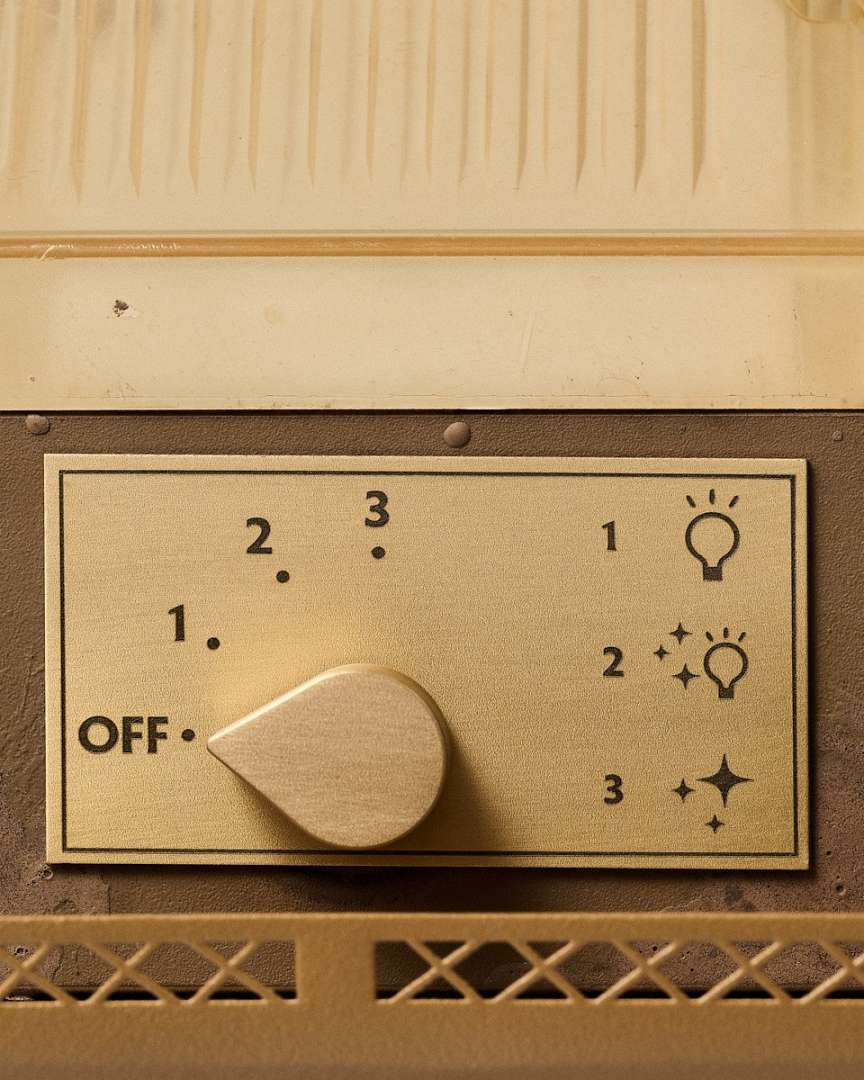
The second mode runs the monument’s own schedule: five minutes of sparkling, then 55 minutes of steady golden light, at the top of every hour.
The third gives you the sparkle alone, the housing flashing against a dark room with darkness in between.
The hardware stays modest on purpose: 24 LEDs behind the old housing, a 12-watt ceiling, a 12-volt supply, and a universal plug with adapters in the box. The lamp stands 10.4 inches tall and weighs 2.9 pounds, and the base alone runs 4.9 inches high, flaring from 5.1 inches wide at the foot to 7.5 inches at the top.
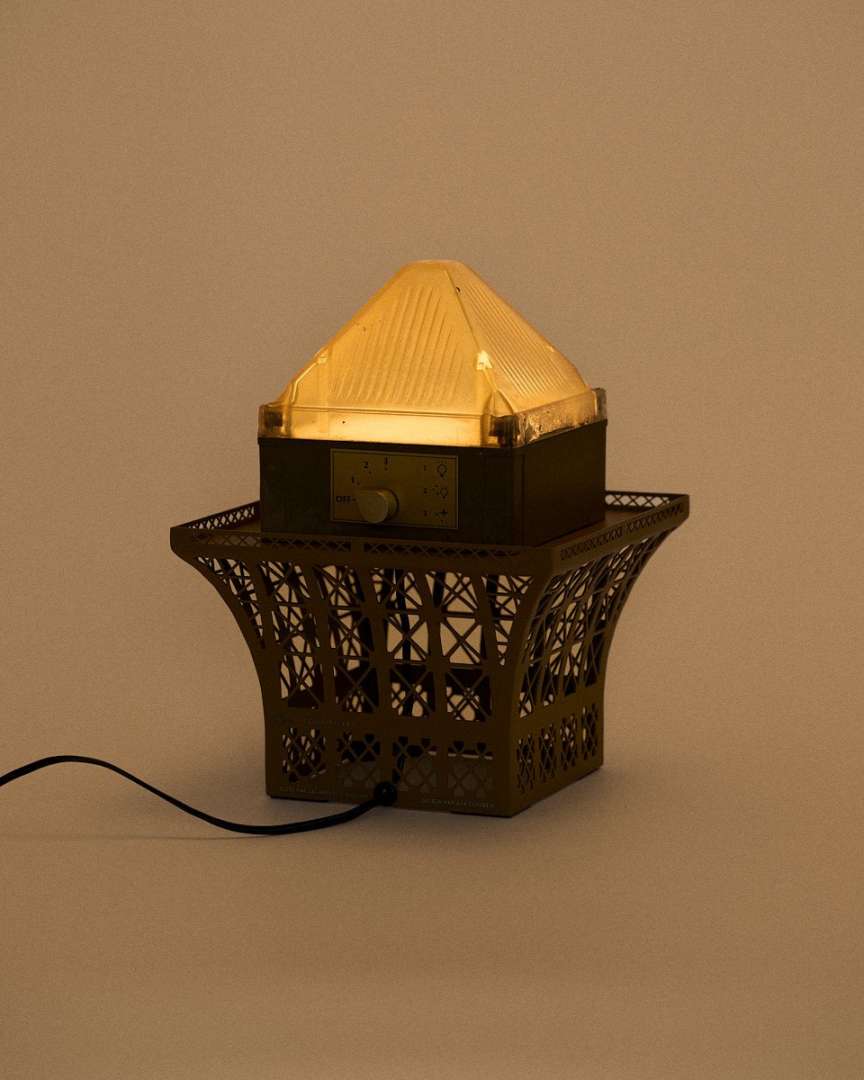
Set expectations by one word: ambient. This is mood light for the edge of a room, not a reading lamp, and no mode on the dial will help you finish a novel.
It arrives like art, in a wooden crate
The case is part of the design, not an afterthought in cardboard. The Coorens drew a wooden crate on the model of the crates that move works of art between museums, printed one face with Eiffel’s elevation drawing of the tower, and packed the lamp inside at 11.2 pounds all in. It’s the rare product box nobody throws away, because the lamp belongs in it, and because a fragment of a monument deserves better than a closet shelf.
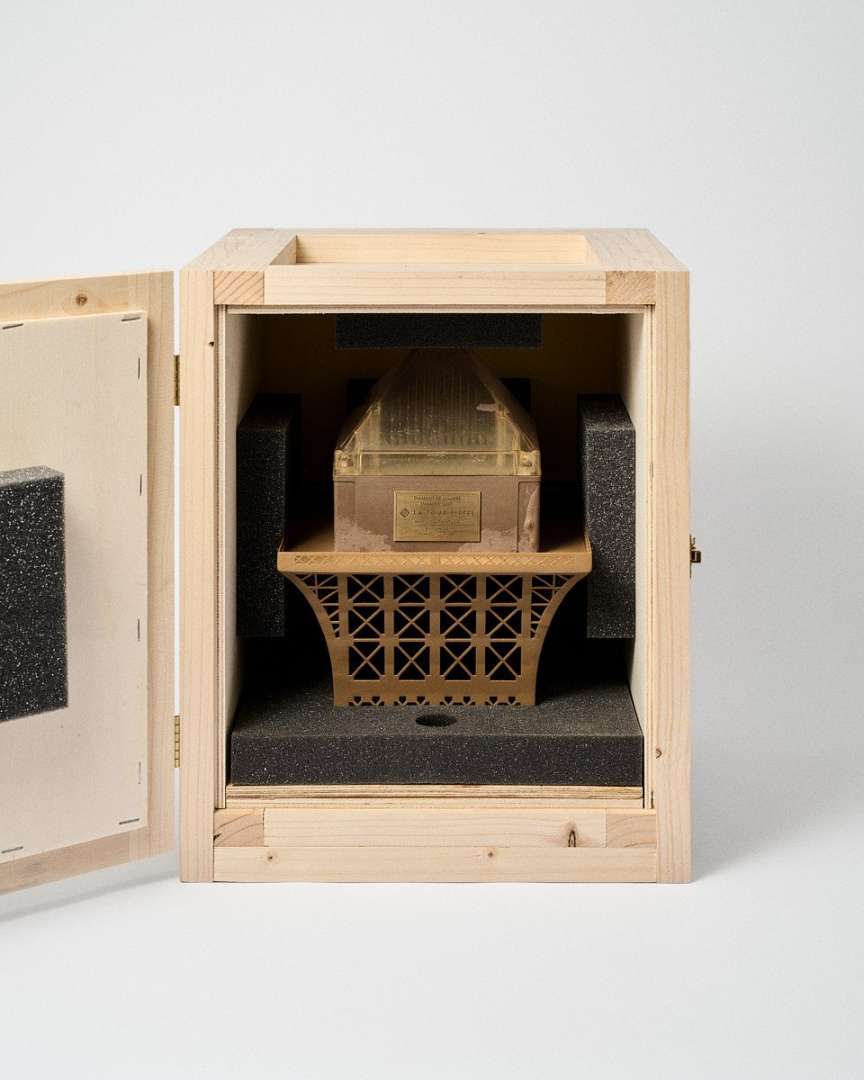
The paperwork carries weight too. A certificate of authenticity from the Société d’Exploitation de la Tour Eiffel, the body that runs the monument, attests where the fixture served, and a two-year warranty backs the lamp, which is made in Slovenia. You can watch one working, lit, in the tower’s own first-floor boutique.
It ships worldwide from Paris in a parcel built for the crate, dispatched within one to two business days, and outside the EU the price already carries the transport, customs and import fees, so the checkout figure is the final figure, no surprises at the door.
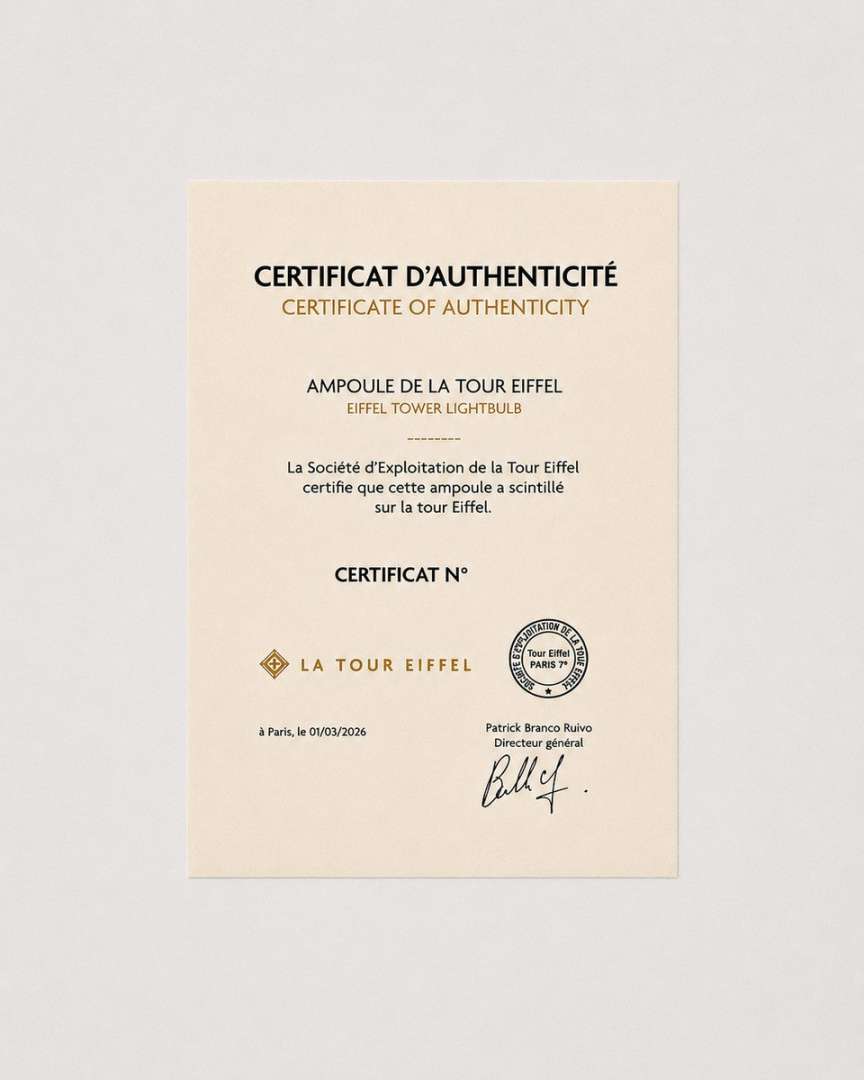
So the arithmetic is plain about what your money buys. A well-made designer lamp in iron might run a third of this price on its own merits, The rest of the $1,110 purchases provenance: a verified fragment of the monument itself, numbered and certified, still doing the job it was built to do, and still working for a living.
I keep coming back to the second mode. A housing that spent years flashing over Paris now keeps the same hours on a side table, five bright minutes at the top of every hour, and the rhythm survives the translation intact.
Souvenirs usually shrink the thing they copy. This one kept a working piece of the original, scars, patina and all, and let it keep working.