
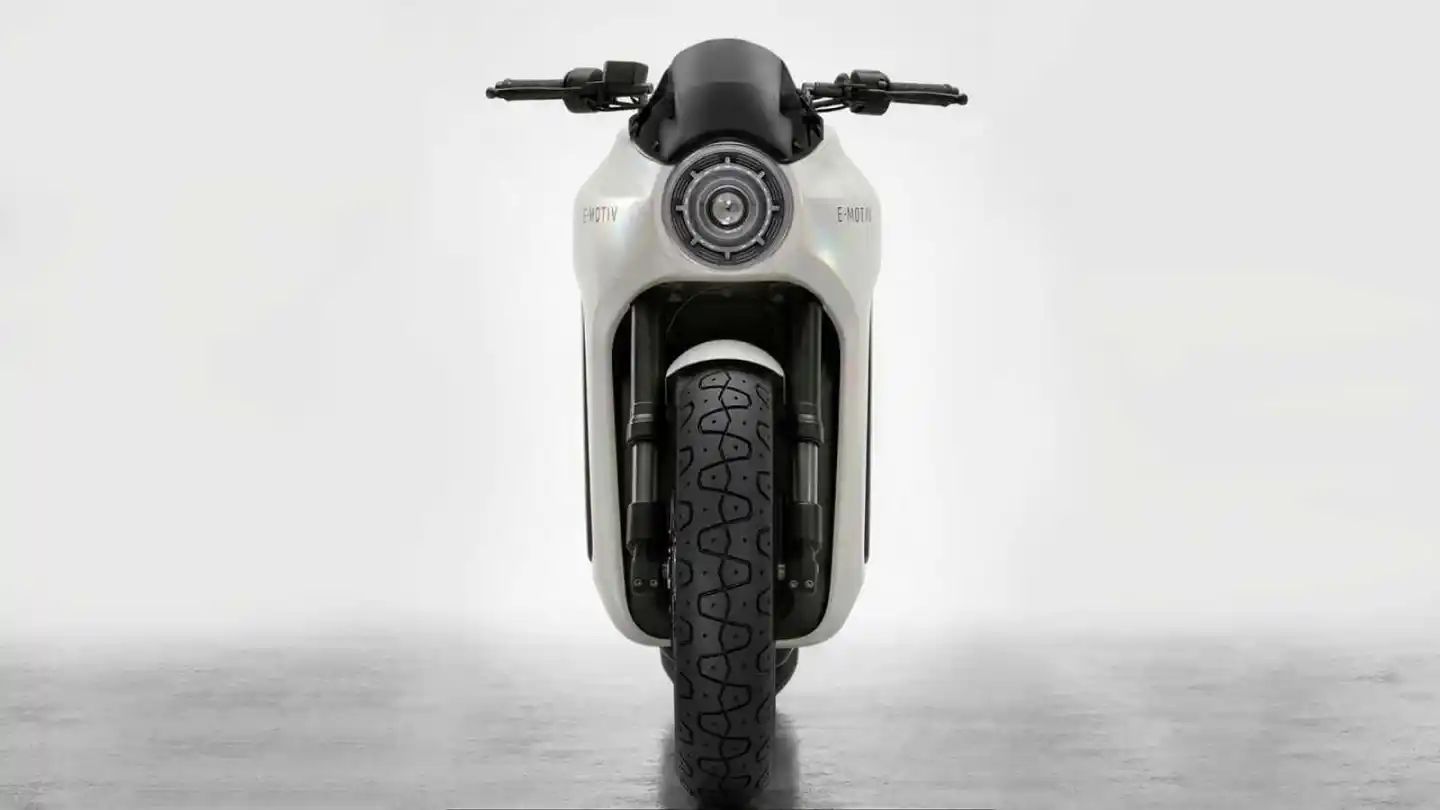
Electric motorcycles usually skip gears entirely, and strong torque covers the rest. E-Motiv Shift Systems brought a two-speed powershift transmission to EICMA 2026 anyway.
A single-speed drive has ruled the category for years, mostly because an electric motor pulls hard from a standstill and keeps pulling toward highway speed. Fewer moving parts also mean less maintenance, which riders tend to appreciate on a machine built around simplicity.
E-Motiv thinks a second ratio still has a clear role, especially once a bike leaves city streets and settles into faster, longer running.
The British engineering firm builds its system on Zeroshift technology, a seamless shifting idea first developed for combustion engines almost 25 years ago. That technology reached MotoGP in 2015 through Aprilia Racing, and it’s since been associated with more than 30 podium finishes. Aprilia’s 1-2-3 sweep at the 2026 British Grand Prix sits at the top of that list.
The system appeared at EICMA 2026 as working hardware for manufacturers, presented as a transmission that brands could adopt for future electric models. That audience shapes everything about it.
Showgoers met a complete answer to a question the category had mostly stopped asking, whether electric drive wanted any gears at all.
A shift that never drops torque

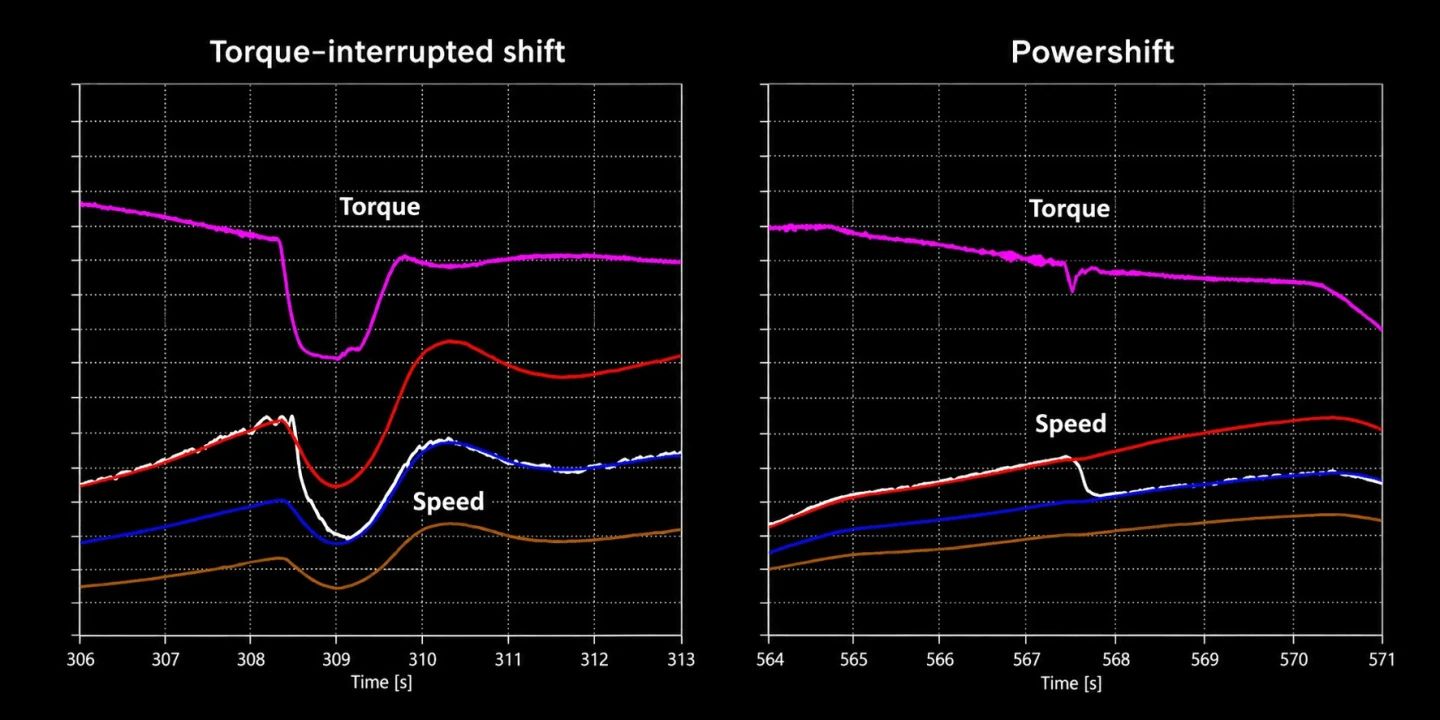
The trick lives in the engagement rings, which let second gear take over before first gear has fully let go. Torque never blinks.
Because the handover overlaps, drive reaches the rear wheel without the pause that usually interrupts a gear change on a conventional motorcycle. Riders feel a continuous push instead of a break, and the motor keeps working through the shift rather than recovering after it.
Manufacturers can also tune the shift character for each machine, choosing a smoother change for a touring bike or a sharper one for a performance bike. One system, two personalities. That flexibility lets a small firm supply very different motorcycles without redesigning the core hardware for every single model.
Two ratios keep the motor closer to its happiest range, with the lower gear sharpening acceleration away from lights and junctions. The higher gear then relaxes cruising speed, holding the motor in a calmer zone that can also improve efficiency on longer runs.
None of that requires a rider to manage a clutch lever or learn shift points, because the powershift handles the change itself.
Zeroshift’s racing record gives the idea unusual credibility for an electric motorcycle component, since the underlying engagement principle has already survived elite competition pressure. Thirty podiums talk loudly.
On open roads, the taller ratio settles the motor into relaxed cruising, which can also help efficiency once a journey stretches beyond familiar city limits.
Low gears launch hard. High gears cruise easy. The split between those two jobs is exactly what a single ratio always had to compromise on every single ride.
Simple proved hard to beat.
A prototype, a grant and a racing past

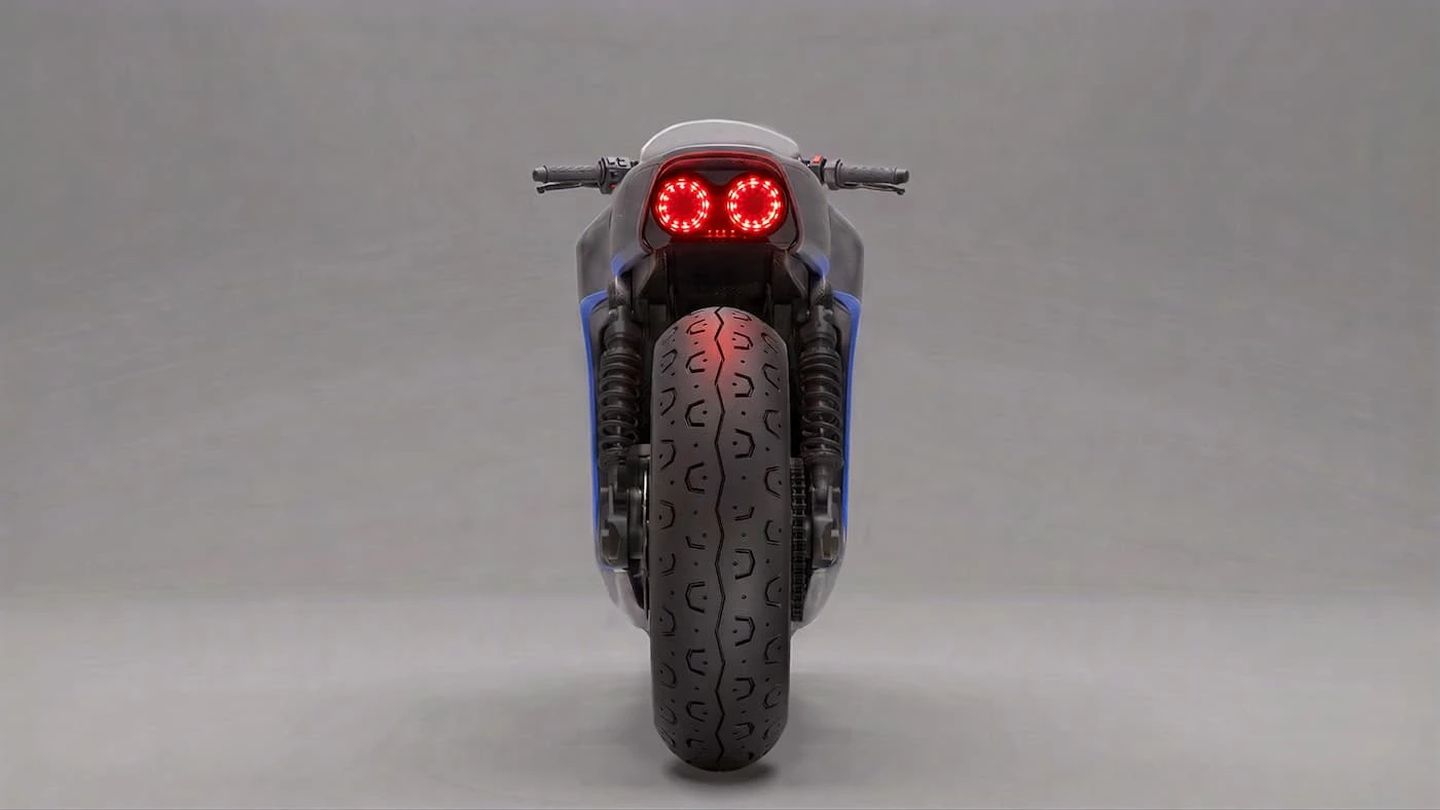
The hardware arrived at EICMA inside the Demo 1 prototype motorcycle, a clean, compact, purposeful machine designed by British consultancy Envisage. IAAPS is building it.
The Institute for Advanced Automotive Propulsion Systems, shortened to IAAPS, handles construction while the bike takes shape as a working demonstrator rather than a styling exercise. BSA and the University of Bath partner with E-Motiv on the wider project, adding manufacturing heritage and academic engineering depth.
Funding comes through the UK government’s Innovate UK Design and Build initiative, which has backed the project with a grant of about $1.34 million. That money supports development work aimed at production intent, not just a show stand moment under bright lights in Milan.
Visitors at EICMA could see Demo 1 on show, giving the transmission a motorcycle around it instead of a bench display. A whole bike explains intent faster.
Together, the partners cover research, prototype construction and motorcycle development, which spreads the project well beyond one small engineering team’s workshop.
British roots run through it. E-Motiv, Envisage and BSA all work from the UK, and the funding arrives through a UK government initiative built for design and build projects of this kind.
Electric motorcycles have spent years proving that simplicity works, and a single-speed drive remains a neat solution for many riders. The racing results behind the Zeroshift technology speak plainly enough on their own.
Instead, the two-speed system offers manufacturers a choice that the category largely stopped offering once electric drive took over. Choice is returning. A gearbox is back on the table, and this time it shifts without ever letting go of the wheel.