
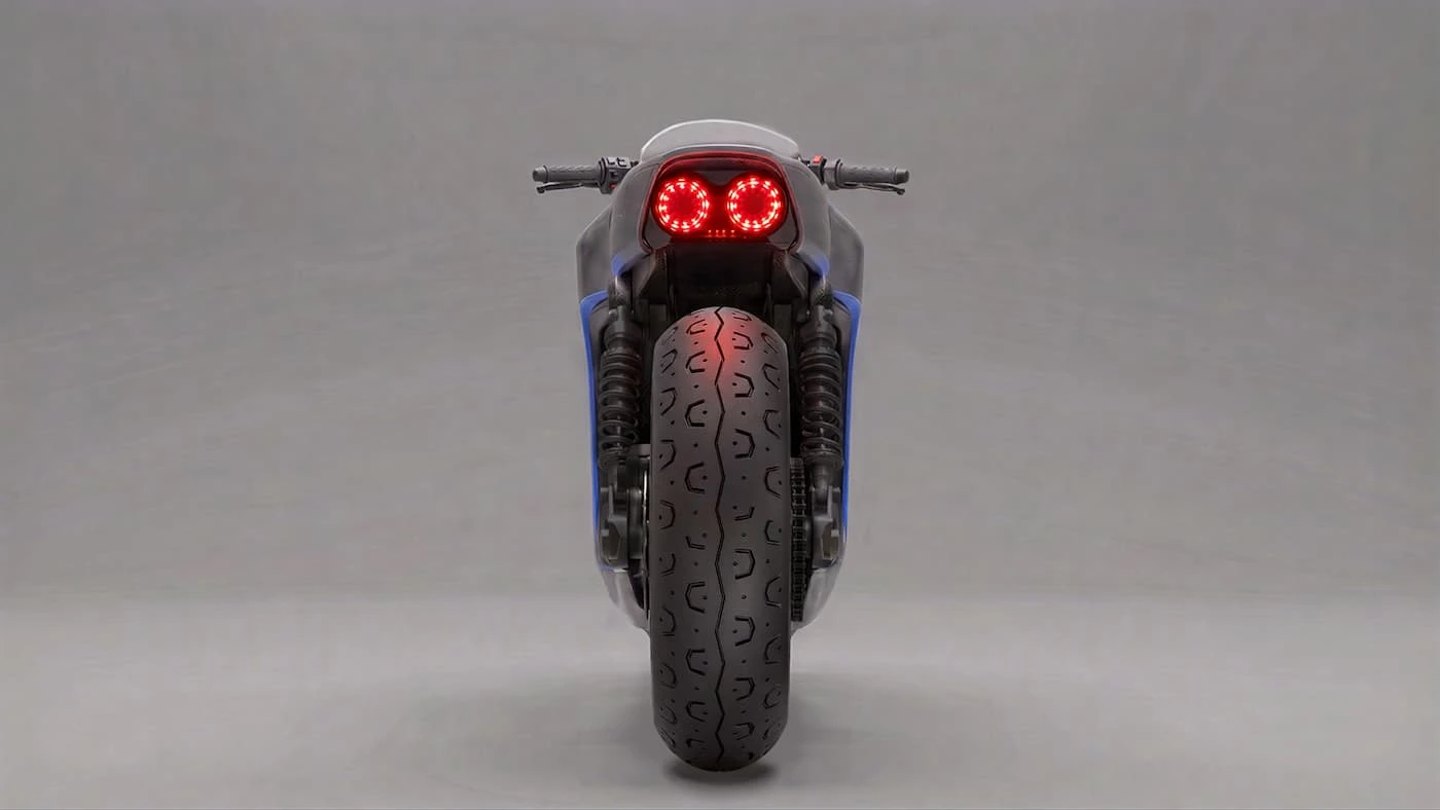
Electric motorcycles deleted the gearbox on purpose, and the deletion worked. One ratio, instant torque, nothing to maintain, and for most riding that really is enough.
The compromise sat underneath the whole time. Gearing short enough to launch hard is gearing too short to cruise relaxed, and every electric bike on sale picks a side of that trade.
British engineering firm E-Motiv Shift Systems showed a different answer at EICMA 2026 in Milan: a two-speed transmission that changes ratio without ever interrupting the drive to the rear wheel. It is called a seamless powershift, and its tagline is the whole engineering brief in five words. Drive through the shift.
The shift that never lets go

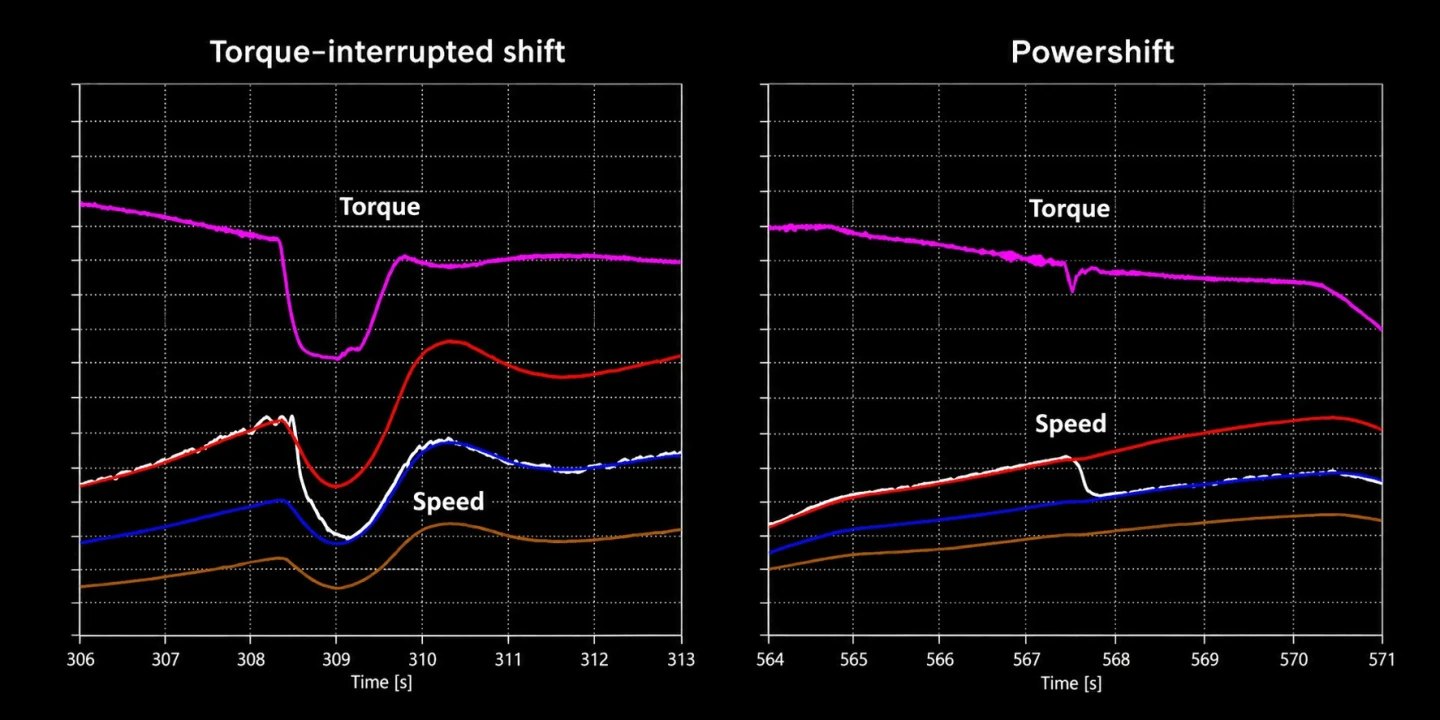
A conventional gearbox unloads one gear before it loads the next, and the rider feels that gap as a pause in the shove. E-Motiv’s system comes from the Zeroshift principle, where shaped dog-engagement rings let the incoming gear pick up the load before the outgoing gear has fully let go.
Torque hands over instead of dropping out. The chart tells the story in two curves: one dips to nothing at the shift point, the other carries straight through, and that unbroken line is, in the end, the entire product being sold here.
There is no clutch work for the rider and no dead moment mid-corner. The drive simply continues on a different ratio.
Racing hardware, rebuilt for electric drive

Zeroshift’s seamless selector gearing was developed for combustion engines about 25 years ago, and Aprilia Racing has run the first-generation system on its RS-GP MotoGP bike since 2015. The family record since then runs past 30 podium finishes, including a 1-2-3 sweep at Silverstone in July 2026. The electric version is a separate development, designed by E-Motiv specifically for light electric vehicles rather than adapted from the racing box.
The program carries serious backing. A $1.34 million grant project funded through Innovate UK’s Design and Build initiative validated the technology, with motorcycle maker BSA, the University of Bath and the Institute of Advanced Automotive Propulsion Systems as partners. Government money and a racing lineage do not guarantee a production future, but they move the idea well past the render stage.
What a second ratio buys
Two ratios let engineers keep an electric motor nearer its efficient operating band. Low gear gives the launch punch riders expect from an electric bike, and the taller second ratio settles the motor down at highway speed instead of spinning it at the top of its range.
The same hardware can also be tuned per machine, with gentler handovers for a tourer and sharper ones for a performance bike. The shift character lives in the control calibration as much as in the metal.
Manufacturers get flexibility, riders get engagement back. Shifting was always part of motorcycling’s pleasure, and the single-speed era quietly removed it. A powershift restores the ritual without restoring the interruption that made electric drive feel clean in the first place.

The case against it is simplicity. A single-speed drive has almost nothing to wear out, and adding a gearbox adds parts, weight and cost to a formula that sells itself on having none of those.
E-Motiv’s reply is that the trade only has to win on the bikes where one ratio genuinely holds the motor back. The system is pitched as a transmission and control package for vehicles where more than one ratio adds value, from motorcycles to ATVs and other light electric vehicles.
That framing matters for how this spreads. A gearbox sold as a rider feature lives or dies on feel. A gearbox sold as a powertrain tool, one that lets a manufacturer spec a smaller motor or stretch a battery, gets evaluated on spreadsheets, and spreadsheets are where component suppliers win their contracts.
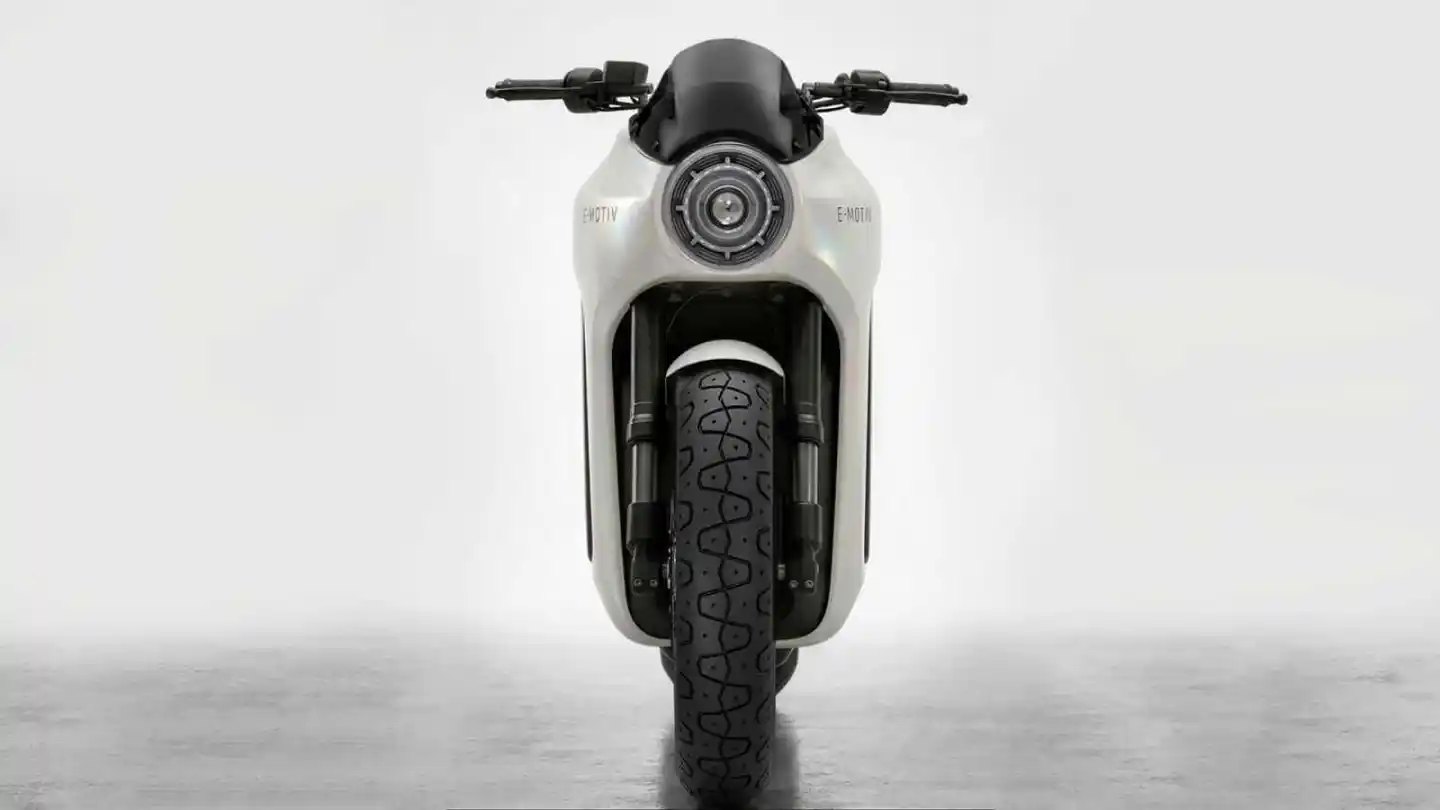
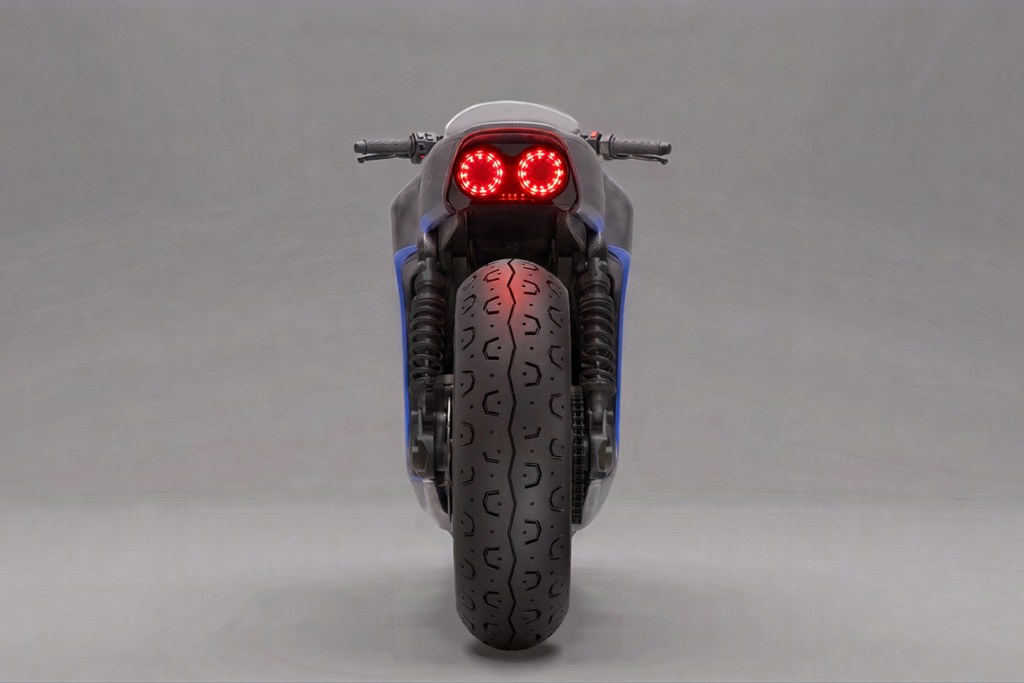
The demonstrator matters here too. Demo 1, the bike built to prove the transmission on real roads, was conceived by British design consultancy Envisage and is being built by IAAPS, with completion targeted for January 2027 and road testing from early 2027. It looks like a proper motorcycle rather than a rolling test bench, which is its own statement: E-Motiv is pitching this to manufacturers as a product, not a science project.
No production bike has been named yet, and E-Motiv has published no figures for the system’s weight, ratios or efficiency gains. Those numbers decide whether the gearbox earns its place. Until they land, the idea stands on a strong pedigree and a clean piece of logic. Electric motors never needed gears to move. They might still want one to move better.
The watch now is the 2027 test season. Demo 1’s road results will be the first public evidence, and the first manufacturer to license the system will say more about its future than any show stand can. Transmissions spread through racing long before they reached the street, and this one has already done the racing part.