
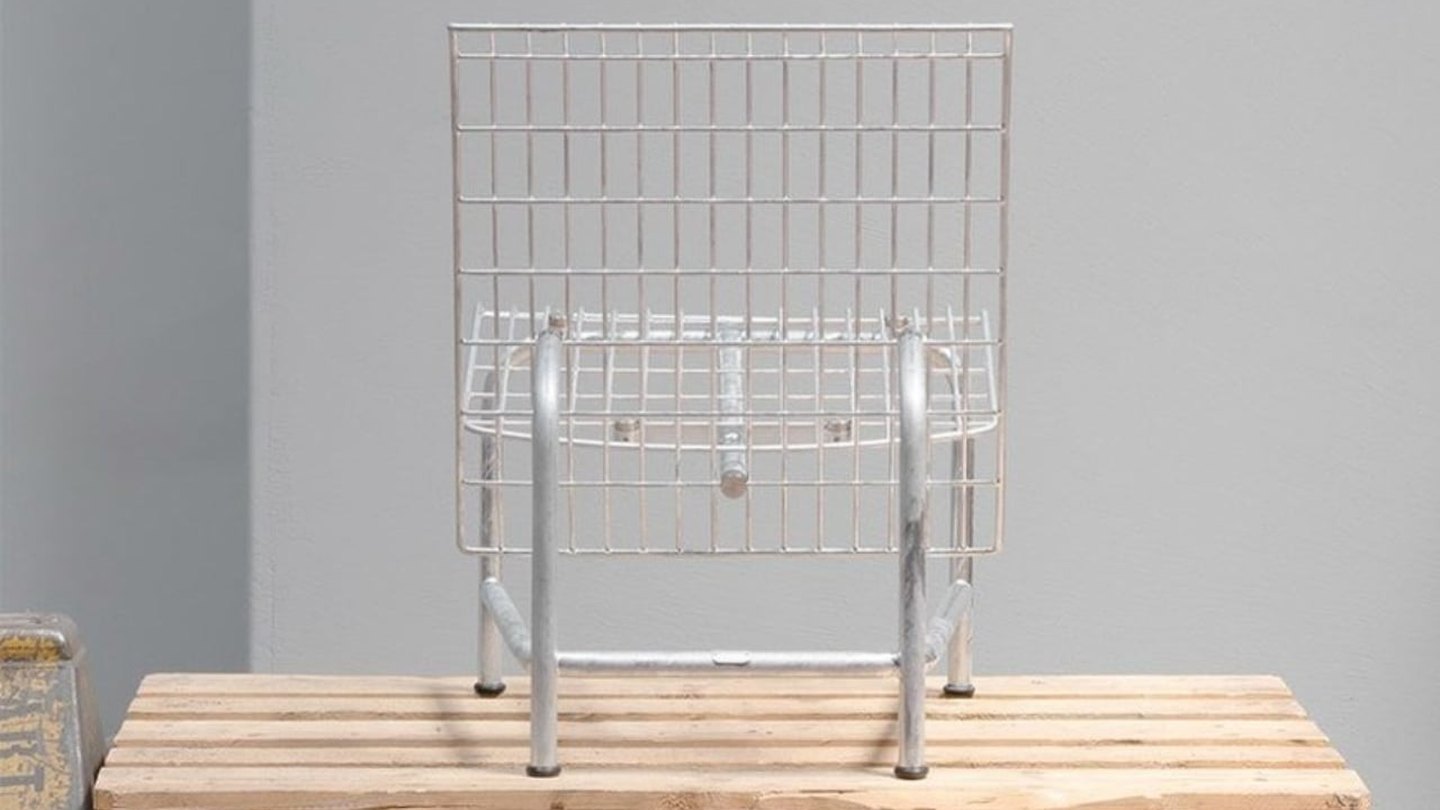
Outdoor chairs usually die from the top down. The frame holds, the legs hold, and the seat that took three summers of rain gives up first, so the whole chair goes out with the bulk trash. Moritz Schmid designed the Patio Chair for Swiss maker Embru around that exact failure, and the fix is almost offensively simple. The seat is a component. Components can be swapped.
It’s a lounge chair, see-through from most angles, a tubular steel frame wearing an open wire grid.
Embru is not a startup with a render and a crowdfunding page. The company has made furniture in Rüti, in the Zürcher Oberland, for more than a hundred years, mostly for schools, offices, and care homes, rooms where chairs get used hard and replaced reluctantly. The Patio Chair brings that contract mindset home to the patio.
The seat is a part, not a life sentence
Embru built the chair on a modular construction, with a mounting system developed specifically to hold different seating surfaces. The company calls the approach Design for Repair. Individual components come off and get exchanged or repaired when they wear, which stretches the chair’s working life and keeps a sound steel frame out of the scrap stream for the sake of one tired panel.

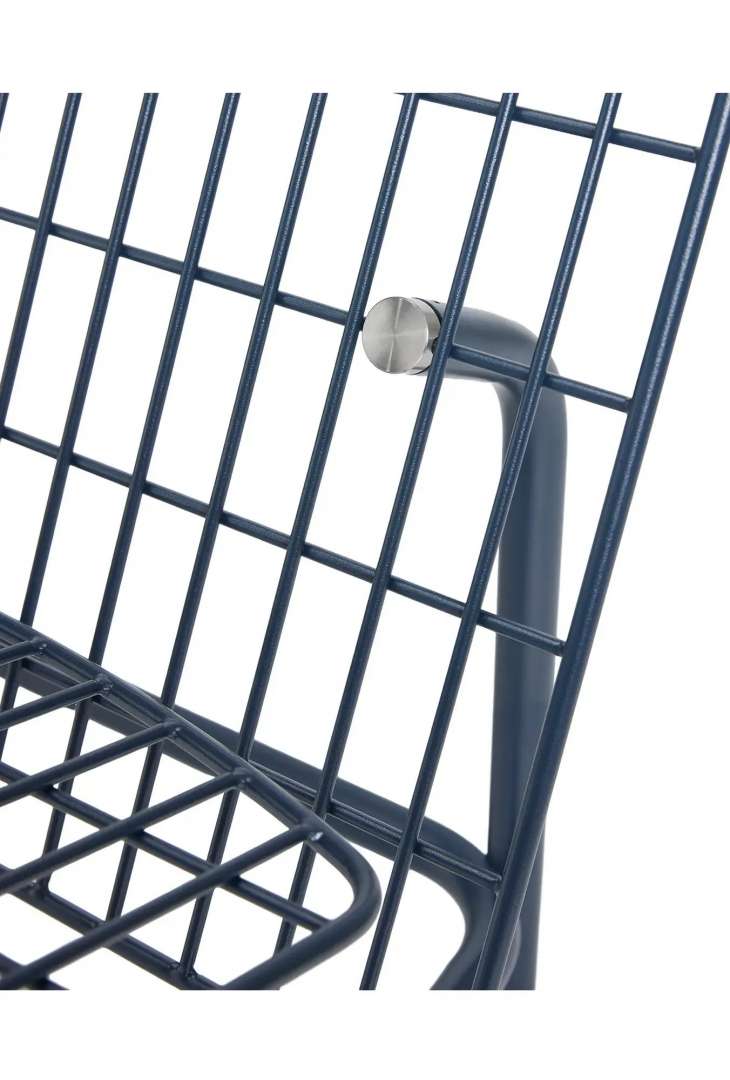
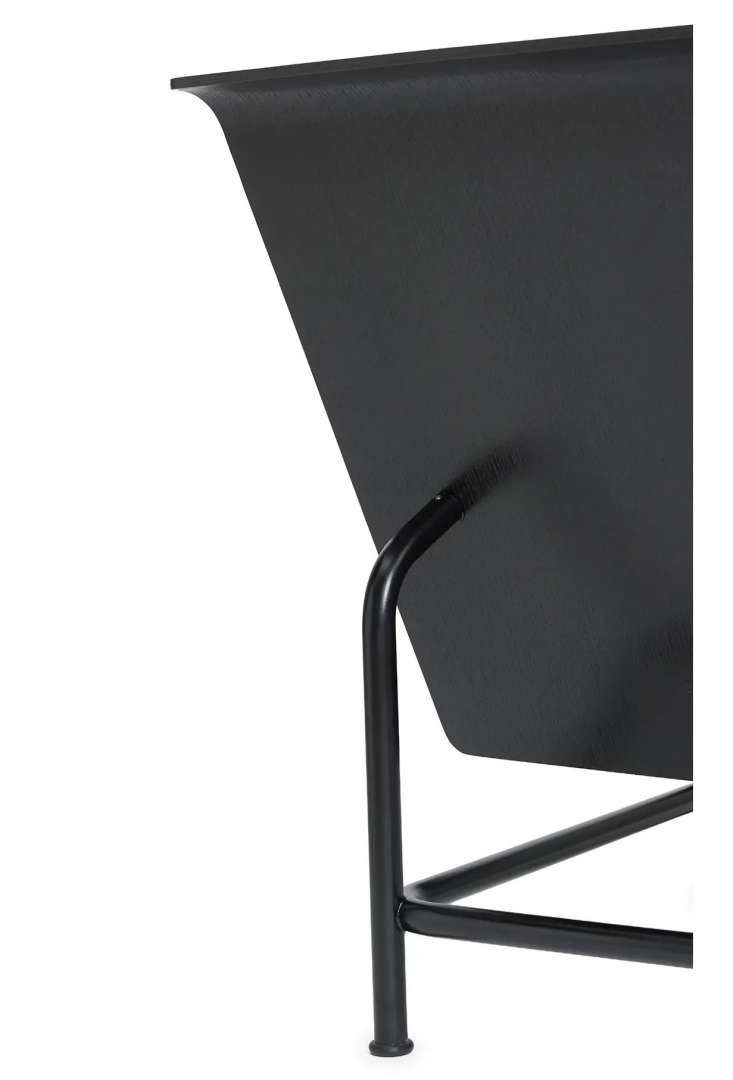
The hardware doesn’t hide. That round fitting interrupts the grid where the backrest meets the frame, and you can read the chair as an assembly of parts before anyone explains the engineering behind it. I trust a repair story I can see.
Swapping surfaces is the part I keep coming back to. A chair bought as a patio grid can move indoors as a veneer piece when the household changes, and a weather-beaten grid panel becomes a part order, not a funeral. Furniture rarely plans for its owner’s second thoughts. This one does.
Hotels and restaurants will care more than most of us.
Embru aimed the flexibility at the contract sector, where a broken chair is a maintenance ticket and a discontinued model is a slow problem that spreads across a whole terrace. One swapped panel beats one skipped replacement cycle, and a row of matching chairs stays a row. Homes get the same benefit on a slower clock: the wear shows up in years there, not months.
Nothing on this chair is precious except the frame, and the frame is bent steel tube.
Grid for the patio, veneer for the living room
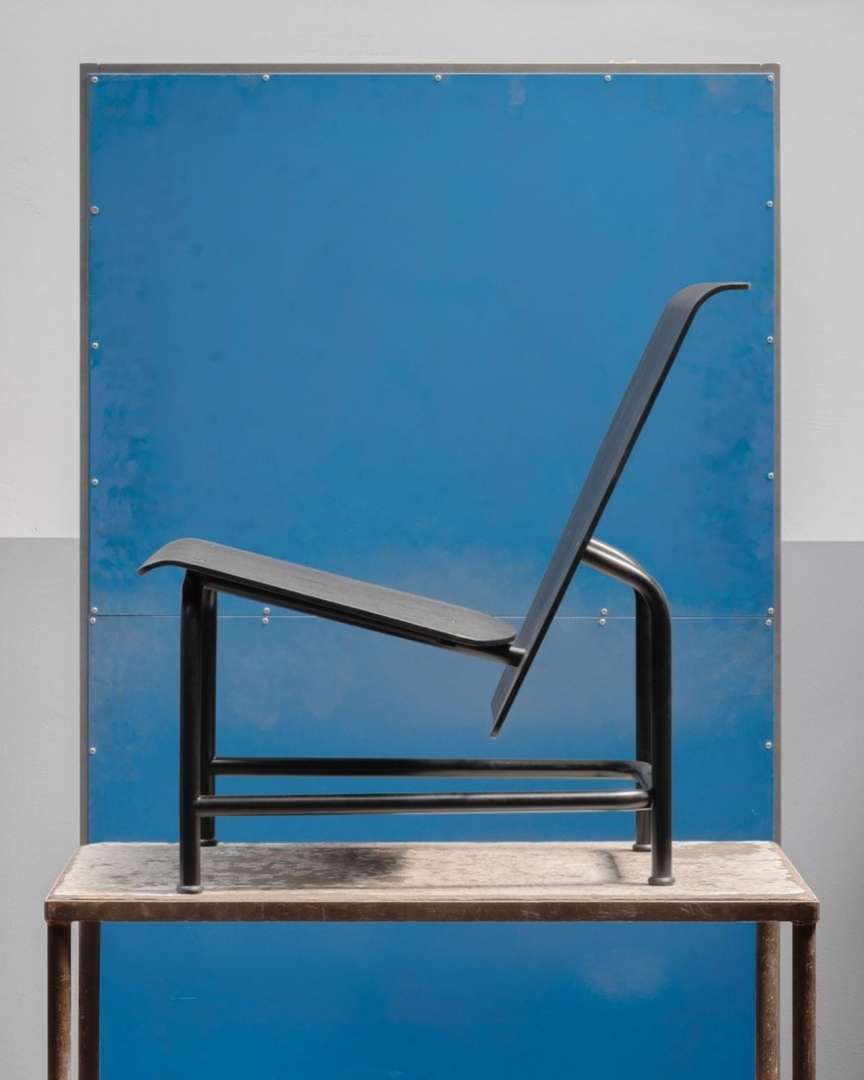
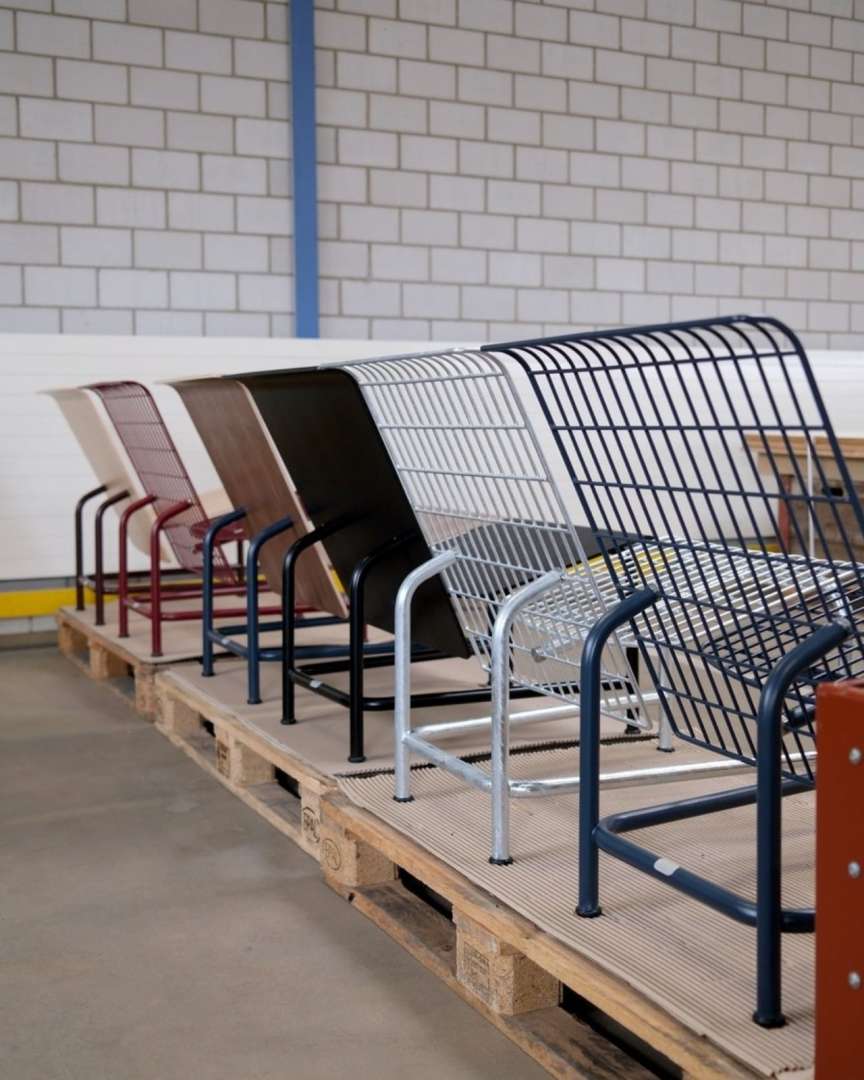
Two surfaces ride the same frame. Outdoors it’s the open grid, which lets the rain fall straight through and leaves the chair nearly transparent against a hedge or a balcony rail. Indoors, wood veneer panels turn the same skeleton into solid planes, and the see-through lounge chair becomes a piece of furniture that can hold a wall.

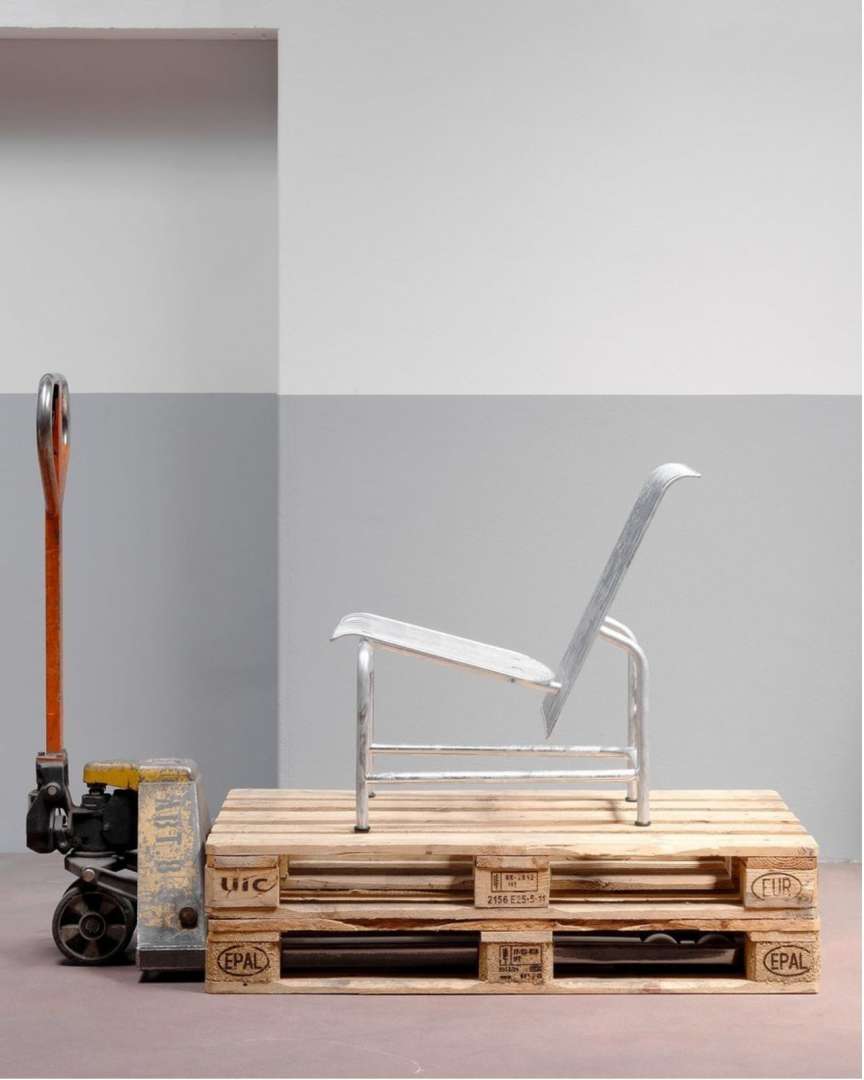
The veneers run oak, ash, black ash, and walnut. Frames come in wine red, gray-blue, black, or hot-dip galvanized silver, the raw finish garden furniture has worn for decades. The footprint stays compact in every version, 77 by 77 centimeters, about 30 by 30 inches, so the chair fits the small balcony it will most likely end up on.
My pick is the gray-blue grid. It gives the industrial geometry enough color to look intentional without turning the chair into the loudest object on the patio, and the grid is the version that shows its mounting hardware off.

Three years in Rüti, standing on an award winner
The Patio Chair follows Schmid’s Park Chair, the garden chair Embru launched in 2022 and took to a Design Preis Schweiz win in 2023. The family resemblance lives in the bent rear legs and the monochrome calm. This one took three years of development work with Schmid before Embru showed it, a long runway for a chair carrying no mechanism, no upholstery, and no electronics. Embru has also been shifting its steel supply toward recycled XCarb stock.

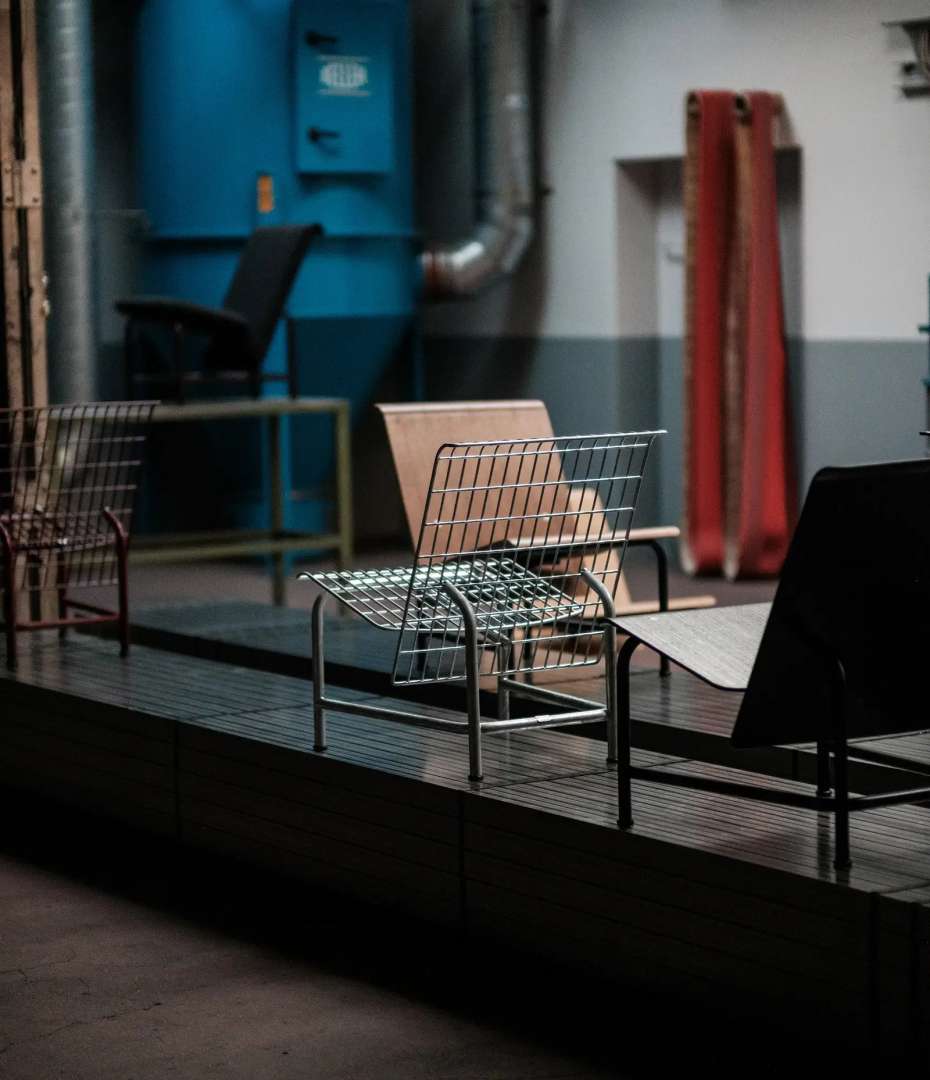
Repairability is the through-line in Schmid’s Embru work. The Park Chair was already designed so every one of its parts can be replaced on its own. The Patio Chair pushes the idea a step further, from parts you can replace to surfaces you can choose, swap, and replace again when the second one wears out.
Production stays in Rüti.
That continuity is the quiet half of the repair pitch. The company that sells a replacement panel in ten years is the company that bent the original frame, in the same building.
Schmid trained as a draftsman before studying product design in Basel, and he has run his own studio since 2008. Pieces of his sit in the design collection of the Museum für Gestaltung Zürich. The drafting background shows in this chair: the drawing carries the whole idea, and the hardware is part of the drawing.
The catch is patience, and it’s the one drawback I’ll put on the record. Embru expects the Patio Chair at the end of 2026 and hasn’t published a price, so for now it’s a promise with excellent photography. The repair promise also still needs its second half, spare parts that are easy to order at prices that don’t sting, and nobody outside the factory has logged a long afternoon in that grid seat yet.
I’d still wait on a chair designed to be repaired instead of replacing another one designed to be thrown out. If the parts support follows through, this chair’s best feature shows up years from now, on the day a worn seat gets swapped and the frame carries on.