
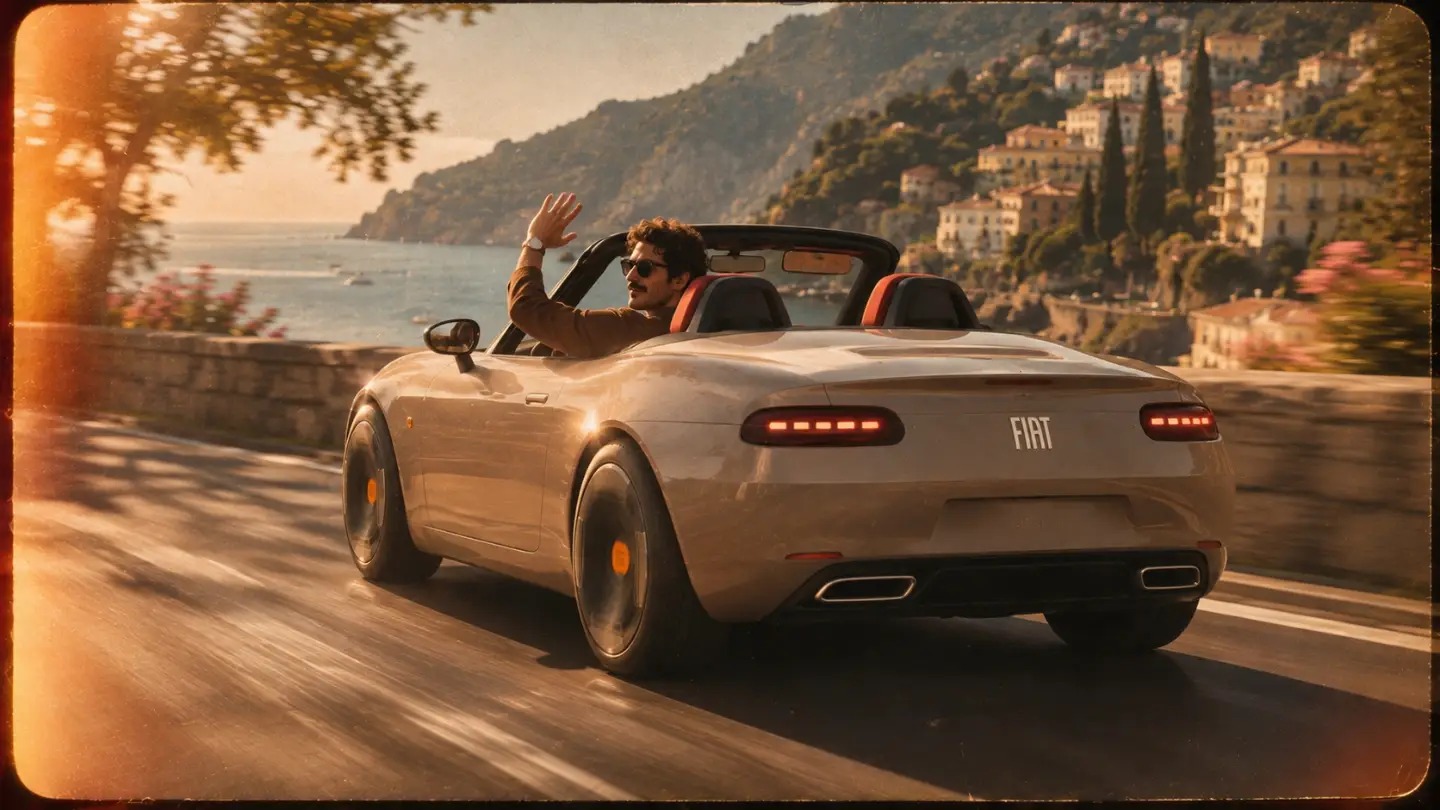
Silver-gray paint, dark wheels, and fender humps that rise like small waves. Augusto Fuchs has drawn a Fiat Barchetta for a world that never ordered one.
It’s a CGI concept. A render study posted by a designer. Fiat hasn’t announced it, planned it, or hinted at building it.
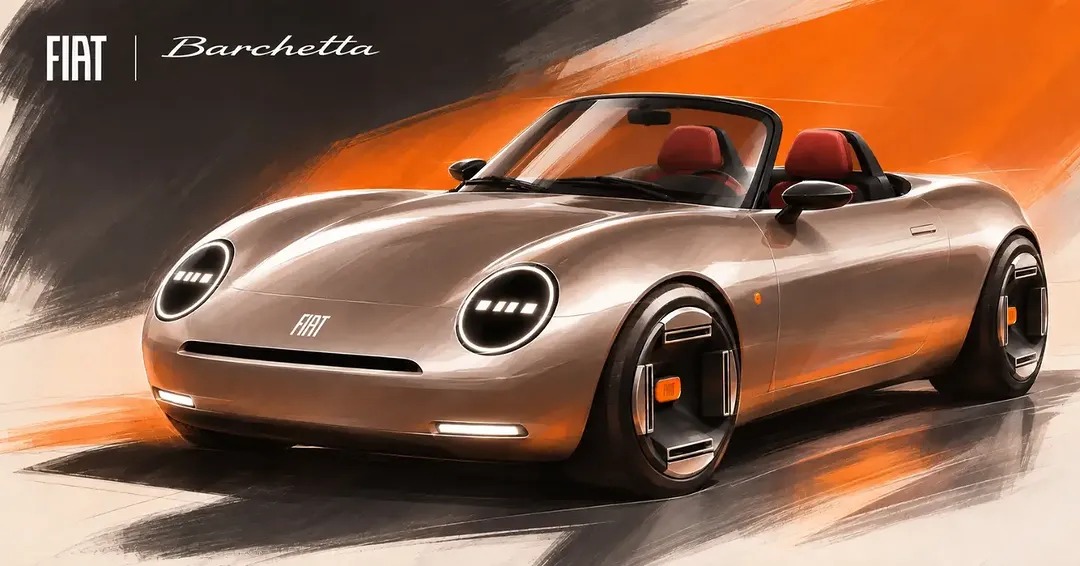
That clarity helps. Freed from a launch claim, the design can be judged as design: Fuchs keeps the low nose, the short tail, and the open two-seat profile intact, then sharpens almost every surface the eye lands on.

The shape stays familiar
Start with the side view, because that’s where the restraint shows. One clean character line runs the length of the body. Nothing else fights it.

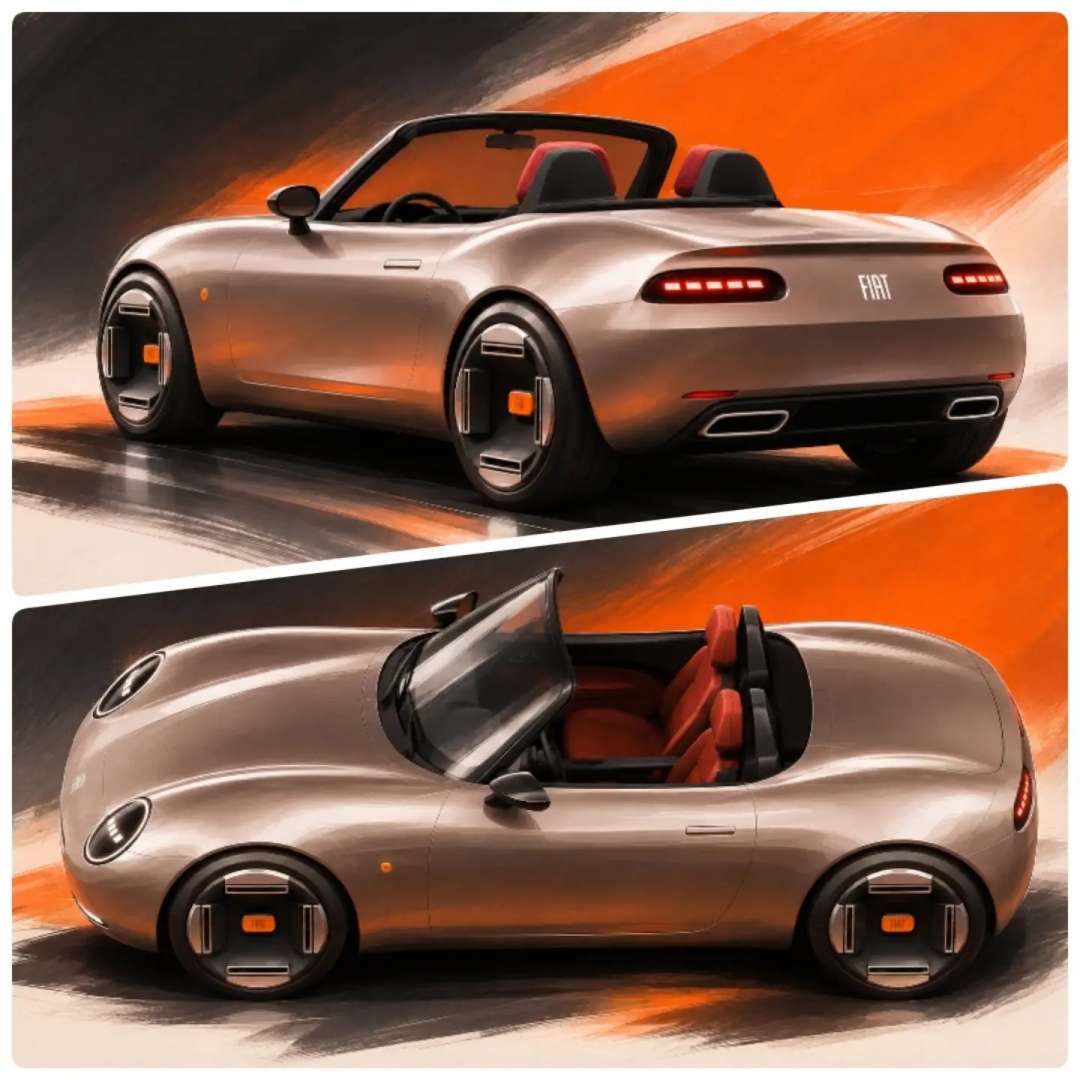
Fender humps still swell over the front wheels, echoing the original’s rounded lamps. Even the wheels carry a familiar pattern, updated instead of replaced.
Fuchs dresses that shape in silver-gray, with black bumpers and dark wheels. A solid silver Fiat badge sits up front, plain and confident.
Stance drops lower than the original’s, and the front arches sit thinner. It looks planted. Calm, too, which suits a small roadster.
A light roadster from the last analog years
Production Barchetta, coded Tipo 183, ran from 1995 to 2005. Andreas Zapatinas led its design at Fiat’s Centro Stile, working with Alessandro Cavazza. Its shape had been previewed in spirit by the Scia concept at Turin in 1993. Coachbuilder Maggiora assembled the cars at Chivasso, before production later moved to Mirafiori.
Under that body sat a shortened Fiat Punto platform, and the layout raised eyebrows.
Power went to the front wheels, not the rear. Purists grumbled at launch, then drove it, and many stopped grumbling. Light cars forgive a lot. This one stayed light.
Its only engine was a 1.8 liter four cylinder with variable valve timing. Output was 129 horsepower, modest even then, sent through a five-speed manual. Weight sat near 2,328 pounds without air conditioning, and sixty-two miles per hour arrived in 8.9 seconds. None of those numbers stuns now.
Together, they describe balance.
What owners remember isn’t a spec sheet. It’s steering that talked, a top that dropped fast, and a cabin built for two people and little else. Barchetta means little boat in Italian, and the name fit the size, the shape, and the mood: transport as a small pleasure, not a statement.
Back to the render, where the edges sharpen
Front drive shaped that pleasure in a useful way. It felt safe when roads turned wet, and friendly when a corner tightened mid-turn. It asked for momentum, not muscle. Keep the revs up, pick a clean line, and it flowed. That recipe still holds up decades later.
Fuchs keeps the memory, then edits it hard. Up front, the grille area gets redrawn, the front bumper opens into wide intakes, and angular LED headlamps replace the old rounded units while a splitter bar cuts across the nose. Door openings change too, cleaner and tighter.
The friendly face gains intent.
Rear haunches grow more muscular, pushing the stance wider in the eye. Thin LED taillights wrap around the tail, and a sharp crease splits the rear panel, giving the back a graphic edge the original never had.
The original smiled at you. This one smirks, just a little.
The Abarth version turns the volume up
That shift is the concept’s central tradeoff, and it’s worth naming plainly: sharper surfaces suit modern traffic and modern screens, but they risk losing the softness that made the original so likable. Fuchs mostly holds that line. The silhouette stays warm, even as the details turn technical.
Then there’s the red one. Subtlety leaves the room.
Could a real one sit against the MX-5
Fuchs gives it scorpion badging, a black hood, and larger wheels under flared fenders. Extra intakes open in the nose, side skirts drop lower, and a front splitter juts ahead. Revised taillights and a larger rear spoiler finish the tail.

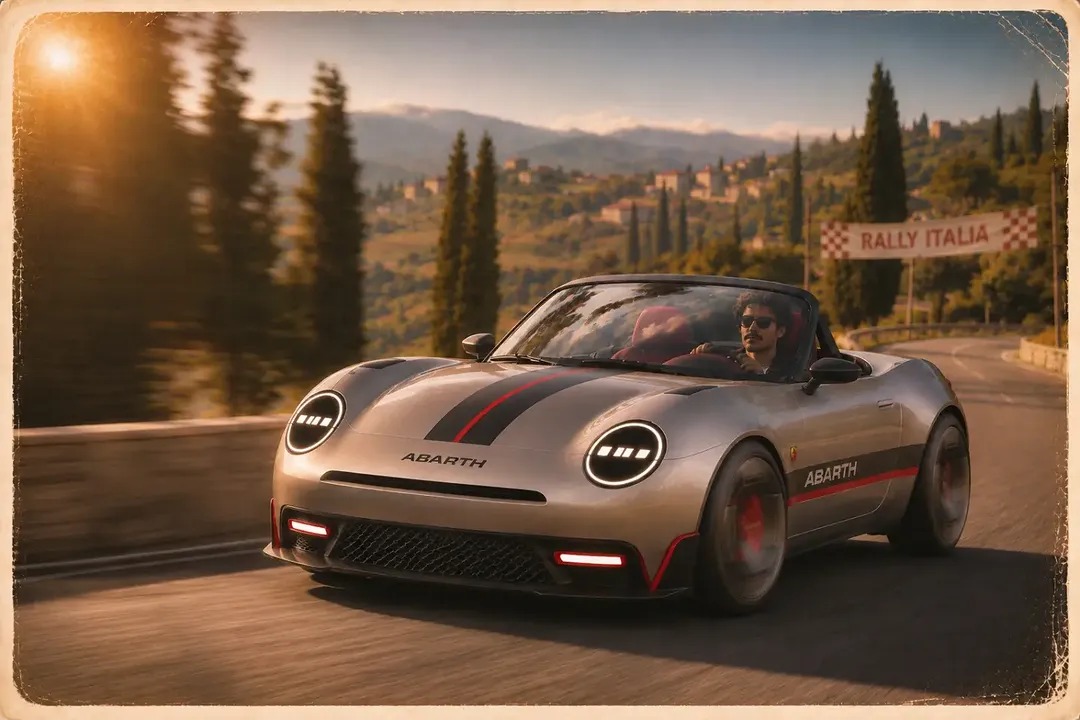
Anyone who remembers the Abarth 124 Spider will get the intent fast: take a small Fiat roadster, add aggression, and charge the shape with theater. Here the theater stays on screen, though. No engine, output figure, or hardware claim comes with these renders.

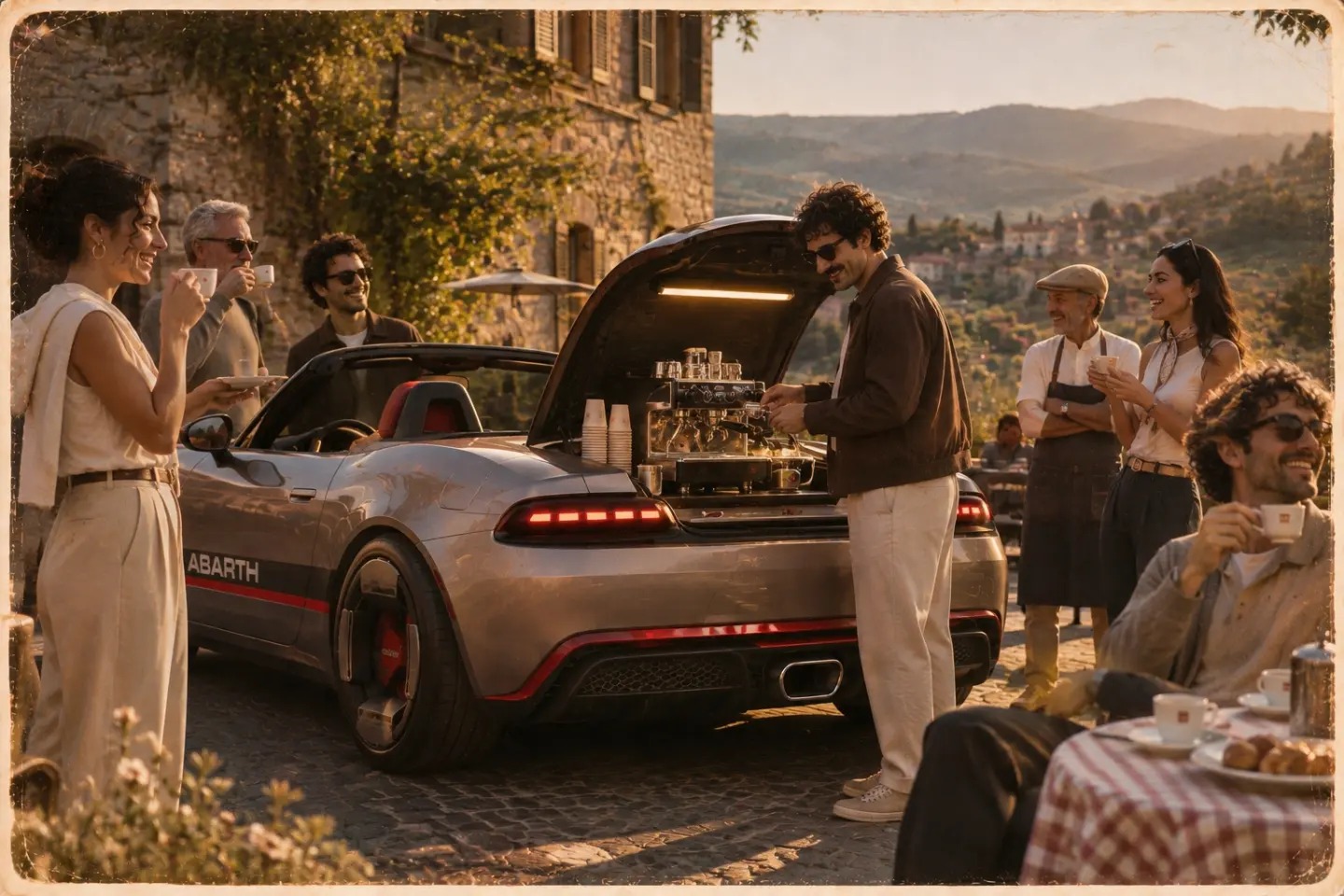
It’s a costume study, drawn well.
So here’s the open question this concept leaves hanging: could a revived Barchetta sit against the Mazda MX-5 today? Mazda owns that corner of the market through lightness, balance, and rear drive.

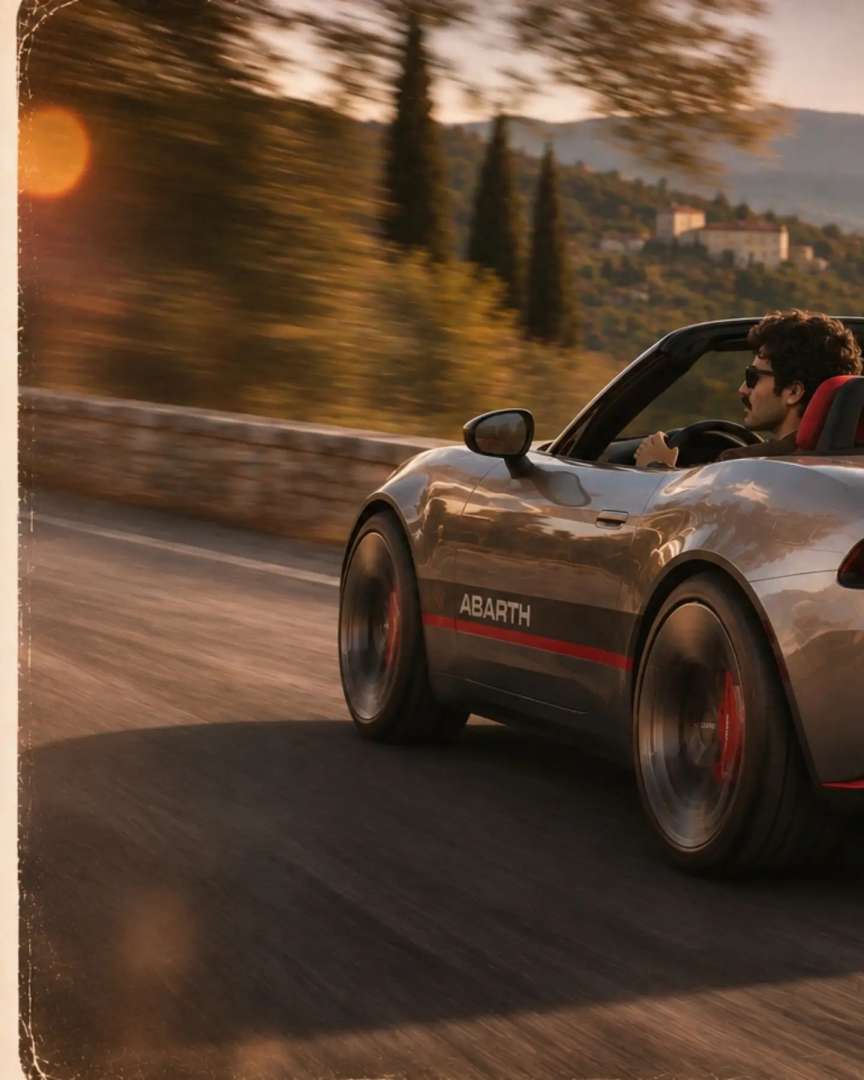
A front-drive Fiat would need charm, sharp pricing, and real steering feel. Render charm, it already has.
Fiat’s small-car line also gives the thought a home. The Grande Panda and 500 Ibrida cover practical and retro duties now, so a small open car would sit above them as pure discretionary fun. Electric or combustion, either route would change the character completely. That choice would define the car.
For now, though, this Barchetta lives where Fuchs put it, on a screen. Judge it there, and it succeeds: the render respects a beloved silhouette, sharpens it without erasing it, and lets the Abarth version shout. If Fiat ever asks the MX-5 question for real, this is a credible first sketch.