
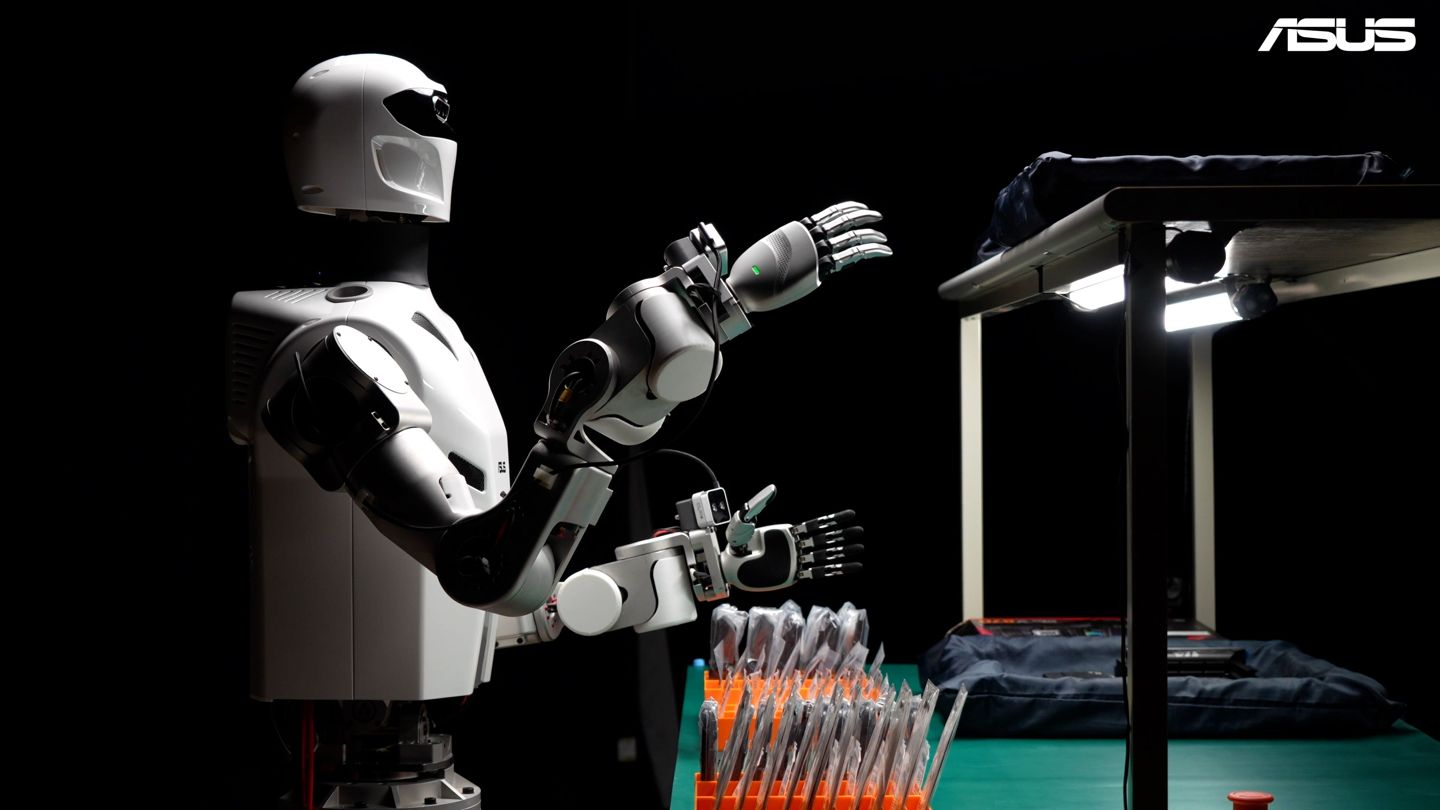
Gallop, a two-armed humanoid robot from ASUS, is learning to pack motherboard accessories at a factory operated by an ASUS group company. The station work is real.
A packing station with a human standard

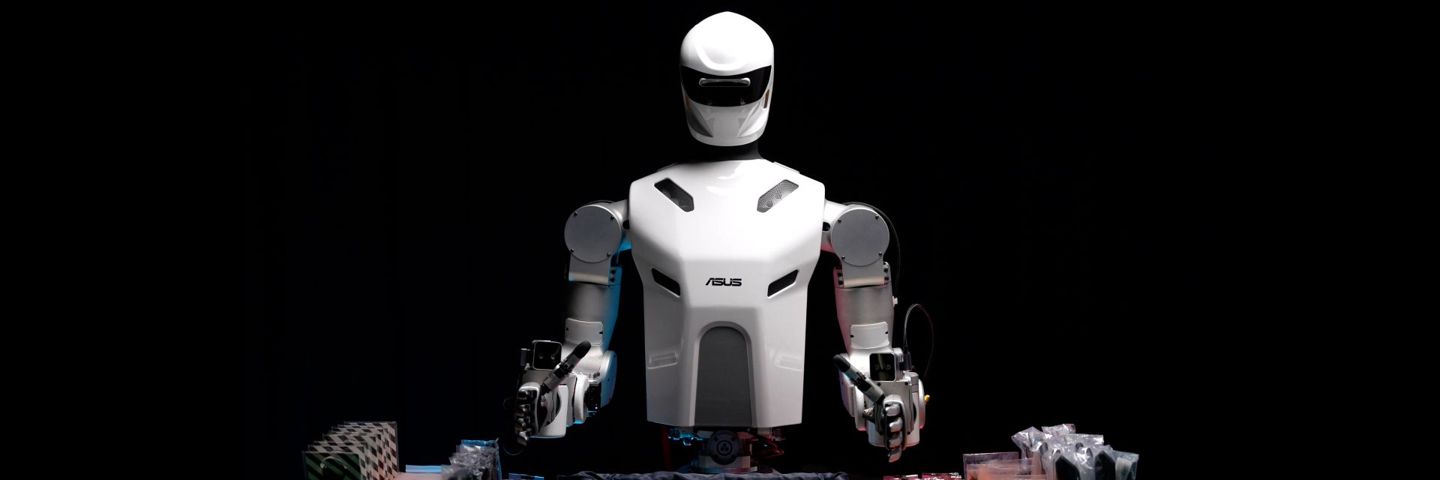
The job holds 15 small parts per board, and many parts arrive sealed inside thin, clear plastic bags. ASUS sets the target at 99.5% success inside 20 seconds for each board packed. That target matches the standard applied to a person at the same station.
The full loop already runs at the station, because a person shows the task, Gallop learns the task, and the team tests the result on the line.
Small, thin and soft parts defeat simple grippers, and ASUS picked the station because the work tests whether a robot can carry most of a job alone, nobody standing beside it. Nobody gains from a chaperone.
Factories are built around people, with stations, tools and trays sized for human hands and human reach. Traditional automation handles fixed, high-volume tasks well, and it struggles once a production run changes shape. A two-armed robot can work at existing stations, so a plant skips a rebuild around the machine.
Taught like a colleague, built in layers

Training starts with open AI models that already understand how hands and objects behave. Experienced workers then wear a small head camera, with consent, and Gallop studies the recorded work. Simulation spins each example into variations, so small changes on the line don’t arrive as surprises. An operator in a VR headset and gloves then guides the robot through the task on the same parts.
Once Gallop works the station, recordings from the line feed back into training, and the robot keeps adjusting to the parts in front of its hands. Practice stays continuous.
Inside the robot, four layers split the work between planning, checking, skills and direct control of arms and hands. A planner breaks each job into steps, and a supervisor AI checks every step and replans after errors. Fixed interfaces join the layers.
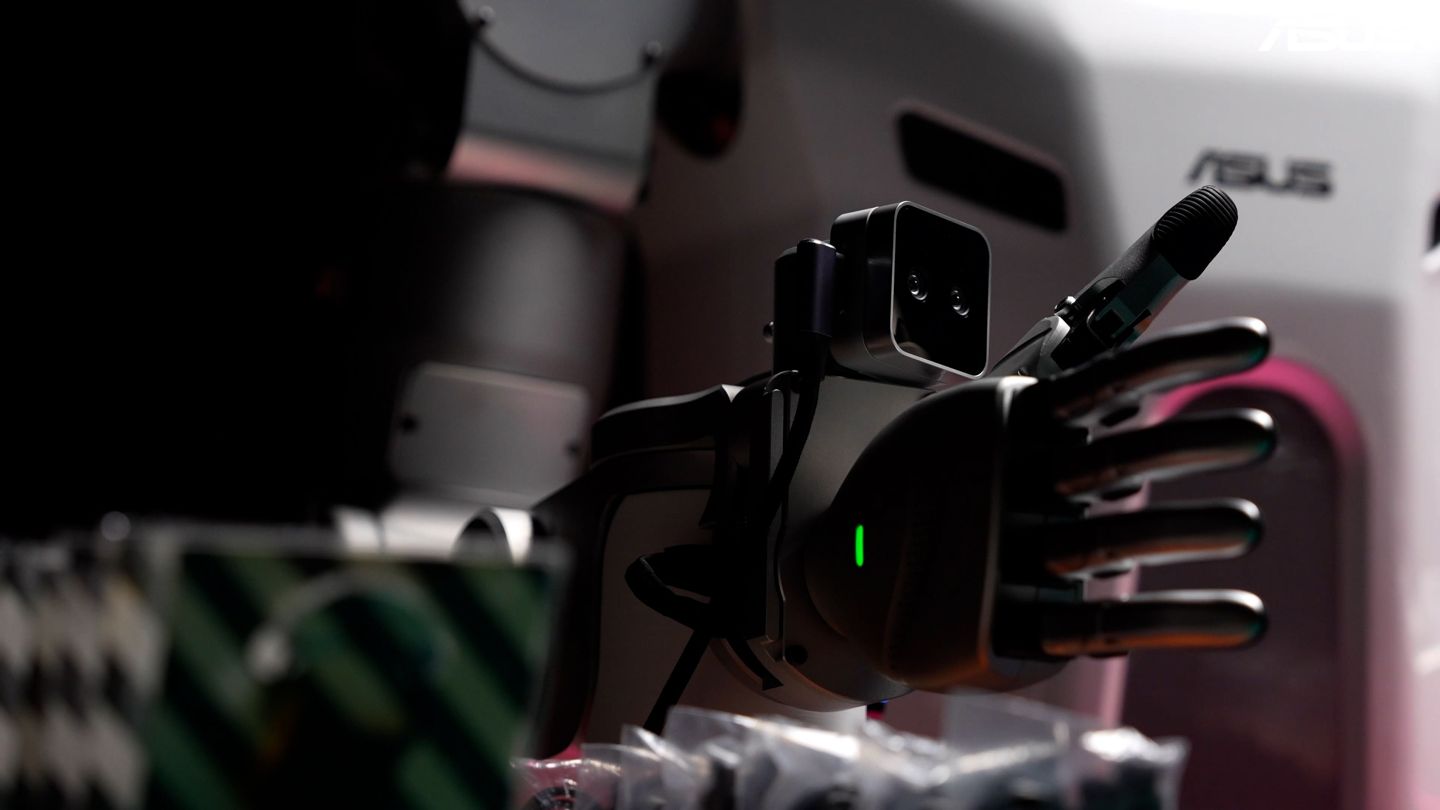
All four layers run on a single NVIDIA Jetson AGX Thor computer inside the robot, using standard robotics software. ASUS designs the body and the hand in-house, and the hand carries a sense of touch for thin parts.
ASUS frames Gallop for repetitive, physically demanding stations that are hardest to staff on a factory roster. The workers who teach the robot move into setup, supervision and improvement roles around it. Experience gains value in that shift. Motors and other standard components come from established partners, and ASUS keeps the scarce hand design inside its own walls.
Today Gallop works from a fixed base with two arms, and a wheeled version follows in the program plan. Customer pilots are planned for 2027, a customer showing is set for Computex 2027, and market availability is targeted for the second half of 2028. Electronics manufacturing comes ahead of hospitals and service sites in the rollout order ASUS describes.
The Gallop program started in early 2026, so the robot reached a working station in under a year. Speed counts less than stamina here.