
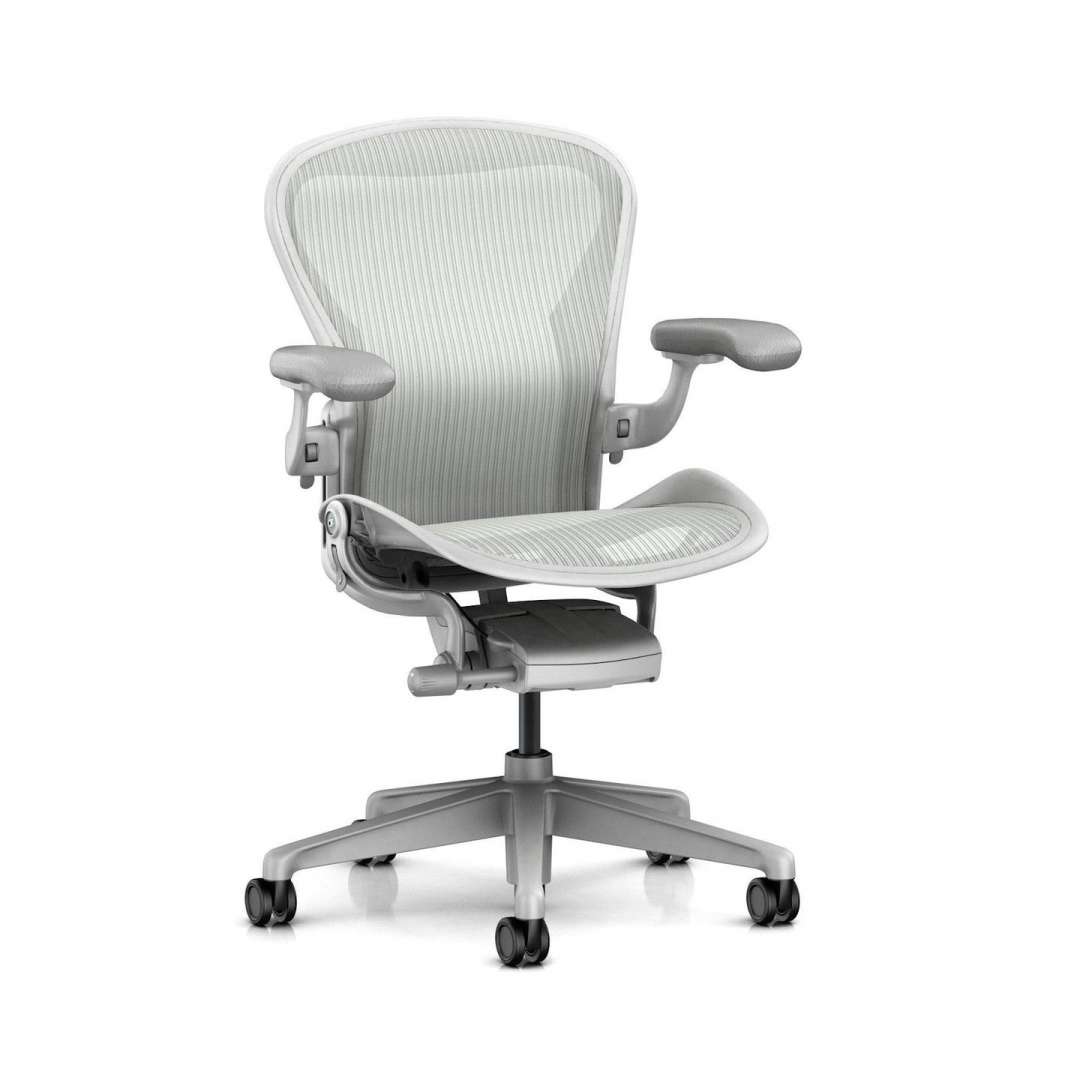
The Aeron is the rare office chair that outlived its own era. Launched in 1994, collected by the Museum of Modern Art, and still the home office default three decades on, it treats sitting as a design problem with a permanent answer.
Most office chairs age out of a room within a few years, replaced when the foam flattens or the fashion moves on. The Aeron never got that memo, because the chair Bill Stumpf and Don Chadwick designed still anchors serious desks long after its contemporaries went to landfill. It earned its museum place, and it earned something harder. It built a second career as the chair people buy once and keep. It never left.
The current chair is the remastered version. It arrived in 2016 with a stronger tilt mechanism, better lumbar support and quieter casters. The silhouette stayed the same because the silhouette was never the problem. What changed sits underneath, in the parts a sitter feels across an eight-hour day rather than sees across a room.
A seat made of tension, not foam

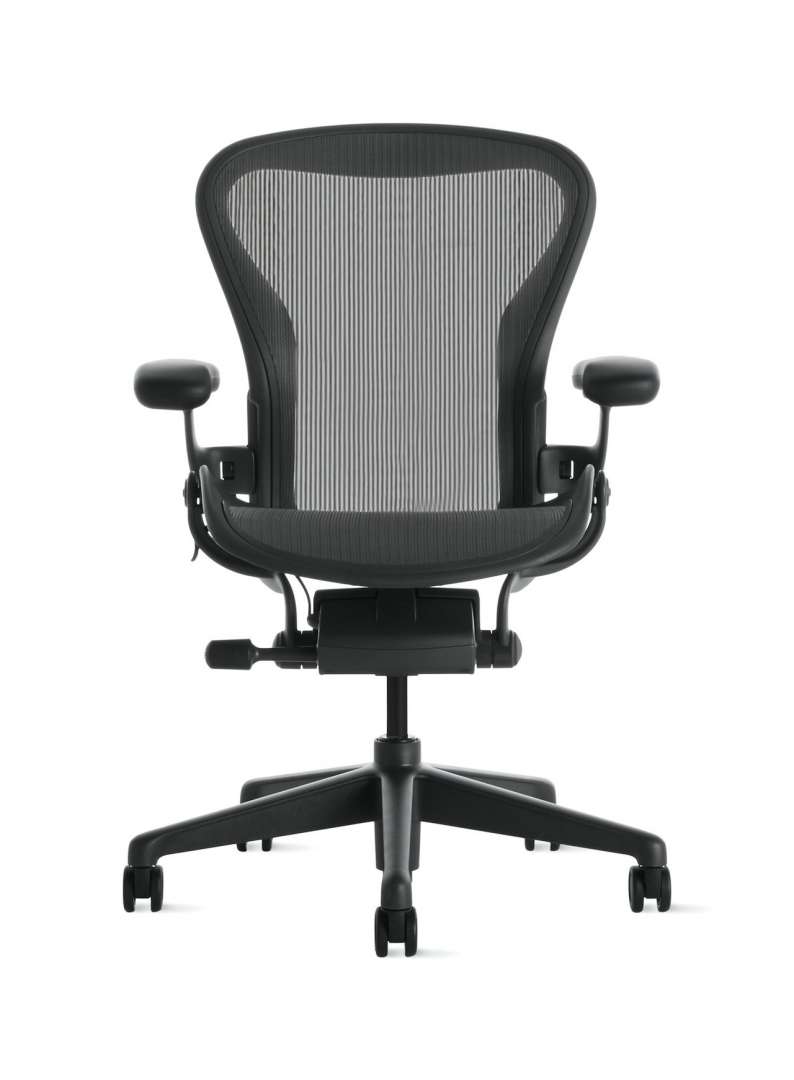
The Aeron replaces cushion foam with 8Z Pellicle, a woven suspension divided into eight zones of different tension. Tighter zones carry the sit bones and hold posture, while looser zones let the thighs and shoulders settle without pressure points. Air moves through the weave all day, so the chair never develops the warm, compressed feel of a foam seat in summer, and foam never stood a chance.
PostureFit SL handles the back. Two independent pads support the sacral and lumbar regions separately. The pads adjust together, and the effect is a lower back that keeps its natural curve without a pillow strapped behind it. It’s support that arrives quietly, noticed mostly at the end of a long day when nothing aches.
Harmonic 2 Tilt manages recline, keeping resistance smooth from upright work to a leaned-back call. The mechanism tracks the sitter’s weight, so the chair leans when the sitter leans and returns without a shove. Tilt limiter settings set the recline range at one of three postures, and tension control fine-tunes the effort.
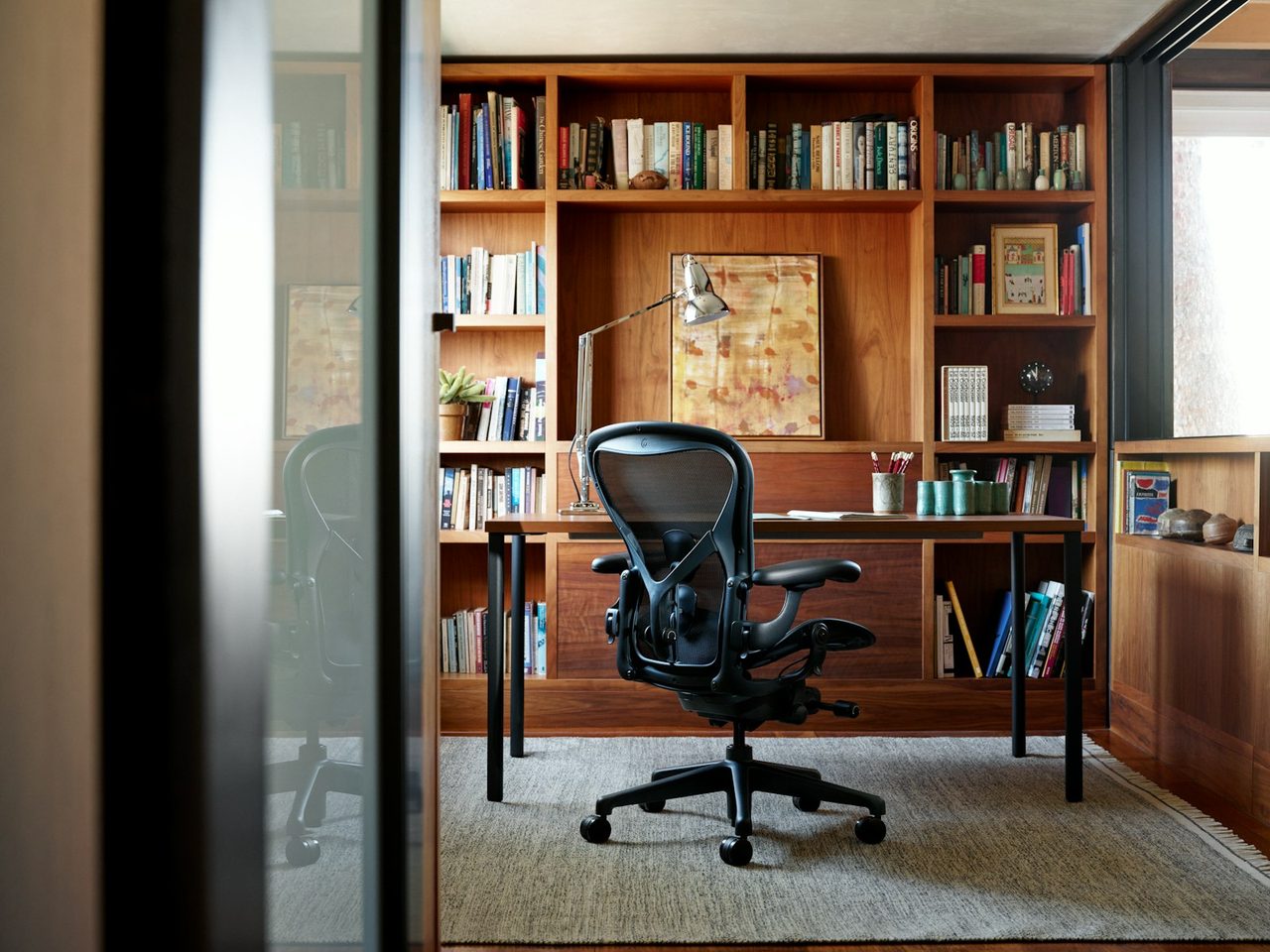
Aeron also changed what an office chair could look like in a home. The exposed Pellicle weave and die-cast frame read as furniture rather than equipment. That’s why the chair moved from trading floors to studios and living rooms without a redesign. Few industrial objects from 1994 remain in production nearly unchanged, and fewer still remain the reference in their category.
The sizing system is the real feature

Aeron comes in three sizes, and the size chart outweighs any finish choice, and size comes first. Size A fits sitters from 4 feet 10 inches to 5 feet 4 inches and up to 300 pounds, with a seat height range of 14.75 to 19 inches. It weighs 40 pounds and suits smaller frames that most one-size chairs swallow whole.
Size B is the most commonly selected. It covers sitters from 5 feet 2 inches to 6 feet and up to 350 pounds, at 41 pounds. Size C stretches to 6 feet 6 inches and 400 pounds. Its frame runs wider to match, at 43 pounds. Herman Miller prints dots under the top of the backrest to identify each size by touch, one dot for A, two for B and three for C. Check the dots.
That system is why the secondhand market needs care, because a used Aeron in the wrong size is a bad chair at any discount, while the right size disappears under a workday. The size chart on the maker’s page takes two minutes to read, and those two minutes decide the next decade of sitting at that desk.
Finishes, casters and the long warranty

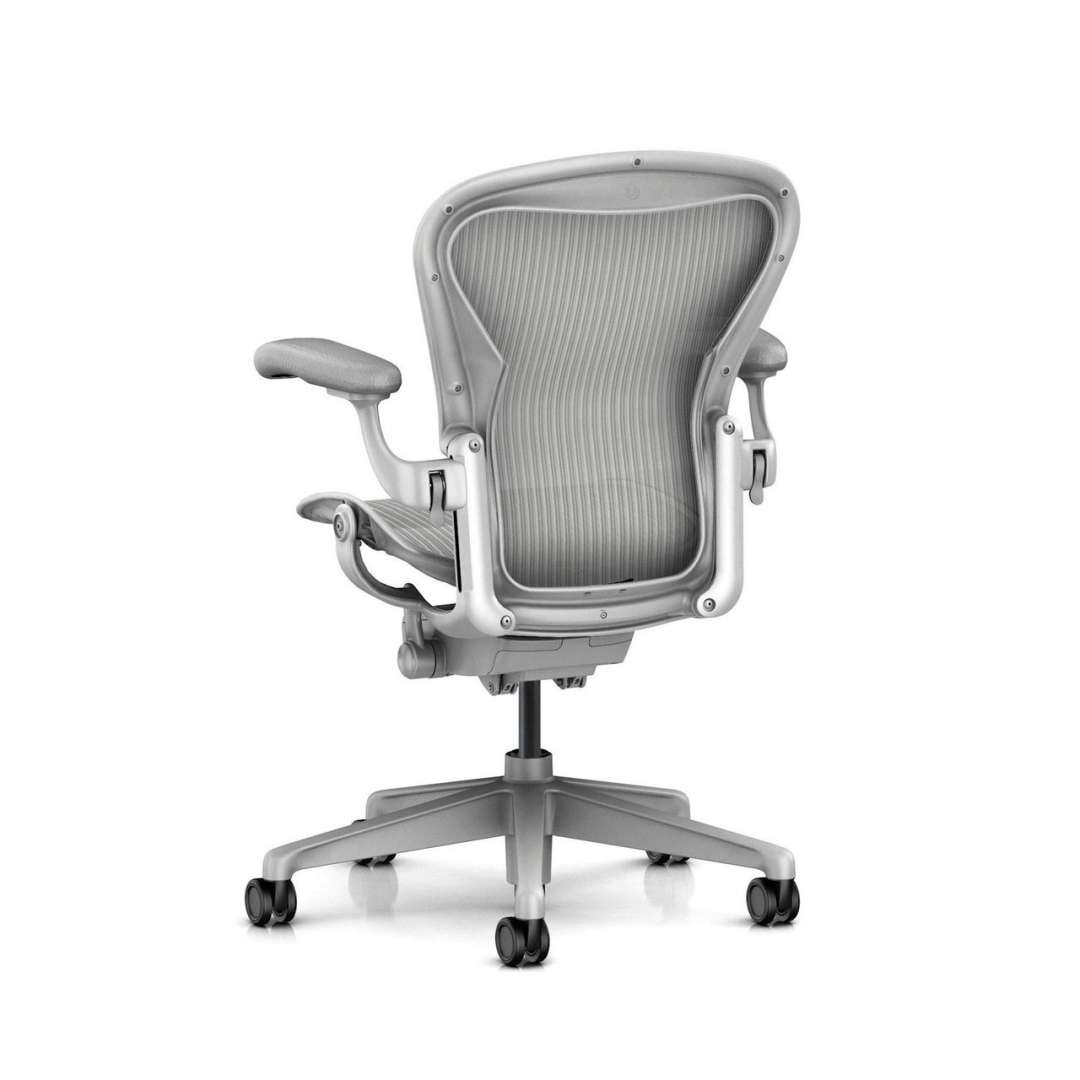
The remastered frame comes in finishes including Onyx Ultra Matte, Graphite, Mineral, Nightfall and Jasper. The build is die-cast aluminum and polymer. Quiet Roll casters roll softly on hard floors, a small change that counts in an apartment at midnight. The arms adjust, the seat angle adjusts, and nearly every contact point has a setting with the sitter’s name on it. Setup takes minutes.
One deliberate omission stands out in the catalog, since Herman Miller offers no headrest for the Aeron. The maker’s position is that a correct recline, properly set, makes a headrest unnecessary. Owners who want one anyway form a healthy aftermarket, but the chair as designed asks the sitter to set it up once and trust the geometry.
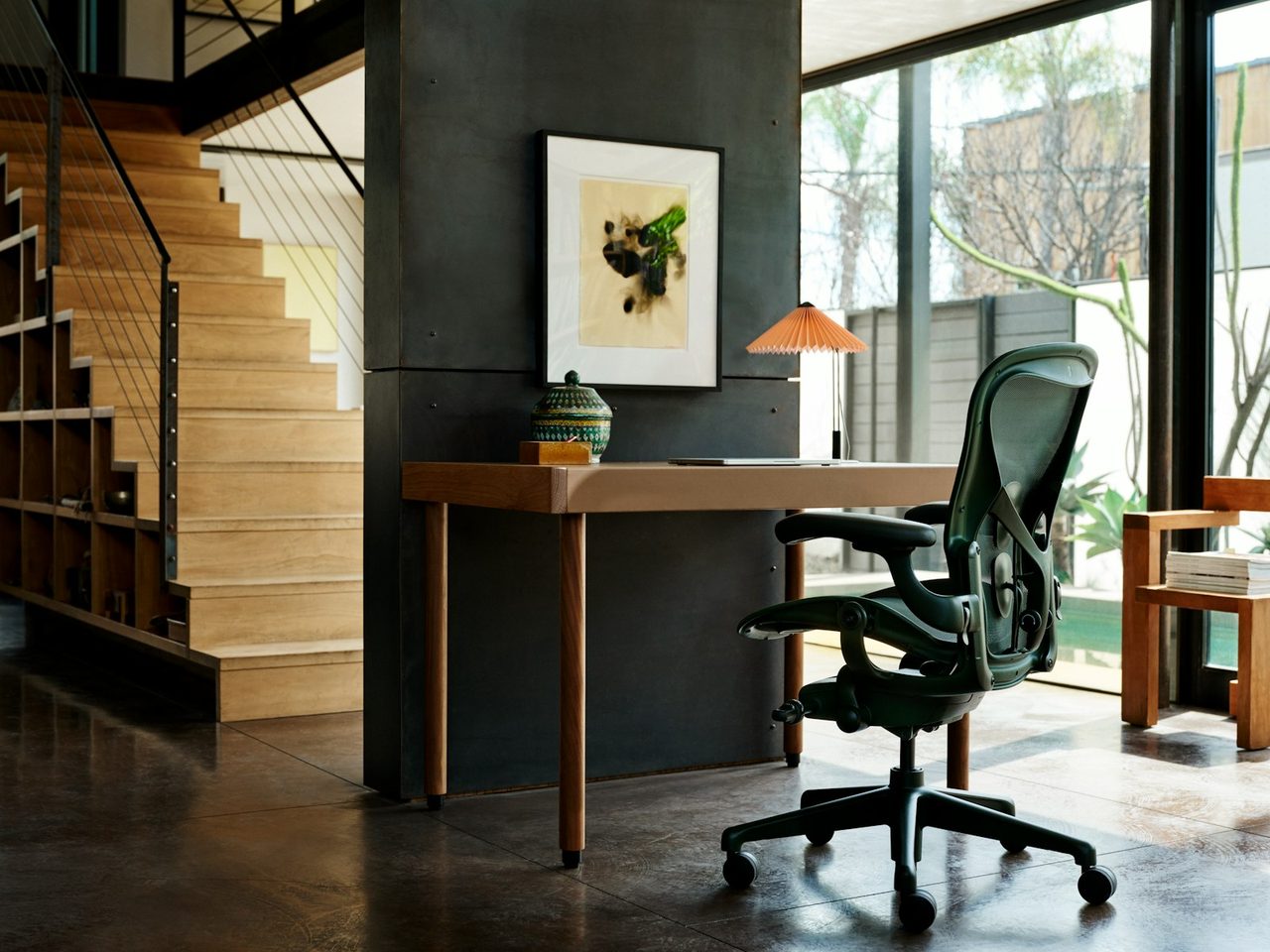
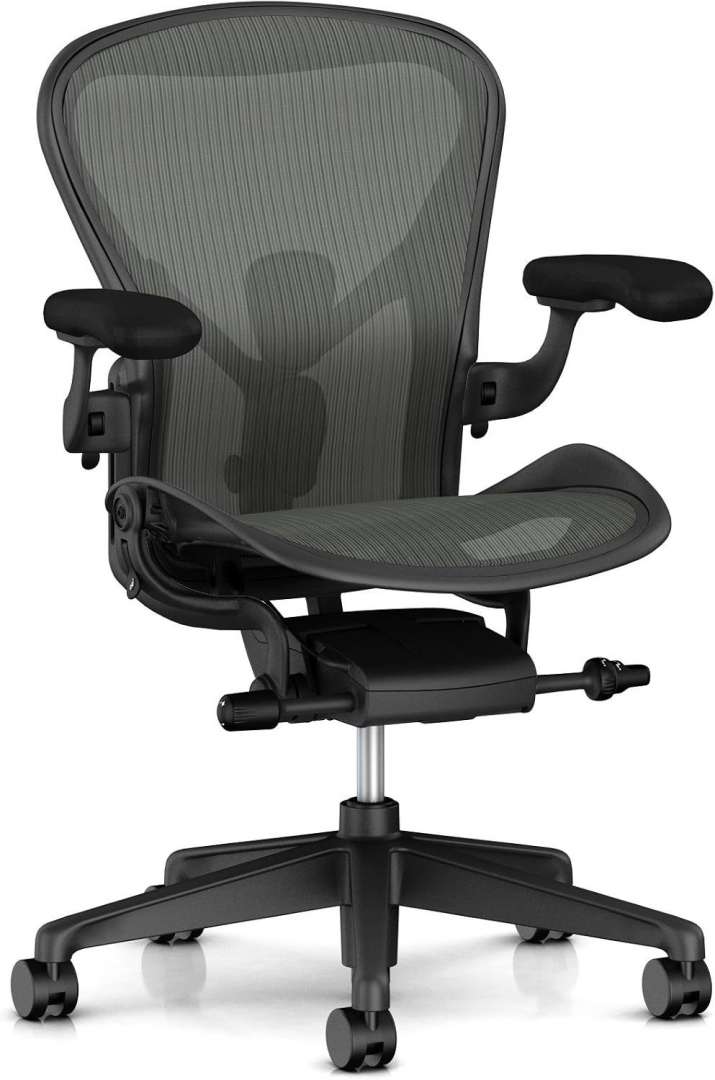

Every Aeron carries a 12-year warranty. That warranty reframes the price as a cost per year rather than a single hit. The Amazon listing covers the remastered chair in Graphite, and the maker’s store configurator covers the full finish and size range. Sized right, this remains the chair to beat in a home office, thirty years after it first made foam look obsolete.
Buying used is the other route, and the size dots make it a safer one than most secondhand furniture. Check the dots, check the tilt tension, and sit in the chair for ten minutes before money moves. A sound Aeron at half price, in the right size, is one of the better furniture buys available.