
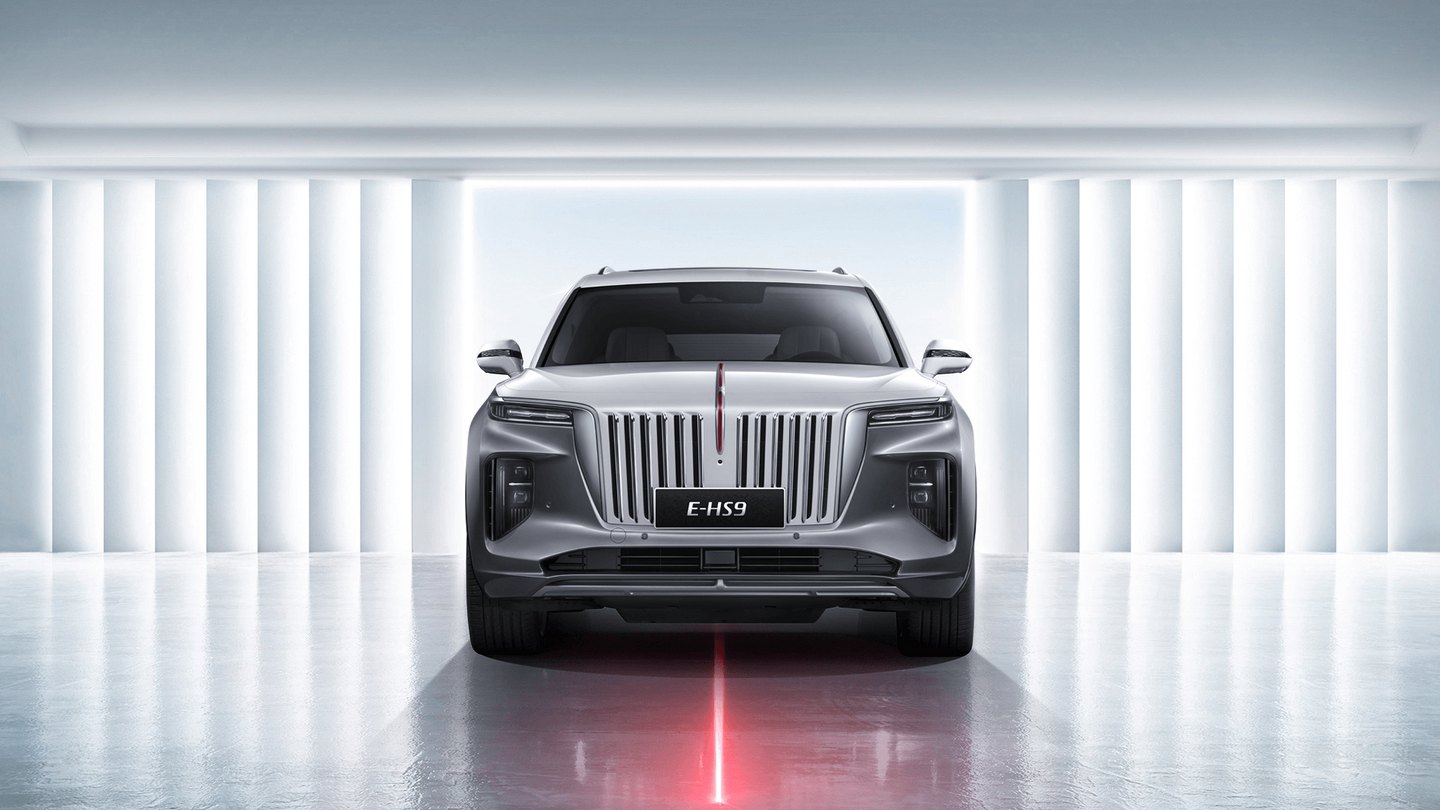
For sixty-odd years, a Hongqi was something you were driven in if you ran China, not something you bought. The brand built limousines for party leadership and parades, full stop. That changed in Sydney this week, where the E-HS9, a six-seat electric flagship the size of a small apartment, went on sale to anyone with the money, the first time Hongqi has offered a car to Australian buyers at all.
It arrives under a shortened badge, HQ, because Hongqi means red flag and the importer would rather sell cars than explain flags. Underneath sits a serious piece of design work.
A grille with a flag drawn through it
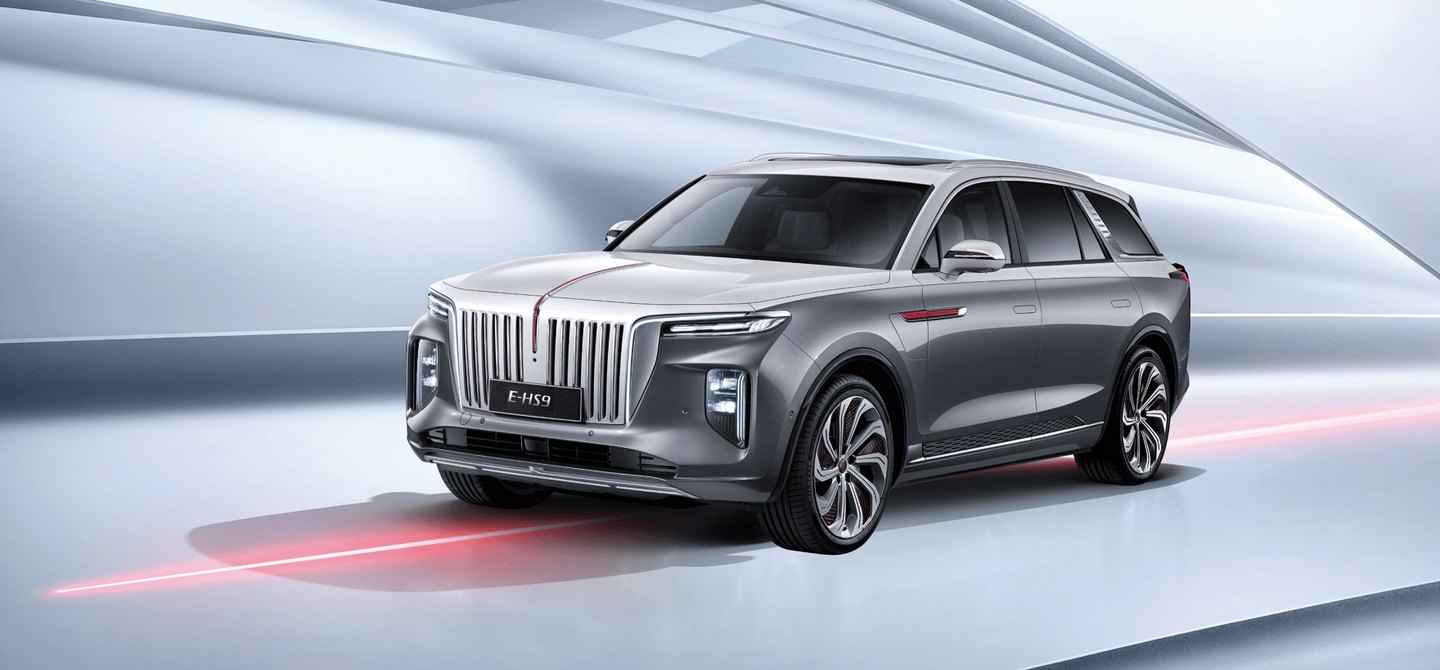
Hongqi hired Giles Taylor in 2018, after he had run design at Rolls-Royce through the Phantom and Cullinan years, and the E-HS9 is the clearest statement of what FAW bought with that hire. British state-carriage proportions, an upright stance and tall chrome, rebuilt around a Chinese flag. Nothing about it apologizes for the scale.

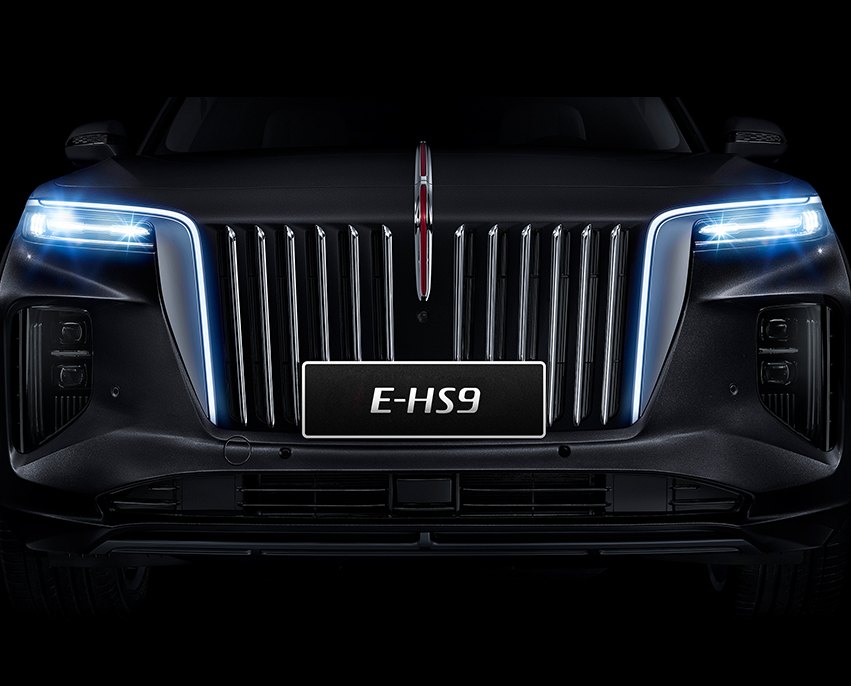
A wall of vertical chrome bars fills the front, straight and tall, like water falling in metal. Through the middle runs one red line, from the crest of the hood down into the grille, the flag reduced to a single stroke. At night the whole face outlines itself in light before the lamps even fire, and there’s no badge doing the talking up there. You read the flag instead.
After dark the headlights run a welcome sequence as you approach, and the C-pillar carries a charge indicator. Theater, but useful theater.
Subtle it isn’t. Subtle was never the assignment.
A very large battery and a modest straw
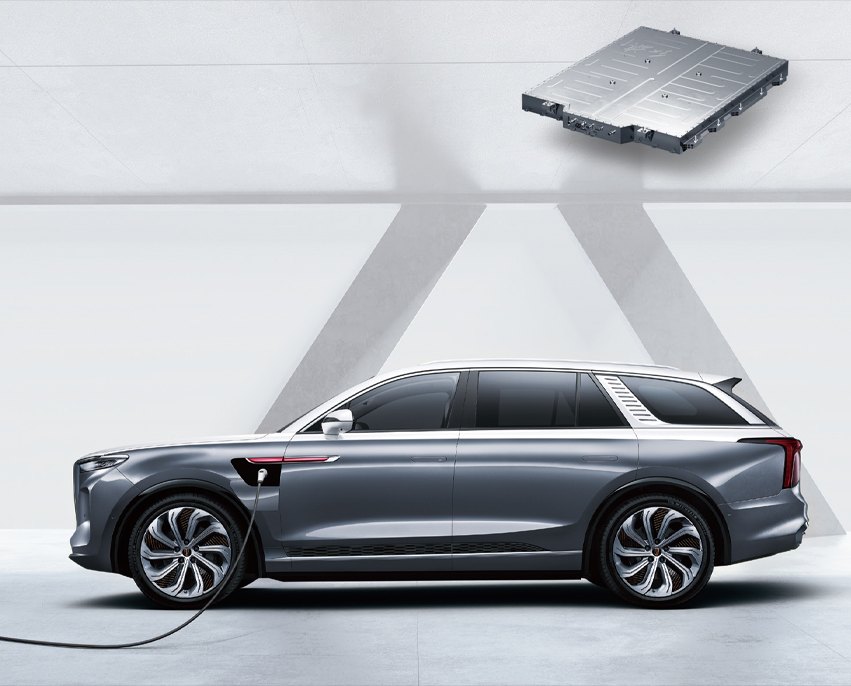
Two electric motors, one at each axle, give the car all-wheel drive, 405 kW and 606 Nm of torque. The battery is a 120 kWh nickel manganese cobalt pack from CATL, the biggest in its class by a wide margin, and the claimed range is 548 km on the WLTP cycle, about 340 miles. The floor of the car is that battery, which is why the cabin sits so tall on top of it.
The safety sheet matches the flagship pitch. Euro NCAP awarded the E-HS9 five stars in its 2025 tests, adult occupants scored 82 percent, and its strongest result was 87 percent for child occupant protection, which tells you exactly who Hongqi expects to ride in the back, and how carefully it wants them kept.
Here’s the one number that doesn’t flatter it. The system runs at 400 volts, DC fast charging peaks at 140 kW, and filling that enormous pack from 10 to 80 percent takes about 48 minutes at a public charger. Smaller-battery rivals are back on the road sooner. Parked at home overnight, the slow peak speed never comes up. On the highway between cities, it does.
Six seats behind a wall of screens
The cabin spends the 3,110 mm wheelbase the way a limousine should, on the people in the back. Six seats, three rows, one very long roof.
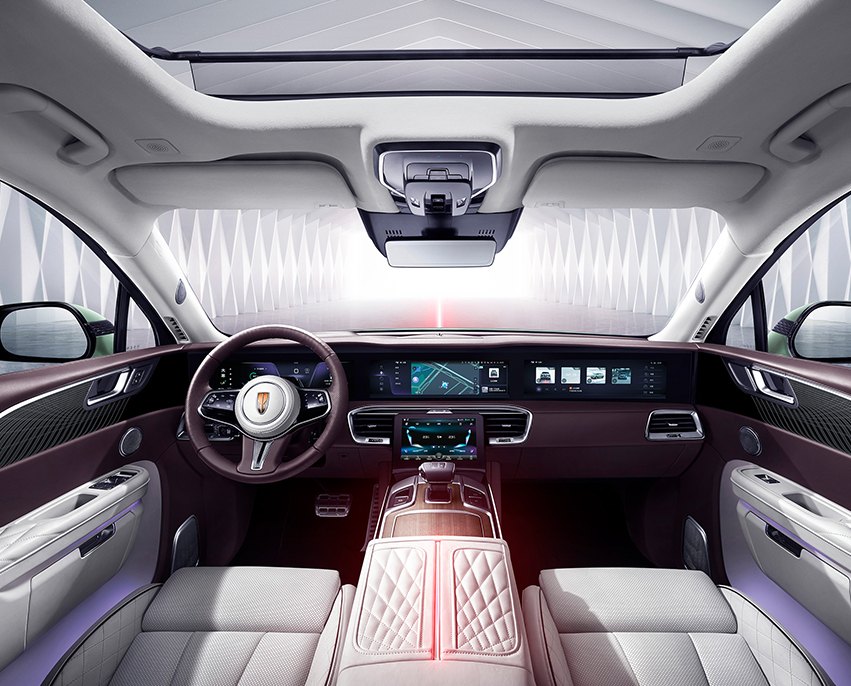
Up front, the dashboard is a single sweep of screens running door to door, set above a quilted console and a chunky two-spoke wheel. It reads more boardroom than spaceship, which suits a brand that has spent decades furnishing the Chinese state. The gold crest at the wheel’s center keeps the state in the room, quietly presiding over the touchscreens.
Overhead, the panoramic roof covers most of the ceiling, and it does more for the third row than any screen could. Airy beats gadgety in the back of a car this size.

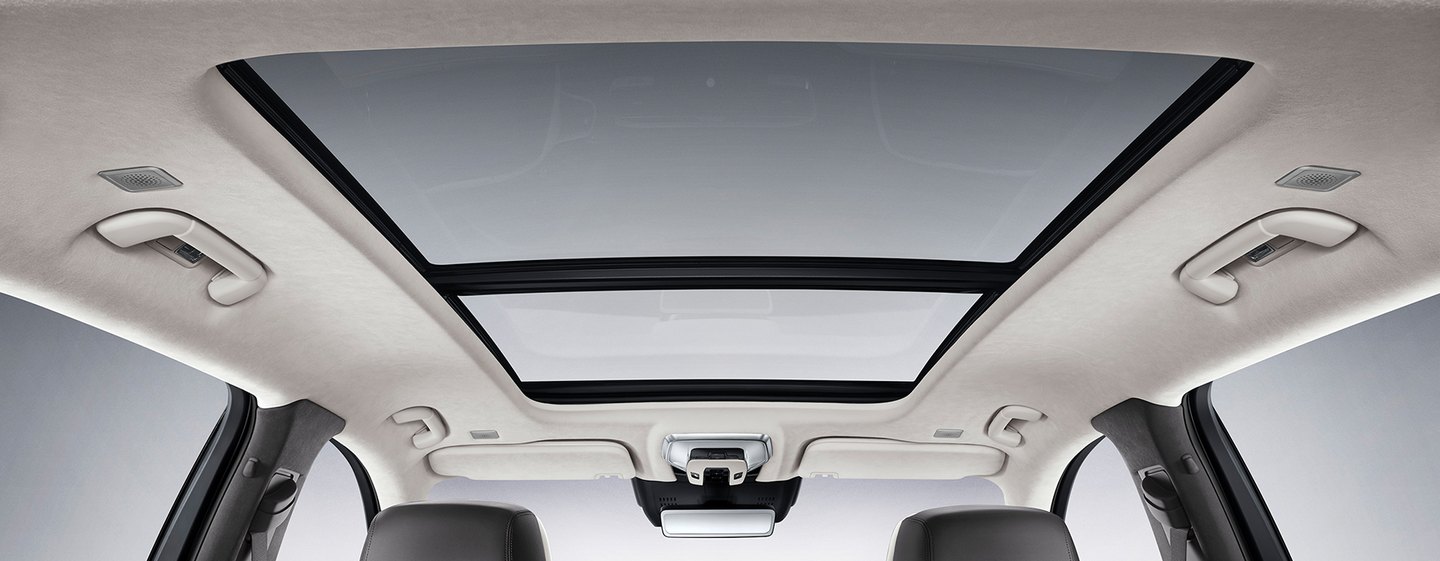
One trim, everything fitted, is the whole catalogue. The order form fits on a single page.
What it costs to fly the flag
Australia gets the car through Greentech Smart EV, a local importer run by Jim Wu, who co-founded Leapmotor before taking this job. Orders are open now, supply is strictly limited, and the first customer cars are due on January 18, 2027. The showroom sits in Alexandria, in Sydney’s inner south, a long way from the parade routes of FAW’s home city, Changchun.

Final pricing lands in January, guided at under $98,000 in US terms before on-road costs, with one fixed drive-away price per state once the number is set. Put a deposit down before the first deliveries and the launch offer hands back up to $6,500 of it.
The warranty is its own sales pitch. Seven years and 200,000 km cover the car, and the battery carries ten years or a million kilometers for the first owner. I read that figure twice.
Whether Australians want the family car to carry the design language of a presidential motorcade is the open question here, and no spec sheet settles it. The supply is thin and the badge is new, which cuts both ways. If I sold German luxury cars for a living, I’d be watching this order book anyway.
Because that grille does the job limousines have always done. It announces the arrival before a door opens, and nobody in the next lane mistakes it for anything else. Presence like that doesn’t come off an options list. It either arrives with the car or it doesn’t.