
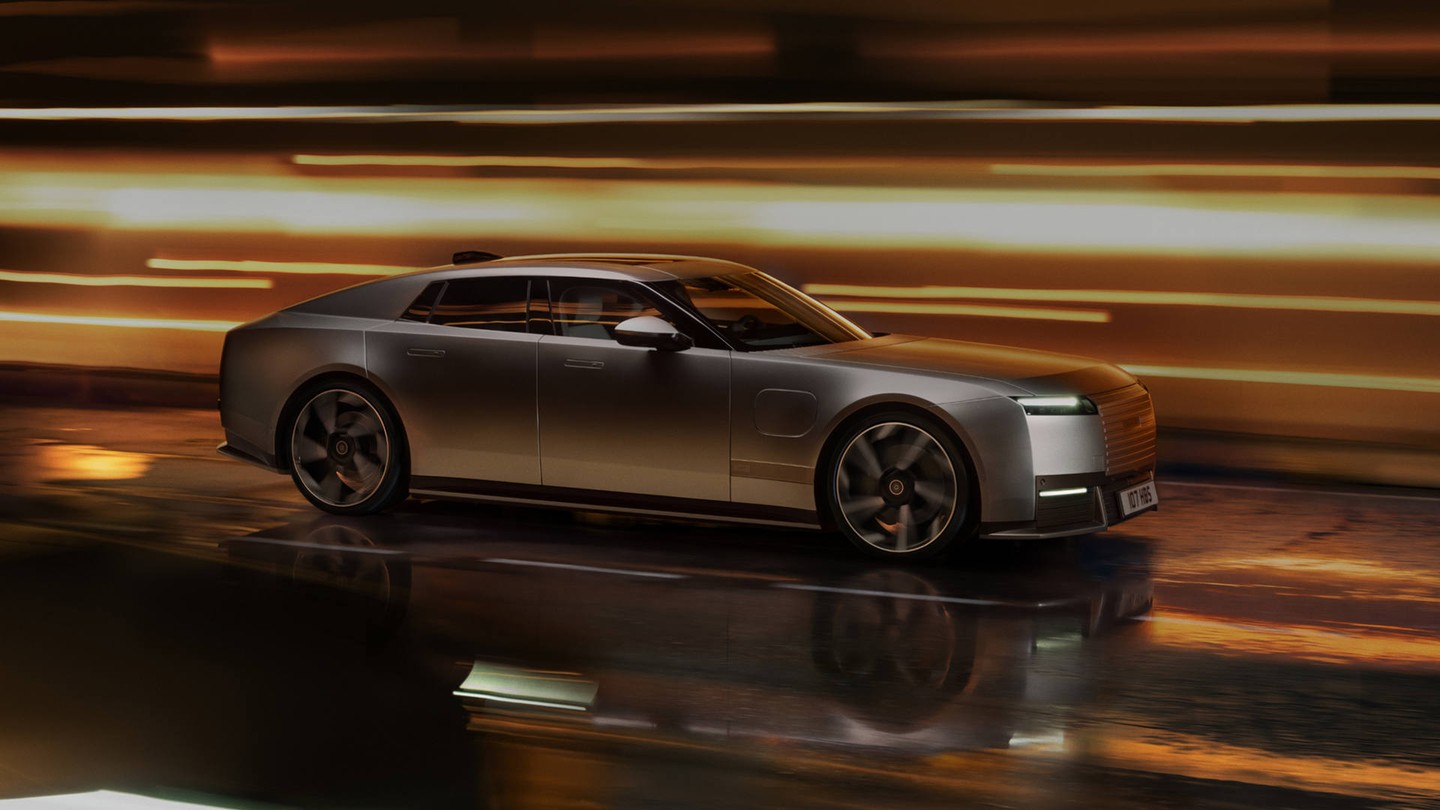
Jaguar Type 01 arrives as a long hood, a low roof, and a body with almost no visible seams. Glass meets metal without trims, door handles stay hidden until needed, and sensors sit behind the surfaces instead of breaking them up.
That purity is the point. It’s an original work of art, in Jaguar’s own phrase, and the production shape keeps that claim intact.
A glassless tailgate closes the rear. Full width lights sit inside the Strikethrough graphic at both ends.

A cabin drawn as a room first
A central spine runs the full length of the cabin, splitting the interior into four individual spaces, one for each occupant. The layout runs front to back, not side to side. It sets the whole tone inside.
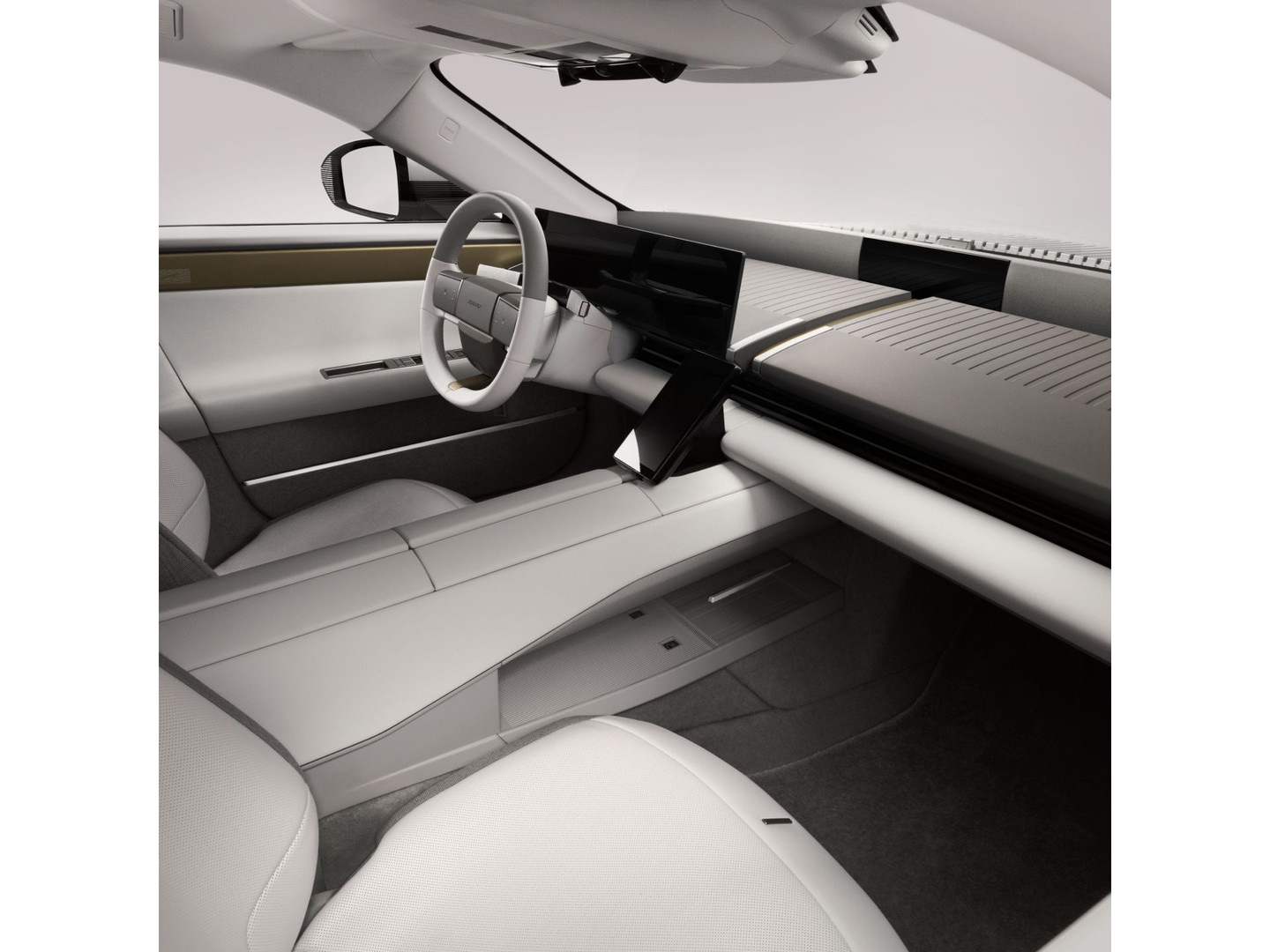
Chief Materiality Designer Mary Crisp led the material story. She wanted warmth you get at home, not a cockpit built around switches.
Seats were shaped to resemble pieces of furniture. Smooth surfaces sit against real texture.
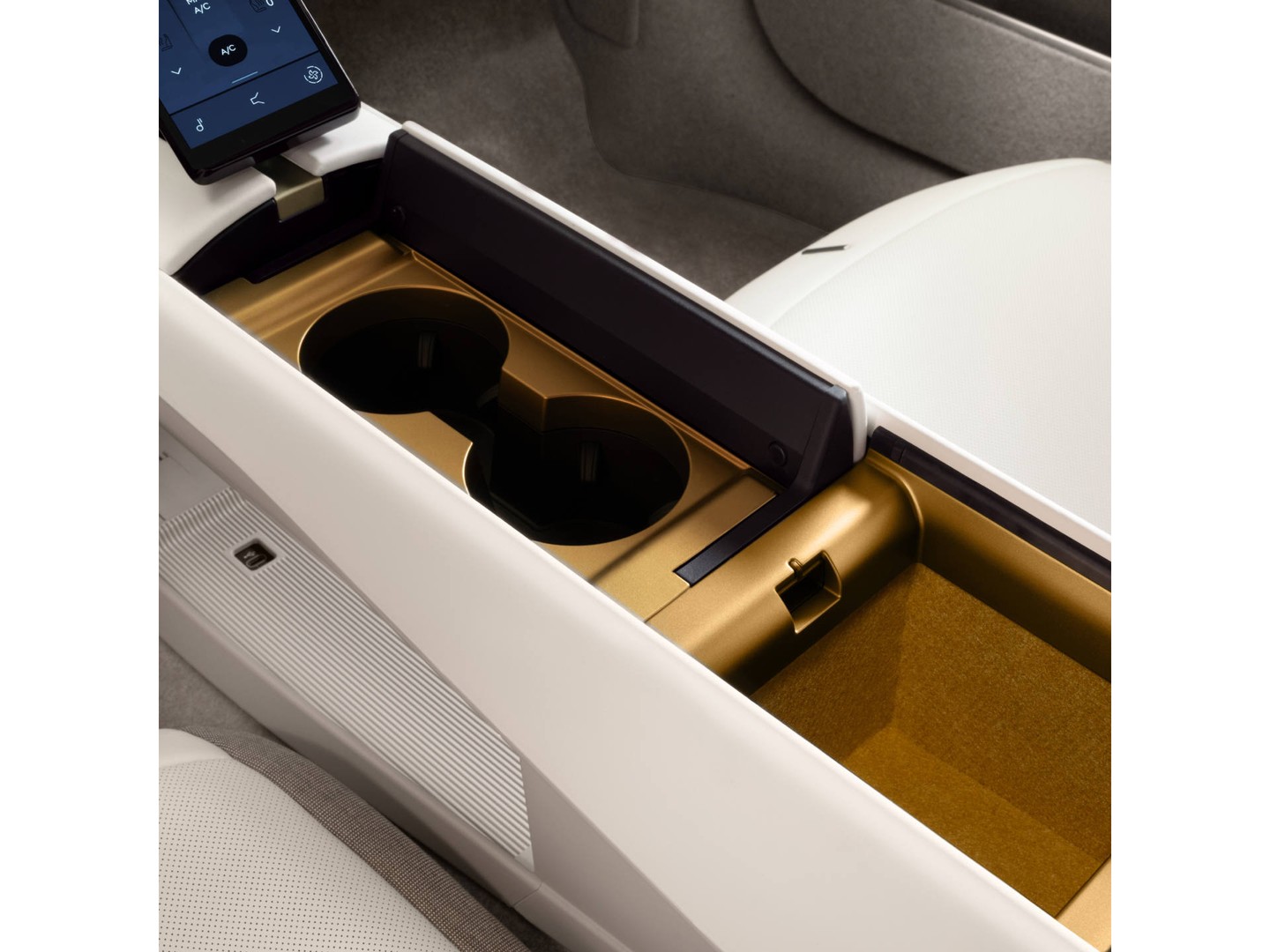
Crisp and her team took references from fashion, art, and craft, and you feel that in the details: storage stays concealed, then opens to reveal splashes of color, while technology stays hidden until you call for it.
Stone tones without the stone
The palette takes its layered tones from travertine stone. Light and shadow do the work that ornament usually does.
There’s no stone slab in the production cabin, though. Jaguar doesn’t pretend otherwise.
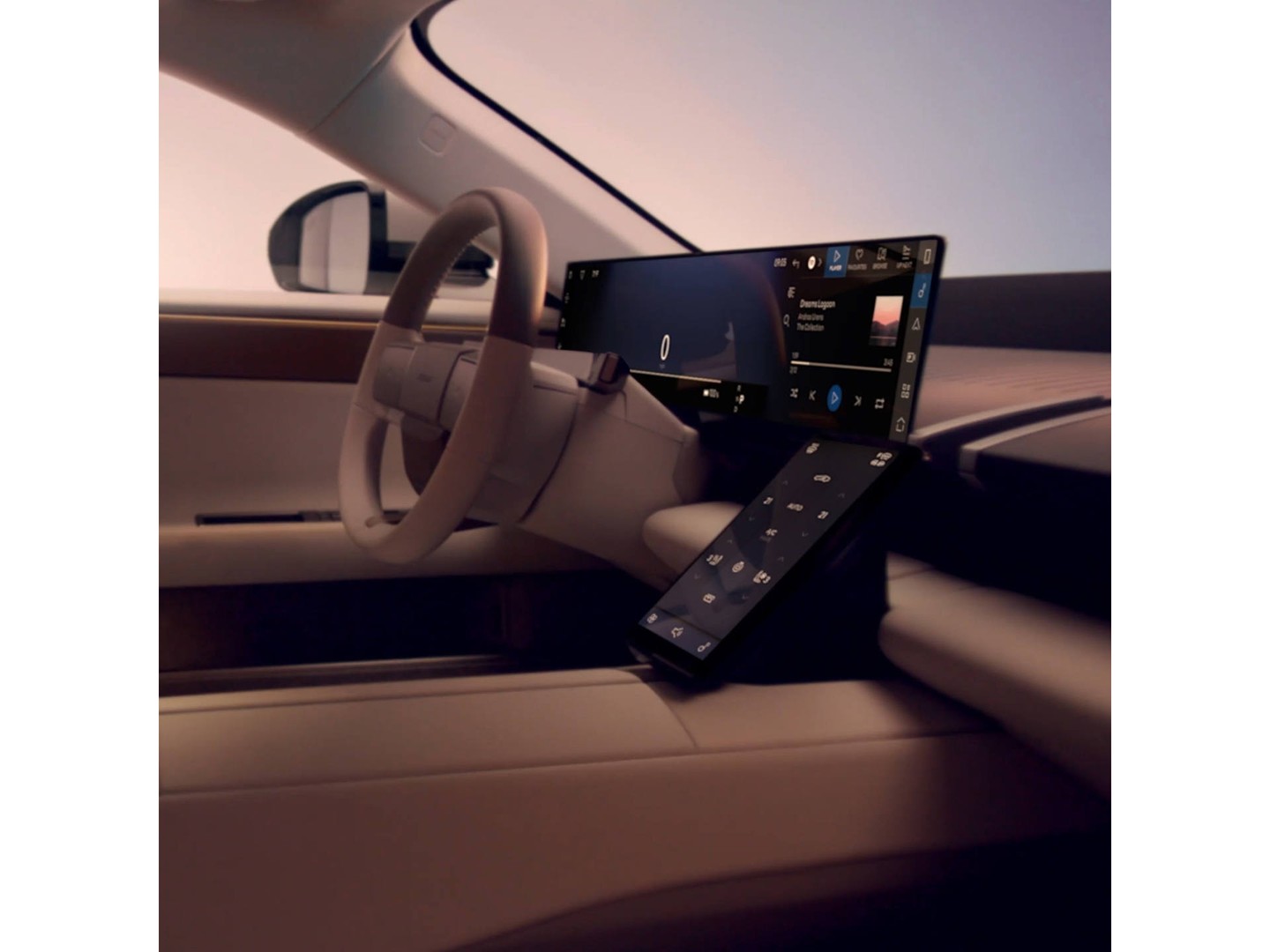
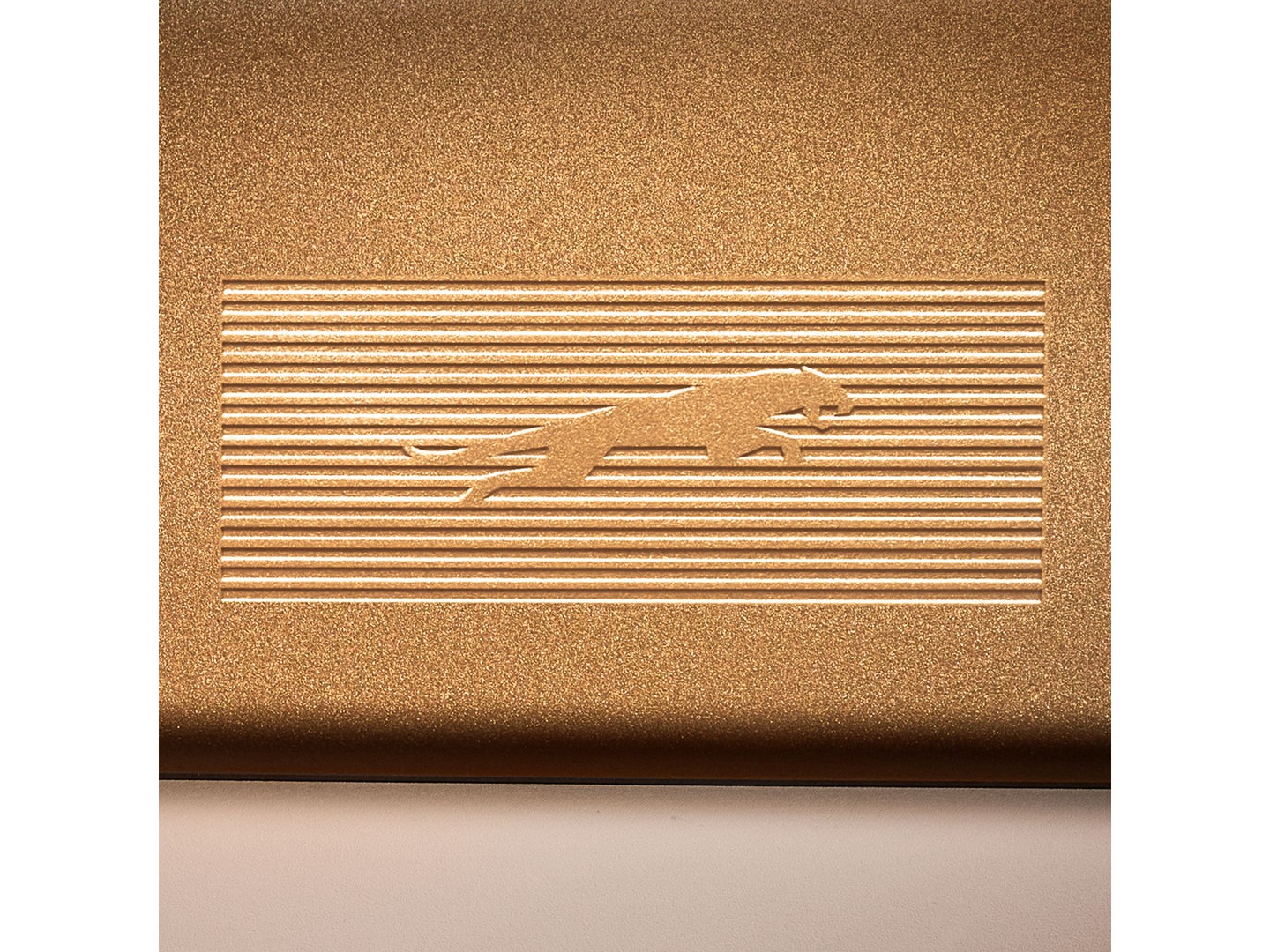
Three brass inspired finishers run the length of the cabin. Anodized aluminum with a brass tone, they’re repeated along the spine and the tops of the doors. Each one carries the leaper, like a hallmark on a piece of art.
A wool blend textile from Danish maker Kvadrat wraps the seat forms. The fabric is DuoWeave, and it encases your choice of leather or Ultrafabrics NeoGrain, softening a cabin that could have felt cold.
Screens that sit inside the architecture
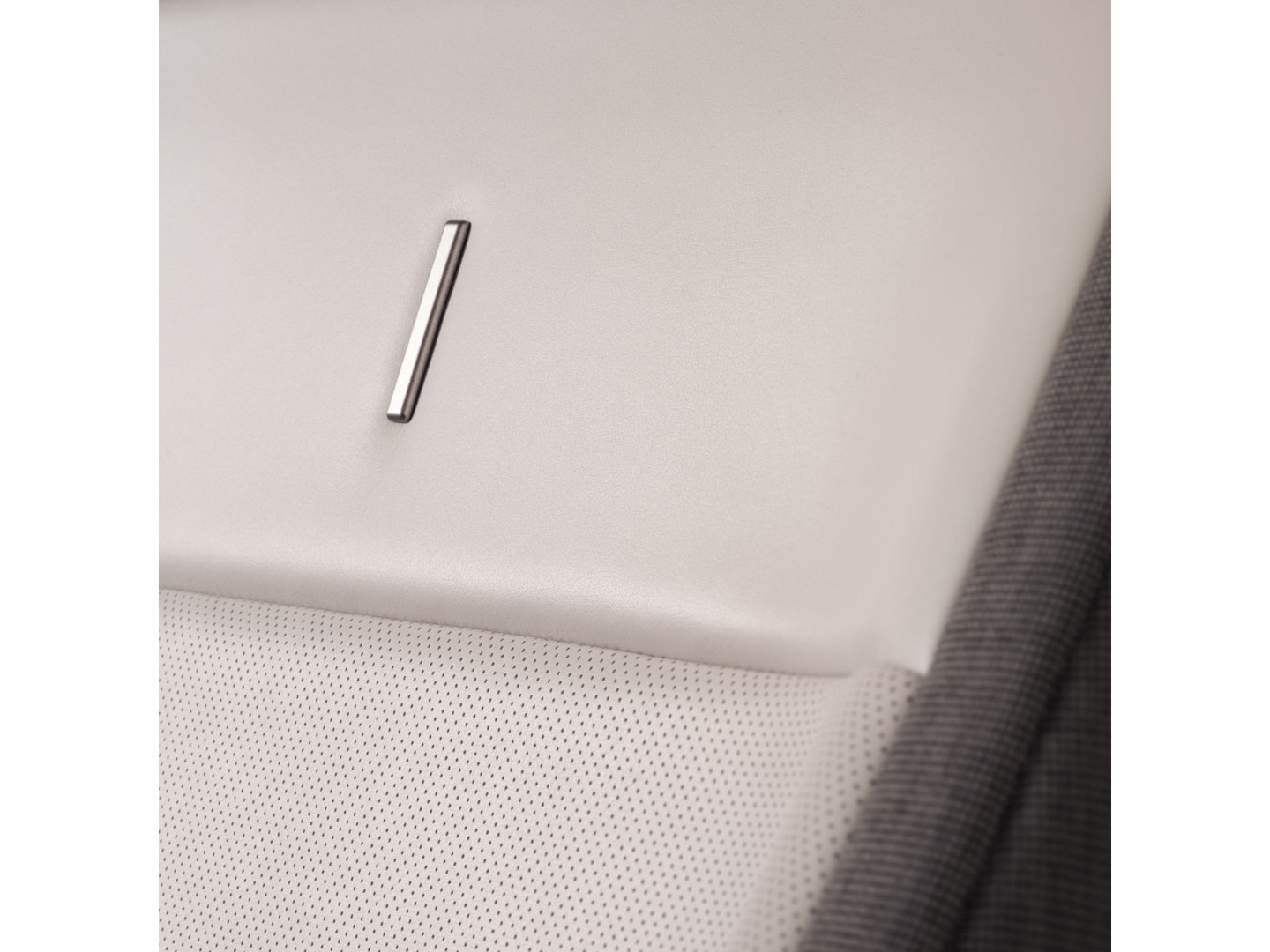
A single glass OLED display sits ahead of the driver. At 24 inches, it combines instrumentation and infotainment in one screen.
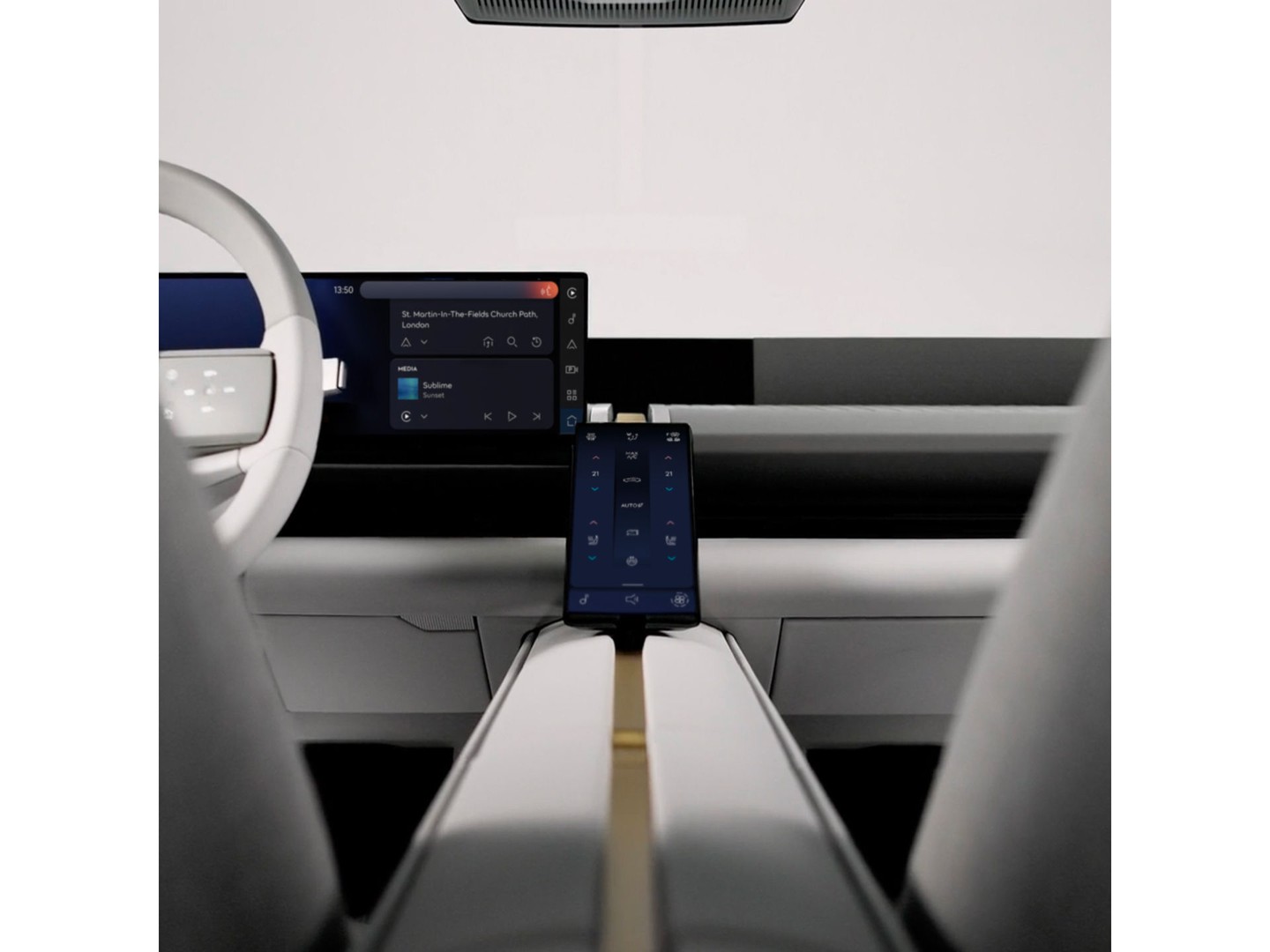
A smaller 7 inch display sits between the front seats, for controls within easy reach.
There’s no rear window to look through. A ClearSight Rear View Display sits at the base of the windshield, at the same height as the door mirrors, and a camera feed does the job a mirror once did.
A full width Panoramic Soundbar, powered by Meridian, stretches across the cabin under the windshield, lifting sound to a natural listening position. Active Road Noise Cancellation and dual isolated drive units keep the cabin quiet underneath it.
Light gets the same treatment as sound. A panoramic roof with virtual blinds casts patterns of light and shade across the seats, and tailored cabin moods combine lighting, fragrance, and the roof blind for an Energize setting or a Comfort setting.

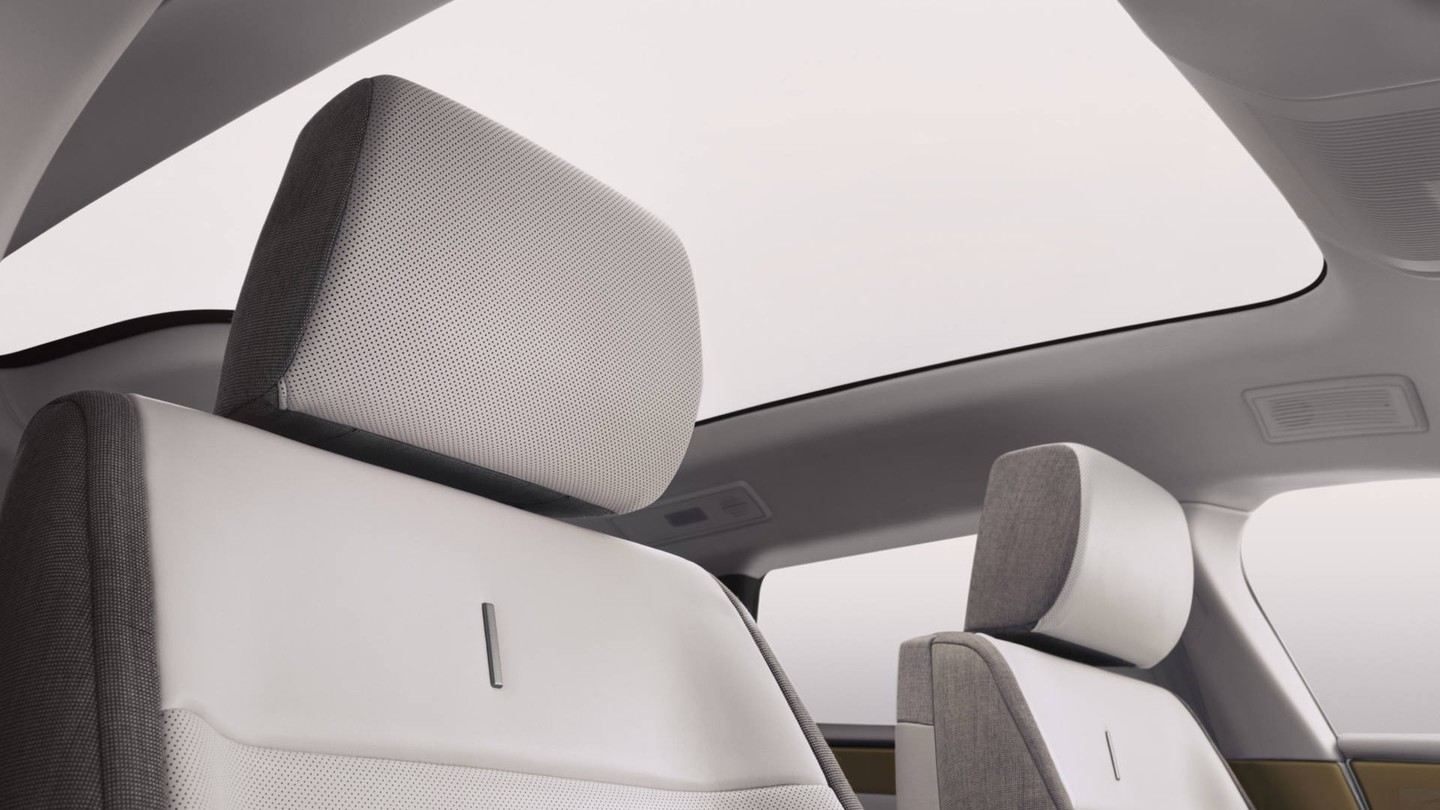
Front seats add a hot stone massage function.
The wider idea is Sensory Audio, where you feel the music as well as hear it. It’s a home idea, really. Comfort first, controls second.
Power built around the proportions
Type 01 rides on Jaguar Electric Architecture, a dedicated platform Jaguar calls JEA. It isn’t shared with Land Rover. Jaguar built it because no existing platform could keep the roof this low and the hood this long.
Three electric motors drive all four wheels.
Output reaches up to 1,030 PS, with torque at 1,365 Nm. 0 to 62 mph takes 3.2 seconds. Jaguar calls this its most powerful car ever.
An 850 volt system works with a 118 kWh usable battery. Range runs up to 450 miles on the WLTP cycle, and up to 400 miles on Jaguar’s EPA estimate. On a 350 kW charger, it can add up to 200 miles in 13 minutes.
Four corner air suspension and twin valve active dampers handle the ride. All wheel steering adds agility in town and stability at speed. Weight splits 50/50, and Jaguar claims the stiffest body structure yet.
Production starts in 2027 in Solihull, with drive units and battery packs from Wolverhampton. Pressed panels come from Halewood. Orders open in early 2027, and Jaguar expects first deliveries in the second half of that year.
Back to the surface
Walk around the car and the design argument returns. The 23 inch wheels fill the arches with aerodynamic purpose, and the slimmest headlights Jaguar has fitted frame the Strikethrough face, with the monogram set into each wheel center cap.
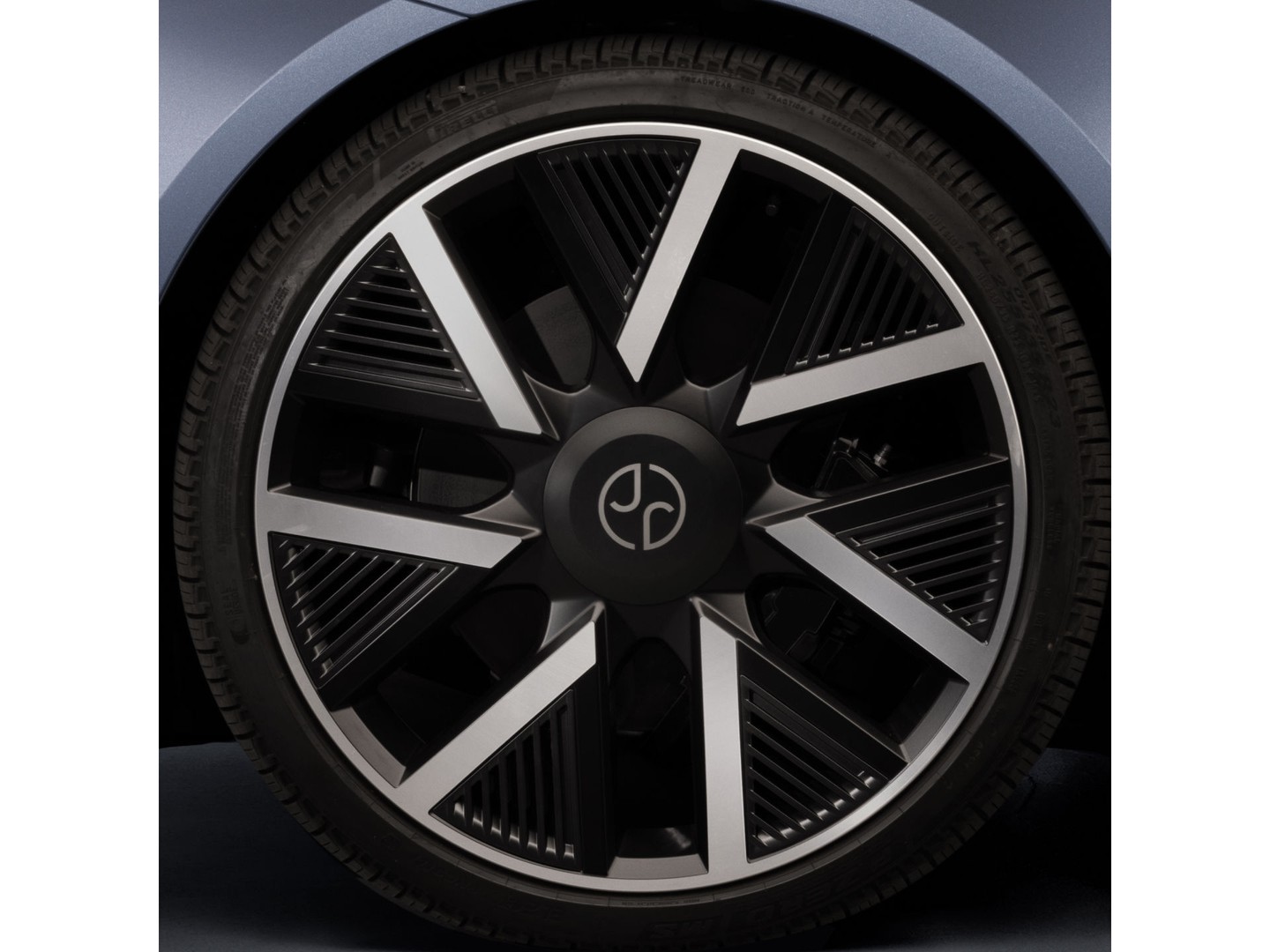
The launch curation, called Design Vision, wears Visionary Silver Satin. It’s the purest form of the car, close to the original vision model.
Other finishes include Dramatic White in gloss, plus satin options across the range.
Practicality didn’t vanish in the process. Combined cargo space tops 450 liters, with pull out compartments and split level stowage under a powered tailgate. A hidden underfloor area adds more room, and the rear seats tilt forward for larger items.
That’s the tradeoff running through the whole car. The same discipline that gives it a clean room of a cabin also removes familiar cues.
No rear window. No visible handles. No wood, no stone, and no grille in the old sense.
Buyers who want a luxury GT that feels like a piece of furniture and architecture will get it. Buyers who want knobs, chrome, and a window out back won’t. Jaguar has picked its side, and the car doesn’t hedge it.