
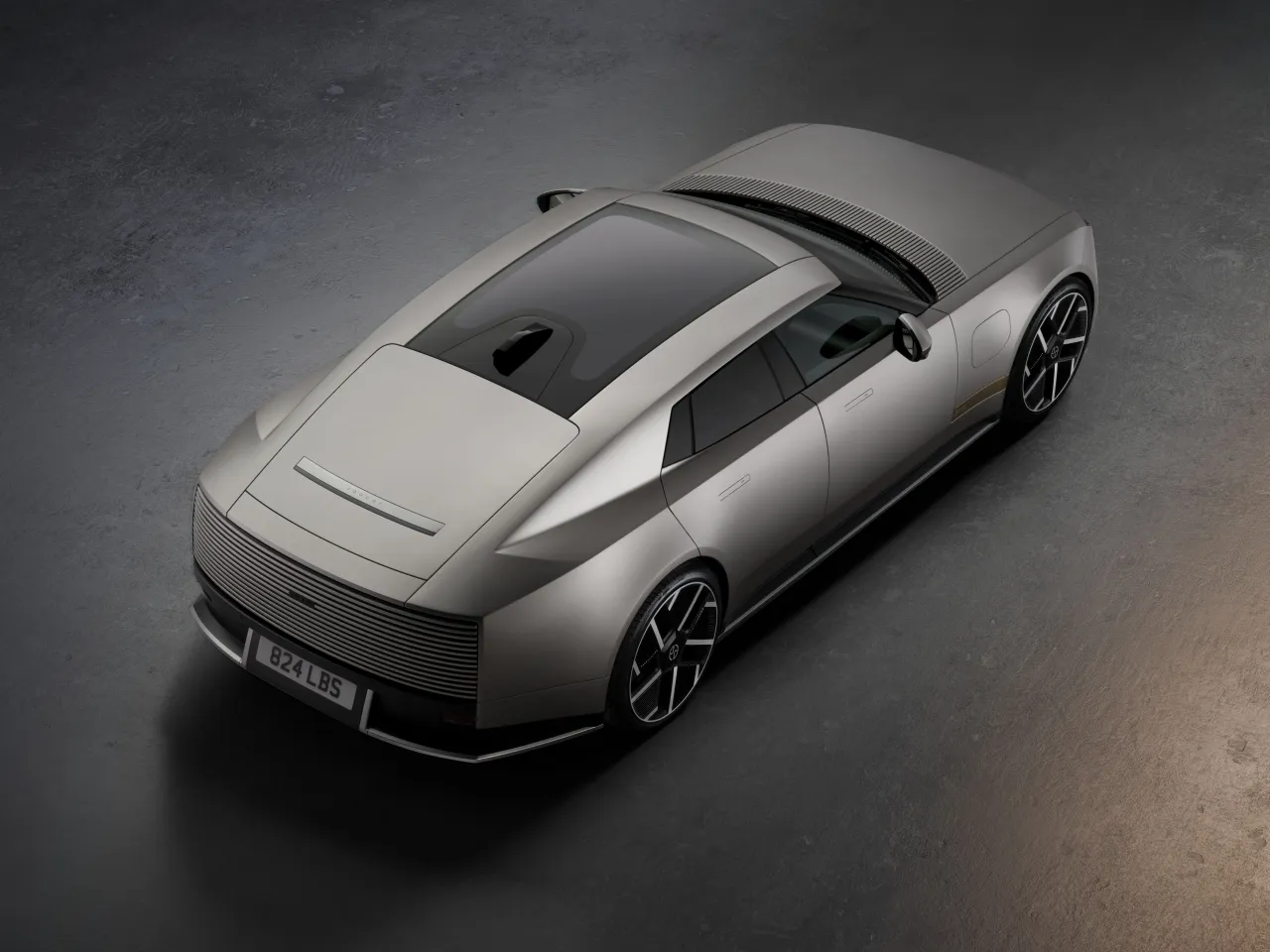
Jaguar’s electric reset starts with a silhouette, not a spec sheet, and the Type 01’s silhouette is pure grand tourer theatre. It stretches 5,235mm long, stands just 1,403mm tall, and leaves nearly 900mm between the dash and the front axle.
Proportion does the persuading

That dash-to-axle gap is the oldest trick in the GT book, and it still works, because a long hood signals power before a single figure lands. The roofline stays remarkably low over the body, the front overhang is short, and the tail runs long behind the rear wheels.
There’s no rear window at all. Cameras feed the view behind, so the roof flows into the tail without a break, and the drag coefficient drops to 0.23, the lowest figure Jaguar has recorded on a road car.
Orders open in early 2027. First deliveries follow in the second half of that year, and Jaguar builds every car in Britain.
Jaguar calls the design language exuberant modernism. The Type 01 is its first production expression, with more models to follow on the same architecture.
Cooling vanes open only when the powertrain asks for air, and a concealed rear spoiler wakes above 80km/h, then changes angle past 155km/h to add downforce. The surfaces stay flush and quiet at cruising speed, which suits a car this size trying to slip through air rather than fight it.
Three motors, 118kWh, 350kW charging

A 260kW motor drives the front axle and two 310kW motors drive the rear, for a combined 1,015 horsepower and 1,007 lb-ft of torque. Jaguar claims 3.1 seconds to 60 mph, and it quotes four seconds flat for the 62 to 112 mph run that owners will feel far more often.
The proportions reach back to William Lyons and the SS1 of the early 1930s, a car built around a dramatically low roofline and an extravagant hood. Lyons understood that a Jaguar sells its stance before it sells its engineering, and the Type 01’s designers have clearly read the same notebook. Where the concept car pushed the theatre toward provocation, the production car keeps the stance and softens nothing, which tells you the reaction emboldened Gaydon rather than scaring it.
Inside the industry, the car resets what a British luxury brand can ask for an electric flagship, because the price undercuts the Range Rover Electric from the same parent company while offering nearly double the power. That internal rivalry is deliberate, with Solihull building both cars and Wolverhampton supplying drive units and battery packs for each. Jaguar’s managers describe the Type 01 as the essence of the brand distilled for a new era, and the distillation is priced to move.
Rivals will read the car differently, since a 5.2-meter electric GT with four seats and no rear window answers a question few buyers asked aloud. Jaguar’s wager is that the space above the Taycan class and below the Spectre wants drama more than discretion, and that a brand with its history can charge six figures for silhouette alone. The order books opening in early 2027 will grade that wager quickly, and Gaydon knows it.
The 118kWh usable battery sits in an 850-volt architecture, and Jaguar estimates up to 400 miles of EPA range on the optional 21-inch wheels. The standard wheel is 23 inches, and the company quotes 320 miles at a sustained 75 mph, a plainer figure that suits motorway work.
On a 350kW charger, the pack adds up to 200 miles in 13 minutes and runs from 10% to 80% in about 22 minutes. Split charging still allows 250kW on 400-volt equipment, AC charging reaches 22kW, and charge ports sit on both sides of the car.
There’s no published curb weight yet. Jaguar also leaves final EPA certification pending, so the range figures stay estimates until regulators sign them off.
A cabin split by a spine

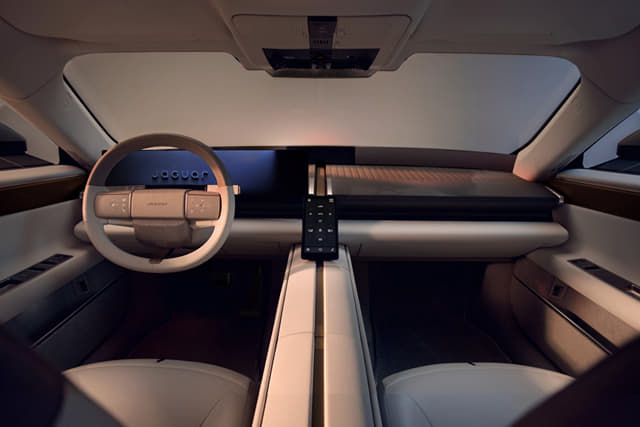
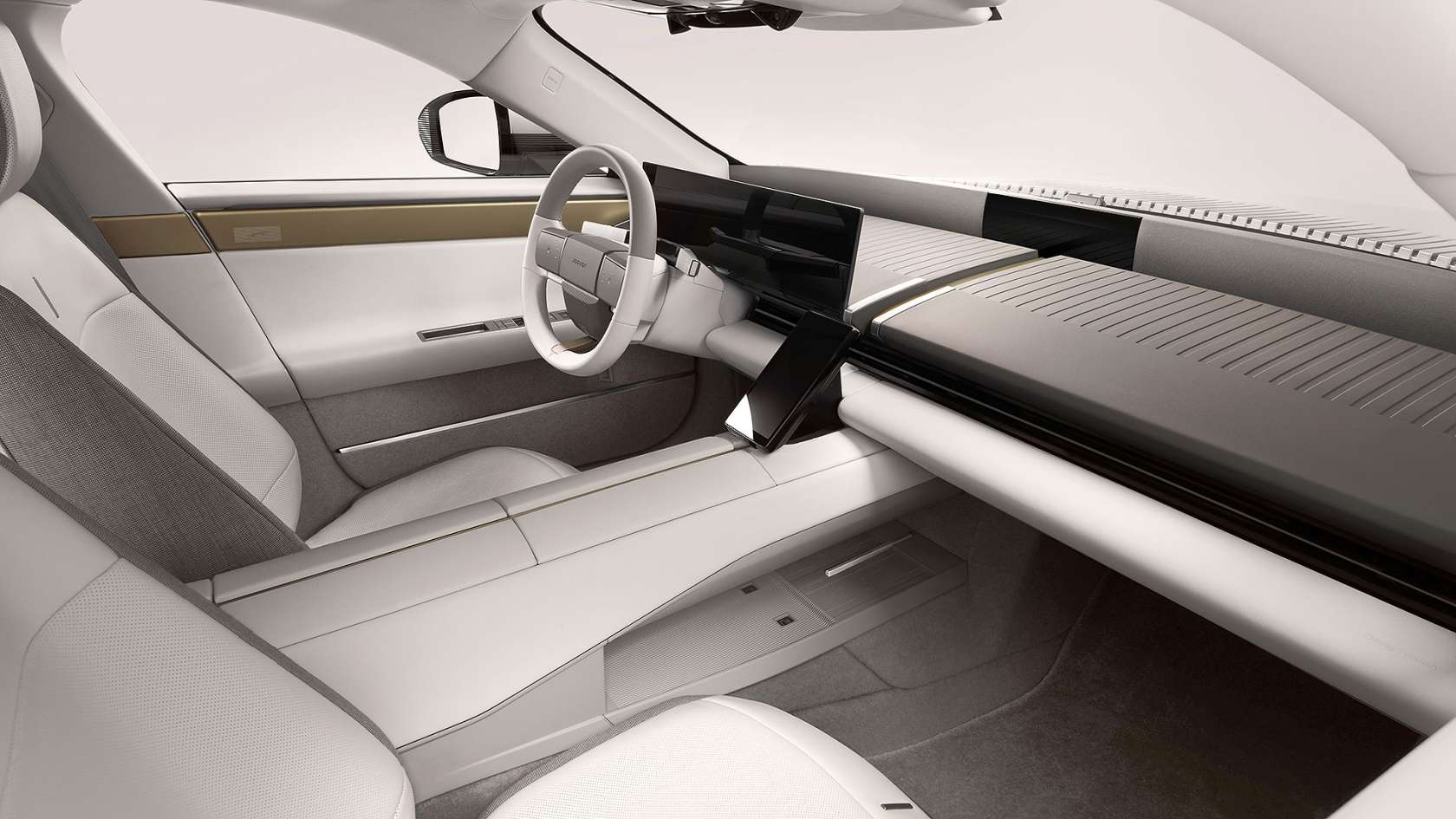
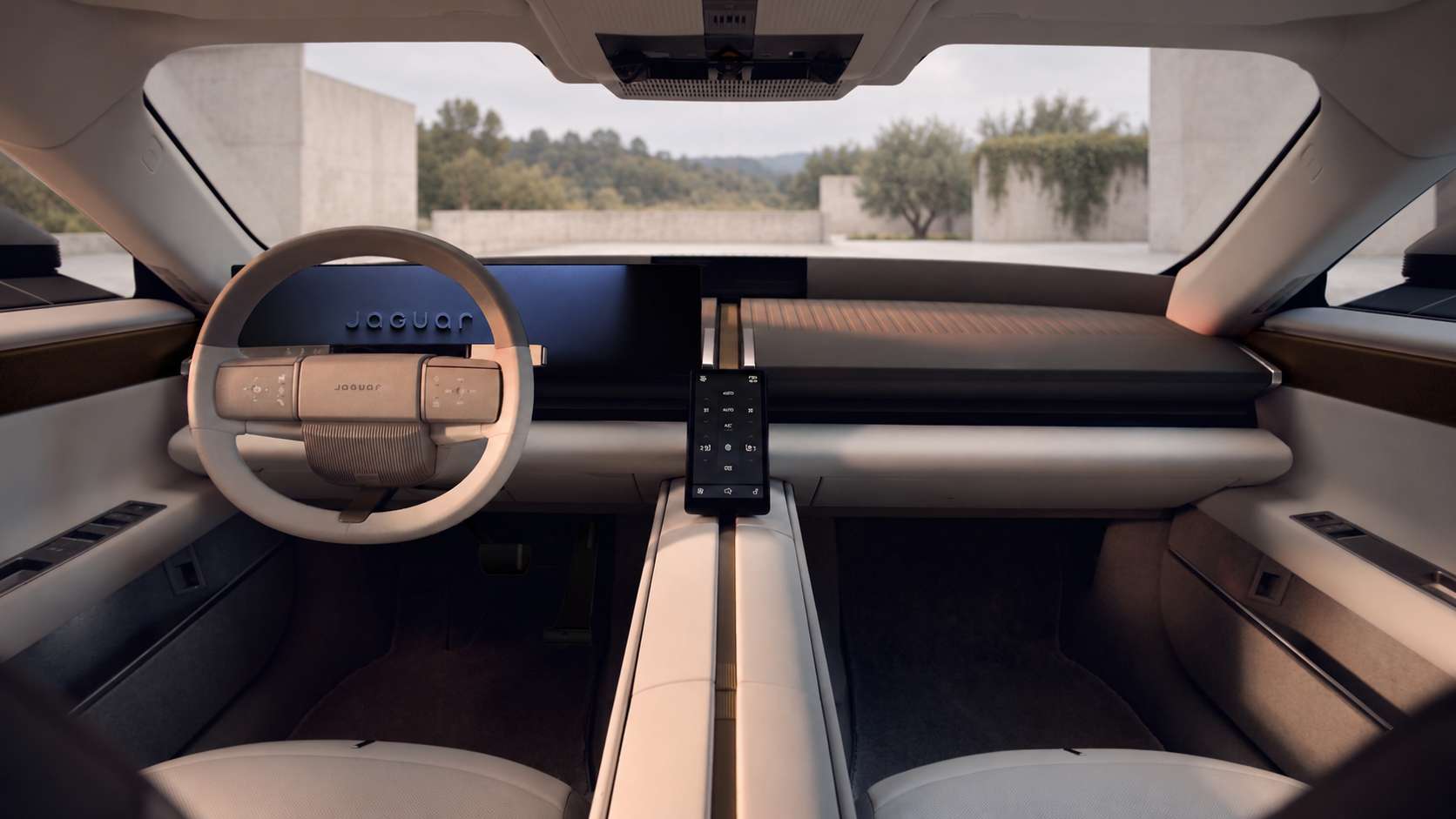
Inside, a full-length central spine divides the cabin into four individual occupant spaces, with brass-effect anodized aluminum finishers tracing the car’s length. Metal and textiles carry the surfaces, and the screens stay deliberately restrained for a flagship electric car.
The driver faces a single-glass 24-inch OLED display running Jaguar’s new infotainment system, backed by a small 7-inch touchscreen lower down. Cargo space measures 15.9 cubic feet behind the rear seats and roughly 35 cubic feet with them folded.
Bespoke Pirelli P Zero tires come in summer, winter and all-season compounds, developed for this car’s weight and torque delivery. That’s a telling detail, because a tri-motor GT on generic rubber would waste its chassis tuning at the first wet roundabout, and Jaguar has clearly spent money where the road meets the car.
The chassis pairs double-wishbone front suspension with an integral-link rear, adjustable-volume air springs and twin-valve active dampers, and Jaguar claims a 50:50 weight split. Rear-wheel steering turns through six degrees and trims the turning circle to 11.5 meters, which is hatchback territory from a car over 5.2 meters long.
Deliveries start in the second half of 2027. Britain builds the car, and Britain launches it first.
Jaguar builds the Type 01 in Britain and prices it from $130,500 in the United States, with orders opening in early 2027 and first deliveries in the second half of that year. As an opening statement for the electric era, it’s the proportion that lands first and the numbers that arrive second, which is exactly how the brand’s founder used to do it.