
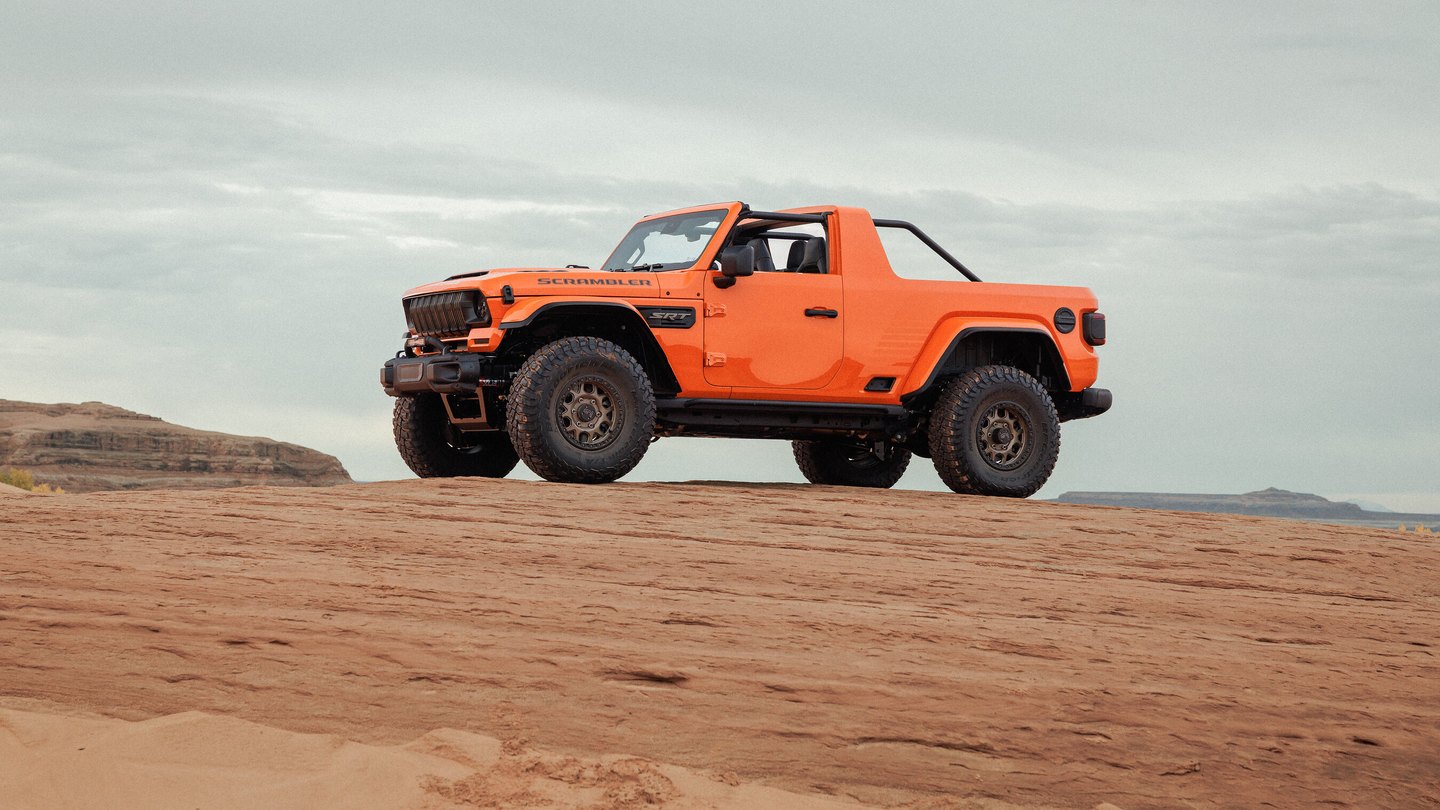
Every Wrangler ever sold rides on a solid front axle, and Jeep people treat that beam of steel like scripture. SRT just built one without it. The Wrangler Scrambler SRT Concept takes the CJ-8 Scrambler formula from 1981, stretches it into a two-door pickup, and points the whole truck at open desert instead of the rock garden.
It’s the first high-speed desert concept to wear an SRT badge, and the hardware backs the claim up: a bespoke independent front suspension, a trophy-truck-inspired rear axle, and V8 power.
Jeep built it for SEMA in Las Vegas as a question, not a promise. No production plan comes with it, no price, and no engine spec sheet.
A CJ-8 silhouette, rebuilt from the A-pillar back
Start with the shape. Designers kept the Wrangler’s face and windshield, then reshaped everything from the A-pillar rearward: longer doors, custom rear bodywork, an integrated pickup bed, a redesigned tailgate, and fender flares that sit wider than anything in the current lineup. A structural roll cage runs through the open cabin, and the silhouette lands somewhere between a CJ-8 and a desert racer.

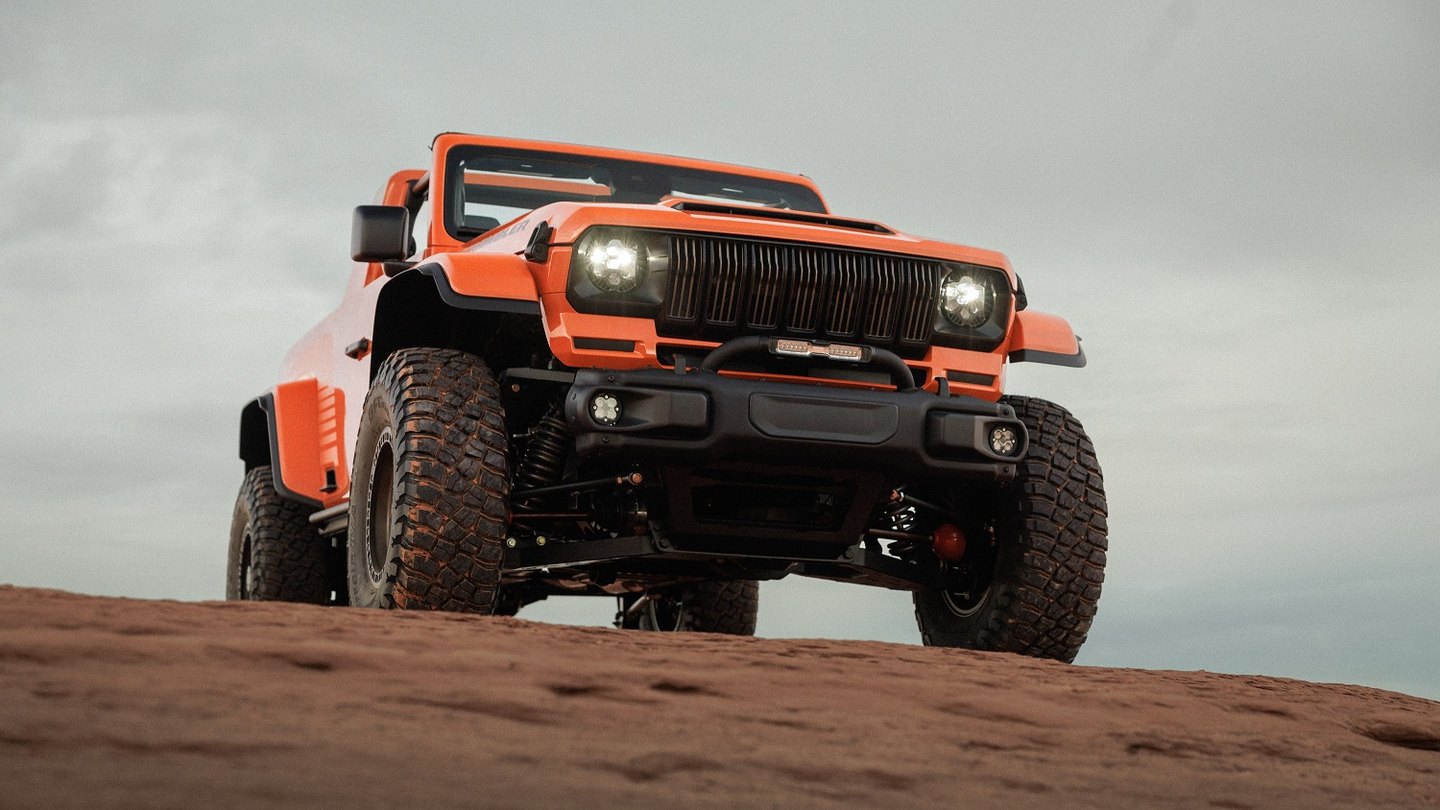
Up front, the sharknose face leans into Jeep’s truck heritage, drawing on the Gladiator and the classic J-series pickups.
Jeep first showed the treatment on a concept at this year’s Easter Jeep Safari, and it reads even better here, stretched over a lifted stance. Punk’n orange does the rest. Against red rock and sand, the truck photographs like a warning sign.

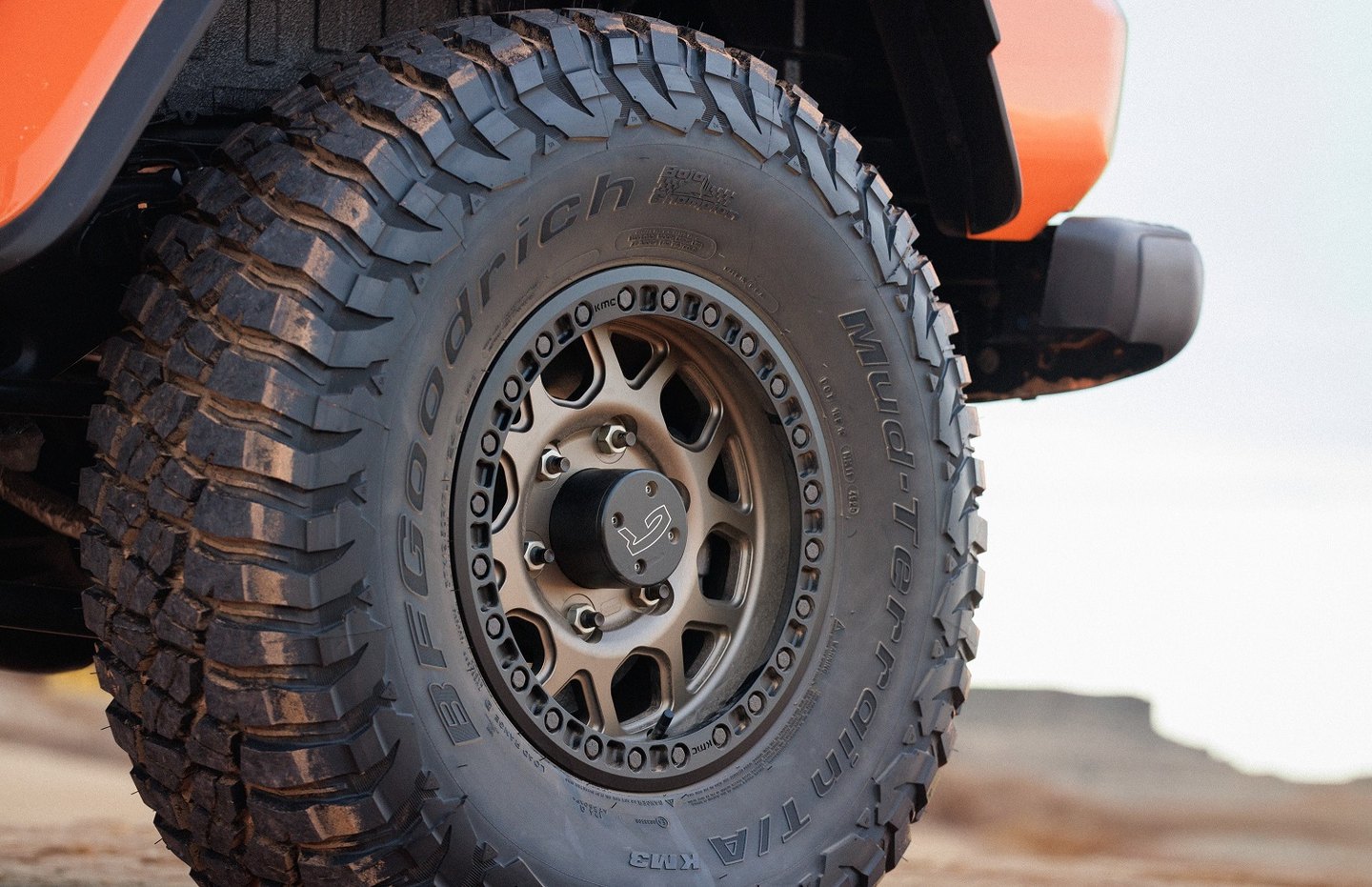
Bronze-painted beadlock wheels fill the arches, wrapped in oversized off-road rubber, and the bed wears a spray-applied liner meant for real loads. The details are working hardware, not show chrome. Even the tailgate carries the Scrambler name stamped wide across its panel, a nod to the CJ-8’s own badging.
The solid axle gives way to Currie hardware
The break with tradition sits underneath. In place of the solid front axle, SRT fitted a bespoke high-travel independent front suspension, developed with off-road racing champion Casey Currie. Each front wheel now moves on its own, and Jeep says the payoff is steering precision, wheel control, and high-speed stability across rough ground, the three things a solid axle gives up first at speed.
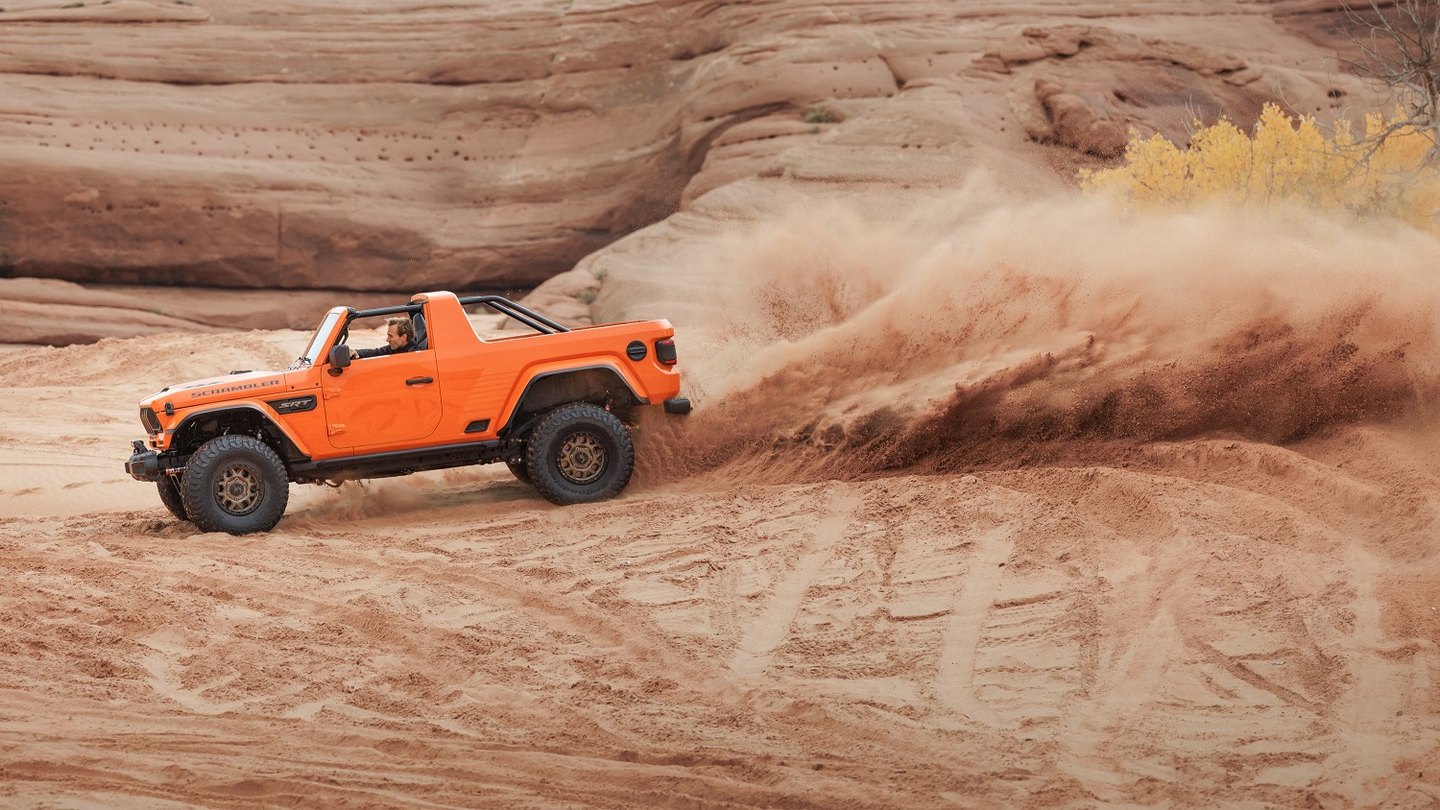
Out back, a trophy-truck-inspired rear axle handles the power, backed by heavy-duty wheels and desert-racing hardware throughout. The architecture isn’t new from nothing. It builds on the system under the Jeep Striker Concept, and Currie proved that setup in competition, driving his Gladiator-based Striker to a class victory at the NORRA 500.
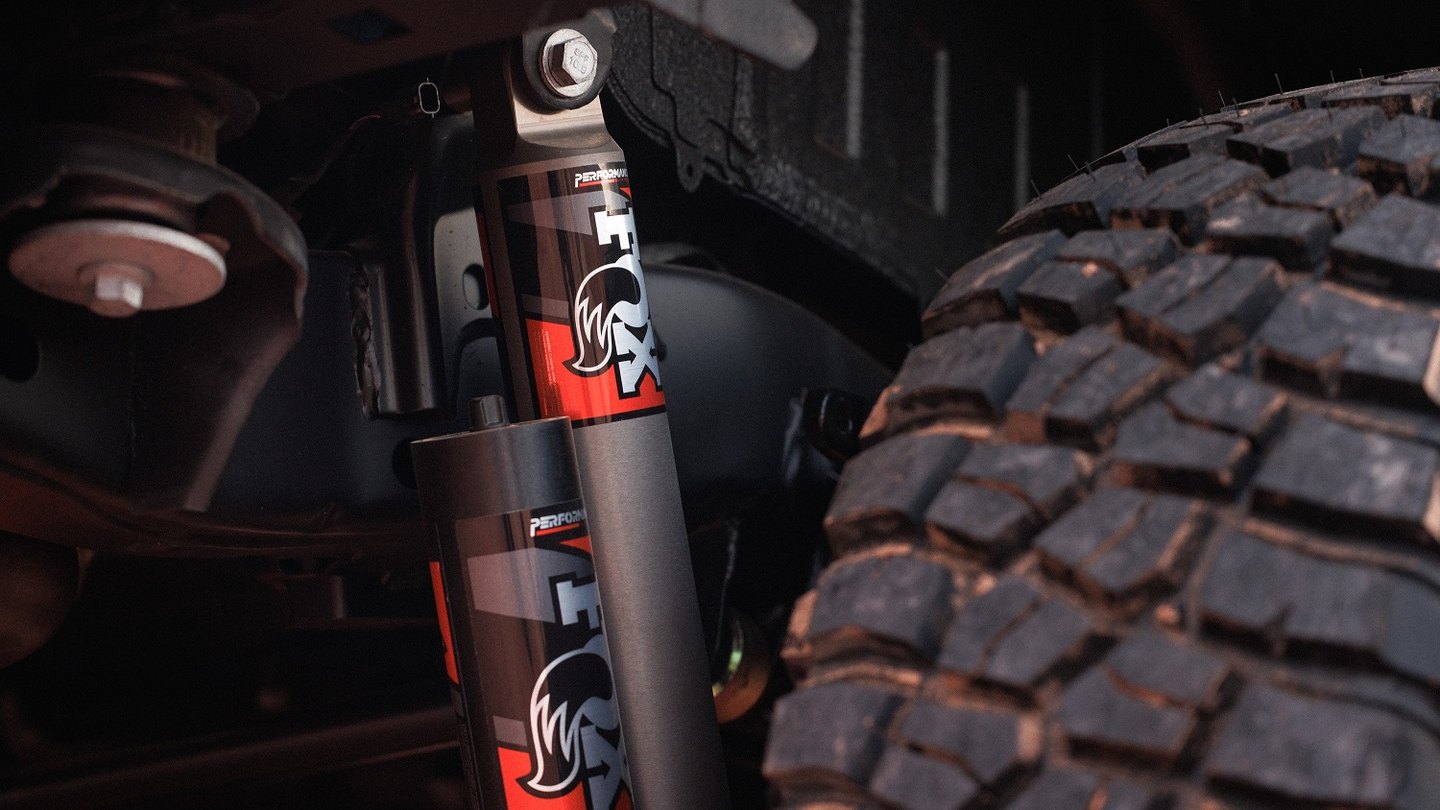
Power comes from a V8, and that’s the full extent of what Jeep will say. No displacement, no output figure, no transmission. For a division that usually leads with horsepower, the silence is deliberate: the concept sells an idea about chassis first and lets the engine stay a rumor until there’s a production case to make.
The tradeoff is real, and Jeep people will feel it.
A solid axle articulates over rocks in ways an independent setup can’t match, and it’s simpler to repair on a trail. SRT chose the other side of that ledger on purpose: control at speed, over articulation at a crawl.
Rear seats that spin around and lift out
The bed holds the concept’s best party trick. The rear seats clip into floor-mounted hooks, and they don’t stay put. Pull them out entirely and the full bed opens up for camping gear or a pair of motorcycles. Or rotate them 180 degrees and they face rearward, turning the bed into a viewing platform at the end of a trail.
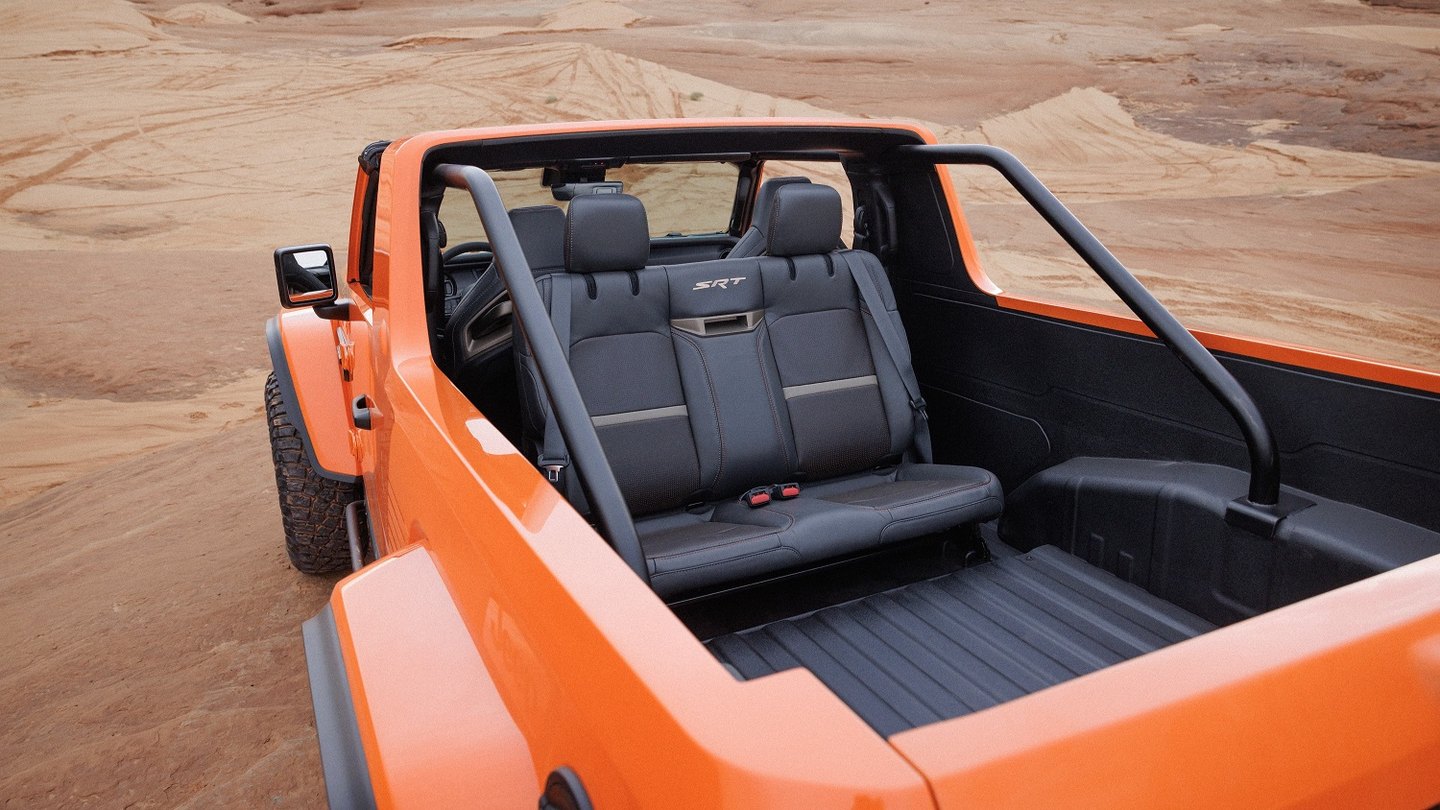
Jeep calls the arrangement an industry-segment exclusive, and it’s easy to see why nobody else bothered. It only works because the Scrambler’s bed and cabin were designed as one space from the start, roll cage and all. In a conventional pickup, the cab wall kills the idea before it starts.
With the seats out, the bed takes the kind of loads a two-door Wrangler never could.
It’s the difference between packing around a cabin and loading a truck. The liner, the flat floor, and the open top turn the rear half of the concept into pure cargo space.
Graphite and orange, finished like a race truck
Inside, the performance seats get Dark Graphite leather with orange inserts, contrast stitching, and bronze accents, with SRT embroidery across the seatbacks. The trim is built to be used hard: unique grab handles sit where passengers actually reach for them, and the rear seats carry Jeep’s Multi-panel System for mounting gear.
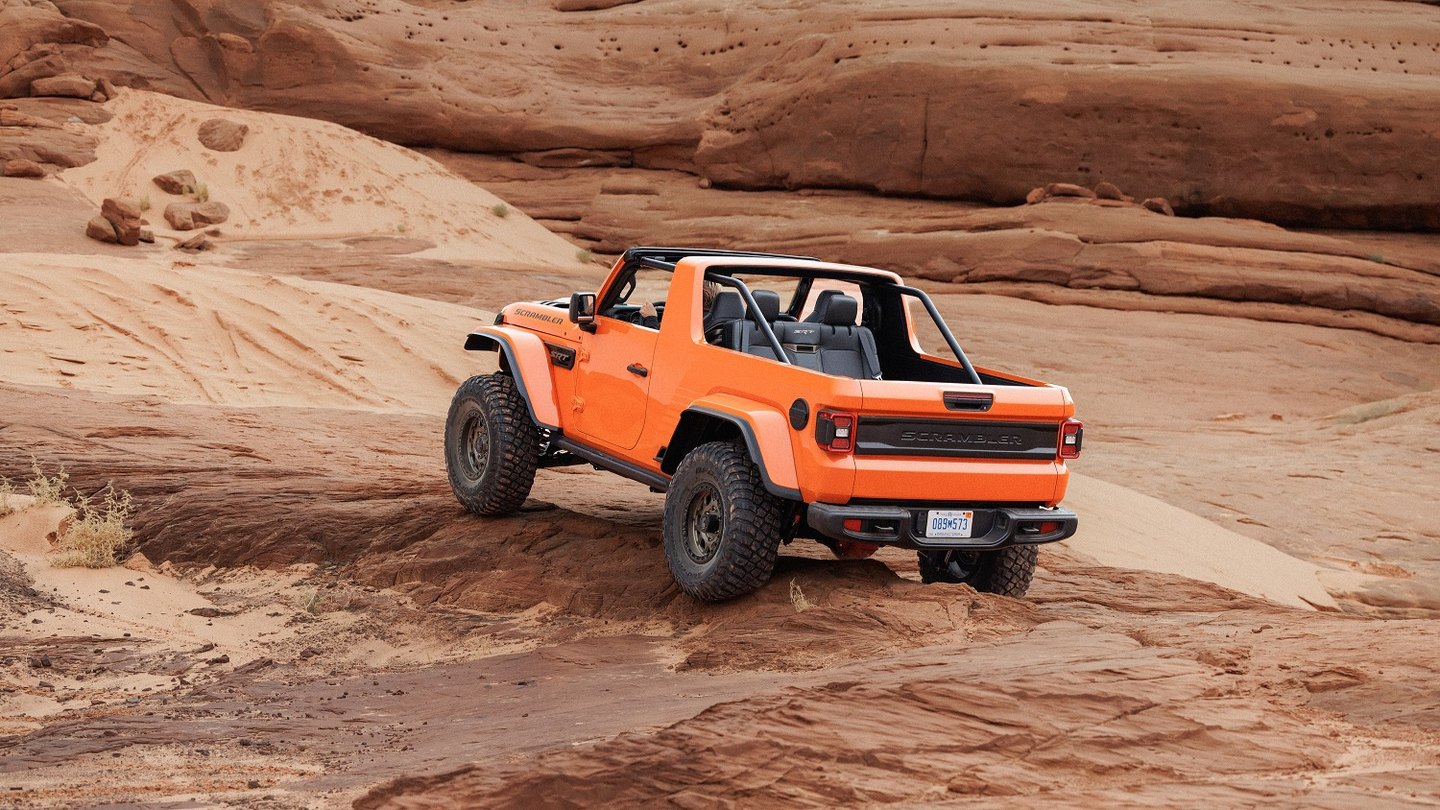
From behind, cabin and bed form one continuous piece of design, the cage tying the two together.
It’s the CJ-8 formula at modern scale: a short cab, a usable bed, and nothing wasted between them. The original sold individuality. This one sells velocity.
So what’s really here? A concept, full stop.
Jeep has made no production decision, published no price, and set no date, and the company says the truck was conceived to go far beyond what a production Jeep could be. Anyone pricing one in their head is guessing.
The hardware underneath is harder to dismiss. Independent front suspension works in the desert, every trophy truck on the line proves that much, and Currie’s name gives the setup a record to stand on. If the Scrambler’s front end ever reaches a showroom Wrangler, this orange show truck is where it started.