
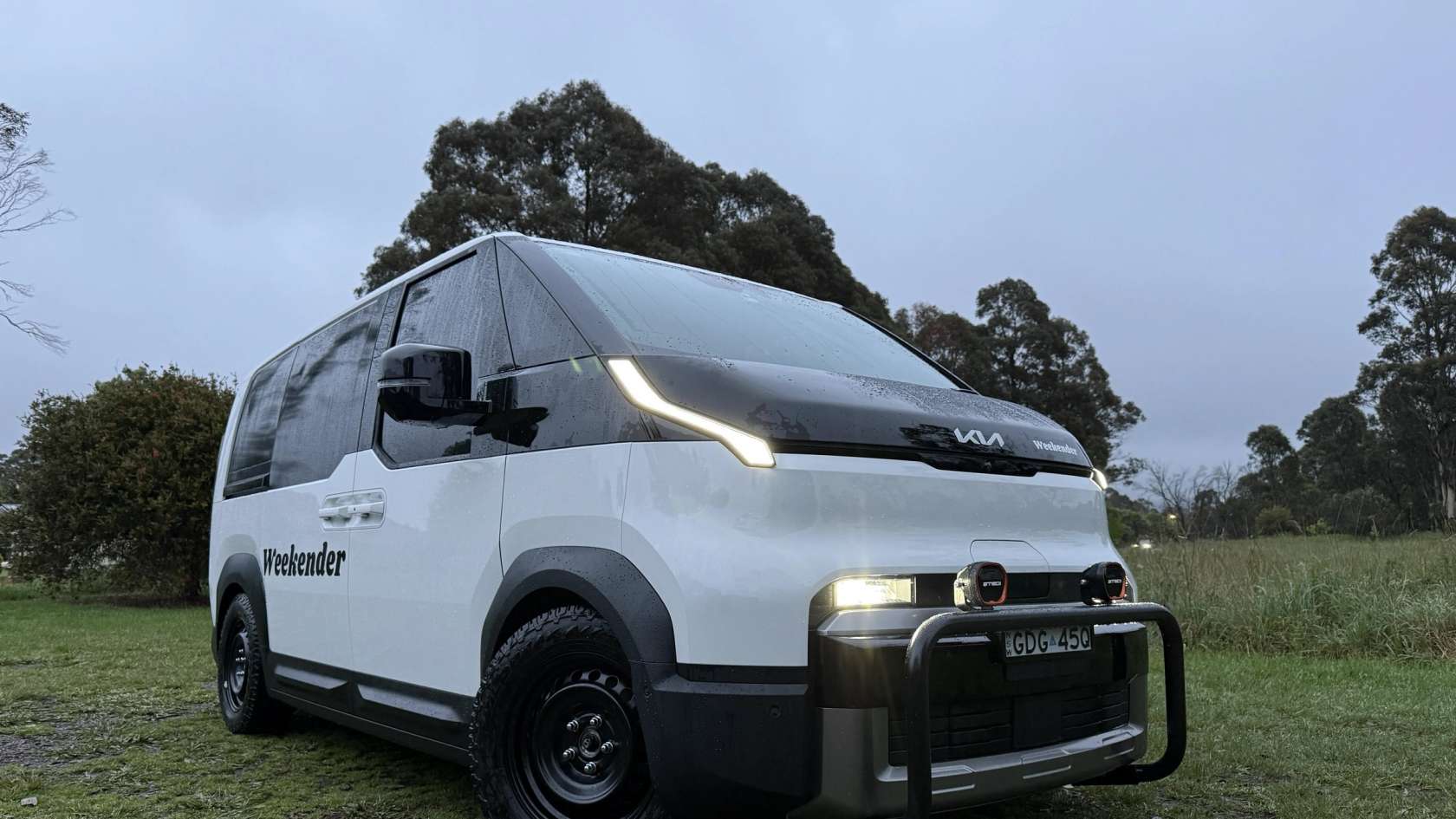
Most camper conversions treat the battery as luggage. There’s the traction pack under the floor, and then a second battery bolted into a cabinet somewhere, with its own charger, its own wiring, and a gas bottle for cooking riding along beside it. KombiLife looked at Kia’s PV5 Cargo and deleted the second battery entirely.
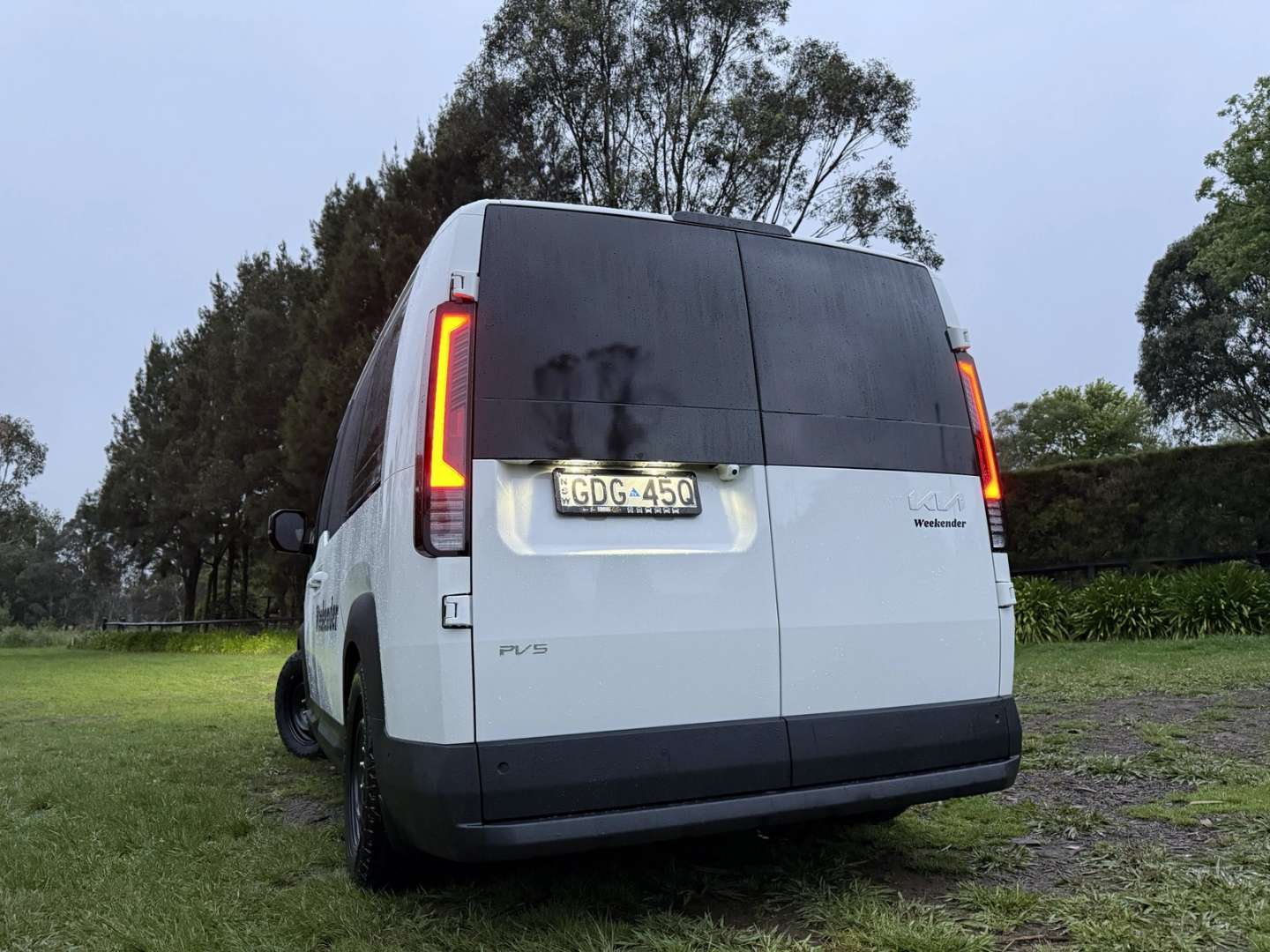
The Weekender is the Campbelltown shop’s conversion of Kia’s electric cargo van, the first PV5 camper built in Australia. One 71.2 kWh pack drives the van, cooks dinner, and runs the air conditioning overnight. Everything else in the fit-out, from the kitchen to the climate control, follows from that single decision.
A cargo van that already looks like a camper
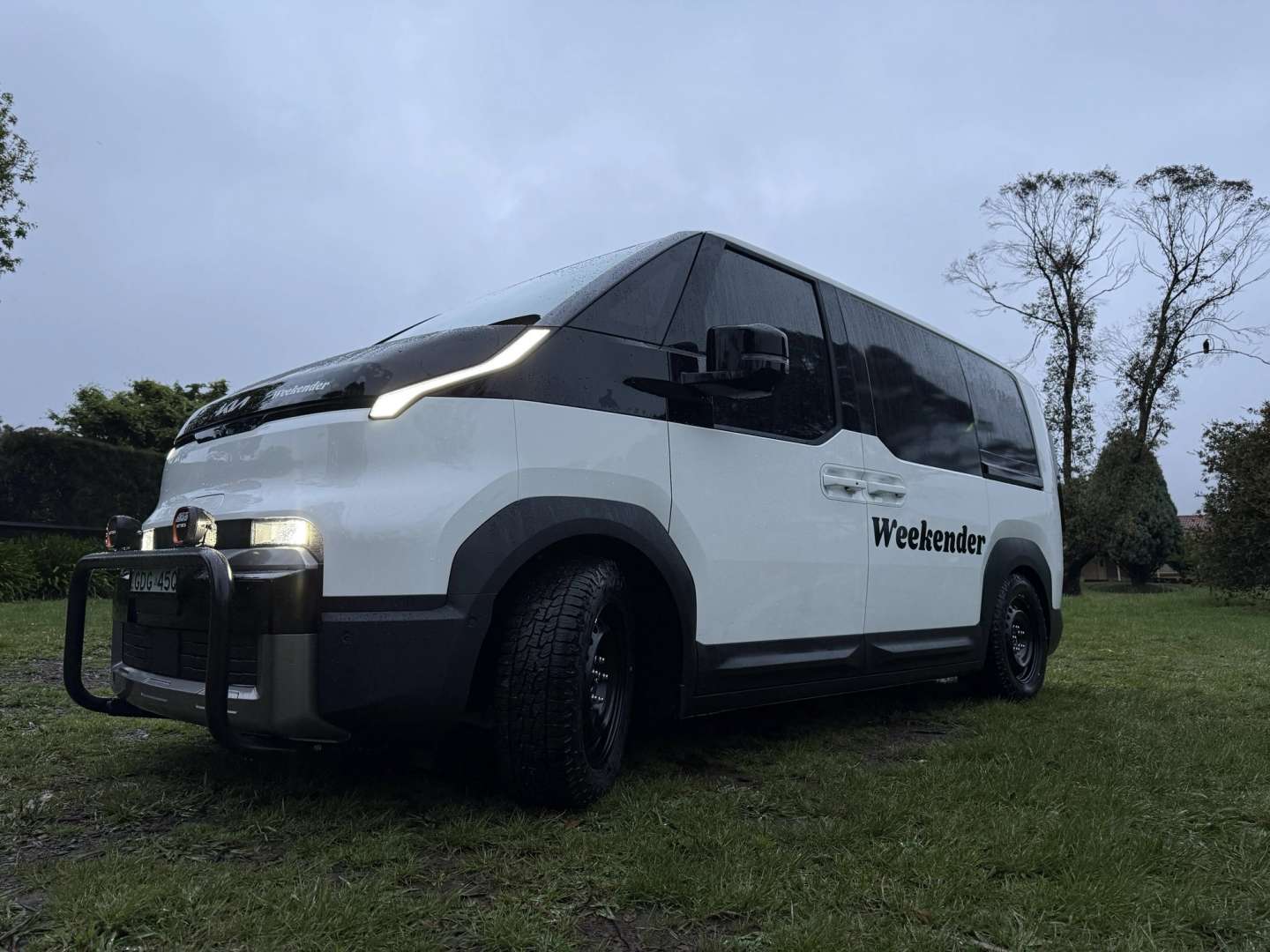
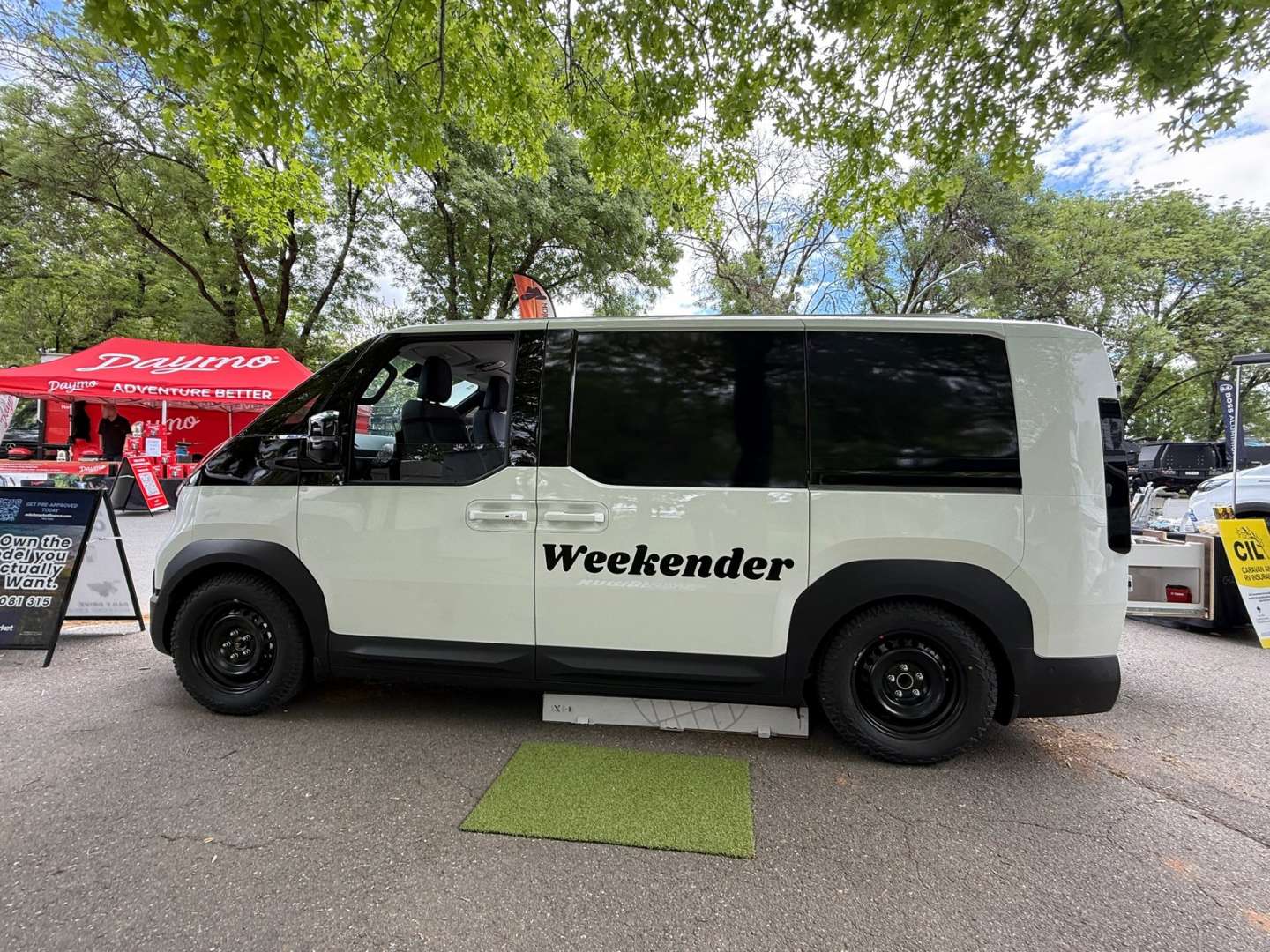
The PV5 helps before KombiLife touches it. Kia built the van on a dedicated electric platform with a flat floor, dual sliding doors, and barn doors at the back, and the shape is all glasshouse and short overhangs. KombiLife keeps the silhouette clean: a nudge bar and Stedi driving lights at the nose, Falken Wildpeak all-terrain tires, decals, and a stealth awning tucked along the roof rail.

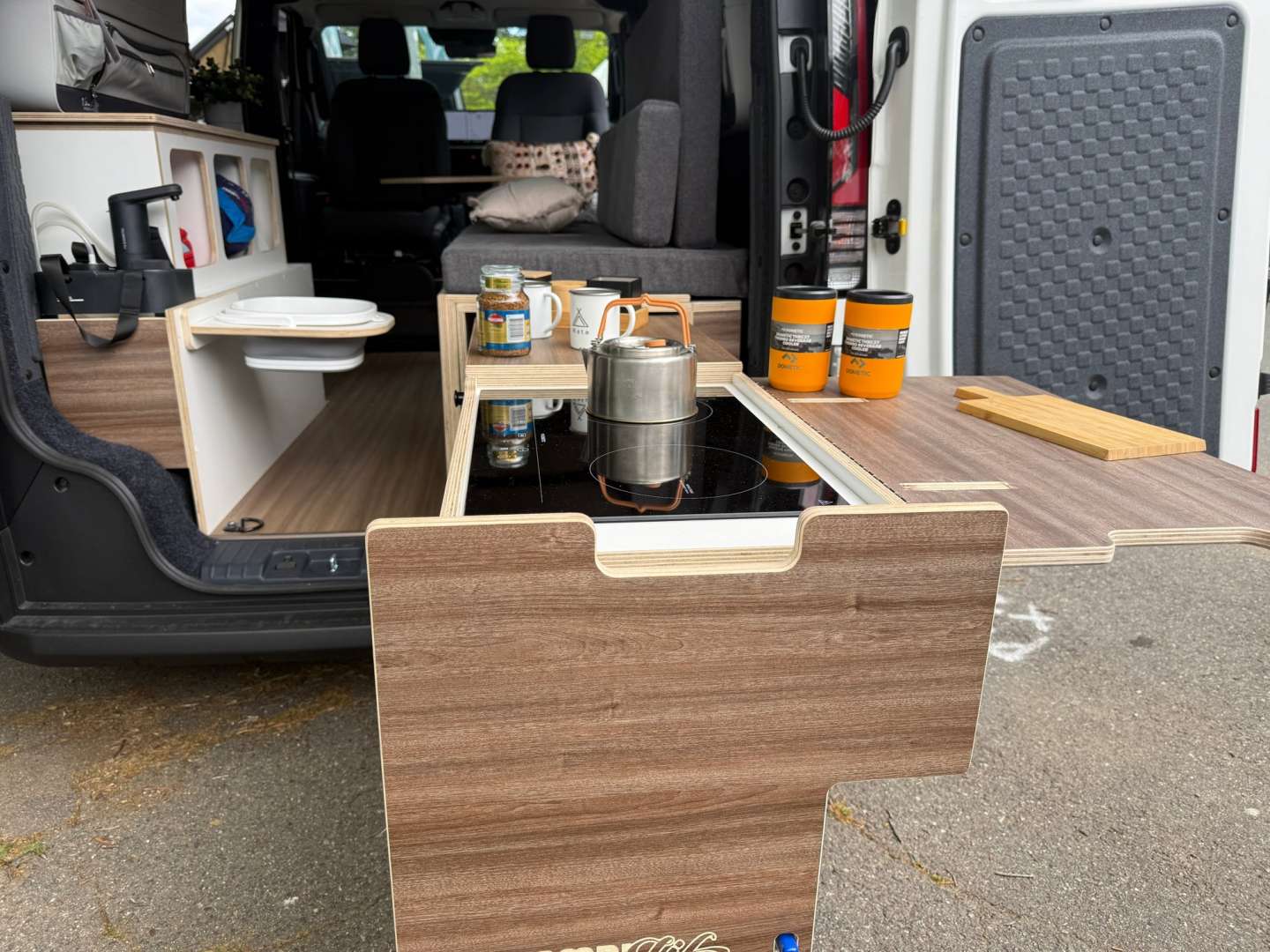
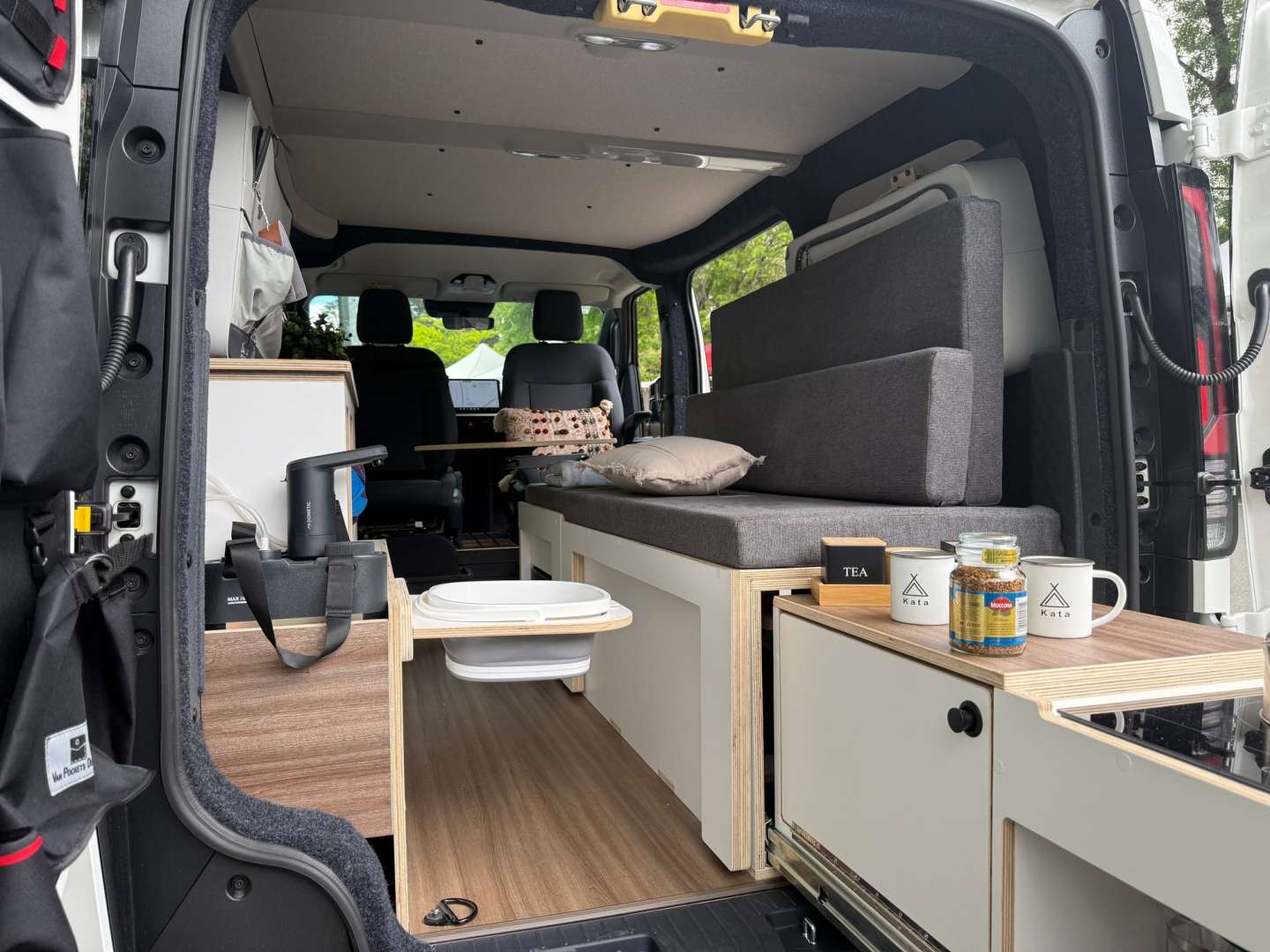
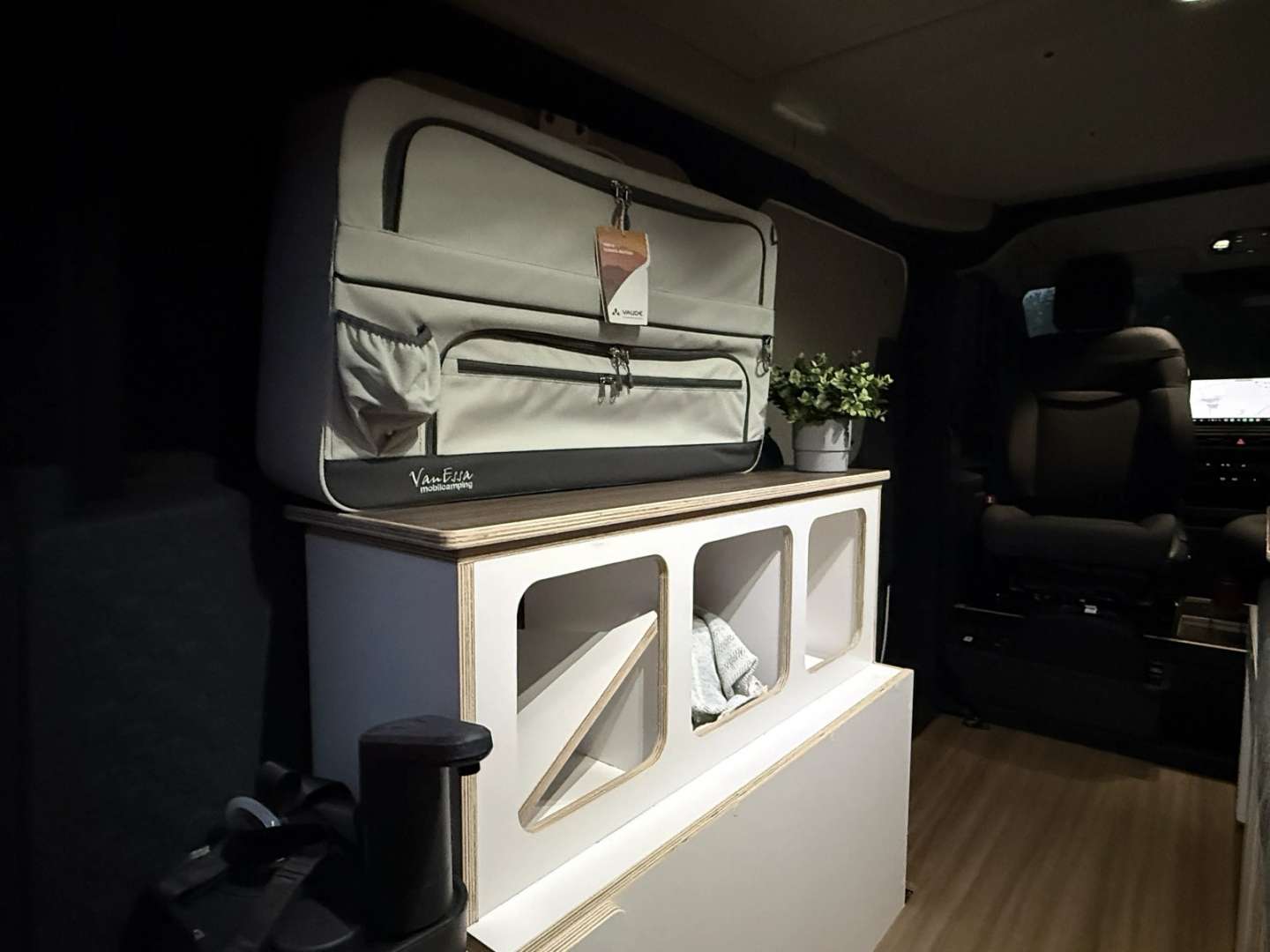
Inside, the fit-out is built with Kata Camperbox from honeycomb ply and white laminate, and the whole cabinet set weighs 130 kg. Every kilo of cabinetry in an electric van is range the van doesn’t get back, so the whole set had to stay light.
One battery does the camping too
Vehicle-to-load is the core of the conversion. The PV5 puts out up to 3.6 kW through ports in the cargo area and at the charge flap, and KombiLife routes that power to a Dometic dual-zone induction cooktop on a slide-out kitchen at the rear doors. Dinner cooks off the same pack that drove the van there. No gas bottle, no fumes, no second battery.
On the road it’s a 161 hp front-drive van, and KombiLife doesn’t pretend otherwise. There’s no all-wheel drive in the PV5 range, so the all-terrain tires and the nudge bar are about unpaved campsite tracks, not rock crawling. Range runs to 416 km on the WLTP cycle, about 258 miles, and a DC fast charger takes the pack from 10 to 80 percent in about 30 minutes.
Kia’s Utility Mode holds the cabin climate overnight off the traction pack, and a 12-volt system runs the 30-liter fridge drawer, the lights, and the fans. Camp runs quiet. Nothing idles, nothing burns.
Lounge by day, bed by night
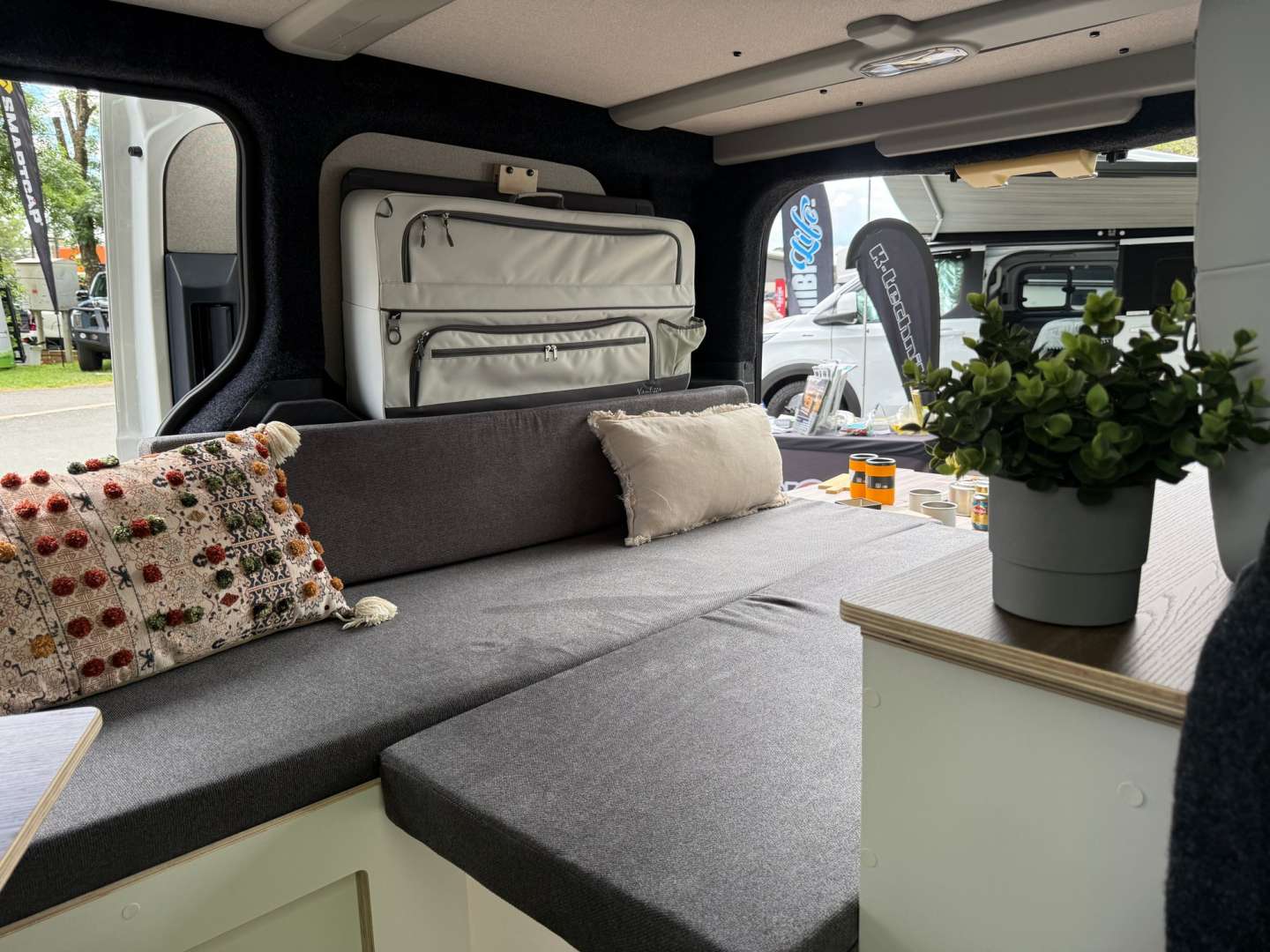
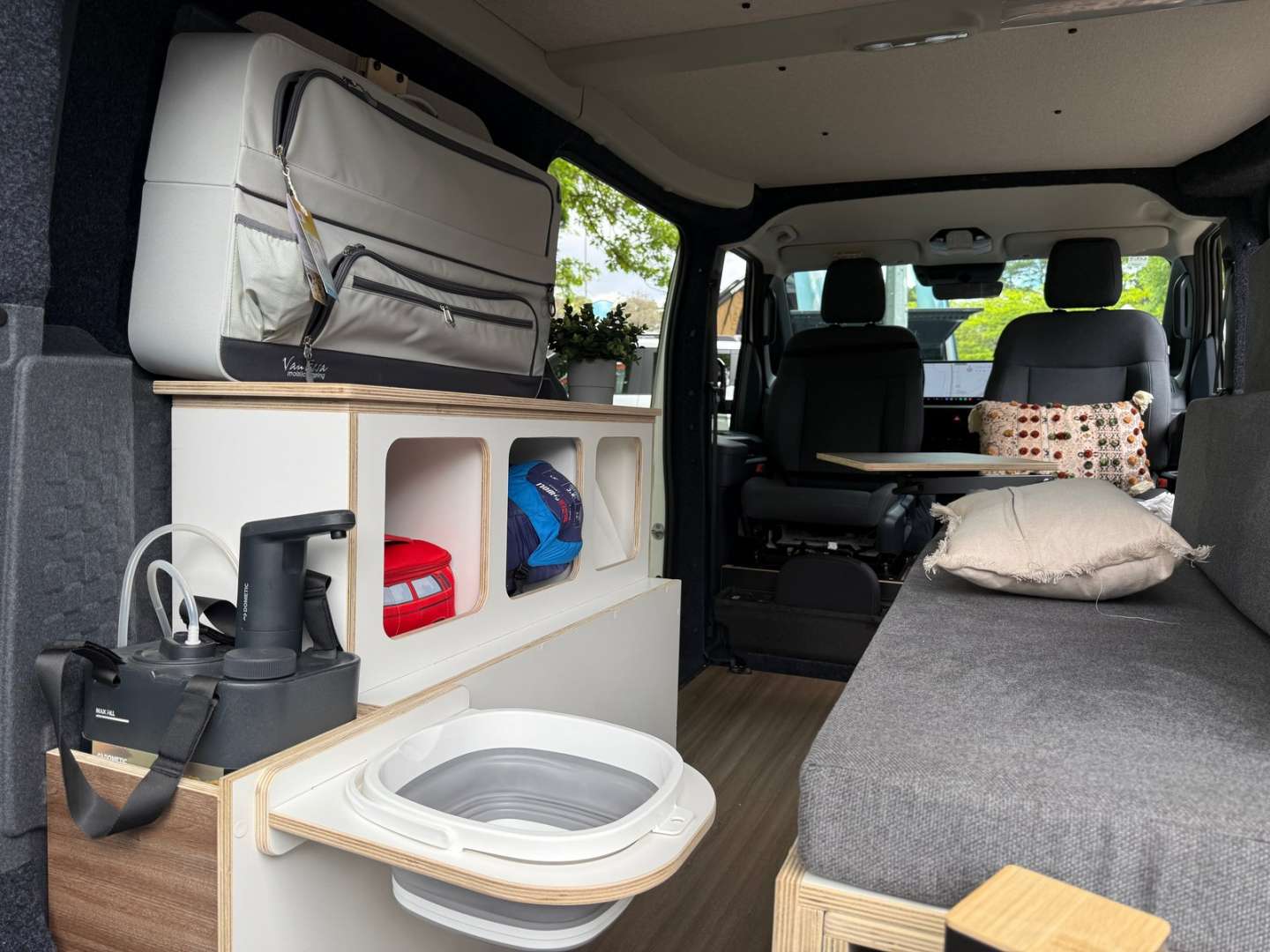
Both cab seats swivel to face the cabin, where a lounge bench, folding tables, and a storage console divide the space into sitting, dining, and sleeping zones. The bench converts to a double bed with a custom mattress, a portable toilet is included, and the water system runs an 11-liter fresh canister against a 5-liter grey one.
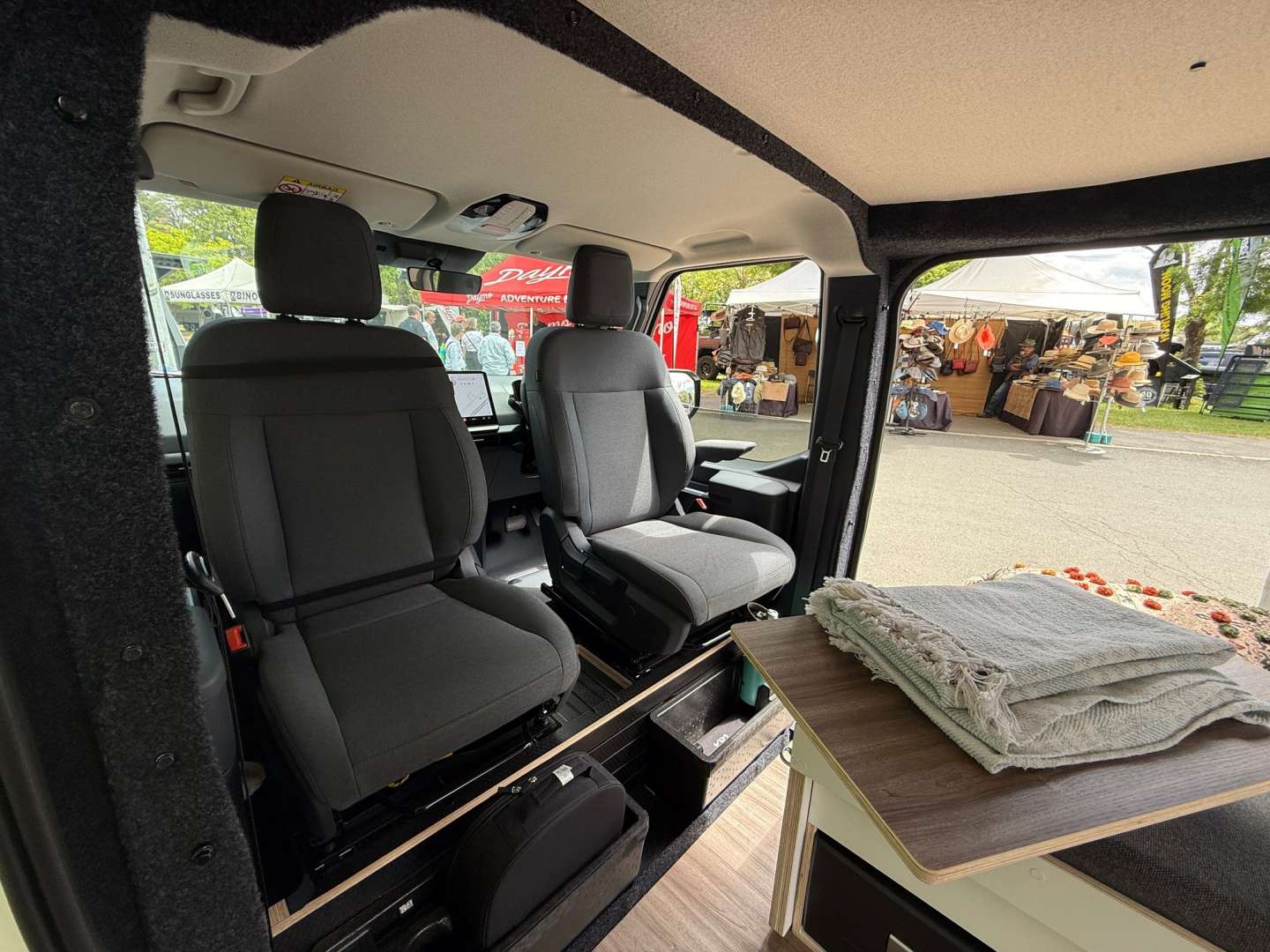
The fridge drawer is reachable from inside the van, which sounds minor until the first rainy night. A collapsible sink with an electric tap folds away when floor space is needed, and pack bags take the soft luggage.
The 2027 step is a Reimo Easy Fit Open Sky pop-top with stand-up room and a second double bed in the roof, 192 by 112 cm, about 75.6 by 44.1 inches, lit by LEDs. Ordered with the pop-top, the Weekender sleeps four in a van that still parks like a delivery van.

KombiLife lists the Weekender at about $58,600 in US terms, and it’s an Australian conversion sold from the Campbelltown showroom in New South Wales. Kia’s warranty carries over: seven years with unlimited kilometers on the van, eight years or 160,000 km on the battery. And because the cabinets weigh 130 kg, most of the van’s 740 kg payload survives the conversion.
Editor’s take
The Weekender’s argument is subtraction. Every camper kitchen that runs on gas carries a second fuel system to do a job the van’s battery already does better, and every leisure battery is weight bought twice. KombiLife spent the money on cabinetry and tires instead, and kept the payload.
Front drive will cap where it goes, and 258 miles of rated range will shrink with a roof load and a headwind. Within those bounds, this is the most coherent small electric camper yet: one battery, one fuel, no flame. The pop-top finishes it.