
Most lighting brands launch with a material or a shape, and Lancken launched with a mount instead. Every shade in its first collection fits the same fitting, in white or polished nickel, so the seven lamps swap shades across the range.
Seven shades, one fitting

The collection holds seven table and pendant lamps, shown at Collectible New York in early November. Five come from Charlotte von der Lancken herself, and two come from invited makers whose studios work in materials a factory wouldn’t touch.
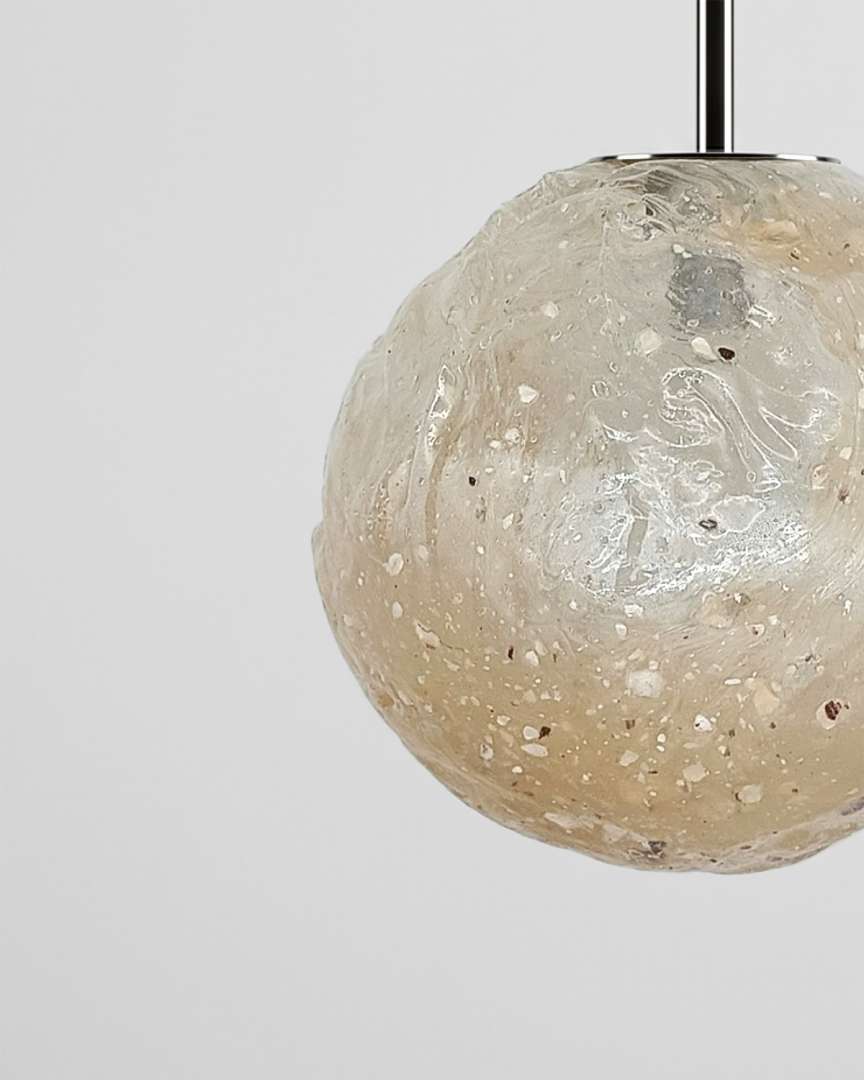
Oyster, by Clémence Joséphine Touzet, is handmade at her bio-manufacturing studio on the French Atlantic coast, where oyster shells pile up as a local resource and become the main component of the shade, gathered within walking distance of the studio. Arcilla, by Dzovag Kotchian, stabilizes raw clay into thin structures that diffuse the light passing through them at close range.
The launch collection showed at Collectible New York from November 4 to 6. Seven lamps went on display, each one shade-swappable across the range.
The shared mount is the commercial logic under the craft, since a buyer can change a room’s mood by changing a shade rather than a lamp. It’s also the design discipline, because every shade, whatever it’s made from, has to resolve into the same small piece of hardware.
Fabric, glass, paper and print grids

Exo is digitally crafted from reinforced recycled fabric, built with a technique Charlotte developed to give the shade soft, flexible volumes and a comfortable spread of light. Pilo uses recycled post-consumer textile waste and comes in white and off-white as standard, with custom colors on request.
Charlotte’s route to lighting ran through research rather than retail, with time at the RISE biomaterial institute shaping how she picks materials. Her Tinnef tables for Skandiform turned recycled plastic waste into café furniture, and the same instinct runs through this collection, where textile waste, oyster shell and raw clay all carry light. The lamps look calm in photographs, but each shade began as a materials problem that needed a maker’s hands to solve it properly.
Materials research sits behind every shade, and the studio treats each new substance as a small investigation with a lamp at the end of it. Oyster shell arrived as coastal waste, clay as a construction material that had never held a bulb, and textile waste as a softness problem waiting for structure. The results share a glow but not a look, which keeps the collection from reading as a matched set.
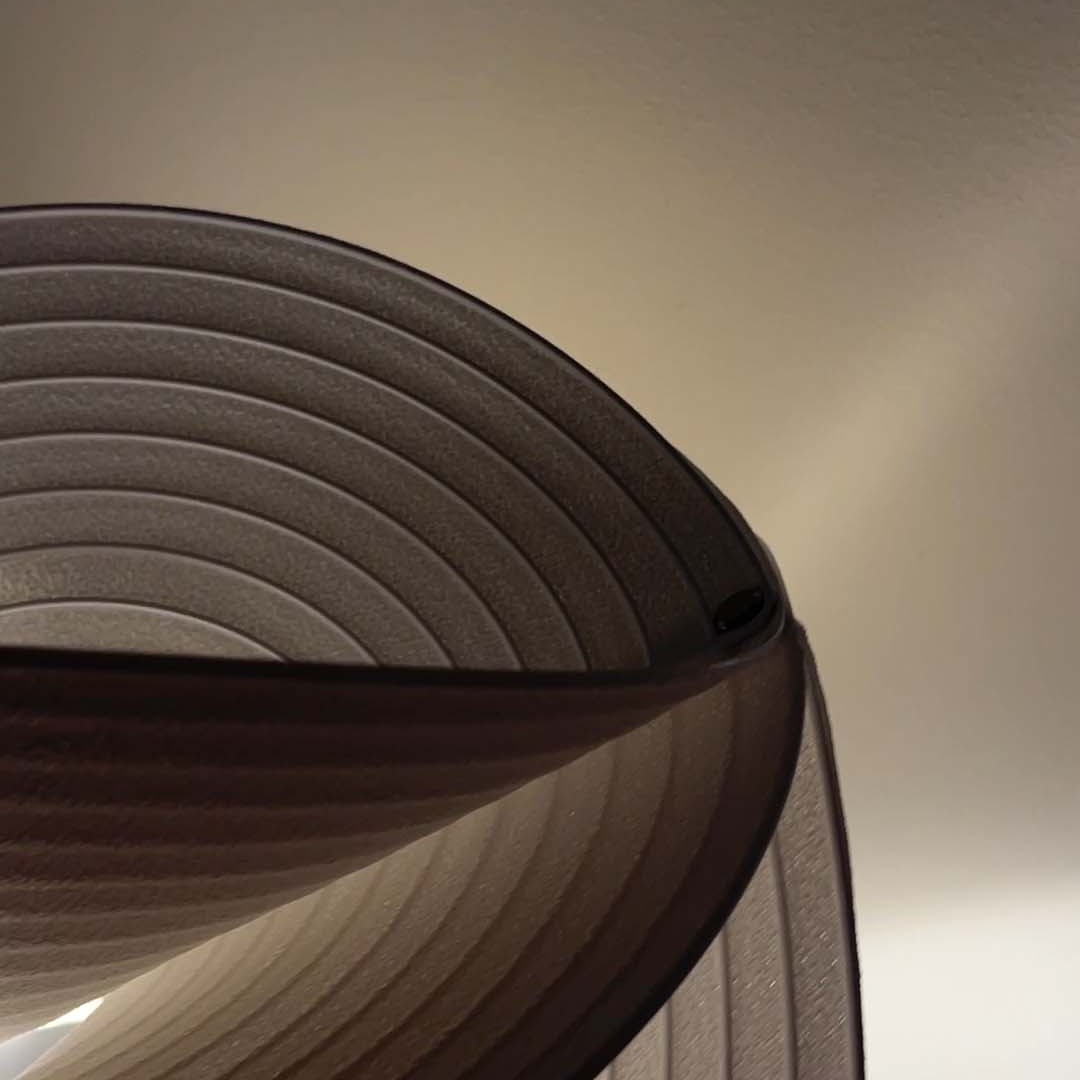
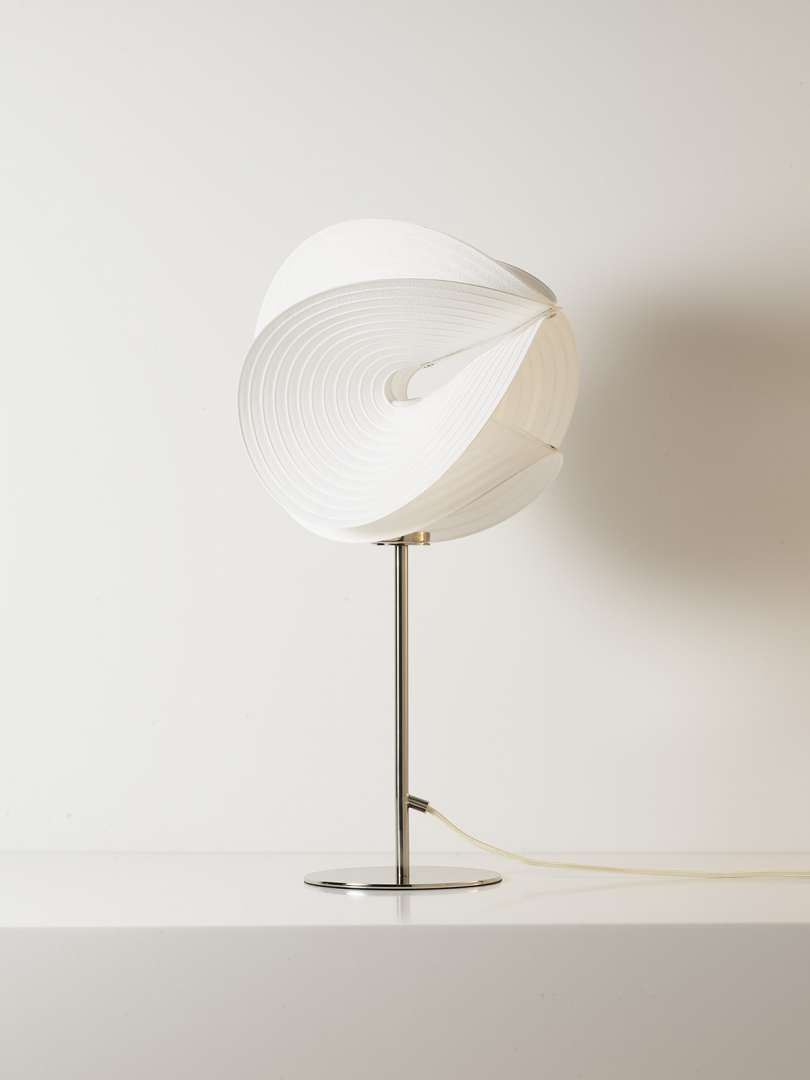
Pärla is a series of hand-blown glass globes made at a Swedish glassworks, playing opacity against transparency inside a single sphere. Blomma, Swedish for flower, combines additive manufacturing with a fabric-like paper developed in the Lancken studio, and its petals soften the light as it leaves the shade. The fitting takes the weight without complaint.
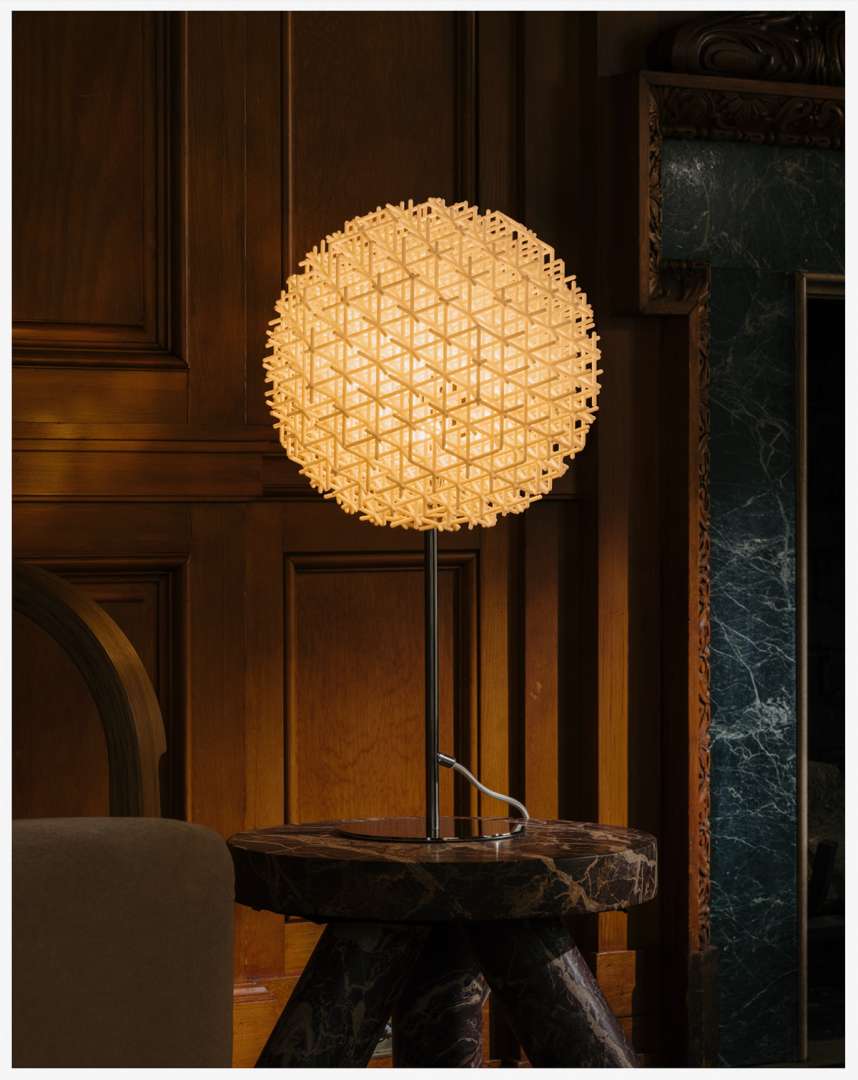
Lattice borrows its structure from the infill patterns inside 3D printing, a mathematical grid that holds strength while using less material. Applied to a globe, the grid diffuses the light and throws a moiré effect across nearby surfaces, so the pattern keeps moving as you walk past it.
Carl von der Lancken runs the business side from New York. His background is creative direction, with work for clients including National Geographic and Amazon.
Every shade in the collection is handmade or small-batch. None of the seven is a mass-produced catalogue item with a warehouse behind it.
The brand sells directly and through selected design retailers. Its founders describe the collection as ever evolving, rather than generated to a schedule.
A brand built on makers, not seasons

Charlotte von der Lancken co-founded the brand with her brother Carl, and her earlier work sits in the permanent collections of MoMA in New York, the V&A in London and M+ in Hong Kong. She trained as an industrial designer, worked with the Swedish design group Front, and spent time at the RISE biomaterial institute.
The brand, founded in 2025 and based between New York and Stockholm, says it won’t run on a fixed annual schedule. New shades arrive when a material or a maker earns one, and the mount keeps every earlier lamp current as the collection grows around it.
The mount itself comes in white or polished nickel, and every shade in the collection attaches to it, table or pendant. That single decision turns seven lamps into a system, and it means a shade bought this year still fits whatever base a room needs next year. Few young brands design their own obsolescence out this early, and fewer still build the whole launch around it.
The collection’s restraint is commercial as much as aesthetic, because a young brand with one mount can tool seven shades without tooling seven lamps. Production stays close to the makers, batches stay small, and the founders keep control of quality at the workbench rather than the warehouse. For buyers, the trade is patience: pieces like the Oyster shade follow the maker’s calendar, not a retail season, and the brand is plainly comfortable with that pace.