
Mercedes-AMG is in the middle of a product reset, and that is exactly why the unofficial Mercedes-AMG Dark Star concept lands with more force than a normal rendering exercise. It is not an official AMG program. It is a speculative design study by Tadeáš Čech, known online as tadeascech, a Transportation Design student at the Academy of Fine Arts and Design in Bratislava with prior Volkswagen Design experience. But the reason it is worth looking at is not because it predicts a showroom model. It is worth looking at because it shows the emotional space AMG risks leaving open as the brand moves deeper into electrified performance.
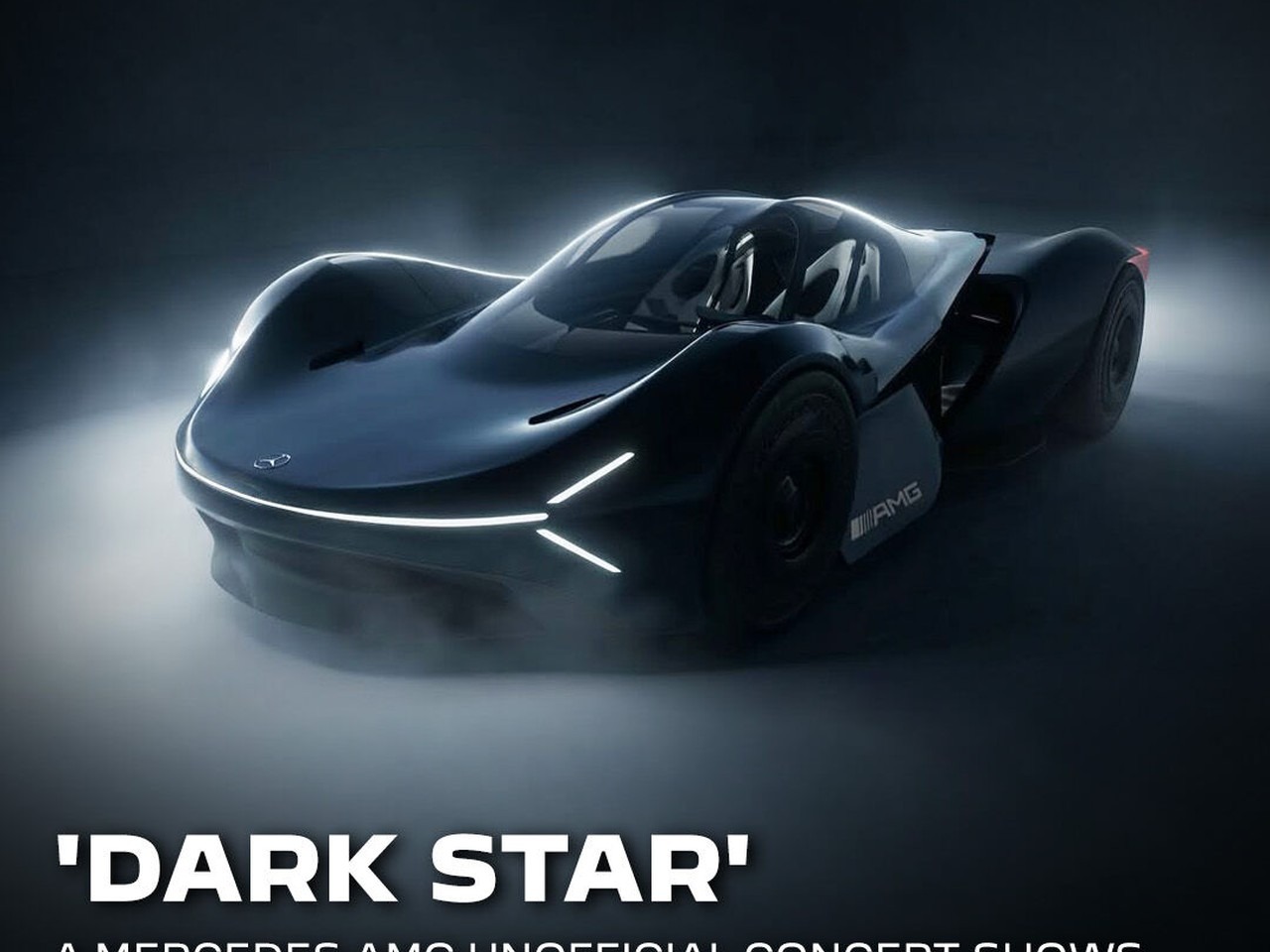

The Dark Star concept was surfaced by car.design.trends and then picked up by autoevolution, which framed it against AMG’s current product offensive. Mercedes-AMG CEO Michael Schiebe has been talking about a major rollout of new models, including V8 SUVs, a coming Mythos model, more CLE variants, a possible new GT Black Series, and fully electric flagships. That makes Čech’s project feel less like random fan art and more like an argument about what an AMG hypercar still ought to feel like.
A hypercar shaped like a refusal
The first thing the Dark Star does is reject softness. The body is low, wide, and visually tense, with a cockpit pushed under a thin glass canopy and bodywork that reads more like a pressure surface than a conventional car skin. The front half is shown in a deep, almost liquid blue, while the rear transitions into exposed carbon fiber. That split gives the car a useful visual hierarchy: the nose is the sculptural object, the tail is the machinery.
That is the design-language story here. The Dark Star does not simply add vents and carbon to look expensive. It separates the car into two identities. Up front, the full-width LED strip, paired side whiskers, large lower intake, rising fenders, and gill-like openings make the car look almost biological. Autoevolution compared the front to a manta ray, and that is a fair read. The forms suggest lift, flex, and flow rather than the blocky aggression that often passes for hypercar drama.
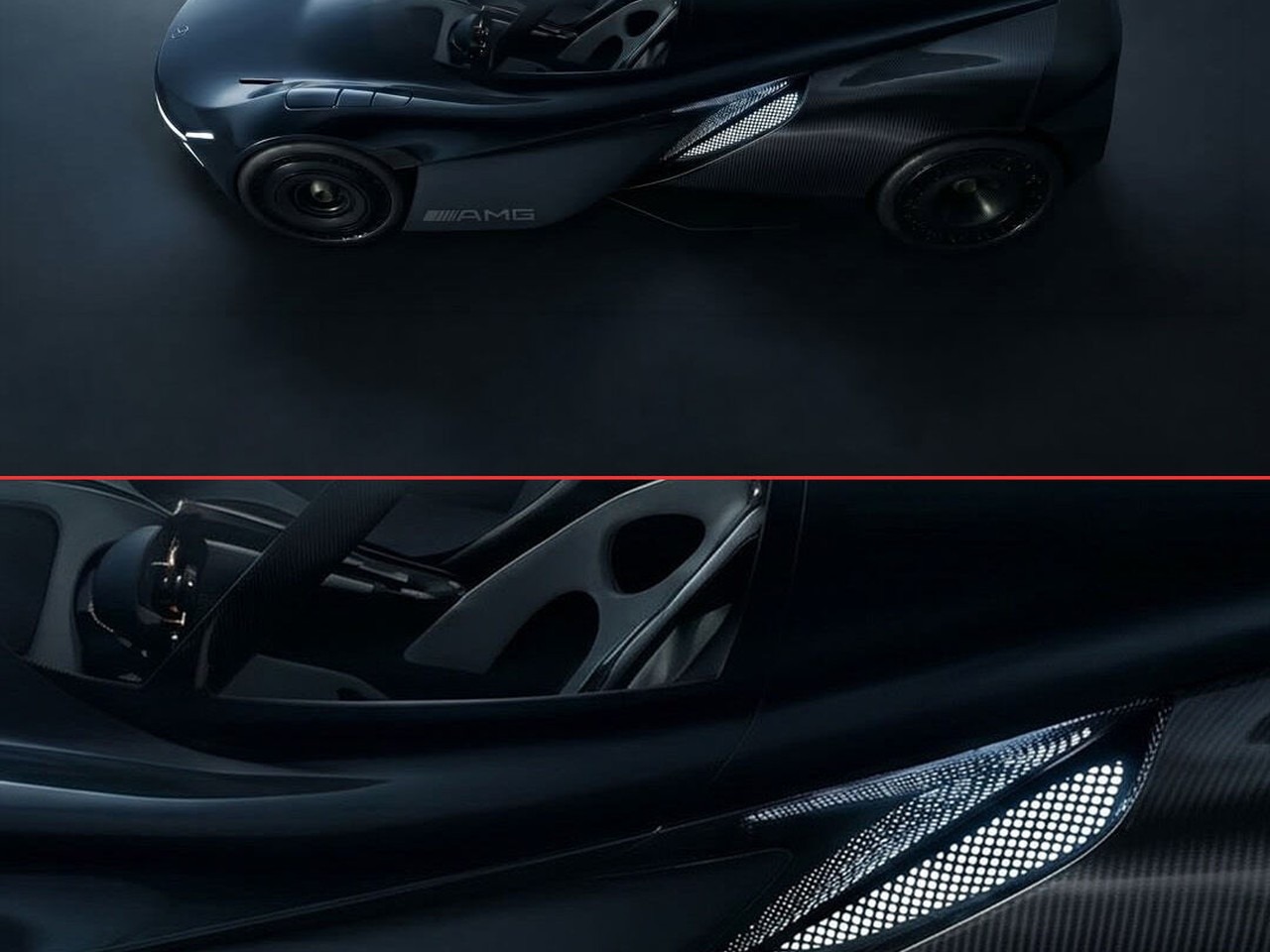
The rear is more technical. Exposed carbon dominates, thin taillights cut through the mass, and the diffuser is huge enough to become one of the main architectural elements. There is also a Formula 1-style third brake light and, crucially, a single oval central exhaust outlet. That exhaust is why this concept feels so pointed. It is a fantasy AMG hypercar that still treats combustion as theater, not as baggage.
Why the ICE detail matters
AMG has been trying to balance electrification, regulation, and enthusiast expectation. Its four-cylinder plug-in hybrid flagship experiments did not land cleanly with many performance buyers, and the new fully electric GT 4-Door Coupe has already drawn criticism for both its visual direction and its emotional distance from traditional AMG cues. In that context, the Dark Star’s implied internal-combustion layout is the entire provocation.
No technical specification exists, because this is not an official Mercedes-AMG vehicle. There is no confirmed engine, output, weight, platform, price, or production plan. But design concepts can still make mechanical promises through proportion and detail. The side intakes, spine grille, carbon rear volume, and central exhaust all point toward a car that wants a physical engine behind the driver. The point is not whether AMG should literally build this. The point is that the idea of an ICE AMG hypercar still has enormous visual power.
The interior is racewear, not lounge furniture
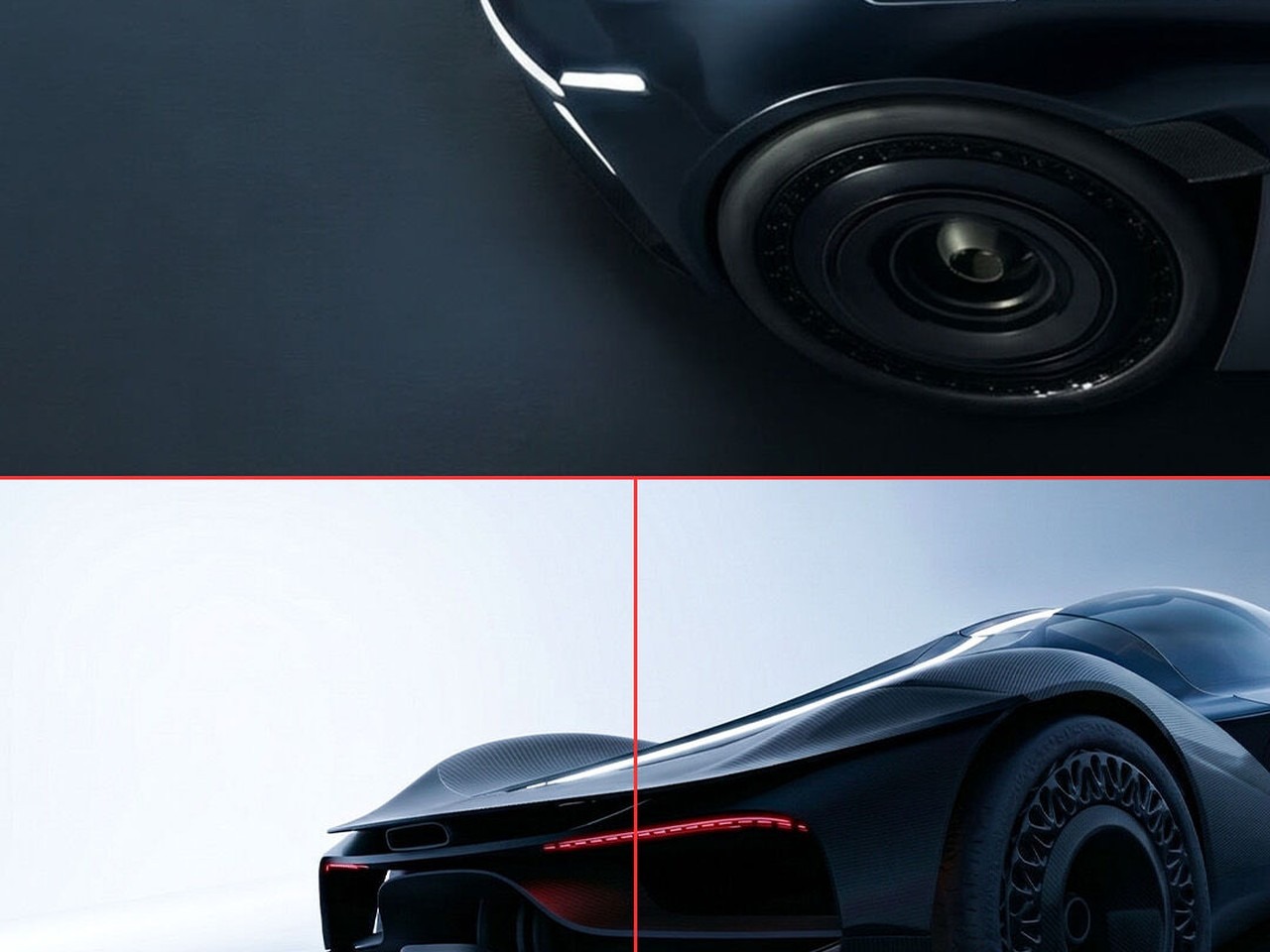
The cockpit follows the same logic. Thin pillars make the canopy feel exposed, almost naked, while the bucket seats are hollowed out so aggressively that they look more like structural shells than upholstered furniture. That is a smart choice for this kind of concept. A design like this would collapse if the interior tried to be a luxury salon. The Dark Star needs to feel severe.
That severity is also what keeps the project from turning into generic supercar fantasy. The best part of the concept is not any single lighting signature or intake. It is the discipline of making nearly every element communicate lightness, heat, air, and speed. Even where the design is busy, it is busy in service of a theme.
Where it fits inside DL’s design lane
For DL, this sits cleanly at the intersection of Design Language and Driving Life. It is not news because Mercedes is secretly building it. It is news because a student concept clarifies a larger taste problem in premium automotive design: electrified performance has made numbers easier to produce, but emotion harder to stage.
The Dark Star’s appeal is that it makes the old AMG vocabulary feel future-facing again. It does not rely on retro cues. It does not ask for a nostalgic grille or a simple V8 throwback. Instead, it imagines carbon, glass, active aero, knife-thin lighting, and an exposed exhaust as one integrated design system. That is more interesting than another vague promise of sustainable speed.
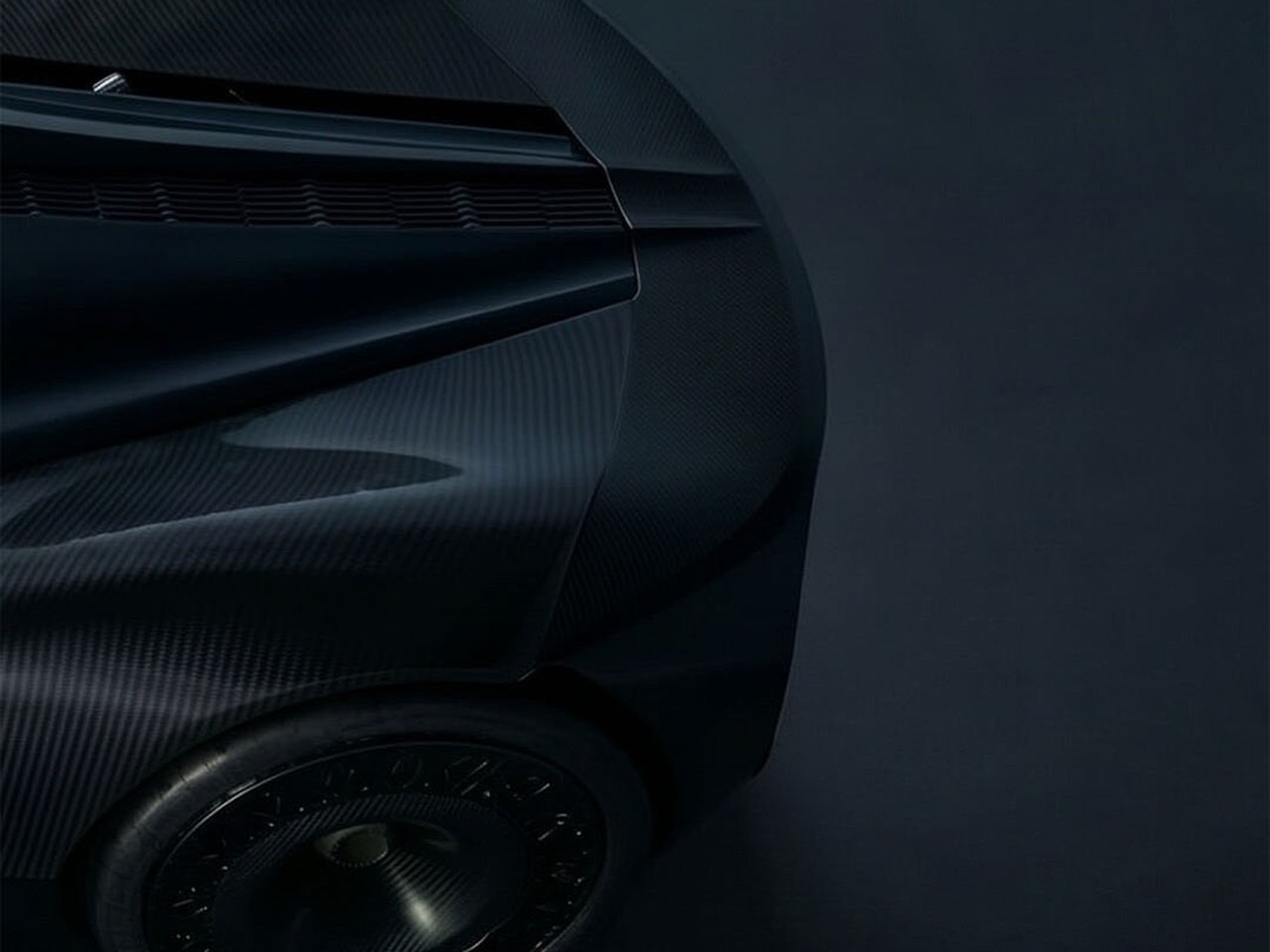
There is also a broader automotive-design lesson here. The most compelling hypercars are not just fast objects. They are coherent objects. The McLaren Senna looked brutal because the air owned the shape. The Mercedes-AMG ONE looked technical because Formula 1 hardware shaped the message. The Dark Star works in a similar speculative register: the car looks like its visual identity was built around pressure, airflow, exposed structure, and combustion heat.
What Mercedes-AMG should take from it
Mercedes-AMG does not need to build the Dark Star as shown. It probably should not. Production realities, crash rules, cooling, visibility, pedestrian standards, and brand strategy would all reshape it. But AMG should pay attention to why people react to concepts like this. Enthusiasts are not only asking for horsepower. They are asking for a car that looks as if it has a reason to exist.
The Dark Star gives that reason instantly. It looks dangerous, expensive, technical, and alive. It makes the combustion element legible without pretending the future stopped in 2015. That is exactly the needle AMG has to thread if it wants its next wave of performance cars to feel like more than luxury EVs with louder badges.
As a piece of unofficial design, Čech’s Mercedes-AMG Dark Star is best understood as a provocation. It asks what an AMG hypercar could be if the brand treated design, carbon structure, aero drama, and ICE emotion as a single language. The answer may never leave the render world, but the question is one AMG should not ignore.
Source: autoevolution, car.design.trends, Tadeáš Čech / tadeascech.