
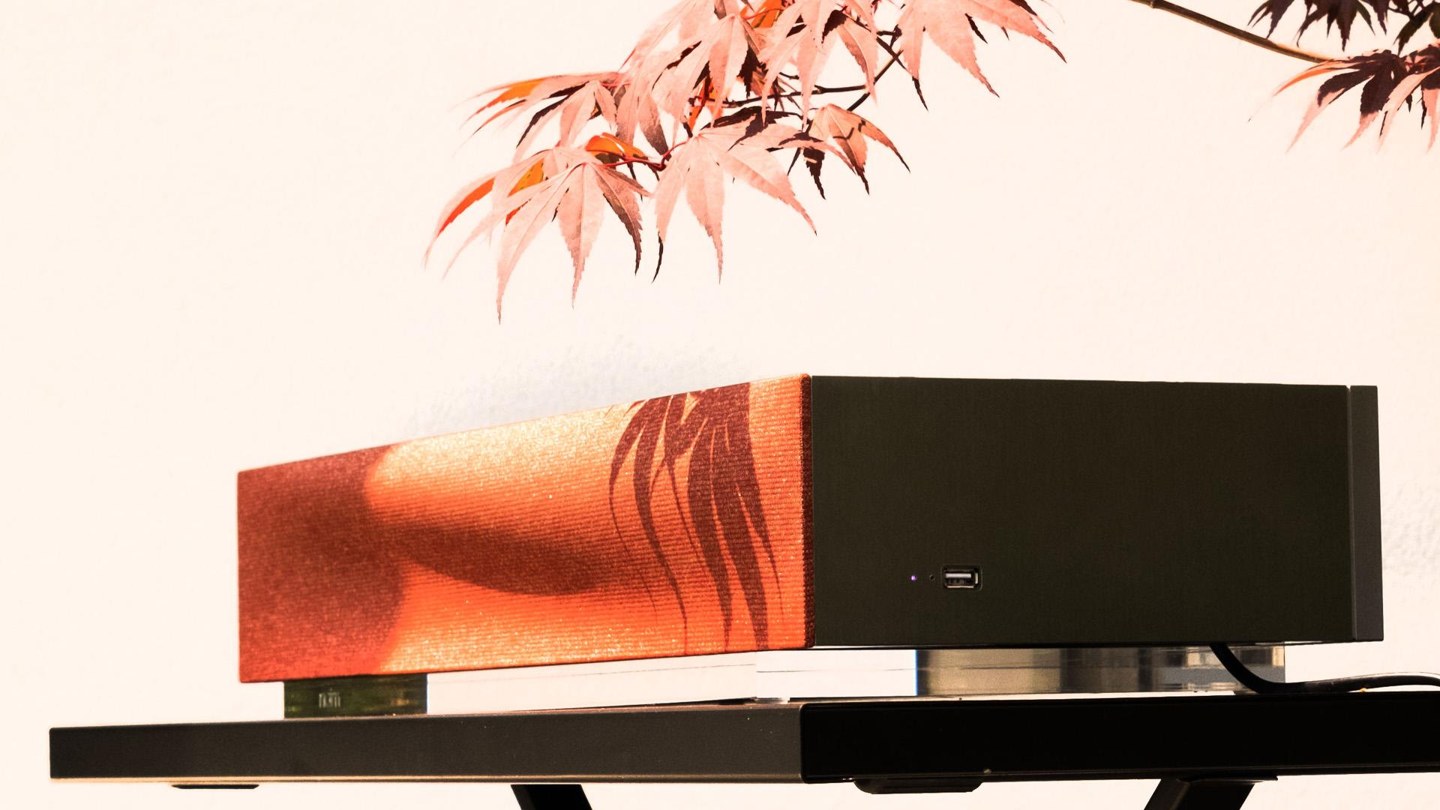
A long aluminum bar sits on the sideboard and replaces a rack of boxes, cables and speakers that never matched the room. That bar is the Naim Mu-so 2nd Generation. It looks like furniture first, then starts playing music like serious hi-fi at home.
Under the calm surface sit six drivers, each one powered by its own 75 watt amplifier for 450 watts total. No separates stack required. Tweeters, midrange drivers and two oval woofers share one rigid cabinet behind a single fabric grille. One power cord is the whole install.
Aluminum casework that earns its place
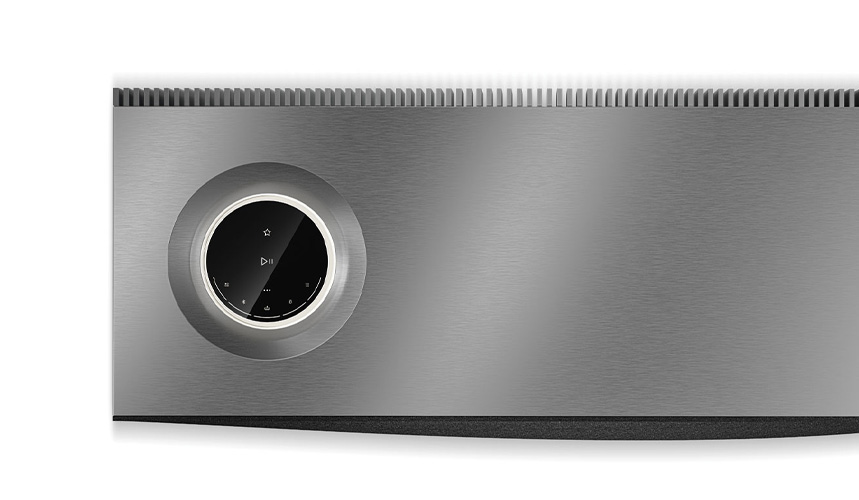
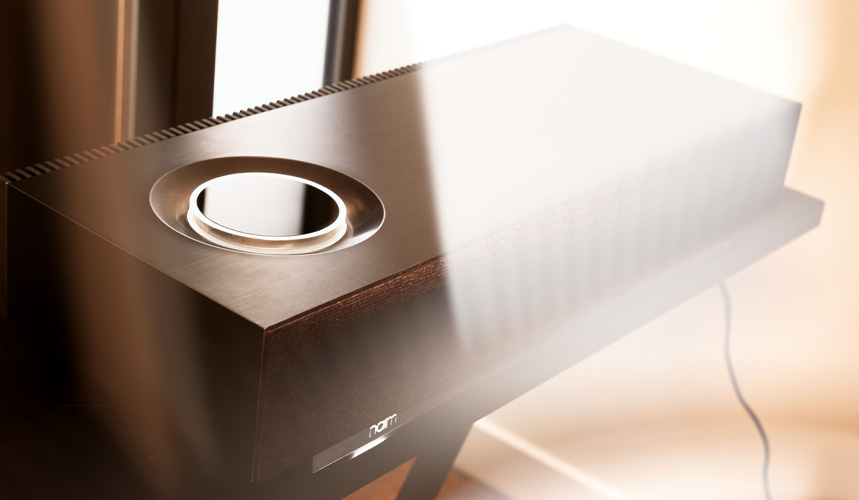
The case is burnished gray aluminum with a soft sheen under lamplight, and the finish reads closer to good furniture than to a gadget chasing attention. Heatsink fins run along both sides of the casework. Those fins pull heat away from the amplifiers during long loud sessions, and they hide the Wi-Fi antenna too. The metal feels cool and dense. Every edge is finished clean, so the bar sits beside ceramics and art books without looking like stray office tech.


At 24.75 inches wide, 4.81 inches tall and 10.44 inches deep, the Mu-so needs a real sideboard or a sturdy media console underneath it. It weighs 24.7 pounds. That weight pays off, since a rigid cabinet stays quiet while the oval woofers push air at higher volumes.
Inside, the cabinet holds 13% more volume than the first Mu-so. Redesigned bracing and a new baffle keep vibrations down, so voices stay clear at low volume during late night listening in a quiet house. A multicore processor runs the system at 2000 MIPS. A limiter guards the drivers at extreme volume, holding clarity when a film soundtrack or a big chorus gets loud.
Grilles that change the room
The standard grille is black fabric with a dual tone finish, and it keeps the long front face quiet against a wall of books and ceramics. Color changes everything. Swap the grille and the mood shifts, without moving a single piece of furniture in the room.

Terracotta warms a pale room beside leather and oak. Olive settles in next to plants and linen, while peacock blue turns the whole bar into one deliberate accent in an otherwise calm scheme. Each grille panel fits the full front width. Changing one takes seconds and needs no tools, no clips to force and no manual open on the floor beside you. I like terracotta best, for warm rooms with afternoon sun.
Streaming and inputs in lived terms
Morning radio, a saved playlist at lunch and a film soundtrack after dinner all run through the same bar, with no receiver in sight. It just plays. Spotify Connect, TIDAL and Qobuz live inside the platform, next to internet radio and stored libraries.
AirPlay 2 sends music from a phone in two taps. Chromecast built-in covers guests on Android, Roon Ready suits a big stored library, and Bluetooth handles a quick play from any device nearby without setup. High resolution files play up to 24-bit/384kHz. DSD files run over UPnP or USB, and multiroom sync links up to five Naim products across the house.
The top plate carries 15 touch sensitive buttons around an illuminated volume dial, and a proximity sensor wakes the display as a hand nears it. The Focal and Naim app handles setup, sources and volume from a phone.
HDMI ARC pulls TV sound into the bar, so dialogue lands clearer and films stop leaning on thin television speakers. An optical input, a USB port and a 3.5mm jack cover older gear. A record player, a flash drive and a guest phone each get a way in.
The price, stated flatly
At $1,990, the Mu-so costs about the same as a starter separates stack of a streamer, an integrated amp and bookshelf speakers. That money buys the finished object, not a first step.
It also buys back the shelf space a rack eats, plus a sideboard top that stays clear for books, ceramics and a lamp at one end. Space counts in small homes. The catch is flat: a sealed bar can’t grow, so separates win for anyone planning upgrades year after year.
For a renter, the math also skips stands, cables and a media rack, which adds up fast in small rooms. One purchase ends the shopping, for better or worse.


Buy it if a living room needs real hi-fi sound without a rack, since the casework, grilles and streaming brain pull together. Skip it if a system has to grow. Wait for a sale if the budget is tight, since full price is the normal route for a bar at this level. This one’s for sideboards.