
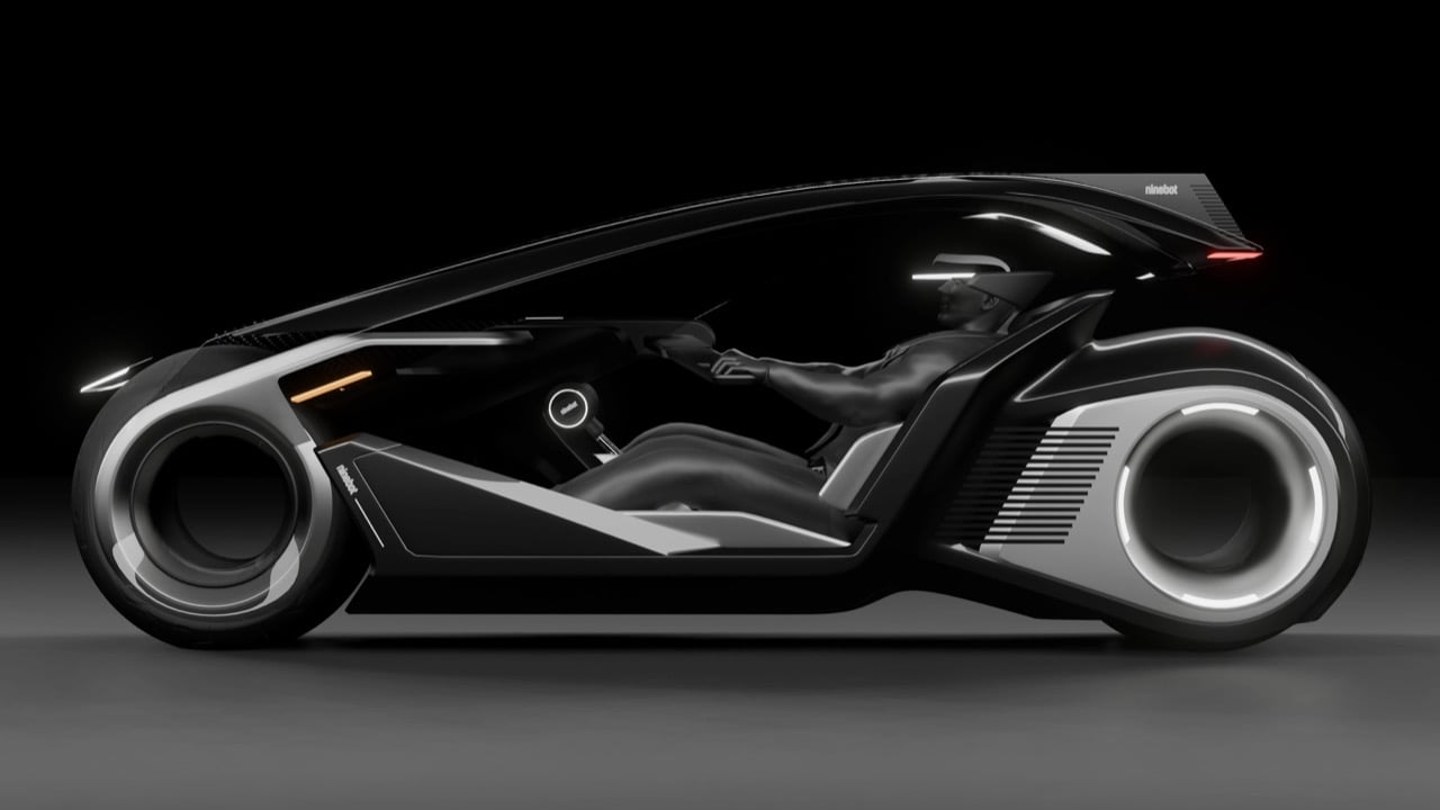
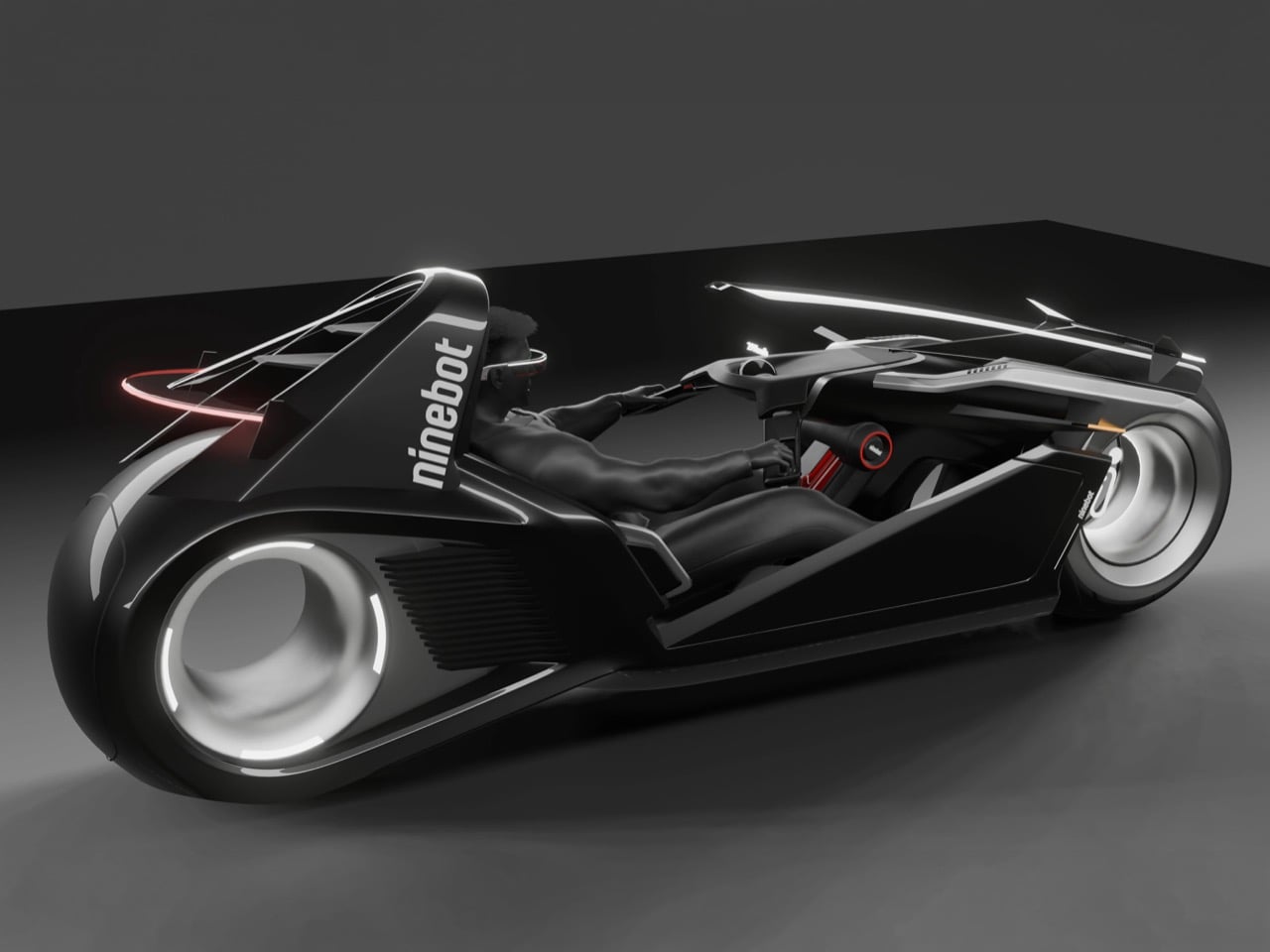
The Ninebot Emax is a concept motorcycle with hubless wheels, a canopy that swings up like a cockpit hatch, and a seat that reclines for the ride. It comes from Segway-Ninebot’s own design lab.
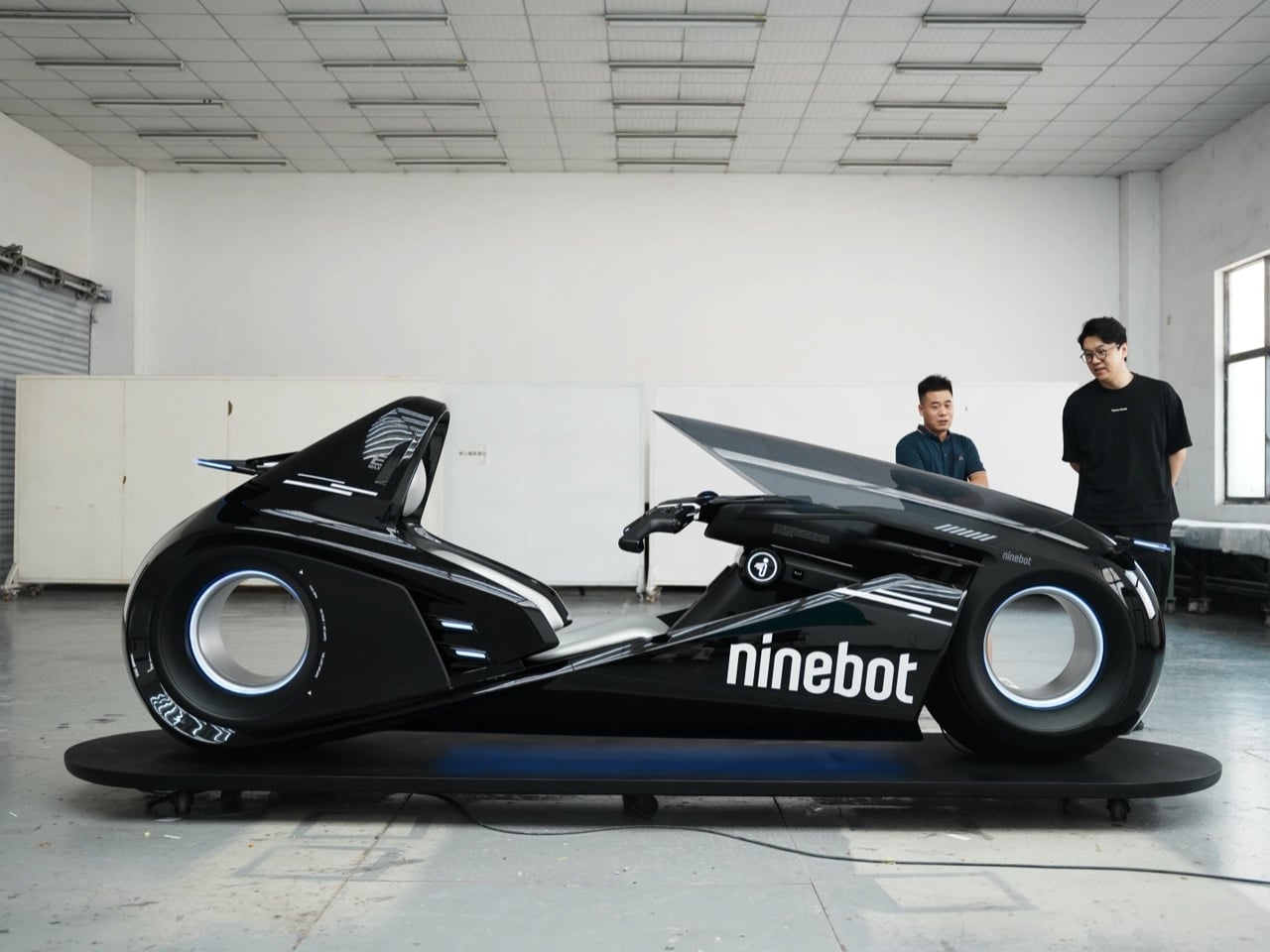
The team built it as a 2025 design study and also built a full-size physical model in gloss black, so the Emax exists as an object, not only as renders. Segway stands behind Ninebot, and the parent company’s scale funds side projects that carry no price at all.
No specs, powertrain details, or production plans have been shared, and that absence is part of the point here. This is a design exercise, framed as one from the first line to the last. The studio draws the mopeds Ninebot sells in China, where Ninebot has shipped 14 million two-wheelers. Every surface serves the silhouette first.
Hubless wheels and a canopy do the film work
Two hubless wheels anchor the Emax, each one ringed with light and wrapped in a fat, lettered tire. One wheel hides inside a capsule pod, and the other in an open C-shaped arm of the bike.
That split does the cleverest work, giving the bike two readings at once. From one side the pod end is bodywork, and from the other the arm is machinery.

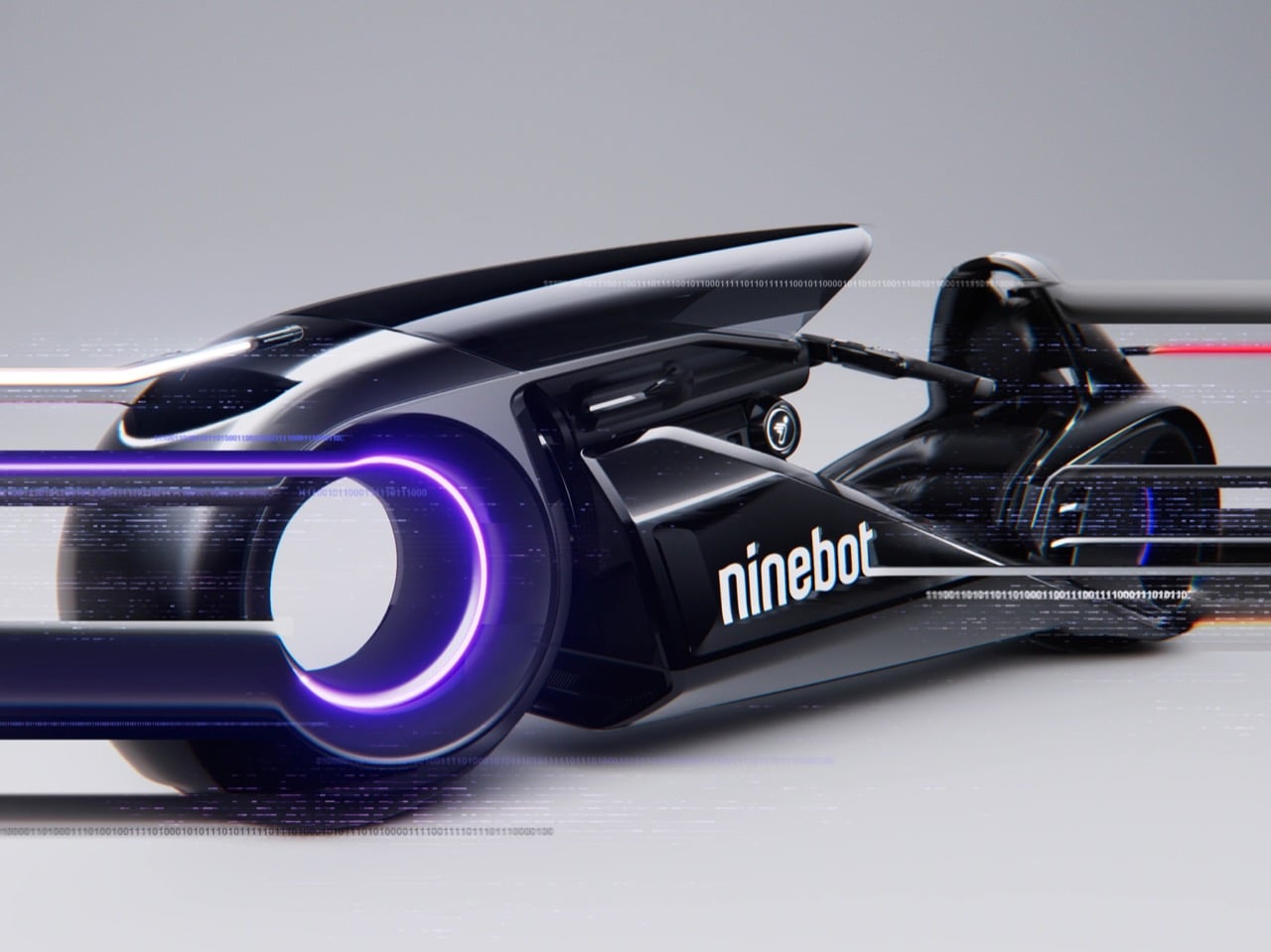
Between the wheels runs a long, low body with a tinted canopy, violet light blades at the nose and tail, and a large Ninebot wordmark along the flank. The finish is gloss black and silver, and nothing on the bike is louder. The wordmark runs the full flank, sized the way a concept wears its name.
Syd Mead sketched the original Light Cycle for the 1982 film Tron, and the 2010 redesign stretched the rider out flat over hubless wheels. The Emax takes that stretched posture and adds the one thing a film bike never needed. It adds a roof. Mead’s original lived inside a computer, and the Emax keeps that digital neatness in physical form.
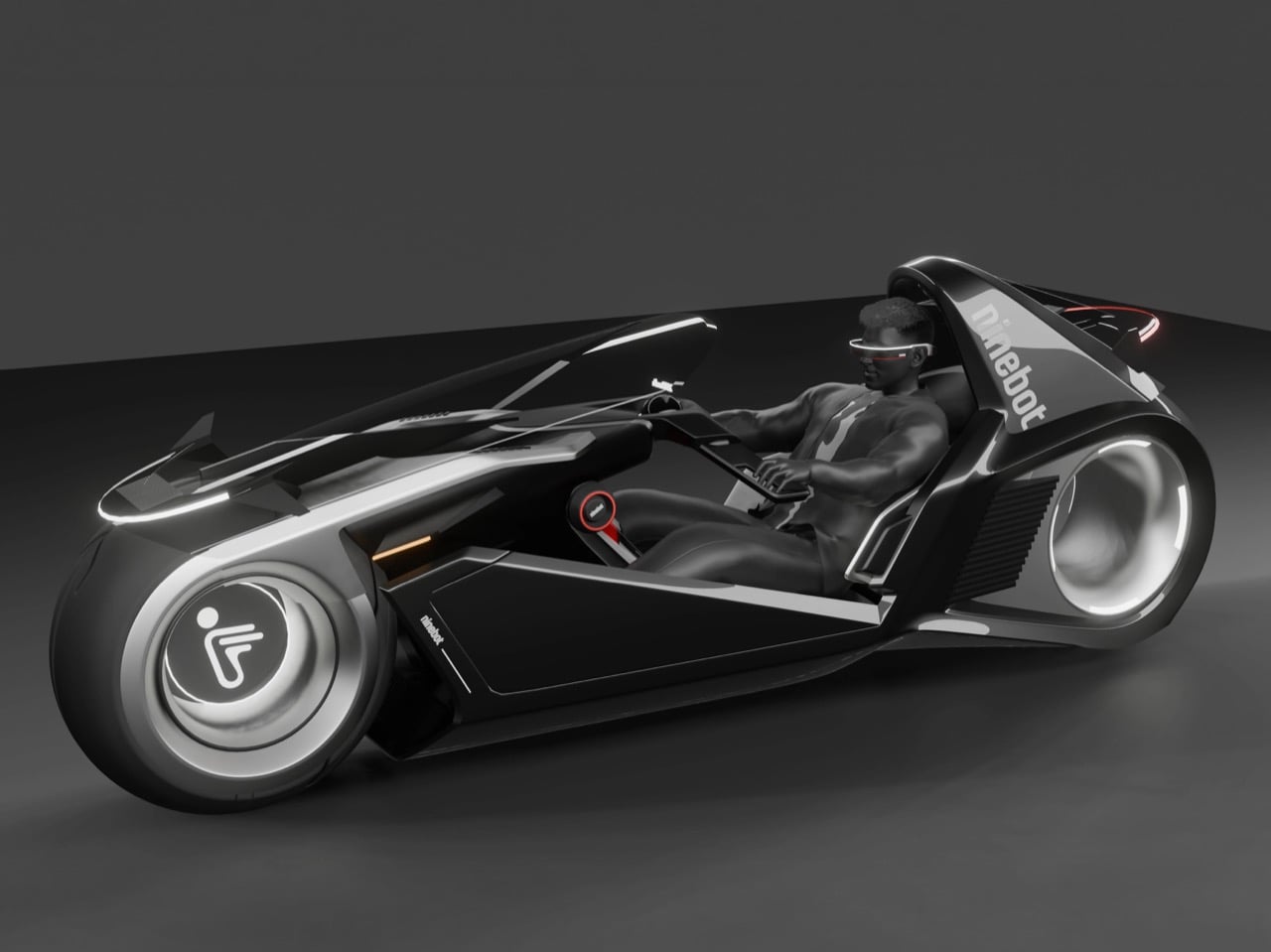
The roof changes everything downstream of it. Seat, posture, and controls all follow from that one decision to enclose the rider.
The seat reclines, then it rises to meet you
With the canopy closed, the seat reclines deep, into a race car posture. Open the canopy and the seat is designed to rise, bringing the rider closer to standing height for getting in and out, slowly and without drama. Anyone who has folded into a low, enclosed concept car knows the problem, since a fixed roof makes exits awkward. The rising seat answers that entry problem directly, without a step or a scramble.

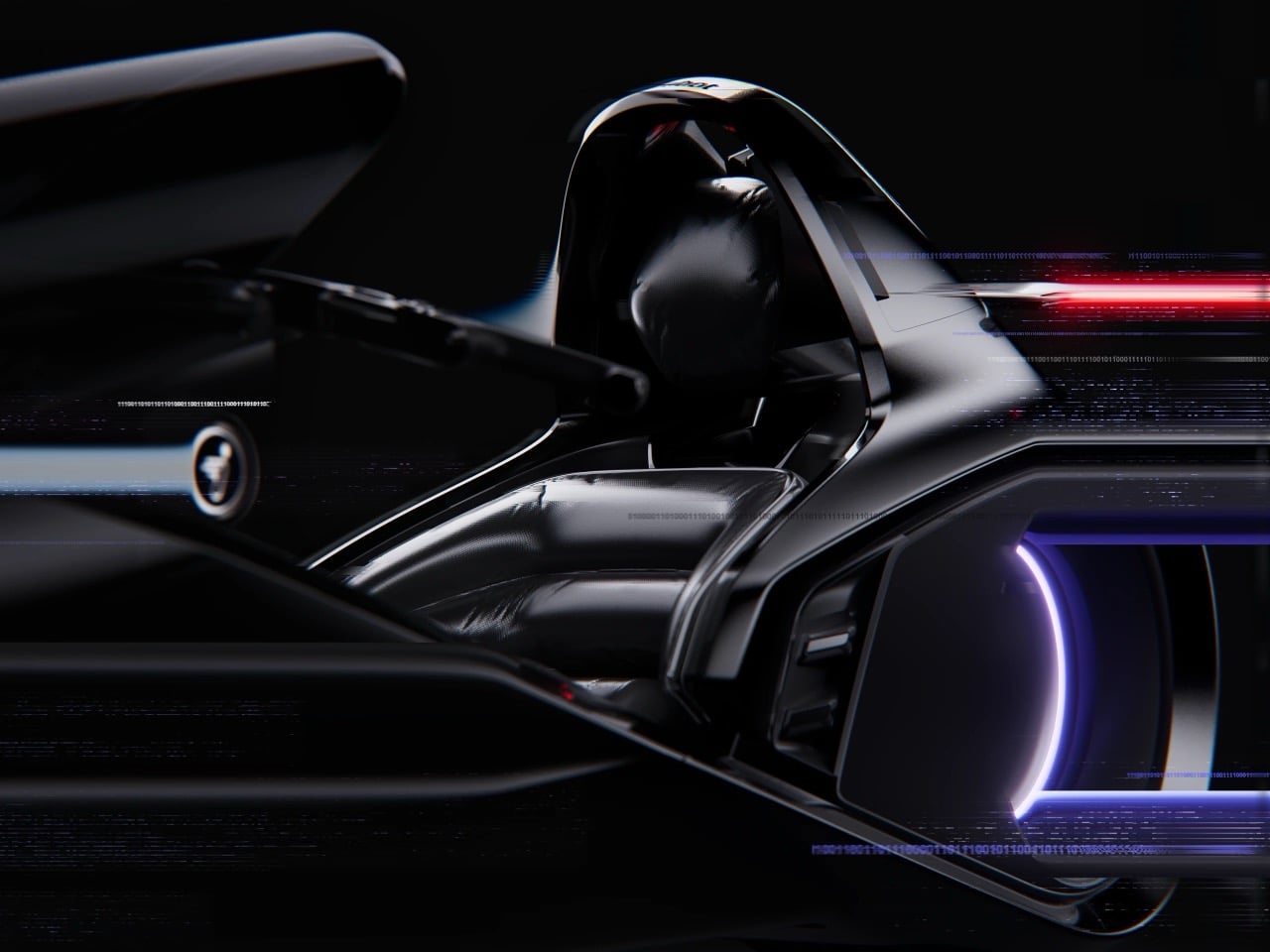
The seat itself is a sculpted shell with separate pads for the head, the shoulders, and each thigh, and the shell carries all of them as one continuous piece of bodywork. One render shows a knit-like lattice texture across the pads. Nothing on the seat is there only to look fast at all, anywhere.
A yoke, a glass orb and a camera on the bars
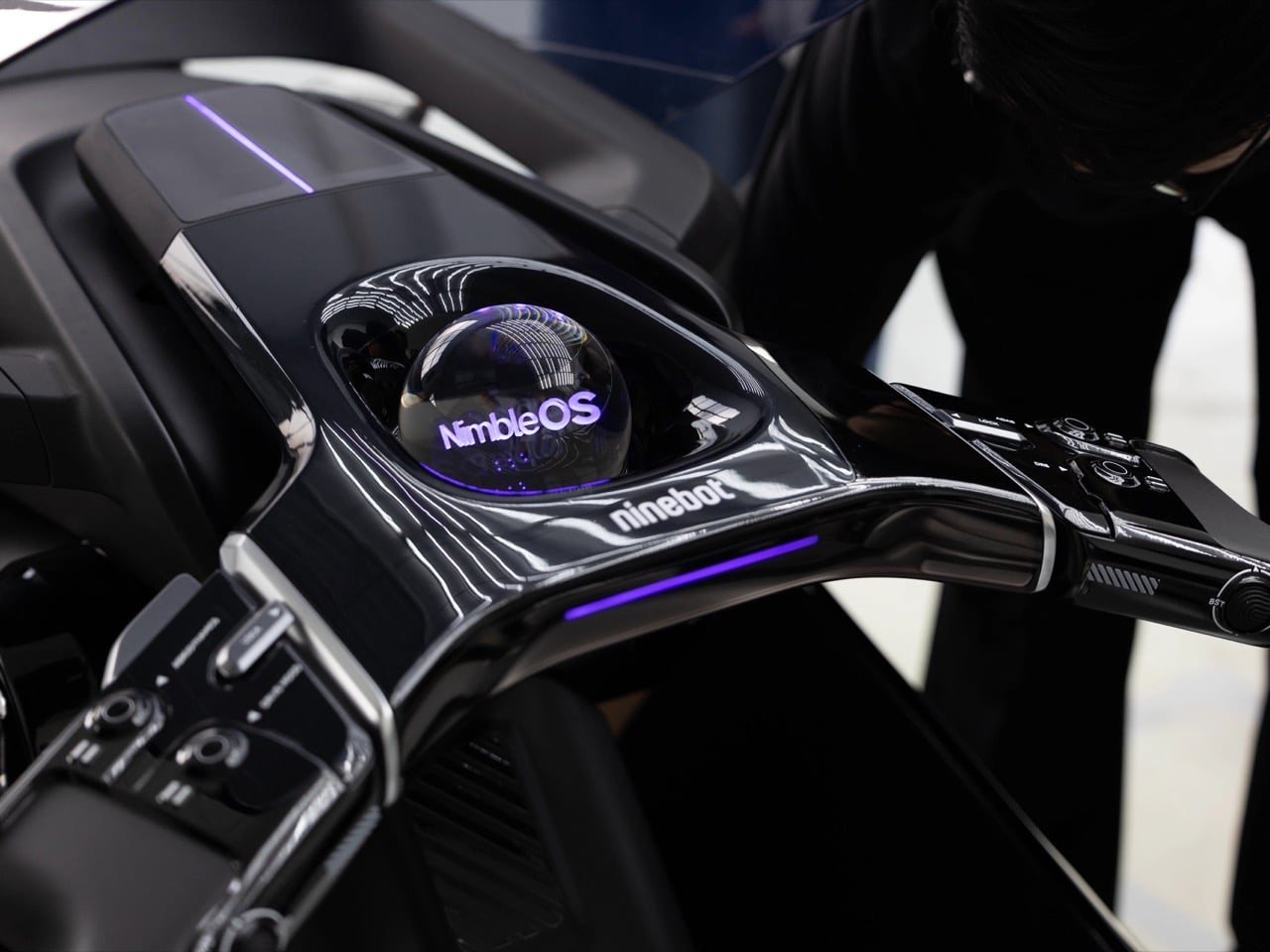
The handlebar is a white and black yoke with a glass orb at its center, ringed in violet light. Both grips carry thumb buttons, and a rotary knob on the bar is described by the team as a new UX button. The orb is the dash.
A small Ninebot-branded camera sits on the bar to track rides, which gives the cockpit a gadget brief as much as a motorcycle one. The whole control set looks closer to a game controller than to a dash. It turns an ordinary commute into footage, no separate action camera and no chin mount required for the job. The camera and the orb share the bar with grips that look borrowed from a controller.
That gadget streak fits the company, since Segway-Ninebot also builds robots. Its Mole Self-Balancing 2.0 system is designed to keep a moped upright at low speeds with the rider’s hands off the bars. The Emax asks a different question, through furniture. The rider sits reclined while the machine does the driving. Earlier concepts from BMW, Honda, and Yamaha asked what a bike could do, with balance and recognition built in. None of it needs a dashboard in the usual sense.
A moped studio spending its spare time well
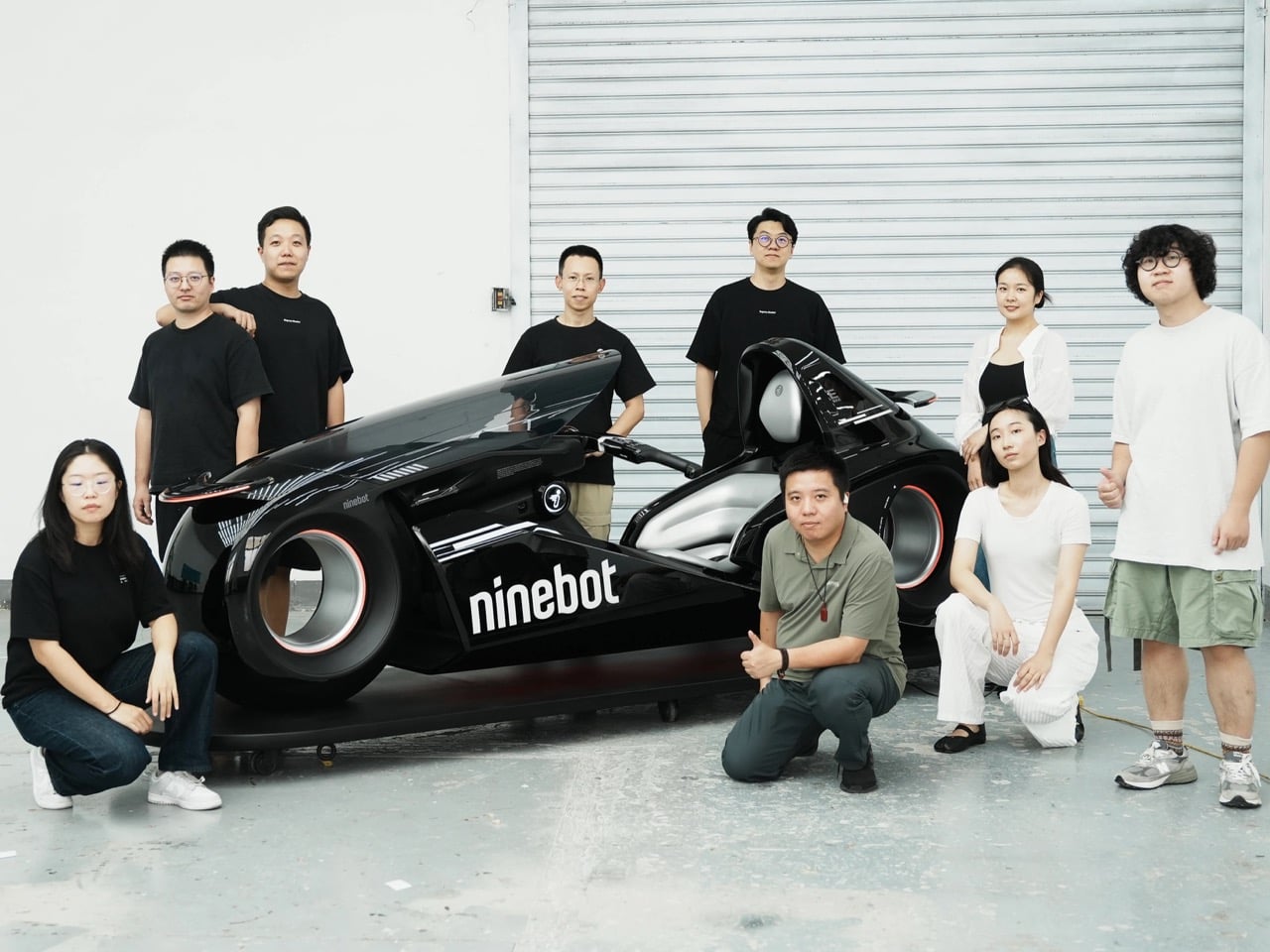
Credit for the Emax goes to Segway-Ninebot’s own design team, led by Head of Design Yang Cai and Design Director Jun Tang, with Zhengxuan Xie, Haoyue Jia, Zhenyu Kong, and Yicheng Fan credited as designers. That’s a senior team for a side project, and the finish on the physical model shows that seniority at work.
The credit list runs four names deep under the two leads. The two leads set the direction for the whole study.
The lead designer described the project as feeling like student work again, a group of friends tossing ideas around without a brief pressing on them. That looseness shows in the proportions, which chase a poster first and a product second. The physical model shows it too, parked on a plinth in gloss black.
Concept bikes from volume manufacturers usually preview a headlight shape or a battery layout that reaches production within a few years. The Emax previews neither, and it doesn’t pretend to.
What it previews is a posture, an enclosed and reclined way of riding that treats the commute as time spent sitting well rather than time spent perched. Whether that posture reaches a Ninebot showroom stays open, with no timeline offered.
What the Emax leaves behind
As a concept, the Emax carries no price to weigh and no order book to join. Its value sits in the seat and the canopy, two production-shaped answers wrapped inside a film-shaped silhouette. The poster is the bonus. I’d rank it among the stronger concept bikes of the year, because most studies this dramatic offer nothing you could carry into a real product meeting. This one offers a way in, a way out, and a place to sit.
The Ninebot you can buy today
The Emax is a studio concept with no price and no production plan, so there is nothing to order. The closest machine in the current Ninebot line that you can actually ride home is the MAX G2 scooter, which trades the canopy and recliner for range and suspension that exist in the real world.
Segway Ninebot MAX G2 Electric Scooter
Up to 43 miles of range with front and rear suspension, 4.1 stars from 544 ratings on Amazon
Price: from $598.48
Where to buy: Buy on Amazon