
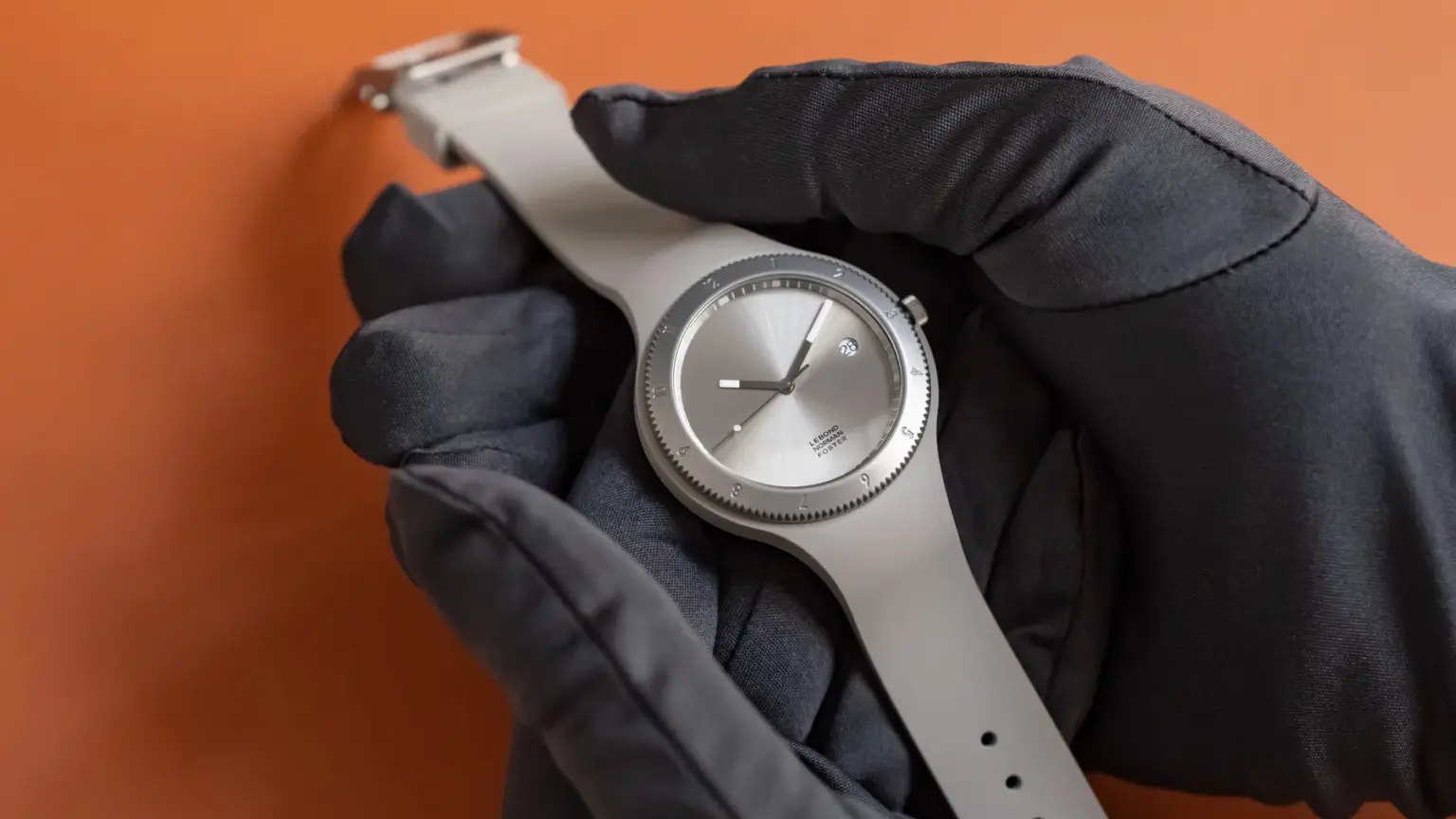
At 91, Norman Foster has designed a watch. He drew it with the Design and Innovation Unit of the Norman Foster Foundation, and Lebond developed it and produces it in Switzerland. I have covered plenty of famous-name watches where the name is the whole contribution, a signature printed on a dial. This is not that. Foster worked on this watch the way he works on a building, and the first thing he did was take something away.
It was conceived as a tool for everyday performance, and it rewards being read that way.
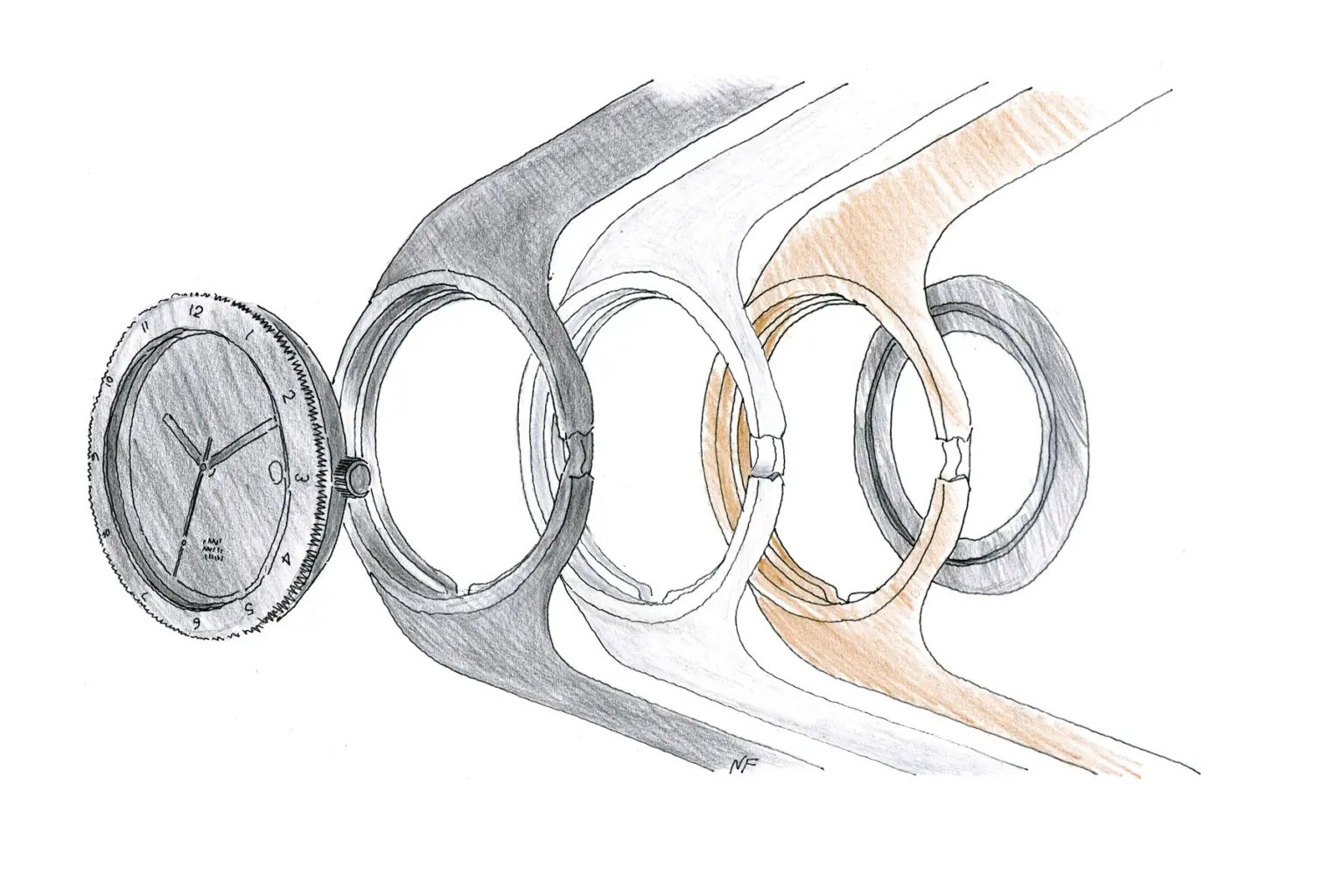
The case is the strap
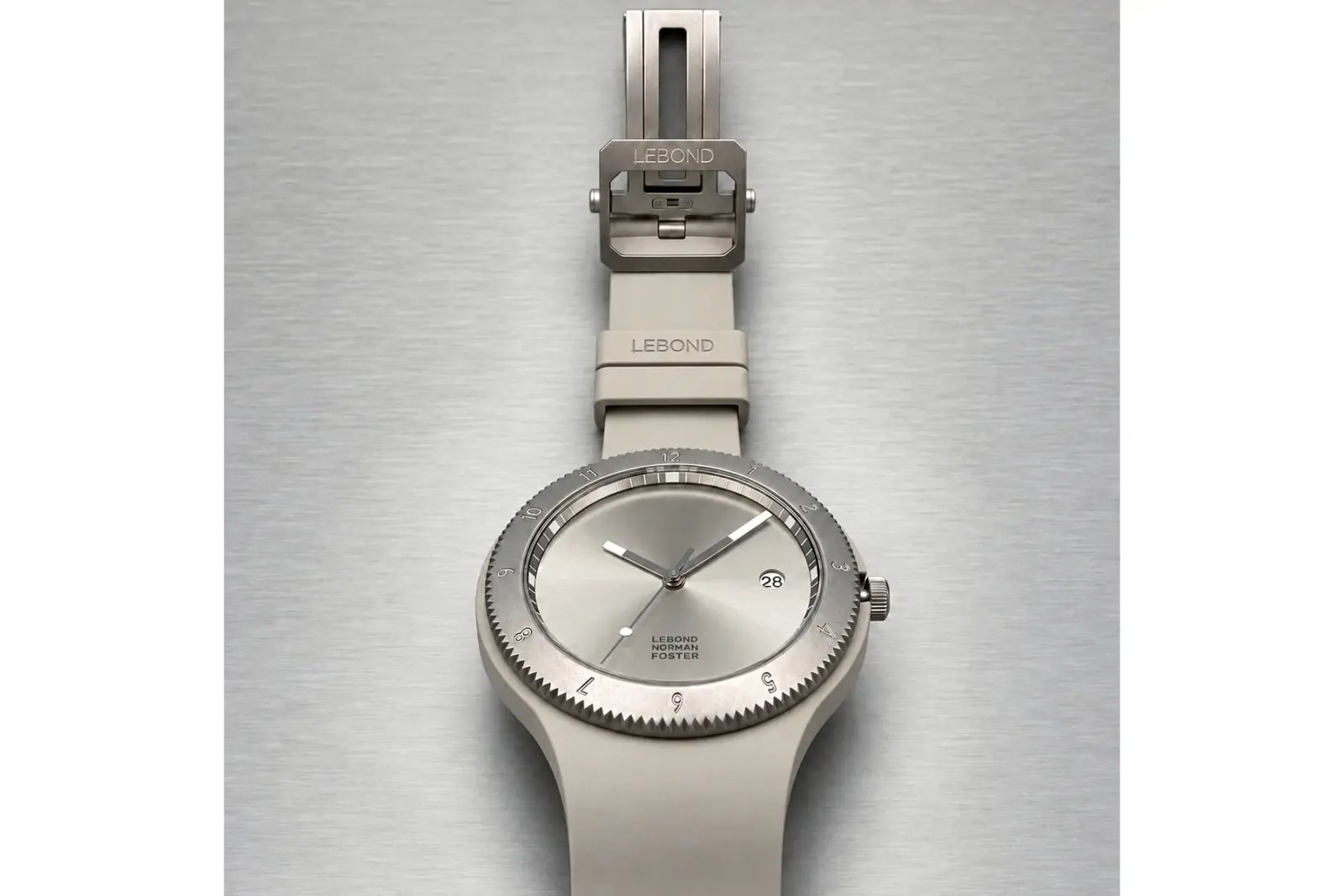
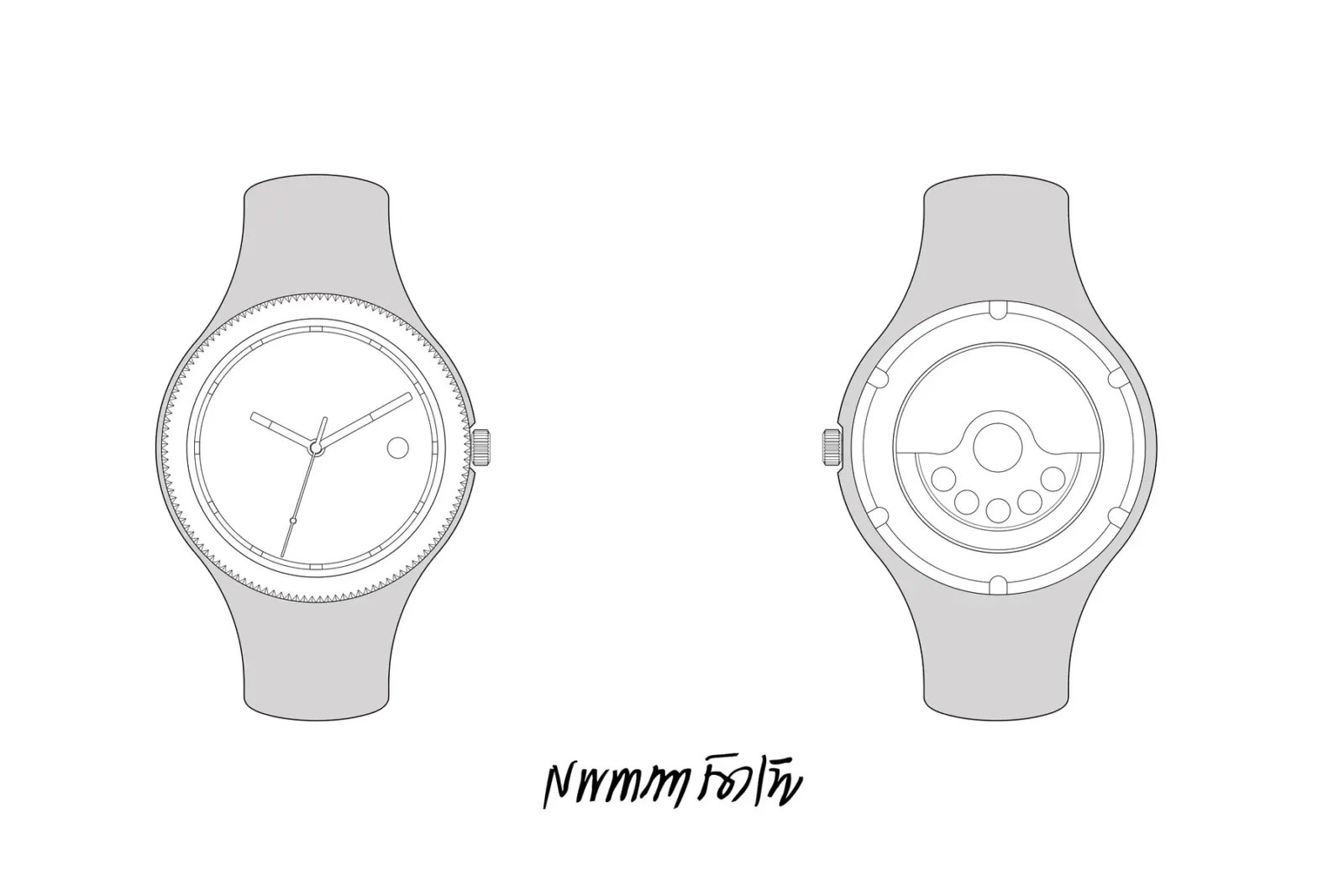
Start with what is missing. A normal watch case ends in four lugs, little horns the strap pins onto, and case and strap stay visibly separate parts. Foster deleted the lugs. The light gray FKM rubber strap flows straight out of the titanium and wraps the wrist in one unbroken line, so case, strap and clasp read as a single object. It is an architect’s solution: when a joint causes trouble, remove the joint.

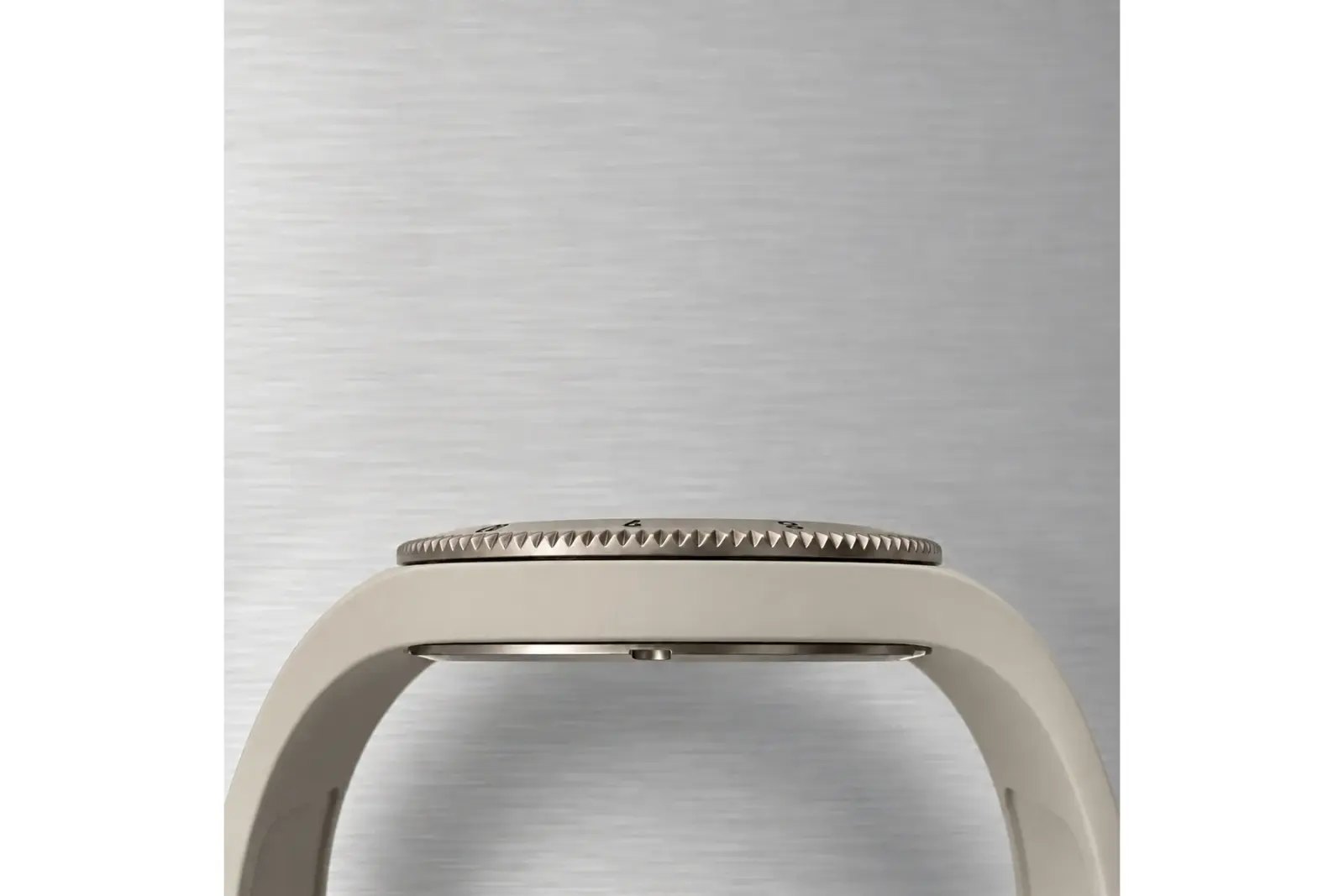
The dimensions keep the discipline. Case diameter and lug to lug are both 38.5mm, the case is 10mm thick, and nothing sticks out past the strap.
One metal, three finishes. The Grade 5 titanium runs matte sandblasted, polished and brushed across the case, under an anti-fingerprint coating, and every case is individually numbered. From across a room the watch is all restraint, one gray note. Get close and the three finishes split the light three ways, which is where the design lives.
A pilot’s second time zone
Foster flies, and has done for decades, much of it as a pilot himself. Lebond says that life is why the watch carries a second time zone, set into the bezel instead of cluttering the dial. The bezel turns in both directions and carries the 12-hour scale, so home time reads off the main hour hand wherever you land.

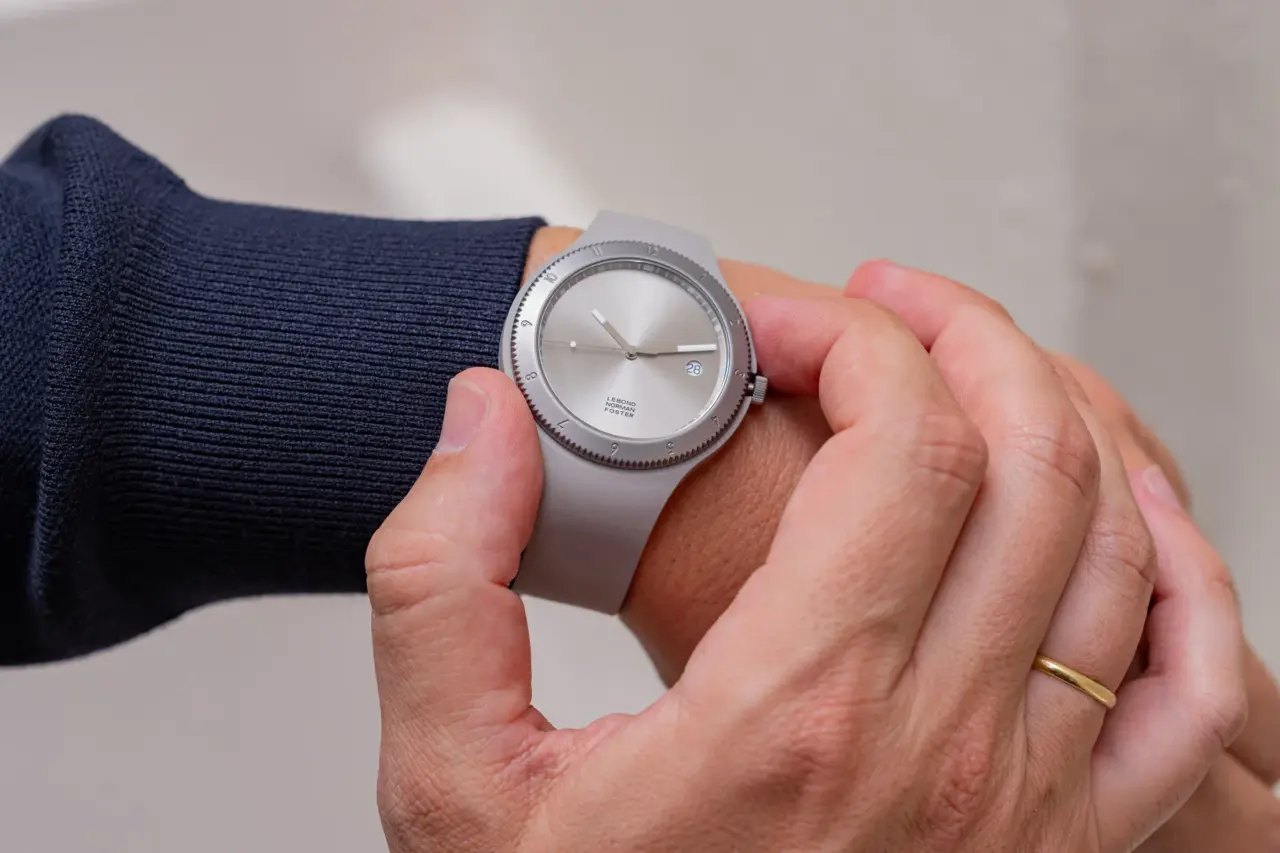
With the hours on the bezel, the dial itself is nearly empty. Sunray brushing, white Super-LumiNova markers that glow blue, nickel hands, a date at 3, done.
A workhorse movement and one blue gesture
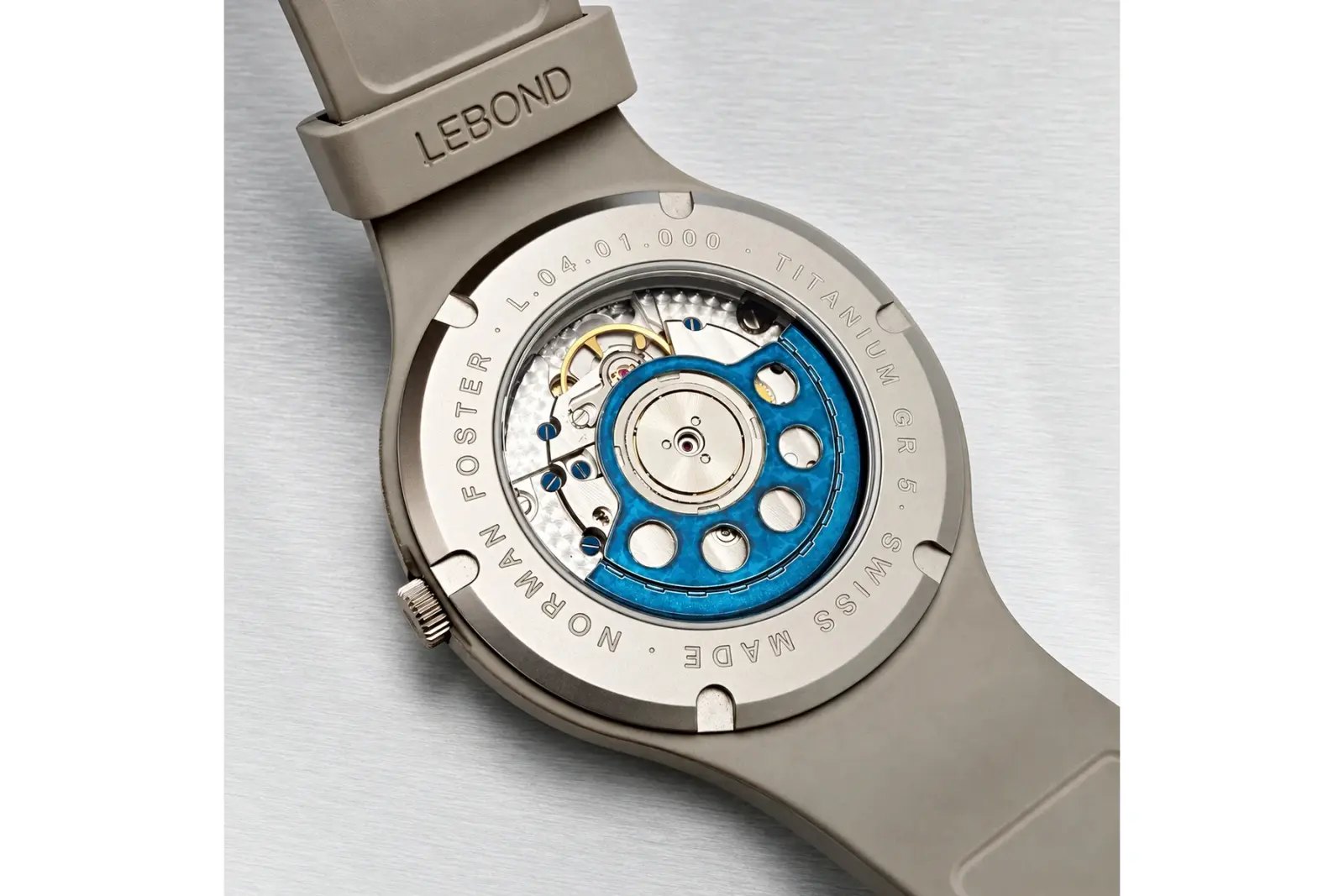
The sapphire caseback shows the ETA 2892-A2, a Swiss automatic with 21 jewels, a 28,800-vibration beat and a 50-hour power reserve. It is a caliber with a long service record in watches at half this price and less, chosen here for slimness and reliability, not for bragging rights. Foster’s one flourish hides around the back. The winding rotor is pierced with five round perforations and painted a vivid blue, the only saturated color on the whole watch.
So the arithmetic should be clear before anyone orders. At about $3,900, the money buys Foster’s case, the titanium finishing and the design work, while the movement is the dependable tenant inside it. The 50 meters of water resistance suits hand washing and rain, not swimming, and that suits a watch built to be worn every day of the week.
Two editions share the design, the Natural Titanium here and a Black DLC version, both about $3,900 converted from Lebond’s euro price and both in stock at Lebond’s own store as I write. The black one takes what Lebond calls a monochromatic tool-watch look inspired by aviation instruments. Shipping is free worldwide. The presentation box adds a collector’s letter and a photographic print, and the warranty runs three years, extendable to five.


Editor’s take
My favorite detail is nowhere on the watch. Every royalty the Norman Foster Foundation receives from sales goes to the Norman Foster Institute, which funds education for future architects, designers and urban planners, so the watch pays tuition for the people who might one day design its replacement. Foster says he hopes it feels “timeless rather than fashionable.” At 38.5mm, with its structure showing and its one complication there because its designer actually flies, I think it gets there.