

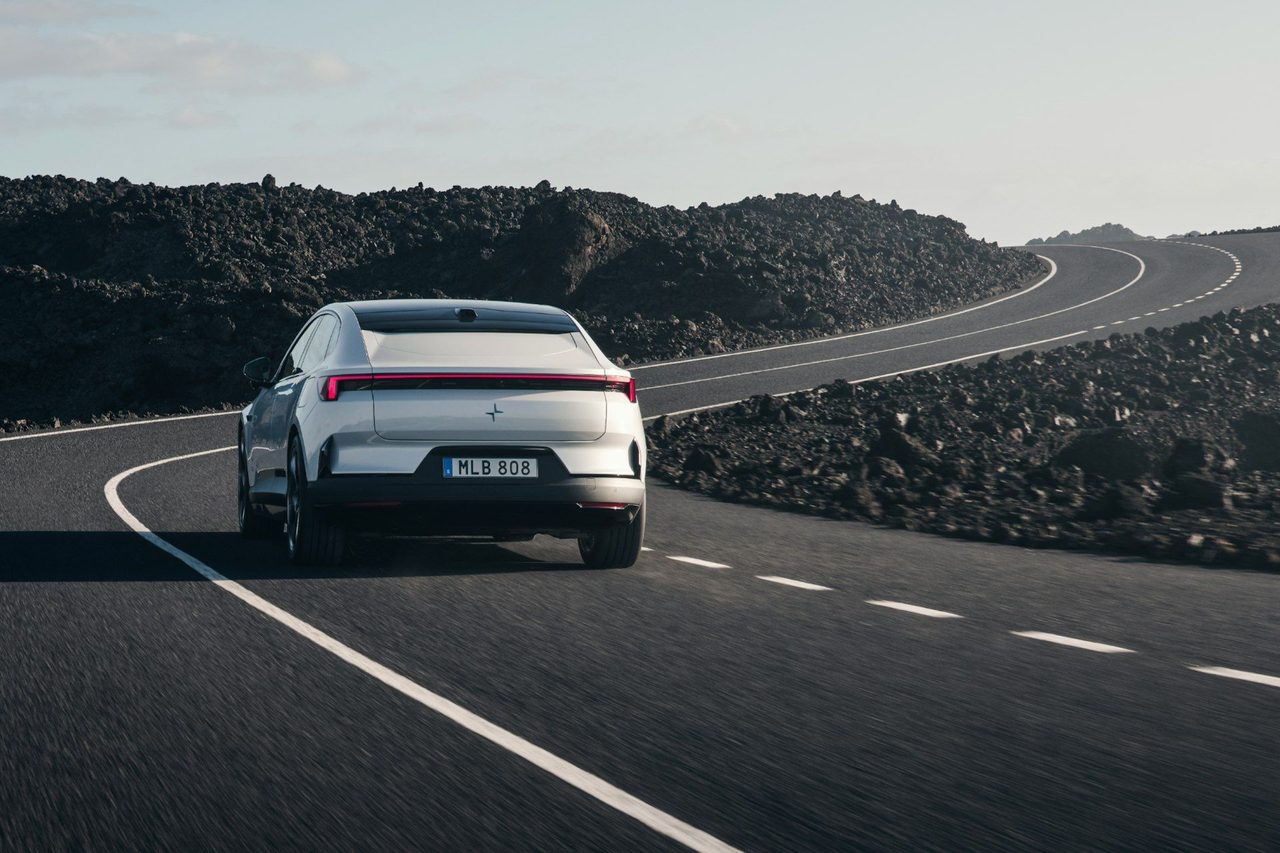
The Polestar 4 arrives without a rear window, and that single deletion sets the tone for the whole car. This is a coupe that treats design as the main event and keeps its considerable pace in reserve. No glass back there at all.
Most electric coupes announce themselves with aggression, all creases, spoilers and intent, as if volume were the same thing as presence. The Polestar 4 takes the opposite route, presenting a smooth, unbroken silhouette that settles into a driveway or a hotel forecourt without raising its voice, and it looks drawn rather than assembled, the effect holding from every angle.
That restraint carries a starting price of $56,400 for the Rear motor car, with the Dual motor version opening at $62,900 before options in the maker’s current US list. Both share the same 100 kWh battery and the same coupe body, so the choice between them is about temperament rather than equipment, nothing more and nothing less. One is the calm week-long companion, and the other adds a second motor with a considerably shorter fuse.
A silhouette with the rear window removed

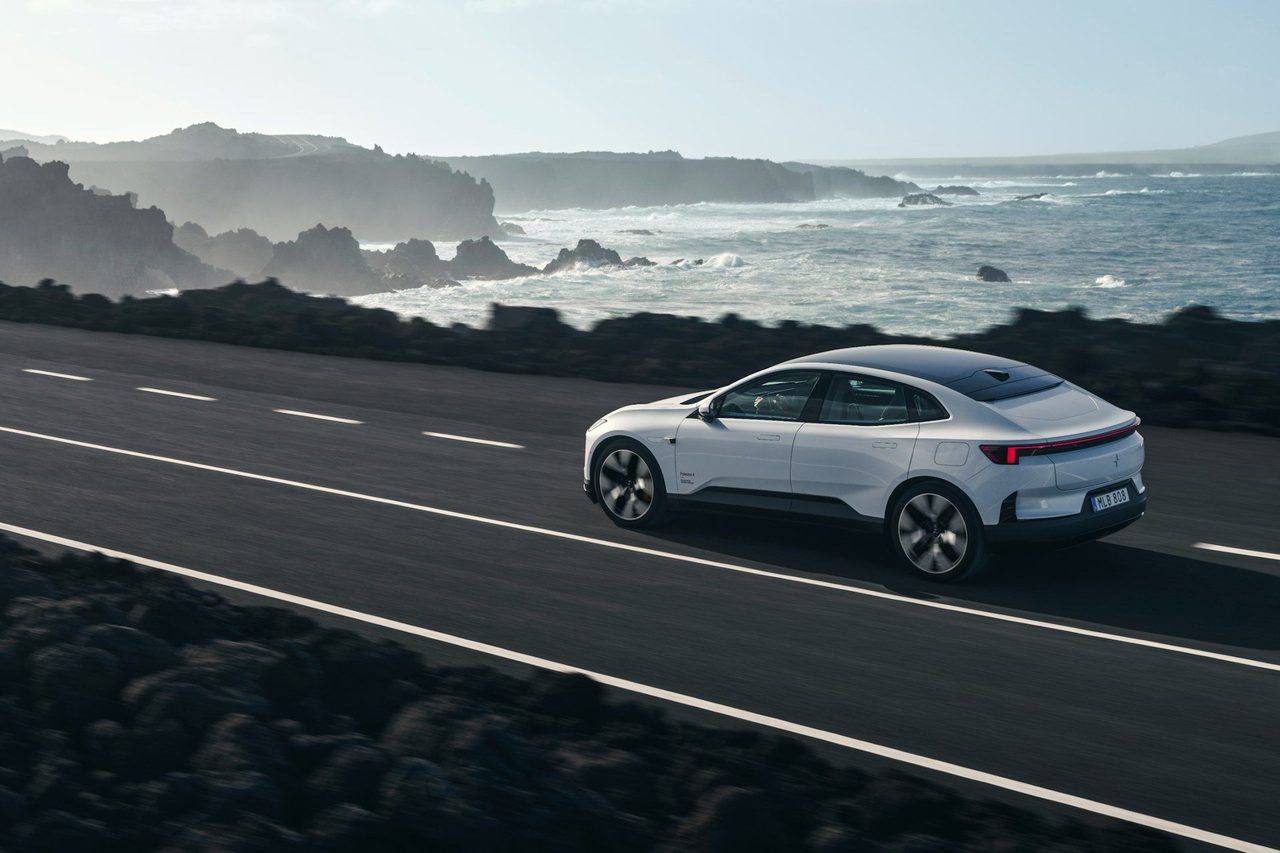
The boldest decision on the car is an absence. There’s no rear window, because the coupe roofline flows uninterrupted into the tail, and the view behind is handled by a roof-mounted camera feeding an 8.9-inch digital mirror in the cabin. The mirror works as a wide, clear camera feed, and it flips to a regular reflective mirror when the rear seats carry passengers whose heads are worth seeing.
Removing the glass also buys room. Rear headroom survives the sloping roof because the structure no longer wraps around a window, and the cabin keeps the tall, open feel of a crossover while the exterior keeps the low line of a coupe. It’s a packaging trick that pays out every day, in space nobody has to think about.
Cargo space measures 18.6 cubic feet behind the seats and 54.2 cubic feet with them folded flat, family-car numbers wearing a much sharper suit that change what the coupe can be used for. Airport runs, a folded bicycle, a week of luggage for two, the Polestar 4 swallows all of it without a roof box or a second trip.
Numbers kept in a supporting role

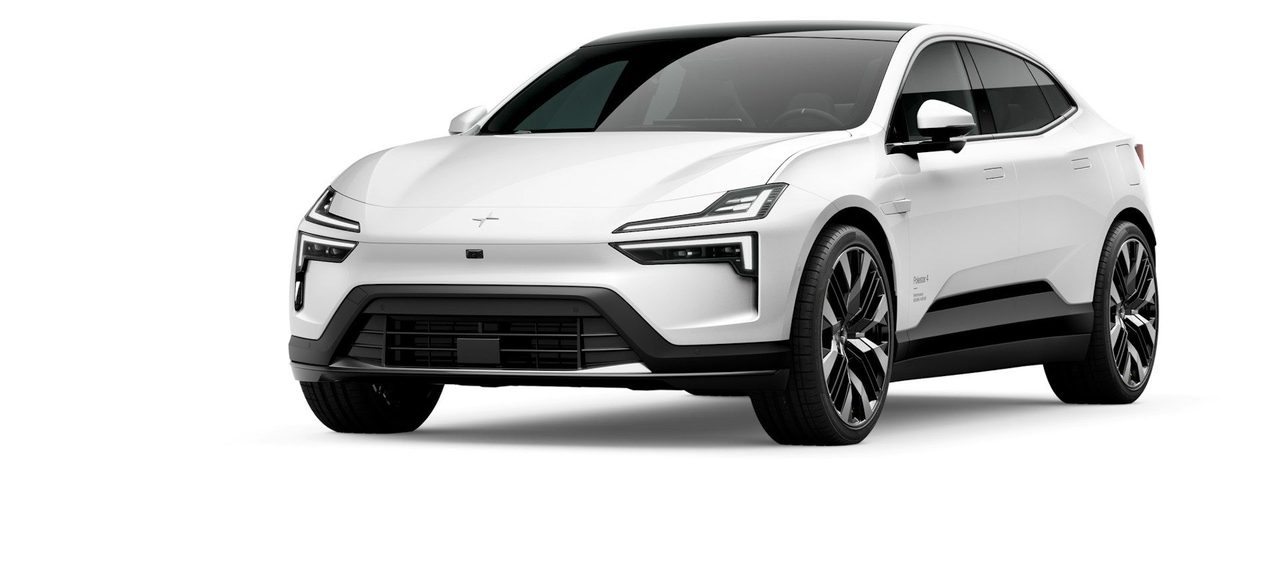
The Rear motor car makes 272 hp and reaches 60 mph in 6.9 seconds. Its EPA range estimate runs to 310 miles. The Dual motor version makes 544 hp. It cuts the sprint to 3.7 seconds and still returns up to 280 miles of range. Neither figure defines the car, and that’s deliberate, since both versions share the same quiet, settled gait until the accelerator asks for more. The math is clean: $6,500 steps up from one motor to two, buying 272 extra horsepower and nothing else changed.
Charging follows the same unhurried logic. The battery accepts up to 200 kW on a DC fast charger and goes from 10 to 80 percent in 30 minutes, while an 11 kW onboard charger handles overnight stops at home. A coffee and a stretch cover the fast-charge stop, and the car never makes a production of refuelling.
Towing capacity reaches 2,000 pounds on the Rear motor car. The Dual motor version manages 3,500 pounds. That’s enough for a small trailer, a pair of jet skis or a track-day support run. Top speed sits at 124 mph for both, a figure that serves mostly as evidence of how much performance the brief left unused on the table.
Sustainability is engineered into the brief rather than applied as a badge at the end of the process. Polestar publishes a cradle-to-gate carbon footprint of 19.9 tonnes of CO2e for the Rear motor car and 20.8 tonnes for the Dual motor, and the battery cells are produced with renewable electricity. The Tailored Knit upholstery option is made from 89 percent recycled PET, woven to size so offcuts never reach the floor.
A cabin built around light and material

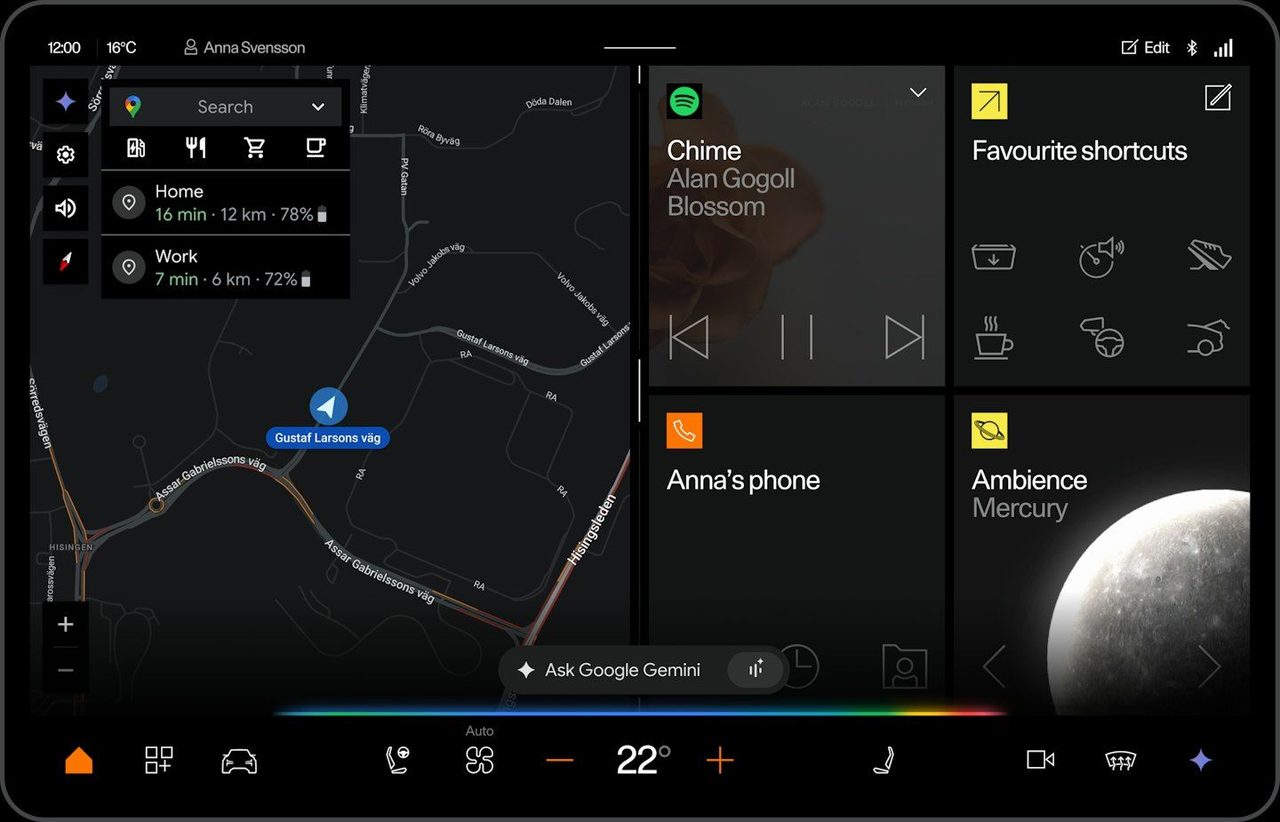
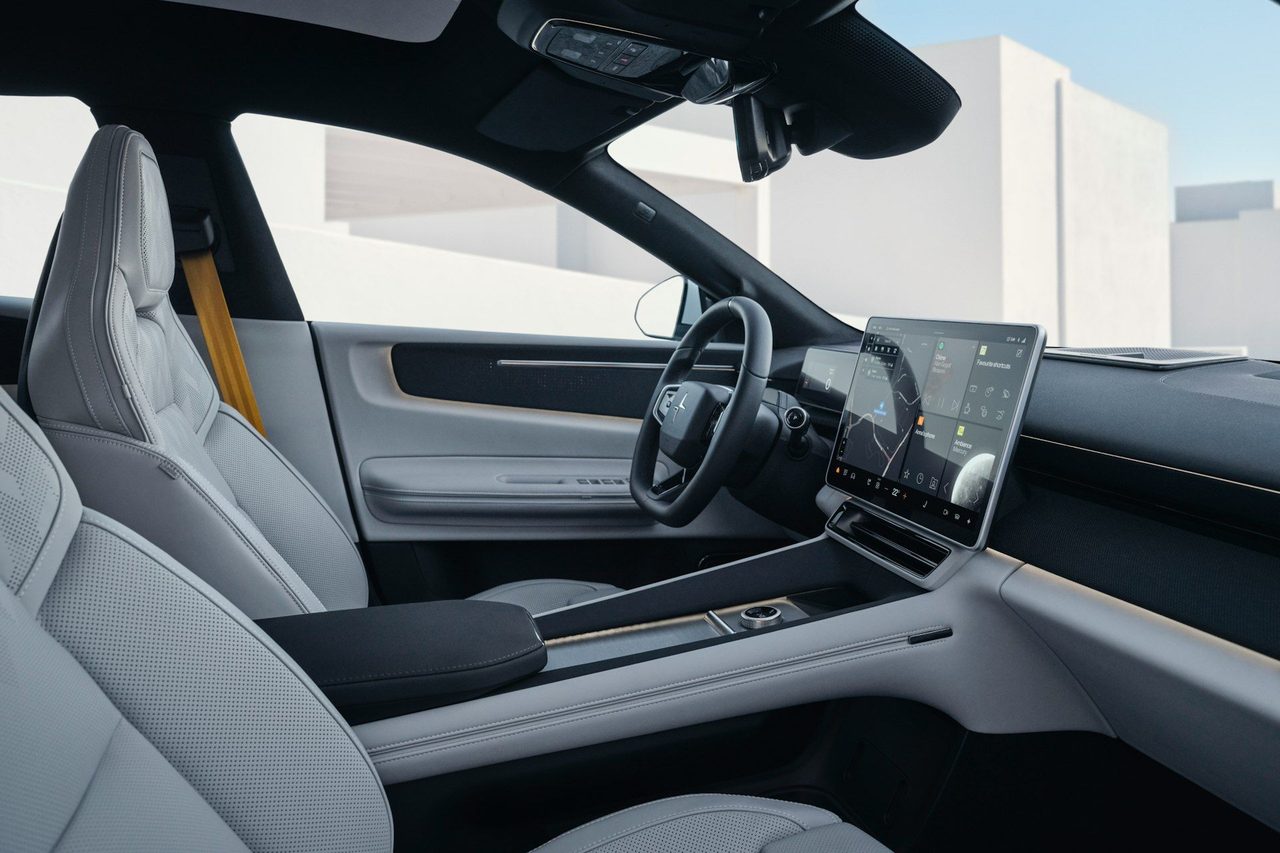
Inside, a 15.4-inch center display runs the interface with Google built in. An ambient light line orbits the cabin with themes named after planets in the solar system. The standard upholstery is Bio-attributed MicroTech, and the upgrade path leads to Bridge of Weir Nappa leather with full traceability, from tannery to seat. Everything in the cabin feels chosen rather than fitted, from the tailored knit textiles to the way the light line sets the atmosphere after dark. Nothing shouts in here.
The Polestar 4 suits the driver who wants one car to handle the weekday commute in silence and the weekend road with conviction. It isn’t the loudest electric coupe on sale, and it doesn’t try to be, preferring understatement to theatre in every panel and every control. What it offers instead is proportion, calm and serious pace held in reserve. It’s a combination that tends to age well, long after louder designs have dated.

Orders run through Polestar’s site, where the configurator lays out both motor versions, the paint range, the interior themes and the delivery timing for each. The Rear motor car at $56,400 is the value in the range, while the Dual motor at $62,900 turns the design statement into a genuinely quick car with the same silhouette and the same cabin. Either way, the silhouette does the talking, and the numbers stay politely in the background where this car wants them and where its design brief always intended them to stay.
Deliveries run through Polestar Spaces rather than a traditional dealer floor, and test drives book through the same site, so the whole purchase stays inside the same quiet, digital routine as the car itself. The ownership pitch matches the design pitch, quiet, digital and short on ceremony.