
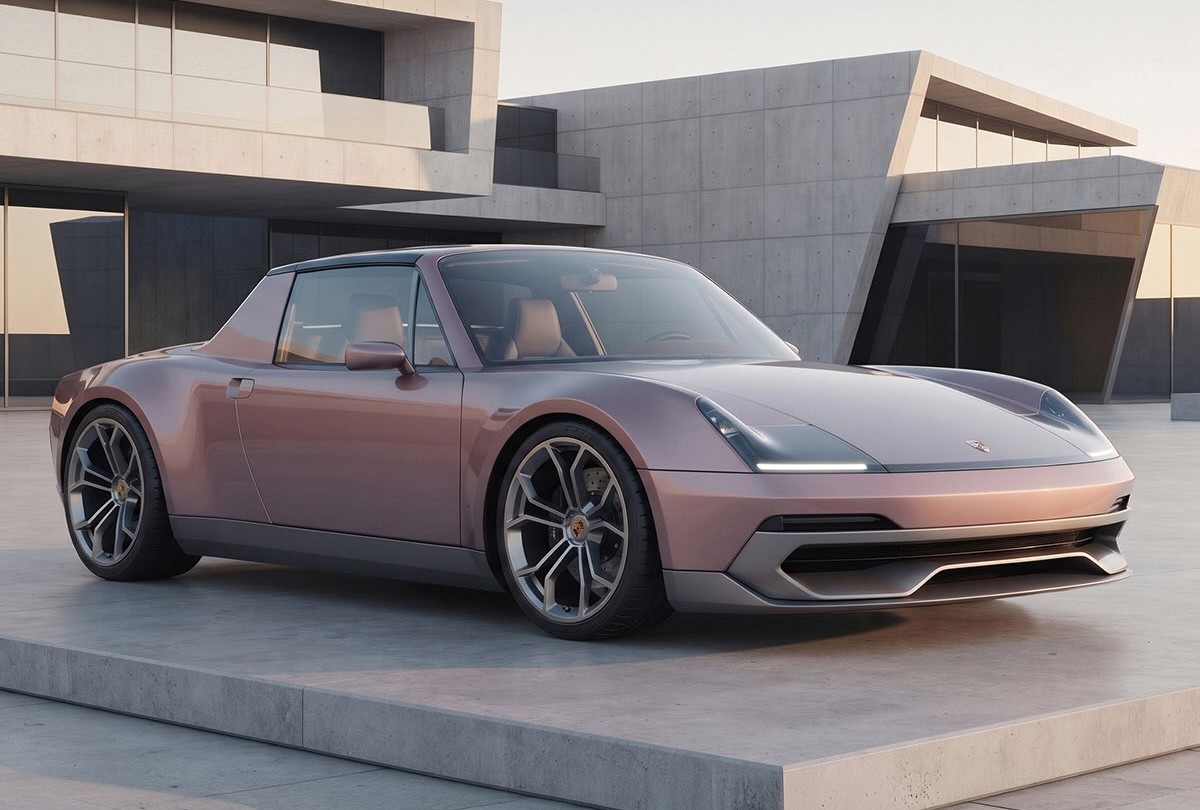
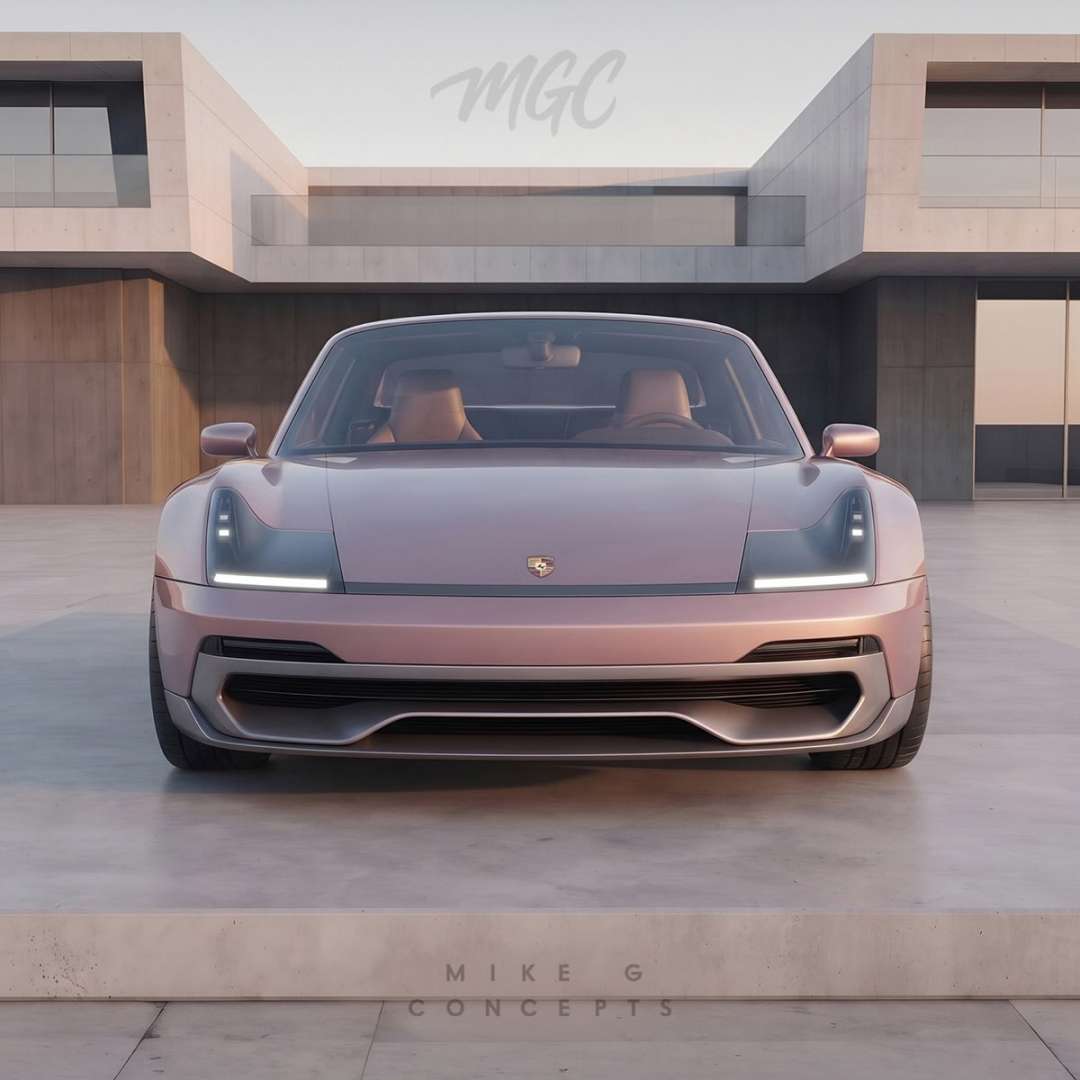
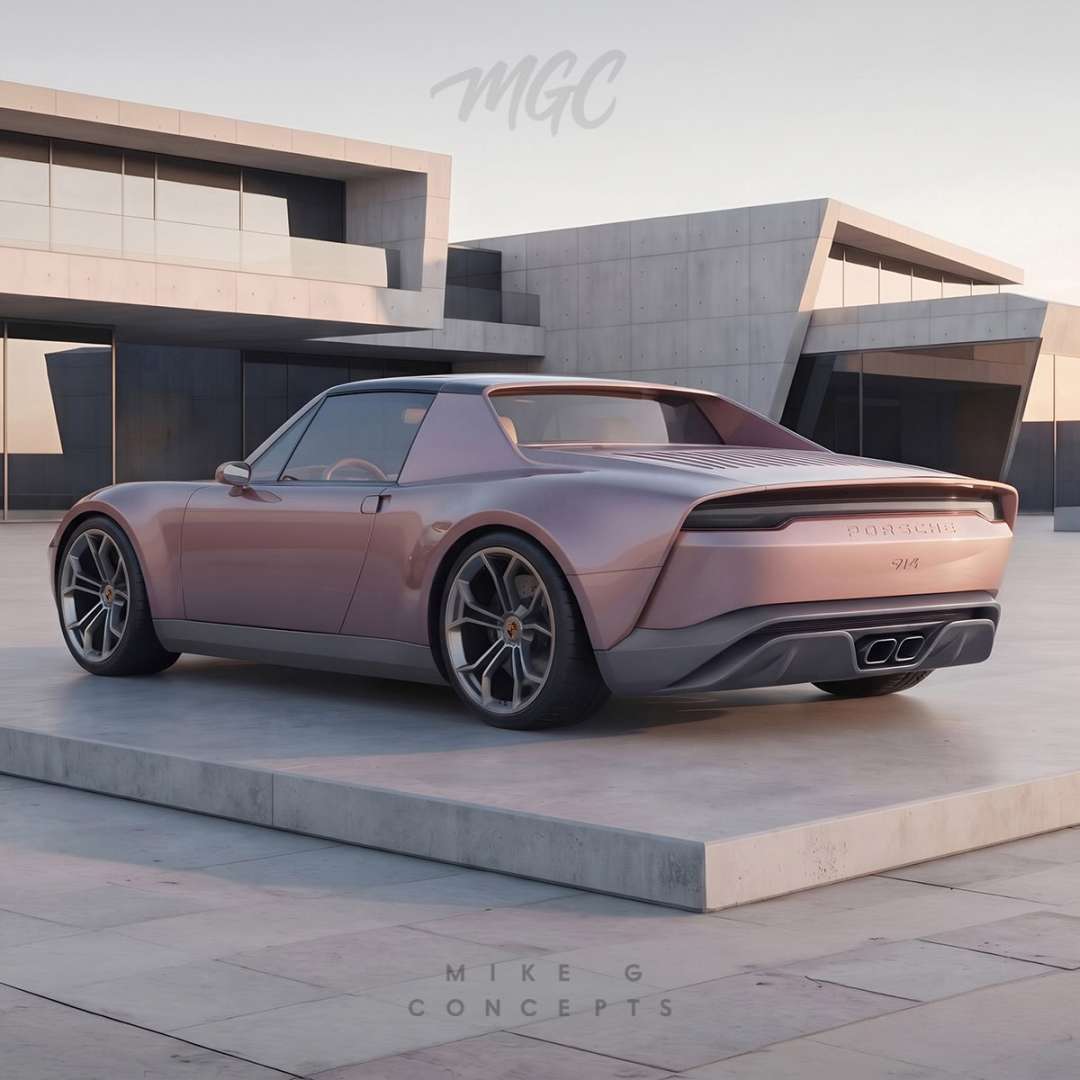
A rose-pink Targa coupe sits on a concrete plinth in front of a concrete house, and the silhouette gives it away before the badging does. The flat deck, the upright Targa bar and the long rear lid are the Porsche 914’s, redrawn for today with modern surfacing and modern wheels. Nothing in the scene is real, no car and no production line, and that absence is the point of the piece.
The car doesn’t exist. Designer Mike G., posting as mike.g.concepts, published the render study on November 4, and Porsche has announced no 914 return, then or since.
The pop-up headlights are gone, replaced by slim LED strips under smoked covers, the nose low and clean.
At the back, a full-width light bar crosses the tail above PORSCHE lettering and a script 914 badge. Louvres cut across the rear deck, over the space where the engine would sit. Twin exhaust outlets sit low and central inside a deep diffuser. The whole rear reads flat, wide and calm, closer to furniture than to aggression. Even the wheels sit oversized and flush, concept-car fashion, filling the arches the original never had.

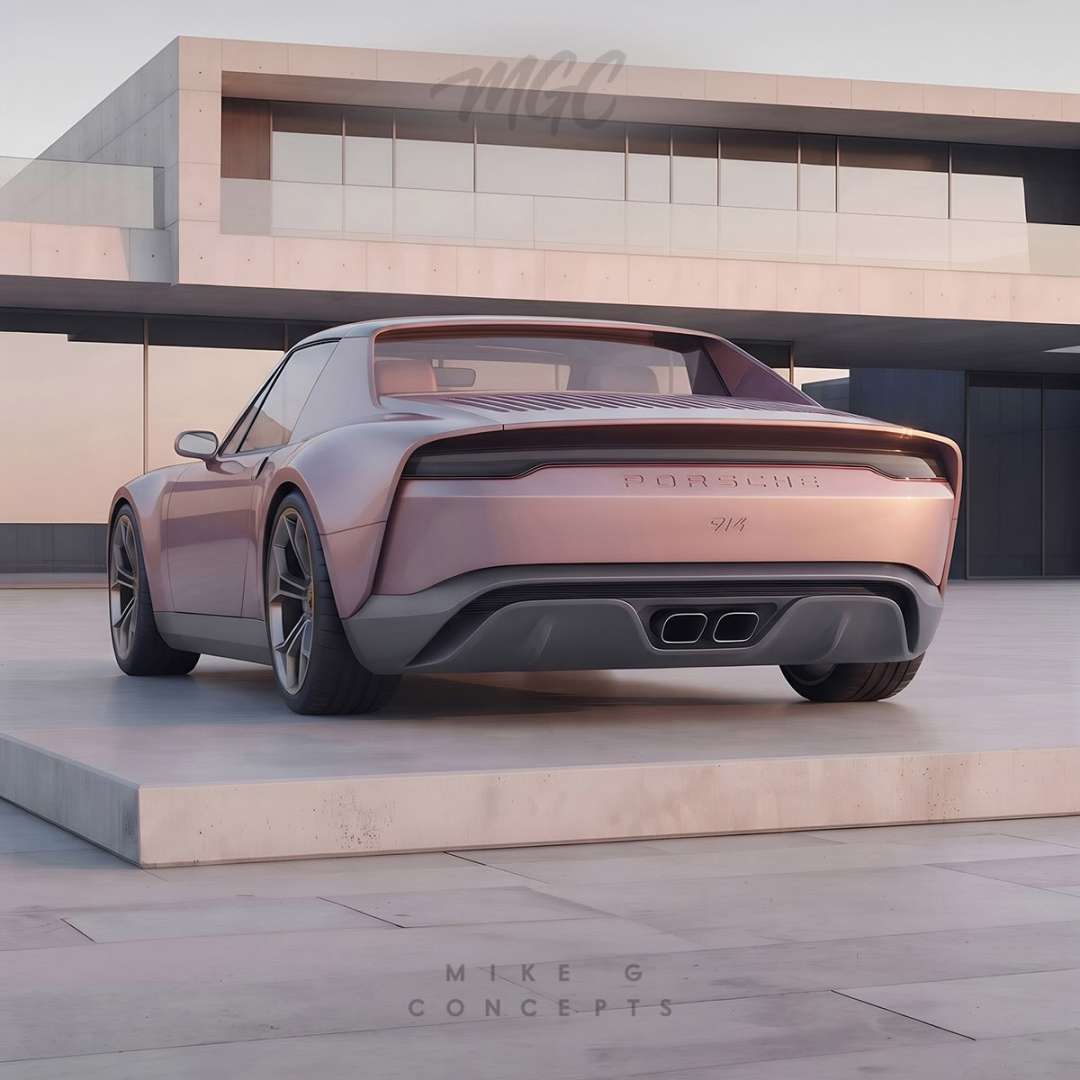
The setting does half of the talking. Bare concrete, low sun and one unbroken colour leave the shape nowhere to hide. The car sits on its plinth like a model in a design studio, which, in every way that counts, is exactly what it is. No people, no road, no weather intrudes on the argument.
The car underneath the idea
The first 914 ran from 1969 to 1976 as a Volkswagen and Porsche collaboration, a mid-engined Targa two-seater and nothing else. The partners built 118,978, and the car became the best seller in the Porsche range.
Nothing in the recipe chased straight-line speed. The engine sat ahead of the rear axle, the weight rode low and central, and the car changed direction on balance rather than grip. Period testers praised the handling and forgave the pace. The steering was unassisted rack and pinion, and the standard gearbox was a five-speed manual.
Two engines split the range. The 914/4 carried Volkswagen’s Type 4 flat-four in 1.7, 1.8 and 2.0 litre forms and accounted for 115,646 cars. The 914/6 borrowed the 2.0 litre flat-six from the 911 T, cost nearly as much as a base 911, and ended in 1972 after about 3,300 cars.
Mike G. writes the hardware as a proposal, in his own words. He’d pack a 300 hp turbocharged 2.0 litre flat-four borrowed straight from the Cayman, for agility he calls go-kart-like.
It is a designer stating what the silhouette deserves. The drawing argues for him.
Tan leather, houndstooth and a gated lever
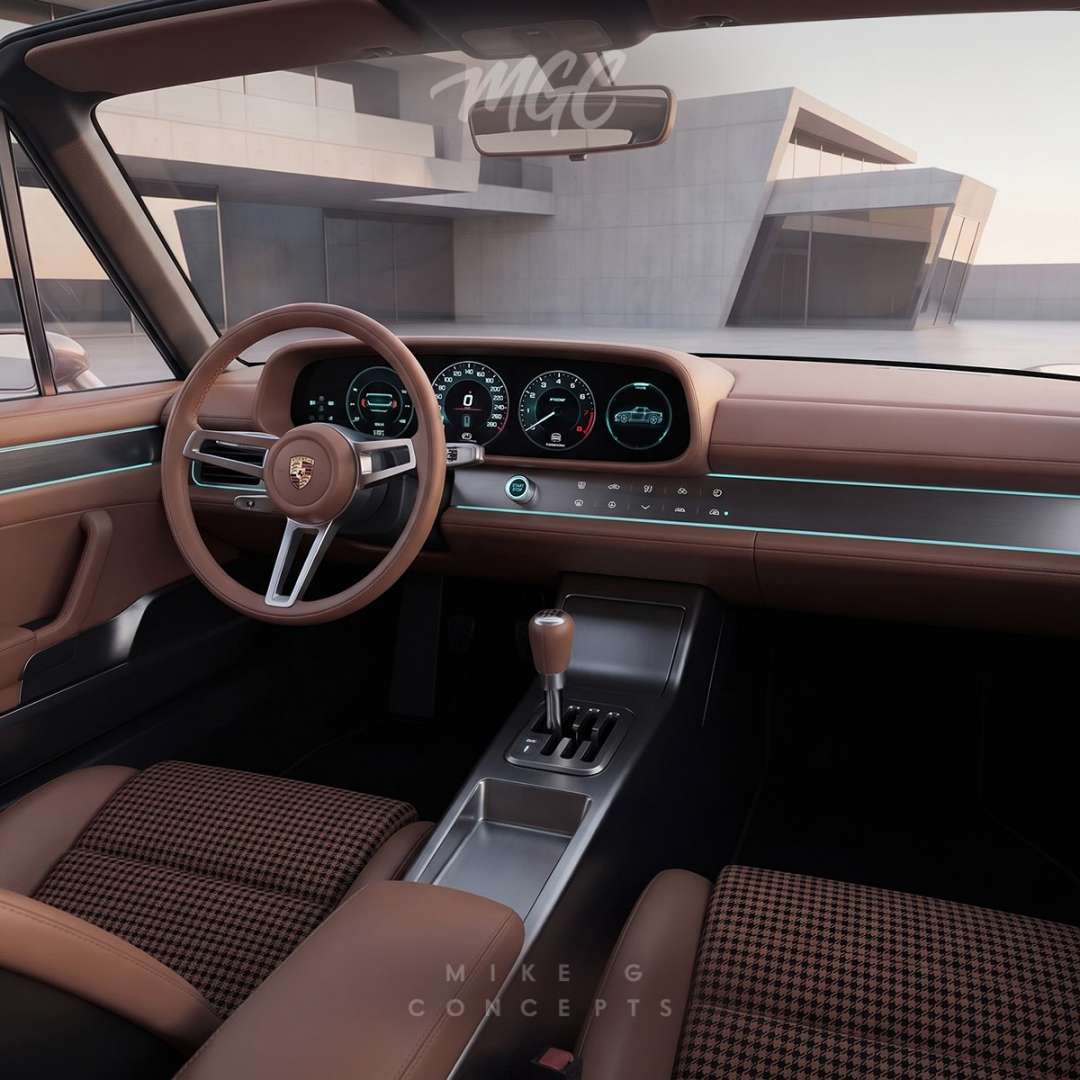
The cabin render works the same seam between eras. Tan leather wraps the seats, the dash top and the door cards, with houndstooth cloth in the seat centres. A slim light strip runs the width of the dash. The wheel is a classic three-spoke carrying the Porsche crest, and the dial faces sit inside one wide digital panel.
The detail that starts the arguments sits in the console. A manual lever rises from a gate, leather booted and unhurried, one analogue part in a dash of screens. The cluster behind the wheel even keeps a turbo gauge among its dial faces. In a drawing, that lever is the position statement.
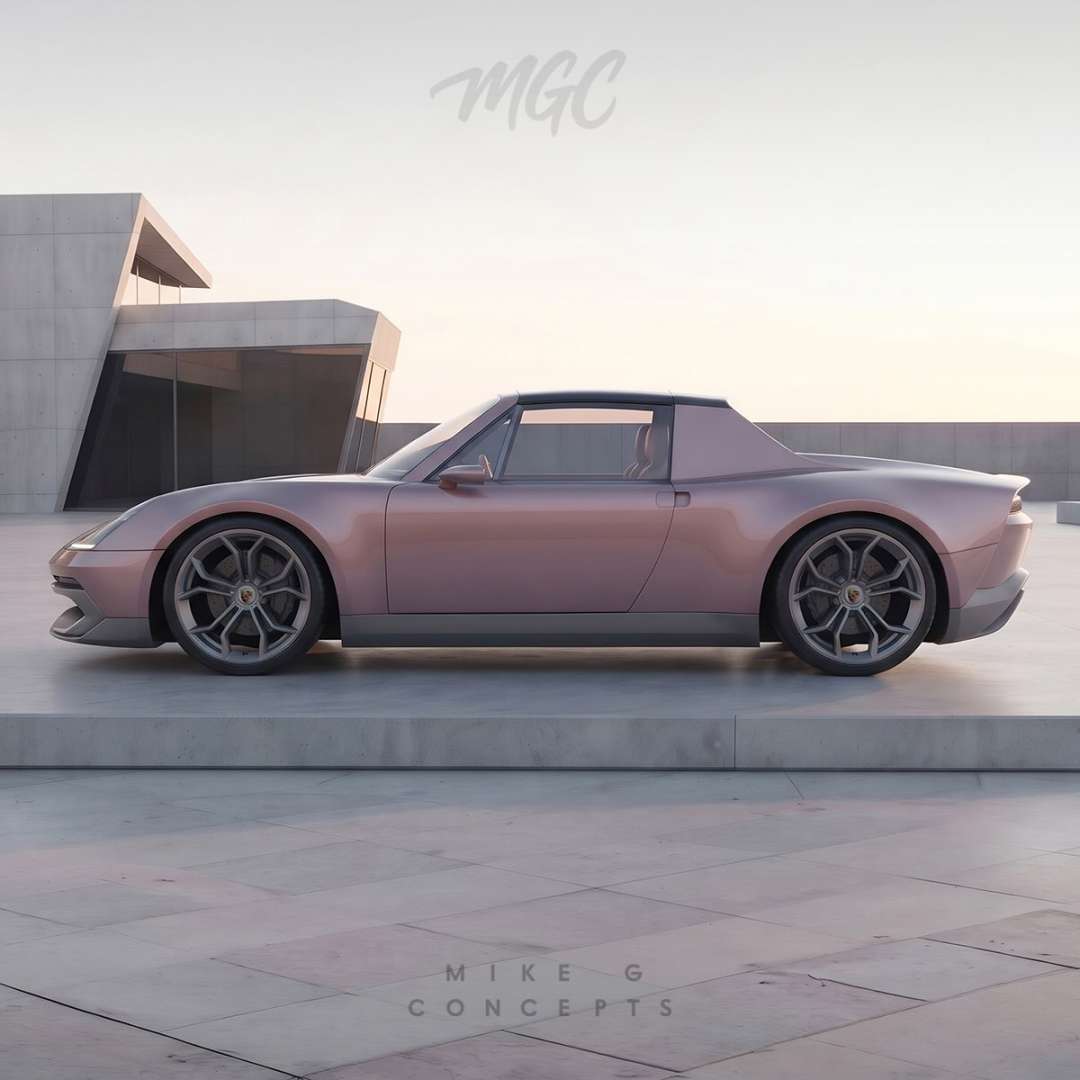
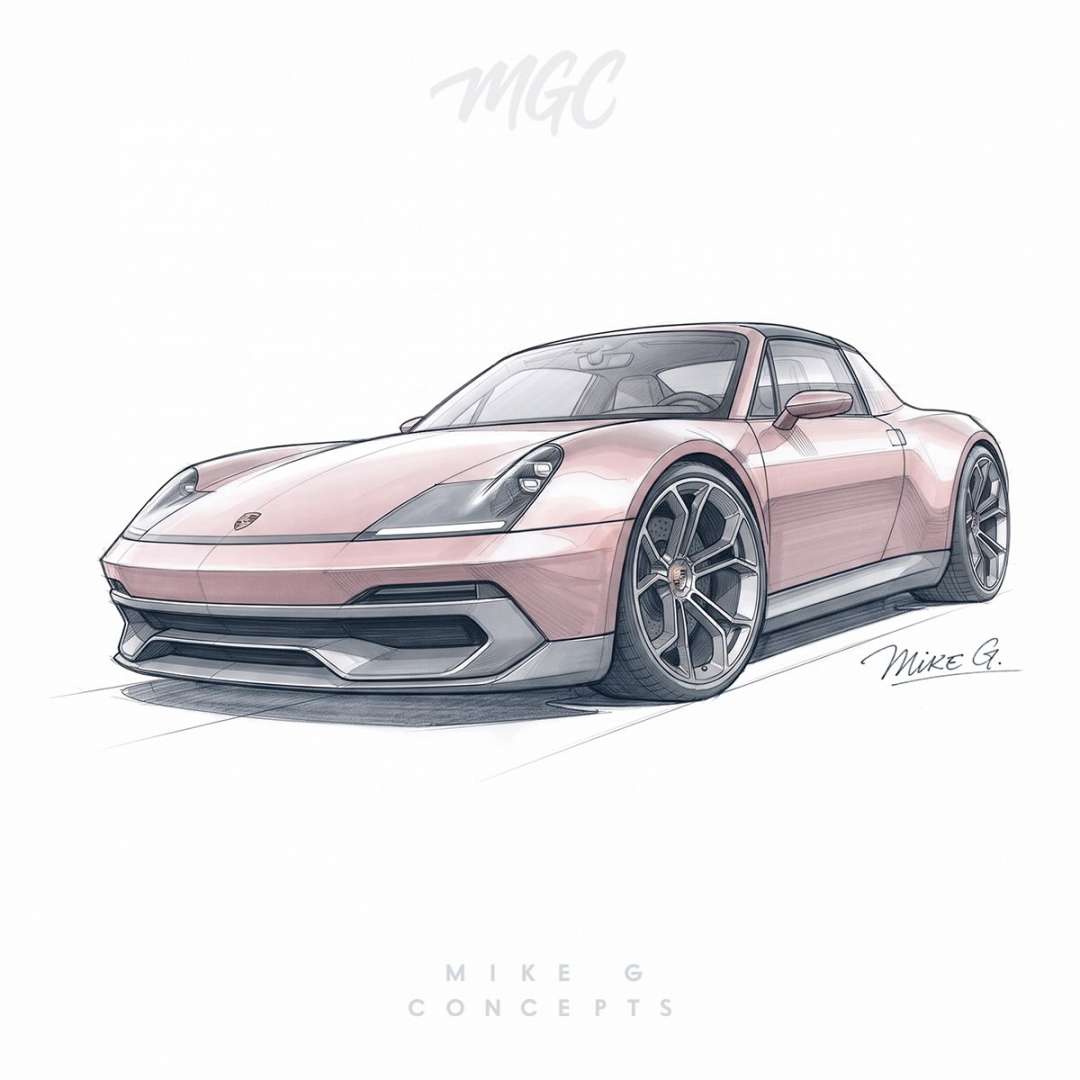
The set closes with a coloured sketch of the front three-quarter, signed by hand. It is the loosest frame in the series, pencil first and pixels after, showing the process the renders hide.
Editor’s take
The 914 was Ferry Porsche’s entry ticket, built to give young drivers an inexpensive way into the marque. That job stands open again as the 718 line turns electric, and a render can’t fill it.
What Mike G. has drawn instead is the shape of the argument, in the colour least expected. Porsche decides what wears its crest in showrooms, and it’s said nothing here. Until it does, the people’s Porsche lives on a designer’s page, in rose pink.