
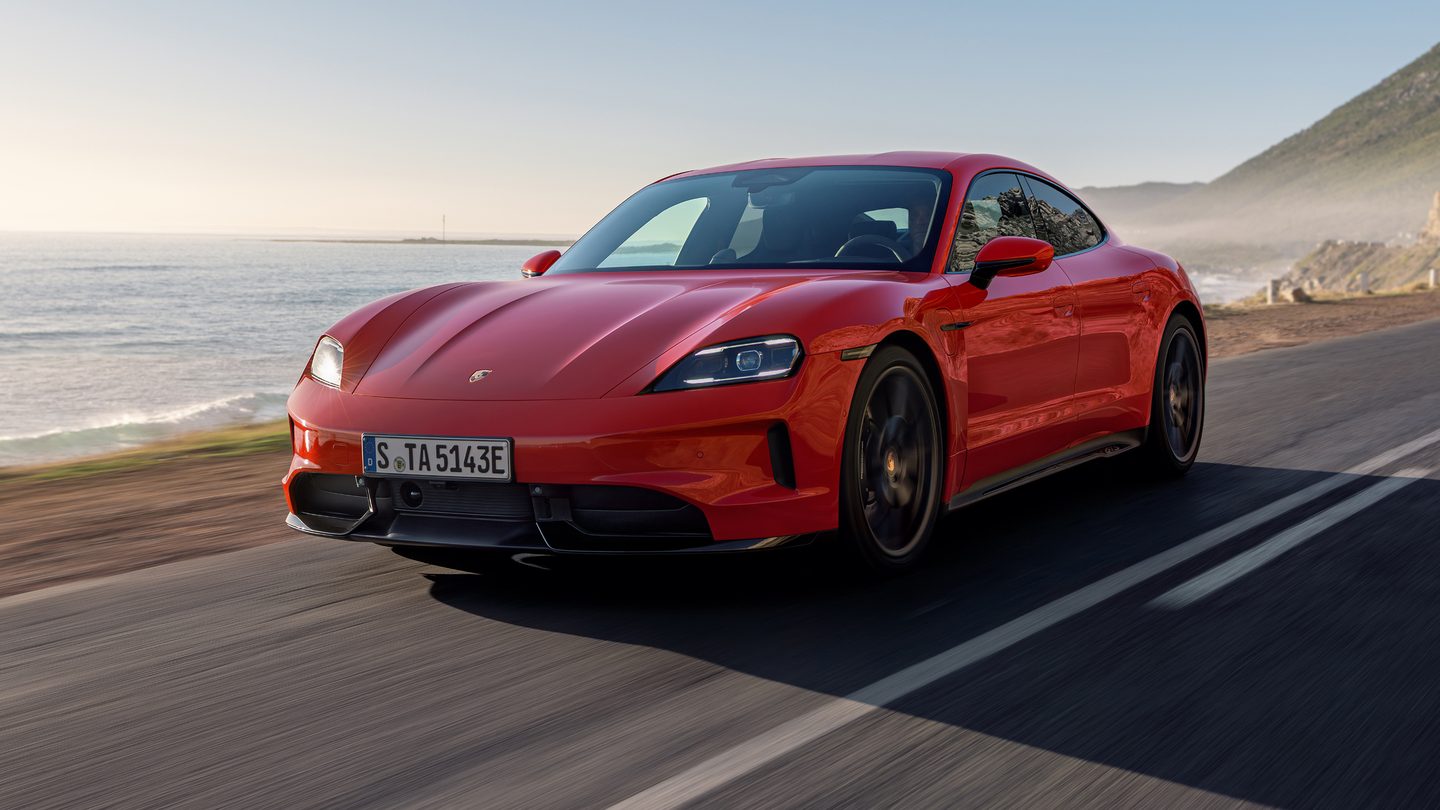
The Taycan line now runs from a $105,800 rear-drive sedan to a Turbo GT that outruns supercars, and the interesting part is how little the silhouette changes along the way. Porsche sells one designed object here, tuned to seven different tempos, from weekday grand tourer to track-day halo car without a redesign in between.
Read the range as a set of lifestyles rather than a spec ladder. The base car is the grand tourer, quiet and long-legged, while the Turbo models chase lap times with the same body and the same badge. Cross Turismo adds a wagon back and a gravel mode for buyers whose weekends end on unpaved roads.
Every Taycan shares the 800-volt architecture, the two-speed rear transmission and the low, wide stance that made the model the electric benchmark. The differences live in motors, batteries and intent. Choosing well means matching the trim to the week the car will actually live, not to the fastest number in the brochure.
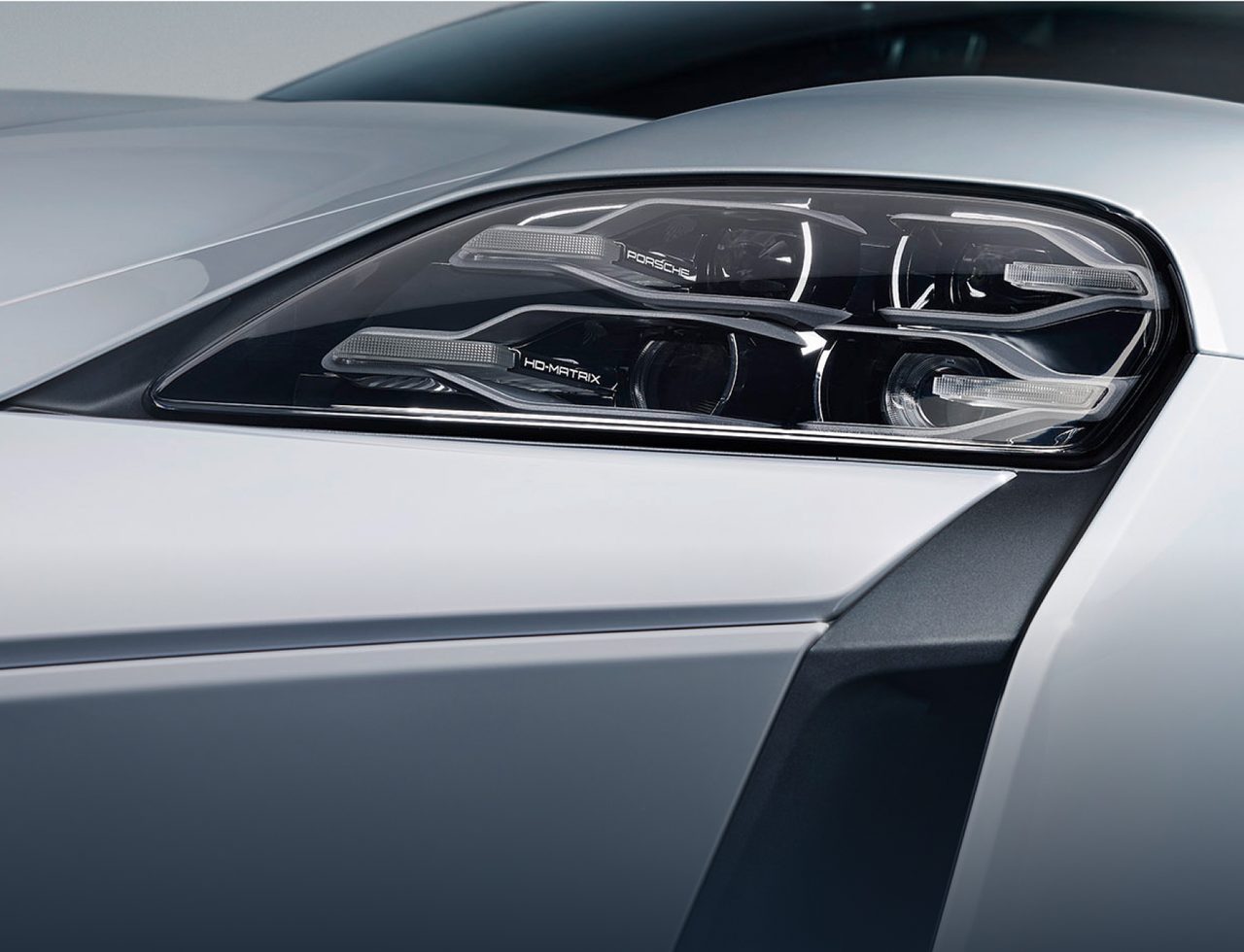
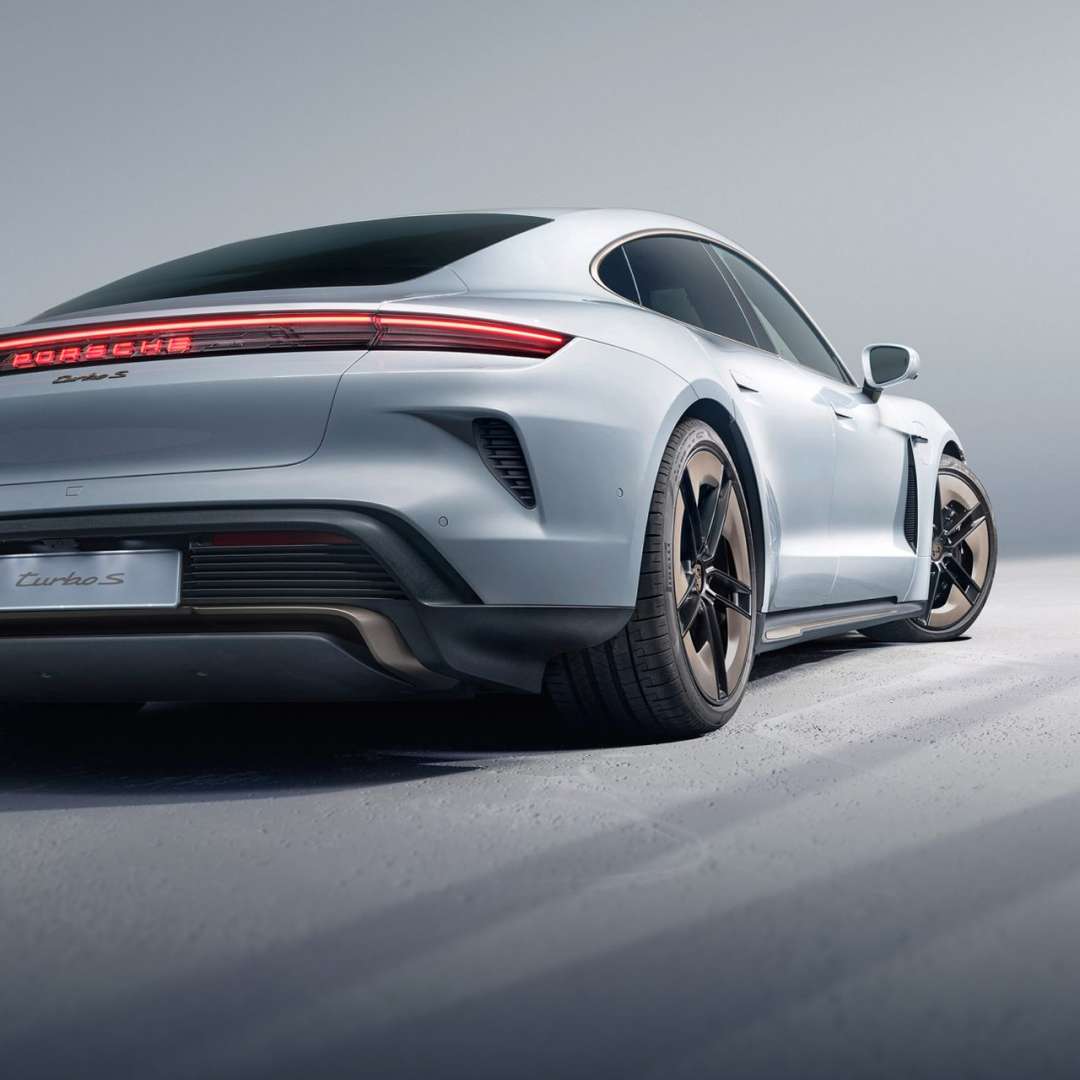
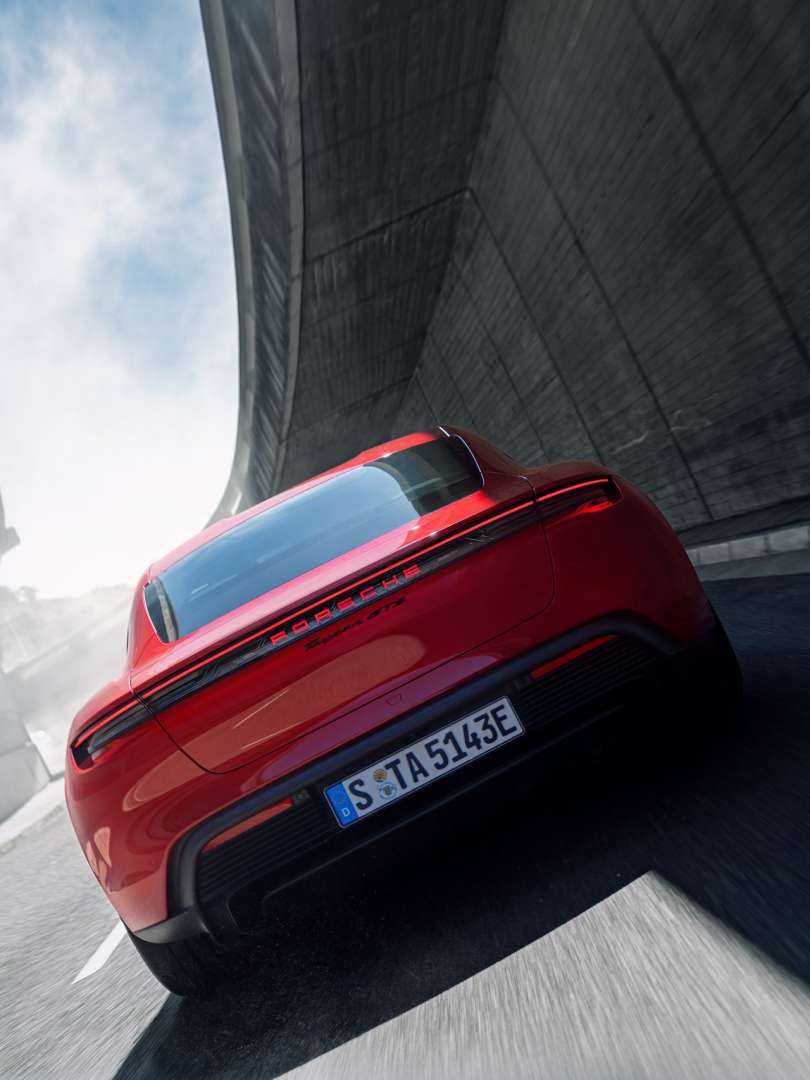
Design holds the line together. Four-point LED headlights mark the face, HD-Matrix units come standard on the Turbo models, and the rear carries the full-width light bar that has become the model’s signature after dark. Pure proportions do the rest, a long wheelbase, a roofline that falls like a 911’s and haunches that need no decoration. It’s the same restraint the Polestar 4 works toward, reached from the opposite direction and at twice the money.
The daily drivers: Taycan, Taycan 4 and 4S

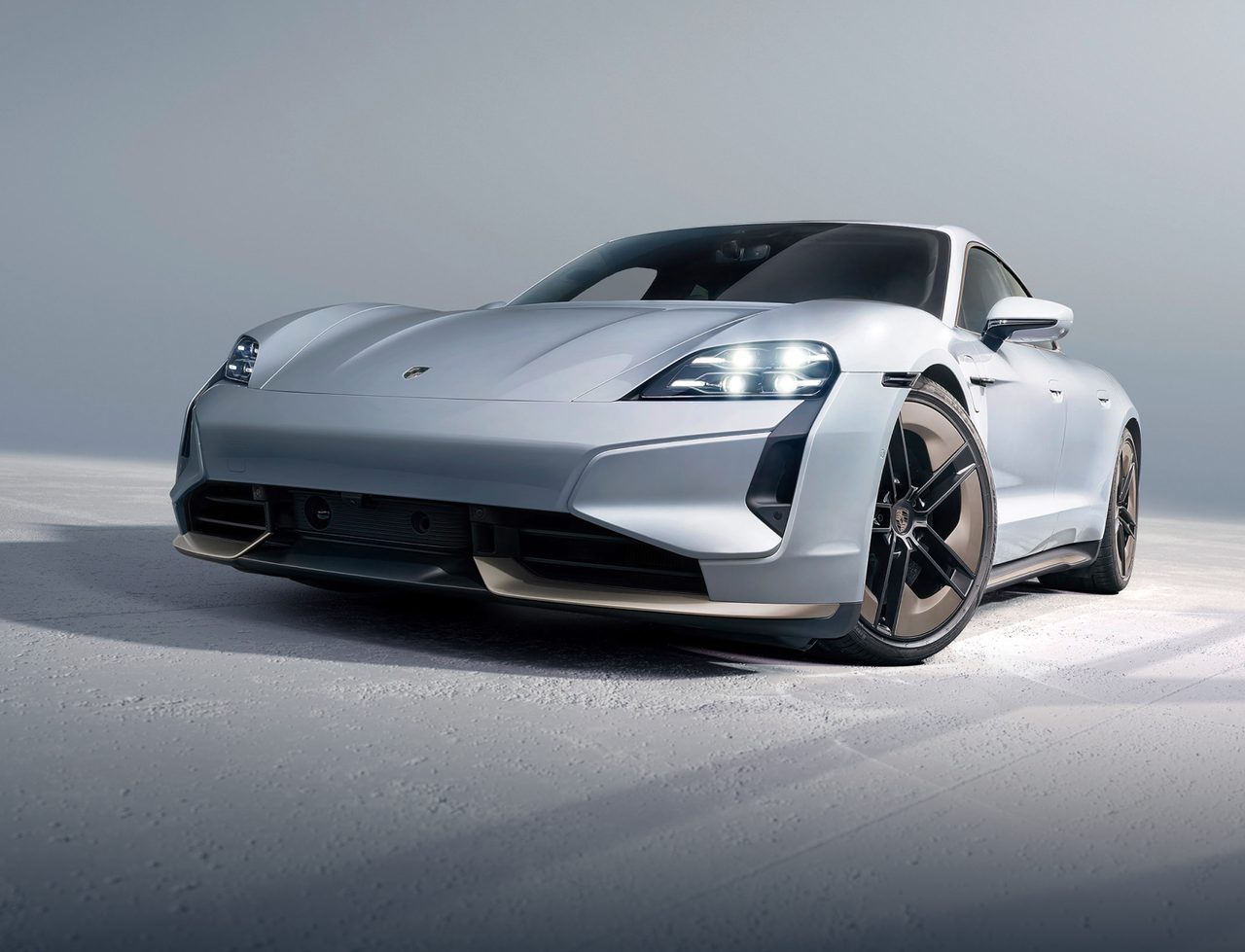
Porsche’s base Taycan makes 402 hp, or 429 hp with the Performance Battery Plus. It reaches 60 mph in 4.5 seconds, and its EPA range tops the line at 318 miles, the road-trip pick of the range. At $105,800 it’s also the design in its purest form, one motor, rear drive and nothing to prove, and it carries the longest range in the line as the reward for that restraint.
Next up, the Taycan 4 adds all-wheel drive at $109,900, holding 402 hp and a 4.4-second sprint with up to 315 miles of range. The 4S at $125,900 raises output to 536 hp with launch control and cuts the sprint to 3.5 seconds. For most buyers the ladder can stop at the 4S, since its pace covers public roads with room to spare. Few will need more.
The fast seats: GTS, Turbo and Turbo S

GTS trim, at $157,000, makes 690 hp, reaches 60 mph in 3.1 seconds and carries the sharpest chassis tune here, while the Turbo at $184,600 jumps to 871 hp and a 2.5-second sprint, with 317 miles of range. The Turbo S at $221,400 makes 938 hp, matches the 2.3-second sprint and tops out at a 162 mph track speed.
Above them sits the Turbo GT at $243,700, with 1,019 hp, a 2.2-second sprint and a 180 mph top track speed. It’s a halo car in the literal sense, built to prove the platform’s ceiling, and the road cars borrow its credibility every time a Turbo badge rolls past a fuel station queue.
Chassis technology deepens as the ladder climbs. Porsche Active Ride, optional on the all-wheel drive models, works each wheel individually to keep the body level under braking, cornering and acceleration. Track Endurance Mode and Push-to-Pass serve the track-day end of the calendar, while the standard adaptive air suspension keeps the weekday ride composed over broken pavement.
Charging and the cabin ritual

Battery capacity splits two ways: the Performance Battery holds 89 kWh and the Plus battery 105 kWh, both on the 800-volt system. Maximum DC charging reaches 270 kW on the standard battery and 320 kW on the Plus, taking the charge from 10 to 80 percent in 18 minutes at peak power. Numbers like that turn charging from an itinerary item into a coffee stop, and they hold across the trim ladder rather than living only on the expensive cars. The heat pump, standard on the current car, protects that range when winter arrives. Winter barely dents it.
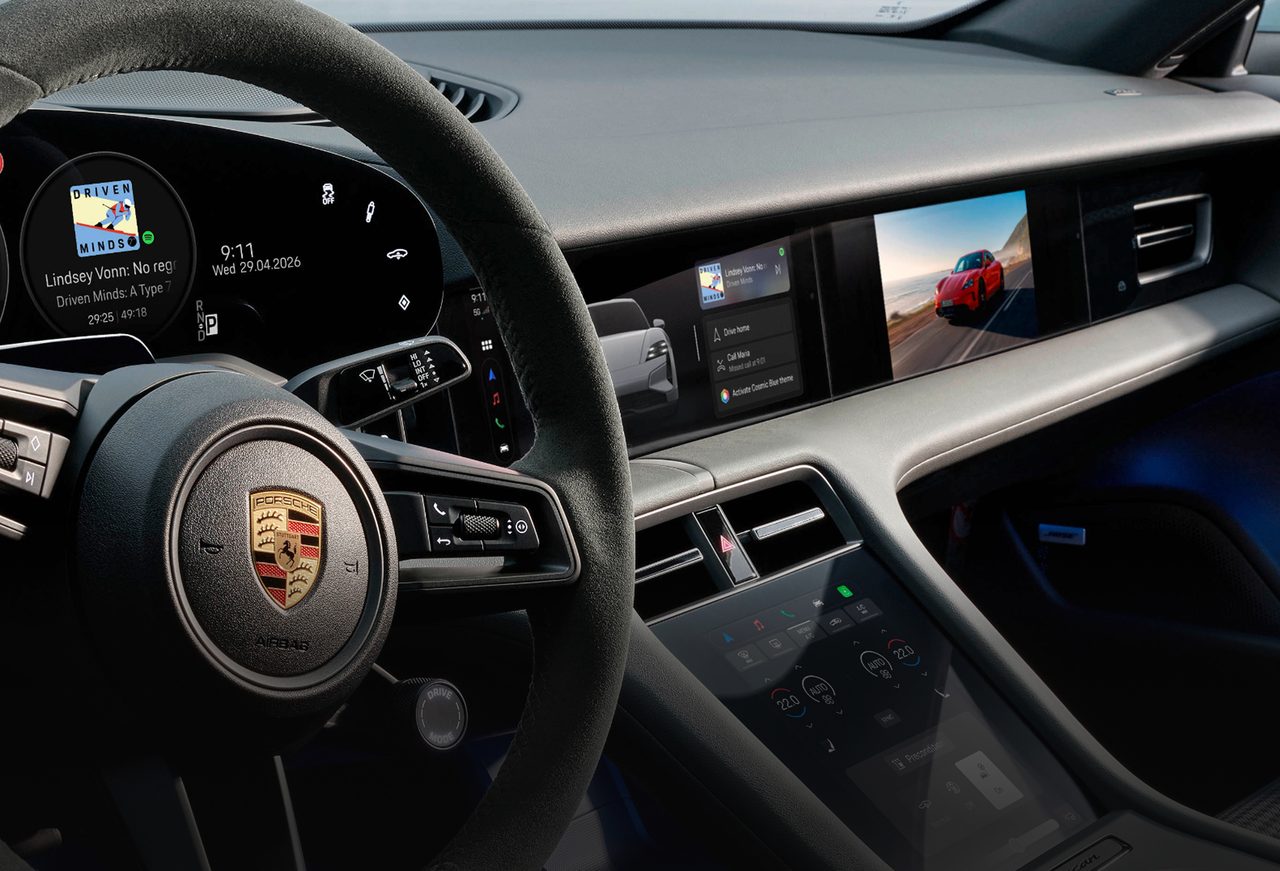
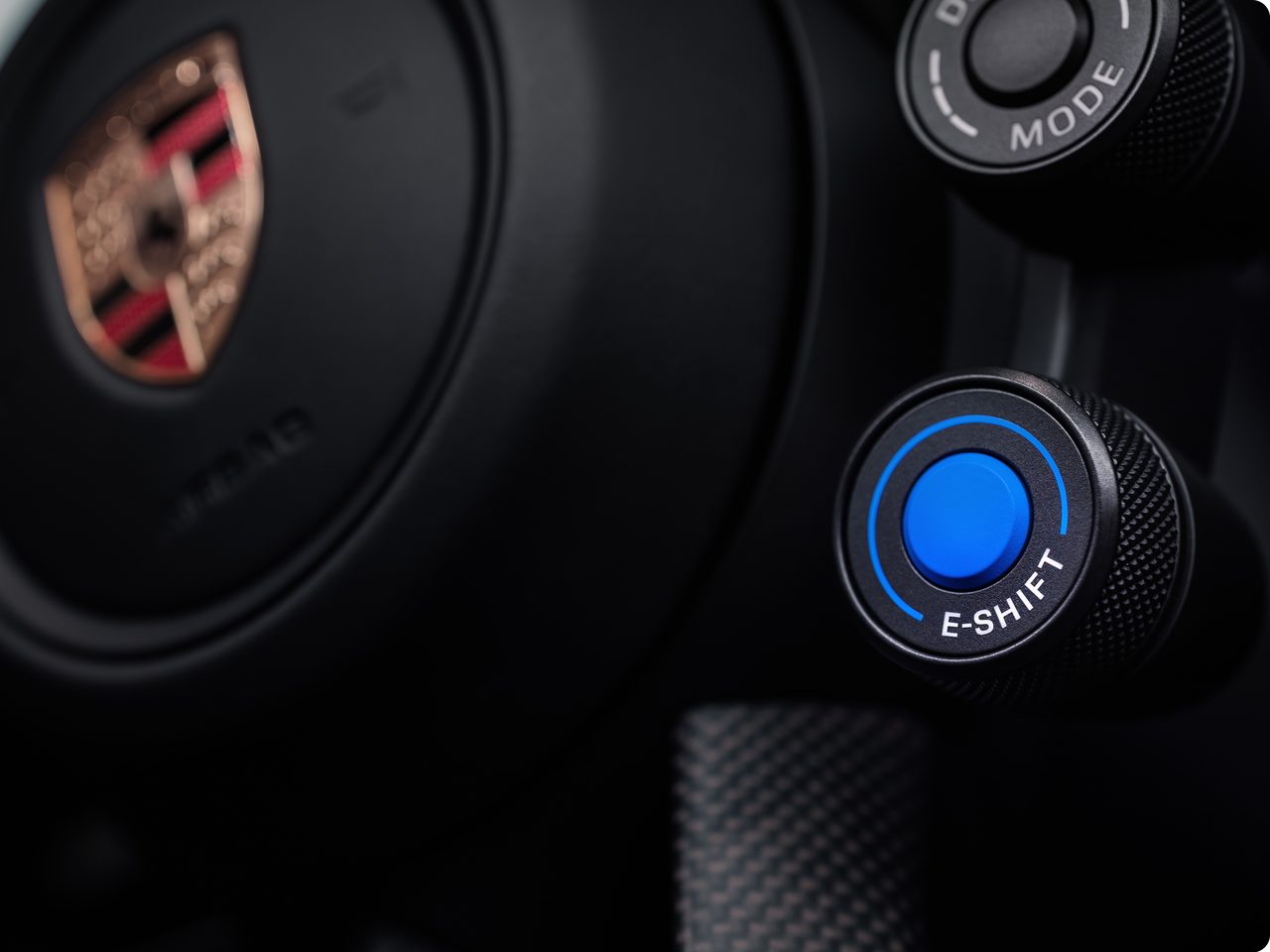
Inside, the curved digital cluster and the Porsche Digital Interaction interface keep the cabin minimal and screen-led. The optional E-Shift adds virtual gear changes with paddle input, rev-matched feedback and the Electric Sport Sound shaped around them. Adaptive air suspension with PASM handles the ride, Smart Lift remembers the driveways that need clearance, and rear-axle steering tightens the car around town. None of it asks for attention once it has been set.
One mechanical detail stands apart: a two-speed transmission on the rear axle gives the Taycan its dual character, a short first gear for launch force and a tall second for autobahn calm. It remains the mechanical detail that separates this car from its single-speed rivals.
The configurator on Porsche’s site lays out every trim, battery and body style, including the Cross Turismo from $118,100. The base car at $105,800 is the connoisseur’s pick for range and purity, while the 4S is the sweet spot of pace and price. Climb higher only if the calendar holds track days.
Cross Turismo deserves its own word, since the wagon back turns the Taycan into the family’s only car more convincingly than the sedan. It starts at $118,100, keeps the same motors and adds the cargo floor that dogs, bikes and airport runs demand. Buyers split cleanly here, and the split says more about weekends than about budgets.