
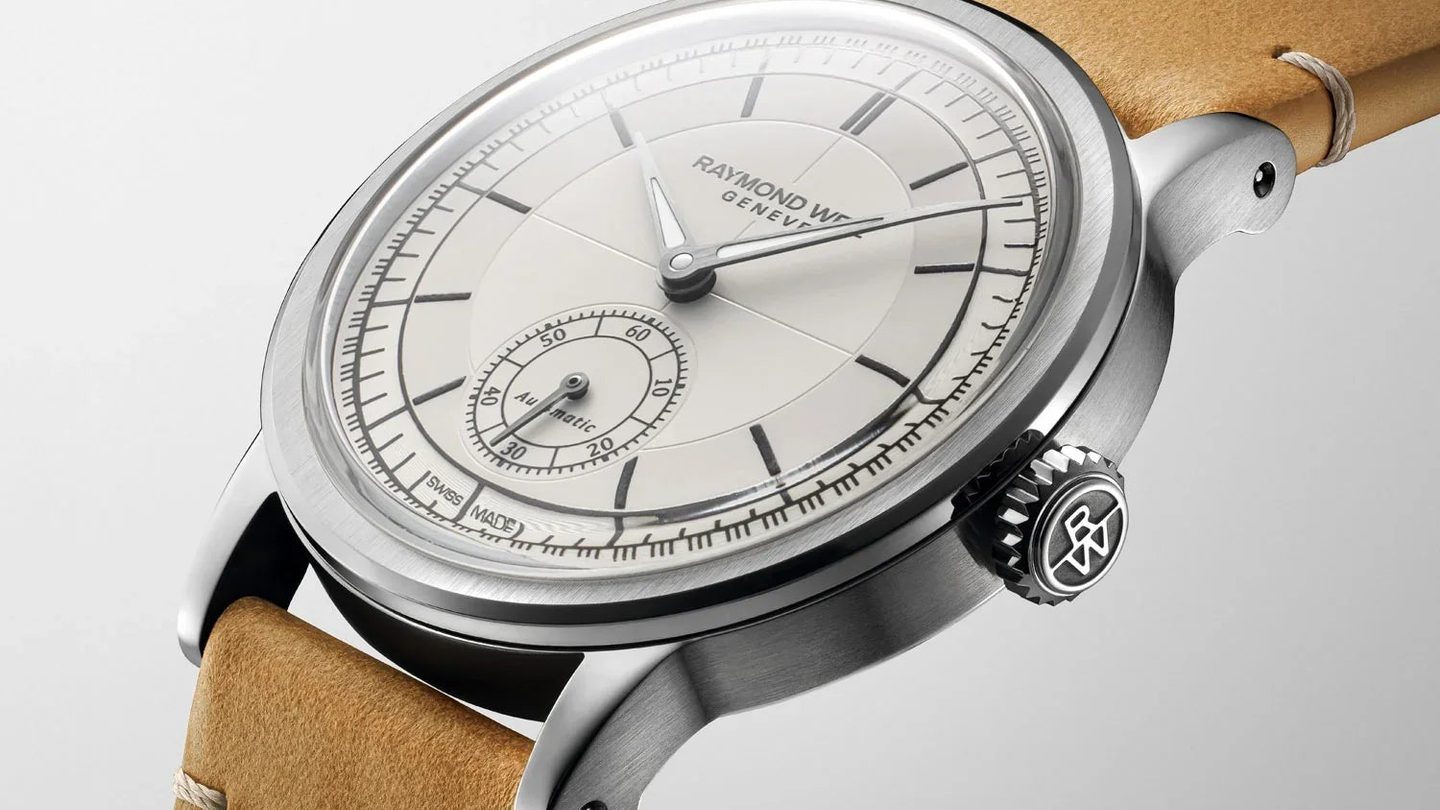
Thirty watches carry a dial colored like a sheet of handmade paper, and all thirty stay in Japan. Raymond Weil’s Millésime Small Seconds Japan Limited Edition takes its cream from Echizen Torinoko washi, a paper made by hand in Fukui for generations.
Torinoko paper isn’t pure white, and that warmth is the whole design brief here. Its natural ecru tone comes from the fibers themselves, and the techniques behind it hold a designation as an Important Intangible Cultural Property of Japan, so the dial color carries a craft tradition rather than a paint code. Paper makers in Echizen have worked those fibers for centuries, passing the technique between generations of workshops.
The ecru of Echizen paper, held in a 35mm case
A sector layout divides the dial into separate tracks for hours, minutes and seconds, a 1930s composition. Small seconds sit at 6 o’clock inside a recessed ring, and the minute hand bends at its tip to chase the angled track.

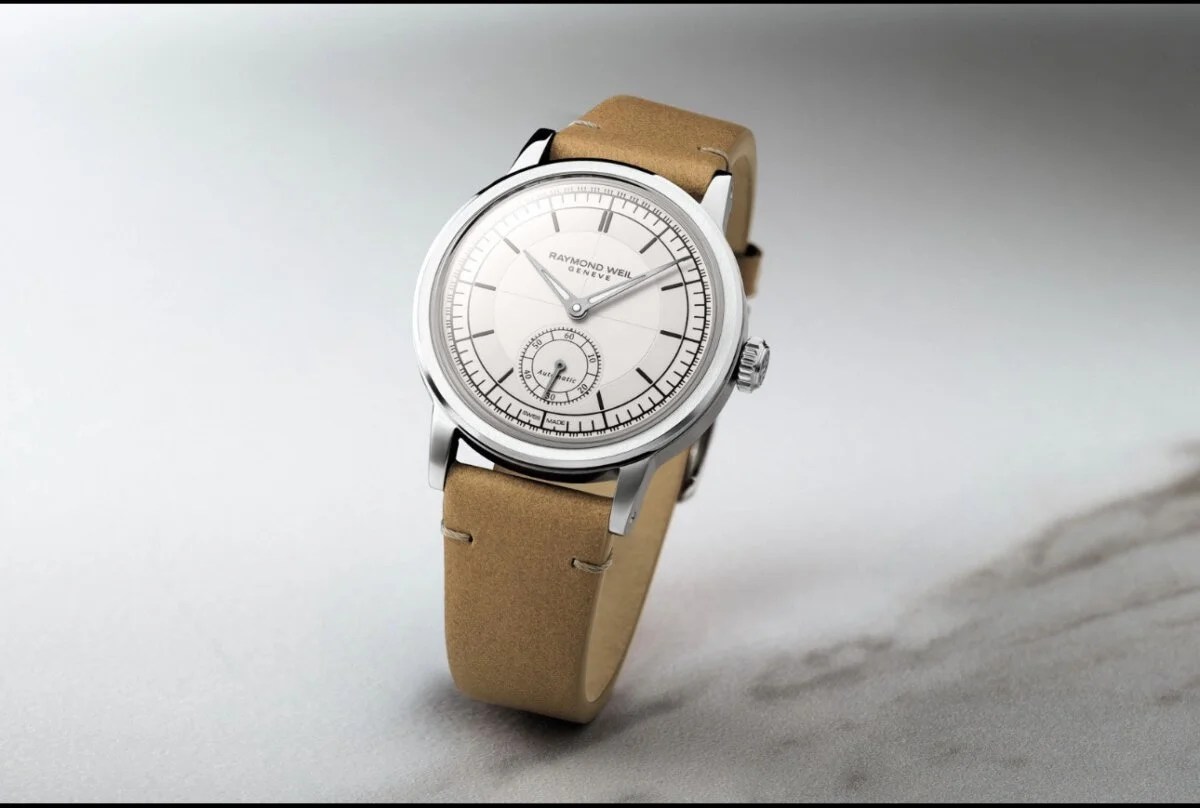
Flat color, layered construction. The cream reads calm across a room, busy up close.
Ecru and amber do quiet work together here, two tones Japanese daily life has used for centuries on paper and leather. Against a steel case, the pairing reads warm without turning sweet, and the camel strap keeps the cream dial from washing out on pale wrists. Neither tone shouts, and together they give the watch a warmth steel alone couldn’t carry into a room.
Stainless steel wraps the dial at 35mm across and 10.25mm thick. Hairline finishing covers the case, polished metal caps the lugs, and long lugs curve down to follow the wrist.
Case sizes ballooned for two decades, and 35mm reads small on paper until it lands on a wrist. In the 1930s, diameters between 30mm and 38mm were normal, so this case isn’t a shrink of a bigger watch but a return to original proportions. Presence comes from the long lugs and the tall box crystal, not the diameter, and the watch wears larger than its number while staying light through a full day.
A Sellita-based automatic behind a W rotor
Cal. RW4251 beats at 28,800 vibrations per hour behind an exhibition case back, with 31 jewels and a reserve of about 41 hours. Its rotor wears a W shape cut for the brand’s initials.

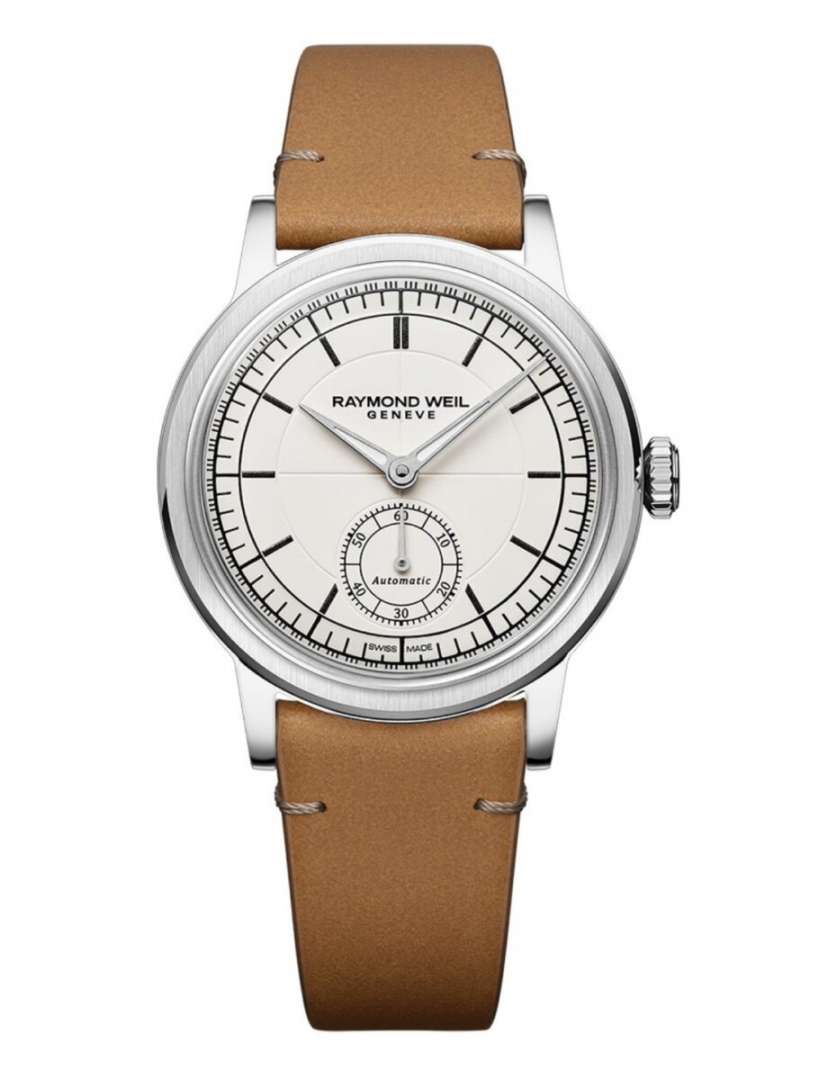
Reconstruction, not reproduction, is the house line for Millésime, and the Japan edition follows it closely. Historic elements like the sector dial and box crystal get rebuilt with modern machining and modern materials, so the watch wears its age as a style rather than a set of compromises. That discipline shows in the details a copy would miss, the bent hand, the stepped sectors, the finishes changing across a dial that stays one color from center to edge.
A box-shaped sapphire crystal rises over the dial, anti-reflective on both sides. Water resistance rates at 5 bar.
Daily wear suits the watch better than a safe does, since the 5-bar rating, sapphire crystal and automatic winding all assume regular use. A 41-hour reserve covers a weekend off the wrist, and the watch restarts with a few turns of the crown on Monday. It wants wearing, not storing.
Modern guts, vintage manners. The spec sheet reads 2026 while the silhouette reads 1935.
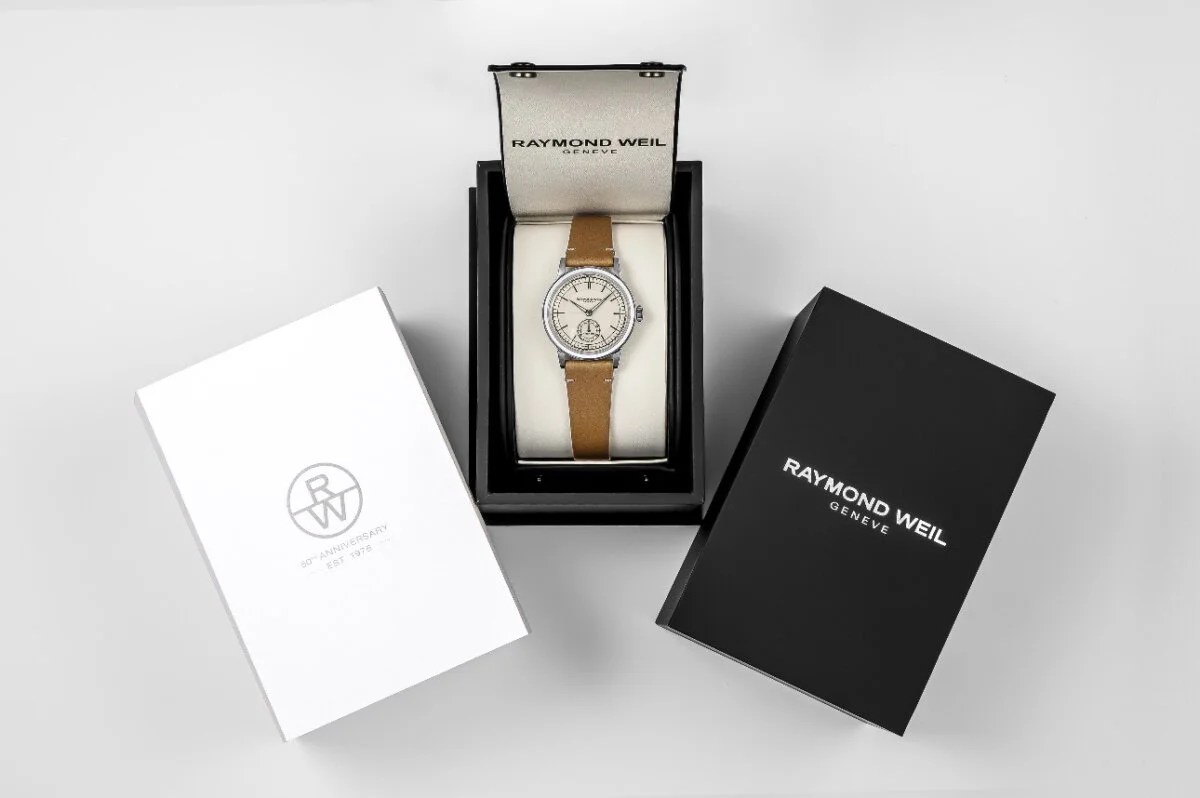
Even the box is made of the paper
Camel calf leather carries the watch, and the strap deepens toward amber as it ages against skin and light. W-shaped stitching finishes the strap tips, and the presentation box goes one step further than the dial, since its sleeve uses genuine Echizen Torinoko paper rather than a printed imitation. The paper on the box and the color on the dial come from the same workshops’ tradition, so the packaging teaches the eye what the dial is quoting.

Raymond Weil founded the brand in Geneva in 1976, and it remains independent and family-owned in its 50th anniversary year. Millésime took the Challenge Watch Prize at the GPHG in 2023.
Dress-watch buyers who track Japanese craft get two collections in one object here, Swiss mechanics and Echizen paper in a single 35mm circle. That overlap is narrow, and narrow is exactly what a 30-piece run needs. Collectors who chase regional editions get a cleaner story than most, since the inspiration sits in museums and workshops rather than in a marketing deck drawn up last spring.
Sales start Thursday, November 19 in Japan, at a listed ¥374,000 with tax included, for a watch built in a run of thirty. Thirty pieces, one country, and a dial color that took its cue from a paper tradition in Fukui. The release names no second allocation and no global waitlist, so the hunt runs through Japan’s authorized dealers or not at all.
Buyers who want one need a Japan route and fast timing, because thirty pieces won’t outlast the season. Everyone else gets the standard Millésime range, which keeps the sector dial and loses the washi story. The washi story stays behind in Japan, sealed inside thirty boxes.