
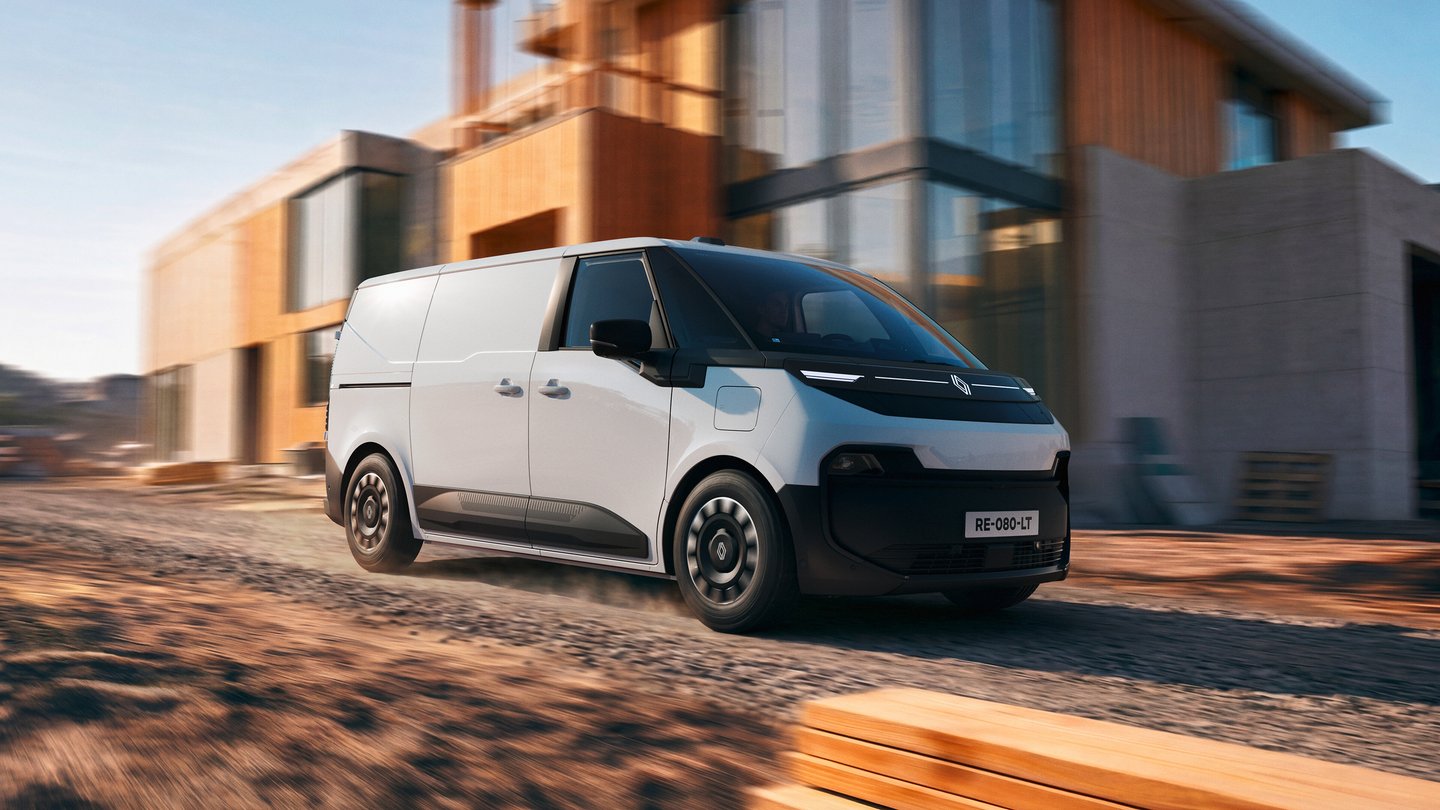
Renault’s Trafic has been Europe’s default medium van since 1980, with more than 2.8 million sold, and the new E-Tech electric version keeps the box and replaces nearly everything inside it.
Under the panels sits a skateboard platform with an 800-volt electrical system, and the wiring loom’s 80 separate control units are gone, replaced by two supercomputers running the whole vehicle. The shape gives the game away early: a short, upright nose sits over a front overhang of just 770 mm, because the compact electric motor lives at the rear and the battery sits flat in the floor.

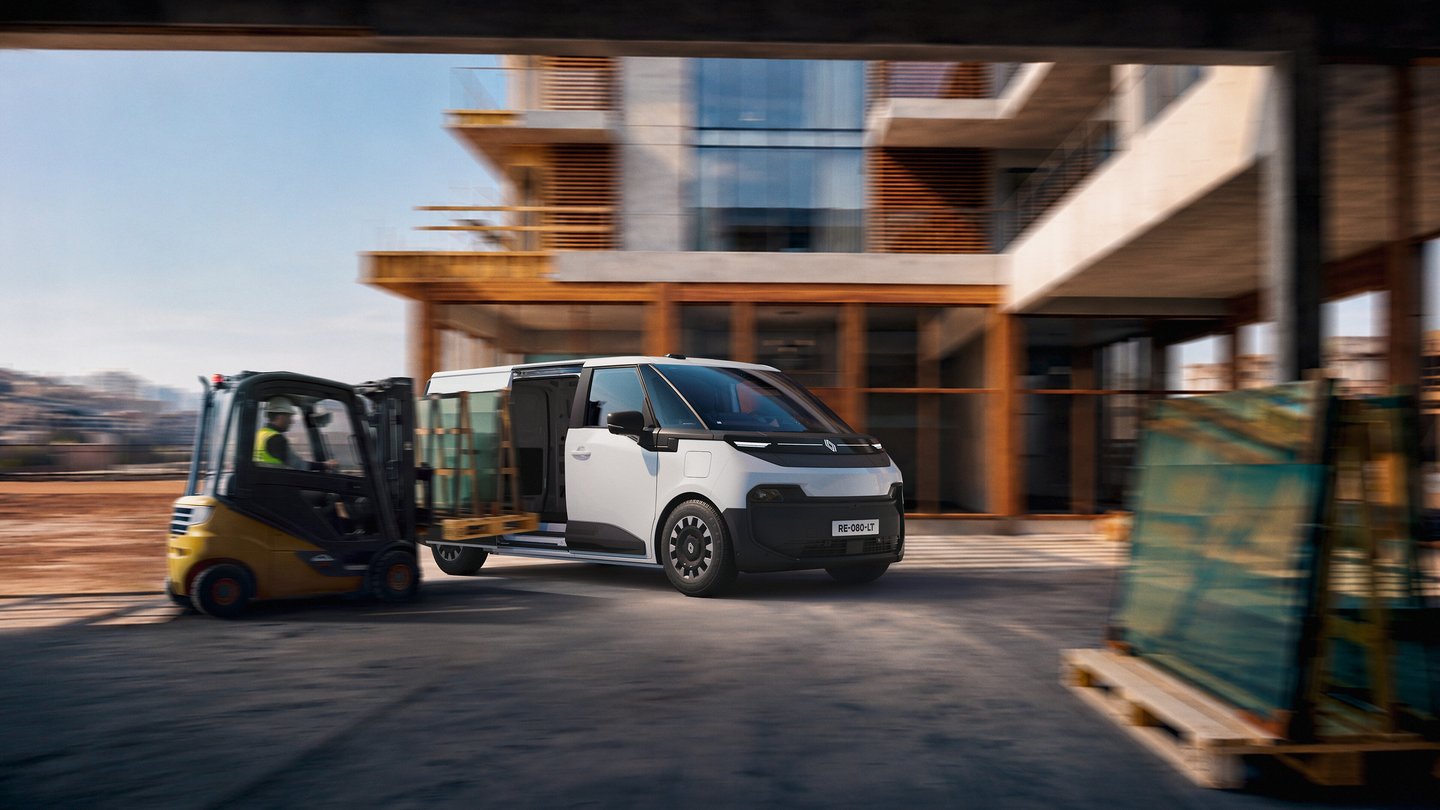
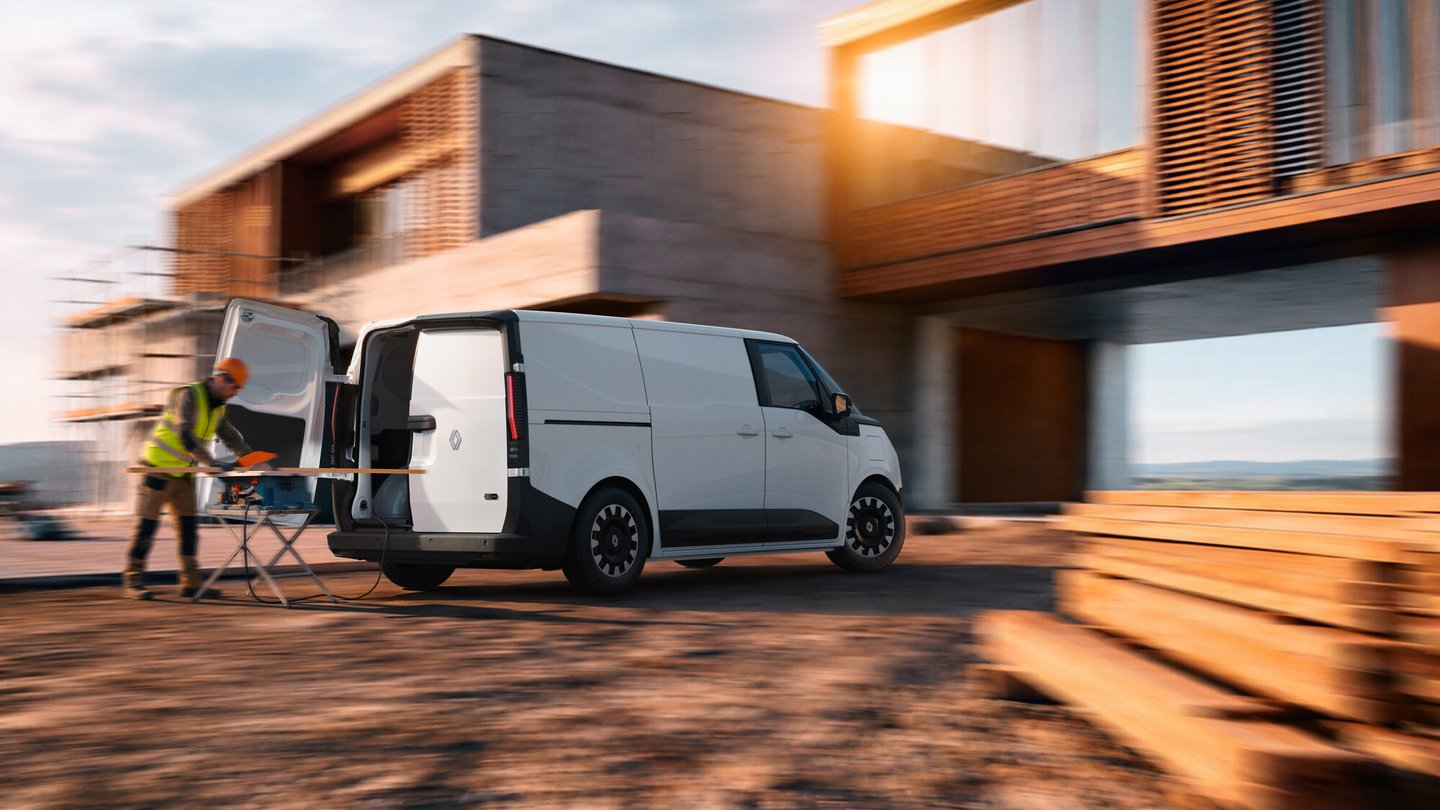
It’s a work van first. The black band across the nose, the flat sides and the near-vertical tail are drawn for pallets and parking garages, not for show, and the van stands 1.89 meters tall so it still fits under standard parking decks. It goes on sale in Europe first.
Drawn around the load, not around the engine
Renault designed the body around the cargo instead of around an engine bay, and the numbers show it in the load figures the company publishes for the two body lengths. The shorter L1 runs 4.87 meters long and swallows 5.1 cubic meters, while the L2 stretches to 5.27 meters and 5.8 cubic meters, with 1.30 meters of clear width between the wheel arches. The upright tail and flat flanks keep the load bay a clean rectangle.
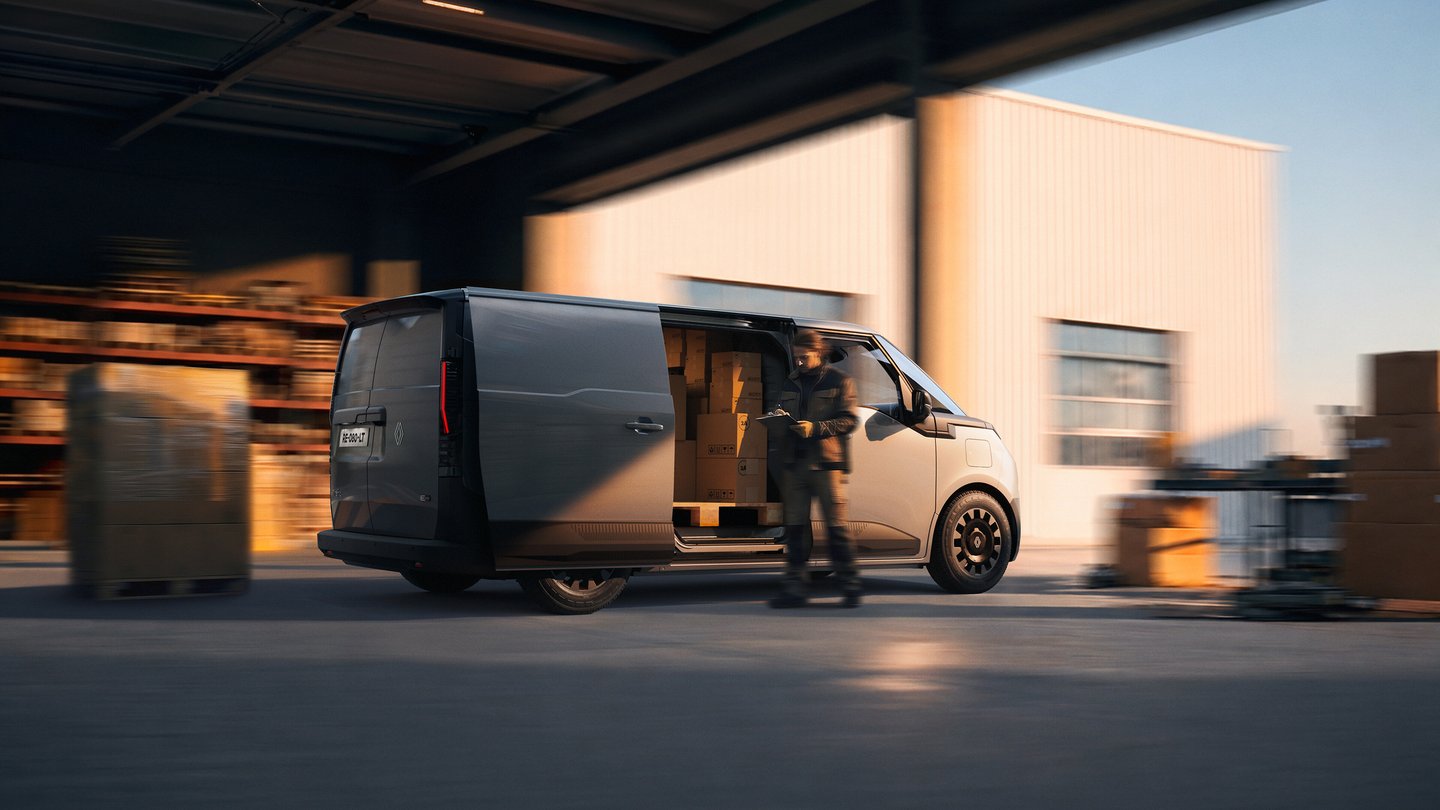
Three Euro pallets fit through the doors. The load floor sits 53 cm off the ground, payload runs to 1.3 tonnes (2,866 lb) on the panel van and chassis versions, and the van tows 2 tonnes behind it.
Renault builds the van at Sandouville in France, and the aero work shows in a 6 percent improvement in drag efficiency over the shape it replaces, which is real range on a highway run.
800 volts shorten the working day
Buyers pick between a 60 kWh battery and an 81 kWh pack, and Renault rates the pair at 217 miles and 292 miles on the WLTP cycle, with the long-range van stretching to 428 miles in city driving. Final homologation is still pending on those figures.
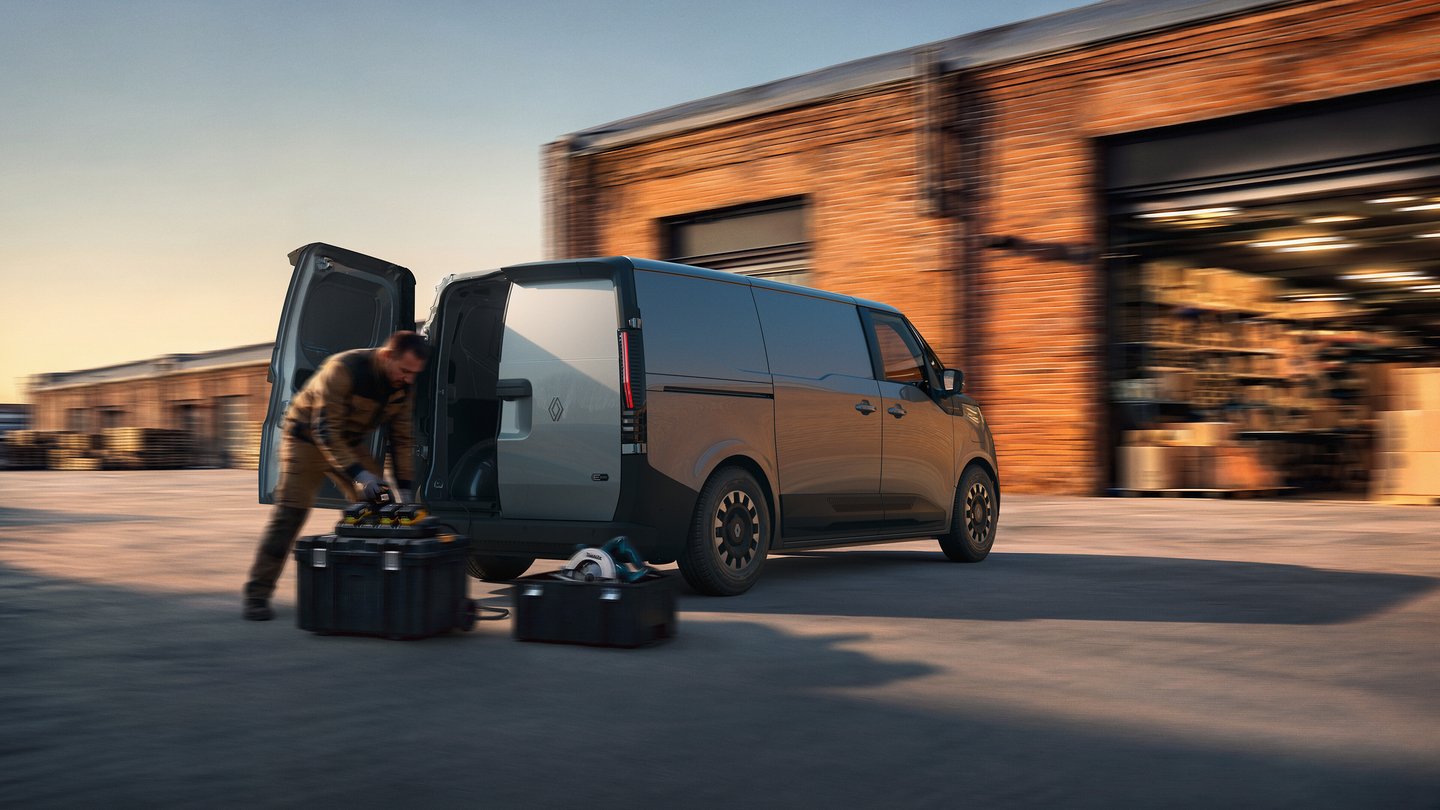
The 800-volt system shows its value at the charger, since Renault rates the big battery at up to 190 kW on DC fast charging and the smaller pack at 160 kW. Renault’s own figure puts the 15-to-80-percent charge at about 20 minutes, worth up to 280 km of range, or 380 km in the city. The trade is plain: a smaller battery and a short stop, against a bigger pack that costs more up front.
A single 215 hp (160 kW) motor drives the rear wheels. Renault says the steering turns in 10.3 meters on the short van, level with a small city car, and the multi-link rear suspension keeps the ride settled under load.
The cab brief was passenger-car manners, with an ergonomic driving position, front and side visibility Renault calls out for tight streets, and the quiet that comes free with an electric drivetrain.
Software that keeps changing the van after delivery
The deeper change is electrical, because the Trafic E-Tech is the first Renault Group vehicle, and the first light commercial in Europe, built as a software-defined vehicle. Two supercomputers replace the 80 electronic control units a conventional van carries, and they run CAR OS, an Android-based system Renault developed in partnership with Google. Renault Trucks sells its own version of the same van.
Updates arrive over the air. Renault’s UPTIMIZE program, due in 2027, feeds real-time vehicle data into maintenance planning so fleets fix parts before they fail, and operators can build their own in-vehicle apps for the dashboard instead of bolting tablets to the windshield. Fleet managers see mileage, energy use and charging in the same feed.
Converters get their own door into the system through Convertor Companion, which folds conversion controls into the van’s openR link screen as dedicated apps. Vehicle-to-load comes standard too, and a socket in the load bay runs appliances straight off the main battery. For camper builders, that pairing changes the build: a flat floor, factory power from the traction battery and conversion controls on the main screen, with no second battery bank to engineer around.
The support network behind conversions runs to 300 certified body builders across Europe, and Renault plans an electric power take-off for heavy conversions such as refrigeration units, so the base van arrives ready for work its designers never planned for.
French pricing starts at about $49,000 for the 60 kWh van and about $55,500 for the 81 kWh, both before tax. The panel van reaches buyers by the end of 2026, and UK pre-orders are already open for deliveries in the second quarter of 2027. Renault doesn’t sell vehicles in the United States, so American fleets and camper builders watch this one from across the Atlantic. The van has already been named International Van of the Year 2027.
Panel van first, then chassis-cab and crew cab versions join in 2027.