The Original Cabin is the case that comes to mind when Rimowa comes up, 35 liters of anodized aluminum rolled into grooves the brand has cut since 1950. It rides on ball-bearing wheels with TSA-approved locks, at $1,550 in silver, black or titanium.
Aluminum carries the price and the weight

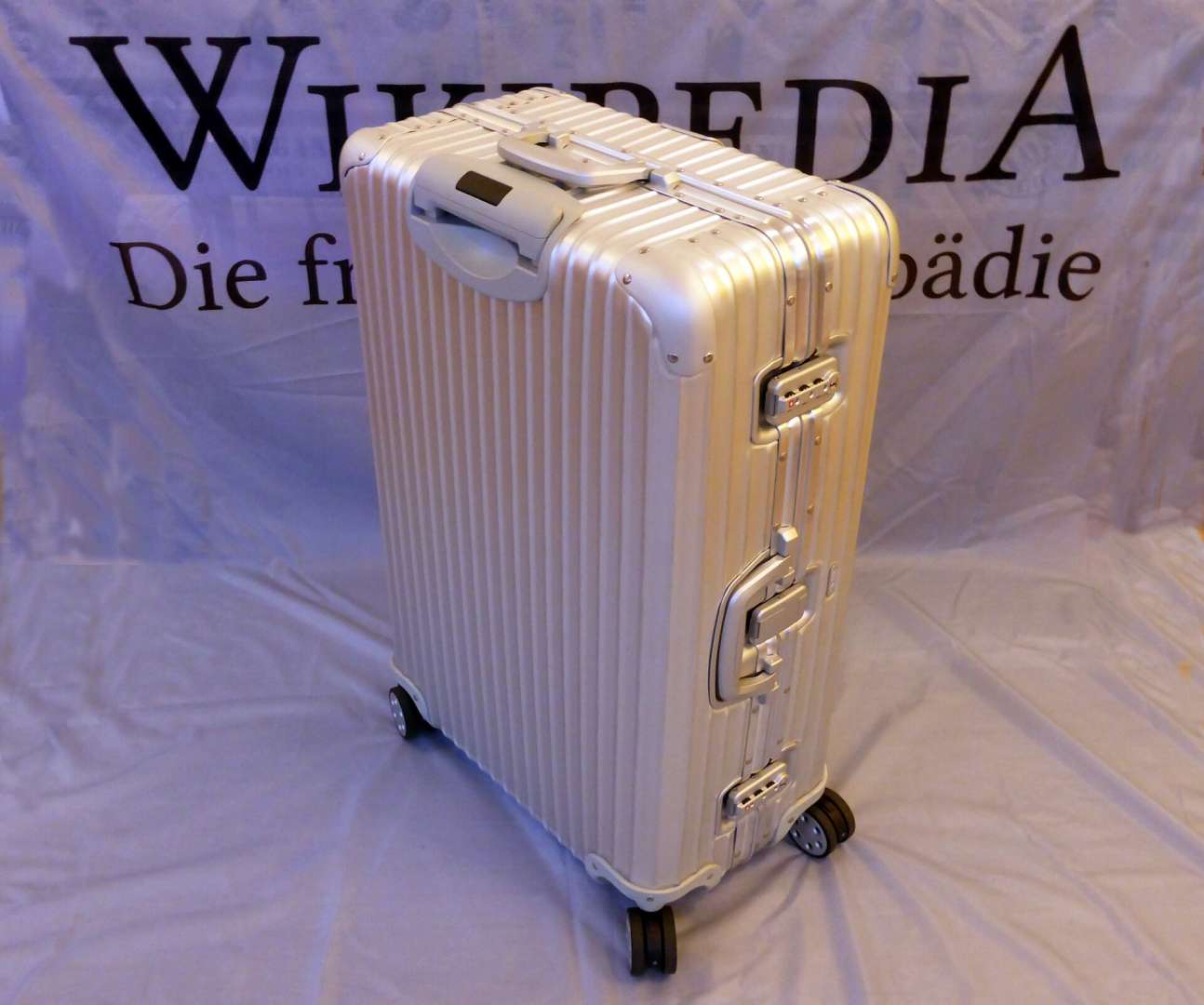
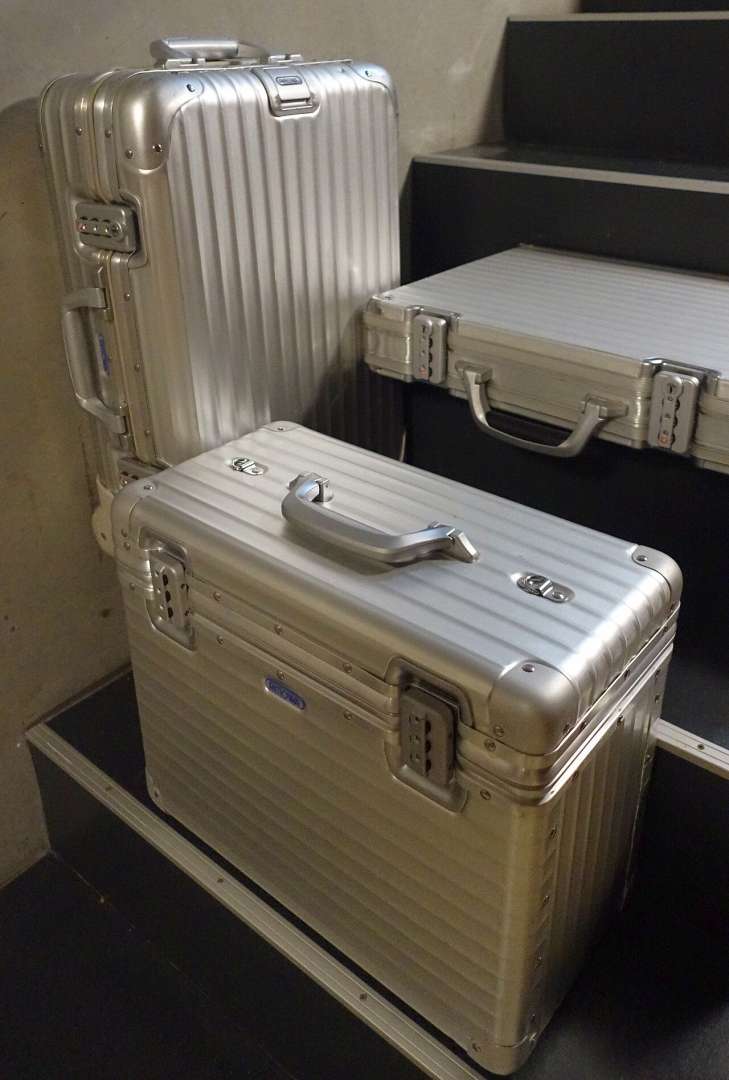
The metal costs real weight before a single shirt goes in, since the case weighs 4.3 kilograms empty against 3.2 kilograms for Rimowa’s polycarbonate Essential Cabin. The Essential also holds a liter more, at 36 liters, and sells for $990, which makes the Original’s $560 premium a payment for material and presence rather than space. Travelers feel that kilogram on stairs and overhead lifts. The shell answers with structure that shrugs off the dents a plastic case would crack under, and with a surface that records every trip instead of hiding it. The size ladder above it runs to the Check-In M at $1,800 and the Check-In L at $1,950, with the Original Trunk at $2,400, all in the same grooved aluminum.
At 21.7 by 15.8 by 9.1 inches, it also sits wider than the strictest US domestic sizers, which run 22 by 14 by 9 inches. International cabins take it without a second look, and those are the routes Rimowa builds for.
The grooves came off an airplane

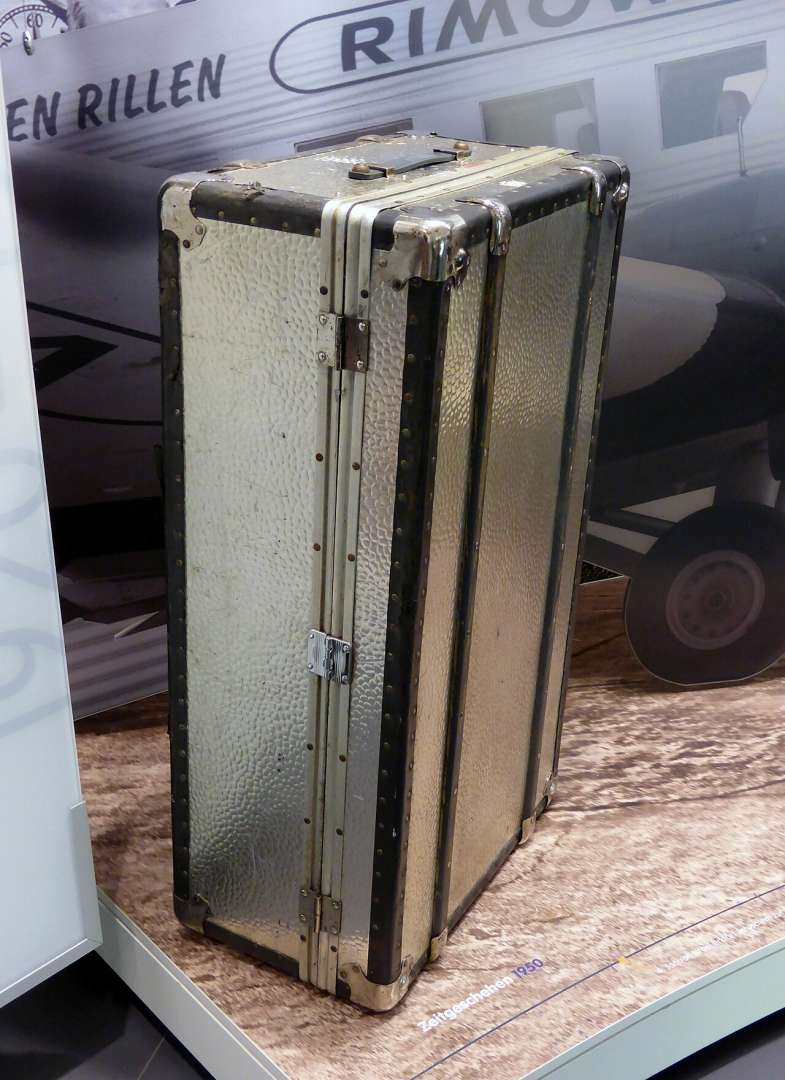
Rimowa started in Cologne in 1898 as a maker of wooden cases, then built the first aluminum trunk in 1937 after a factory fire left metal as the material that survived. The grooves arrived in 1950, borrowed from the corrugated skin of early all-metal aircraft, and they stiffen the thin aluminum sheet the way corrugation stiffens cardboard. A plain sheet would flex under load. The ridges keep the panels taut, so the case can stay thin, light for metal and still hard to crush at the corners where baggage belts do their worst work.
Inside, everything gets compressed flat

The interior runs on Rimowa’s Flex Divider system, a height-adjustable compression panel with zippered pockets that pins clothes against one side while the other side stays open for shoes and wash bags. The maker rates the case for three to four days of travel, and the 55 by 40 by 23 centimeter footprint keeps it inside most international cabin limits. The telescopic handle adjusts without fixed stages, the grab handle returns softly on a damper, and the Multiwheel rollers use cushioned axles so the case tracks straight over terminal tile. Nothing inside is exotic. The discipline is the feature, because a rigid shell gives away no extra centimeter when a traveler overpacks.
What a decade of trips does to it

Silver shows the patina fastest, while black hides it the longest. Titanium sits between the two, a warmer gray that darkens slowly and forgives more.
Aluminum dents, and Rimowa treats those dents as the product working as designed rather than as damage to apologize for. Frequent travelers read the accumulated marks as a patina, and the brand’s repair network exists to keep the functional parts, wheels, locks and handles, alive long after the shell has mapped a few hundred flights. The lifetime guarantee covers those functional elements for the life of the case, a term almost no luggage brand still offers at any price. Resale listings reward the same logic, since a used Original with travel dents still carries the silhouette buyers want.
The Original Cabin suits the traveler who flies weekly and wants one case for a decade, at $1,550 with the lifetime guarantee behind it. Anyone chasing the lightest possible cabin bag should take the Essential and keep the $560, because the aluminum charges for its character in weight on every single trip.