
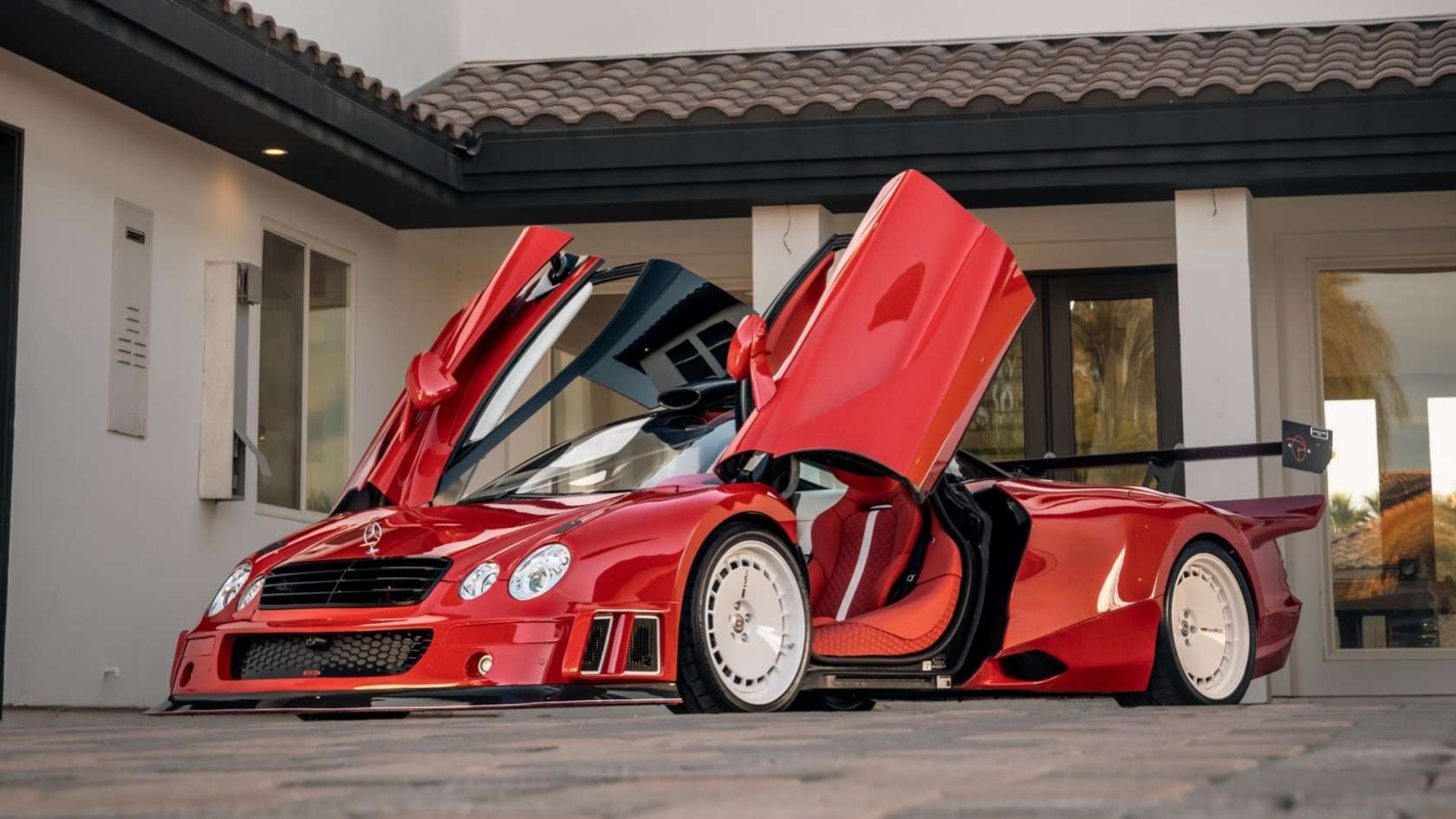
SEMA fills the Las Vegas Convention Center with thousands of modified cars every November, and most of them blur together by the second hall. A handful never do. The one-offs that stopped people this year share a trait that has nothing to do with power figures. Each one starts as a silhouette somebody could not let go of, and the engineering follows the shape.
A McLaren in a Mercedes suit. A Testarossa on six wheels. A Bugatti begun as a sketch. Kei cars shrunk into GT-Rs.
Game Over: a McLaren in a Mercedes suit

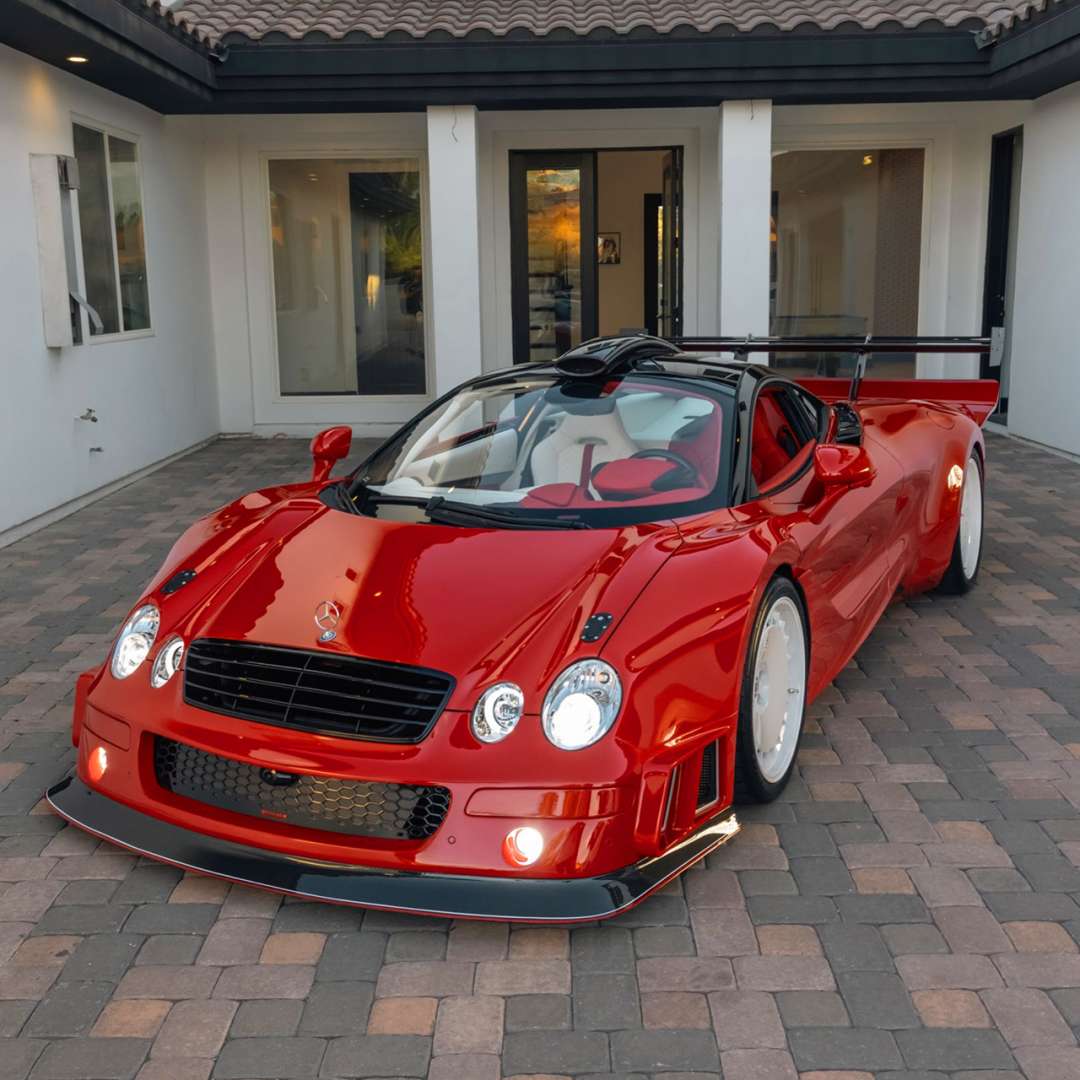
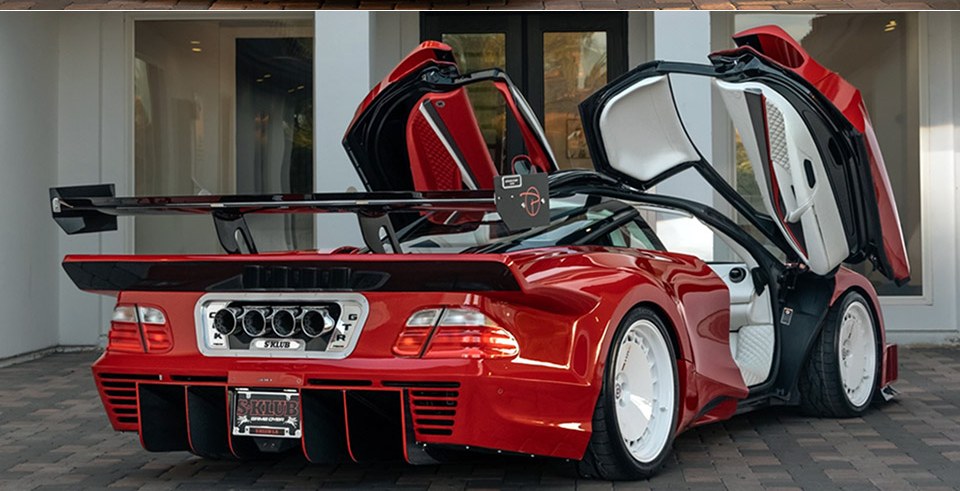
S Klub LA started with a new McLaren 750S and replaced nearly every exterior panel. What rolled onto the Toyo Tires display wears the long nose, the four round headlights and the roof scoop of the Mercedes CLK GTR. Mercedes built that racer in 128 days in 1997. The swan-neck rear wing is fixed carbon. Four exhaust tips exit through a panel lettered CLK GTR. White HRE wheels fill arches far wider than anything that leaves Woking.
Underneath, nothing changed, and that restraint is the discipline of the build. The 750S keeps its 4.0-liter twin-turbo V8, 740 horsepower, carbon tub and doors that swing up, all untouched by the conversion work. S Klub spent everything on the surface, which is the right way to read this car: a body, tailored over a modern chassis that already works perfectly well as is.
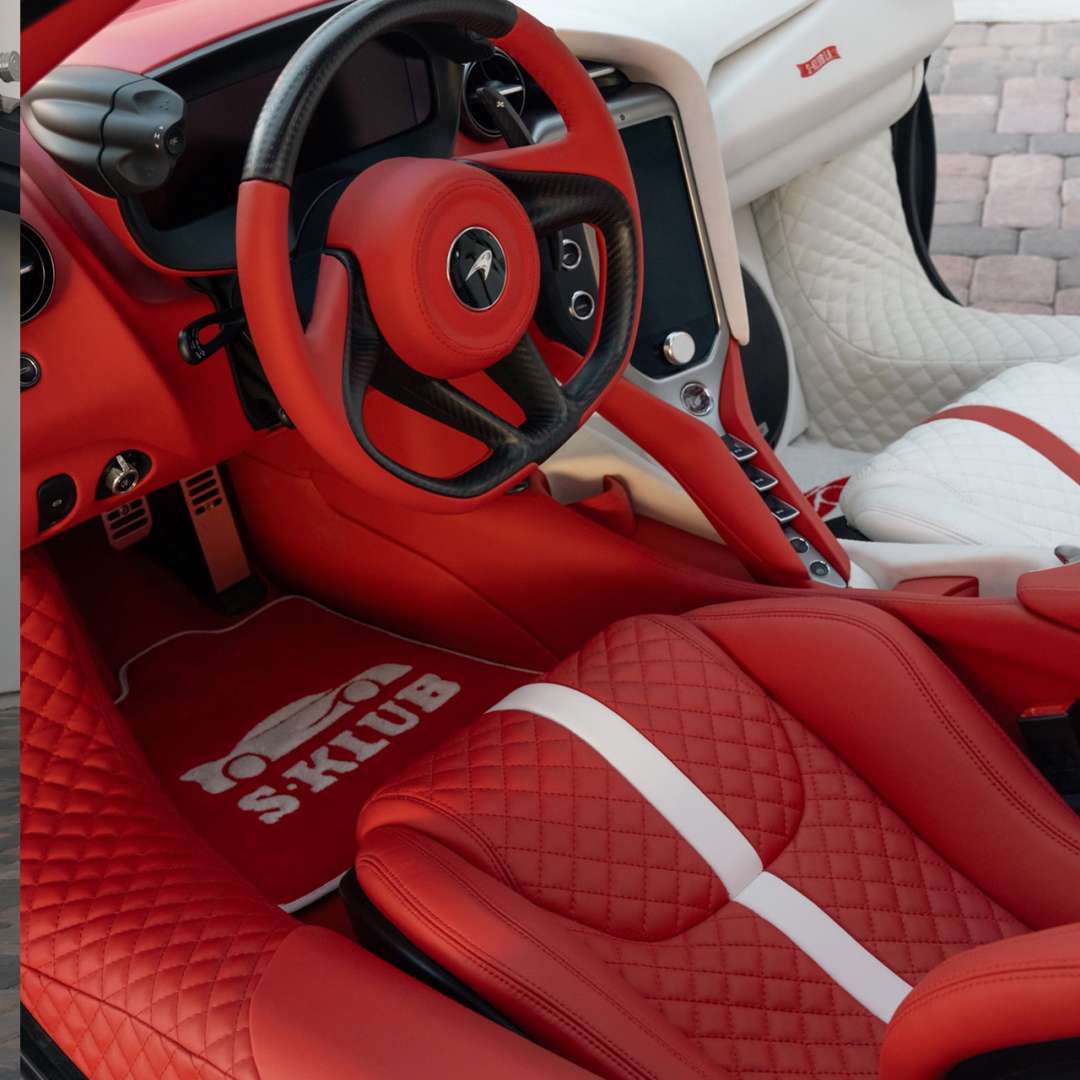
The cabin follows the same split personality, and it is where the coachbuilding argument lands. The driver’s side is quilted red leather, seat, door card and steering wheel trim. The passenger side is quilted white with red striping, and the digital dash behind the wheel is pure McLaren. Mercedes never trimmed a CLK GTR like this, because the original was a race car with license plates, all noise and bare carbon and no upholstery budget at all.
The F6 stretches a Testarossa over six wheels

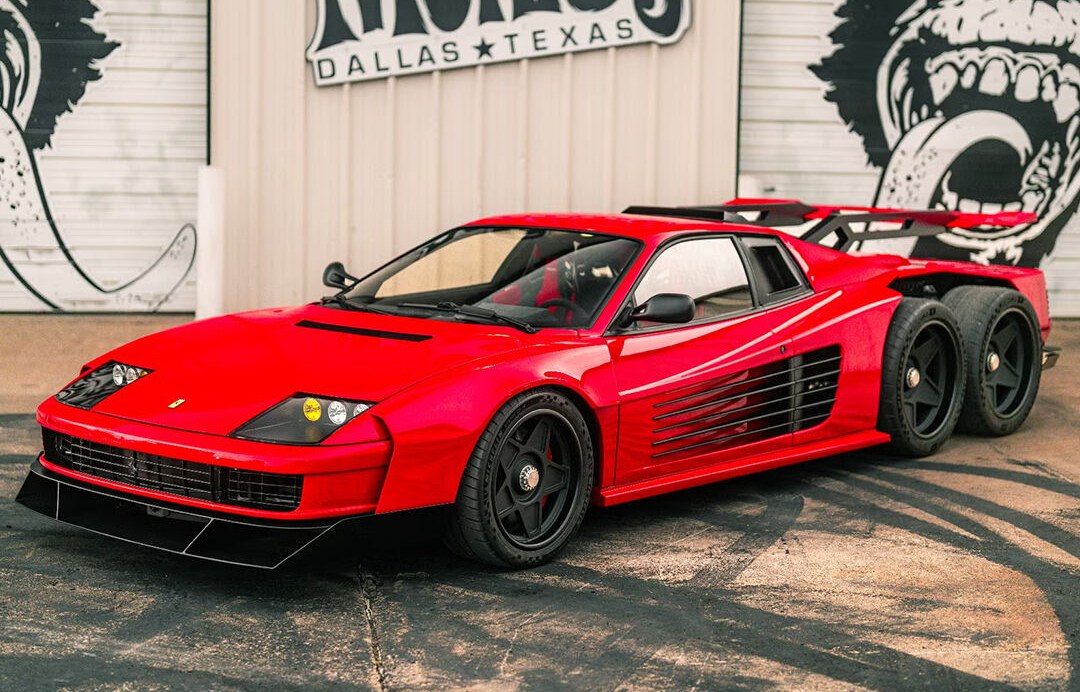
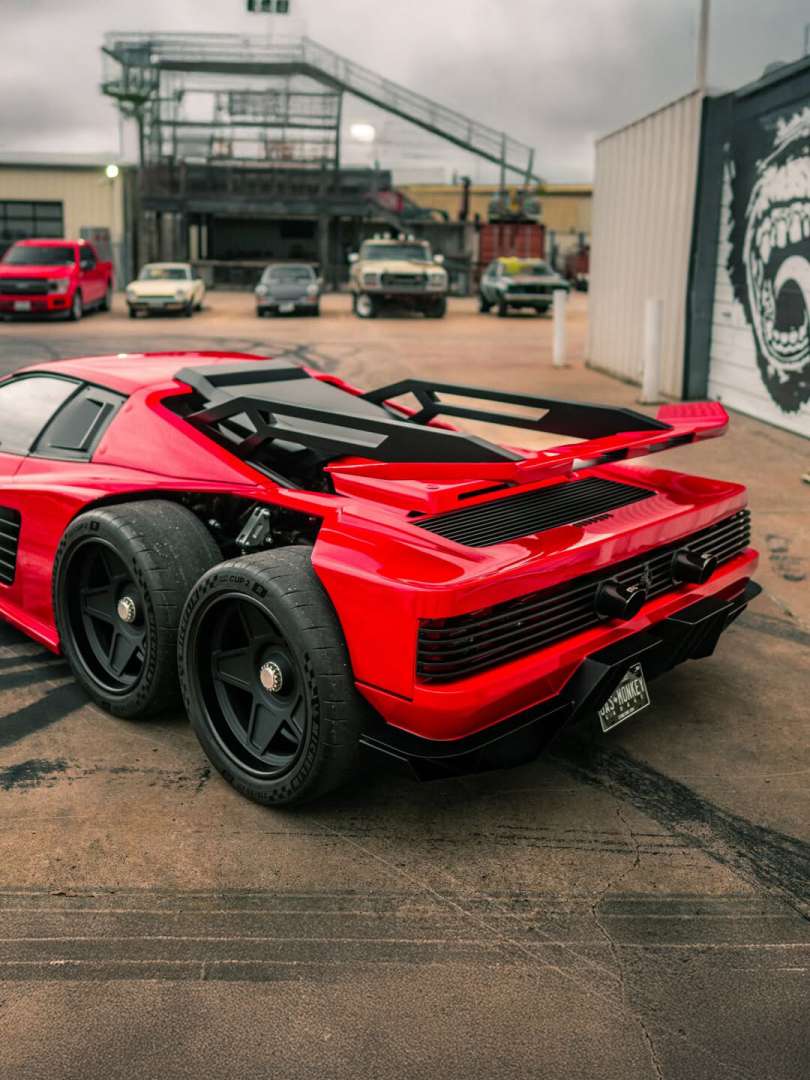
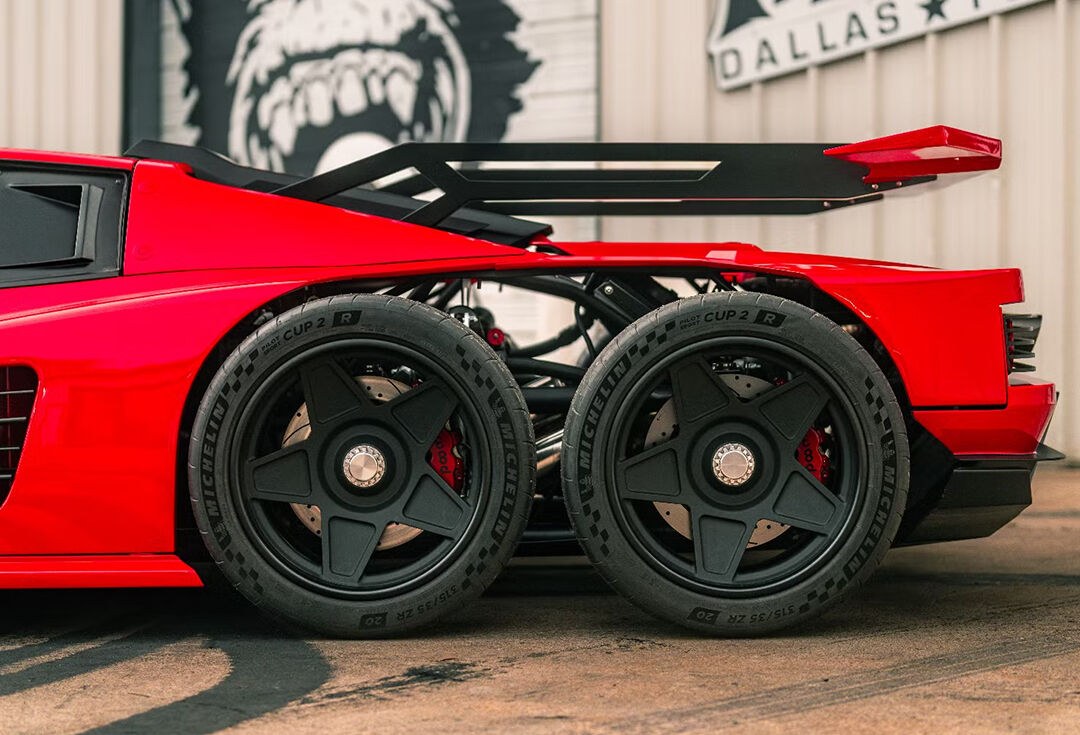
Gas Monkey Garage’s F6 began as a French project, and it shows the scars. Danton Arts Kustoms started the car, the relationship collapsed, and Richard Rawlings’s crew hauled the pieces to Dallas and rebuilt the thing themselves. The body grew roughly three feet to fit a second rear axle. The front pair of wheels only rolls. Drive goes to the four at the back, from a supercharged Katech LT4 rated at 1,200 horsepower.

None of that is the point. The point is proportion, nothing else. Stretching a Testarossa turns a famous silhouette into a genuine question.

A rendering made real: Jon Sibal’s EB110

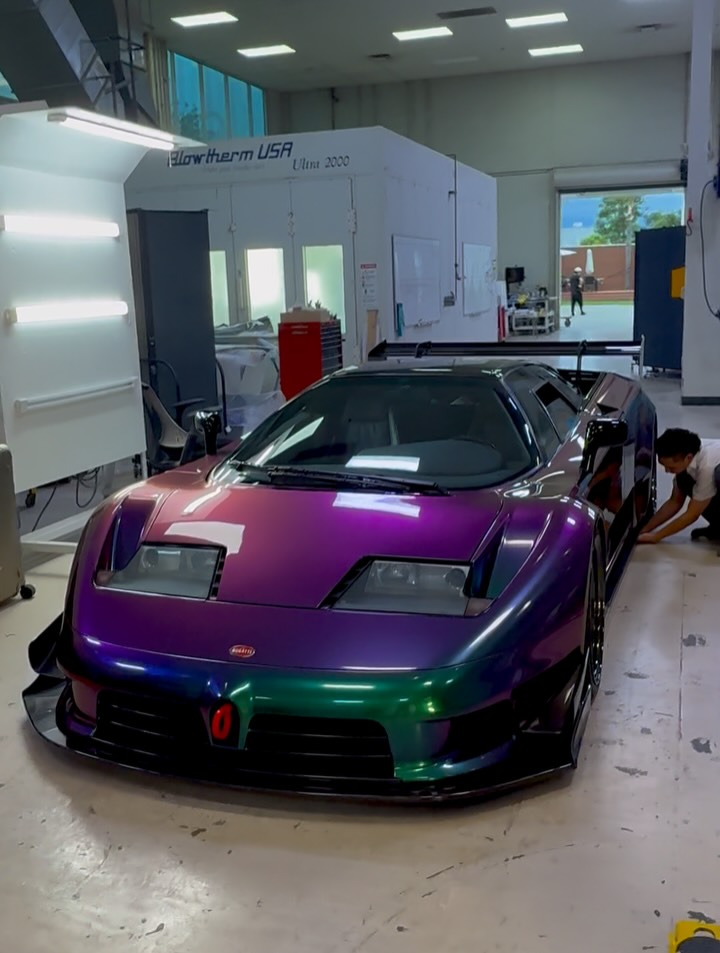
Jon Sibal drew his EB110 in 2020. It was a widebody study, posted for fun. Collector Greg Park saw the render and commissioned the real car himself. Phiaro Bespoke built it around chassis GT047, an EB110 GT. It sat on the Toyo Tires stand in a finish that runs purple to teal as the light moves, chosen with Gyeon and the Coto Collection.
The widebody gives the EB110 the stance the original car never had. Artioli’s wedge was narrow and upright, shaped by its quad-turbo packaging. Sibal’s version spreads the car over MV Forged wheels and lets the surfacing do the talking. The render and the car sit side by side in his post, and the metal matches the file line for line. The V12 underneath stays, because the exercise was never about speed.
Pocket Bunny shrinks the GT-R
TRA Kyoto’s Pocket Bunny starts with the Suzuki Twin, a kei car sold only in Japan from 2003 to 2005. Miura’s kit replaces every panel except the doors and roof with fiberglass. Two conversions exist, R32 and R34. Four cars made SEMA, two at Central Hall’s main entrance and two in the Inozetek booth.
The Inozetek pair carries the wildest hardware. Pandem built an R34-look car around a Nissan SR20DET rated at 350 horsepower, plus an R32-look car with a 400-horsepower 13B rotary. Every GT-R cue survives the shrink: the round taillights, the wing, the blunt nose, all drawn at two-thirds size. Miura draws them the way a cartoonist draws a hero car, each cue exaggerated enough to read at half scale.
Editor’s take
Coachbuilding used to mean a chassis shipped to a carrozzeria and a body drawn by hand around one customer’s exact taste. SEMA is where that trade lives now, at show-car scale and show-car speed. Sibal’s Bugatti started as a file on a screen. S Klub’s Mercedes started as a memory of a poster. Both ended as metal, paint and stitching with one shop’s name signed on it.
That’s the through line of this year’s floor. The loudest cars there weren’t chasing a lap time. Every one of them was drawn before it was built.
They were chasing a shape. It is what people photograph. It is what they argue about driving home.