
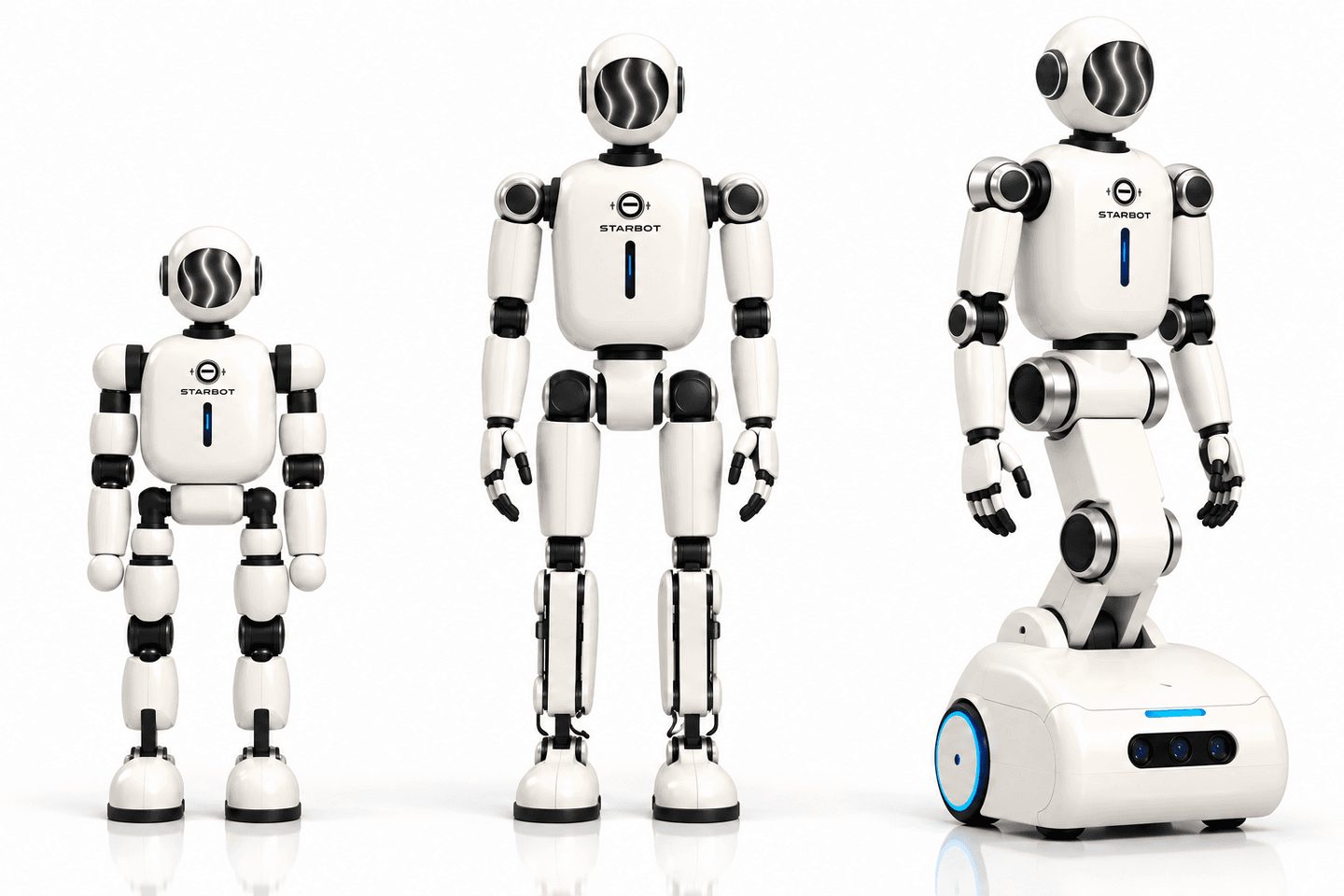
StarBot’s Spark is a 90-centimeter humanoid robot with 22 degrees of freedom, built in the United States and priced from $7,999 for families, schools and developers. It’s a platform, not an appliance. Reservations opened at $200 per unit, applied toward the final price.
Ninety centimeters, 35 pounds, and sized for a classroom
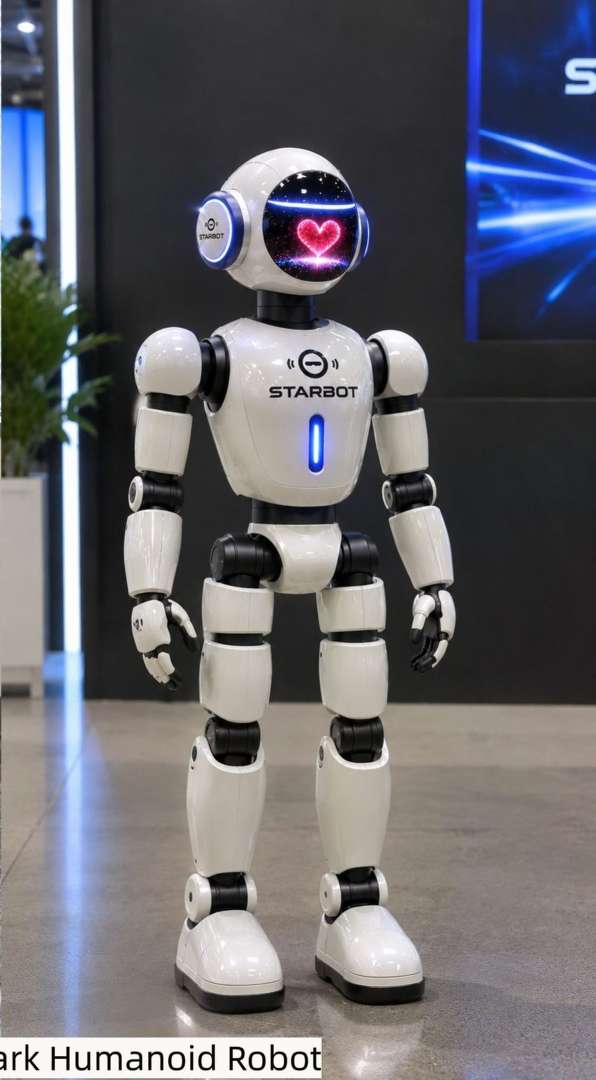
Spark stands about three feet tall and weighs 35 pounds, so a teacher can carry it into a room, set it down, and let students work around it. That’s classroom scale, not lab scale. The 24-volt battery runs for up to three hours on a charge, and StarBot puts the recharge time at roughly 40 minutes, which fits a school day built around sessions rather than continuous use.

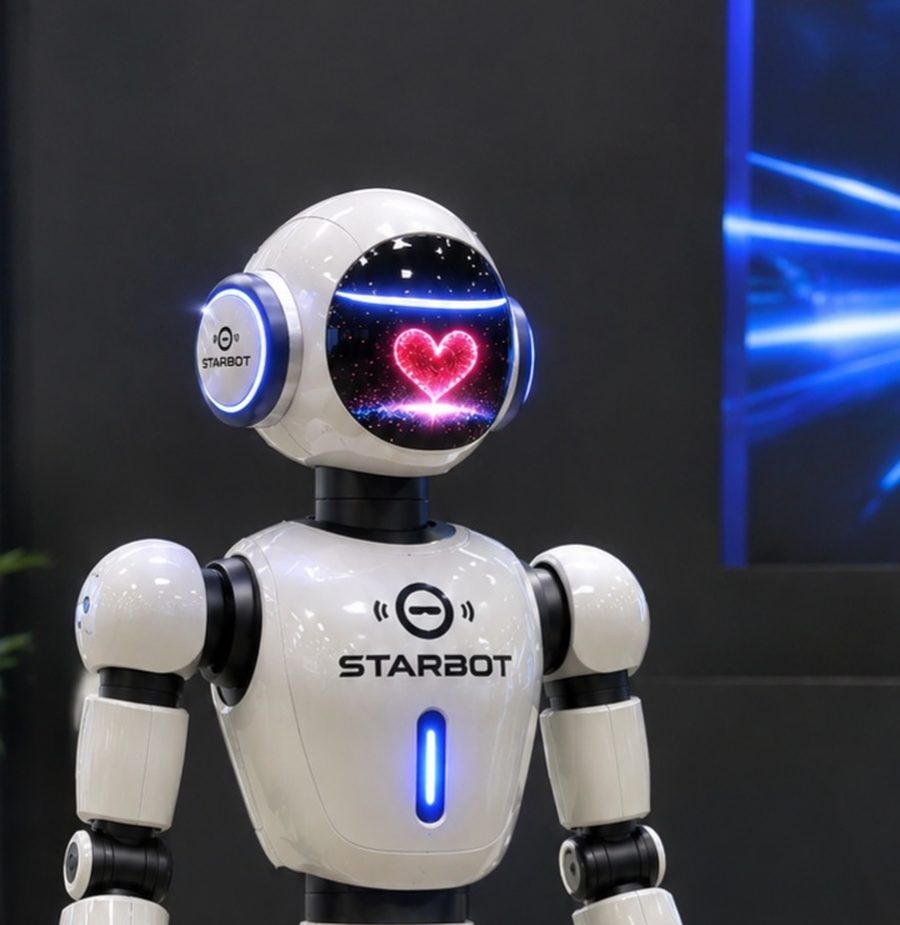
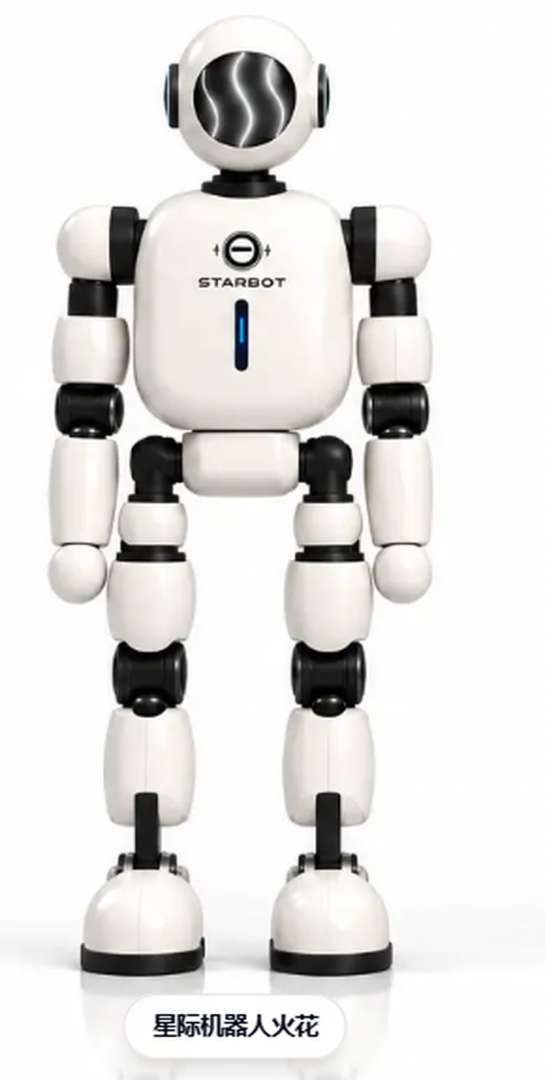
The body comes in multiple colors, and the proportions stay deliberately friendly, with a rounded head, a lit face, and ball-tipped hands that read as approachable across a room. StarBot pitches that shape at child companionship and youth robotics education first, because a machine that children will stand next to can’t look like industrial equipment borrowed from a factory floor.
Size does quiet work here, since a 90-centimeter robot meets a child at eye level instead of towering over a desk or shrinking into a tabletop toy. It looks like a person-shaped machine. Students can gather around it in a semicircle, watch the joints move through a routine, and connect the code on a screen to a body standing in front of them.
The platform is the product being sold
StarBot calls Spark an open-development platform, and the company’s own page frames the work as robotics education, programming practice, AI projects, and supervised research exploration for younger learners. A sealed toy can’t do that job. Developers get a physical humanoid to build on, schools get a machine students can program rather than just watch, and families get a robot that can grow past its first trick.

The tradeoff sits right there, though, and it’s the only one that counts here: buyers reserve a platform whose final configuration, included capabilities, and delivery timing StarBot confirms only before the order is finalized. In return, they get in at $7,999 for a US-built humanoid, a price band that research machines have never visited, and the first 100 confirmed orders start at $5,999.
That openness cuts both ways for a classroom, because a programmable robot rewards a teacher with a plan and sits idle beside a teacher without one. The hardware invites building. Schools that treat Spark as a course, with projects, teams, and time on the schedule, will pull far more from those 22 degrees of freedom than a school that parks it in a display corner.
Spark sits at the start of a three-platform range, under the five-foot Astra research humanoid at $9,999 and beside the wheeled Flex, a five-foot-nine service platform built for real-world work. Astra carries 23 degrees of freedom. The ladder is clear: Spark teaches and invites experimentation, Astra serves universities and research teams, and Flex folds down for restaurants, hospitality, and retail floors that need a working machine.
Keeping Spark at the bottom of that ladder is a deliberate piece of product design, because the company needs an entry machine that a school budget can survive. One robot leads to the next, and a student who learns movement and programming on Spark meets Astra’s research questions later with the basics already in hand, while StarBot keeps that customer inside its own range the whole way up.
Nova already works a dining room
Spark isn’t the company’s first machine in public, because StarBot’s Nova service robot went into restaurant work in early 2026 and has served more than 20,000 people in commercial settings since. Nova greets guests, takes orders, serves food, and handles checkout, with an itemized bill shown on a 7-inch flexible LED screen and payment taken at the robot’s head. It’ll sing for a birthday cake, too.

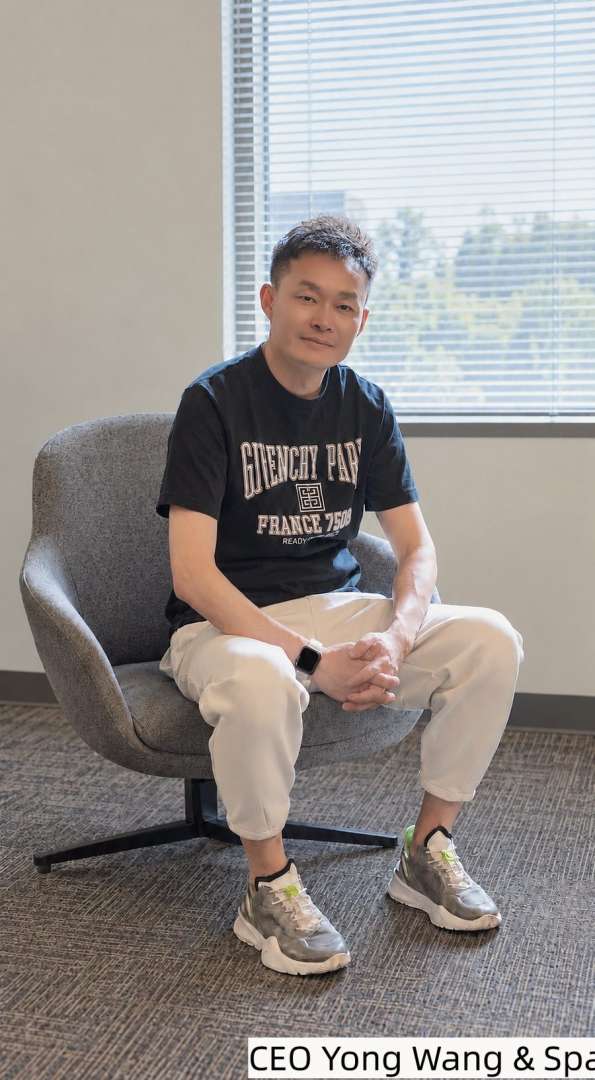
That service record is the credibility under Spark’s price, since a company that keeps a robot running through dinner service learns lessons a prototype shop never meets. StarBot emerged from the University of California, Santa Barbara’s incubation ecosystem. Founder and CEO Yong Wang set the goal plainly: build robots that ordinary people can afford.
Restaurant work is unforgiving in useful ways, because a service robot faces spilled drinks, shifting crowds, impatient guests, and a floor plan that changes between lunch and dinner service. Spark inherits that education. A machine family raised on paying customers arrives in a classroom with its rough edges already found. That’s a stronger start than a launch video and a spec sheet.
Who should reserve one, and who should wait
The deposit is $200 per unit and counts toward the balance, with taxes, shipping, delivery timing, and support terms quoted separately before anything is finalized. Schools and research programs can request a project quotation instead, which suits a lab buying several machines for one course. The deposit is small. The commitment stays small, too, until StarBot confirms the configuration in writing and the buyer sees exactly what the balance buys.

Buy a reservation if you’re a school, a developer, or a family that wants to program a humanoid rather than watch one perform the same routine every day. Skip it if you want a finished home companion today, because Spark’s promise is the platform, and the platform asks its owners to build. At $7,999, Spark is priced like a used car, and it should be judged like one: on what it lets its owner do next, in a classroom, a lab, or a living room, over the years ahead.