
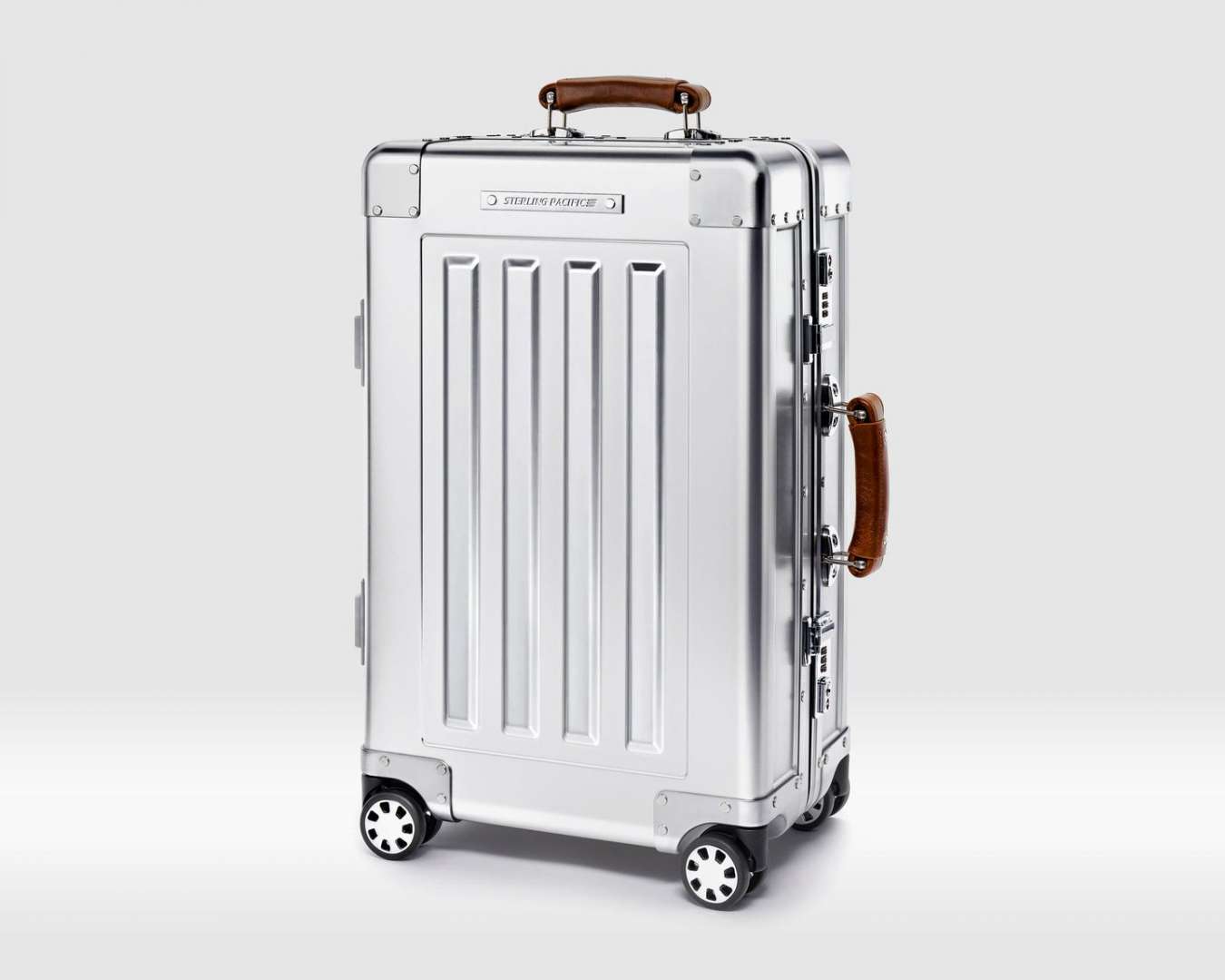
Sterling Pacific builds its 40L Cabin Travel Case the way airframes get built, from riveted aluminum sheet, stainless hardware and full-grain leather, and then it warrants the result for the whole of its life. It’s the carry-on as a permanent object.
The case measures 22.5 by 14 by 9 inches, holds 40 liters and weighs 12.0 pounds, which puts it at the serious end of the cabin class and the top of the price list. Nothing about it is disposable. Silver and black are the two finishes, and both wear their dents as a record of where they’ve been, and neither one tries to hide it.

An airframe you can carry on
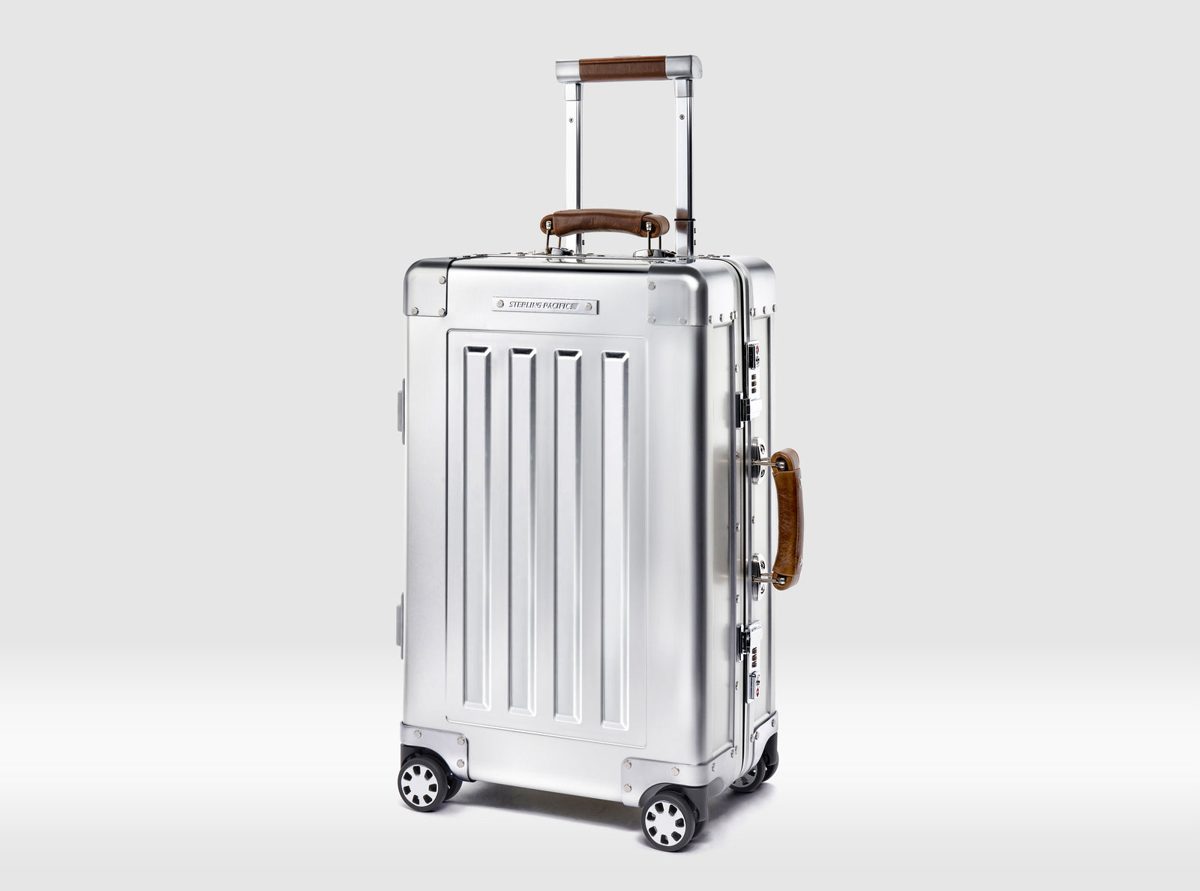
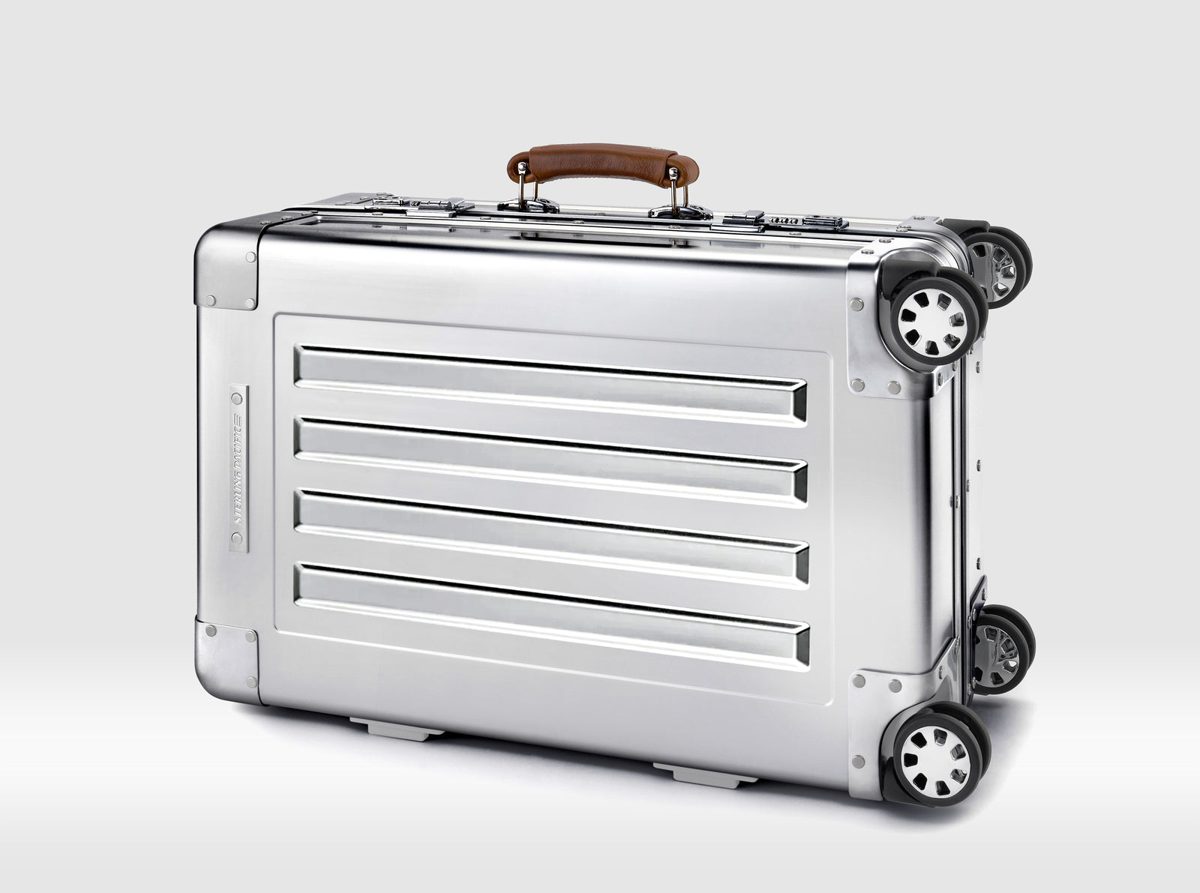
The body starts as customized 5000-series aluminum sheet, just 0.9 mm thick, pressed with ridges that carry impact the way corrugation stiffens a wing skin on a fuselage panel. The corners step up to 1.5 mm 5052 aluminum, reinforced where bags actually meet the world, at the corners where drops land.
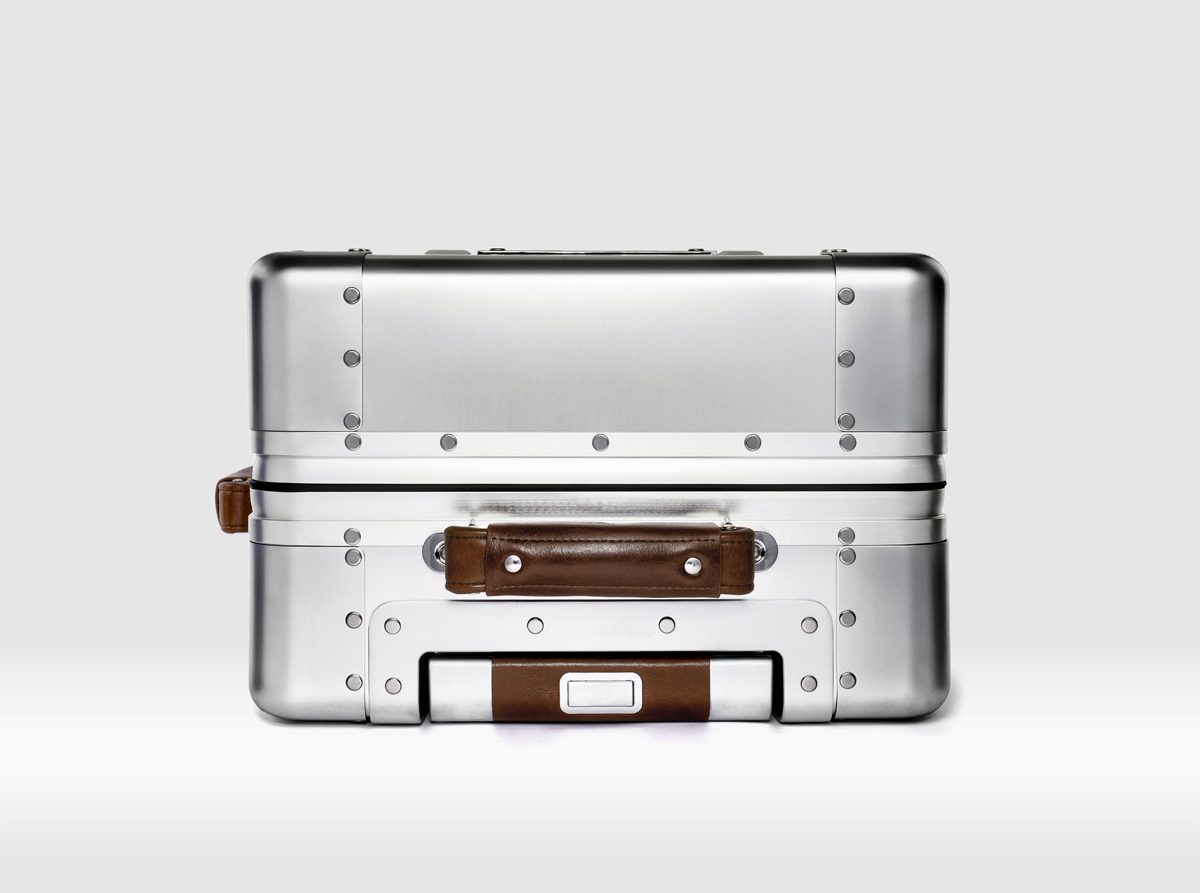
SAE 304 stainless steel rivets run throughout the shell, more than a hundred of them, each one set to hold the panels in permanent tension, the way a drum holds its skin. An extruded 6063 aluminum frame ties the structure together. There’s no zipper to burst and no fabric to tear, because the case closes on its frame like a road case built for instruments that tour.

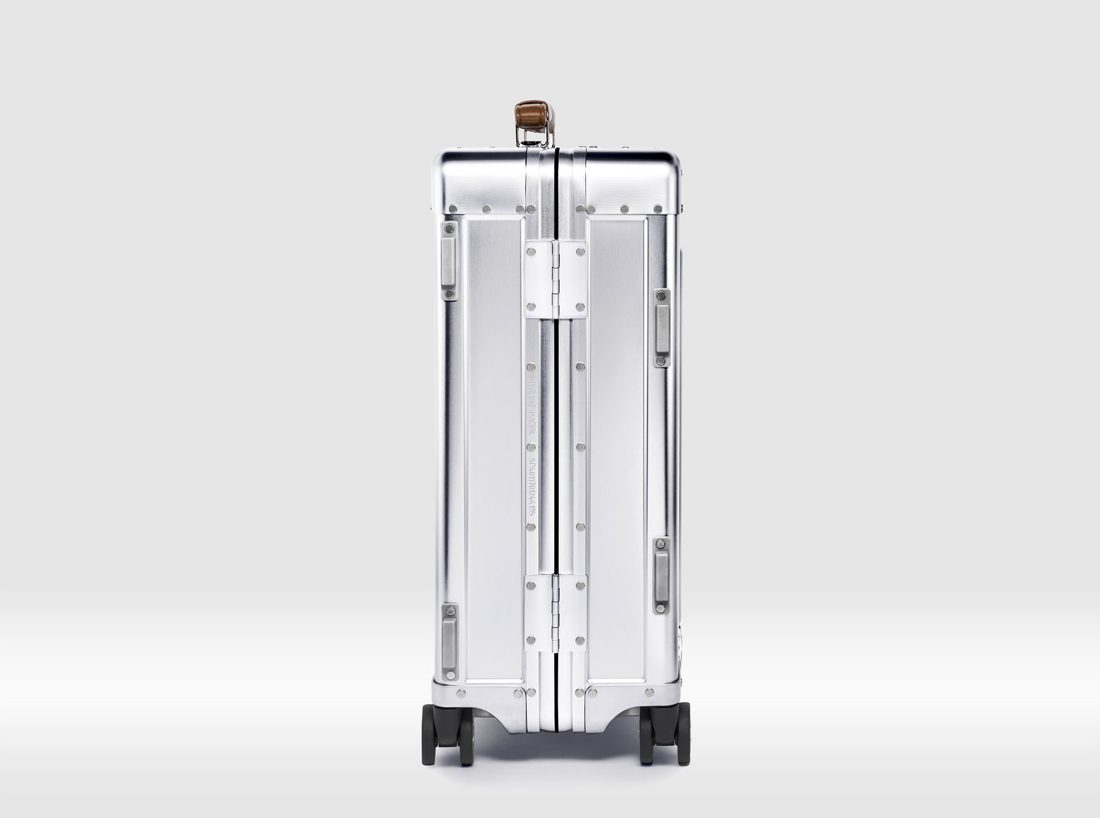
The pressed ridges do quiet structural work, spreading a knock across the panel instead of letting it concentrate in one soft spot that becomes a crease, then a crack, then a claim. They also give the silver shell its signature, a fluted face that catches light in stripes.
Fluting runs vertically on the face and horizontally along the sides, so the shell reads differently from every angle. It photographs like luggage and behaves like equipment. That double life is the whole design brief, stated in metal rather than in a press release.
Hardware that treats the airport as a work site
A380 aluminum forms the trolley housing and the wheel housings, and the retractable trolley itself is aluminum rather than the usual plastic compromise that bends, rattles and eventually gives up. Four spinner wheels turn a full 360 degrees. The case rolls beside you through the terminal at walking pace, upright and unbothered by carpet, tile or the expansion joints at the gate, and it tracks straight without the wrist fight that two-wheel cases demand.

Two TSA combination latches lock the frame shut, so the case opens with a click at security and closes with the same finality at the hotel, with no zipper to coax and no fabric flap to tuck. The handles are Italian full-grain leather, top and side, and they’re the warmest thing on the case.
That leather will darken with handling, and the aluminum will map every hard trip in shallow dents. Sterling Pacific counts that as patina. The warranty treats it as a service record rather than damage.
Forty liters, packed like you mean it
Forty liters is the right size for a week of disciplined packing, two pairs of shoes, a blazer that survives the fold and a wash kit with room to spare for the things you pick up along the way. The 12.0-pound starting weight asks you to pack with intent.
The four-wheel layout followed the maker’s two-wheel 35L original, trading the drag-behind stance for an upright roll that suits crowded terminals and tight aircraft aisles. It fits the sizer and the overhead bin it was drawn for. At $2,150, it costs what several lesser cases cost in sequence, which is the comparison the maker wants.
Flight crews and constant travelers are the natural audience, people whose luggage works as many days a year as they do, in the air four days a week. For them, a case is equipment, and equipment gets specified, not styled.
The size was drawn for the bin, the silhouette for the long term and the structure for the baggage system’s worst days, with the hardware drawn for all of them at once. It asks a lot of its owner and gives a lot back. The math runs in its favor.
The last carry-on you’ll ever buy
The lifetime warranty comes with a repair service behind it, so a tired wheel or a bent latch goes back to the maker instead of sending the whole case to landfill at the first failure. That promise, kept by a repair bench rather than a replacement cycle, is the design’s final panel.
Most luggage is sold as a season, a color or a collaboration, and it’s priced to be replaced when the zipper gives up, the wheel snaps or the shell cracks at the corner. This one is sold as a service life. Buy it once, rivets and all, and let the dents keep the diary of everywhere it takes you, from the first departure onward.

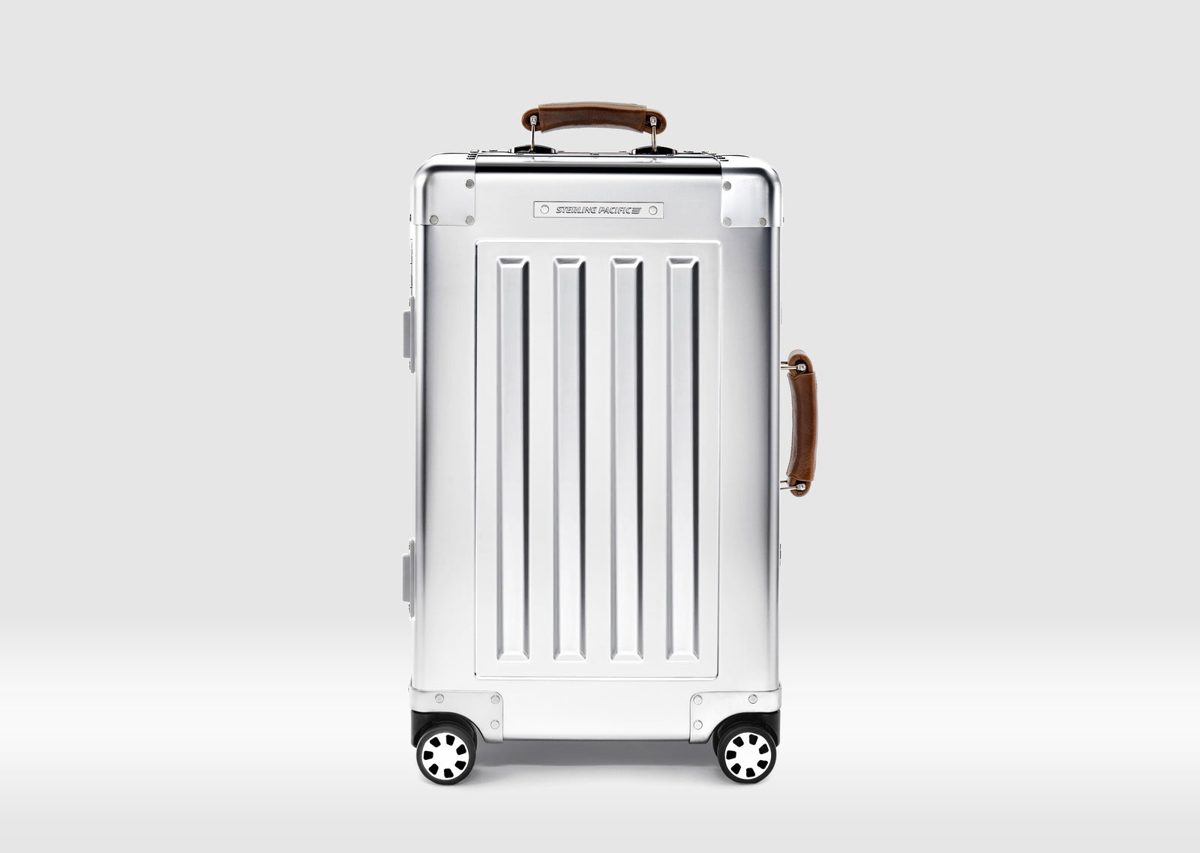
The 40L Cabin Travel Case is on Amazon at $2,150, in silver or black finishes, ready for the next decade of departures, reunions, red-eyes and the occasional sprint across a terminal. Few objects at the gate can say the same.