
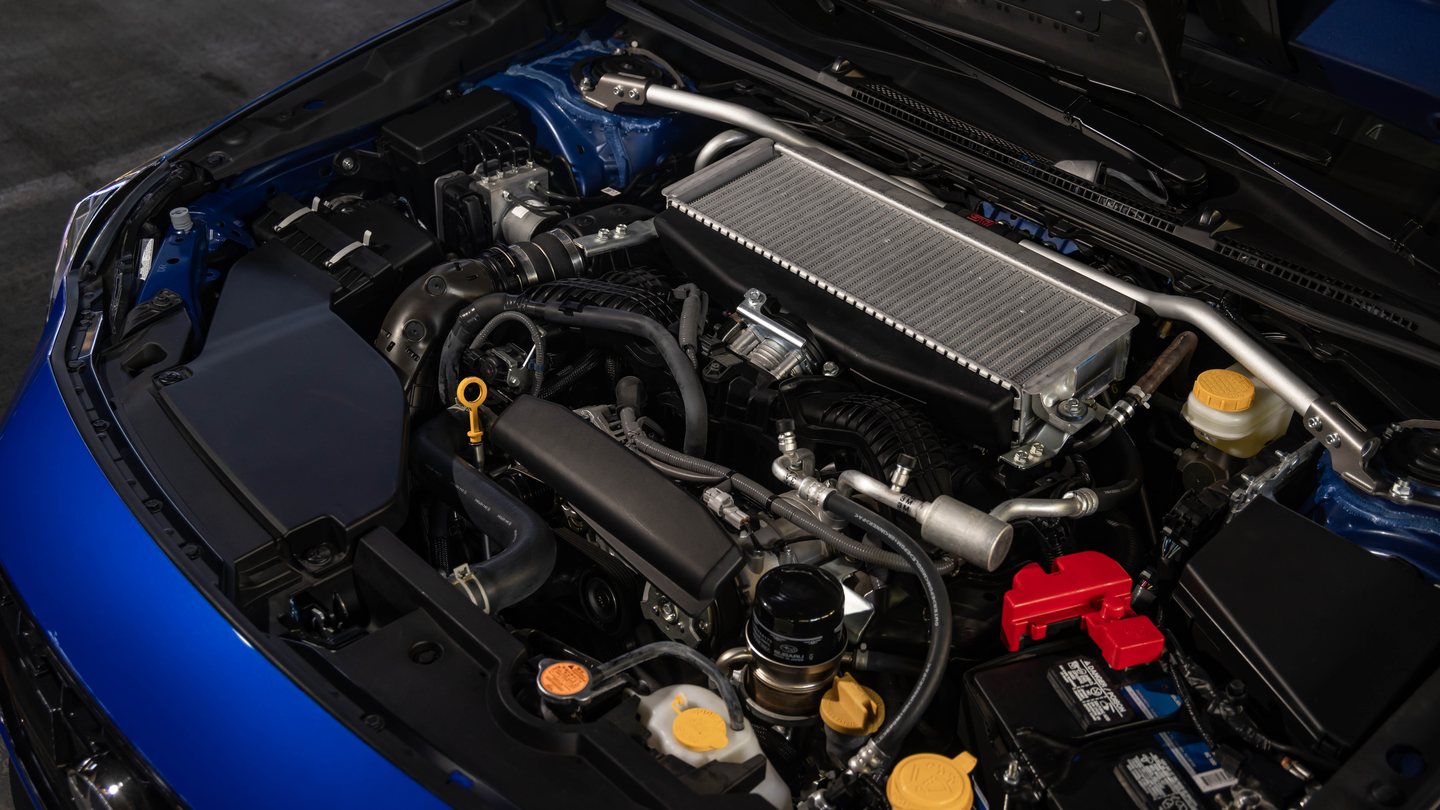
Subaru’s boxer engine sits low and wide in the nose, its pistons punching sideways in pairs. That flat shape defines every car the company sells, and Subaru’s engineers have now set it a hard new target.
The goal is 50 percent thermal efficiency, a figure Subaru describes as the practical ceiling for a gasoline engine, and reaching it means reworking how air moves through the cylinders and how the fuel charge burns.
A flat engine with a packaging problem

Most high-efficiency gasoline engines use a long piston stroke to cut heat loss, but a boxer can’t follow that path because each added millimeter of stroke widens an engine that’s already broad across the bay.
Subaru’s answer keeps the short stroke and attacks airflow instead, with straighter and narrower intake ports that accelerate the incoming charge and build a more uniform mixture that burns cleaner at leaner settings.
Opposed pistons cancel each other’s primary vibration, so the engine runs without heavy balance shafts, its low height drops the car’s center of gravity, and that balance pairs the layout with symmetrical all-wheel drive.
Width is the tax Subaru keeps paying.
Combustion, mapped in three dimensions
Engineers now track flame propagation inside the cylinder with three-dimensional combustion analysis, a simulation method that predicts knock before a single metal part is cut for testing. Knowing where knock starts lets the team raise the heat release rate and convert more fuel energy into work.
The development engine pairs direct injection with turbocharging, and Subaru’s data shows a high-efficiency operating zone roughly double the size of the zone in the naturally aspirated engine inside its current hybrids.
The lab numbers point the right way.
The hardware still on the study list
Turbocharging and valve timing alone won’t reach 50 percent, and Subaru says so openly, so engineers are studying a variable-geometry turbocharger, electric assistance for the turbocharger, and Miller cycle valve timing. Each item attacks a different loss in the cycle.
Pre-chamber combustion sits further out on the roadmap, with ignition starting inside a small auxiliary chamber and jets of flame firing into the main cylinder to light ultra-lean mixtures that a spark plug alone can’t sustain.
None of it’s promised for production.
Where the new boxer fits


Subaru plans petrol and hybrid applications for the engine, driving the wheels directly rather than acting as a generator, and development continues alongside the company’s battery-electric program without pushing combustion aside.
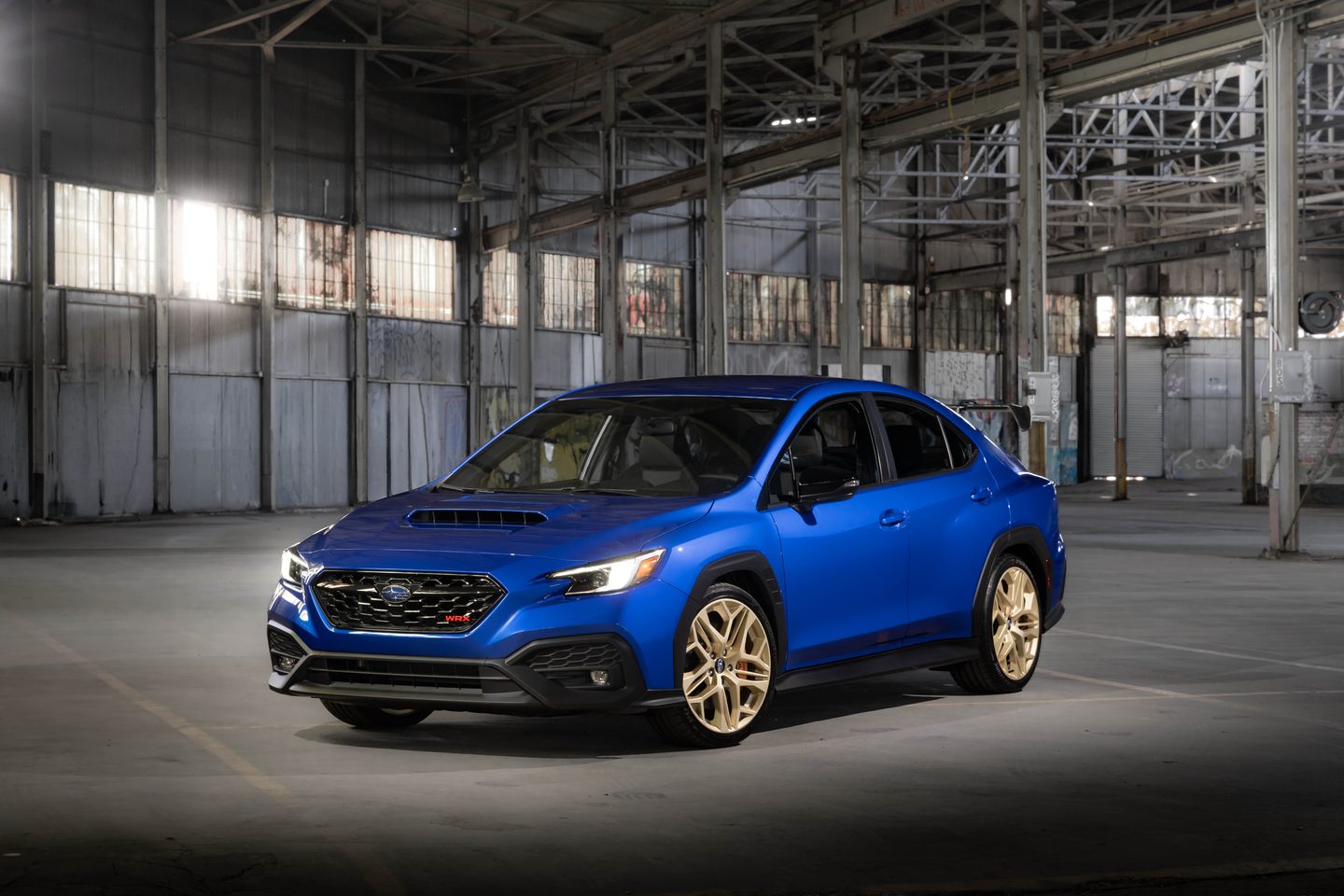
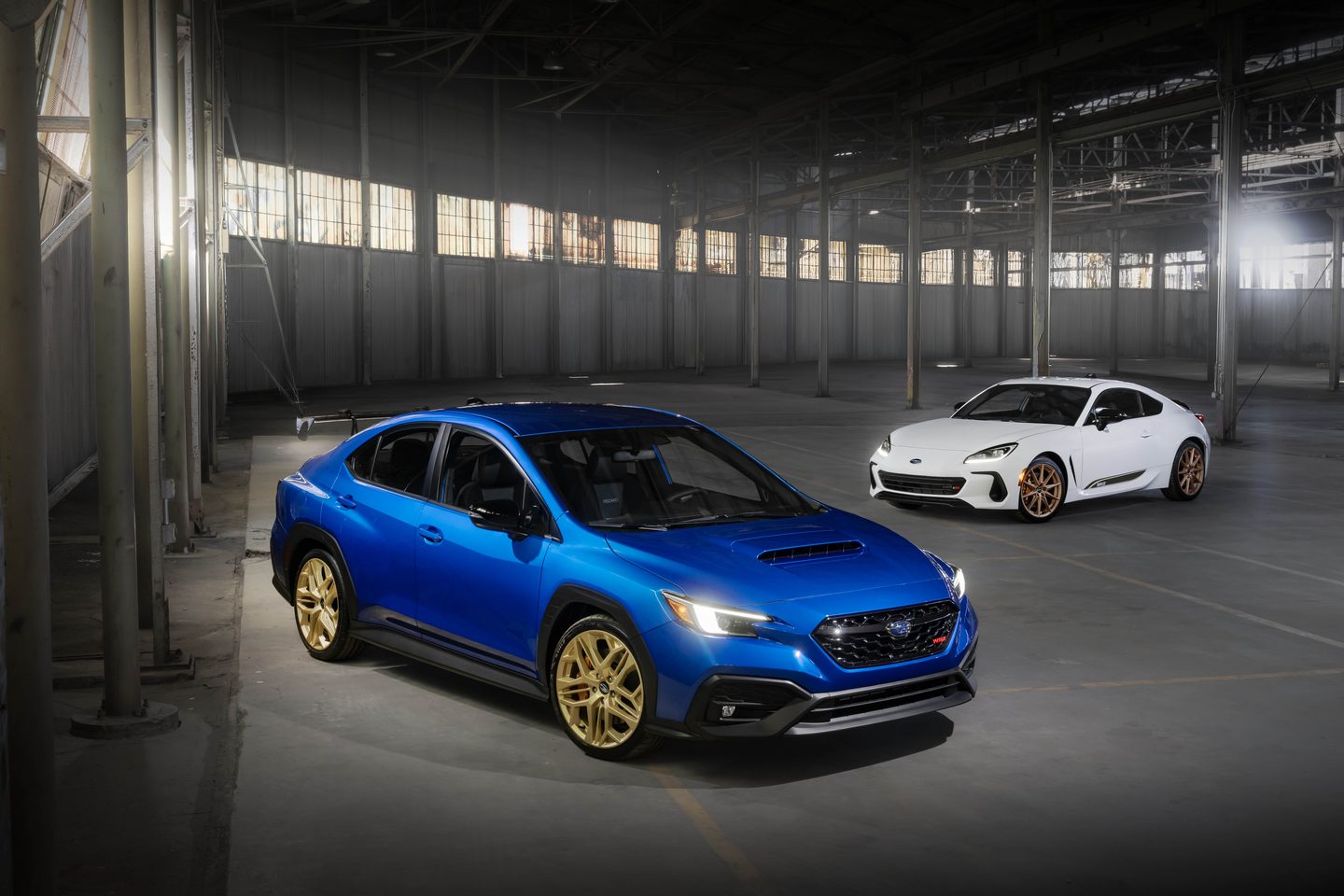
Today’s range runs on FB and FA series engines, with the 2.4-liter turbocharged FA24 at the top and e-Boxer hybrids pairing flat-fours with electric motors at the efficiency end. Subaru hasn’t named a launch date or a debut model for the new engine.
The shape stays, though, with opposed pistons cancelling primary vibration and the mass carried low between the front wheels. Whatever the efficiency program changes inside the cylinders, the silhouette in the bay stays unmistakably Subaru, low and wide as ever.
Flat stays flat.