
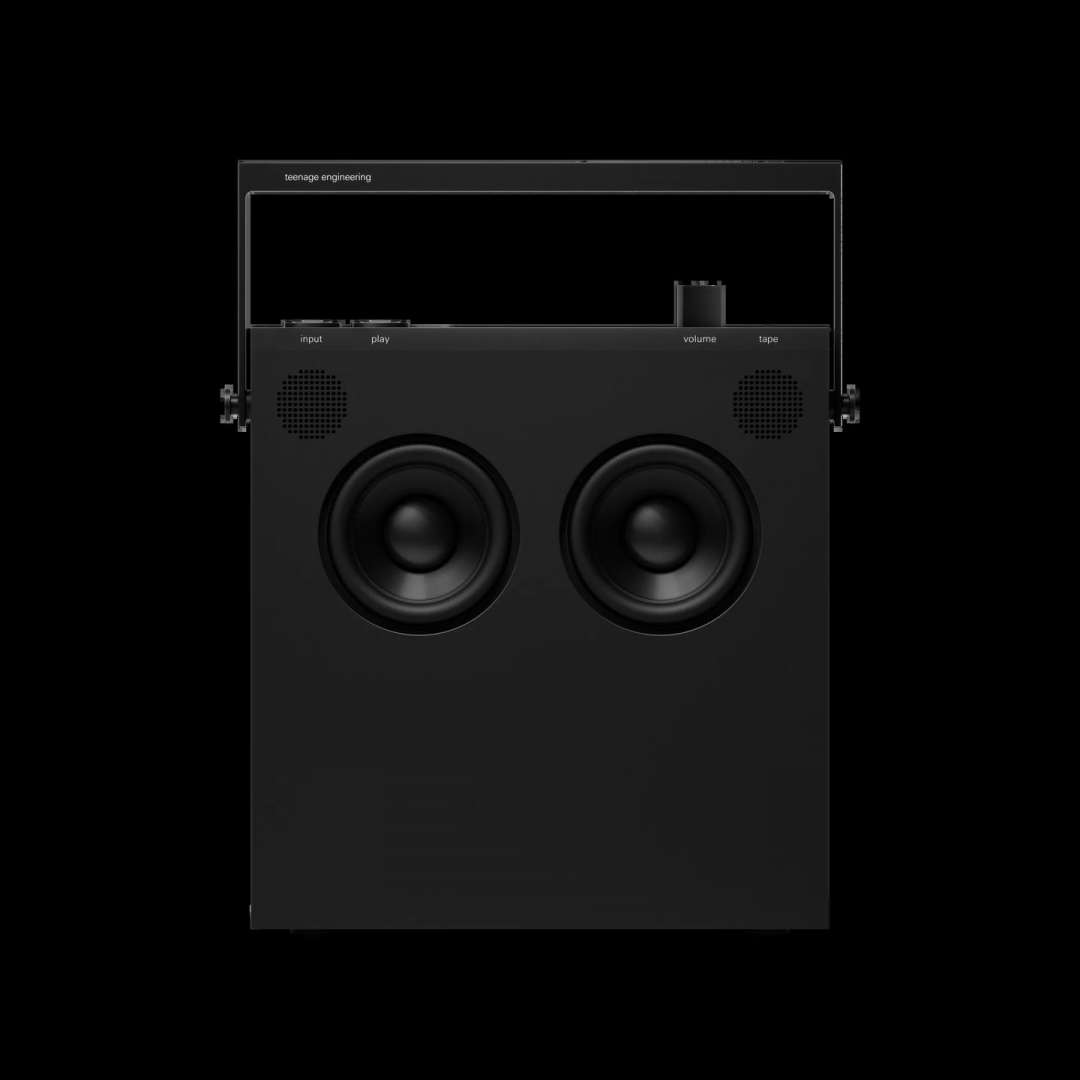
The Teenage Engineering OB-4 doesn’t behave like a normal portable speaker, and that’s clear before any music starts playing through it. The silhouette is closer to a book.
It stands 284 millimeters tall and weighs 1.7 kilograms, with a folding handle across the top edge that also works as a stand for listening. FM radio, Bluetooth streaming, and a line-in feed cover the sources. It also records everything it plays onto a rolling two-hour tape, so nothing it plays is ever really gone for good.
The maker calls it the magic radio, and the name fits the pitch better than any spec sheet could manage on its own. Every seam looks considered, from the fine pitch tweeter grille to the gel dampened handle that folds flat against the top panel when the radio sits on a shelf in the kitchen or the studio.
A thin slab with a full stereo system inside

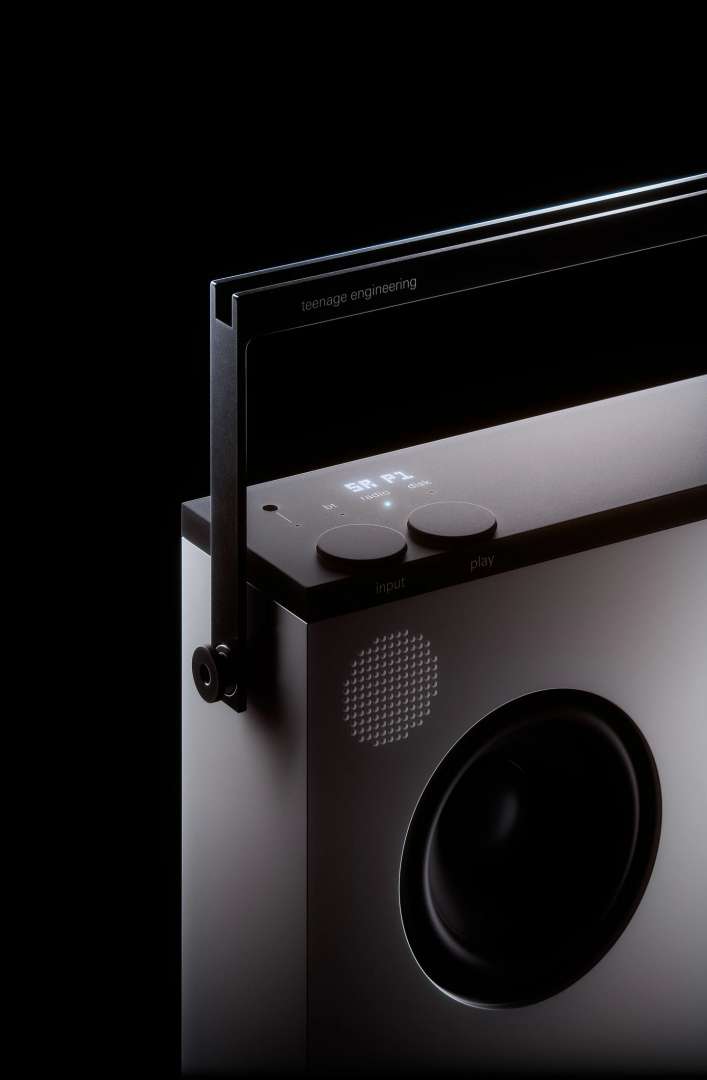
Four tailor-engineered speaker elements sit behind the fine pitch grille, arranged as a stereo pair of neodymium woofers and ferrofluid cooled neodymium tweeters. Two 38 watt Class D amplifiers drive them. A flow optimized bass reflex duct with a semi unified chamber handles the low end. The rated frequency range runs from 52 Hz to 25,000 Hz.
The numbers support the claim. Teenage Engineering rates the OB-4 at 92 decibels of unsupported wideband output at one meter, with supported bass reaching 104 decibels, and the active crossover sits at 3.5 kilohertz.
The cabinet materials do quiet work here, since the amorphous polymer and milled aluminum keep the slab rigid without a hollow feel. A universal built in power supply accepts 100 to 240 volts. The same unit can move from a home office to a hotel room overseas without a second thought about voltage, plugs, or local power standards.
The tape that never stops recording

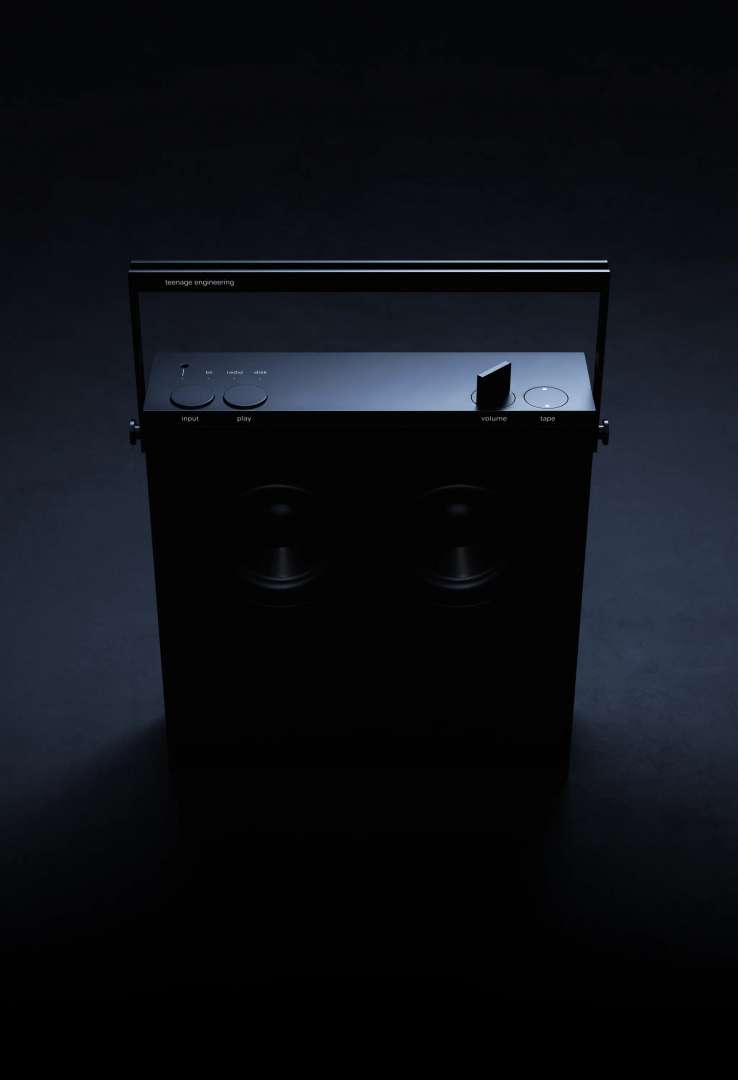
Everything the OB-4 plays is memorized on an endless looping tape, a rolling two-hour recording that keeps rewriting itself as new audio arrives. Miss a song title on the radio and you rewind, because the gesture takes a second, the tape is always running underneath the broadcast, and the last two hours are waiting to be heard.
The controls are motorized, and they’re the part people remember after a demonstration in a quiet room full of audio gear. A digital motion controlled volume knob and tape reel use a brushless motor, a hall effect sensor, and an intelligent control algorithm. A fingertip spin can rewind the tape. Time-bending and looping follow from the same dial, and the interface stays minimal on purpose, with no screen competing for attention.
Instant rewind changes how radio feels, because a missed weather line or a traffic update is suddenly recoverable instead of gone for good. The tape runs under every source, not just the tuner, so a Bluetooth stream gets the same treatment. A phone feed becomes a recording you can scrub.
Disk mode is where the radio keeps changing

Disk mode is the maker’s public research space, a fourth input where new functions arrive through the orthoplay app over time. The current disk holds five functions: ambient, karma, metronome, noise, and loop, and each one treats the speaker as a small instrument. The list keeps growing with each update.
Ambient builds a drone from snippets of any audio source, while karma works as a 30 in 1 musical mantra box for quieter rooms. The metronome includes an 808 voice with pitch adjustment, noise offers white, brown, and pink settings for focus, and loop lets owners create, store, and beat match audio loops. None of it’s essential.
Battery life that runs for days

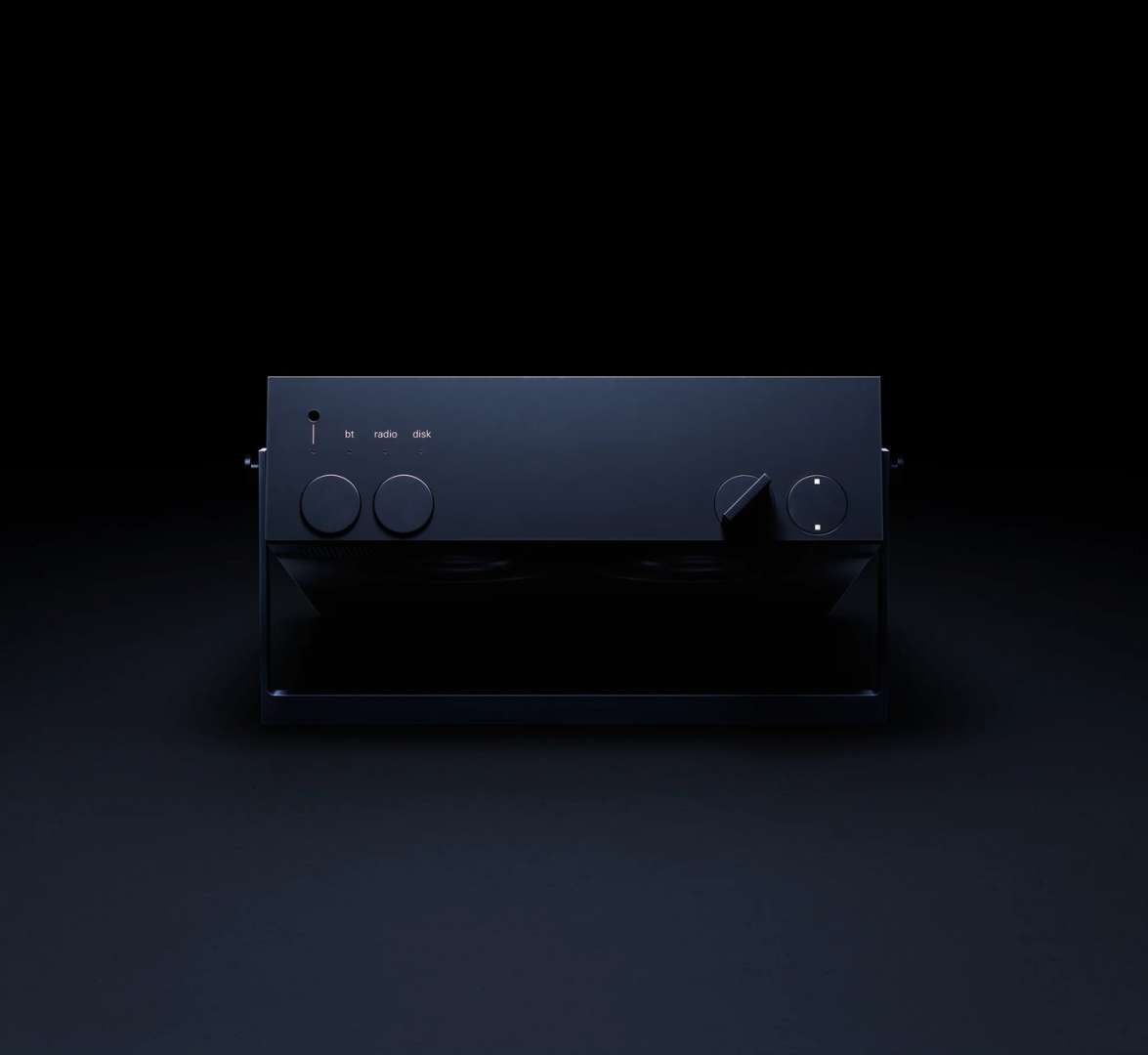
The battery figures explain why owners leave the OB-4 on a kitchen counter for weeks at a time without reaching for the cable. FM radio runs for 72 hours at normal volume on one charge, Bluetooth listening averages 40 hours, and full volume still delivers about 8 hours, enough for a full workday of loud listening. The handle earns its place too, since it also works as the stand and hides the antenna inside its frame.
That gel dampened handle folds flat against the top panel, and its grip is shaped for one handed carrying between rooms. Bluetooth Classic handles streaming with AAC support, Bluetooth 5 LE covers wireless volume control through the orthoplay app and the ortho remote, and there’s a 3.5 millimeter stereo input on board.
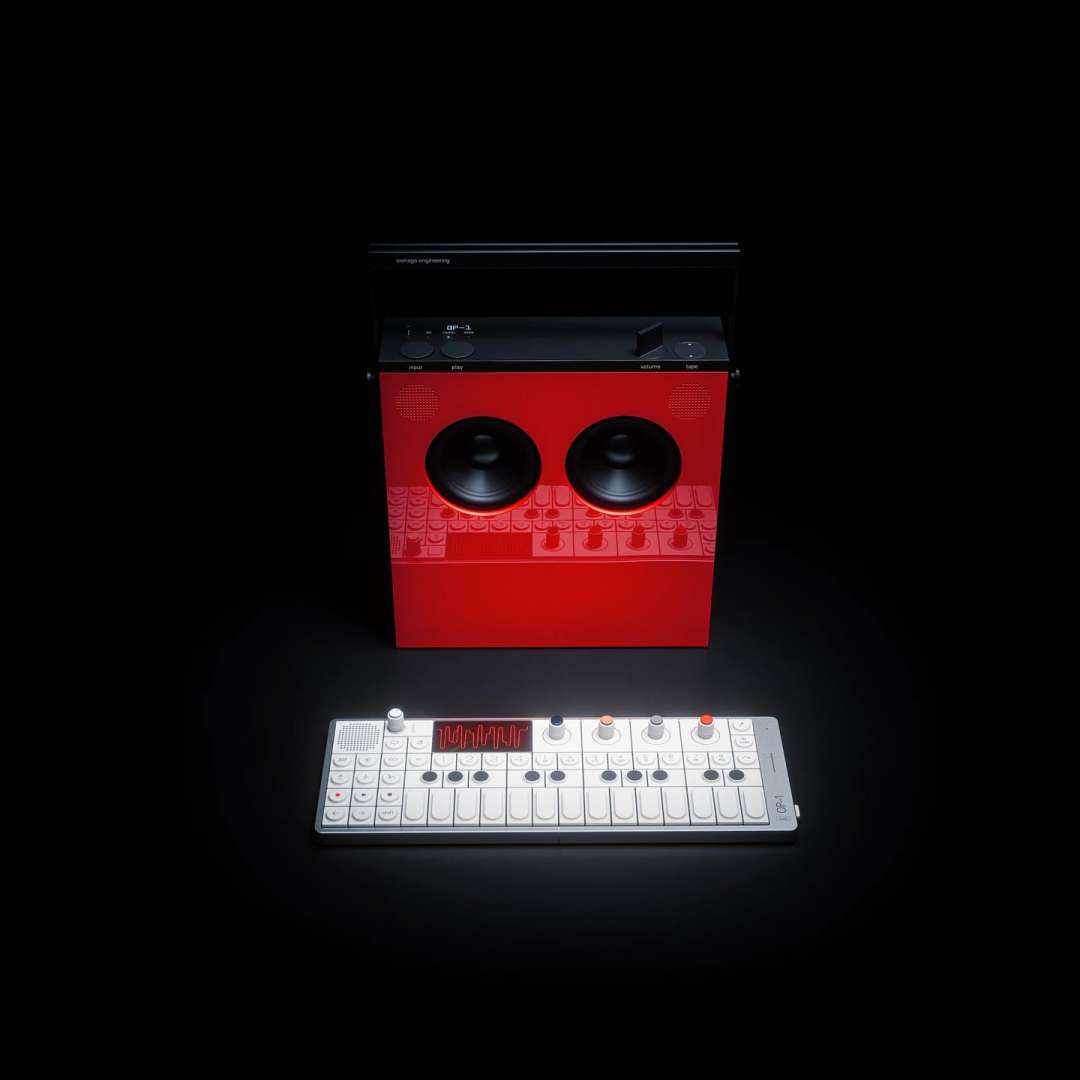
The low latency line input also suits a record player, an instrument, or a mixer, and the FM signal can link an OP-1 field wirelessly. That studio monitor role separates it from most portable radios on a shelf, since the OB-4 can take a feed from gear instead of only from a phone. The box keeps setup simple too. Included accessories are a mains power cable, the antenna, and a user’s manual.
Seven finishes are listed, from matte black and white to red, navy, ochre, gray, and orange, so the color call is a real one. The maker lists the Czech Republic as the country of origin in its own specifications, and the white finish anchors the price below. Buyers pick a color the way they’d pick a watch finish.
It’s a considered object first and a speaker second, and the sound hardware is strong enough to support that order of priorities. At $629, the price asks buyers to pay for design and battery life. The tape trick has no rival in this form.
Buy the OB-4 at $629 if you want a design led radio that records everything it plays and still fills a room with proper stereo sound. Skip it if you only need a Bluetooth speaker. The tape, the disk mode, and the motorized dial are the reasons this radio costs what it costs, and they’re wasted on background listening alone.