
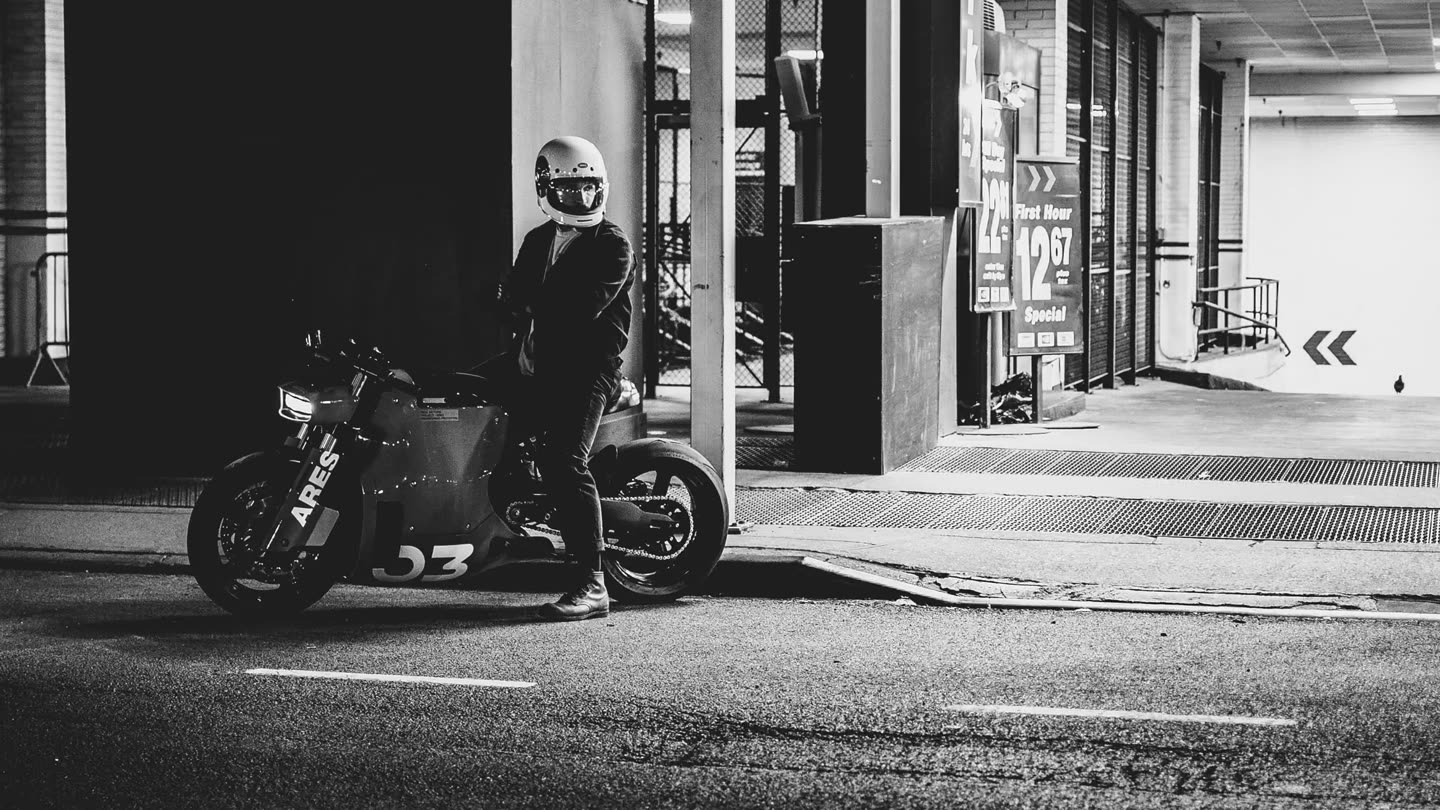
Project : ARES looks like it escaped from a game. Slab-sided bodywork, a slit of a headlight, a number roundel where a fuel tank should be. It’s a café racer drawn from Cyberpunk 2077 and Wipeout, and it’s built by hand in Greenville, South Carolina.
Real Motors calls it a neo café racer, the first of its Future Machines. The production run is called Lot 01: 250 bikes for the whole world at $20,000 each, reserved with a refundable $500 deposit.
Deliveries start early in 2027.
The structure is the styling
The company’s own description is blunt about the method. ARES reinterprets the café racer through what Real Motors calls an electric analogue architecture, cutting the machine down to the essentials and removing everything that doesn’t earn its place. The result, in its words, is precise and purposeful, with the structure visible and every element serving a function.

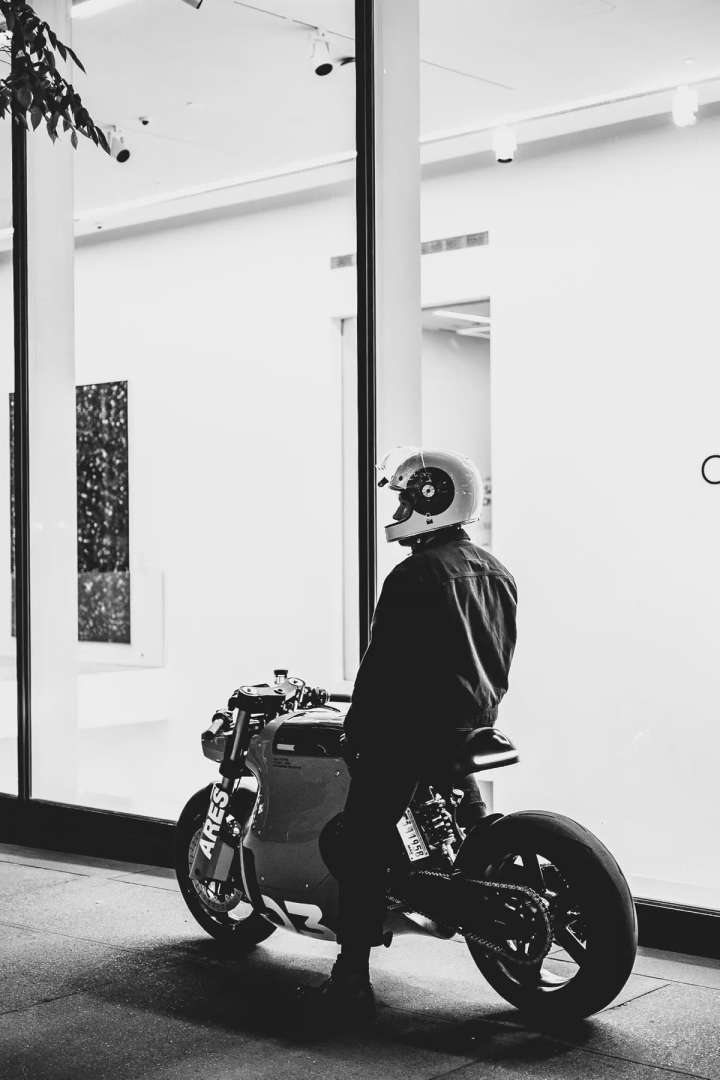
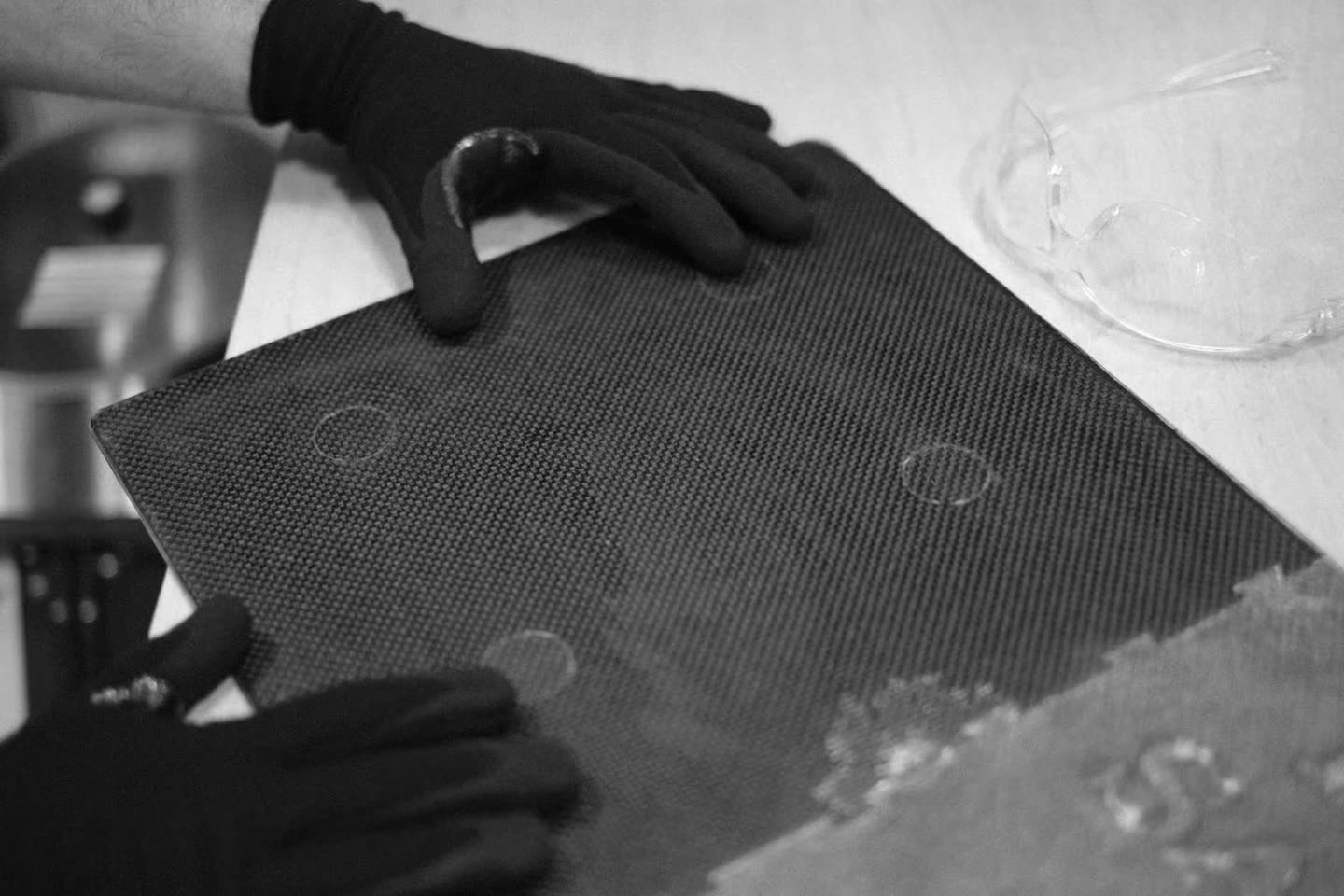
The materials list comes straight from a race shop: 4130 steel, A356 aluminum, carbon-fiber-reinforced polymer and ABS. Real Motors calls the structure aero-mechanical. Nothing on the bike is dressed up to look like something else, and there’s no retro cladding pasted over the electric hardware.
The numbered fairings, 01, 02 and 03 so far, are engineering prototypes, and the liveries do the talking that chrome does on a conventional café racer. Lot 01 buyers choose from colors drawn by the company’s design team. The Founder’s Edition carried exclusive liveries, and it’s already gone.
The Electric Analogue
Most electric motorcycles sell you the numbers first. Real Motors buries them. The philosophy, trademarked as the Electric Analogue, starts from a stranger place: the psychological connection between a rider and a machine, and the feeling that lives in the distance between intention and response.
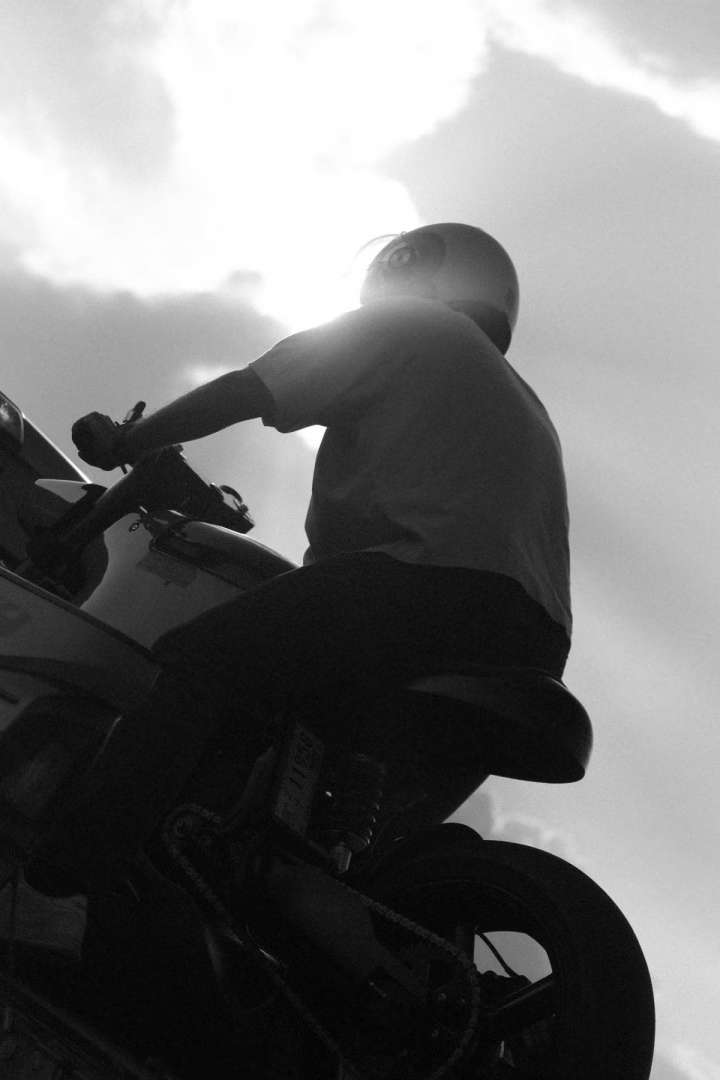
Force arrives before the mind fully understands it. That’s the company’s line, and the hardware follows it: immediate, uninterrupted response from the motor, controls kept intuitive, the experience unmediated. There’s no clutch to manage. Real Motors admits there’s a learning curve, a period of getting used to the bike, and calls the result unspeakable.
Owners aren’t customers in the company’s telling. They’re participants in the project, expected to check in with the engineering team and pay attention to what the machine does to them. It’s an unusual ask: a motorcycle as a working thesis instead of a product launch.

The homepage puts it in one line: silence is not absence, but focus.
Two versions, two sets of numbers
Real Motors sells ARES in two configurations, and the split explains the spec sheets floating around the internet. Lot 01, the current release, runs a 65 kW permanent-magnet motor and a 13.4 kWh nickel-cobalt-manganese battery. The Founder’s Edition runs 75 kW and 15 kWh, and it sold out at $19,000, a thousand dollars less than Lot 01.

| Lot 01 | Founder’s Edition | |
|---|---|---|
| Drive | PMSM, 65 kW | PMSM, 75 kW |
| Battery | 13.4 kWh NCM | 15 kWh NCM |
| Top speed | 175 km/h (110 mph) | 192 km/h (120 mph) |
| Mass (est) | 215 kg (474 lb) | 220 kg (485 lb) |
| Price | $20,000 | $19,000 |
| Run | 250 worldwide | Sold out |
The headline number needs its footnote. Real Motors claims 1,000 Nm of torque, measured at the rear wheel with a 12/45 sprocket setup, and 100 horsepower tested on a dynamometer with the prototype 15 kWh pack. Gearing multiplies torque on the way to the wheel, so that figure describes the shove at the contact patch, not the motor’s shaft output. It’s still a big number.
What’s missing is just as clear. Real Motors hasn’t published a range figure or a charge time for Lot 01, and the final configuration only gets disclosed before production begins. The spec sheet is a moving target, and the company says so itself.
Greenville, and the order book
Real Motors describes itself as an engineering initiative, founded in 2022 by engineers Trent Dingman and Michael Feng, and it likes to point out that it’s run by engineers, not shareholders. The shop sits in Greenville, in the middle of South Carolina’s battery belt, a few miles from BMW’s American plant and Scout Motors’ new factory.

The production method has its own name: Manufacto. Research, prototyping and manufacturing share one engineering-led facility instead of splitting across contractors. In October the company hired its first chief technology officer, Vance Strader, who held the same job at Harley-Davidson’s LiveWire division. Circle Engineering, formed by former Energica staff, and the Michelin Innovation Lab round out the engineering roster on the ARES page.
Bikes get built in pre-order sequence. North American deliveries start early in 2027, after an Alpha Build and the Founder’s Edition run. Europe and the Gulf states follow in the first quarter of 2027, once homologation clears. Founder’s Edition buyers put down $1,000 and get premium parts in return: suspension, brakes, tires and seat, plus an extended warranty and engineering support.
The fall plan put the bike in front of crowds at the Barber Vintage Festival in Alabama and EICMA in Milan.
Strip the philosophy away and the shape remains. ARES doesn’t hide its battery under retro bodywork or apologize for the motor. The structure is the styling, the silence is the soundtrack, and the rider is asked to meet the machine halfway.
Two hundred fifty riders get to test that idea. Everyone else gets the pictures, and the pictures are very good.