
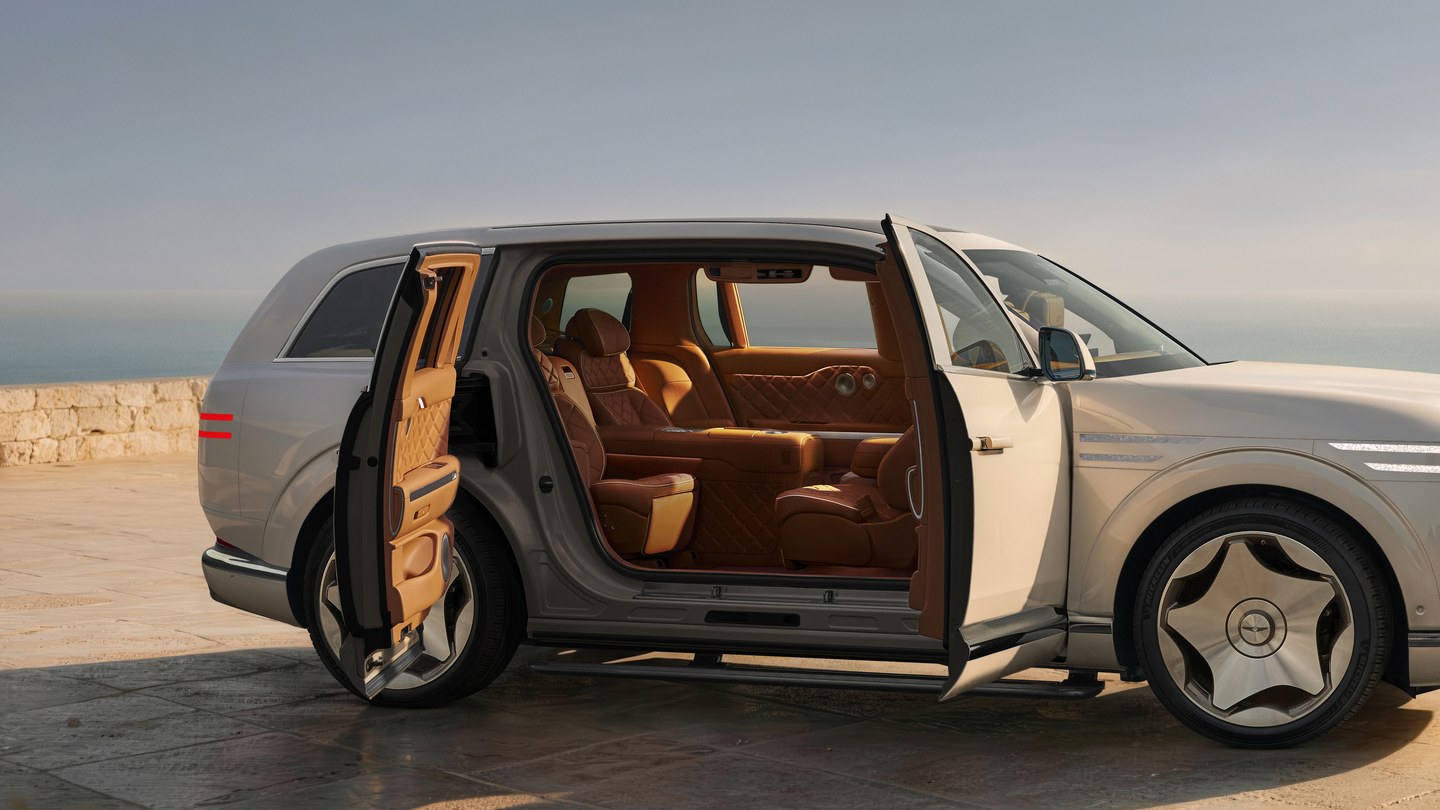
Genesis opened Korean orders for its first full-size flagship electric SUV on November 10, and the lineup splits cleanly in two. The standard GV90 is a seven-seat luxury SUV with conventional doors, built for families who count seats. The GV90 Neolun removes the B-pillar altogether and swings its doors apart like a coach from a century ago, built for passengers who count entrances. Both ride on the same dedicated flagship platform. The difference is the arrival.
Prices, converted from the Korean list, start at $103,700 for the GV90 and $141,200 for the Neolun. The Executive Suite tops it at $178,100.
A moon jar on 24-inch wheels
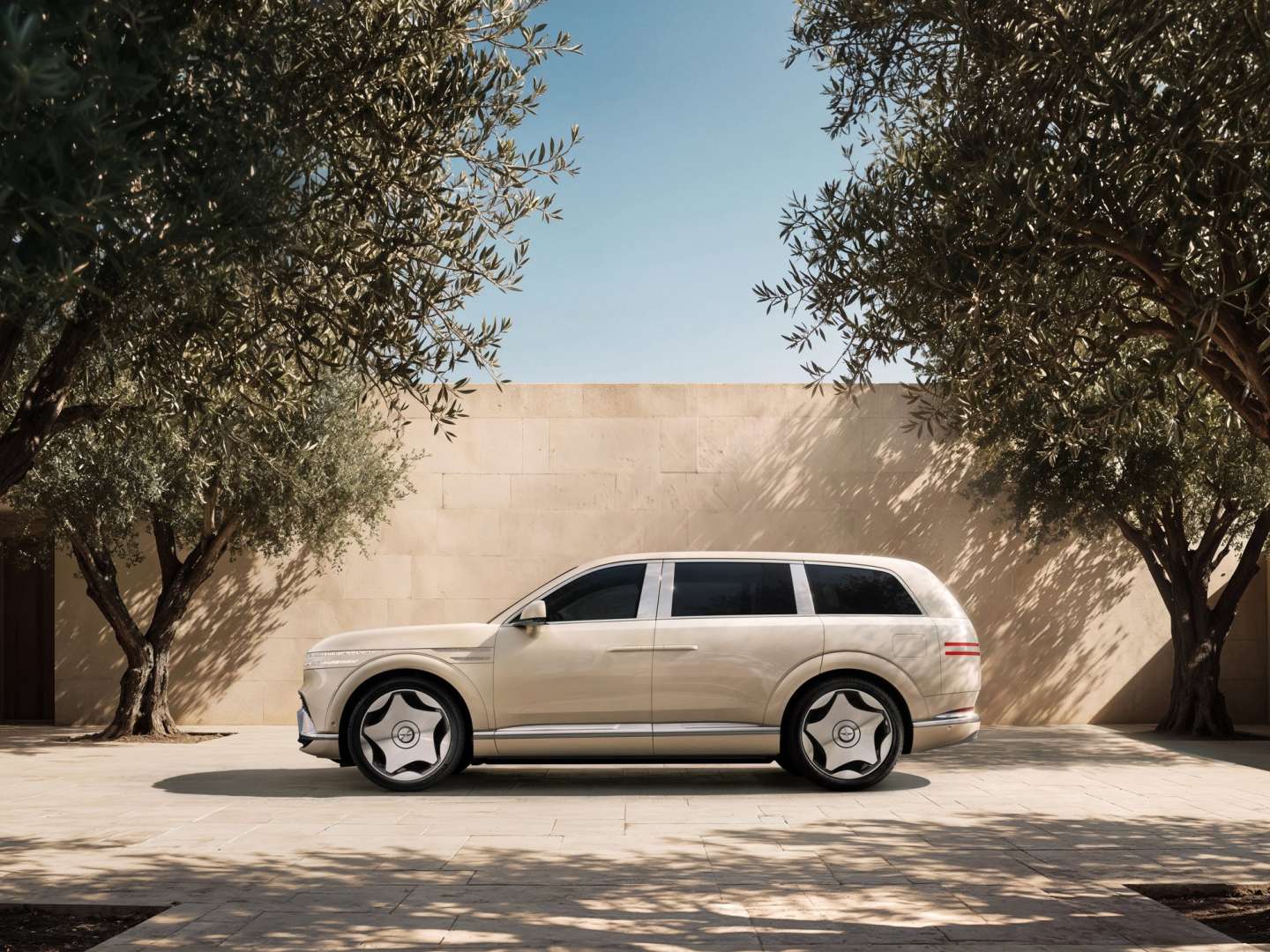
The shape starts from a moon jar, the white porcelain vessel Korea has prized for centuries, all proportion and curve and white space. Genesis design chief Luc Donckerwolke describes the method as reduction, luxury revealed by taking things away until only the essential remains. The surfacing obeys. There isn’t a crease on the car that doesn’t earn its place.

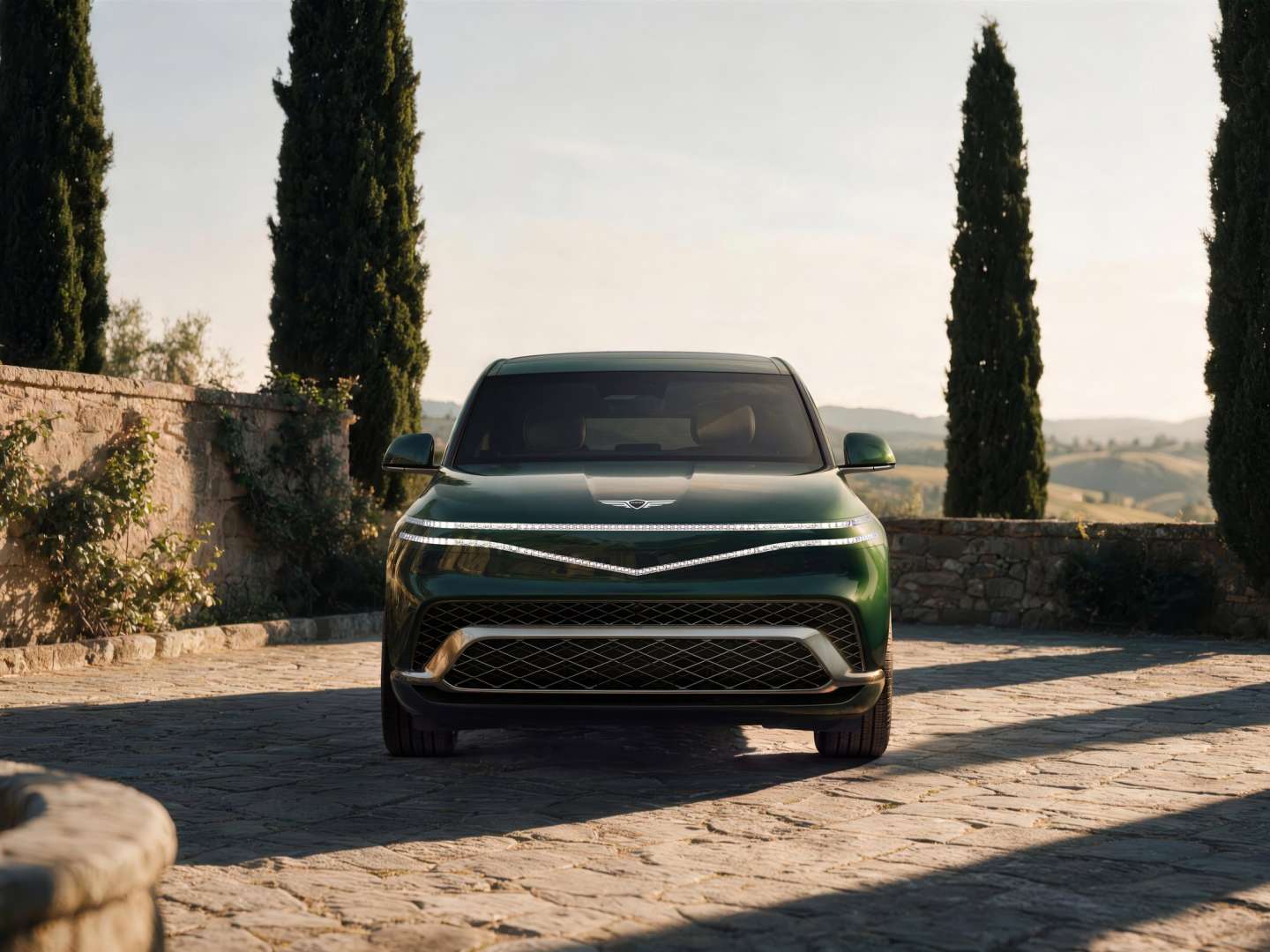
Up front, the Wing Face carries Micro Lens Array headlamps laser-engraved into the bodywork, the two-line signature stretched across the nose. Below it, a three-dimensional dual-layer G-matrix grille in chrome does the imposing part, quietly.
The standard car wears frame-flush glass. The Neolun signs itself in anodized aluminum.
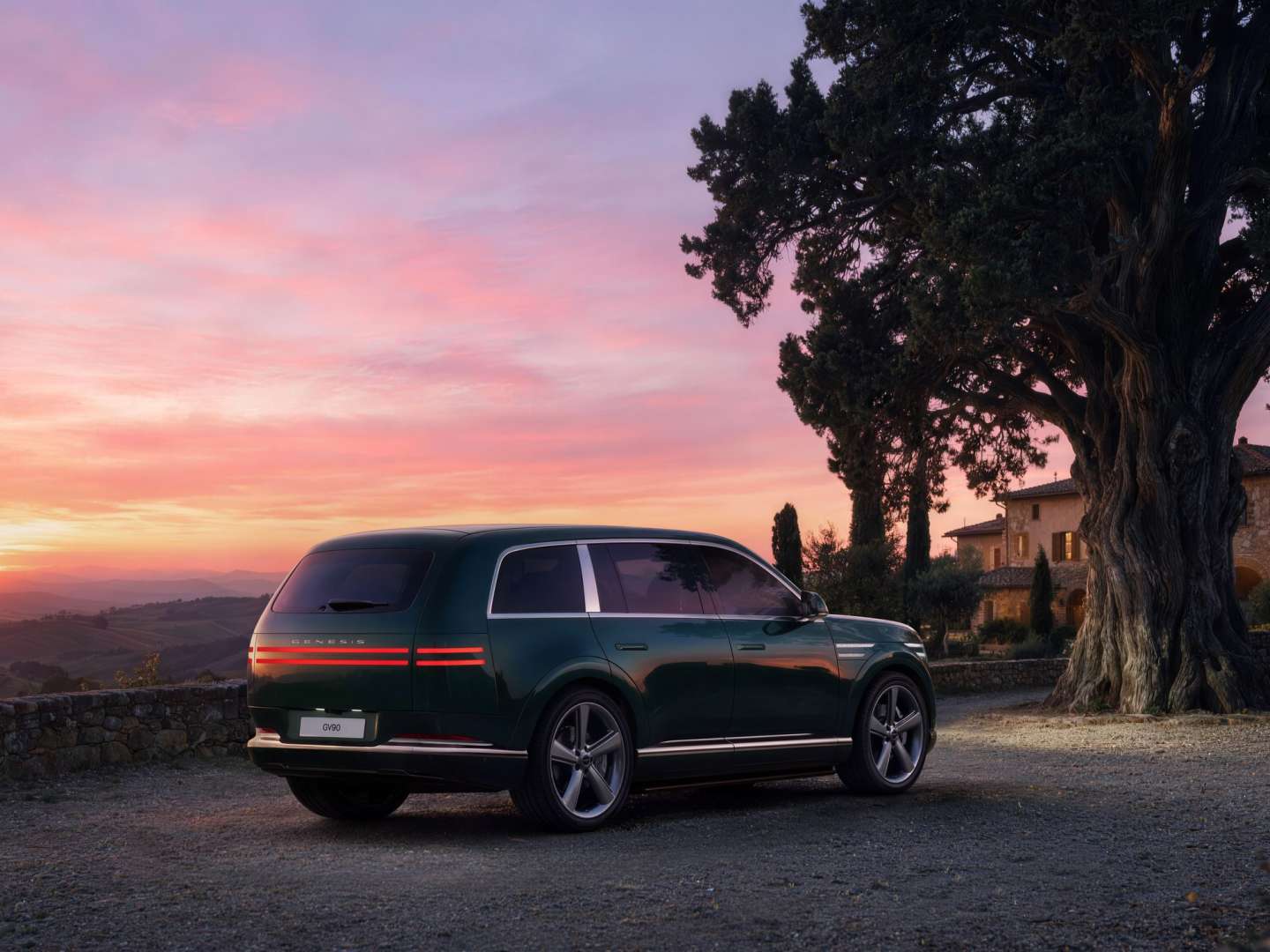
Sixteen finishes are on offer, thirteen gloss and three matte, each named for a moment when daylight meets a landscape. Seychelles Beige is sun over sand, Baena Green is light through olive groves, and Jaipur Rose needs no explaining at all. The beige and green cars in these photographs carry the two moods.

The arch where the pillar used to be
Genesis calls the system the Neolun Arch Gate, and attaches a world’s-first claim to it: coach doors that open and close independently, with the B-pillar hidden rather than deleted and forgotten. Front and rear doors open in unison, facing each other, and the opening they leave is one long, unobstructed arch. With both doors open, the car reads less like an SUV and more like a pavilion.
Each rear door slides slightly outward first, then rotates open on its dual-motion hinge, so a rear passenger can leave without waiting for the front door to move.
Coach doors aren’t new. The missing pillar is.
Deleting a structural pillar means putting the strength somewhere else. Genesis integrated high-strength dual steel beams into the doors themselves, then wrapped the cabin in a frame one and a half times thicker than a conventional car’s, fortified with steel tubes and structural foam. The result is a hidden roll cage the brand says matches the crash performance of a car with a fixed B-pillar.
657 horsepower, tuned for silence
Underneath sits the eMP platform, built only for this flagship, with a 123.5-kilowatt-hour battery that’s the largest Hyundai Motor Group has ever fitted to an EV. Genesis estimates 311 miles of range for the GV90 on its 22-inch wheels, 286 for the Neolun, and a 10-to-80-percent charge in about 22 minutes on a 350-kilowatt charger. Plug & Charge 2.0, a first for the group, starts authentication and payment the moment the cable connects.
Twin motors, one at each end, deliver 657 horsepower and 590 pound-feet of torque, the strongest output in the group’s history. A dual electronic limited-slip differential works both axles, catching slip on wet or snowy roads.
The chassis reads like a serenity brief. Multi-chamber air suspension adjusts its own height and stiffness, dual-valve electronic dampers soften or brace by the millisecond, and rear-wheel steering turns the back wheels up to five degrees, shrinking this 208-inch SUV’s turning circle to a mid-size car’s. Serenity was the brief, and the hardware agrees.
Then there’s the quiet: acoustic glass over five millimeters thick on every window, seals reworked, cavities filled with soundproofing foam.
A lounge that turns to face you
Park the Neolun, press a button on the door trim, and the front seats motor around a full 180 degrees. The cabin becomes a face-to-face lounge, the group’s first swiveling seats, aimed at conversation as much as transport. Genesis built the gesture into the Neolun only.

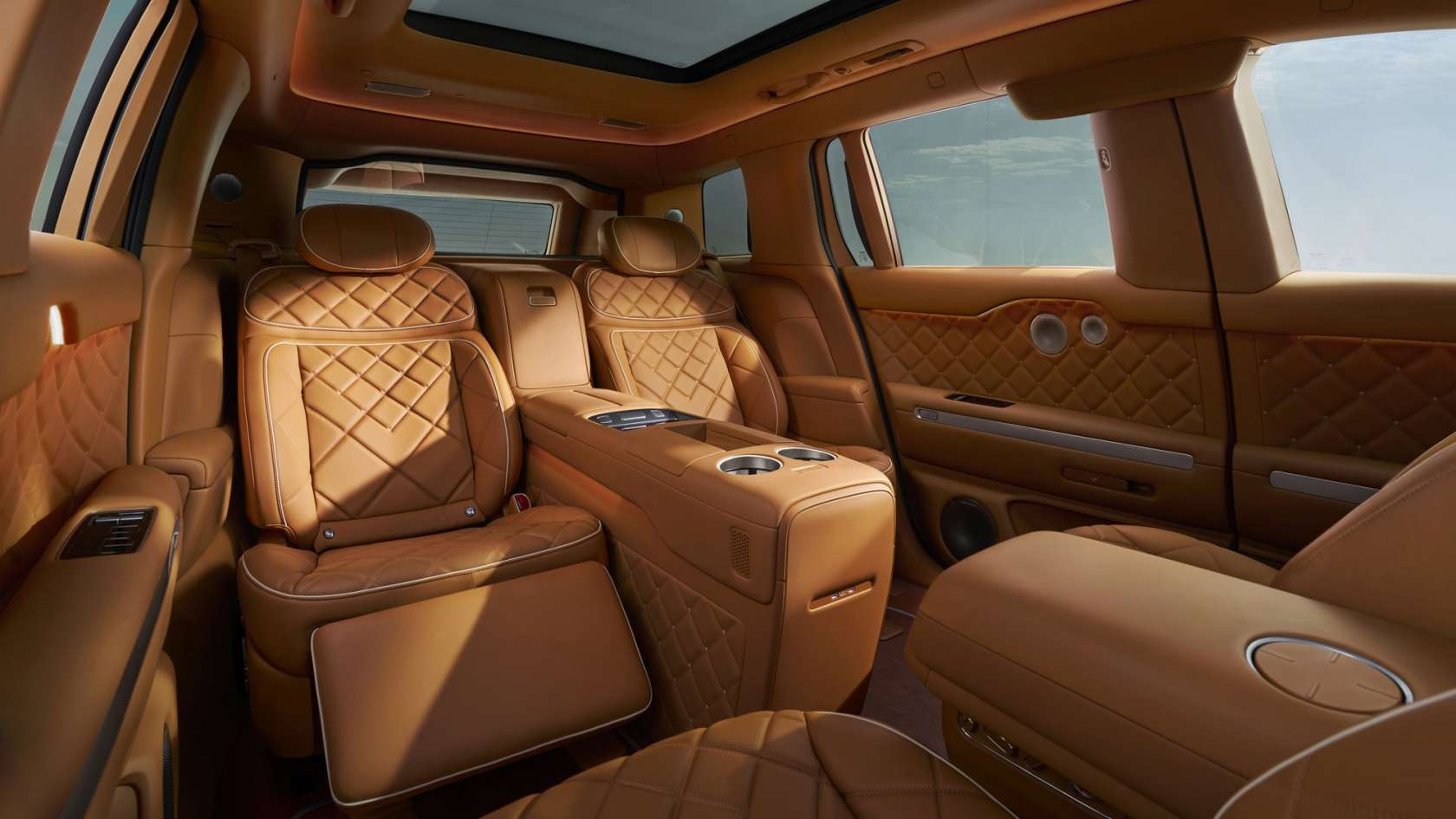
The dashboard display plays a trick of its own. Driving, it’s a 23.6-inch OLED carrying instruments, navigation and media. Park, and it rises to expand into a 24.6-inch cinema screen. There’s no start button anywhere: close the door, the crystal sphere controller rotates into place, press the brake, and go. A 25-inch head-up display throws speed and navigation onto the windshield, so there’s no separate instrument binnacle at all.
Sound comes from a Bang & Olufsen Premier 3D system, 25 speakers strong. Ambient Glow lighting washes over wood, stone and wool cashmere.
Order the Executive Suite and the second row gets a genuine wood floor with radiant heating modeled on the Korean ondol underfloor tradition, A comfort partition, a refrigerator, foldout tables and a glass roof whose transparency adjusts across six zones complete the room. The seats carry 15 air cells each and a pulse vibration massage. Twelve airbags include the world’s first roof airbag, there in case of a rollover.
Nothing at the back but the curve
The rear is where the reduction shows clearest. No spoiler, no crease work, just surface-emitting taillights and the Genesis name floating on a curve that falls away like the shoulder of the jar that inspired it.
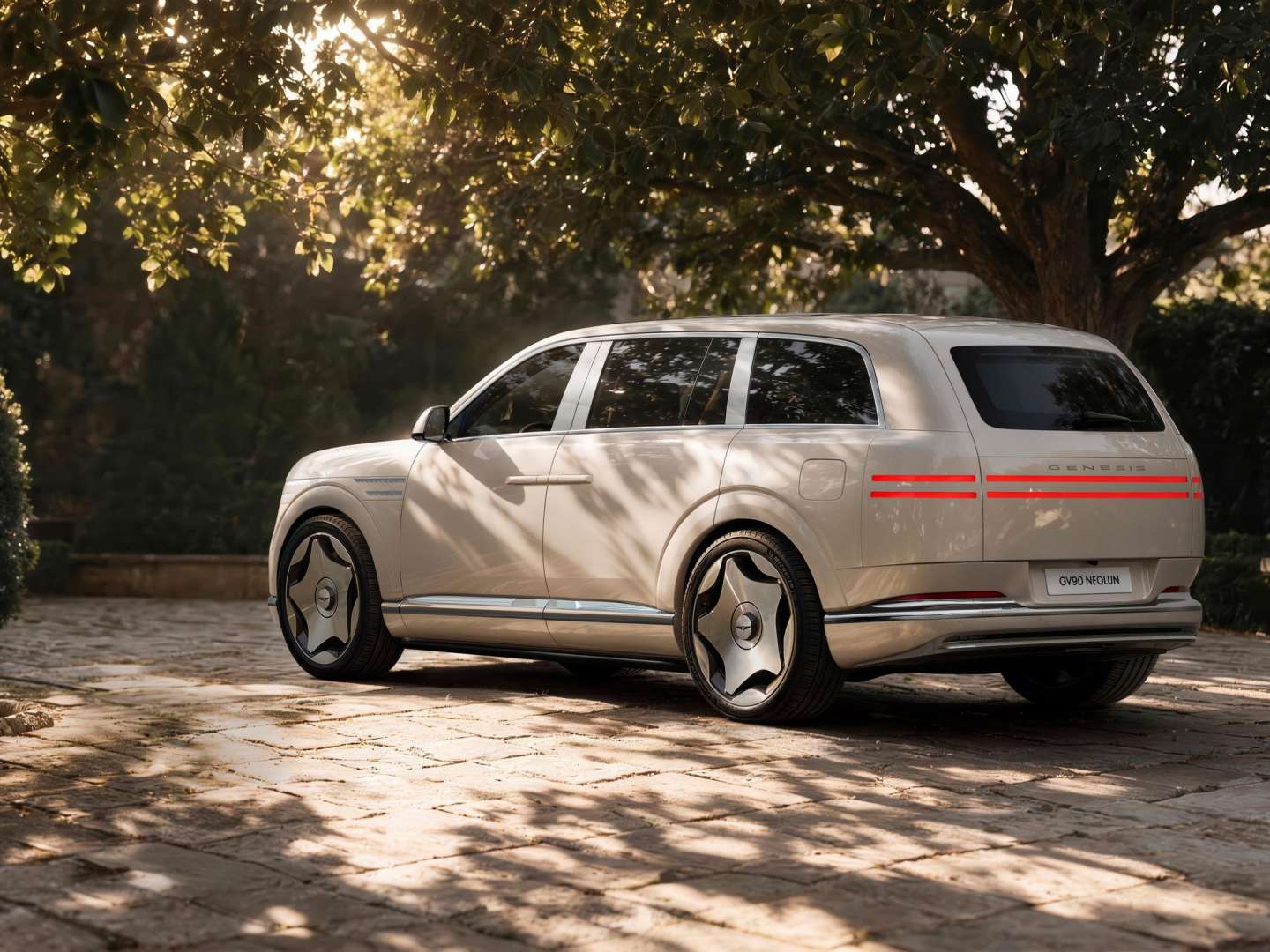
Korea gets the car first, including a two-tone Neolun First Edition limited to 222 cars at $200,700. The rest of the world waits on dates Genesis hasn’t given. But the design argument is already settled in the metal: the wildest idea on the 2024 Neolun concept, doors that open onto nothing at all, is the one Genesis refused to cut.