
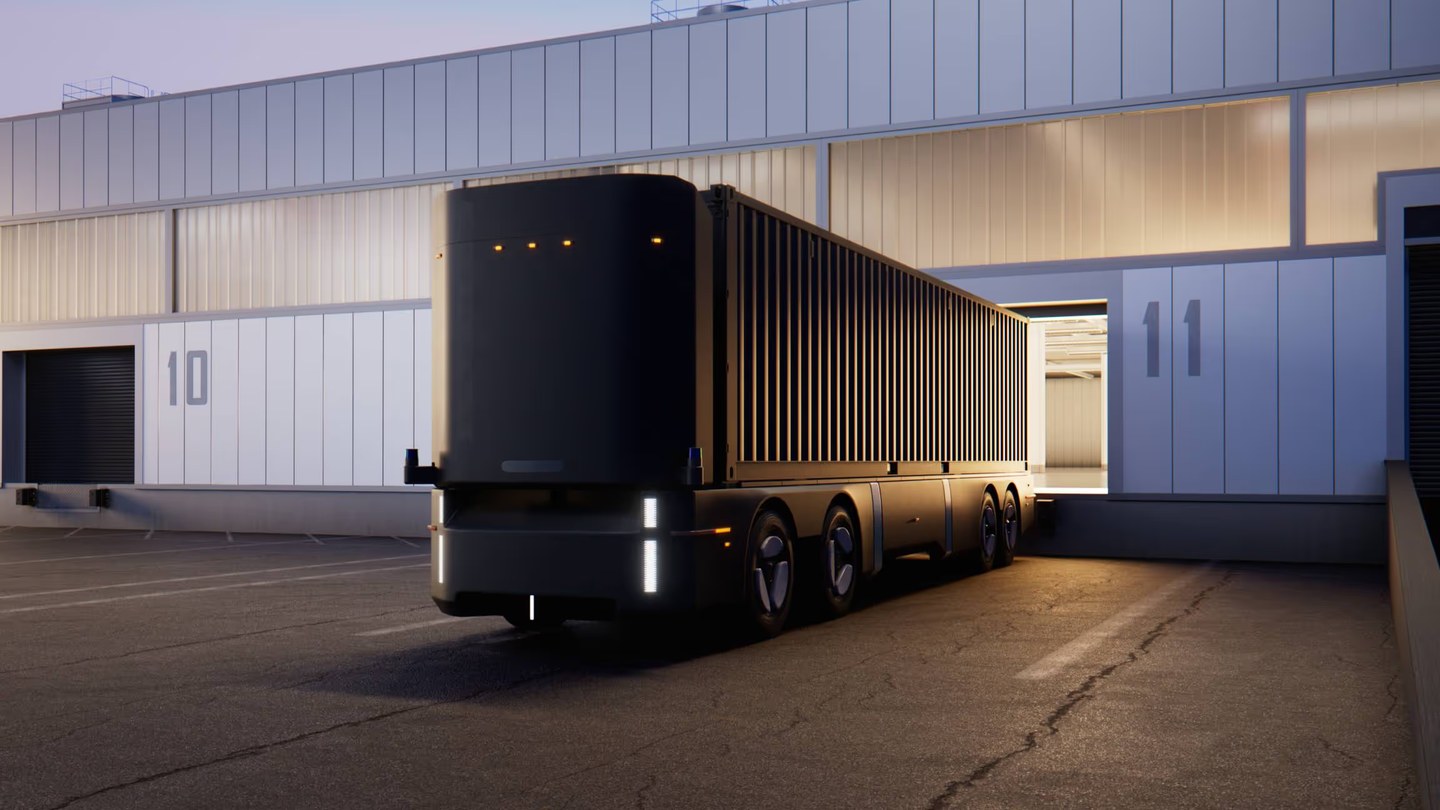
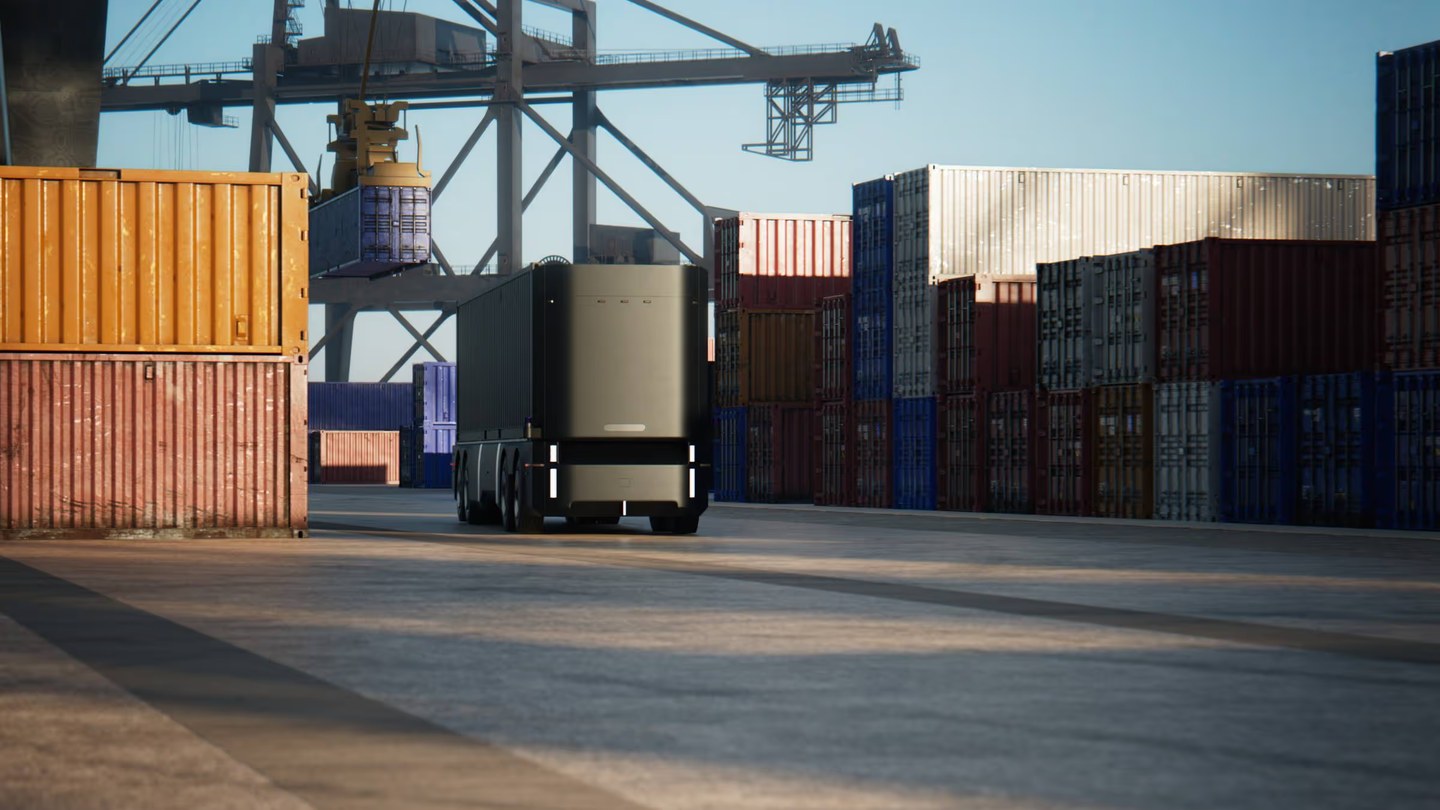
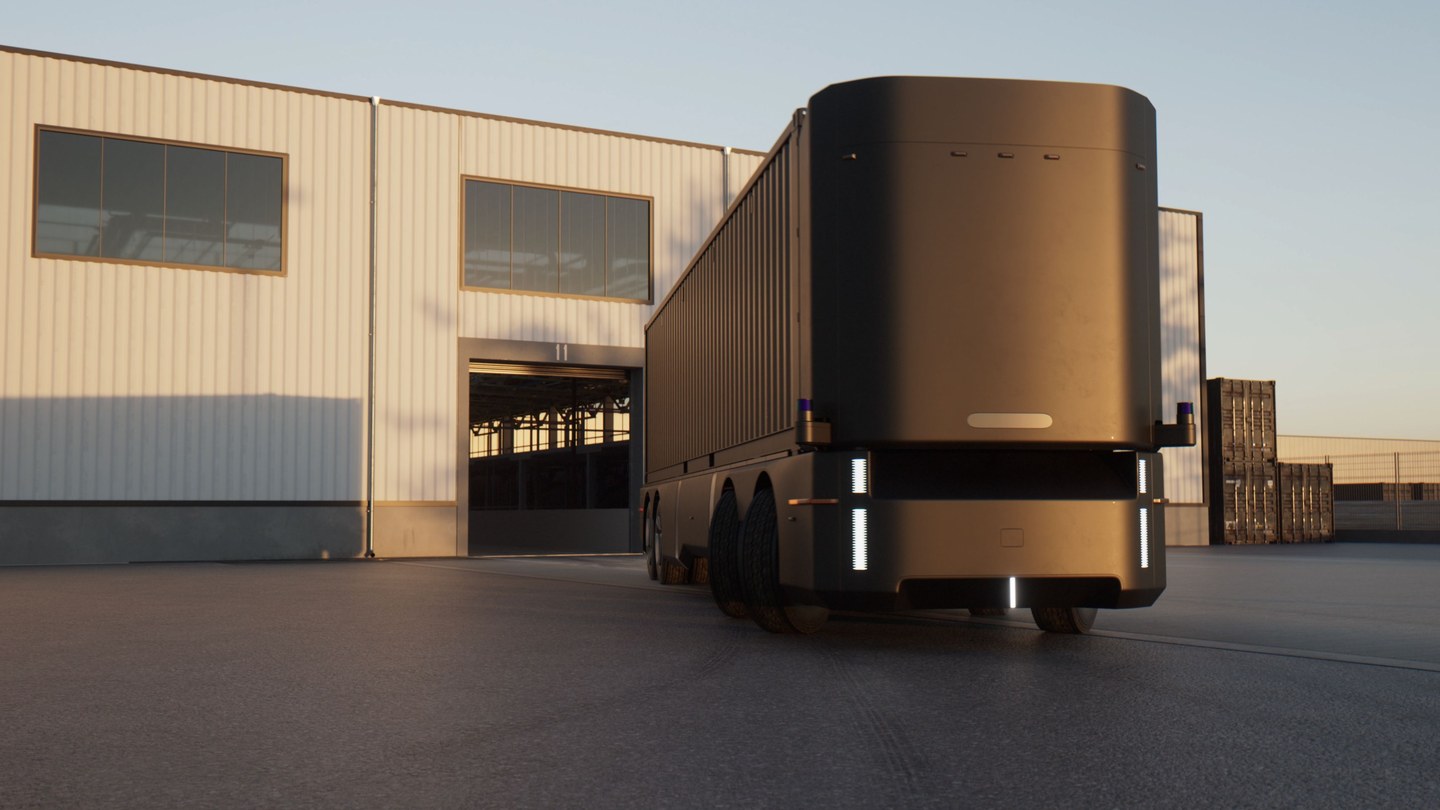
Look at the front and the trick lands at once. Where a cab should be, windshield, mirrors, a sleeper berth behind the seats, there’s a smooth black slab carrying marker lights. Humble Robotics didn’t automate a truck. It deleted the truck, then handed the trailer its own motors, its own sensors and its own brain.
The chassis is the vehicle
A container chassis is normally the dumbest object in freight, a steel frame with wheels that exists to be pulled. Humble rebuilt that frame as the whole vehicle and called the result the Humble Hauler. The platform sits low and flat, its battery and eAxle drive hardware carried inside the frame, and the container locks straight onto the deck through a universal lock-and-twist interface.

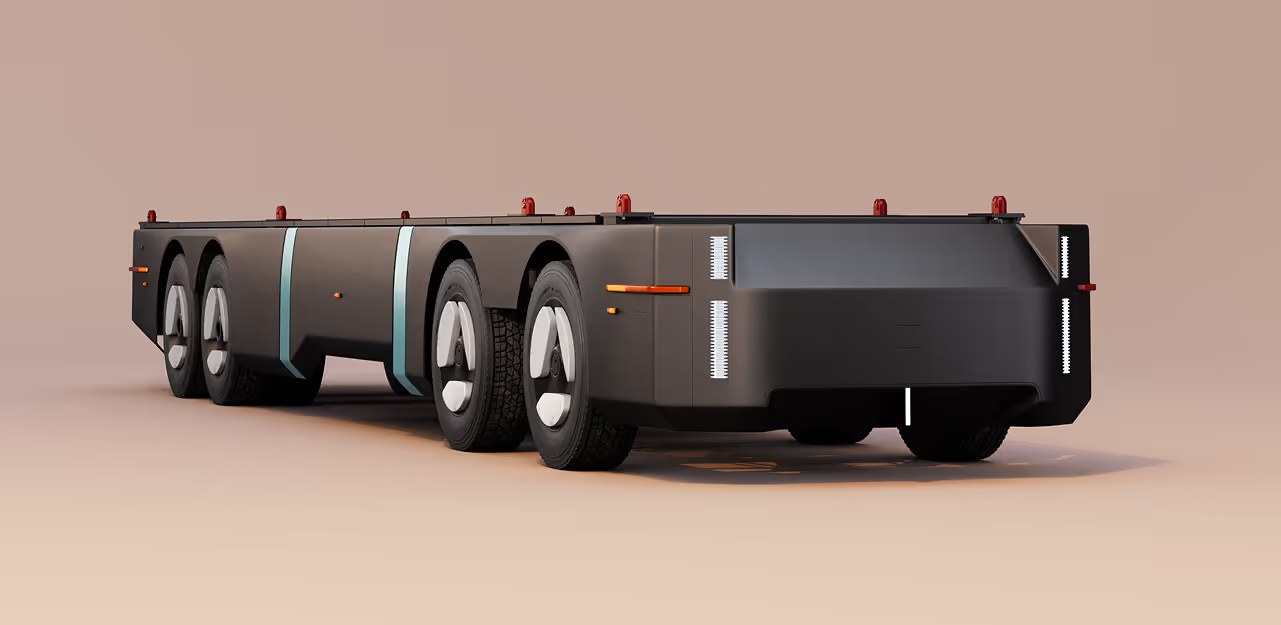
Nothing rides above the deck but the box itself.
Deleting the cab is where the design starts. No cab means no cab weight and no aerodynamic brick pushing air ahead of the box. Humble’s pitch stacks the savings: a platform billed as 20% lighter than a traditional tractor and trailer, plus the 2,000-pound federal allowance for electric trucks, adds up to payload room a diesel rig can’t match.
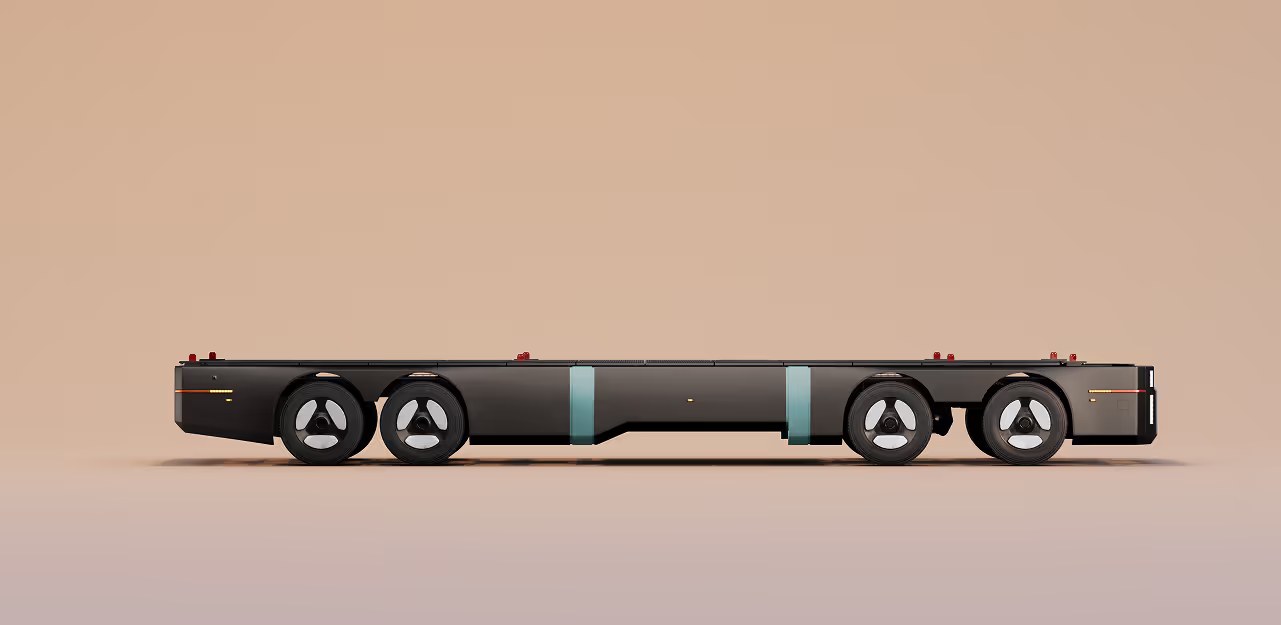
A decade of autonomous-truck pitches kept the truck and swapped the driver. This one asks why the truck’s shape deserved to survive.
What it does on the road
Humble publishes the core numbers on its technology page: 200 miles of range, a 55 mph top speed and an all-electric powertrain built around eAxle drive, with zero tailpipe emissions. Those figures say regional work out loud. This machine isn’t chasing cross-country lanes.

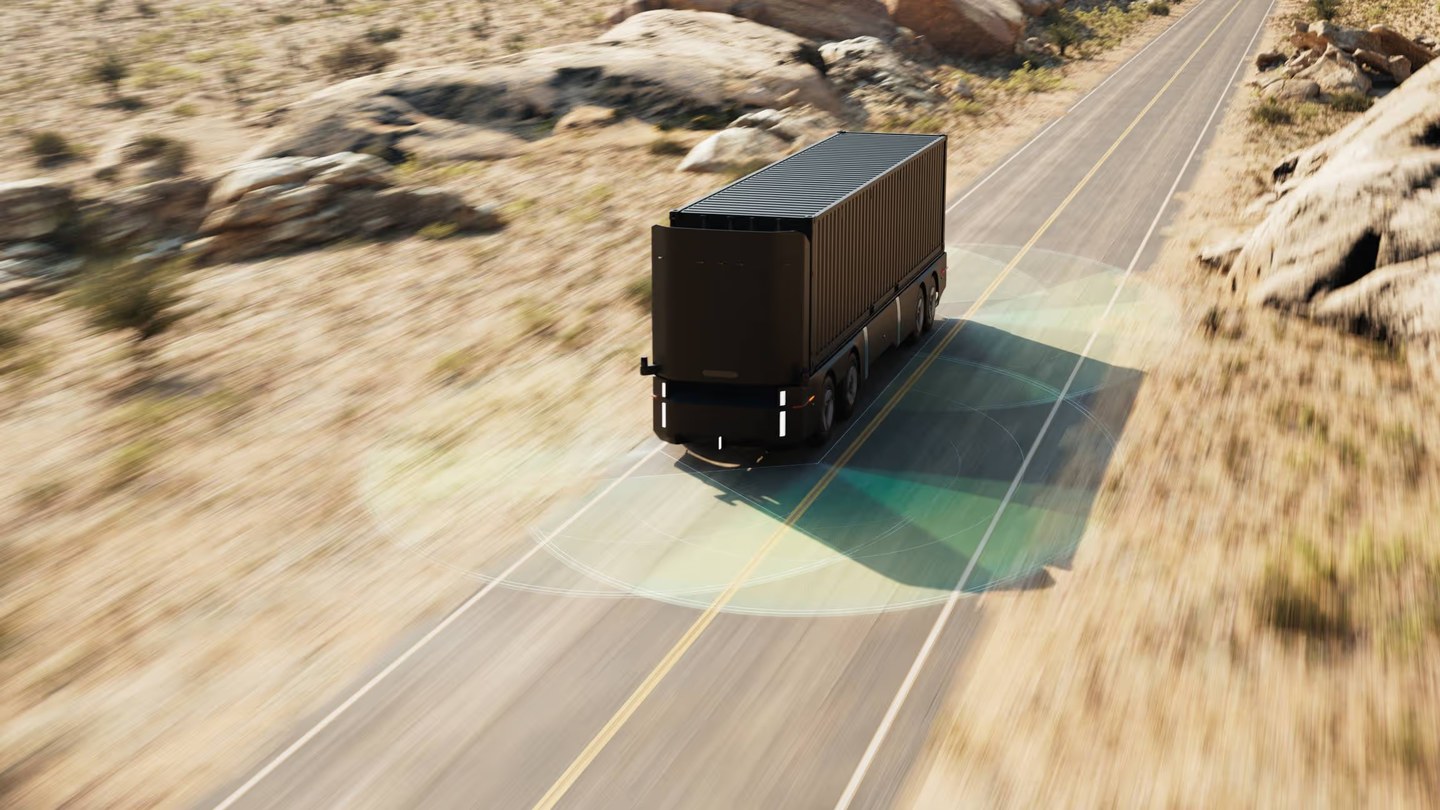
Seeing is handled by sensor pods mounted around the platform, packing automotive-grade cameras, lidar and imaging radar into a 360-degree view, and the vehicle is built to run driverless. Redundant, fault-tolerant systems sit behind the sensing, built to meet federal and state requirements, because a vehicle with no driver has no one to catch a sensor’s bad day.
The driver is software. Humble Driver is a vision-first foundation model, a vision-language-action system trained in photorealistic simulation. It doesn’t depend on pre-mapped routes or programmed paths, and Humble says the model reasons through what it sees before it acts. That reasoning is the pitch. Freight runs on liability as much as logistics, and a system that can explain a decision is easier to put on a customer’s load.
Founder and CEO Eyal Cohen spent a decade on the other approach, at Apple’s self-driving project, at Otto, at Uber and at Waabi. He names two problems a smart tractor never solves. It can’t connect itself to a trailer without help. And its sensors can’t see what’s happening behind the trailer it’s pulling. Putting the intelligence in the trailer answers both.
What Humble doesn’t publish is just as telling: no battery capacity, no power output, no charging spec. The figures would say more than the silence. What the design does instead is charge at the depot while it loads, turning dwell time into the refuel stop.
Built for the dock-to-dock grind
The work list is specific: port drayage, plant-to-warehouse shuttles, rail yard moves and terminal-to-terminal legs. Humble points out that regional routes under 250 miles carry 87% of U.S. truck tonnage, and that hours-of-service rules cap a driven truck at 30 to 40% utilization. A vehicle with no driver to rest doesn’t sit out the other 60%.
Short, fixed, repeatable. That’s the whole bet.
It unloads directly at a dock and is built to plug into existing freight operations, with 24/7 charging and remote operations support behind it. Fleets that aren’t ready to hand over the keys get a hedge: the Hauler can still be towed by a conventional tractor.
Cold freight is on the roadmap, not the spec sheet.
Transport Topics reports that Humble plans to adapt the design for 53-foot dry van and refrigerated trailers, which would put the platform into grocery and produce work. For now, the standard configuration moves 40-foot international and 53-foot U.S. containers.
One platform, more bodies
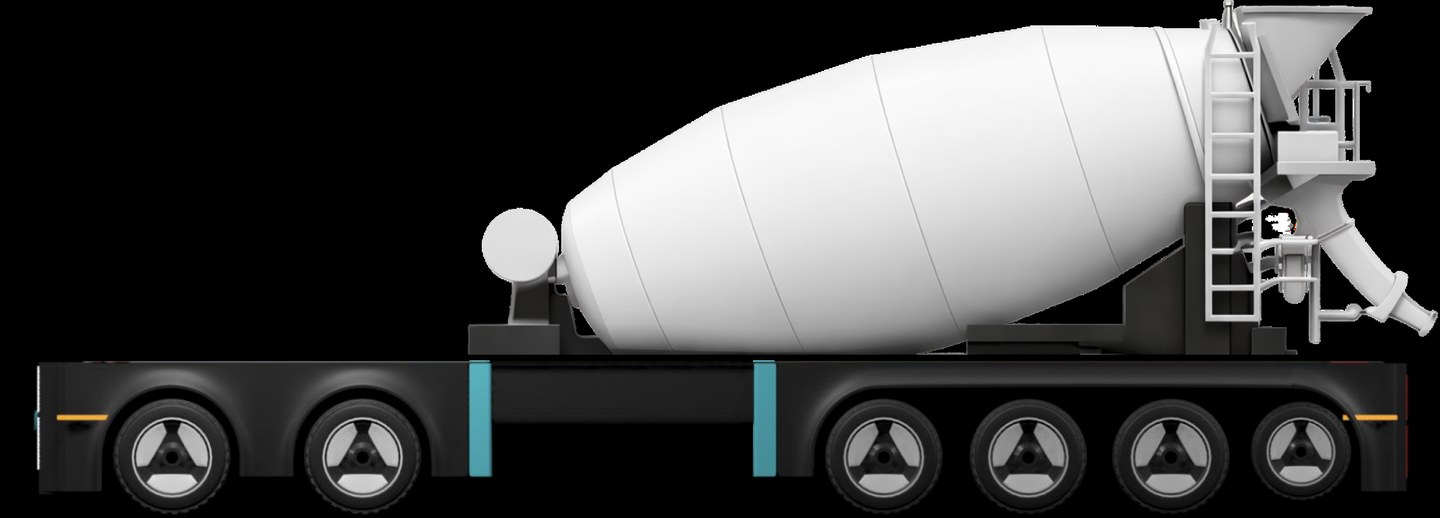
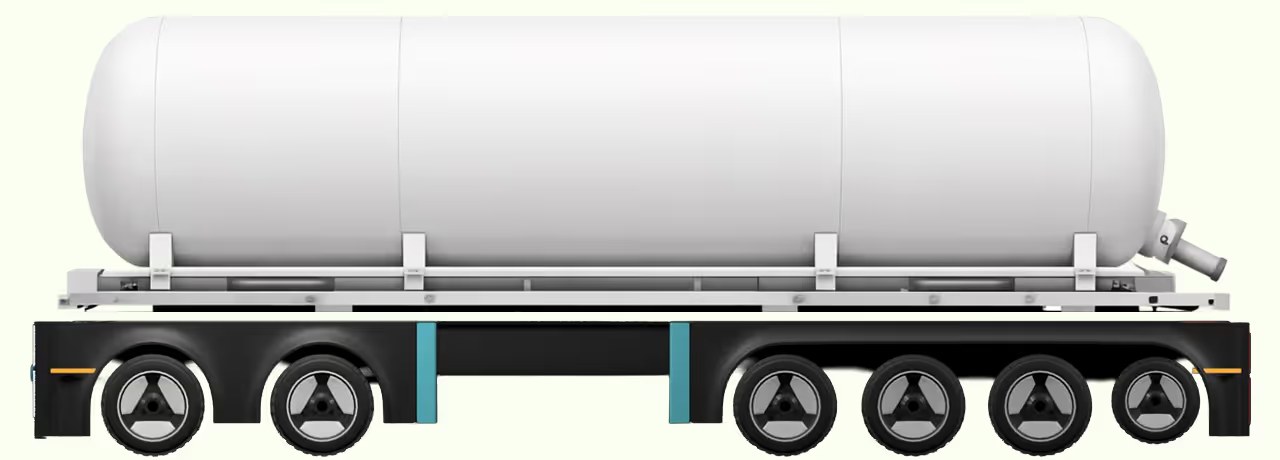
The container carrier is the first body, not the only one. Humble’s own renders show the same platform under a tanker and carrying a concrete mixer, and the Series A money funds a broader family of vehicles on the modular base. A platform that accepts freight’s handful of repeated shapes is worth more than any single-purpose truck.


The money and the wait
$51 million of Series A money, led by Obvious Ventures with Eclipse and Energy Impact Partners in the round, took Humble’s total funding to $75 million. It follows a $24 million seed round in April, when the company came out of stealth with its first prototype already built, less than six months after work started. The team behind it comes from Tesla, Waymo, Cruise, Google and Rivian.
“We’ve spent years proving that a truck can drive itself,” Cohen says. “The harder question is how to make autonomy something a freight operator can depend on every day.”
No customer has hauled a paying load with one yet. Customer pilots are a target for the next twelve months, and Cohen expects them to open in the first quarter of 2027 with conventional trucks gathering route data first, ahead of commercial operations targeted for the third quarter of 2027.
Testing so far runs under a California permit with a safety driver aboard, and the test vehicle wears a temporary cab. The gap between the renders and revenue freight is real, and it’s measured in permits and pilot miles, not press releases.
The logic is the strongest in freight autonomy. Short regional loops are where driverless operation pays back first: the routes are fixed, the endpoints are controlled, and the vehicle never has to be good at everything. Ports, yards and warehouses are managed ground, and the machine sleeps where it loads. Designing the vehicle around the container instead of around a driver is the clean idea the rest of the industry walked past.
The watch item isn’t the technology. It’s whether operators sign for pilots on Cohen’s clock, because a beautiful platform with no freight on it is a sculpture. If the 2027 pilots land with real cargo on real routes, the cab starts to look like a very expensive room kept for a job that’s leaving the building, one short route at a time.