
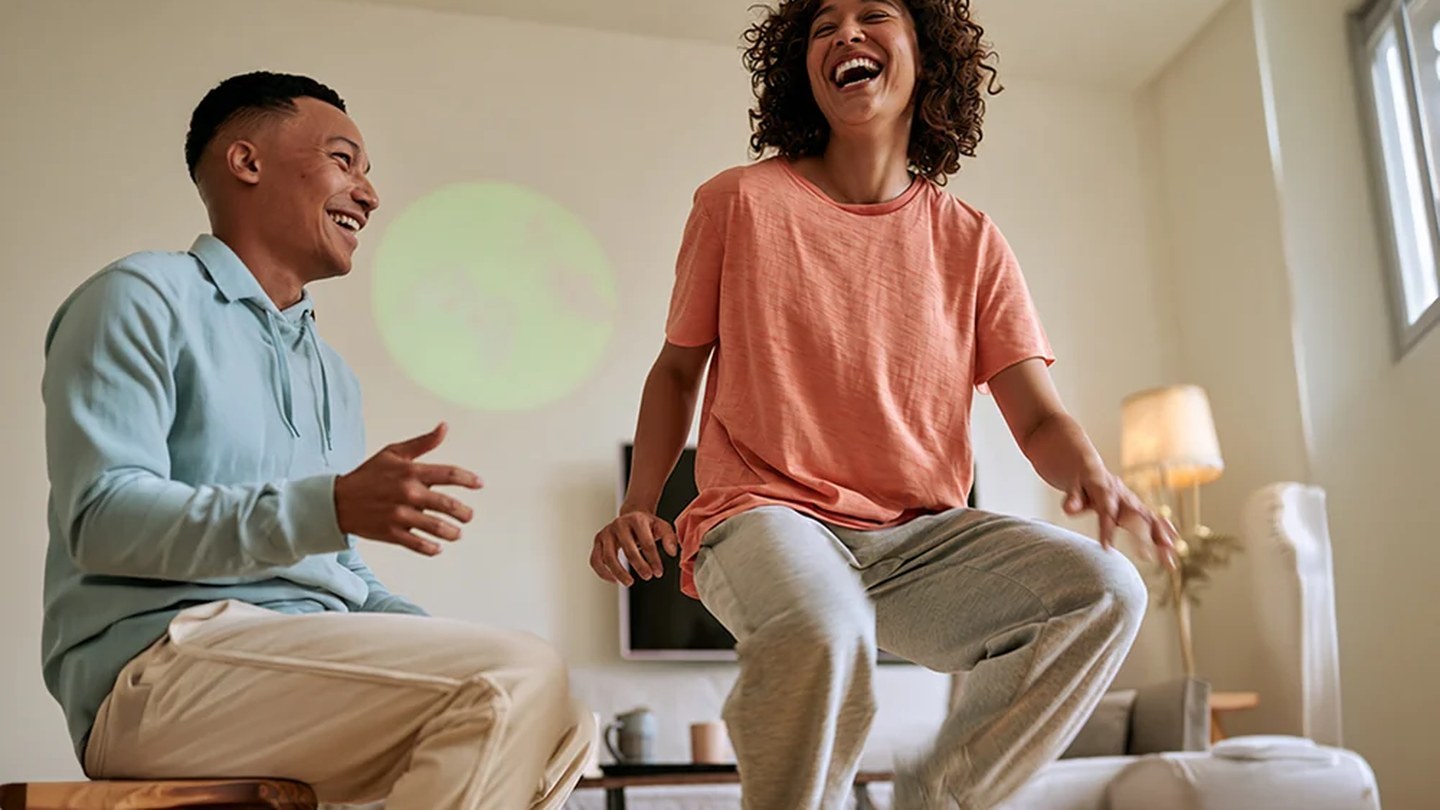
Somebody’s standing on a board in the living room, leaning hard into an invisible corner, laughing too loud to steer straight. The TV’s showing a luge run, and she’s not holding a controller, because there isn’t one. Her feet are doing all of it.
The board is Kiwii Move, from Kiwii AI. A crew of MIT engineers looked at the humble vibration plate and asked why nobody had made it playable. Their answer packs 12 games onto a board that reads your body as the input. No headset, no wand, no mat rolled out like a yoga class you’re about to resent, and the whole session asks for ten minutes a day.
Technically, it’s exercise equipment. In the room it plays like the arcade cabinet your living room always deserved, the one that runs on lean, step, squat, and a stubborn streak about high scores.
Twelve games, and your feet do the playing


Under the textured top sit four pressure sensors, and they read every shift of your weight in real time. There’s nothing to charge, strap on, or wave around. It’s you, the screen, and whatever your balance feels like confessing today.
Lean left and the game turns left, step fast and you strike, squat and you duck. The lineup runs gleefully wide. Firestep Party turns quick feet into the whole sport. Neon Luge has you rocking back for speed down a glowing course. Hoop Whirl spins, Snowball Rush charges, Crag Motor climbs, Wind Sail catches a breeze, Hearth Pop crackles, and Quake Hold dares you to stand perfectly still while the ground pretends otherwise.
Slow Chi closes the night shift, all sway and breathe. Same feet, twelve different demands, and the wobble you can’t hide becomes half the comedy.
Every round ends the same way. Again. One more.




Taking turns is where it becomes a house sport. One person plays, everybody else coaches from the couch, loudly, with snacks. Kiwii frames the mode as playing with the people you come home to. A round is short enough that the loser demands a rematch before the winner sits down.
The scoreboard is the sneaky part

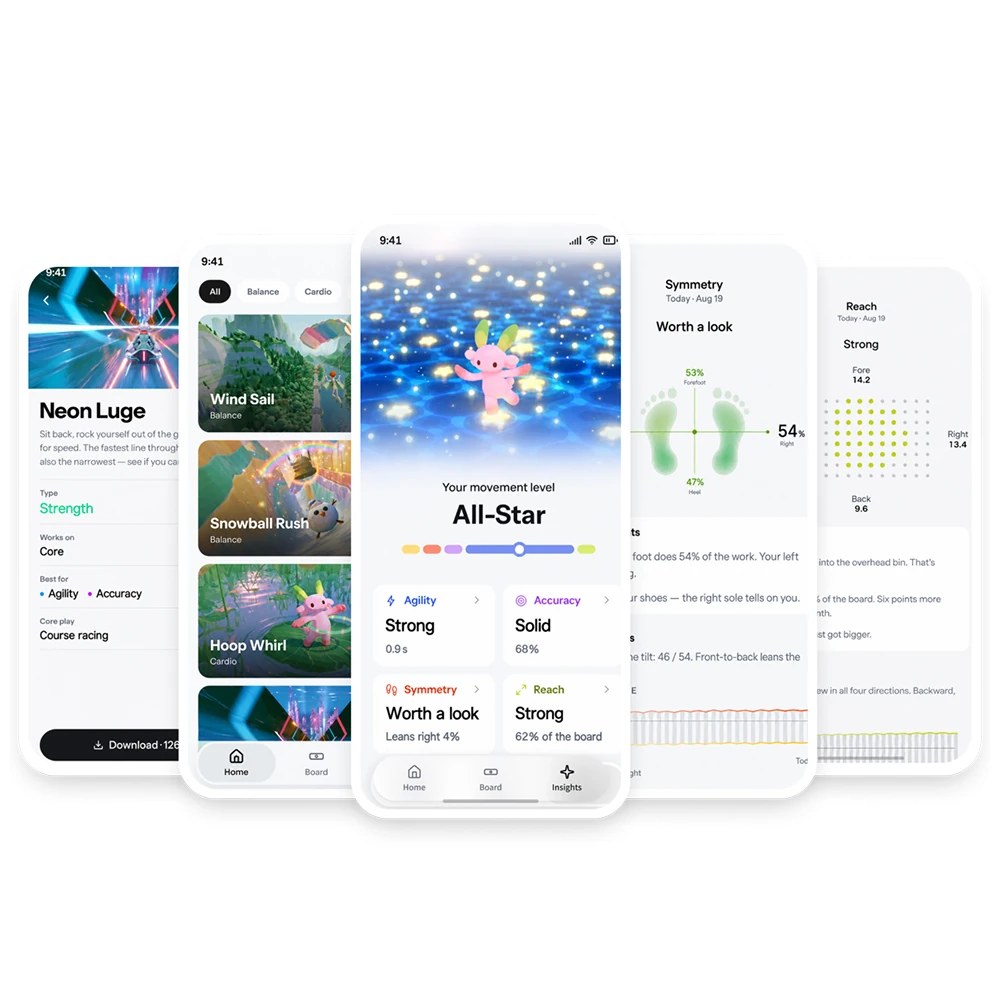
Play gets you on the board, and the tests are what keep you coming back. Kiwii built nine movement tests into the app, and every one of them ends in a score. Stand on one foot for thirty seconds, then hold the zone while the screen does its best to distract you. Match your steps to your eyes and see which one’s slower.
Each test feeds four movement insights, tracked in the Kiwii app on iOS and Android, so day one sits right next to day thirty. The app lines the four up side by side. A strong week for balance and a slump everywhere else both show at a glance. Your balance gets a number. So does your left side’s habit of letting the right side do the work.
That’s the trap, and it’s a kind one. The rematch is never against a stranger, it’s against last Tuesday’s version of you, and she was wobblier.
The numbers have a longer game in mind, too. Balance is the skill that quietly decides how steady the coming years feel. Kiwii built the tests to be retaken, not admired once and forgotten. A score that climbs a point a week makes a dull little graph and a genuinely surer staircase, curb, icy sidewalk, and trailhead scramble in October.
Kiwii aims a few of its framings at grown-up stakes, not gamer ones. Keep your strength through menopause is one of its own use cases, printed right beside staying steady for the years ahead. The games stay silly, and the reason to keep playing them doesn’t have to be.
Under your feet, a gentle buzz
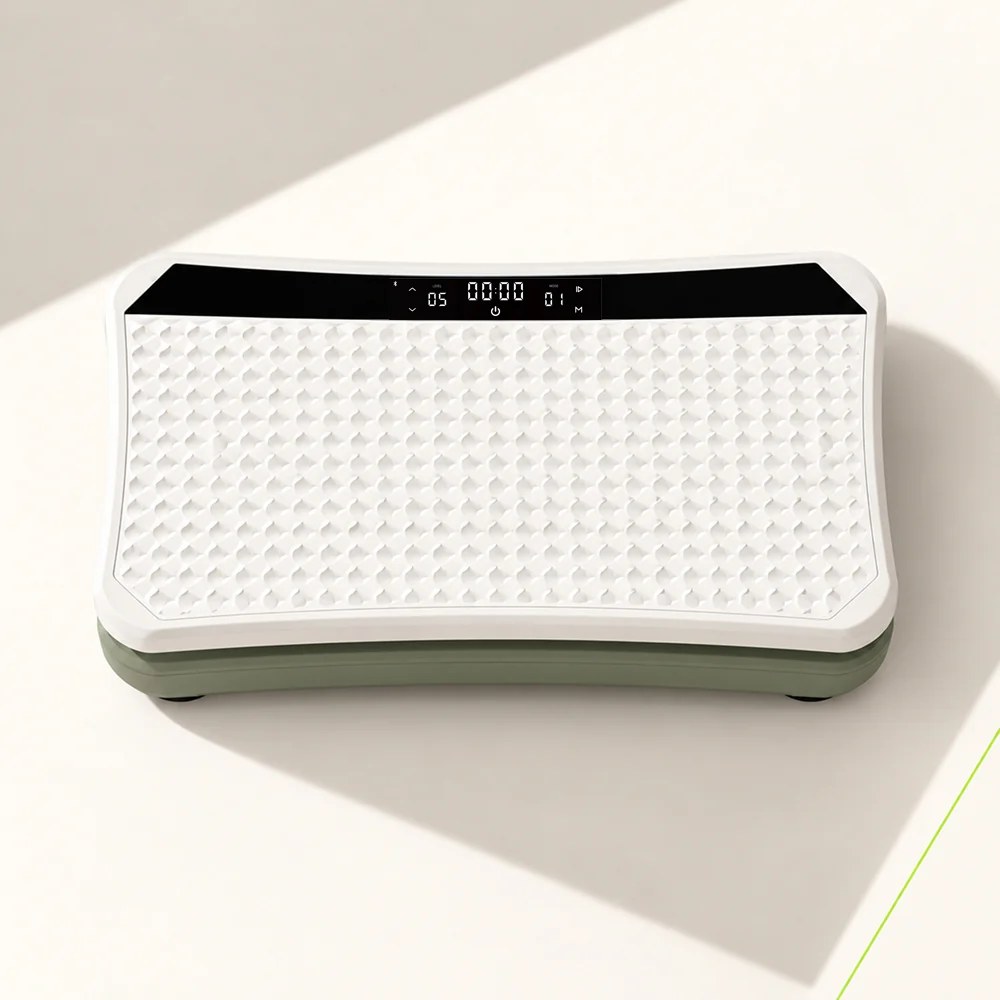
Strip the games away and the hardware’s a friendly thing. The vibration runs low-frequency and gentle, tuned across more than 90 intensity settings and three preset modes, so a session can feel like a wake-up or a wind-down. The top is non-slip TPR, grippy under socks, and the board plugs straight into the wall at 120V.
No batteries. No charging cable to lose behind the couch.
It connects over Wi-Fi and Bluetooth, measures 25.2 by 15.7 by 5.8 inches with a 5.5-inch step up, and holds riders up to 330 pounds. A small display rides the board’s front edge. Kiwii labels the specs preliminary while production locks down, and its patents are pending.
The maker’s own use cases read like a day in fast-forward. Ten minutes to undo the desk day, then a wake-up round before the coffee lands. Calves draped over the deck after a run, shoes kicked off beside it, recovering without pounding your joints. A balance check folded into the morning stretch, scored before the day even starts. Then a wind-down at night that skips the sitting still. Six little appointments, none of them a workout appointment.
Reserving on Kiwii’s early access page takes an email address and nothing else, no card, no deposit, and the first 500 boards go at $269 before the price steps up to $369. The boards ship in December with 30-day returns. Ten minutes a day is the pitch, and for once the pitch undersells it. The games are the easy part to start, and beating your own balance score is the part that follows you around all day. This one’s for anyone whose workout needs a high score and a rematch built in, so bring a friend, bring two.