
BYD opened pre-sales for the third-generation Tang in China on Friday, and the flagship skips the third row entirely. Five seats, two rows and a dashboard given over to screens mark the overhaul, with prices starting at $33,600.
It is the second half of a dual flagship with the seven-seat Da Tang, and it pushes the Dynasty line upmarket with air suspension and an 850-kilometer range rating.
A light wing across the nose
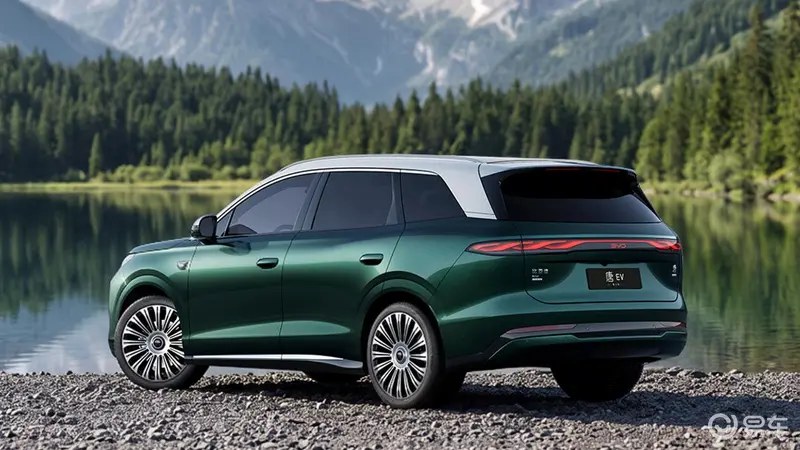
BYD calls the design language Tech Aesthetics, and the signature is the Flying Eave light wing, one integrated headlight element stretching 2.5 meters across the nose. A phoenix-inspired design shapes the taillight at the other end, and the body between them is a large five-seat SUV: 5,045 mm long, 1,980 mm wide and 1,740 mm tall, on a 2,950 mm wheelbase.
The details stay tidy elsewhere: a closed grille, hidden door handles, chrome trim along the flanks and multi-spoke wheels, with a sloping rear end that gives the tall body a coupe-like cut. BYD photographs the car lit, wing on, in nearly every press shot. The face is the advertisement.
The Tang debuted at the Chengdu Auto Show in August and surfaced in the regulatory filing catalog last month, so the shape has been public for a while. Friday brought the missing piece: the price.
Nothing about the silhouette shouts. The light bar does the talking.

The dash is two screens deep

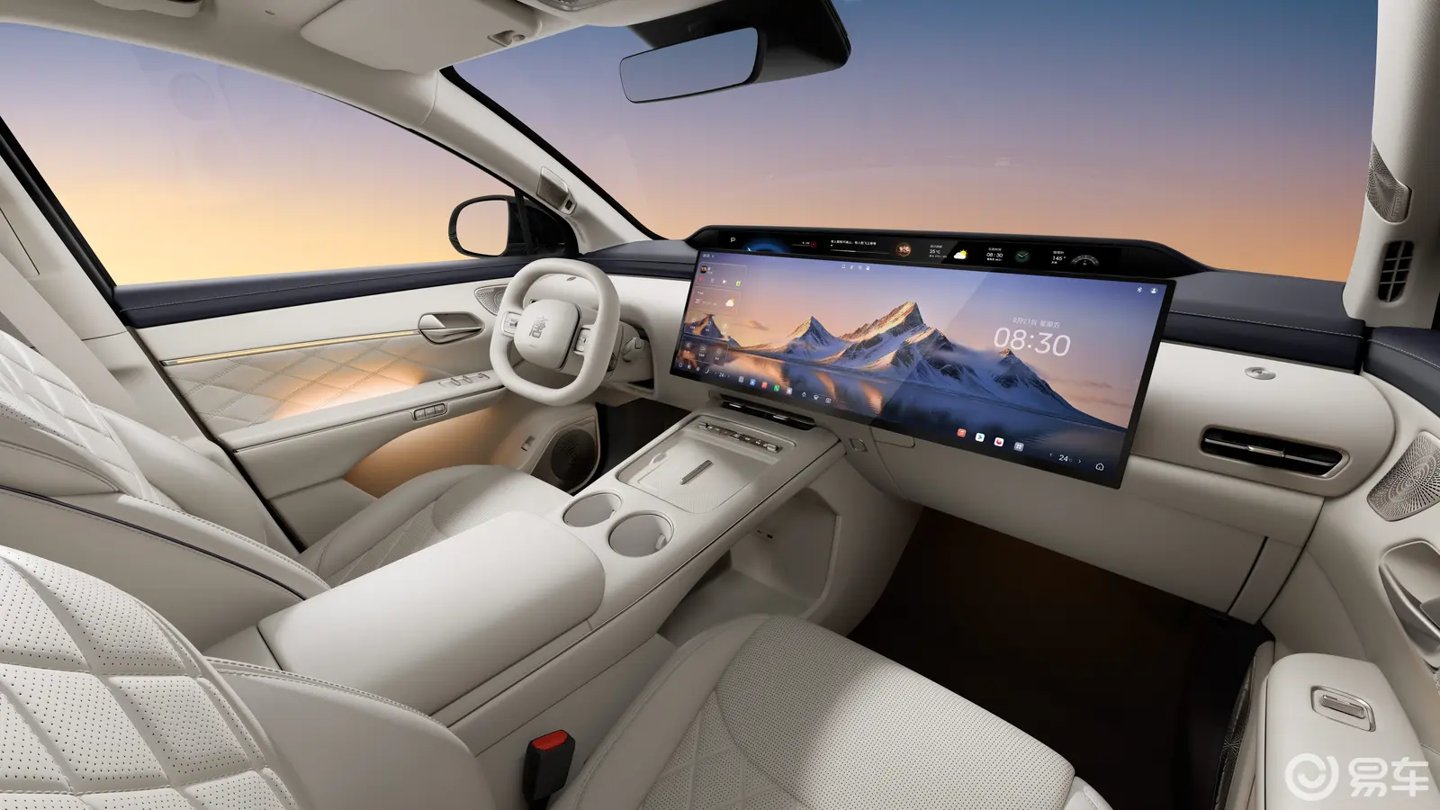
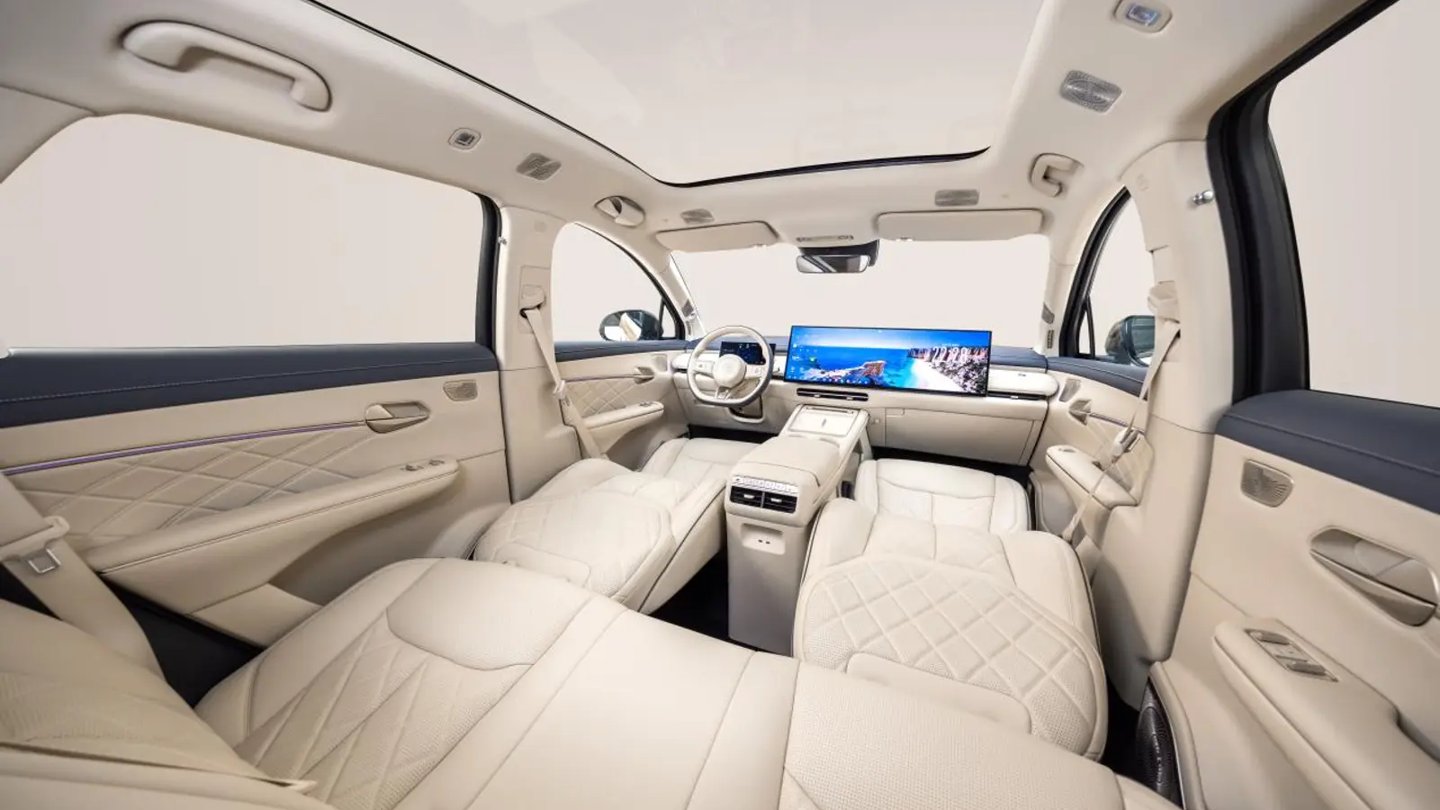
The cabin runs on DiLink Max, built around the layout BYD calls Interstellar Dual-Screen. A 35.4-inch integrated screen sits far forward under the windshield and carries the driving information, while a 30-inch panoramic screen beside it handles entertainment.
BYD places the driving data at the far end of the dash on purpose, so the driver reads it without dropping focus from the road ahead. The DiClaw AI agent layers voice recognition and scene perception over the displays, the dash around them carries almost no physical switchgear in the press photos, and the entertainment screen is sized for video at a charging stop or a film for the second row.
The screens are the interior.
Even the steering wheel is a choice, a classic circular rim or an oval one. The seats are Nappa leather in a 12-layer structure, and four of them bring ventilation, heating and a 10-point massage function. Ambient lighting runs to 127 colors, and the cabin theme, Living in Light, leans on cream leather and a wide glass roof.
691 horsepower under the calm
The rear-wheel-drive Tang runs a single 300 kW motor, good for 402 horsepower. The all-wheel-drive version adds a 215 kW motor at the front, and the combined 515 kW, or 691 horsepower, moves the big SUV from 0 to 100 km/h in 4.3 seconds.
DiSus-A dual-chamber air suspension looks after the ride, working with a double-wishbone front axle and a five-link rear under a cage-structure body. Air suspension at a $33,600 starting price is the flex of the spec sheet, hardware that usually lives several price classes higher.
Energy comes from second-generation Blade battery packs, lithium-iron-phosphate units of 88.6 and 105.8 kWh. Range gives the trims their names: 850 kilometers on the CLTC cycle for the rear-drive cars, about 689 kilometers on the stricter WLTP scale, and 770 kilometers for the all-wheel-drive version. CLTC flatters every car it tests. Discounted for the real world, the numbers still describe a long-legged family car.
Every trim carries 11 airbags and the God’s Eye B assistance suite, with urban navigation, intelligent parking and a stabilization system for high-speed tire blowouts. The TBC system exists for the worst second of a tire’s life, holding the car steady through a blowout rather than letting it pull.
Three trims and room to spare
Pre-sale pricing splits three ways. The 850km RWD Premium starts at 225,000 yuan ($33,600), the 850km RWD Flagship asks 240,000 yuan ($35,800), and the 770km AWD tops the line at 260,000 yuan ($38,800).
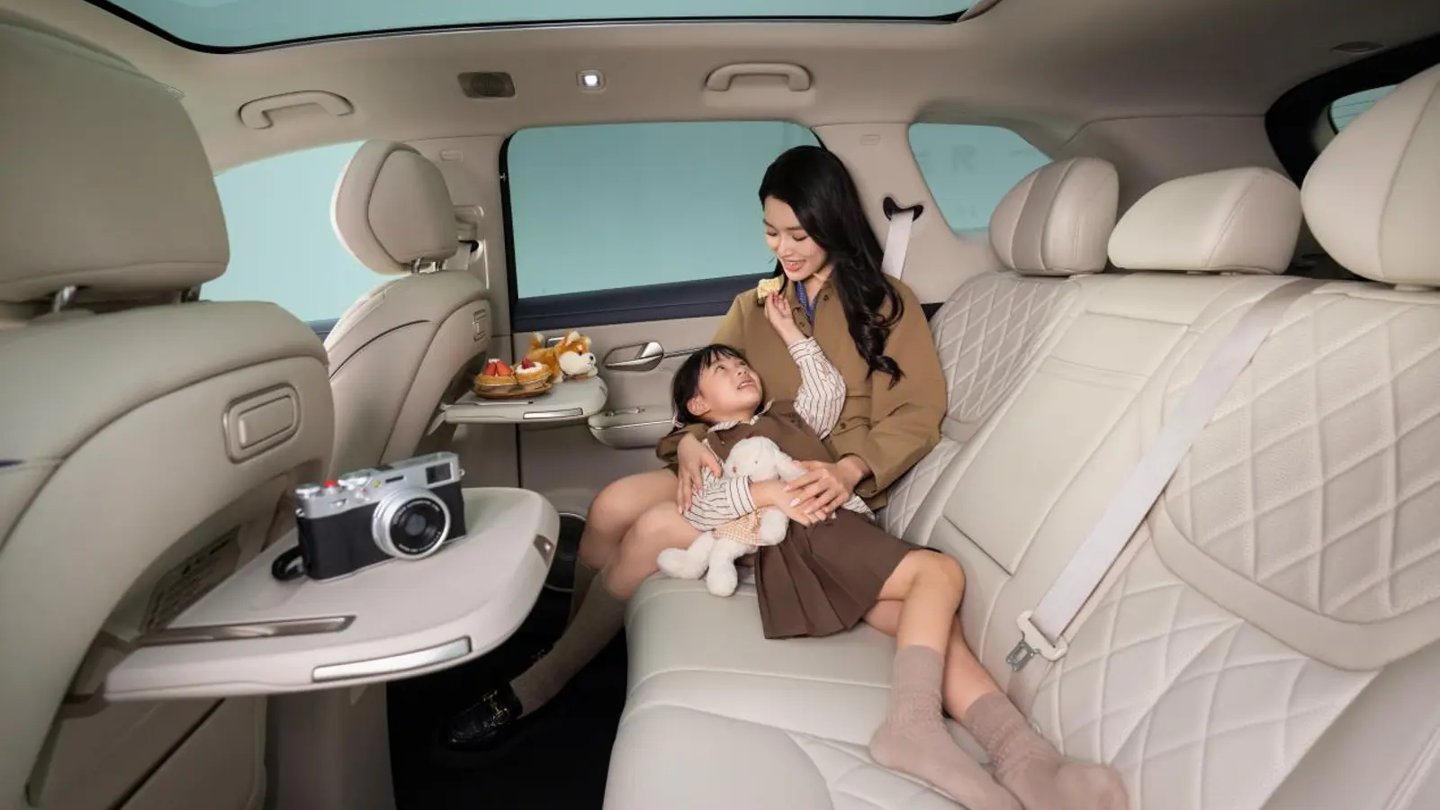
The five-seat bet is the interesting one. Chinese flagship buyers have defaulted to three rows for a decade, and BYD is wagering that screens, silence and range outrank two extra seats that spend most of the year folded flat.
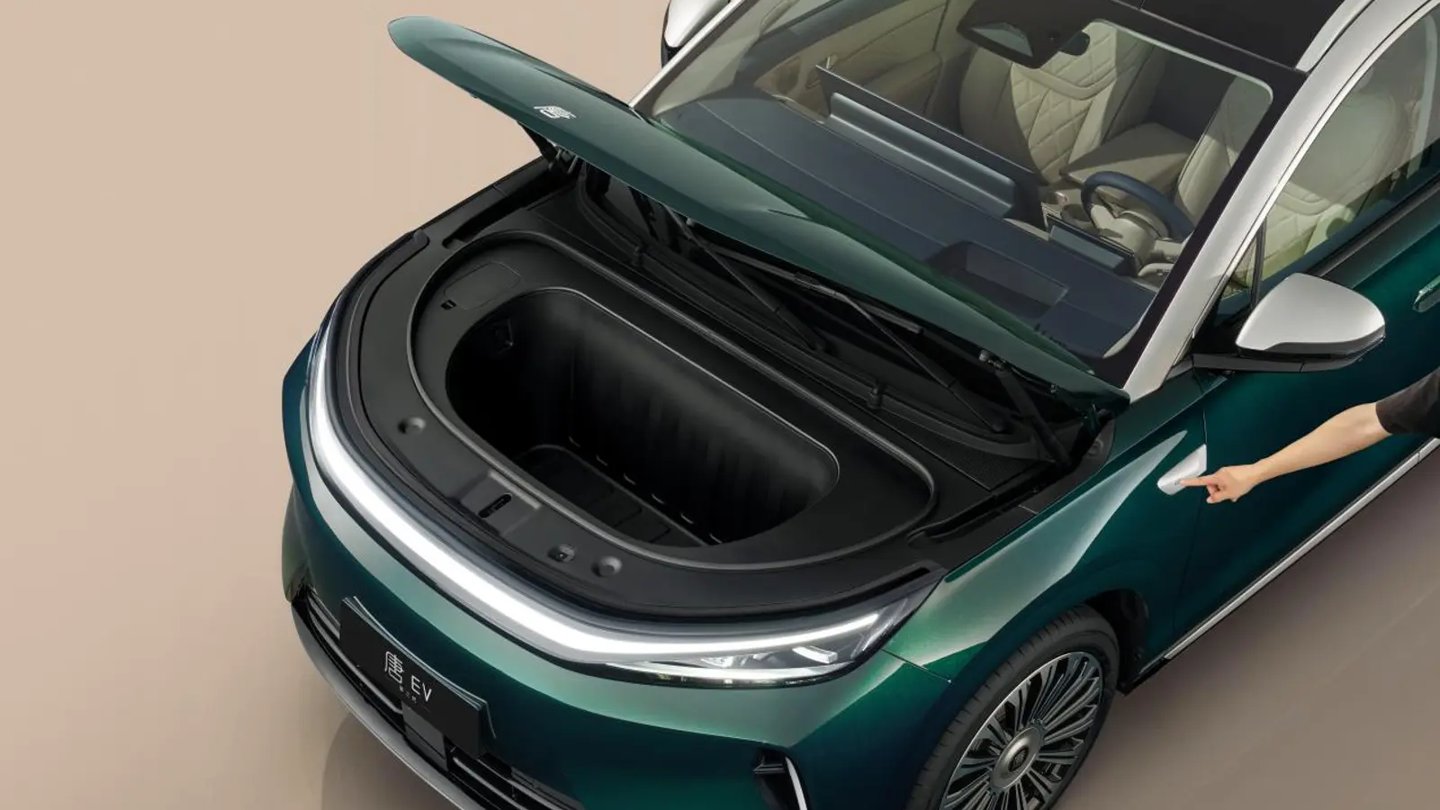
The space math stays family-first: more than 47 storage spaces around the cabin, a 205-liter front trunk, and a rear trunk of 910 liters that grows to 2,098 liters with the second row folded. Cars are already on Dynasty dealership floors, which Lu Tian, the network’s sales general manager, flagged on Weibo as pre-sales opened.
The Tang’s job in the lineup is to hold the large-SUV ground against Li Auto, Aito and Nio while BYD pushes upmarket, and the five-seat layout is the deliberate gap beside the seven-seat Da Tang. One carries the crowd. This one makes the case for five seats, with the screens and the range doing the persuading.
Whether the flagship formula travels beyond China is a question BYD has not answered yet. The car itself needs no translation.