
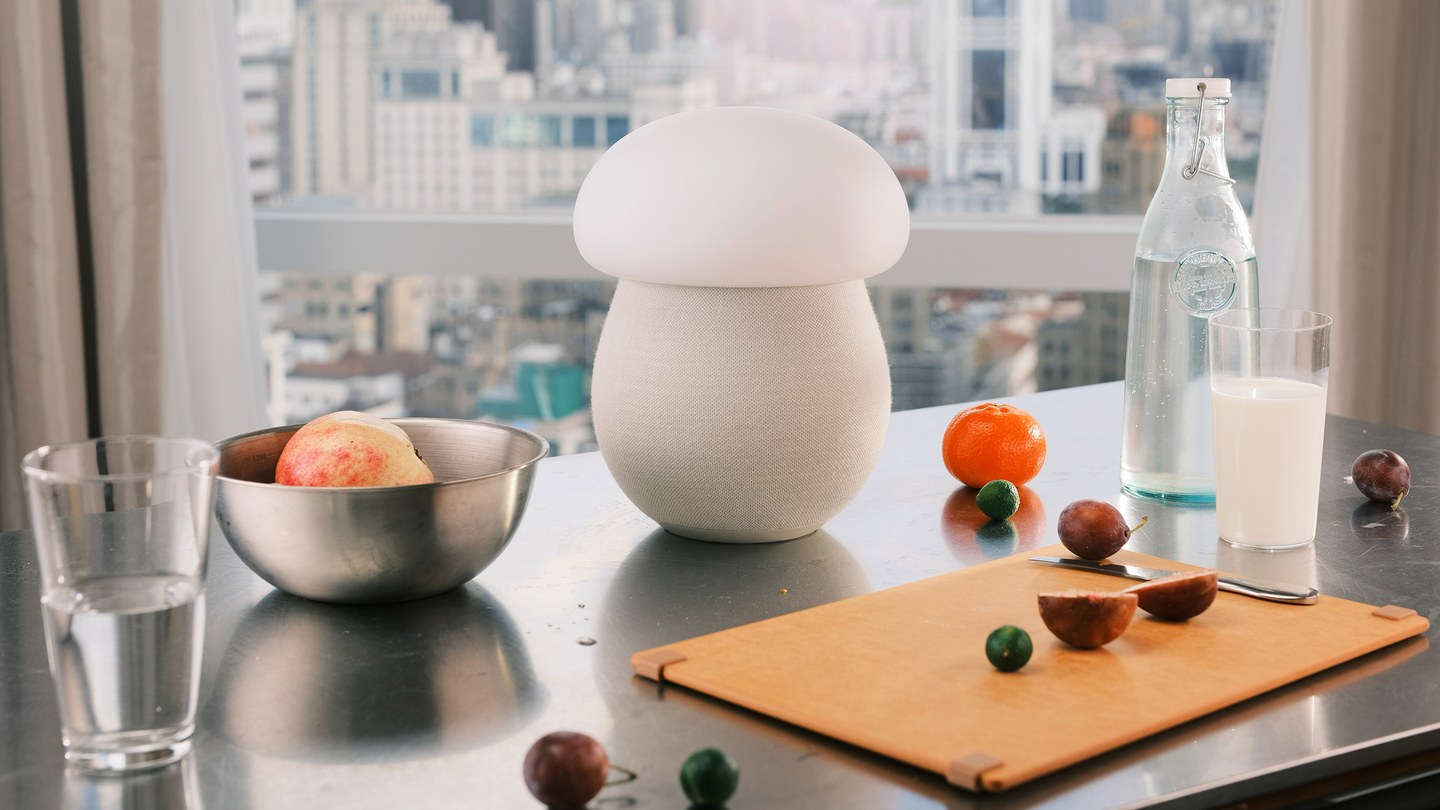
Most home robots show up looking like robots, all seams and sensors and blinking status lights. Mori shows up looking like a lamp. There’s a squat, cloth-covered base, a soft dome on top that glows, and nothing about it asks for attention. It sits on a kitchen counter the way a kettle does, like it has always lived there, and the first few times you walk past it, you won’t register it as a machine at all.
Underneath the disguise, Mori is a companion robot from OKA, a small studio in Cambridge, Massachusetts that designer Hua Wang and robotics researcher Weizhe Chen founded in 2024. It greets people, plays nature sounds, keeps you company. The tech isn’t the interesting part, though. The object is. The first production run, sold as First Access at $649, has already sold out.
A lamp first, a robot second
OKA’s reasoning is refreshingly simple. Most robots look technical or mechanical, and the humanoid ones can tip into unsettling. A lamp is something people already live with comfortably, so Mori borrows the lamp’s shape, its scale, and its manners. The soft silhouette and the tactile materials are there to help it blend into a room rather than dominate it. In the photos, the trick lands. It looks like furniture that happens to glow.

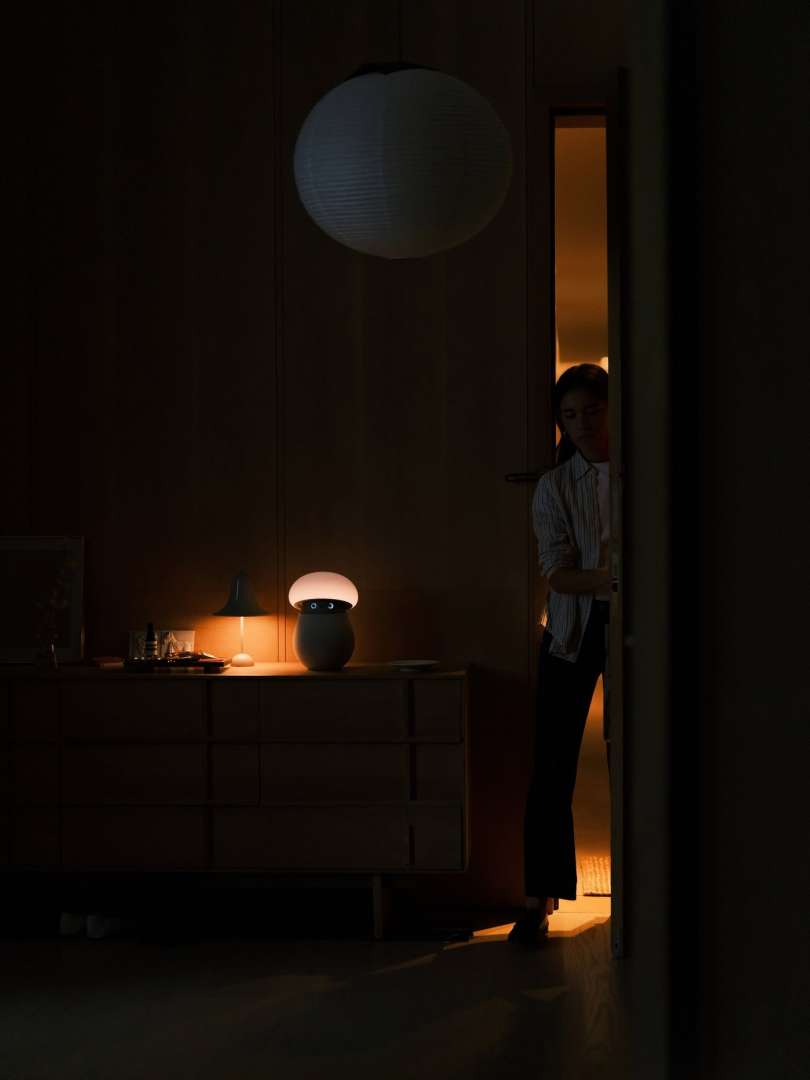
The proportions help. Mori stands 26.4 centimeters tall at rest, about 10.4 inches, measures 20.9 centimeters across, and weighs 2.5 kilograms. Side-table scale. It’s rechargeable, and OKA suggests keeping it plugged in, which tells you where the studio expects it to live: parked in one loved spot, not carried from room to room.
Mori is the studio’s first artifact, model ARTIFACT-01, with five planned in OKA’s lifetime. A design language, not a one-off.
The face hides on purpose
There’s a face under the dome, and it only appears when Mori switches into its responsive mode. The illuminated head lifts, and two cartoonish eyes blink and swivel underneath. Tap the top of its head and the face retracts, the head settles back down, and it’s a quiet lamp again. No menus, no wake word, no settings page to dig through. One tap, and the robot goes away.

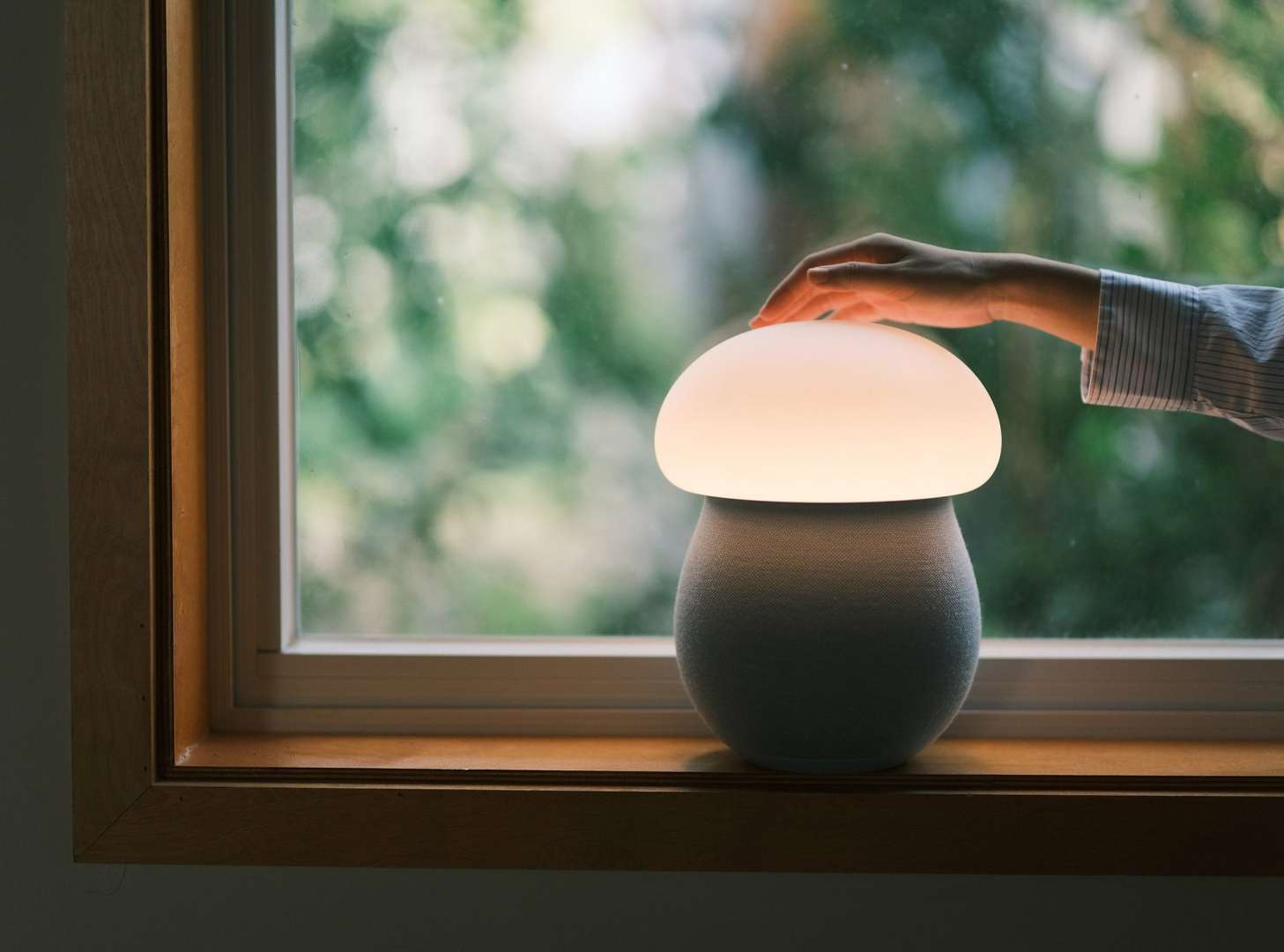
The dome does double duty as the light itself, shifting color as Mori responds, while a multi-axis neck and body handle the nonverbal side: small tilts, little movements, tiny sounds.
Designing the face to disappear is the whole philosophy in one gesture. Expression shows up when you want it, and it’s gone the moment you don’t.
Four soft colors, one round shape
Pebble, Moss, Fog, and Timber. The finish names give the game away, because OKA calls Mori a nature companion and the palette follows: warm grey, soft green, mist, and a woodsy brown. These are colors chosen for living rooms and kitchen counters, not for a toy shelf or a gadget wall, and they sit comfortably next to ceramics, wood, and linen.

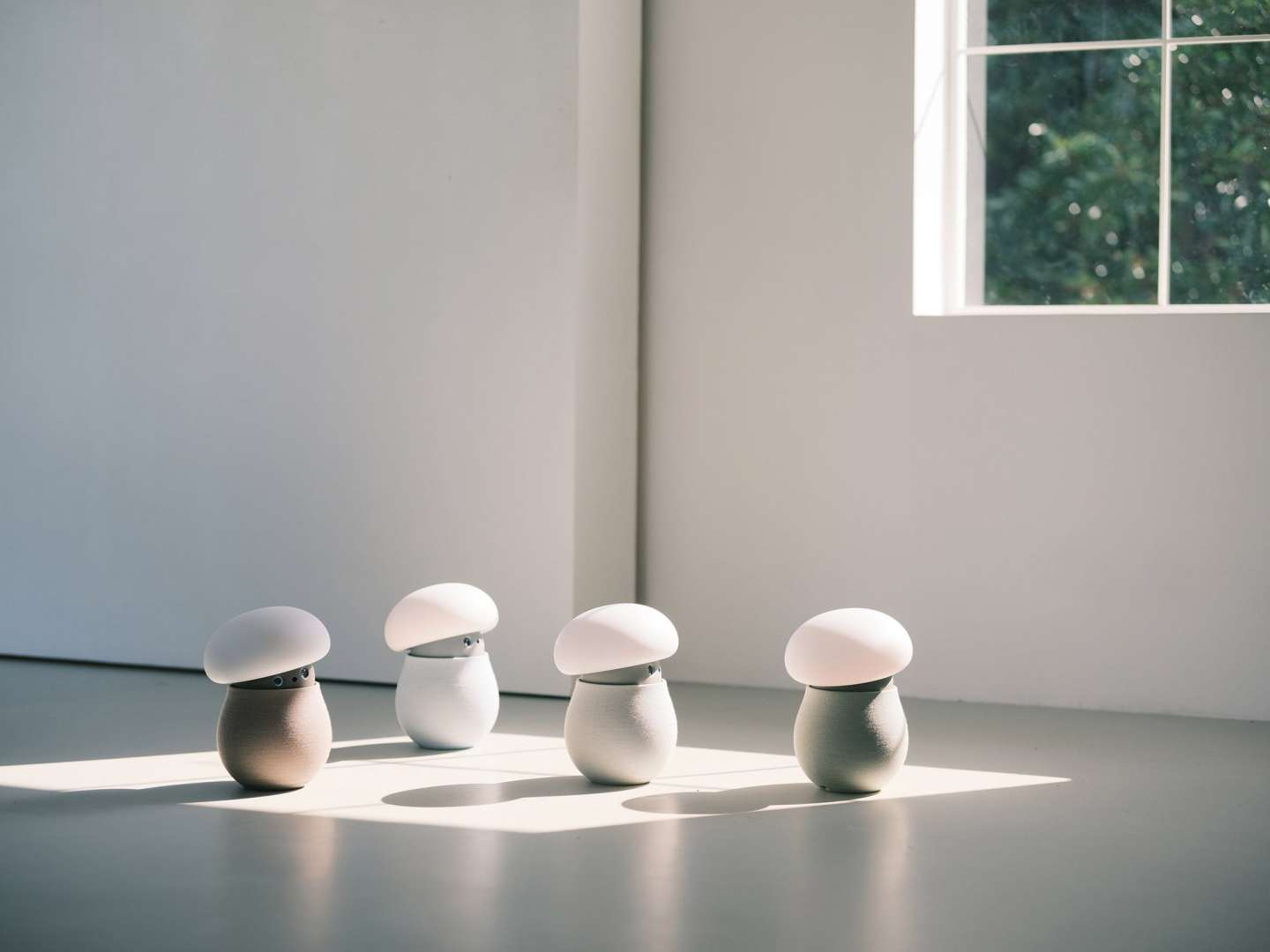
Every finish keeps the exact same silhouette, so color does all the personalizing.
Line the four up in a shaft of sunlight and they look like a little family of stones. Pick whichever one disappears into your room best. That’s the assignment, really.
What it does while it sits there
The companion side stays deliberately small. Mori greets you when you come home, plays rain and other nature sounds, and dances to music. Grab its base and it walks you through a breathing exercise instead. OKA gives it an inner state called VIBE, short for Vitality, Interaction, Bonding, and Emotion, which drifts with time and experience, so the same greeting can come out lively one day and gentle the next.

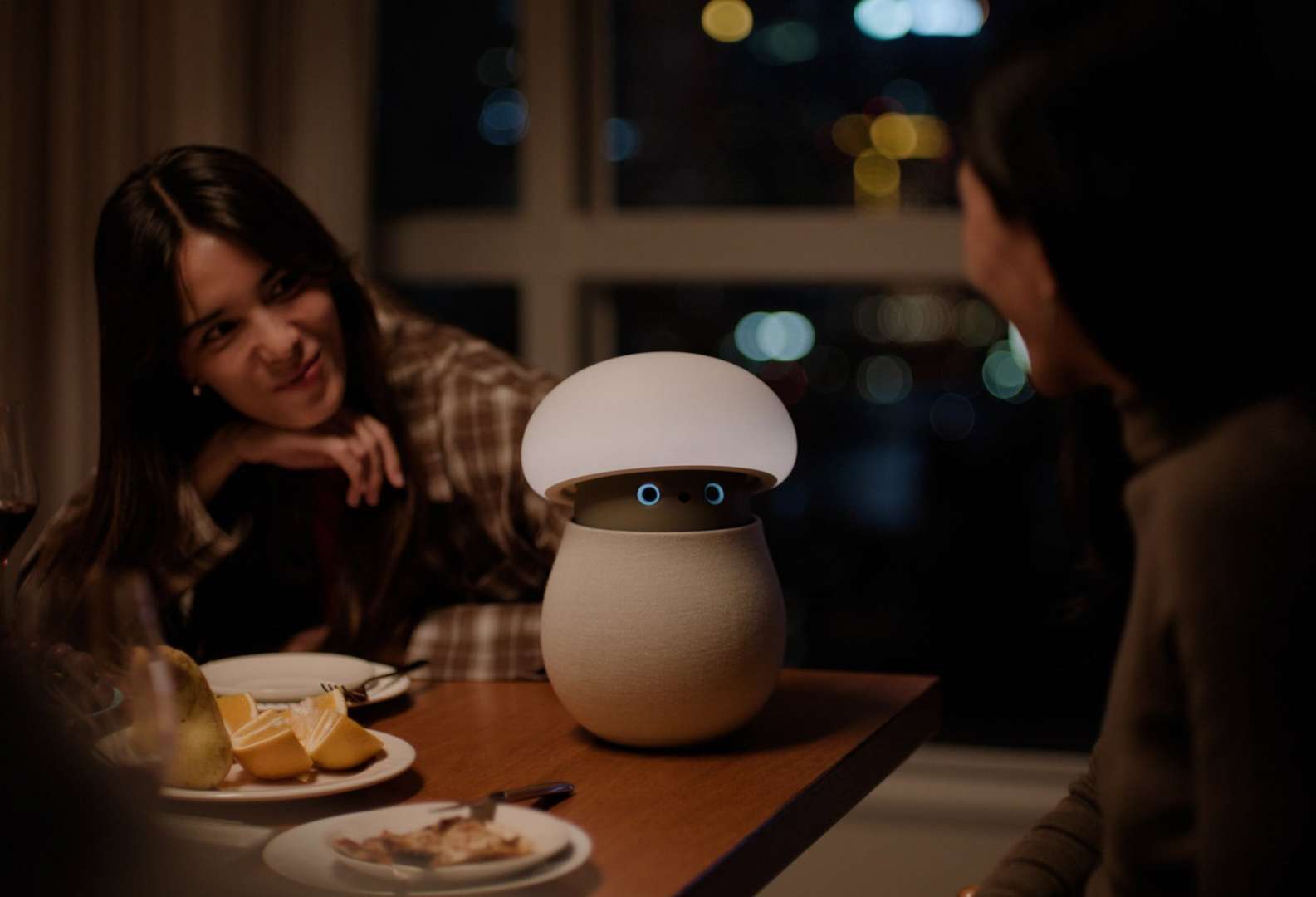
It also remembers the people in the house, their routines, and how past interactions went, then judges when to join in and when to stay quiet. Sometimes a small nod is enough. For a companion robot, restraint might be the most advanced feature on the list, and it’s certainly the one competitors keep skipping. Most companion robots are designed to interrupt better. Mori is designed to interrupt less.
Every smart device on the market demands attention on its own schedule and keeps demanding until it gets it. Mori’s best trick is retreating into a lamp the second you’ve had enough. It doesn’t sulk or ask you to finish a setup flow first. That’s not a limitation. That’s taste.
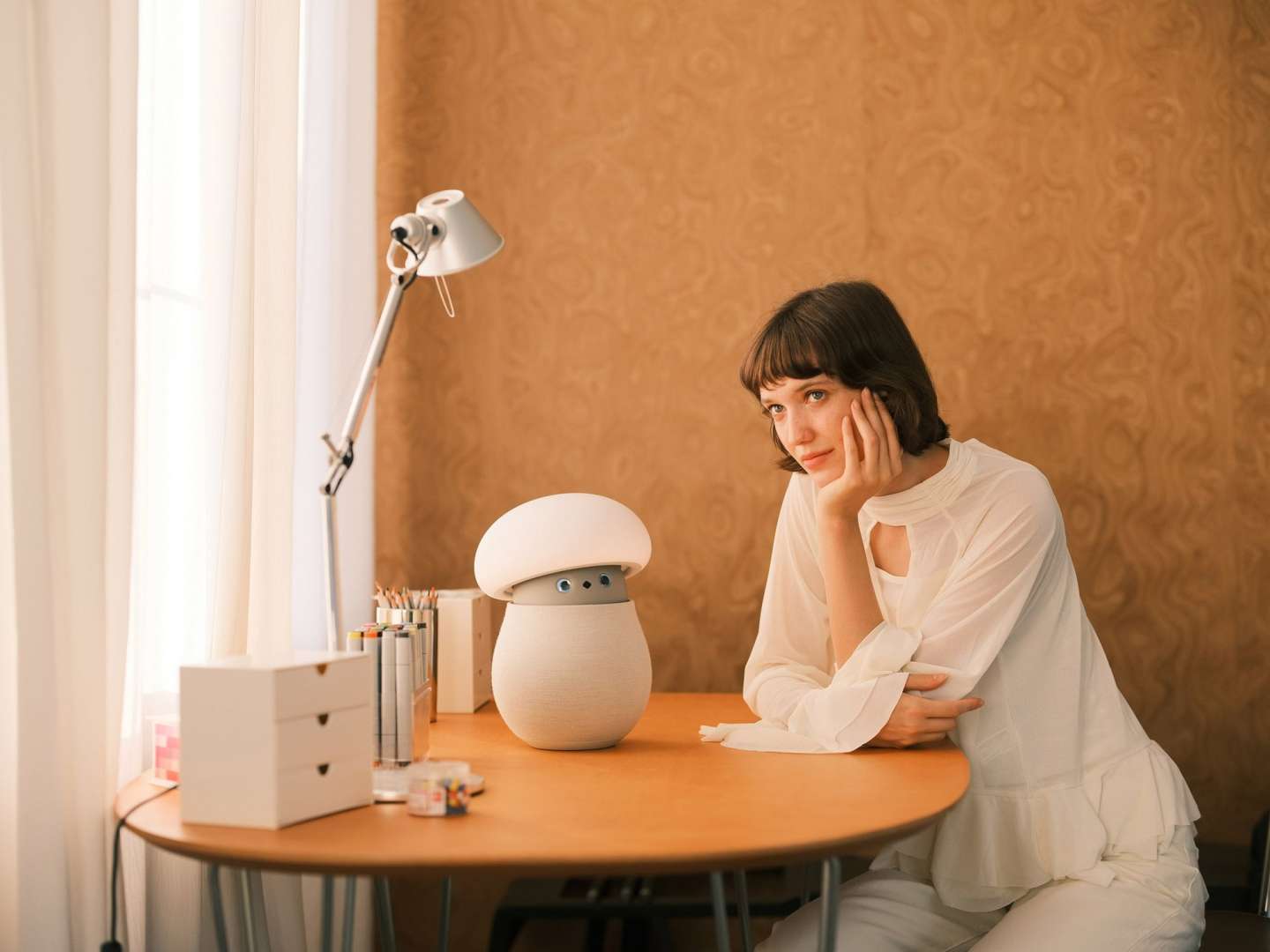
The sold-out first run was small by design, and Mori won’t suit everyone. But as a first artifact from a young studio, it makes a clear argument: the home robots that win won’t be the ones that look most alive. They’ll be the ones that know how to sit still.