The Timex Waterbury range reads like a primer in older American watch design, written in steel and priced for a first serious purchase. Six models carry the lesson.
Quartz movements run the current versions. The layouts survive as design rather than necessity, and the forms still work.
A design language borrowed from the mechanical era

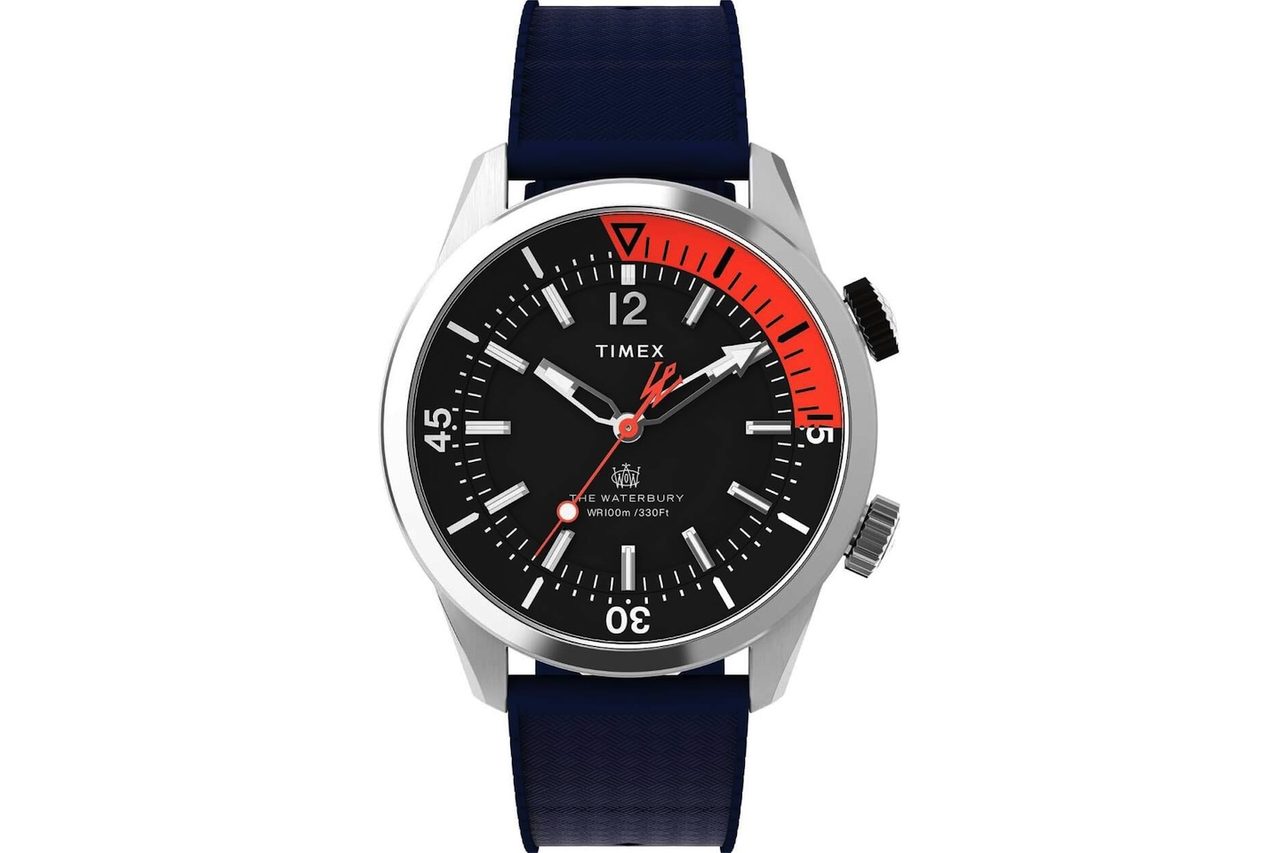
That distinction shapes the whole range, because nothing here chases a glowing screen or a fashion logo, and the dials stay busy in the way instrument dials were busy for a century. Information sits in rings and registers. Readers who know the older watches will read these faces at once, and readers who don’t will learn the grammar quickly, since every register sits where a hand or an eye expects it to sit.
A fuller Gadgeteer roundup of the same six Waterbury watches works through the set as a buying list, pick by pick and price by price. This piece takes the design route instead, asking what the dials borrowed and why the borrowing still reads well on a modern wrist in ordinary light.
Start with proportion, since five of the six cases measure 41mm and the sixth drops to 39mm, a spread that keeps the whole range inside classic territory rather than modern billboard territory. Nobody’s chasing wrist presence here. The cases stay quiet so the dials can talk.
Three chronographs and three different tempers
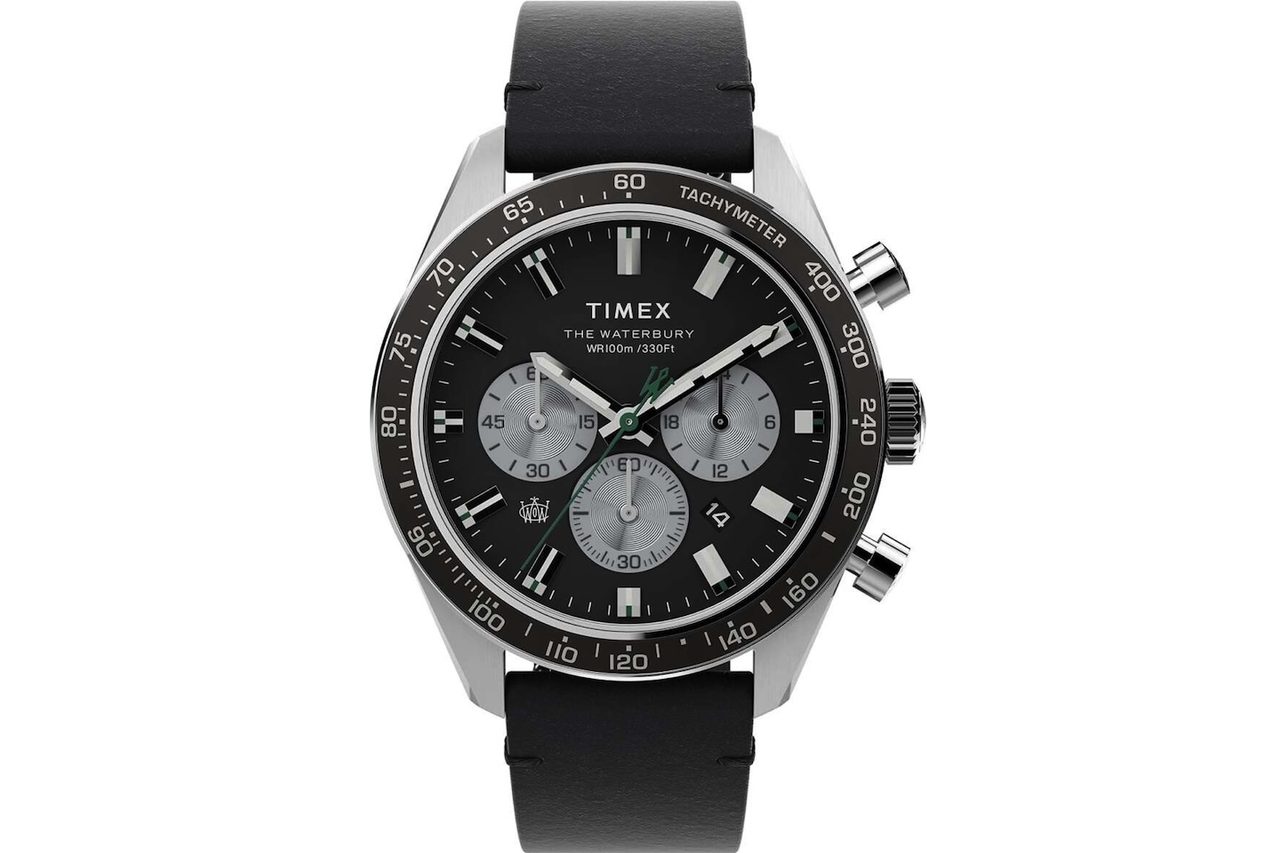
The Waterbury Traditional 41mm opens at $155.47, the lowest price across the six, with a blue dial, tonal subdials and red accents carried on bold markers that stay readable as light fades. Its date window sits between 4 and 5 o’clock, tucked into the chronograph layout rather than punched through it. The arrangement feels considered. It reads dressy on a bracelet and calmer on leather, and the family carries 100 meters of water resistance.
A tachymeter bezel rings that dial. It’s the oldest device in the chronograph book, a scale for timing speed over distance.
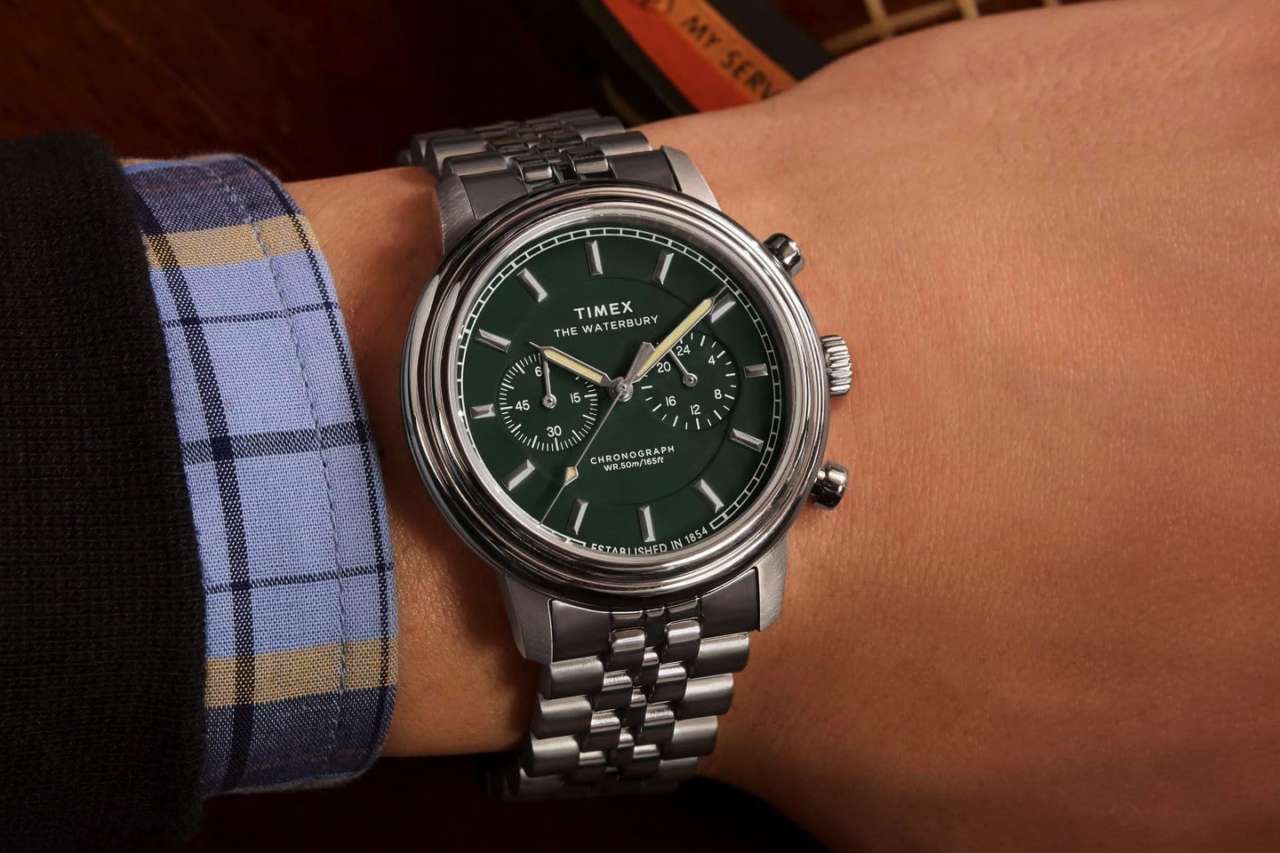
The Metropolitan Chronograph 41mm takes the same complication toward dress, with an enhanced stainless case, a two-tiered bezel and sharp lines that sweep down into a matching bracelet. Timex rates it to 50 meters, and the case stands 11mm tall, slim enough to slide under a cuff without catching at the office or at dinner. Polish does the talking here. At $188.46, it’s the bracelet watch of the set.
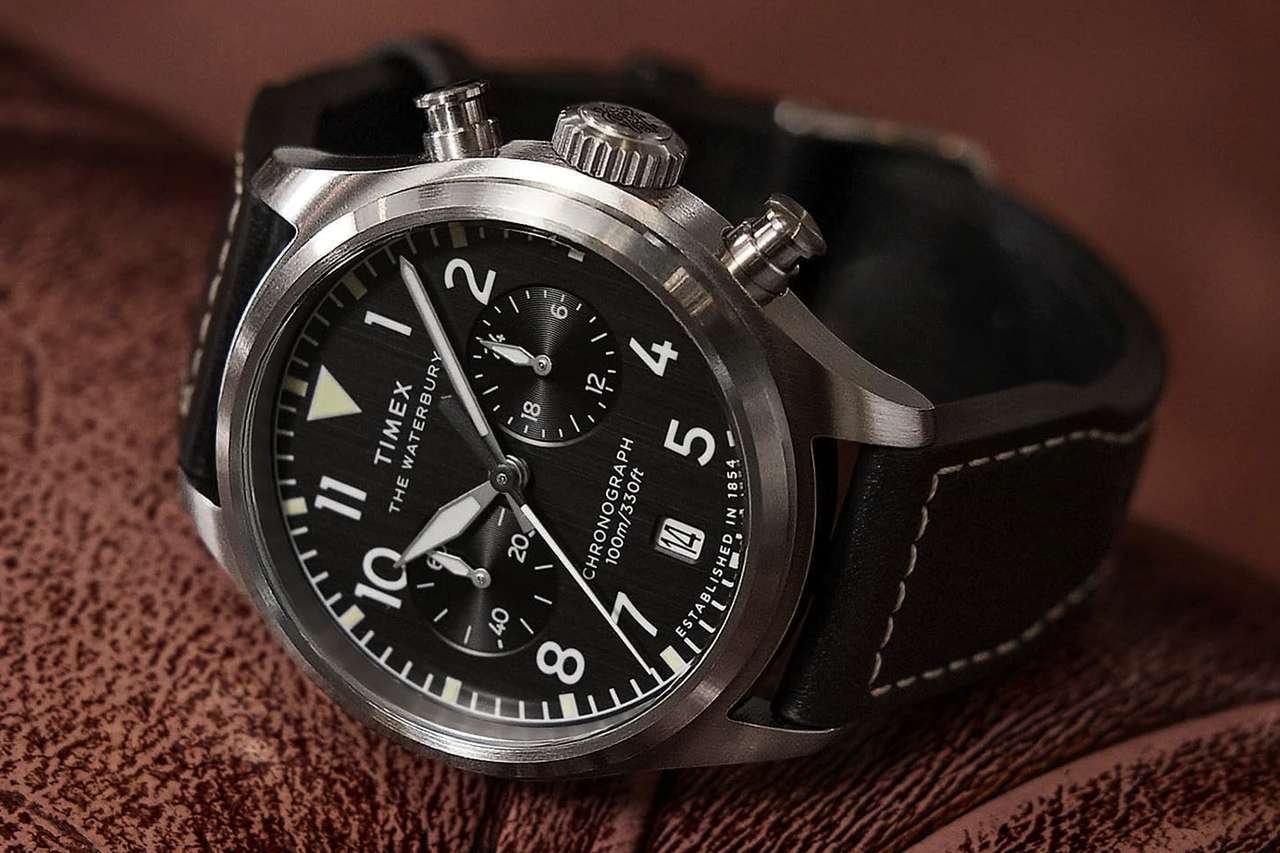
Then the Diver Chronograph turns the register outward again, pairing luminous hands and indexes with 100 meters of water resistance under a mineral glass crystal in a 41mm case, model TW2V42500VQ. Owners have noticed. Its 4.5-star average across 339 ratings is the strongest owner record in this set, and the black strap keeps it in tool territory.
The quieter dials reward a slower look
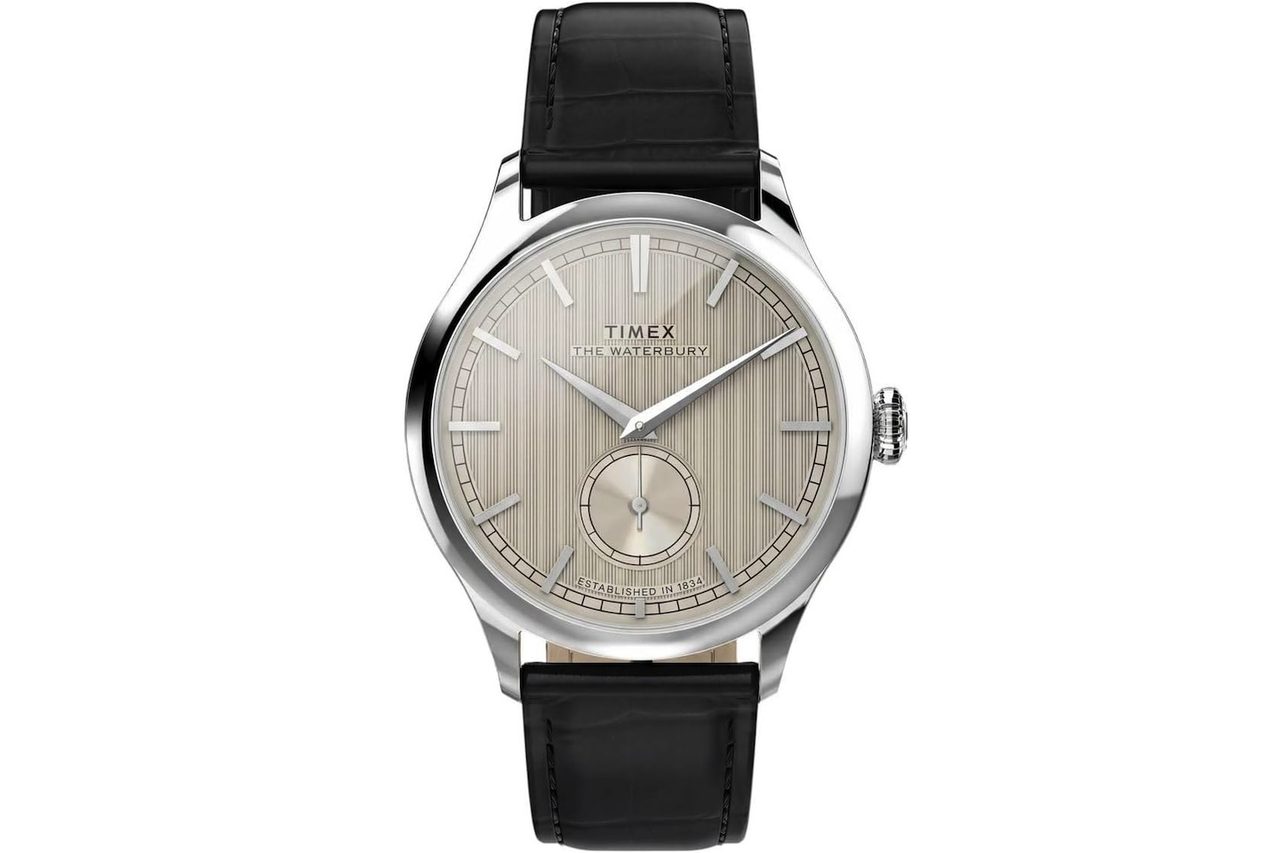
At 39mm, the Waterbury Classic spends its detail budget on texture, running a pronounced silver-tone handset and matching markers across a patterned face that rewards a second look. A sub-second dial sits at 6 o’clock under slightly domed mineral glass. Small case, deep dial. The texture does what a complication does on the larger models, giving the eye a reason to return. The smaller case sits closer to dress proportions than anything else in the range.
Its black strap comes from Leather Working Group sources. The crocodile grain matches the dial story at $179 flat.
The Ace answers with contrast instead of texture, a black dial on a brown leather strap in a 41mm stainless case running a simple quartz movement. There’s no complication competing for space. The warmth of the strap against the dark dial carries the entire design, through a working week and into dinner.
The Legacy puts the calendar back on the dial
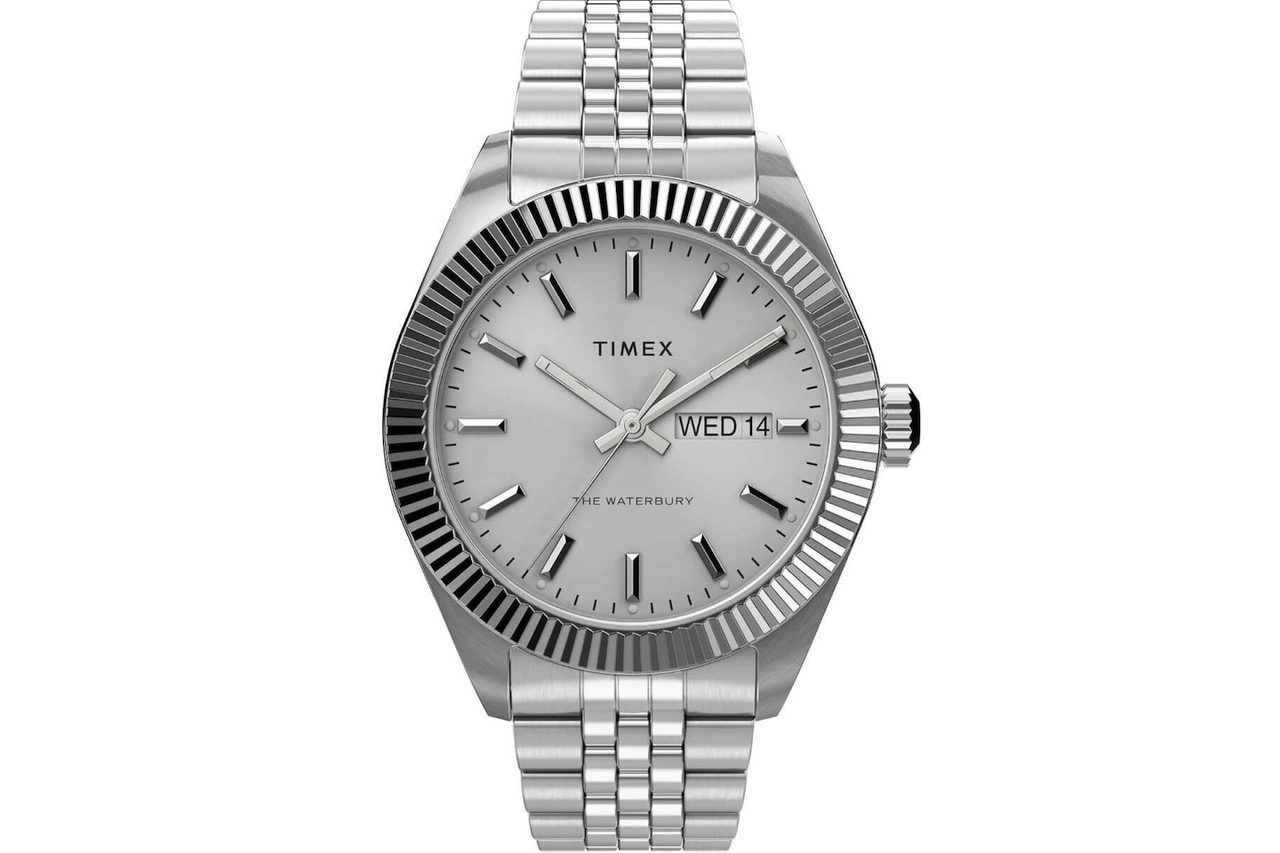
The Waterbury Legacy Day-Date 41mm tops the set at $194.77, and it earns that slot with the one display the chronographs skip, a full day and date readout set into the dial. A silver-tone face rides on a matching stainless bracelet, model TW2V17300VQ, so the watch forms one finished piece of metal. The calendar does quiet work.
A day and date window sounds minor until a phone dies at an airport. It’s the most traditional layout in the range, borrowed whole from working calendar watches.
Where a first heritage watch actually starts
Read together, the six watches show that good design ages slower than technology. Every dial here would’ve made sense on a wrist sixty years ago, and each still makes sense now, at an office or a school gate. The quartz movements remove the servicing bills and the winding ritual. What’s left is the part worth keeping, the layout, and the layout is the part a new buyer actually lives with every day.
Buy the Traditional if a first heritage-styled watch is the goal, because its chronograph, date window and 100 meters of water resistance arrive at $155.47, the lowest price here. Start there. Trade up only for the Legacy’s calendar or the Classic’s smaller case.