
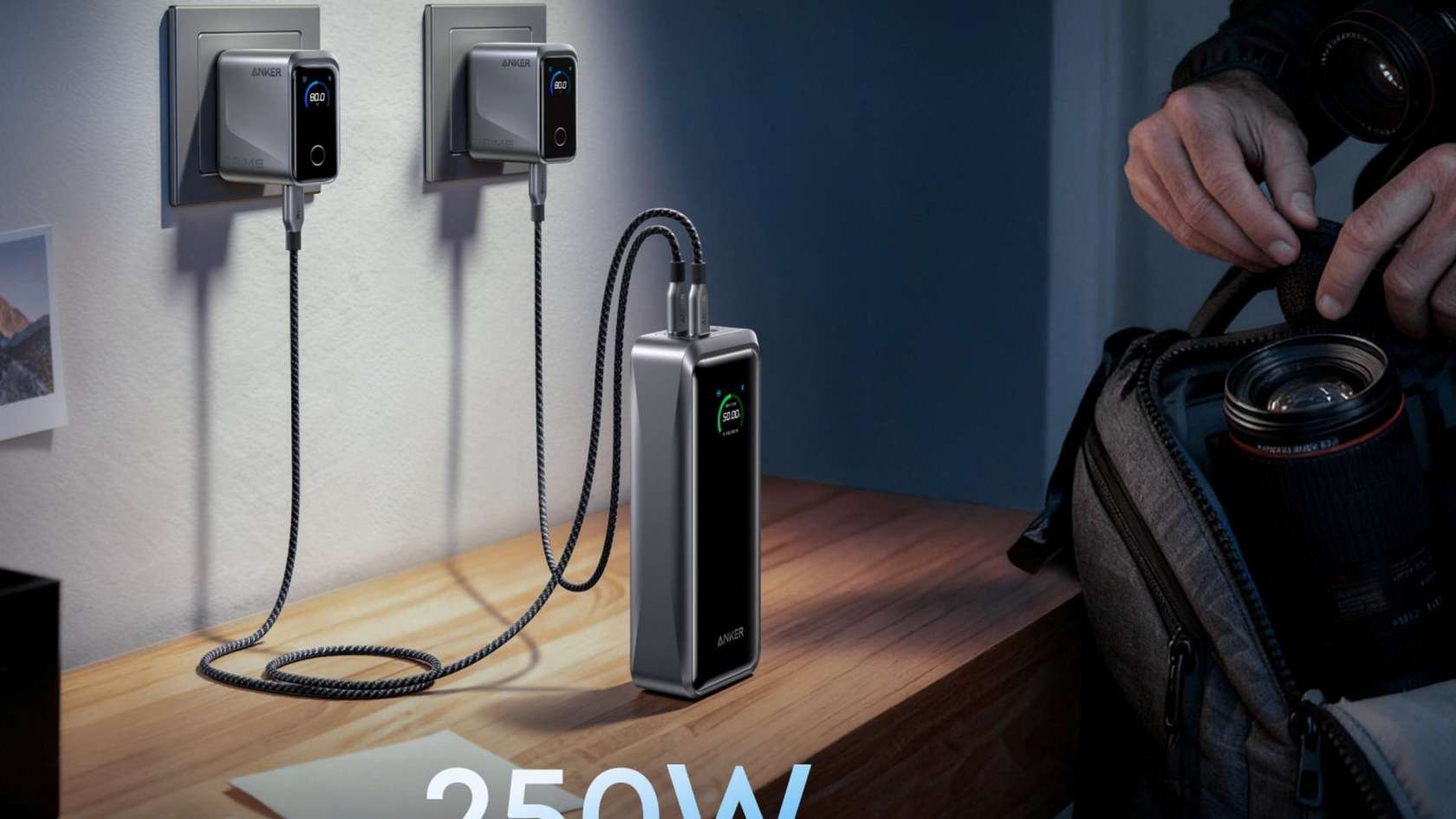
A power bank that can run a laptop sounds like a brick, and most of them are. This one weighs 1.32 pounds, holds 26,250mAh, and pushes up to 300 watts across three ports at once.
It’s $199.99 on Amazon right now, which is $30 under the $229.99 price on Anker’s own store. A 13 percent cut will not change your life, but it changes the comparison against smaller banks.
It’s a lot of bank. That’s the idea.
300 watts, split three ways
The 300 watts split across two USB-C ports and one USB-A port on the end of the bank. Either USB-C port can deliver 140 watts on its own, enough for a hungry laptop at full speed.

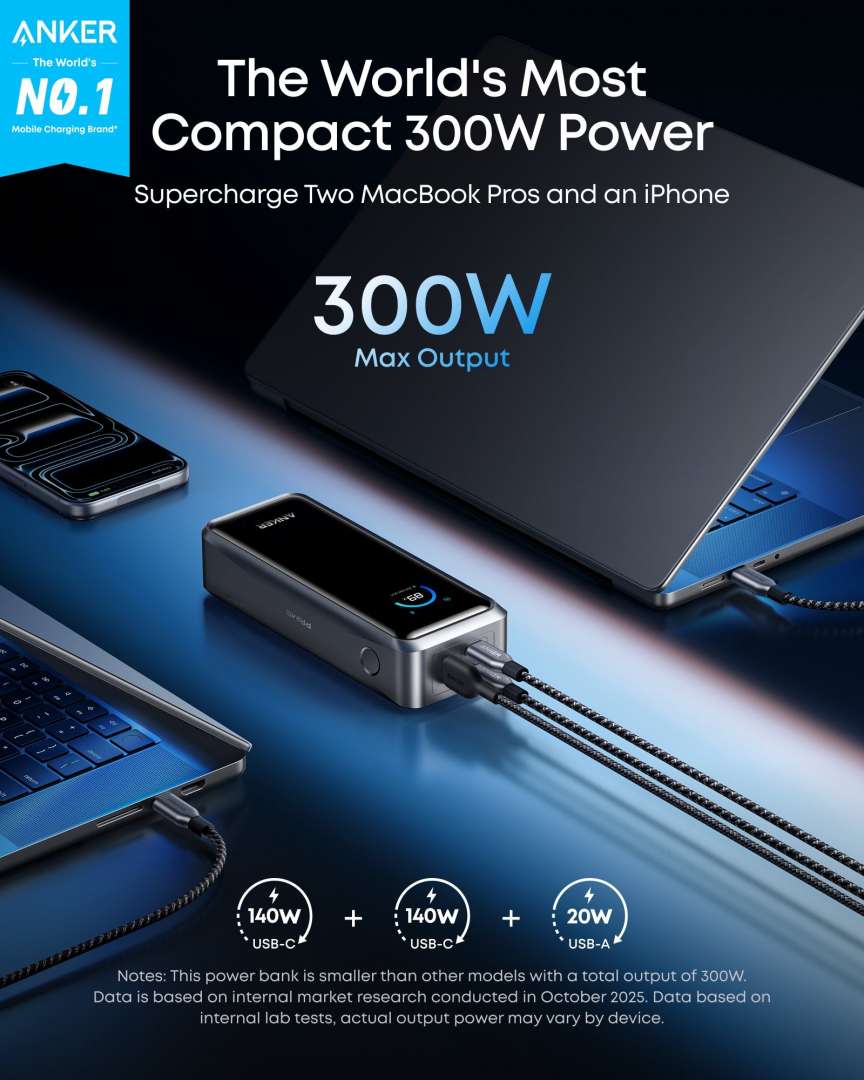
Plug in two laptops and a phone, and the bank shares its total across all three.
Anker rates that mix at 140 watts per USB-C port plus 20 watts from the USB-A. That’s two work laptops charging properly, not sipping, while a phone tops up on the side. For a shared desk at a conference or a kitchen table during an outage, that split is the whole appeal.
The screen helps there. One glance, one number, no guessing.
A small screen on the face shows the charge level and what’s flowing out.
Anker also builds in app control and its ActiveShield 4.0 temperature checks. The display sounds like a gimmick until a bank is buried in a bag and you want one number fast.
Charging two laptops at once used to mean two wall bricks and a power strip in the bag. One bank replacing that tangle is the real travel upgrade here. The wattage headline just explains how it pulls the trick off.
The refill is half the story
Big banks usually punish you at refill time, draining an evening to get back to full. This one takes up to 250 watts of input when both USB-C ports feed it at once. Anker rates that dual-port refill at 50 percent in about 13 minutes.
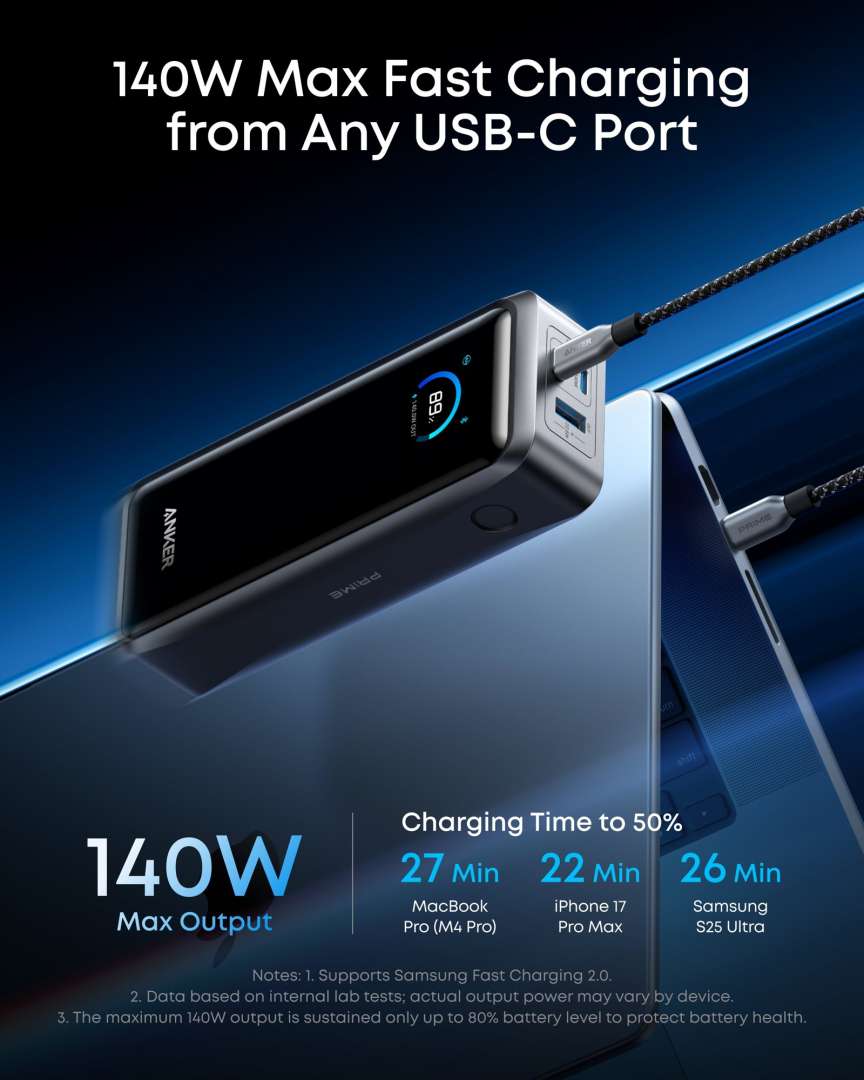
That speed needs two proper chargers and the right cables, so it isn’t free convenience.
Still, a half-full 26,250mAh bank covers a laptop emergency, and 13 minutes is coffee-line time. The math turns a dead bank at breakfast into a useful one before the first meeting.
In the box, Amazon lists the bank, a 3.3 foot USB-C to USB-C cable rated at 240 watts, and a travel pouch. A welcome guide rounds it out.
The cable rating counts, because a weak cable quietly caps all those headline watt numbers.
There’s a catch worth naming: full 250 watt input needs two chargers that can each push serious power. One ordinary phone charger won’t unlock the fast refill. Budget for the bricks if that speed is why you’re buying it.
Built to fly, sized like a bottle
At 99.75 watt-hours, the bank sits just under the 100Wh line airlines use for cabin batteries, and Anker sells it as TSA approved. It can ride in a carry-on and work at 35,000 feet.
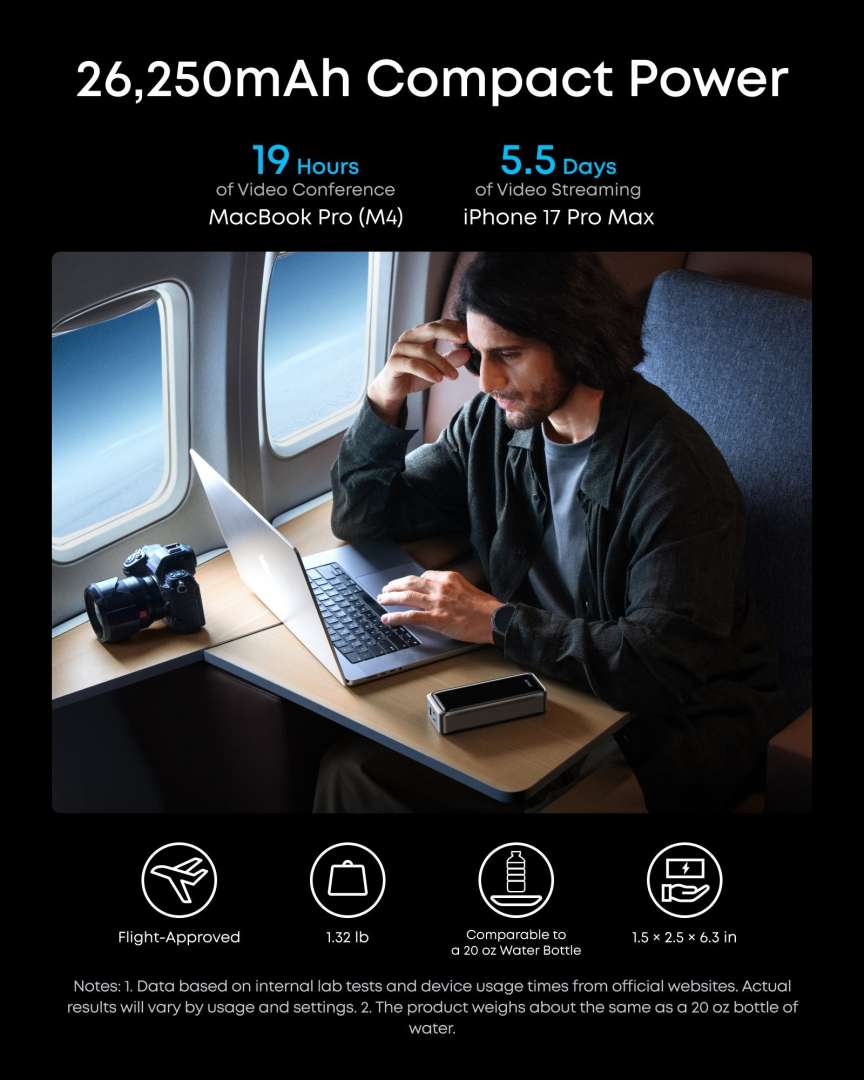
Consider what 26,250mAh actually buys across a work trip, because capacity claims get abstract fast.
It’s several full phone charges with a laptop rescue left over. Or it’s one long-haul flight where the laptop never hunts for a seat-side outlet that may not exist.
Spread across a weekend, the same capacity covers a phone, earbuds and a tablet for films. It also rescues a partner’s phone at a gate where every outlet is taken. That’s the lived scale of this bank. Not a spec sheet trophy, just two days of not thinking about battery percentages at all.
That’s the difference between a gadget for home and one that actually travels.
The body measures 6.3 by 1.5 by 2.5 inches, closer to a water bottle than a brick.
At 1.32 pounds, it disappears into a backpack’s side pocket or a tote’s inner sleeve. Photographers, field crews and students crossing a big campus all feel that size in a good way.
Skip the charging base bundle if you’re comparing listings, because this price is the bank on its own. A newer 27,650mAh model also exists, and it isn’t this deal. The listing marked Base Not Included is the right one at $199.99.
Buy it if you work from airports, trains or client sites, because 300 watts and a 13 minute half-refill solve real dead-battery days.
Skip it if your phone is your only device, since a pocket bank at a quarter of this price covers that job.
Wait if you want the charging base too, because bundles follow their own sale rhythm. This one’s for the laptop-first traveler: $30 off brings serious power under $200, and that’s the line where it stops feeling like a splurge.