
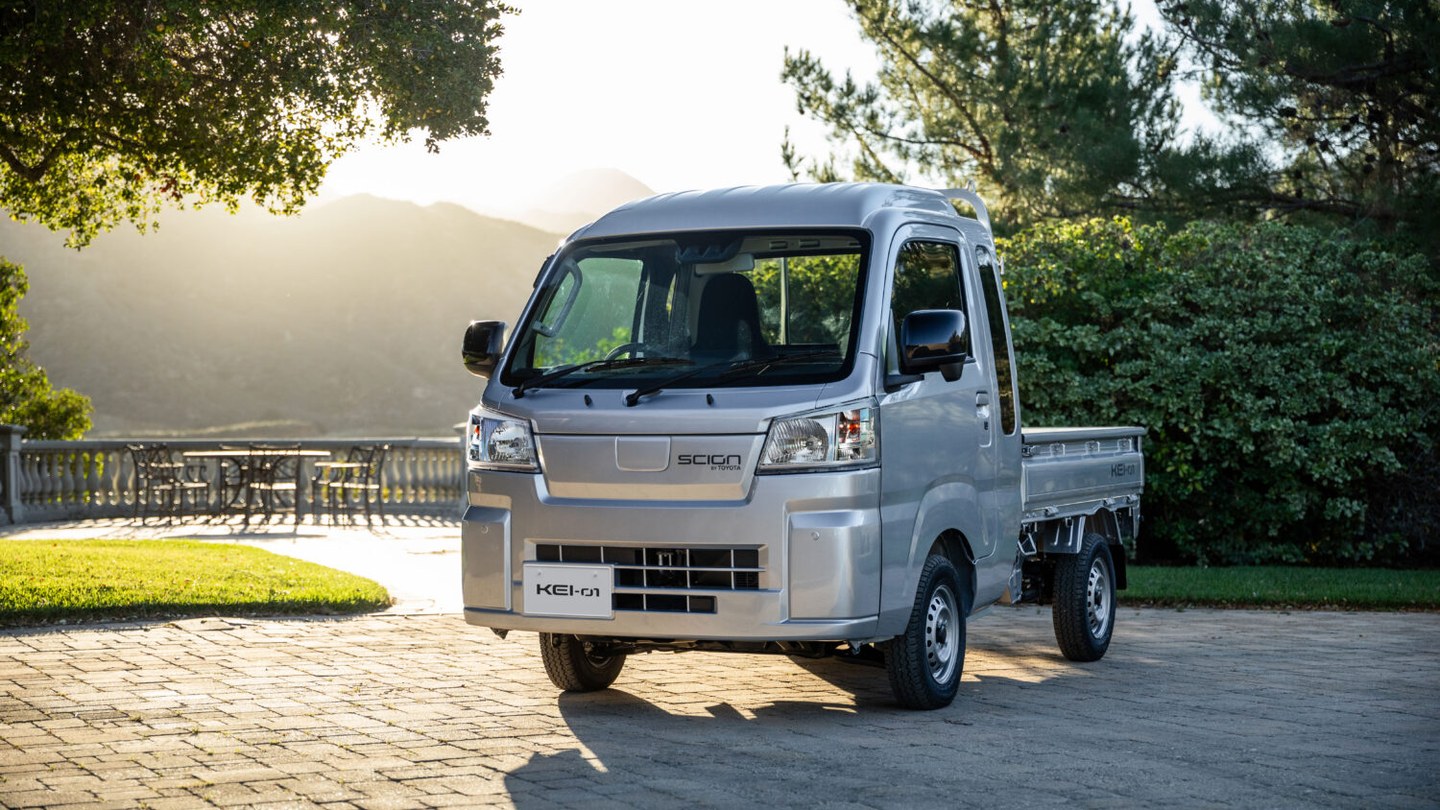
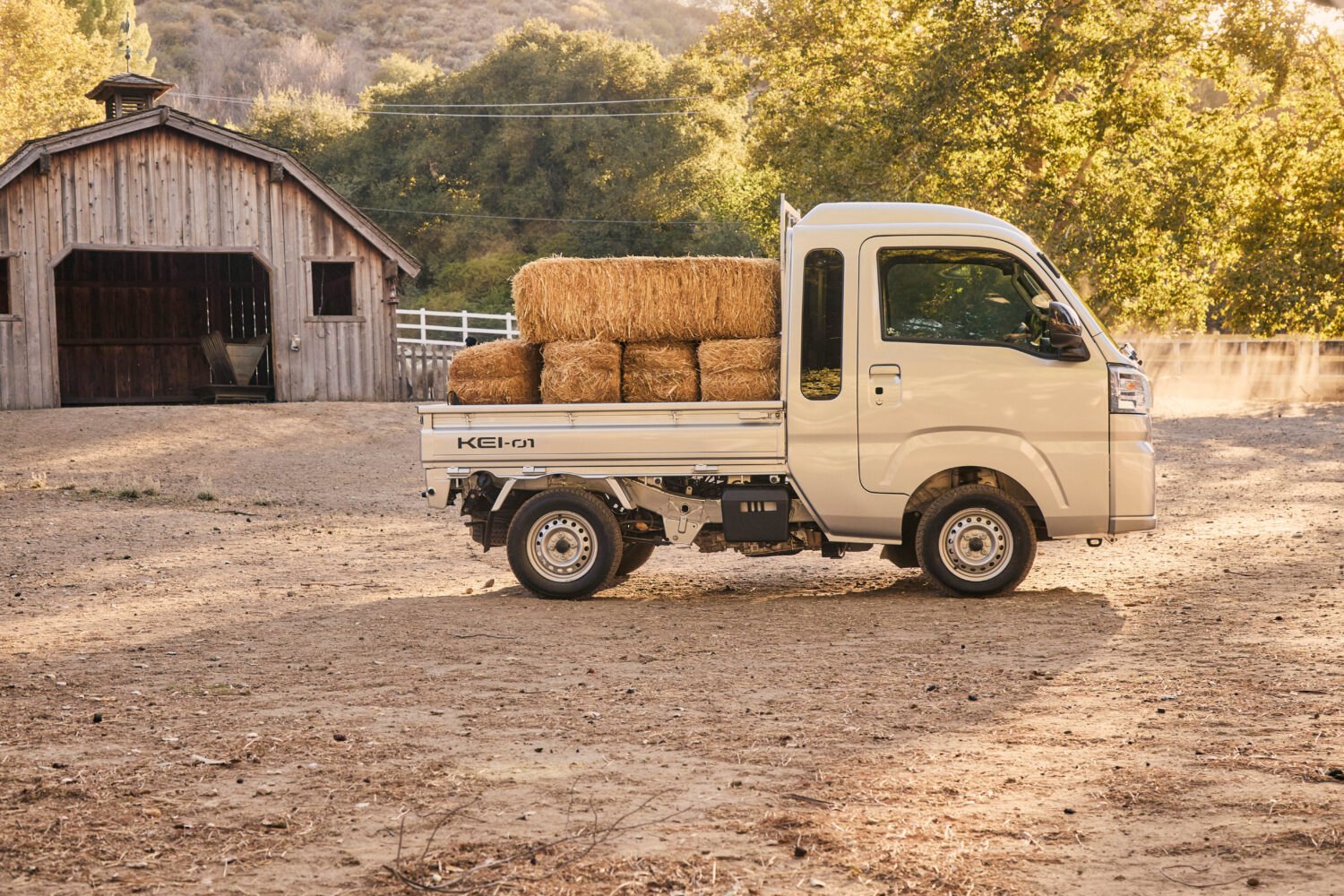
Scion is back, and its first vehicle is a truck that makes a Tacoma look like heavy equipment. The KEI-01 follows the Japanese kei truck formula to the letter: just over 11 feet long, under 5 feet wide, a 660cc three-cylinder engine, and a cargo bed that folds open on three sides. Toyota will build it in Indiana, and the first ones reach fleet customers in the second half of 2027 through dealers picked from the existing Toyota network.
The truck launches a brand, Scion by Toyota, which Toyota describes as a freedom lab for mobility ideas that don’t fit the main line, and what’s striking is how little of the kei formula got Americanized on the way over.
The steering wheel is still on the right.
A shape drawn by a rulebook
Kei trucks look the way they do because Japan’s kei class writes the drawing for them. Engine size caps at 660cc, the body stays inside tight dimensions, and every maker answers with the same tall cab, flat face, and wheels pushed out to the corners. The KEI-01 keeps all of it. There’s no hood to speak of, because the cab sits over the front hardware and gives its length to the bed instead of a nose.

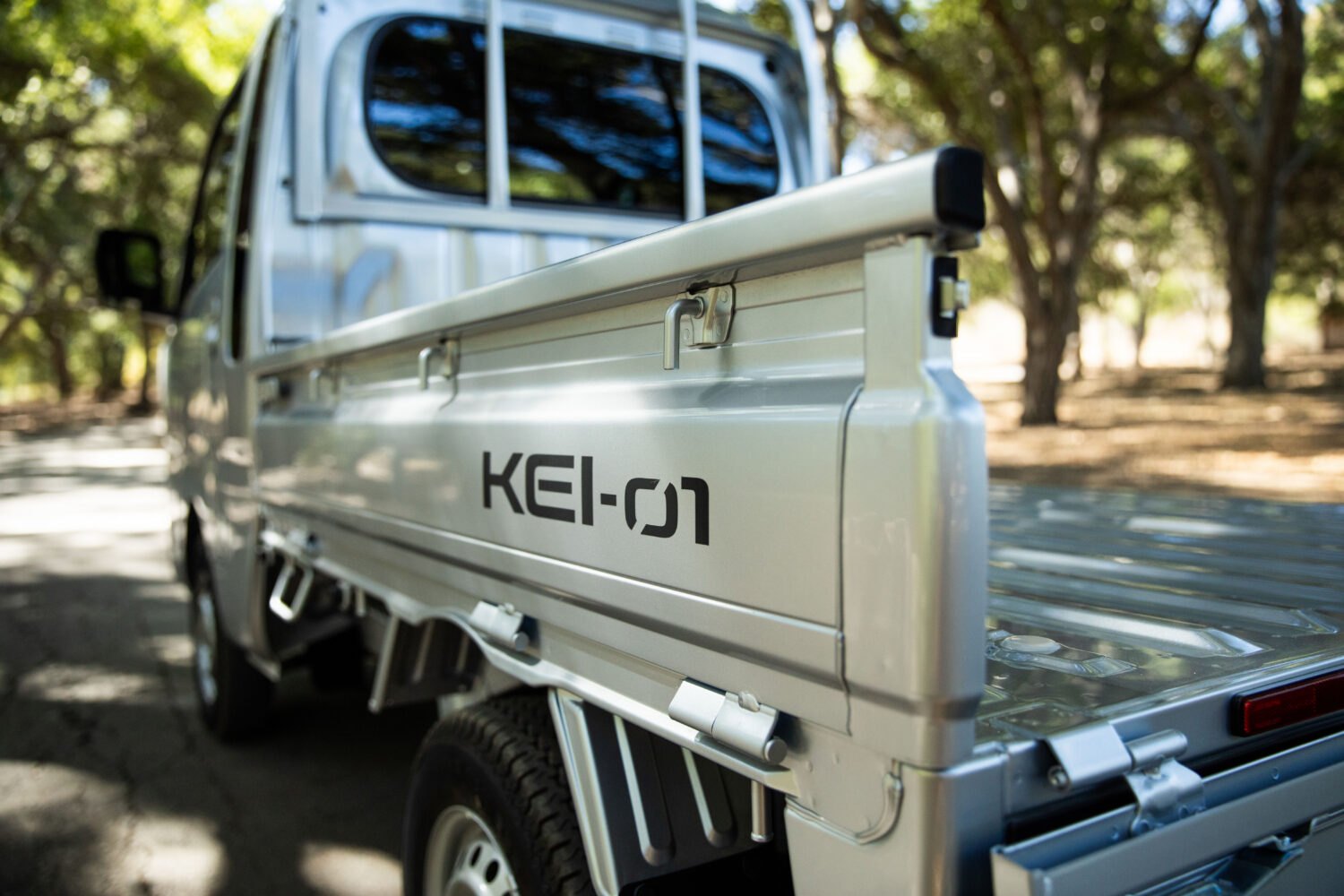
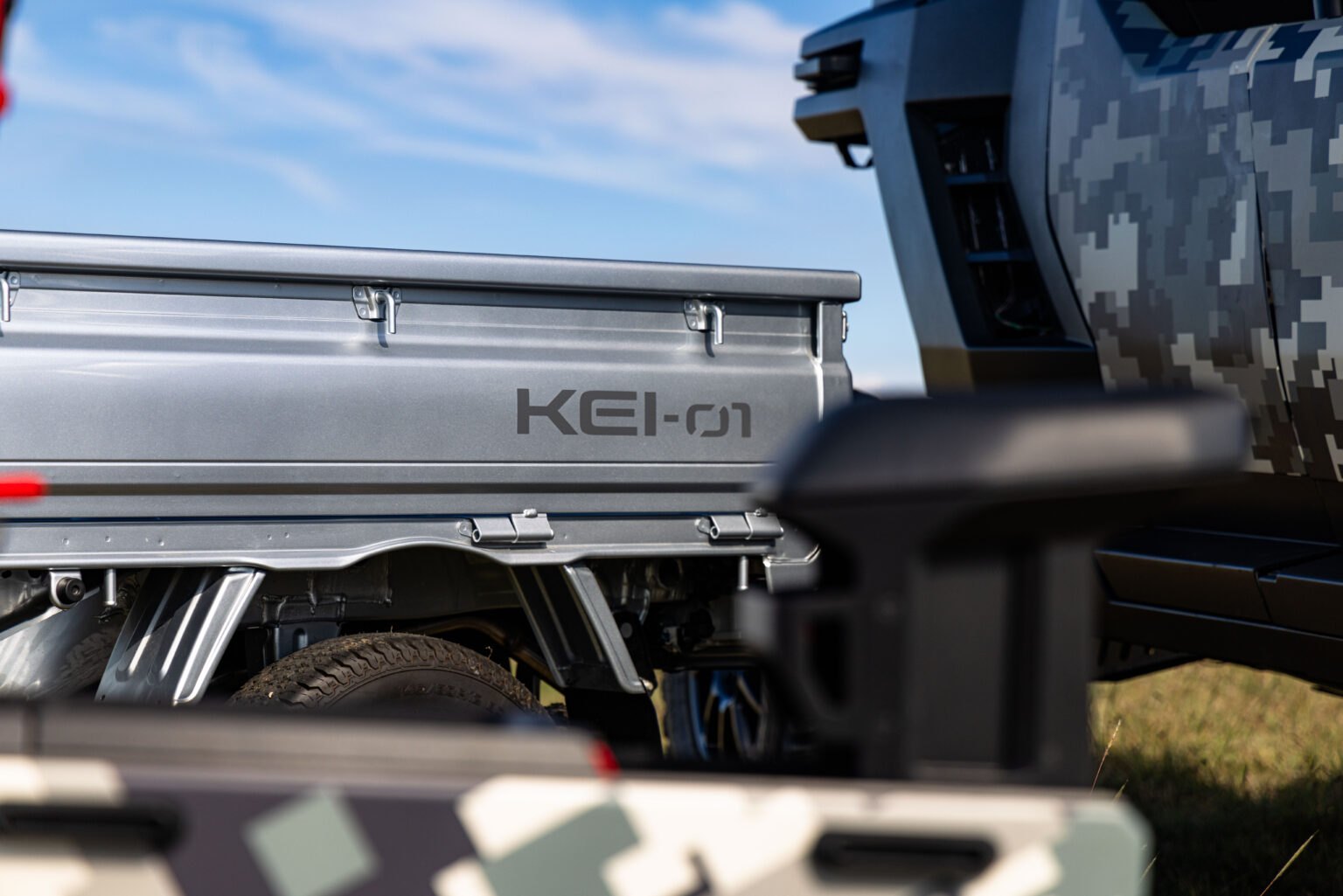
Nothing on the silhouette is decoration, and that bed is the exterior’s real design work. All three sides fold down, so the load floor opens flat and loading happens at a lower height than any conventional pickup allows. The bed sides carry a stamped KEI-01, the tailgate wears SCION BY TOYOTA in block letters, and nothing on the truck pretends to be bigger than it is: a work surface with a cab attached, drawn straight.
The formula has been working for decades. Kei trucks earned their reputation on Japanese farms and city delivery routes, where narrow roads and tight gates reward a truck that fits through them, and the class survives because the work it does never went away.
Twenty-five miles per hour is the whole brief
The KEI-01 is a right-hand-drive vehicle built to the federal low-speed vehicle standard, FMVSS No. 500, and its top speed is 25 mph. That number decides everything about how it drives. It isn’t a small highway truck. It’s a machine for the loops that fill a working day on a farm, a campus, a depot, or a delivery route where the stops come every few hundred yards.
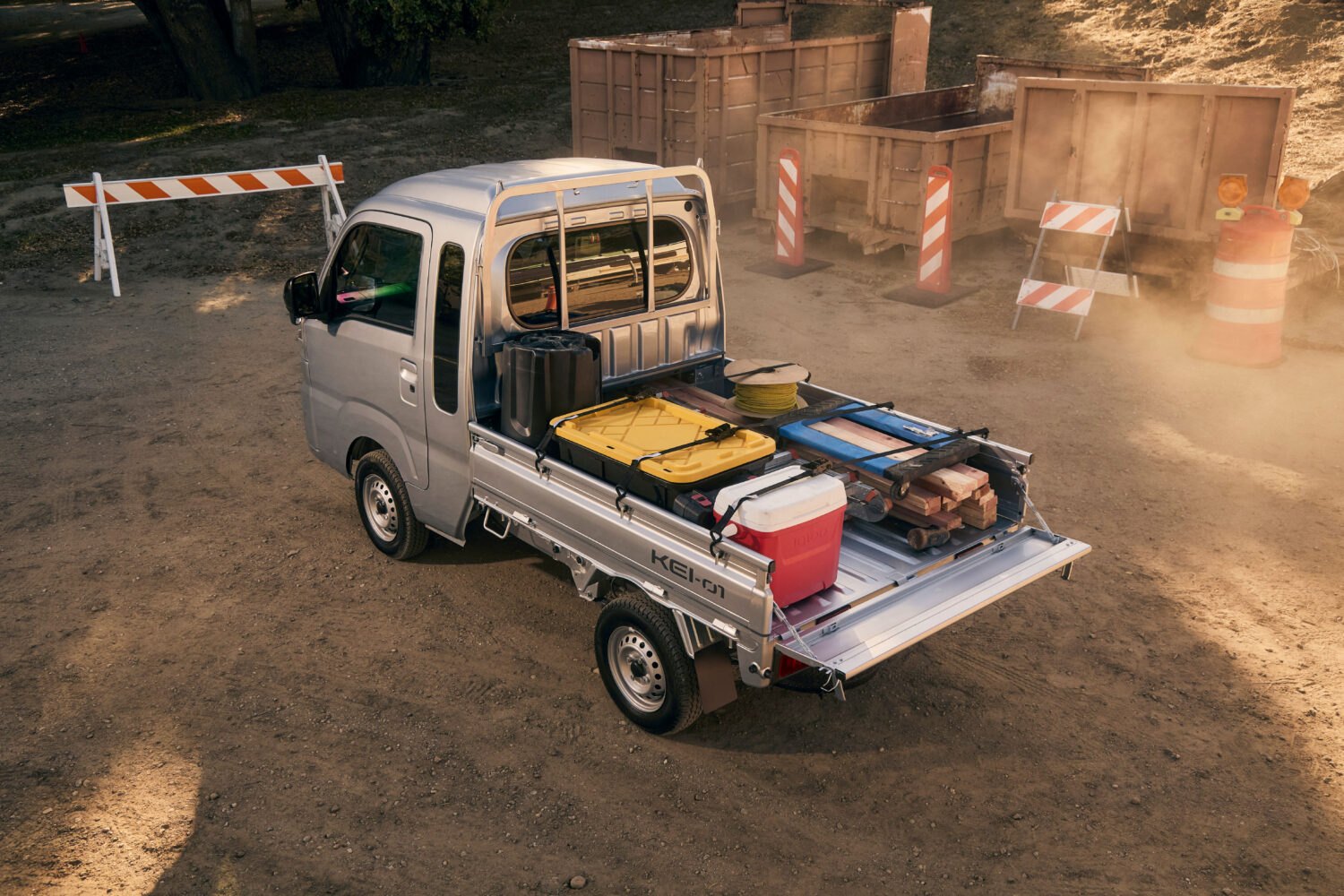
Four-wheel drive comes standard, selectable with an auto mode and a push-button lock for mud, snow, and uneven ground. The CVT keeps the little three-cylinder in its low-end torque, the bed takes up to 600 pounds, and the frame is rigid enough to tow small trailers and equipment. In tight spaces, an 11-foot truck turns where a full-size pickup needs a three-point plan.
The brief is modest. The hardware underneath it is not.
Toyota names the buyers plainly: small business owners who need an affordable urban commercial vehicle, farmers and ranchers who need a daily workhorse, municipalities, universities, and corporate campuses running efficient fleets, delivery and service providers working dense city streets, and hobbyists who want the utility without the bulk.
The cab gets the comfort budget
Toyota stretched the cabin and raised the roofline, which buys reclining and sliding seats in a truck this small, plus secure storage behind the seats for tools and gear. The cab is fully enclosed with heat and air conditioning, so the KEI-01 works through a Minnesota January and a Texas August with the same indifference, on job sites where the working day starts before the sun does and ends in the dark half the year.
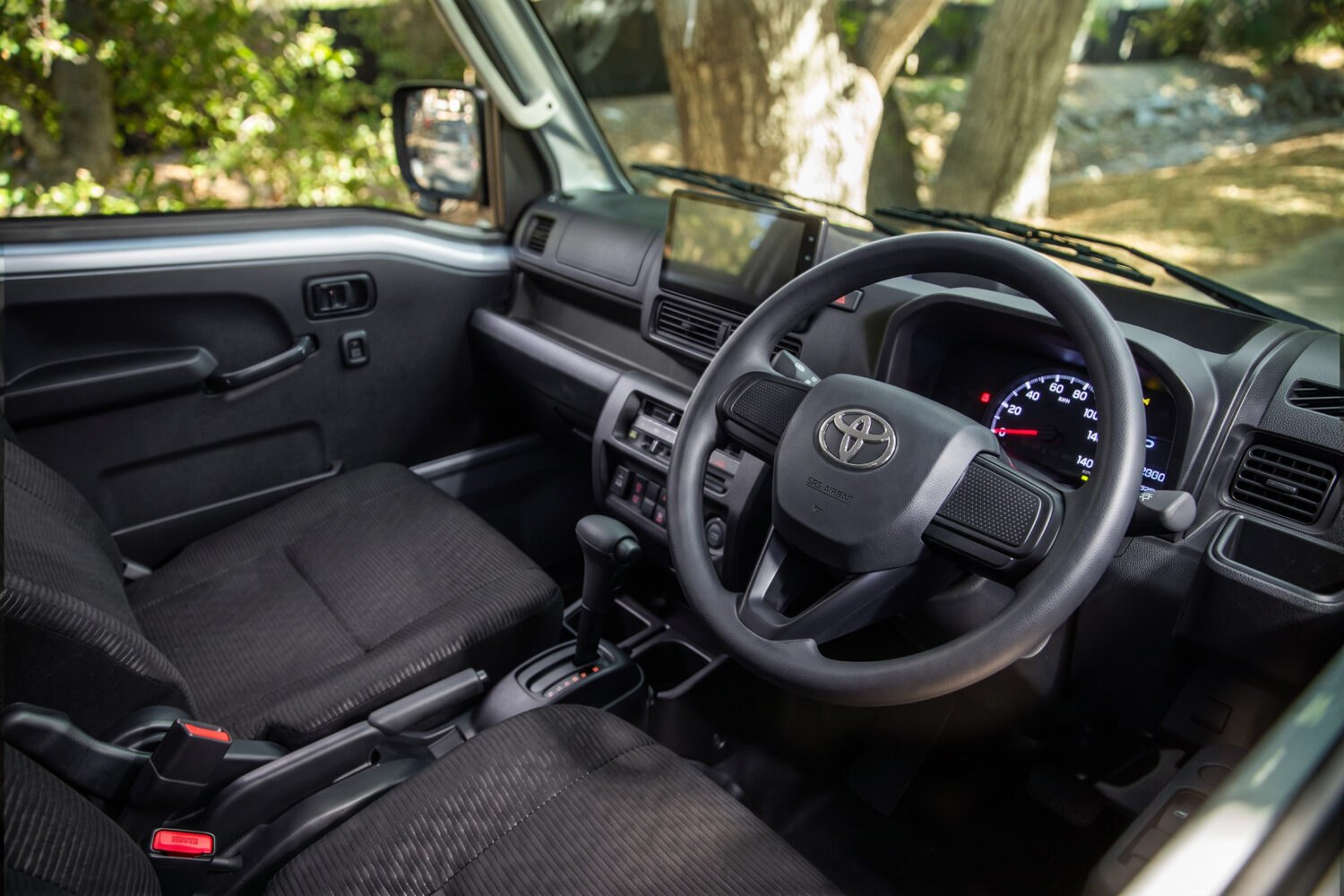
Everything inside is simple on purpose. The controls sit in plain reach of the right-hand driver’s seat, the surfaces are flat and wipe-clean, and the glass area is huge for the footprint, so placing the truck in tight quarters is easy on the neck. Visibility is a working tool here, not a styling note. Nothing glows, nothing beeps for attention.
Comfort here isn’t luxury. It’s the arithmetic of a driver who climbs in and out forty times a day, every day.
A lab coat over a work truck
The original Scion launched in 2003 as Toyota’s experiment for younger buyers, and the name returns in the same spirit, this time as a standing design lab. Simon Humphries, Toyota’s Chief Branding Officer and Head of Design, frames it as a place “to challenge conventional thinking, explore new possibilities and create mobility in new ways.” The KEI-01 is the lab’s first production piece, and it won’t be the last.
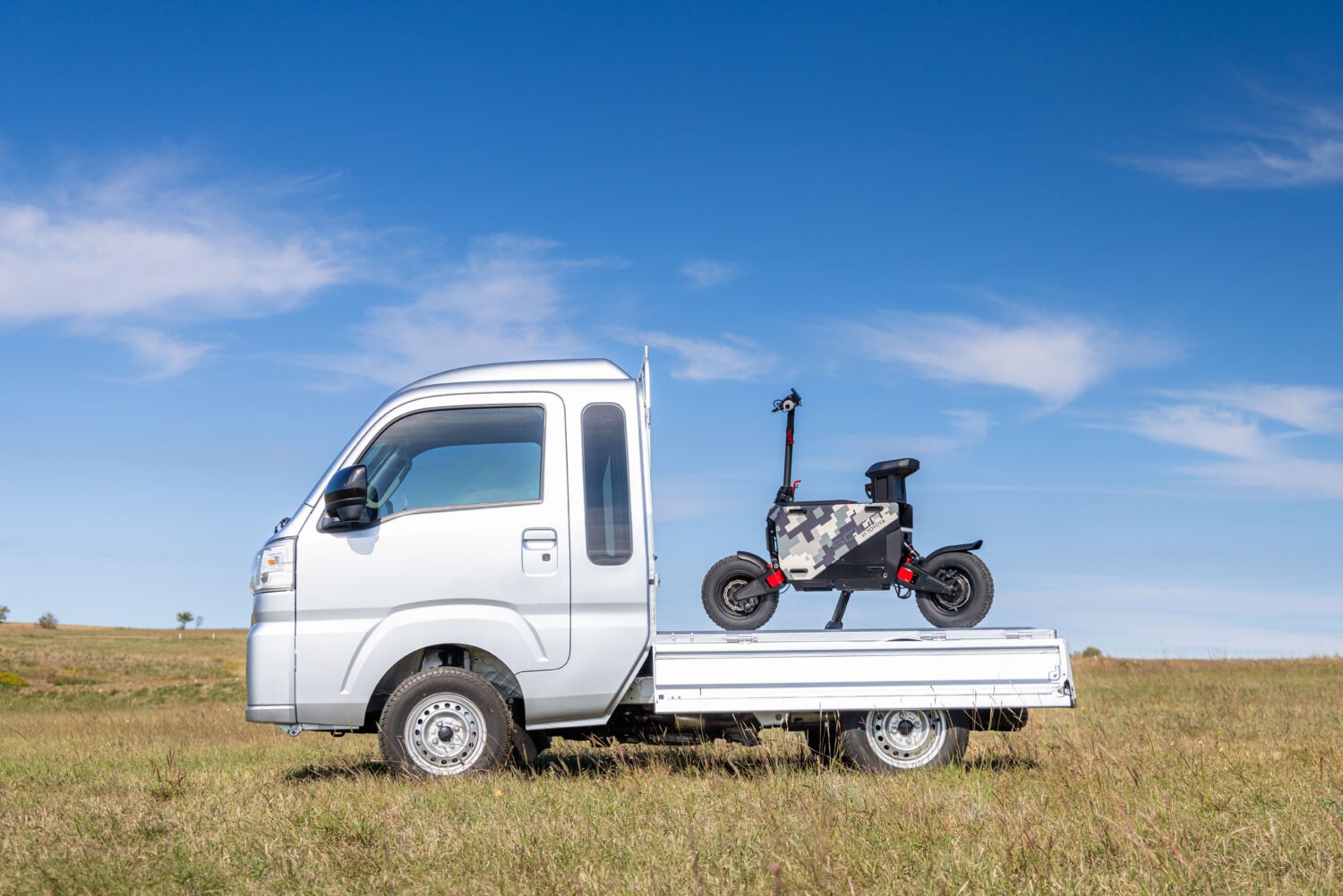
Two concepts flank it. The SxS, first shown at the 2025 SEMA Show, is a side-by-side built around a turbocharged hybrid four-cylinder making more than 300 horsepower, with a silent electric mode for the trail. The BKE goes the other direction entirely: a small personal-mobility machine, sized to ride in the KEI-01’s bed. Toyota says it will keep advancing the SxS, exploring what it could become.


Production starts at Toyota Indiana in the second half of 2027, backed by a $34 million investment and about 50 new jobs. Sales open as a fleet pilot through Scion by Toyota dealers picked from the existing Toyota network, with limited retail possible later if demand supports it. No price has been announced.
Most American trucks keep growing into their spec sheets. The KEI-01 goes the other way: the strictest rulebook in the industry drew the smallest truck Toyota has ever sold here, and Toyota’s designers had the discipline to leave the drawing alone. That restraint is the design story.