
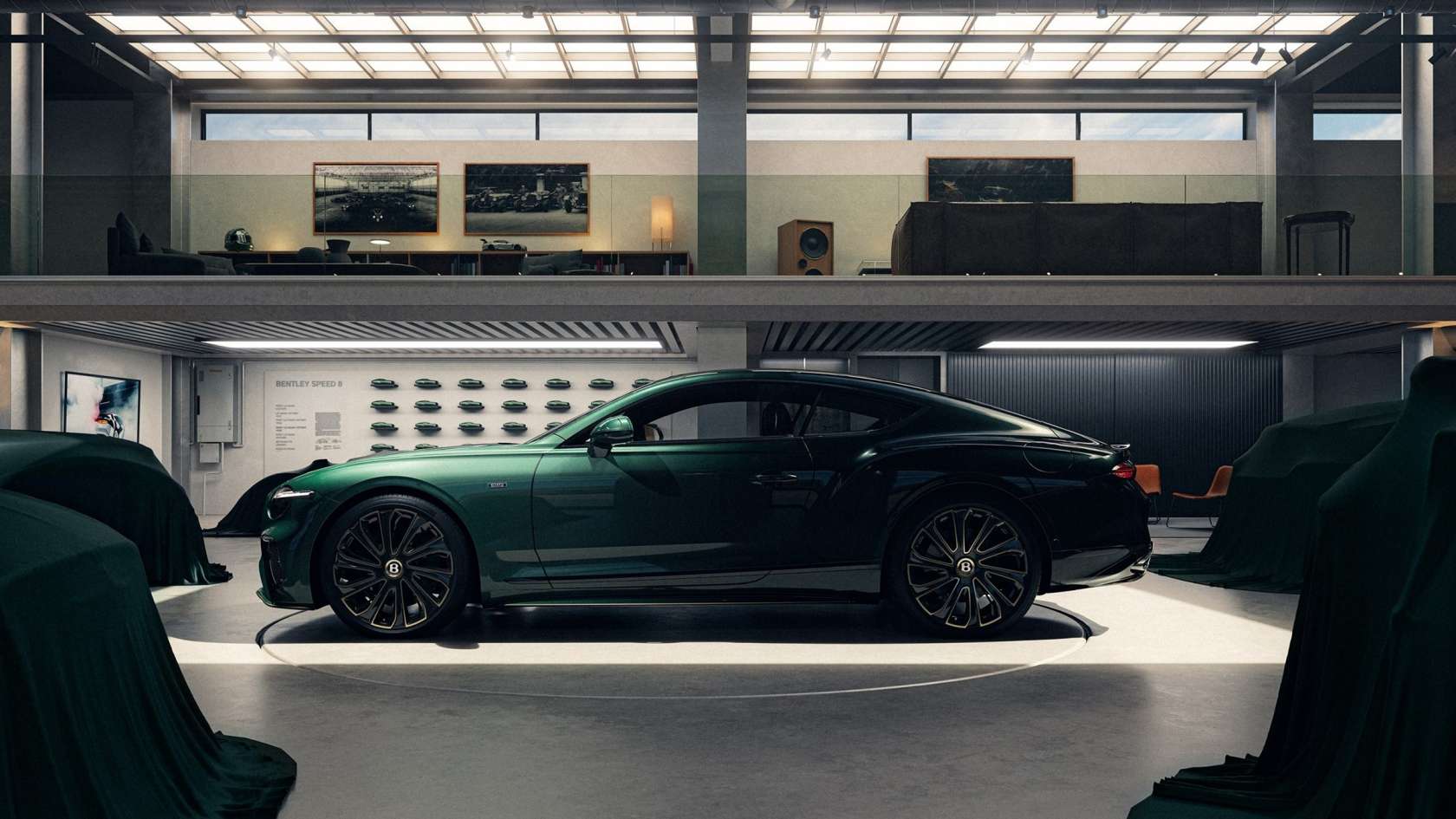
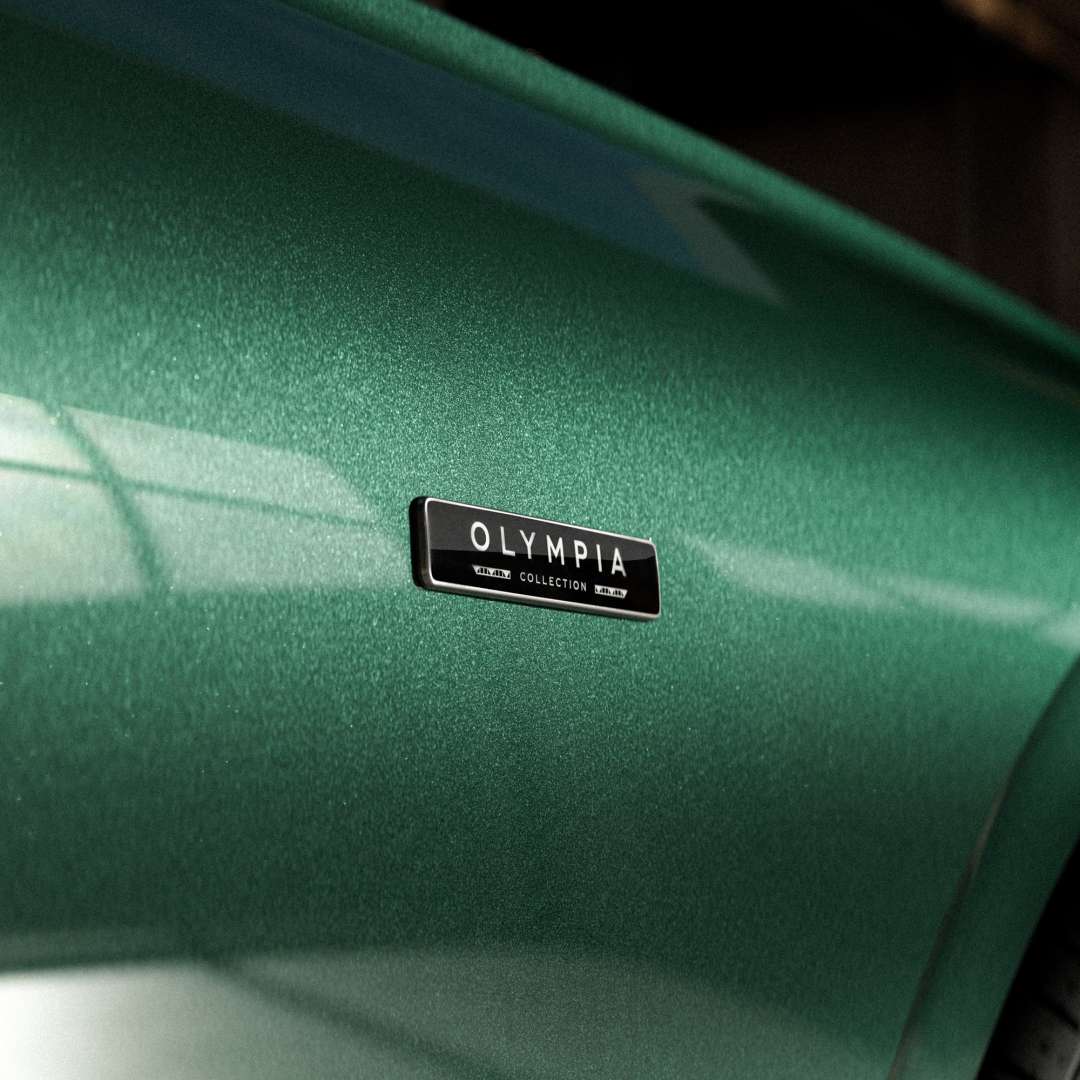
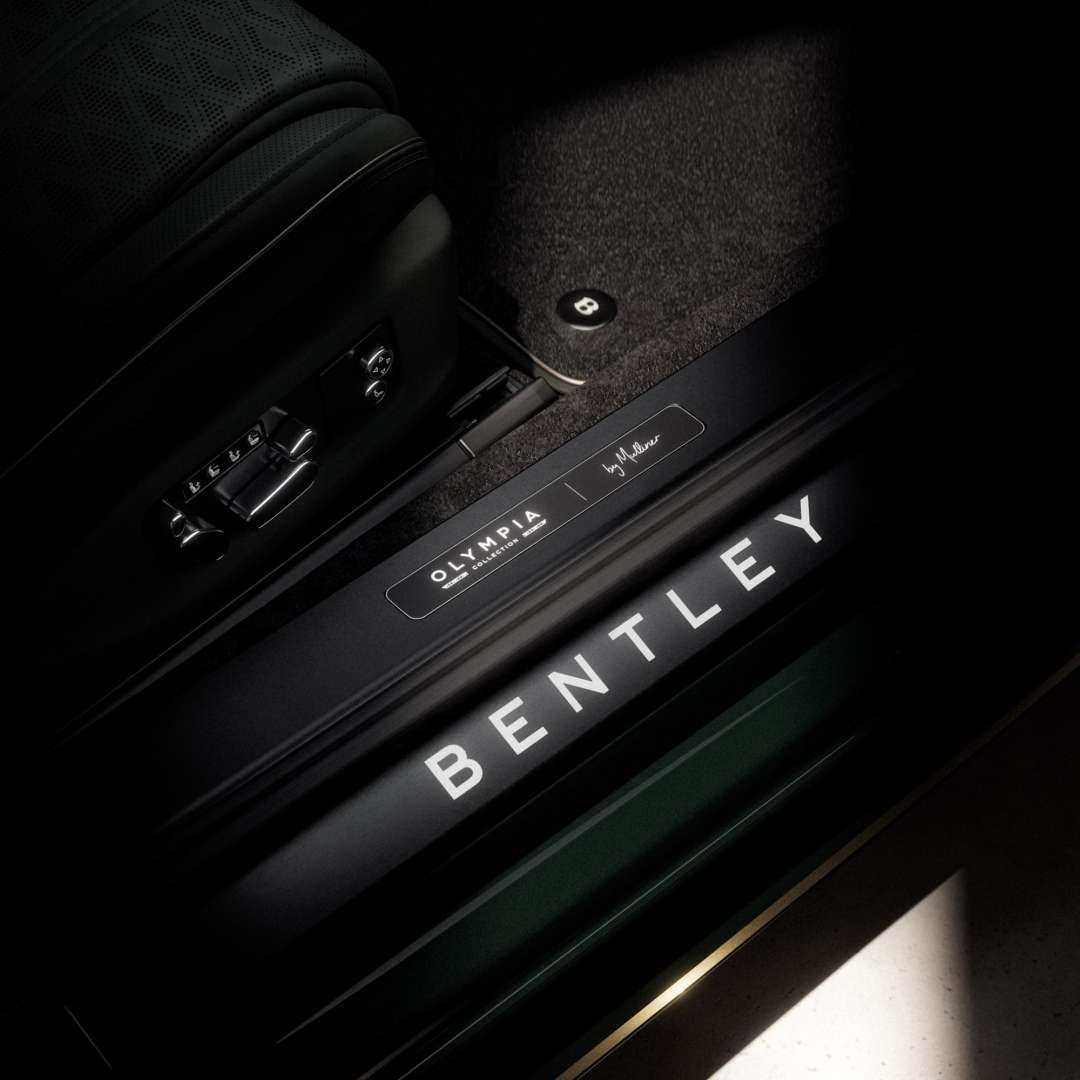
A hundred years ago, Bentley took its second ever model line to the Olympia Motor Show in London and presented the production 6½ Litre to the world. Mulliner has marked the centenary the slow way, with 12 Continental GTs built to a single specification, each one numbered, each one finished in a green that takes 56 hours to lay down.
The green is the whole story here, because the green no longer exists.
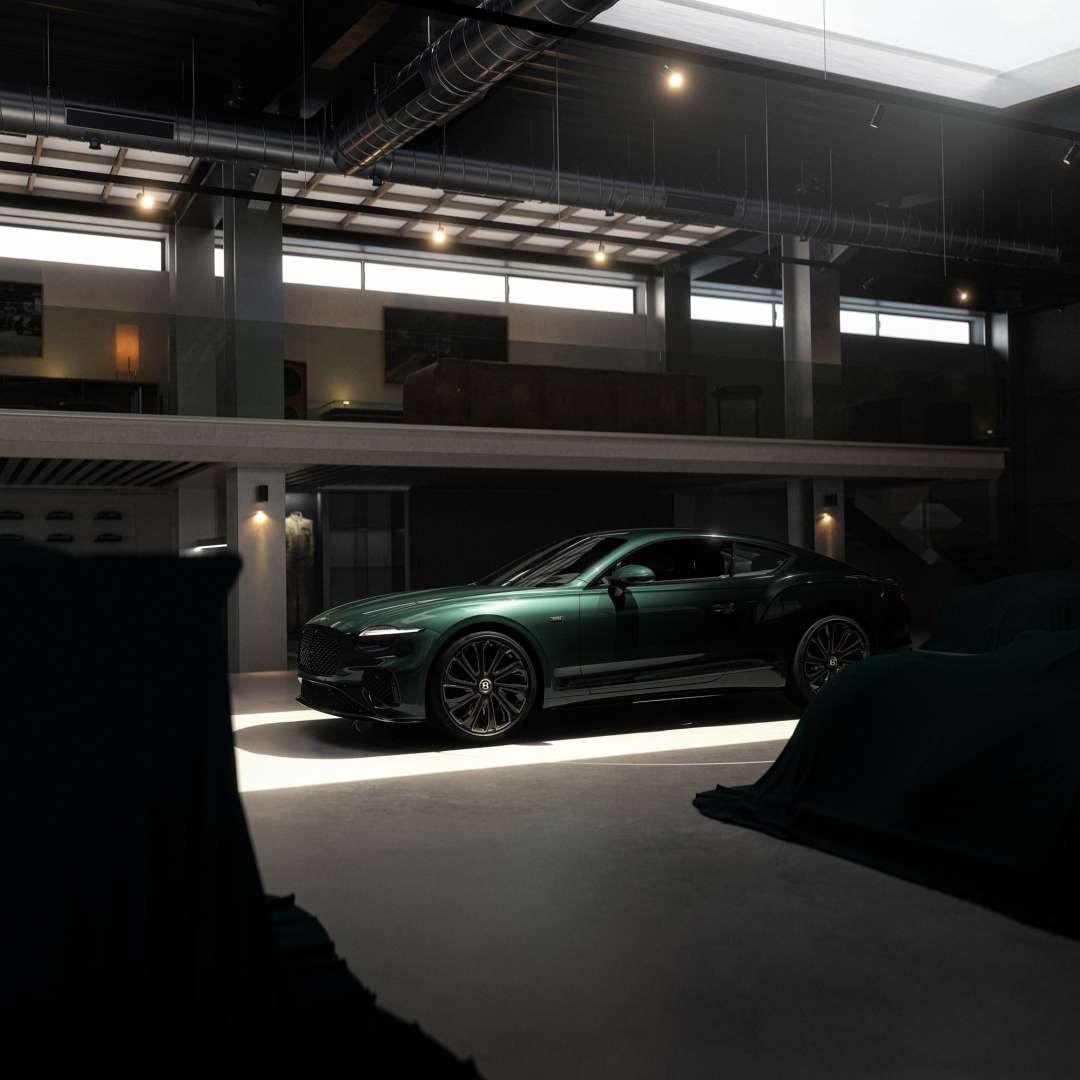
British Racing Green was never one colour. Coachbuilders in the 1920s each mixed a version of it, the copper in those paints degraded under sunlight, and no standard reference survives to match against. So the Olympia Collection declines to choose. Its Ombré finish starts in Verdant at the nose, then darkens along the flank until the tail sits in Midnight Emerald, close to black. Every period guess at the shade falls somewhere along that body side.
Every shade of the argument, settled in paint
Ombré by Mulliner is a fade with no visible seam, and Bentley quotes 56 hours of work by its paint technicians to blend the two extremes into one continuous surface. Verdant and Midnight Emerald were picked as the poles precisely because the space between them covers the spectrum the 1920s cars wore, from bright leaf green to something you would call black until the light caught it.

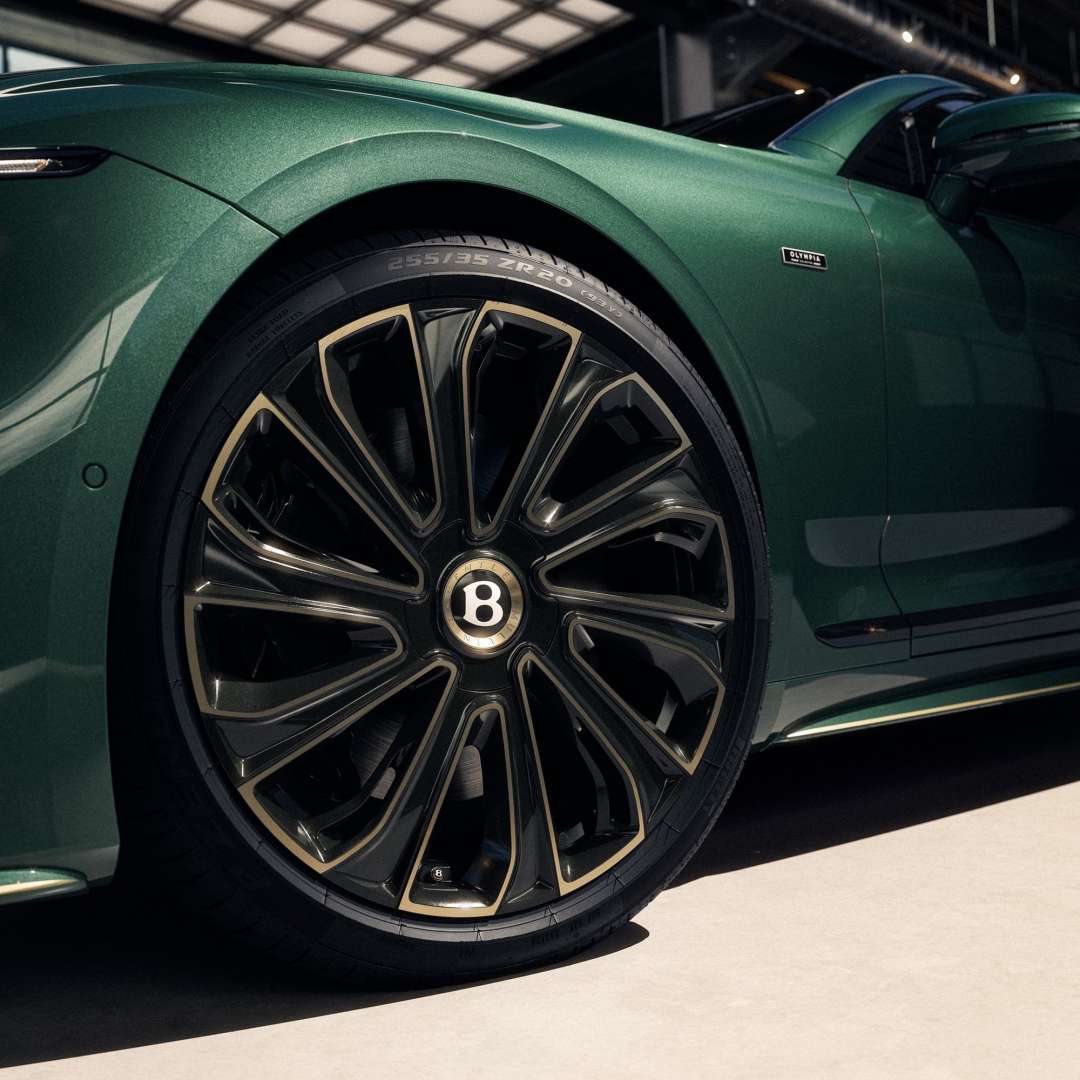
The Blackline specification blacks out the brightwork, the matrix grille, the intakes and the rear diffuser. Against that darkness the Champagne Gold does the talking. It edges the badges and a hand painted pinstripe along the lower body, and it faces the black 22 inch Mulliner wheels, cut to evoke the spoked wheels of the era. The gold itself is a reference, standing in for the nickel silver that skinned the radiator shells and switchgear of the early cars.
Open a door after dark and an animated projection replays the drive that started all of this, cast onto the ground beside the car.
The race that made the engine bigger
The drive was a test run that turned into a duel. In 1924, W.O. Bentley and three colleagues were bringing a six cylinder prototype from the Grand Prix at Lyon, bound for Dieppe, when they converged at a Y junction with a team from the company’s closest competitor.
Neither party would give way. The two cars raced side by side at over 80 mph down a straight, tree lined Route Nationale, and the Bentley won.

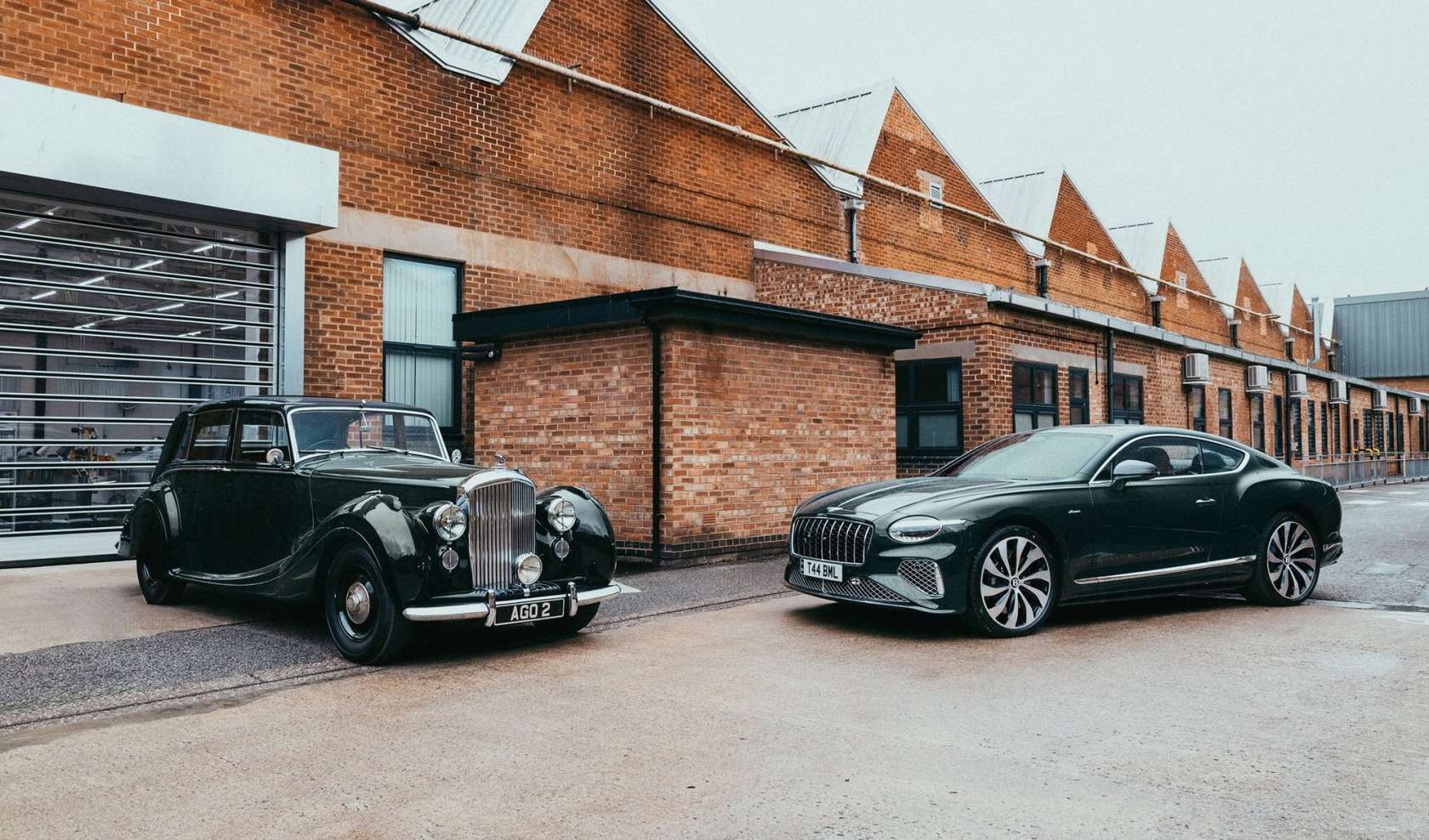
Winning was not enough. W.O. judged the margin too small, went back to the drawing board and stretched the six from 4.5 litres to 6.5, writing later that the point was “to stay two steps ahead”. The enlarged engine powered the 6½ Litre, shown as a chassis at Olympia in 1925 and as a complete car with Vanden Plas coachwork a year later. As the Speed Six it won Le Mans in 1929 and 1930.
That split brief, performance with refinement, is the one the Continental GT still works to. The Olympia Collection simply dresses it in the colours of the car that wrote the brief. Nothing about the formula needed updating for the centenary, because the formula was the centenary: a big-engined Bentley, built without compromise, aimed at a rival it intended to stay ahead of.
Gold thread, dark walnut, and a map between the seats
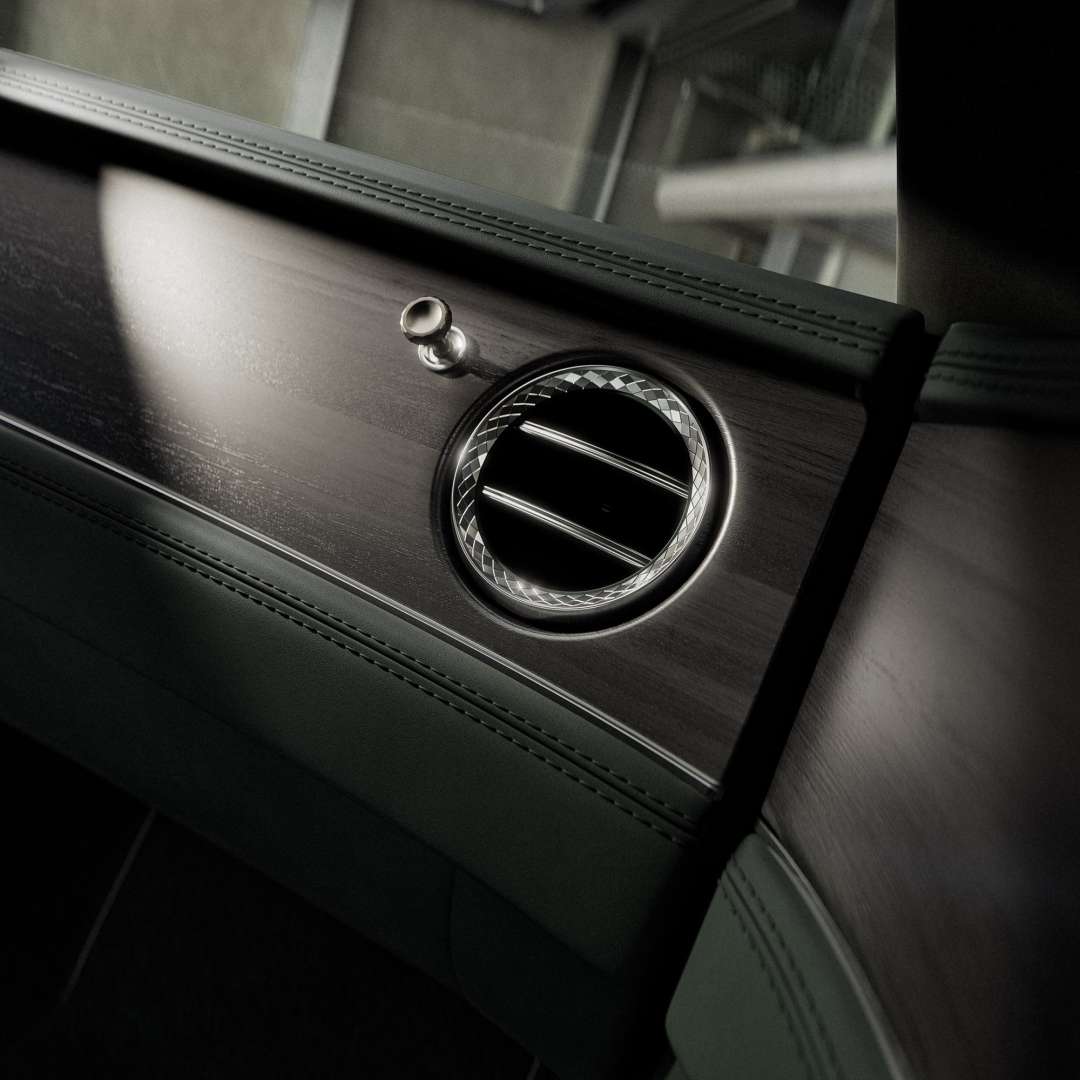
The cabin pairs a bespoke Coach Green main hide, given a heritage patinated finish, with Cumbrian Green as the secondary hide. Fascia and waistrails are trimmed in black stained, open pore crown cut walnut,, and the controls carry the diamond knurling Bentley has used for decades.
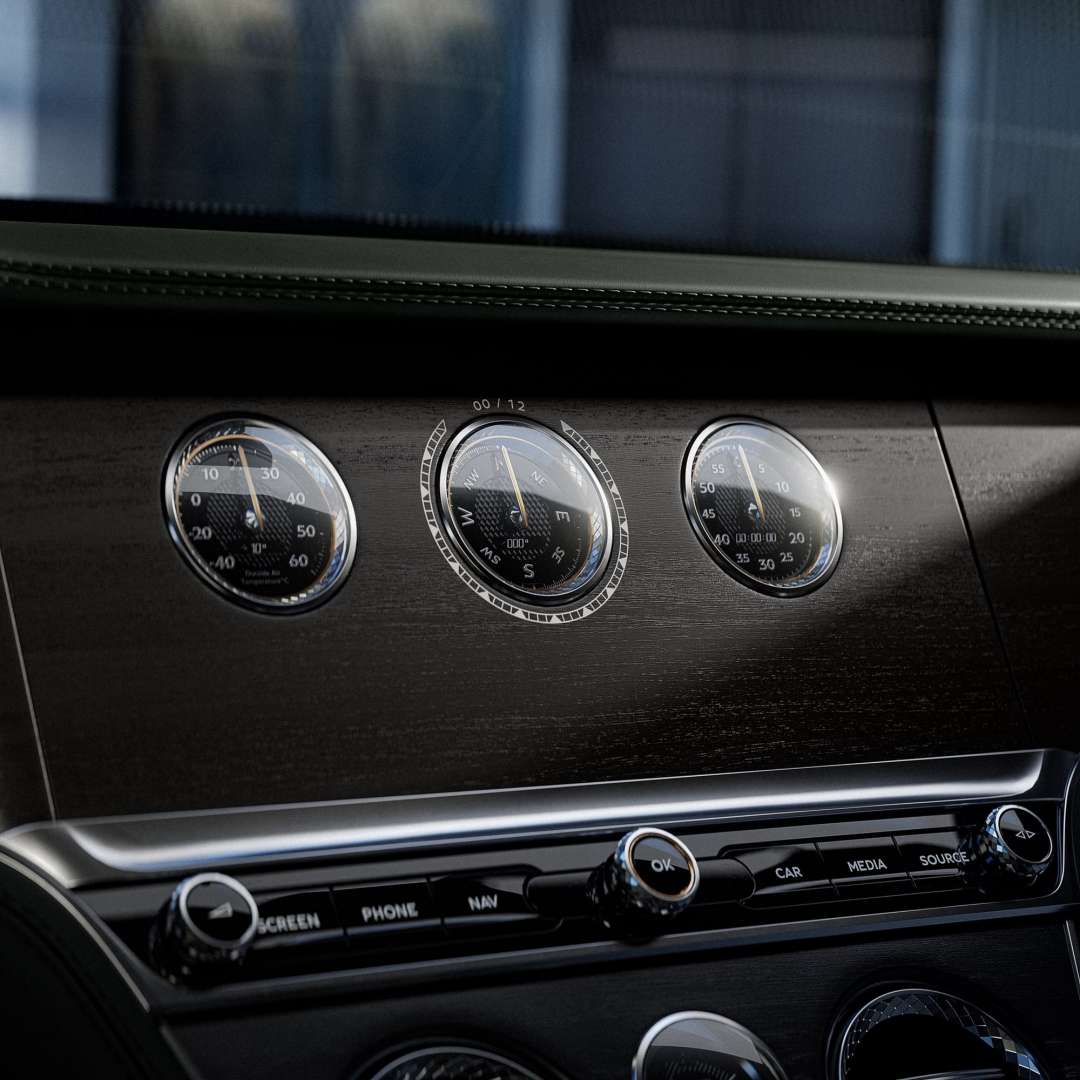
The Bentley Rotating Display anchors the dashboard, and for this collection its analogue face is exclusive: an individual number for the car, dials and bezels modelled on the 1926 6½ Litre’s instruments, and laser etching around the centre dial that evokes the original’s speedometer. Champagne Gold continues inside on the seat piping, the gear lever and the organ stop vents, and the steering wheel’s box stitching copies the rope bound wheels of the twenties.
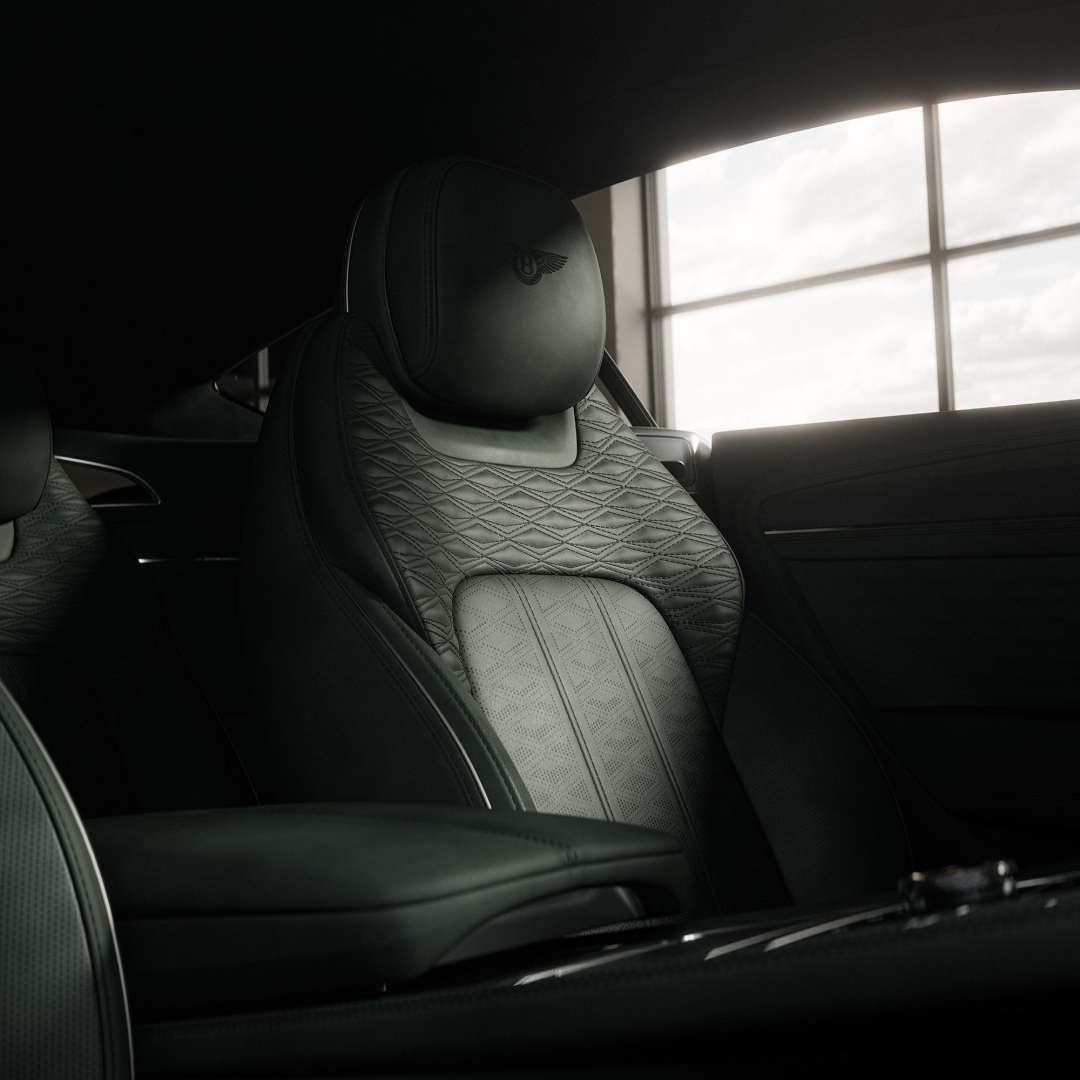
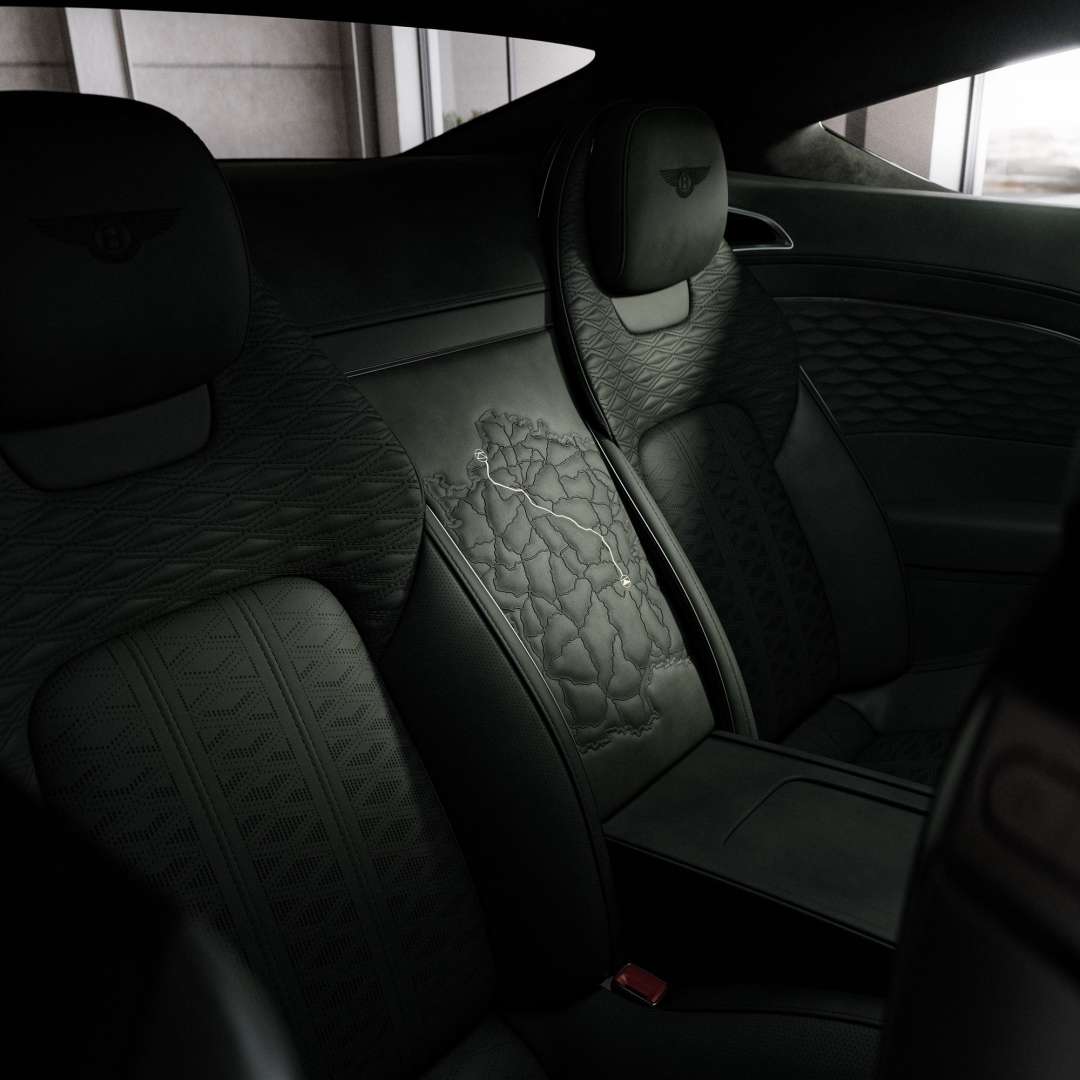
Between the rear seats, the ski hatch carries blind embroidery in Cumbrian Green outlining the region of that 1924 drive, with the Lyon to Dieppe route itself picked out in Champagne Gold thread. It is the car’s best detail, hidden where only rear passengers will find it.
A watch numbered to match the car
Each of the 12 cars is supplied with a bespoke green car cover carrying a Champagne Gold motif, a commemorative handover box and a book telling the collection’s story.
The fourth item in the package is the one collectors will ask about first: a handcrafted Brooklands Watch Co. chronograph, individually numbered to correspond with its car.
The watch’s strap is cut from the same Coach Green hide used in the cabin. A chapter ring graphic on its case back echoes the laser etching on the Rotating Display, and it ships with two interchangeable tachymeter bezels referencing Brooklands’ Outer Circuit and Double Twelve Circuit, the track woven through Bentley’s early racing years. Car and watch were specified as one object in two sizes.
Bentley publishes no price for the Olympia Collection, and the model page routes buyers to an enquiry rather than a configurator. Twelve cars, one specification, no options menu to argue over.
Anniversary editions usually reach for a badge and a plaque. This one reaches for a colour that cannot be recovered, and answers with 56 hours of paintwork, a map stitched in gold thread and a duel retold every time a door opens at night. The 6½ Litre deserved a serious tribute. It got one.