
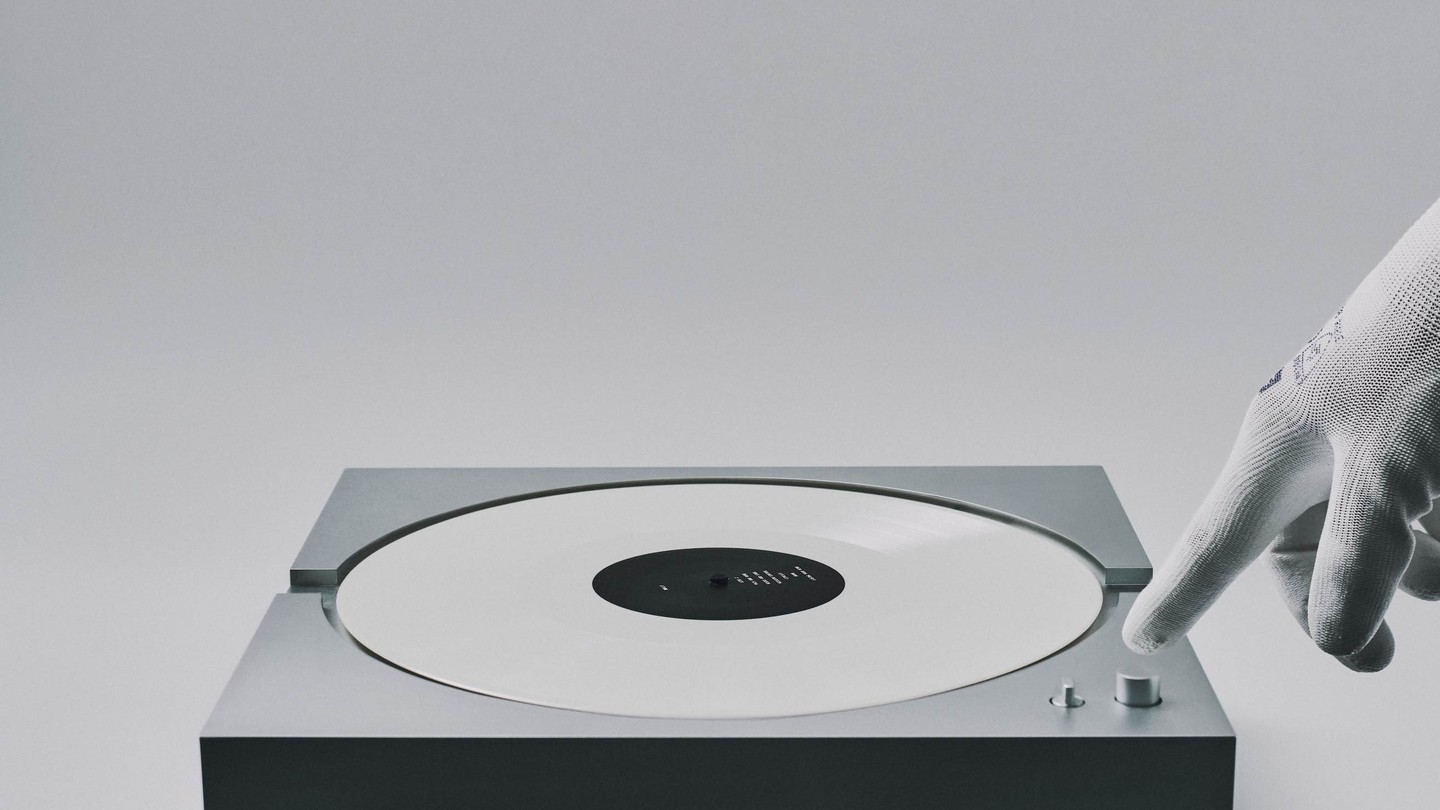
A square block of aluminum sits where a turntable should be. No tonearm rises from the corner, no cartridge waits at the end of an arm, and nothing on the face asks to be adjusted. Place a record upside down, press Play, and playback starts underneath the deck.

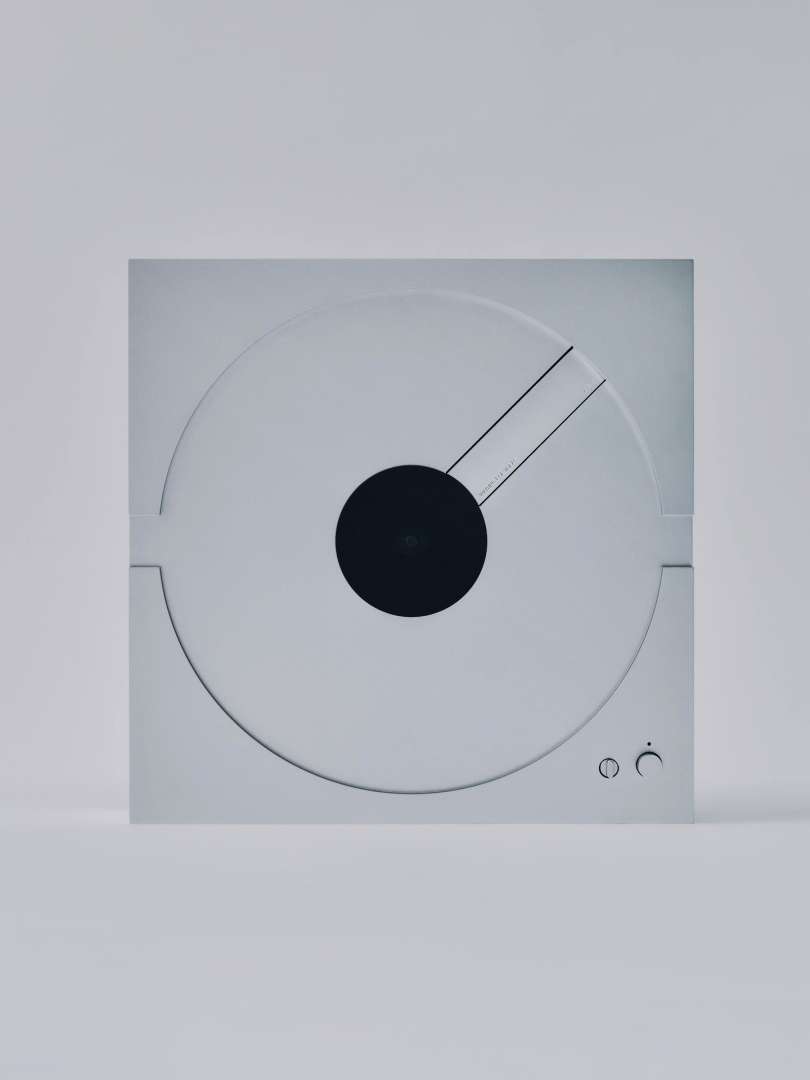
Paris studio Waiting For Ideas built the PP-2 around that deletion. A stylus still rides the groove, hidden inside the body, though light, not magnets, reads what the stylus does. The ritual stays physical.
Simplicity is the appeal and the limit at once. You don’t set this deck up. You use it on its terms.
Light does the reading instead of magnets
Most turntables use magnets or coils inside a magnetic cartridge, a proven system that lets owners swap cartridges and compare sounds. This deck replaces it with an optical system, powered by Miniot technology, sealed into the body.
Sensors measure the stylus movement with light as it tracks the groove. This isn’t a laser scanning vinyl from across the room. A needle still touches the record, and playback stays analog.
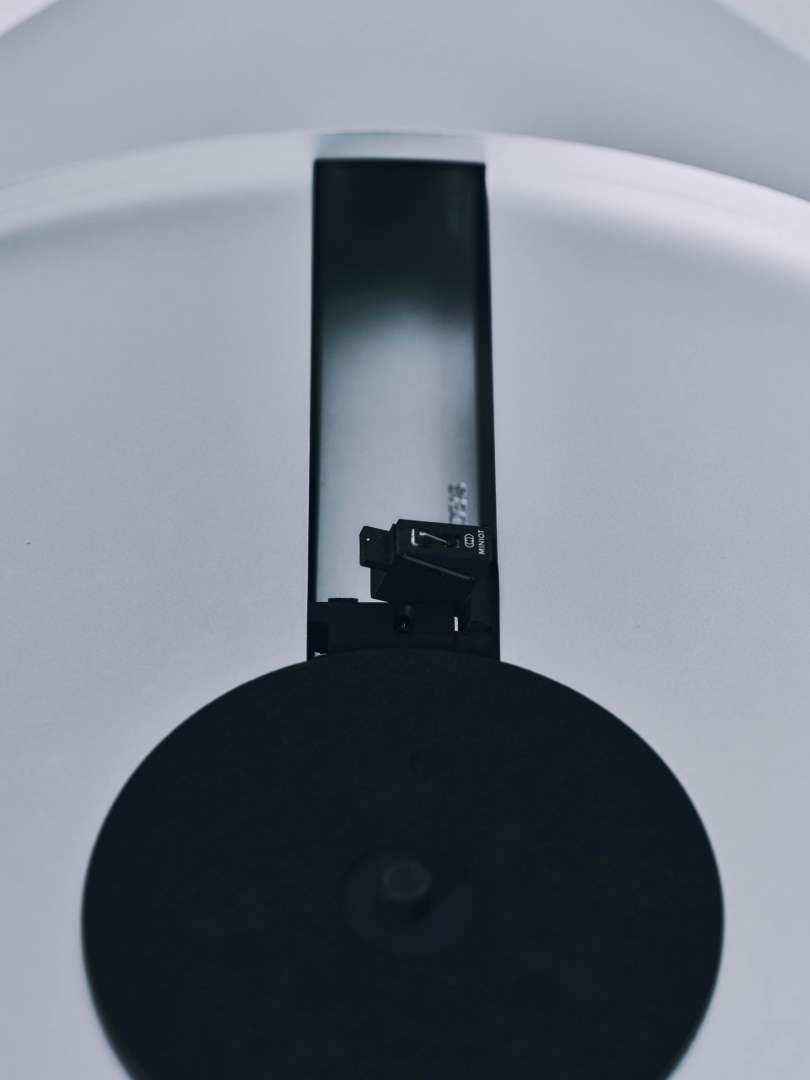
Without magnets, the stylus weighs less, and a lighter stylus follows the groove more closely, tracing finer detail. Lower weight is where the studio locates its gains, in detail and in low frequencies.
Tradeoff sits inside the gain, though. An optical system sealed into a solid block belongs to its maker in a way a standard cartridge never does. Swapping, tinkering, and easy replacement go away with the tonearm.
A motor that corrects itself a thousand times a second
Speed control gets the same closed, automatic treatment. An axial flux direct-drive motor turns the record, while optical control checks the rotation and adjusts it a thousand times per second, so a long note holds steady.
Torque helps on warped or unbalanced records, which every serious collection holds a few of.
Connections stay simple.
Outputs run through RCA and a 3.5mm mini jack, power comes over USB-C at 5 volts, and a built-in preamplifier called Harmony sits inside the body. Plug it straight into an amplifier line, aux, or CD input, or into active speakers, with no separate phono stage needed.
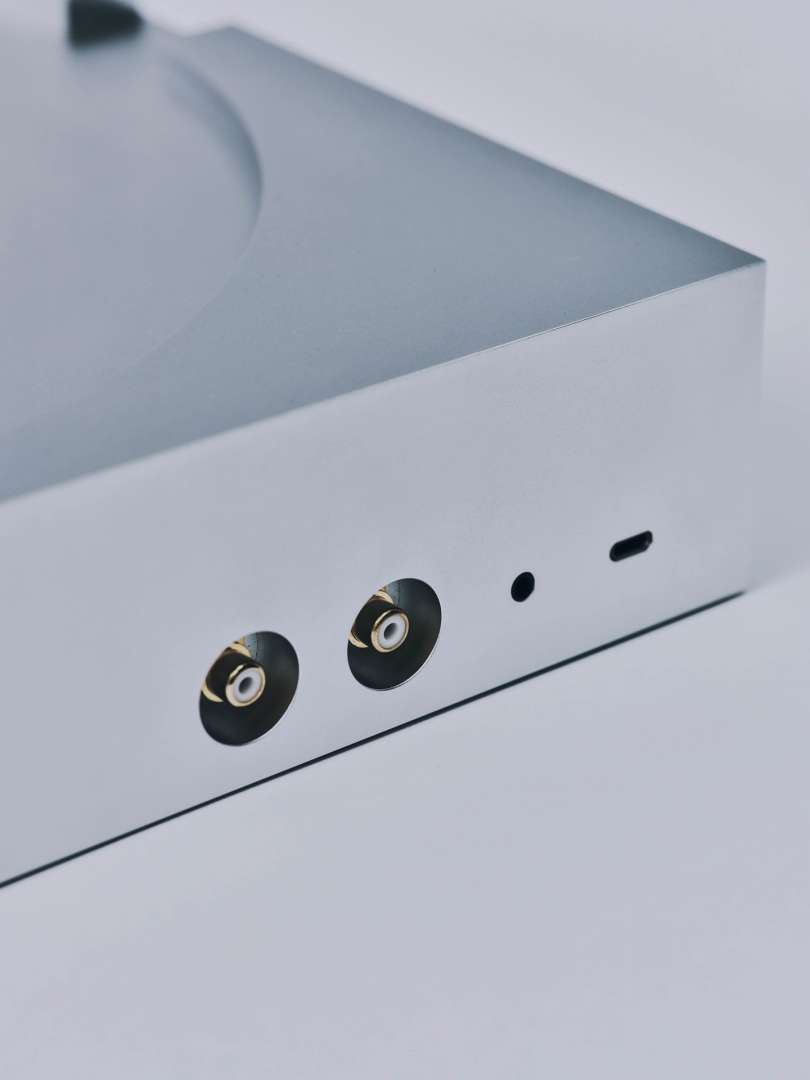
Two stylus options are listed, the Optical Analog Classic and a Shibata.
Machined from one block, and meant to be looked at
Form isn’t decoration here, because the body itself, CNC machined from a solid block of aluminum and then anodized, carries the whole object. Nothing interrupts that square, and no dials cluster on the face. When a record plays, this deck reads closer to sculpture than to hi-fi gear.
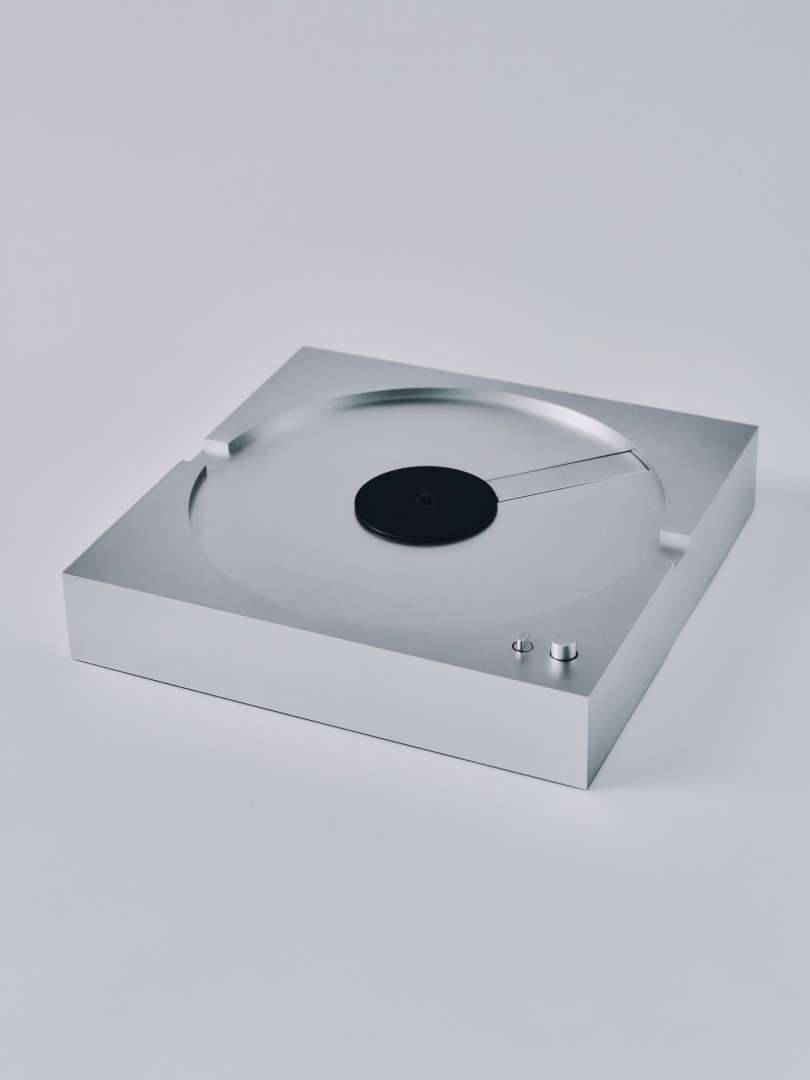
A conventional deck shows its work, arm moving in plain view. Here the work stays hidden.
Others buy vinyl for the visible ritual and the small skills that build around a deck over years. PP-2 keeps the choice of a record, and drops almost everything else.
What the first deck started
PP-1 arrived before this one, a conventional-looking turntable by the same studio, machined through Digital Manivelle in France and assembled by the LBM factory in Desvres, Pascal Noresse, and launched in 2021.
Output ran through RCA plugs and a 3.5mm mini jack, power arrived over a USB-C port, and a built-in preamplifier meant it worked off a wired amplifier or active speakers with no extra boxes to buy.
PP-1 hasn’t been retired, and its form is very different from the PP-2.
RCA outputs, the Harmony preamplifier, and USB power all carry over, as do the two stylus options.
A glass room in Tokyo, drawn around the deck
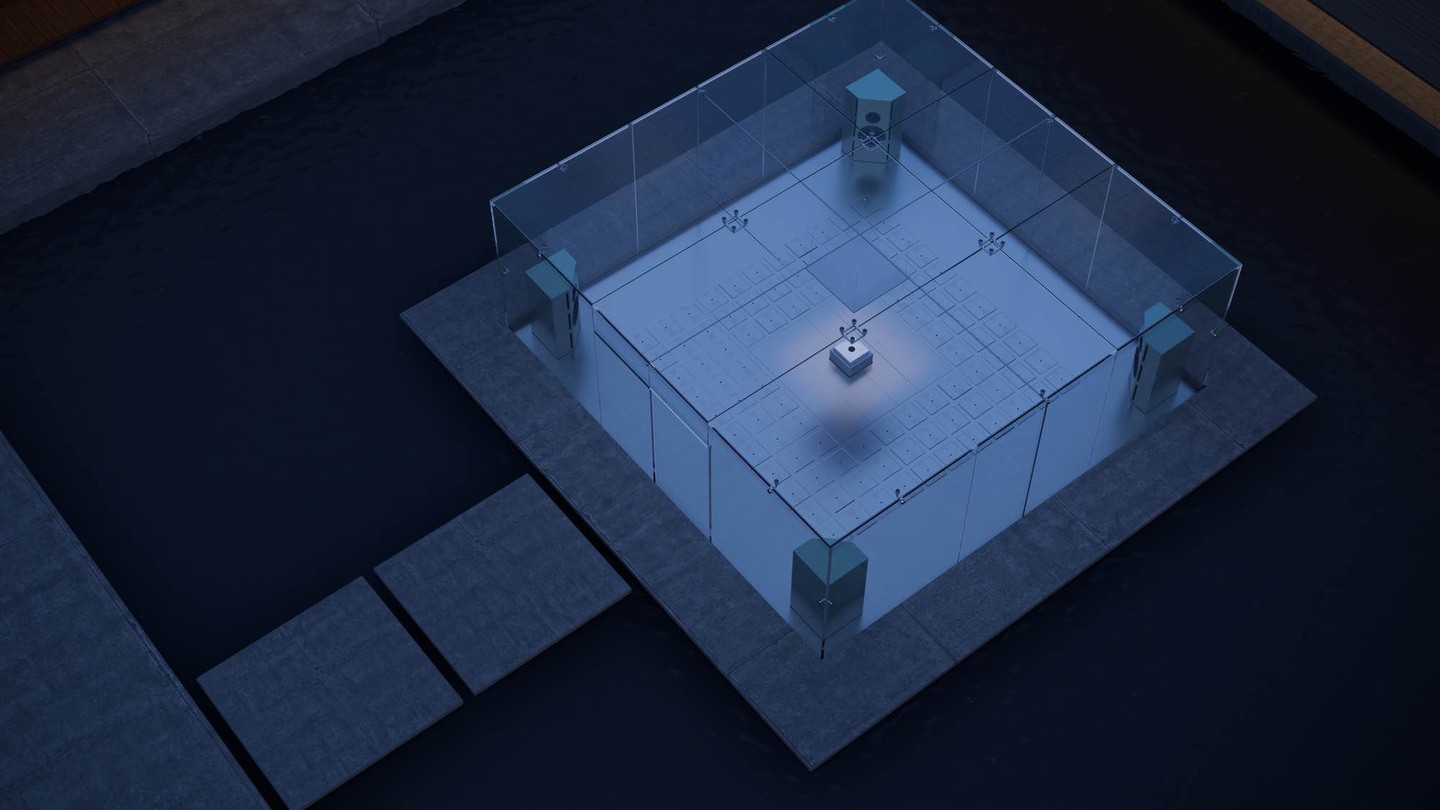
[Pause] takes the studio’s idea off the page and turns its own devotion into a concept: a 30-square-metre listening room cast in glass.
Inside the concept, the PP-2 sits in the middle of the glass case, built on the first-generation PP-1 record player design, while a man’s home sits on the floorboards under the deck.

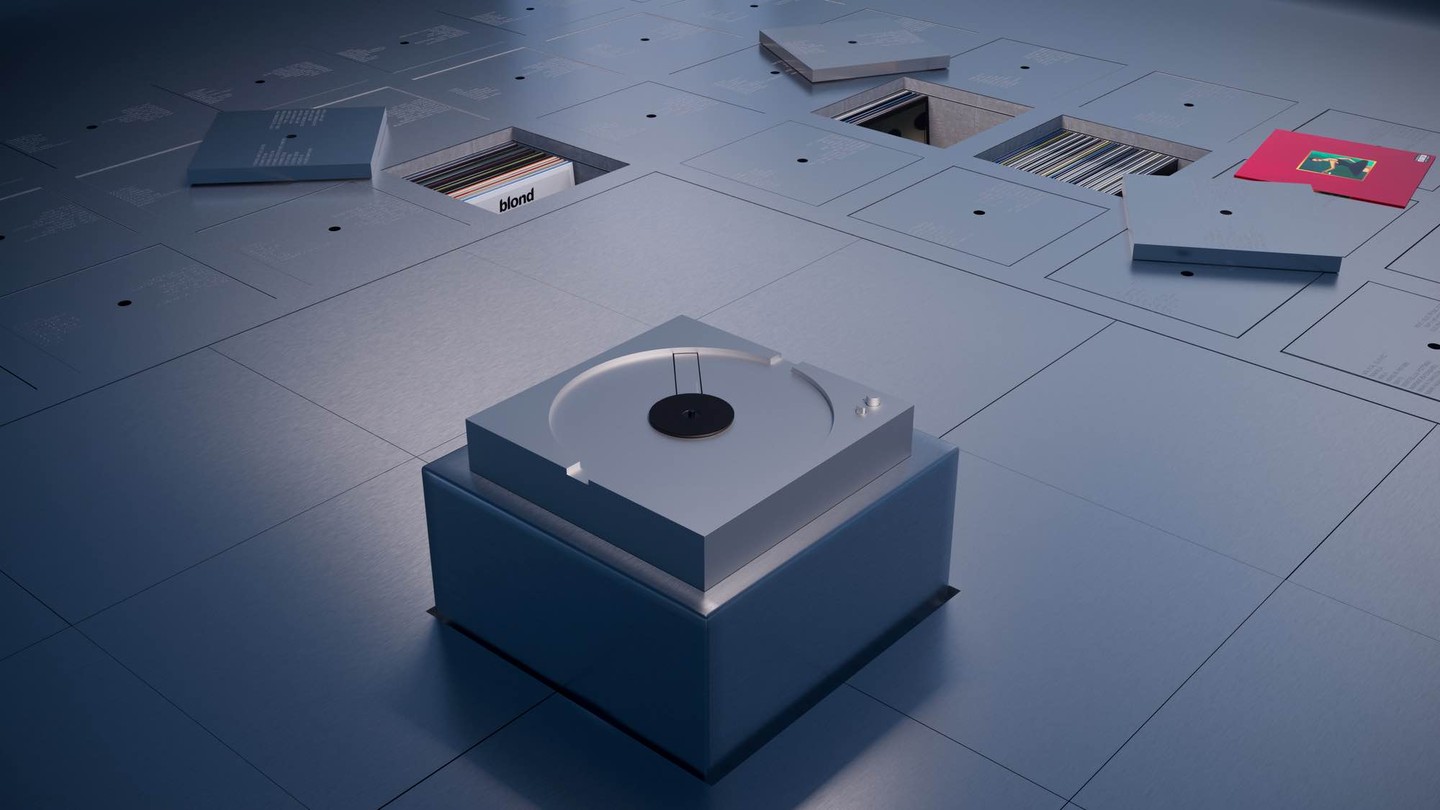
Records don’t sit in sleeves beside the machine. They stack on rails under the floor, and the listener sees the whole space while sitting down to play an album.
Streaming made music a sound file to play while you cook, or while the pre-title sequence of a film gets going and the audience’s hunt for a room is over. A listening room does the opposite by scheduling time for an album.
A glass cube above water, with water underneath and sky around it, does something far more: it treats the act of playing an album as something worth the glass, worth the water, and worth the time.
Production is suspended, with no price and no order button
PP-2 production is suspended because the small business system that was supposed to handle it is no longer operating. PP-2 is designed for production, but it isn’t available.
That staging fits the design. PP-2 was built for Euterpe, a stunning black-white monolith of a machine, and as a one-off, it can carve out a small place of its own.
PP-1 is the shipping alternative: a turntable for those who want to hear vinyl without hunting for one, you can order it straight away.