
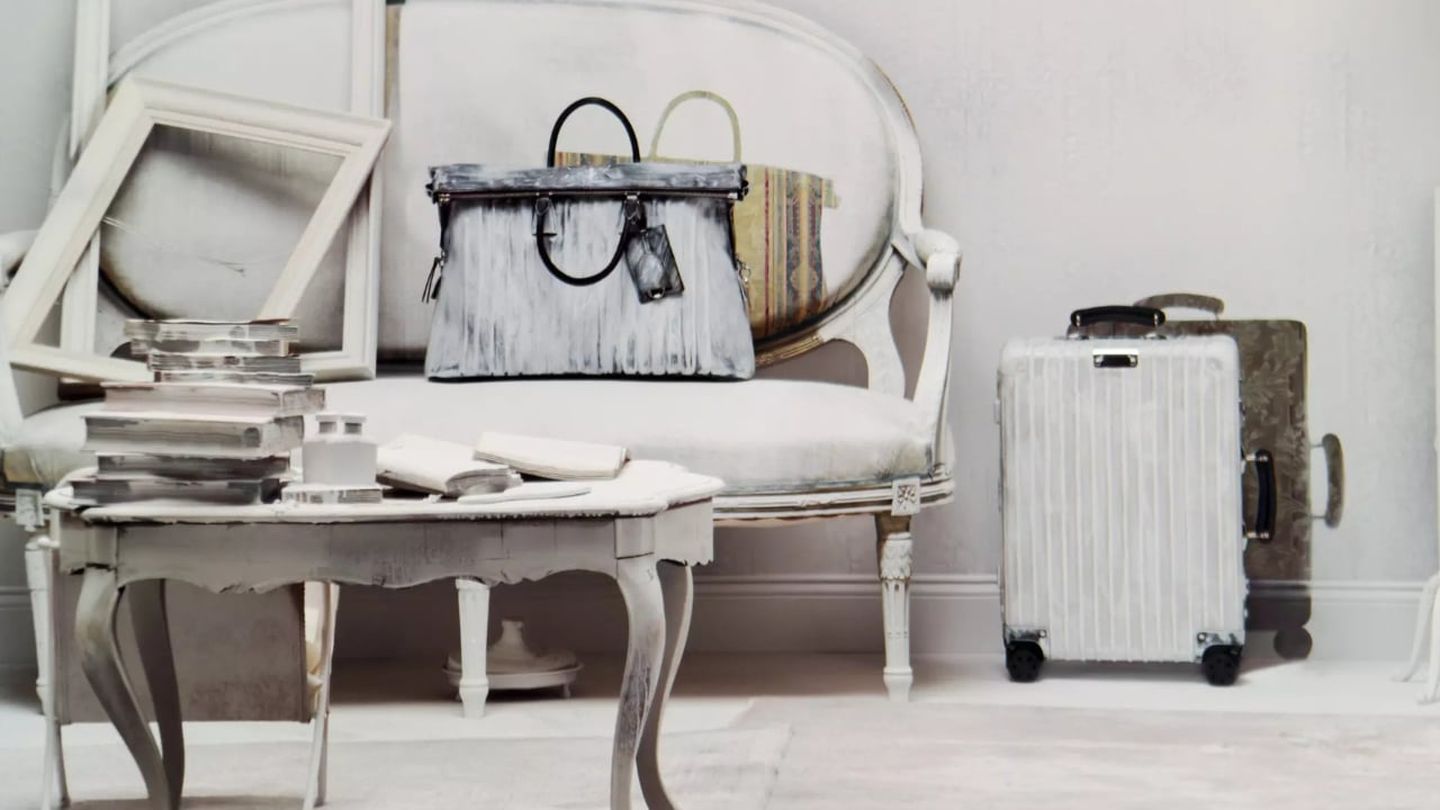
RIMOWA and Maison Margiela have made a travel set that starts changing the moment it’s carried anywhere. White paint covers both pieces, and the paint is meant to fail beautifully.
The limited edition pairs the Classic Cabin suitcase with the 5AC XL bag, two familiar shapes given a single shared surface treatment. Both pieces wear Margiela’s archival Bianchetto technique, applied by hand across aluminum and leather alike.
Most luxury luggage promises to stay pristine forever, and owners usually spend years protecting that first-day shine from belts, pavements and baggage carousels. This set takes the opposite path from the start.
Because the paint goes on by hand, subtle variations in brushwork form part of each piece’s character before the first trip even begins. Together they form a matching set, designed to travel as a pair and to age as a pair.
Paint that keeps a diary of the road

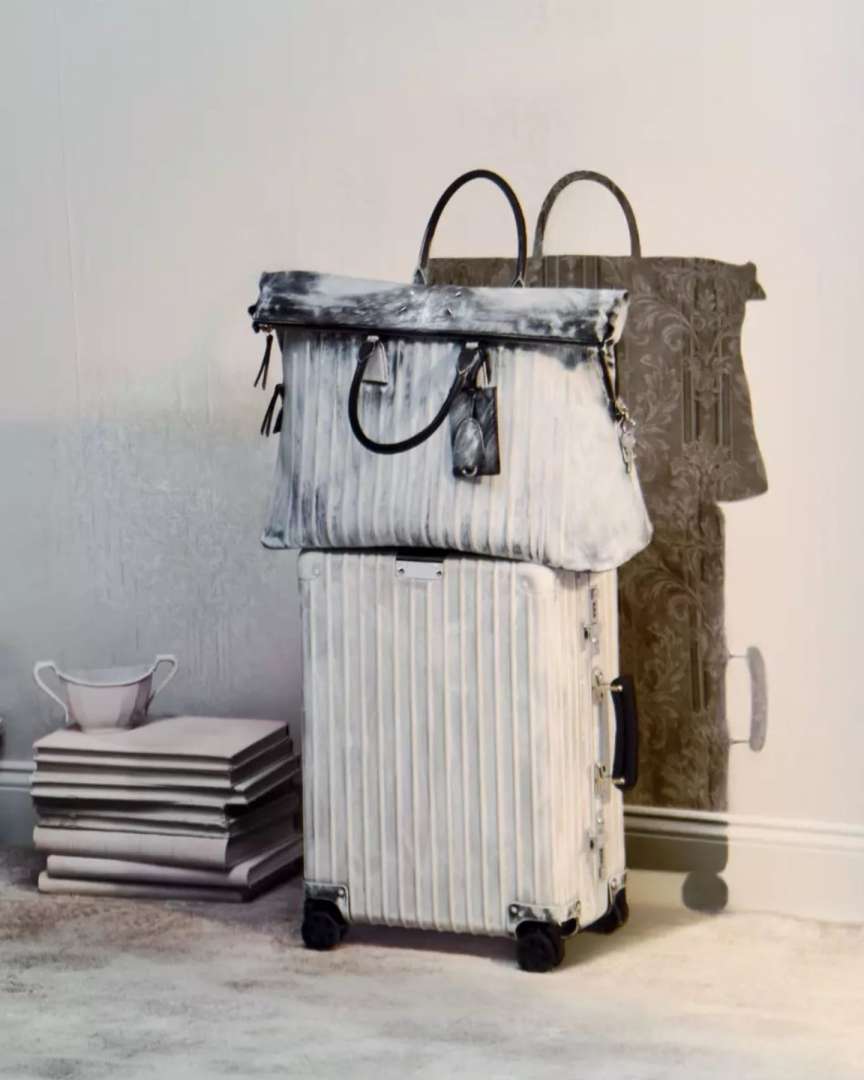
Bianchetto begins as a coat of white paint, brushed over the surface until the piece looks freshly finished and almost gallery clean. Then travel takes over the work.
The paint is designed to crack, chip and flake with use, so every journey leaves a small, visible record on the surface. Over time each piece develops its own patina, shaped by the routes its owner actually takes rather than by any factory distressing.
On the Classic Cabin, that fragile white skin stretches across RIMOWA’s famous grooved surface, where ridges catch light and shadow in long vertical lines. The grooves give the cracking paint a rhythm, so wear gathers unevenly and no two suitcases age in quite the same way.
A finish like this changes the owner’s relationship with damage, since a scuff stops being an accident and becomes part of the design’s slow unfolding.
The patina that follows belongs to one owner alone, mapped by their terminals, taxis and hotel corridors rather than by any designer’s template.
A scuff from a baggage belt becomes another mark in that record, layered slowly across the grooves like handwriting settling onto ruled lines. Nothing about the surface stays frozen.
The Classic Cabin, inside out
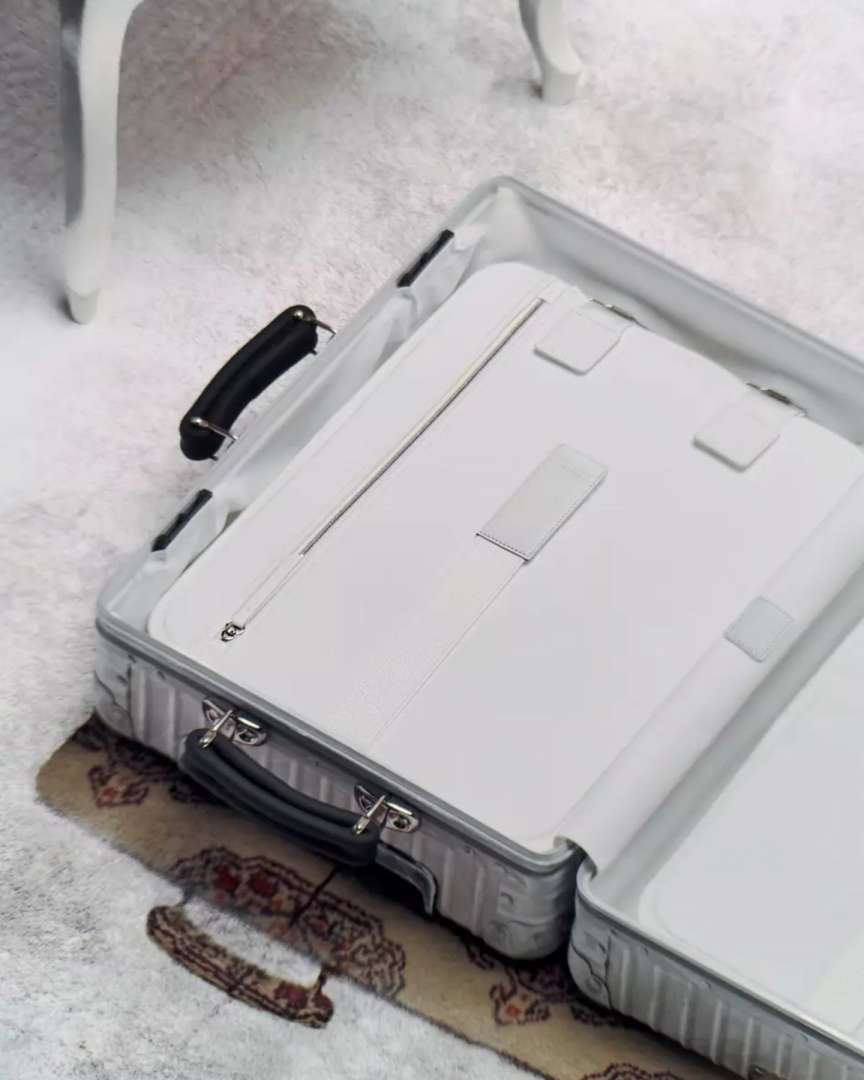
The suitcase itself is built at RIMOWA’s Cologne factory from anodized aluminum, keeping the house’s usual precision underneath the painterly surface. Its hardware stays practical and familiar.
A stage-free telescopic handle adjusts without fixed steps, TSA-approved locks guard the shell, and the Multiwheel system carries the case smoothly across terminal floors. Those details keep the piece grounded as luggage first, however artful the finish becomes after a few trips.
Inside, the lining turns the construction outward, with a white interior showing visible stitching and overlocked edges that recall a garment worn inside out. The effect feels closer to an atelier than an airport, as seams that usually hide away become the decoration.
An aluminum logo badge sits on the shell, held in place by four small white stitches that quietly sign the collaboration on the surface up close.
Four white stitches on an aluminum badge sound minor until they catch the light, a tiny, deliberate garment detail pinned onto an industrial aluminum shell. Small signals carry the collaboration.
Grooves, translated into leather
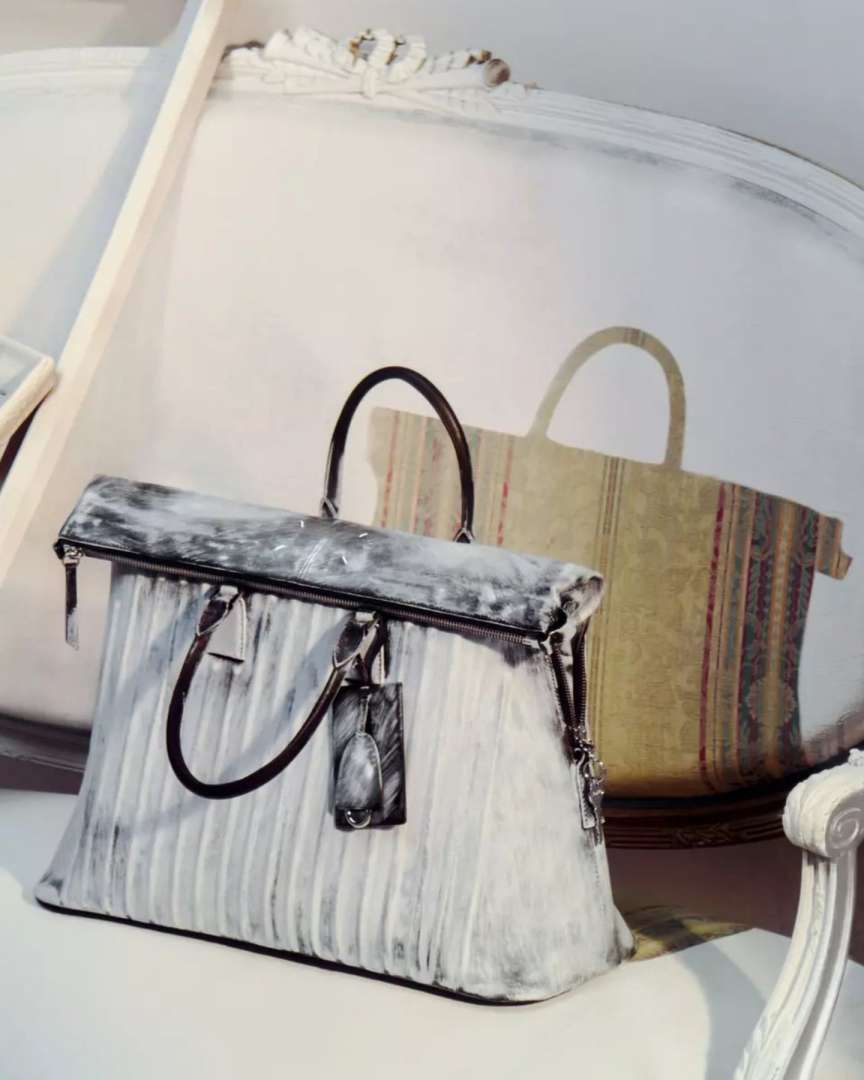
The 5AC XL carries the same Bianchetto paint, but its body translates RIMOWA’s grooves into leather instead of pressed metal itself, panel by panel. A seamless high-frequency technique forms those ridges.
Because the grooves arrive without traditional panel construction, the bag becomes a soft echo of the suitcase rather than a copy of it. Its lining stays exposed, continuing the inside-out theme that runs through the whole set from case to carry piece.
A leather crossbody strap gives the bag an everyday role away from the airport, worn across the body on shorter outings around a city. Then the travel trick arrives. Removable loops hook over the suitcase handle, so the bag rides on top of the Classic Cabin and the grooves align into one continuous set.
Worn together, the aligned grooves make the pair look cut from one long surface, leather continuing a pattern that metal started years earlier in Cologne.
One set, finished by a tag
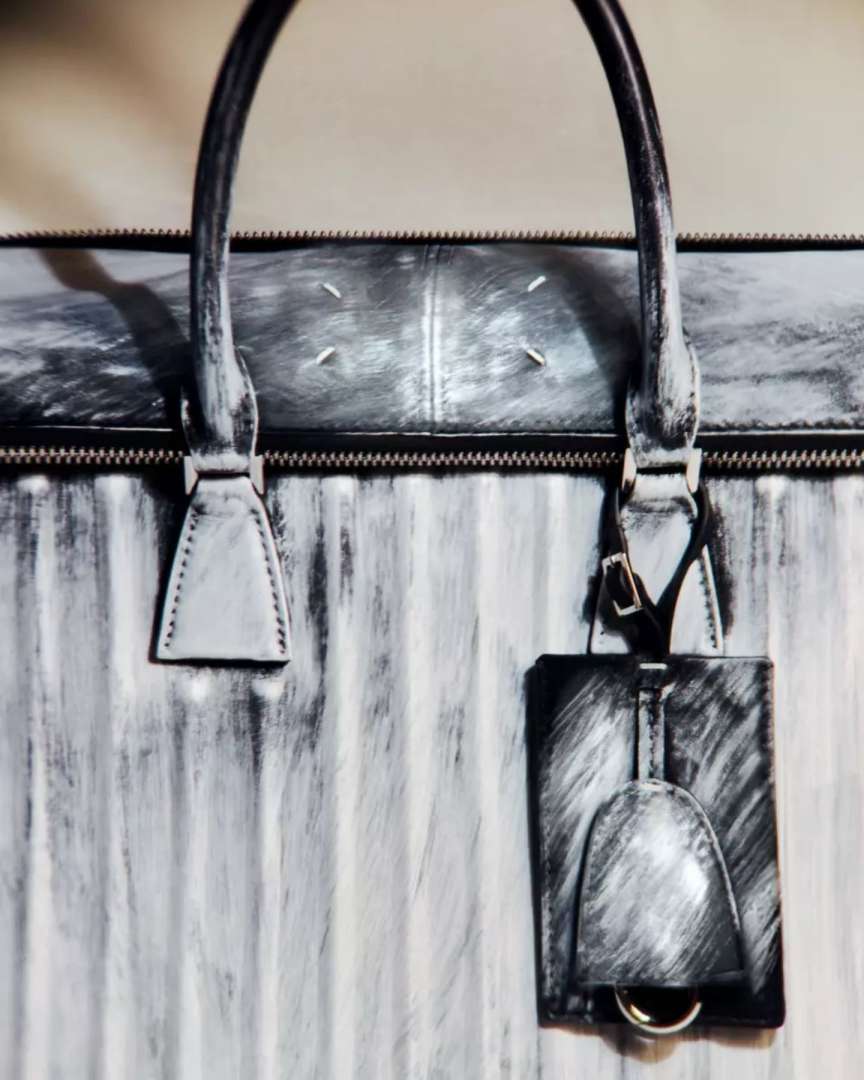
A bespoke leather tag finishes both pieces, combining RIMOWA’s address tag with Margiela’s key bell in a single small object hung from the handle. It’s the quietest piece of the set.
Details like that reward a close look, since the tag carries both houses’ travel rituals without shouting either name across the leather. Held together, the set feels like a conversation between Cologne engineering and Paris garment craft, each side leaving visible fingerprints on the other.
The collection releases on November 19, 2026, at select stores and online, in a limited edition that will not wait around for slow decisions. Anyone drawn to it probably accepts the premise already, that a suitcase can hold memories on its surface as faithfully as it holds clothes inside.
Select stores will present the set alongside online sales, giving curious buyers a chance to inspect the brushwork in person before committing.
Travel will test the premise quickly, since cabin cases roll through more hands, belts and weather in one trip than most objects meet in a year. That is the set’s quiet wager.
White paint, patience and a few thousand miles will handle the rest of the design work from there.